TagNoise Mitigation(218)
-
 2013-09-09
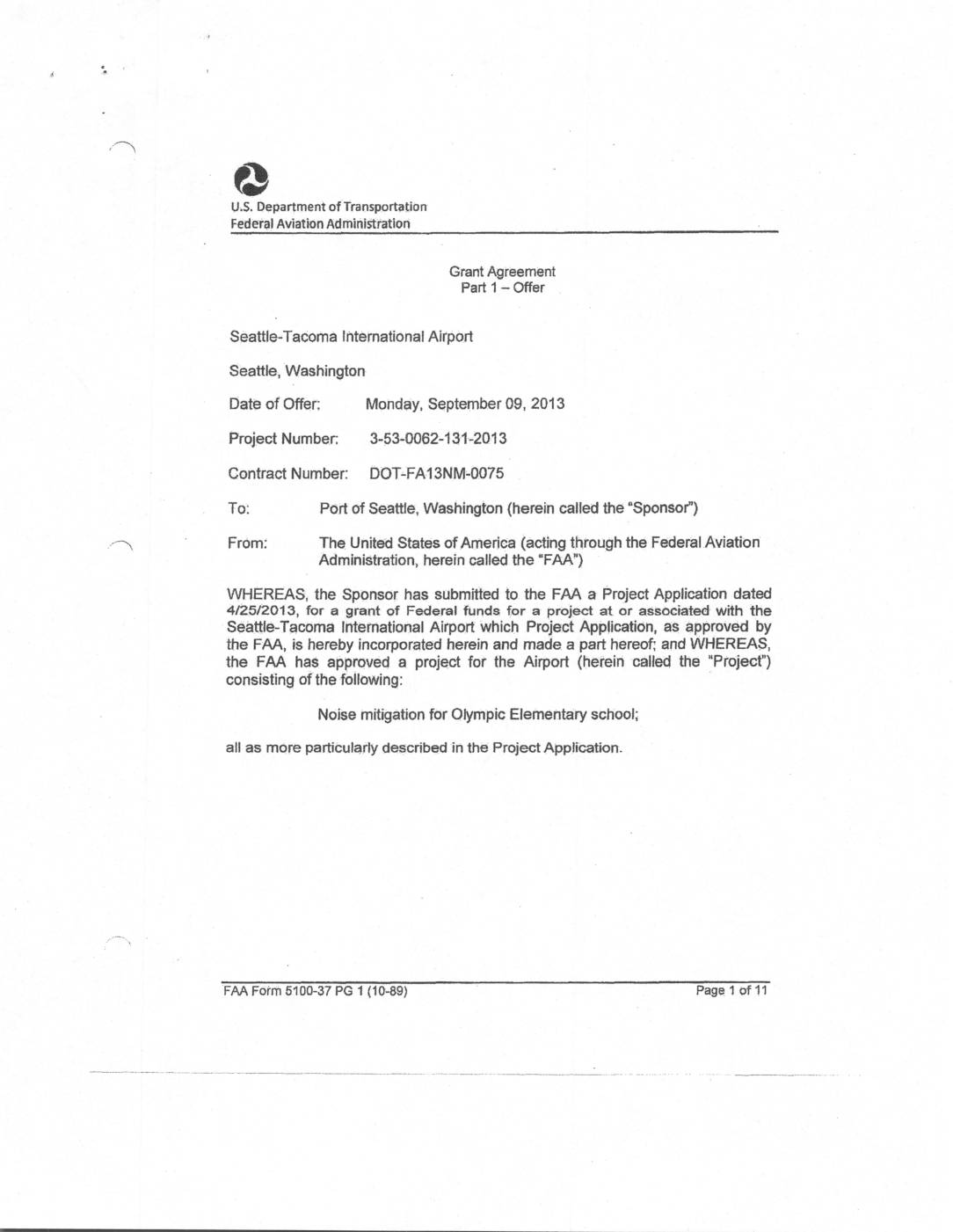
Grant agreement: Noise mitigation for Olympic Elementary school, Seattle-Tacoma International Airport
This 2013 FAA grant agreement provides up to $3,900,000 in federal funding to the Port of Seattle for noise mitigation at Olympic Elementary School near Seattle-Tacoma International Airport, with the federal government covering 80% of allowable project costs. The agreement, offered September 9, 2013, outlines conditions including the Sponsor's responsibility to complete the project without undue delay, recover any misused federal funds, and comply with federal assurances and anti-trafficking provisions. -
 2013-04-12
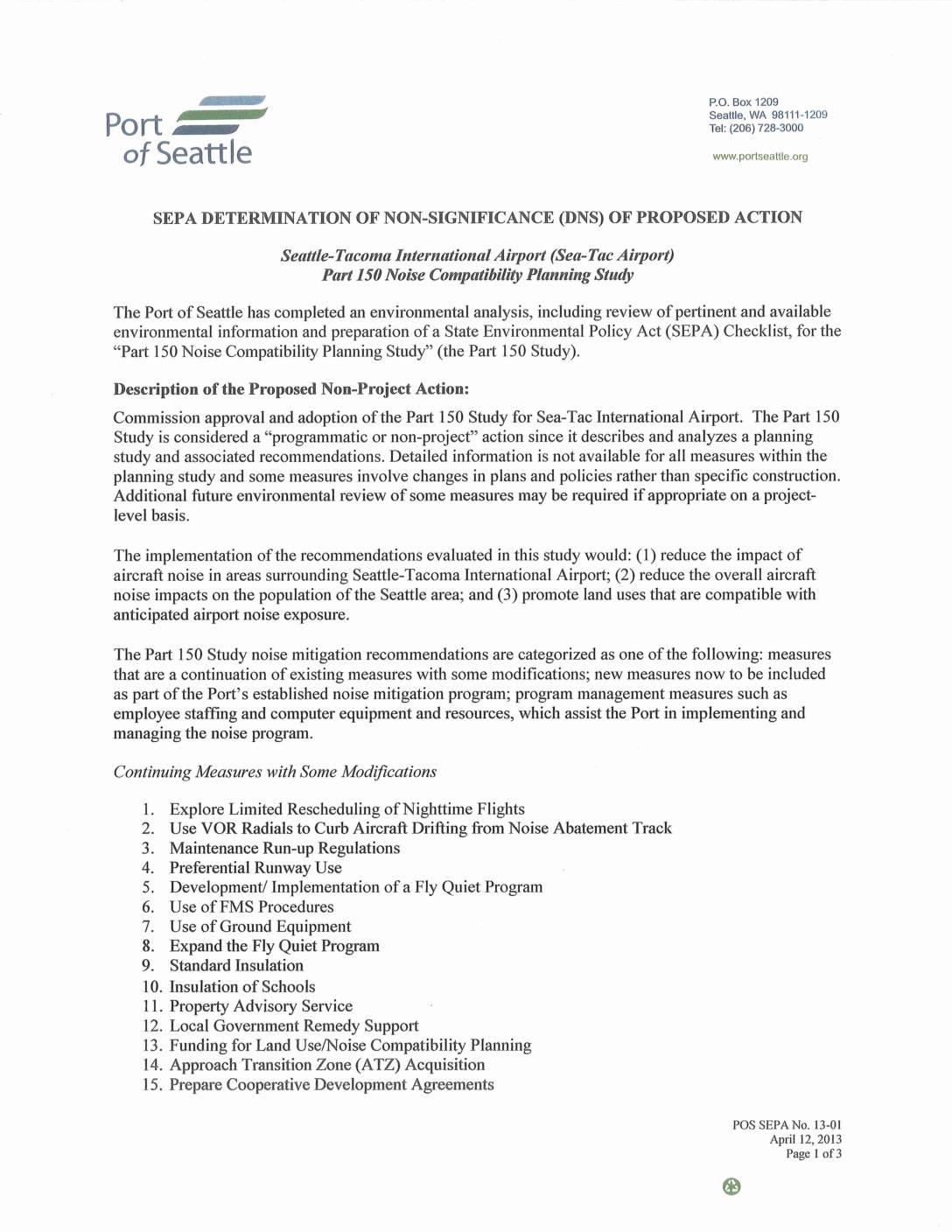
SEPA Determination of Non-Significance (DNS) of Proposed Action: Sea-Tac Airport Part 150 Noise Compatibility Planning Study
The Port of Seattle issued a State Environmental Policy Act (SEPA) Determination of Non-Significance for the Sea-Tac Airport Part 150 Noise Compatibility Planning Study, concluding the plan would not have a significant adverse impact on the environment. The study outlines 23 noise mitigation measures—including limiting nighttime flights, sound-insulating homes and schools, and constructing a Ground Run-Up Enclosure—aimed at reducing aircraft noise for communities surrounding Seattle-Tacoma International Airport. A 45-day public comment period was open through May 30, 2013, with the determination signed by Elizabeth Leavitt, Director of Aviation Planning and Environmental Programs. -
 2013-01-01
Guidelines for airport sound insulation programs
This 2013 report from the National Academies provides updated guidelines for airport sound insulation programs (SIPs), helping airport sponsors manage the process of reducing aircraft noise in homes, schools, hospitals, and other noise-sensitive buildings. It covers key topics such as construction contracting, federal funding requirements, and best practices for working with homeowners and contractors on government-funded renovation projects. The guidelines are intended for use by airport staff, consultants, and FAA offices in developing compliant noise compatibility programs. -
 2012-10-26
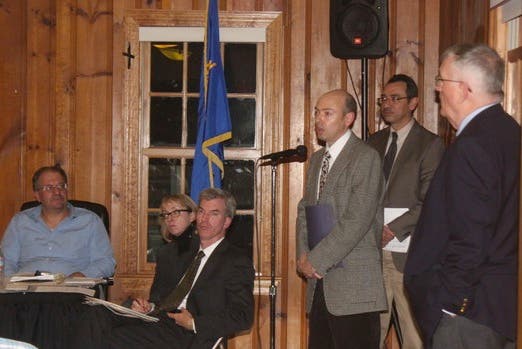
Frustrated Residents Fire Back at FAA Officials
Joseph Kellard, Patch Staff Posted Fri, Oct 26, 2012 at 4:00 pm ET Story and photos by Tara Conry Is the Federal Aviation Administration compromising safety and ignoring an agreement to reduce noise pollution in order to maximize efficiency at JFK airport? Those were the charges residents made at the Oct. 23 meeting of the -
 2012-05-02
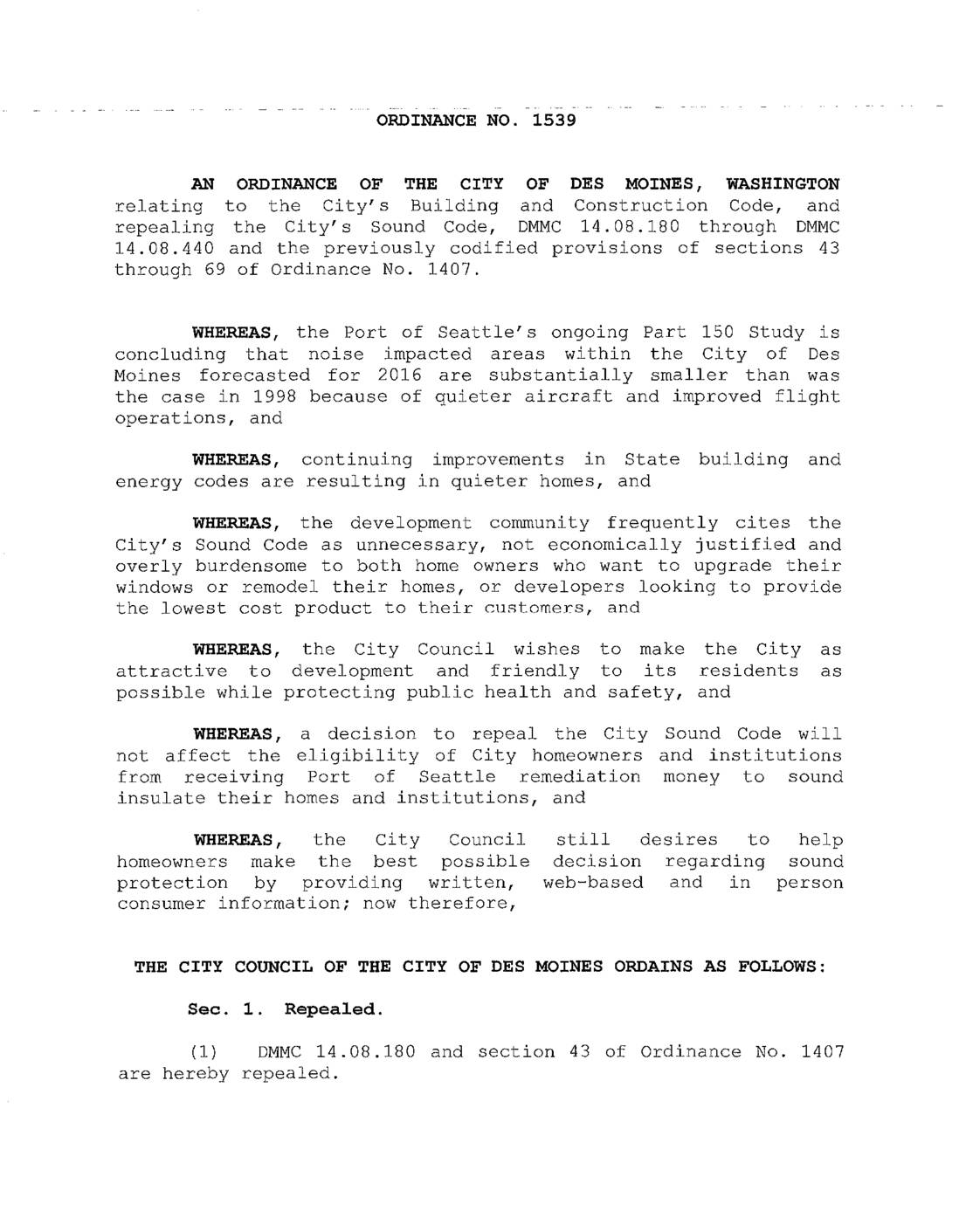
Ordinance No. 1539: An ordinance of the City of Des Moines, Washington relating to the City’s Building and Construction Code, and repealing the City’s Sound Code
The City of Des Moines, Washington repealed its local Sound Code (DMMC 14.08.180–14.08.440) in response to reduced aircraft noise projections from the Port of Seattle's Part 150 Study, improved State building codes, and concerns from the development community that the code was unnecessarily burdensome. The repeal does not affect homeowners' eligibility for Port of Seattle sound insulation remediation funding. The city indicated it would continue to support residents through consumer information resources on sound protection options. -
 2011-04-15
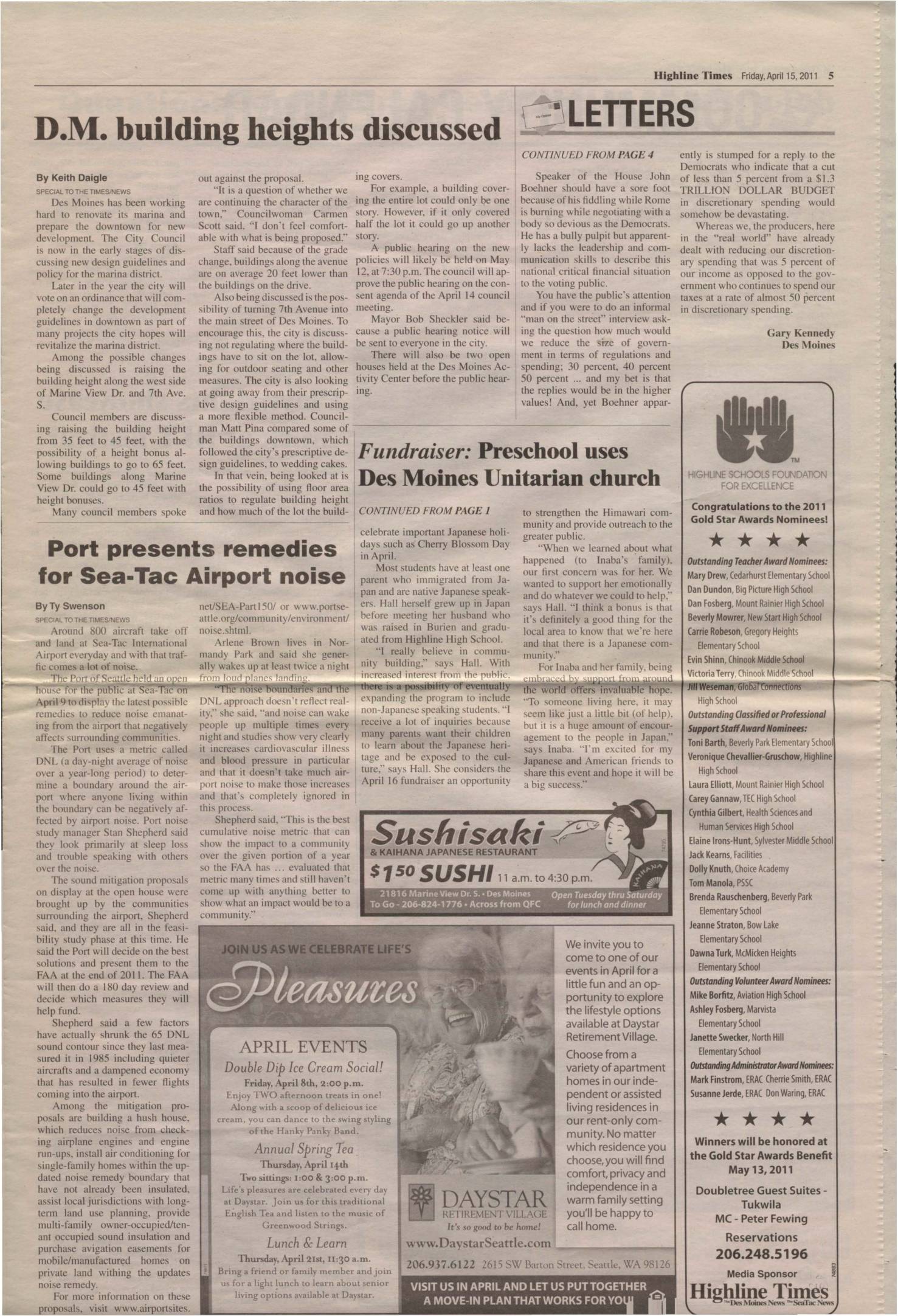
Port presents remedies for Sea-Tac Airport noise
The Port of Seattle held a public open house at Sea-Tac International Airport on April 9, 2011, to present feasibility-stage proposals for reducing airport noise affecting surrounding communities. Mitigation options under consideration included building a hush house to muffle engine run-ups, installing air conditioning in uninsulated single-family homes within the updated 65 DNL noise boundary, providing sound insulation for multi-family and mobile homes, and assisting local jurisdictions with long-term land-use planning. The Port planned to submit its recommended solutions to the FAA by the end of 2011, after which the FAA would conduct a 180-day review to determine which measures it would help fund. -
 2009-01-01
Compilation of noise programs in areas outside DNL 65
This 2009 report from the Airport Cooperative Research Program (ACRP) examines how airports across the country manage aircraft noise in communities that fall outside the standard DNL 65 decibel threshold typically used in federal noise policy. Compiled by consultants from Harris Miller Miller & Hanson, Inc., the synthesis documents real-world airport practices for addressing noise concerns in lower-noise areas that are nonetheless affected by flight operations. The findings are intended to help airport operators, planners, and policymakers develop more responsive and comprehensive noise mitigation strategies beyond federally mandated boundaries. -
 2009-01-01
LAX Master Plan Community Benefits Agreement (CBA) 2008 Annual Progress Report
Annual progress report documenting the implementation of the LAX Master Plan Community Benefits Agreement for 2008. The report covers various community benefit programs including residential noise mitigation, job training, first source hiring, living wage requirements, air quality studies, health studies, and minority business enterprise programs. -
 2008-11-01
King County International Airport Sound Insulation Program Homeowner’s Handbook
The King County International Airport Sound Insulation Program, launched in 2005, offers free noise-reduction improvements to qualifying single-family homes (4-plex or smaller) located within the airport's noise mitigation area. Funded primarily by the FAA with a 5% match from King County, the program installs sound insulation upgrades to reduce the impact of aircraft noise inside residences. Homeowners who qualify must complete an eight-step participation process, including attending a briefing, signing a program contract, and granting an avigation easement. -
2004-10-05
Highline School District superintendent to retire
DES MOINES — The superintendent of the Highline School District announced yesterday that he will retire at the end of the school year. Joe McGeehan, who will turn 65 in March, took over the Highline schools in 1994. During his tenure, the district won approval in 2002 of a $189.5 million construction bond issue after