TagNoise Mitigation(218)
-
 1982-02-26
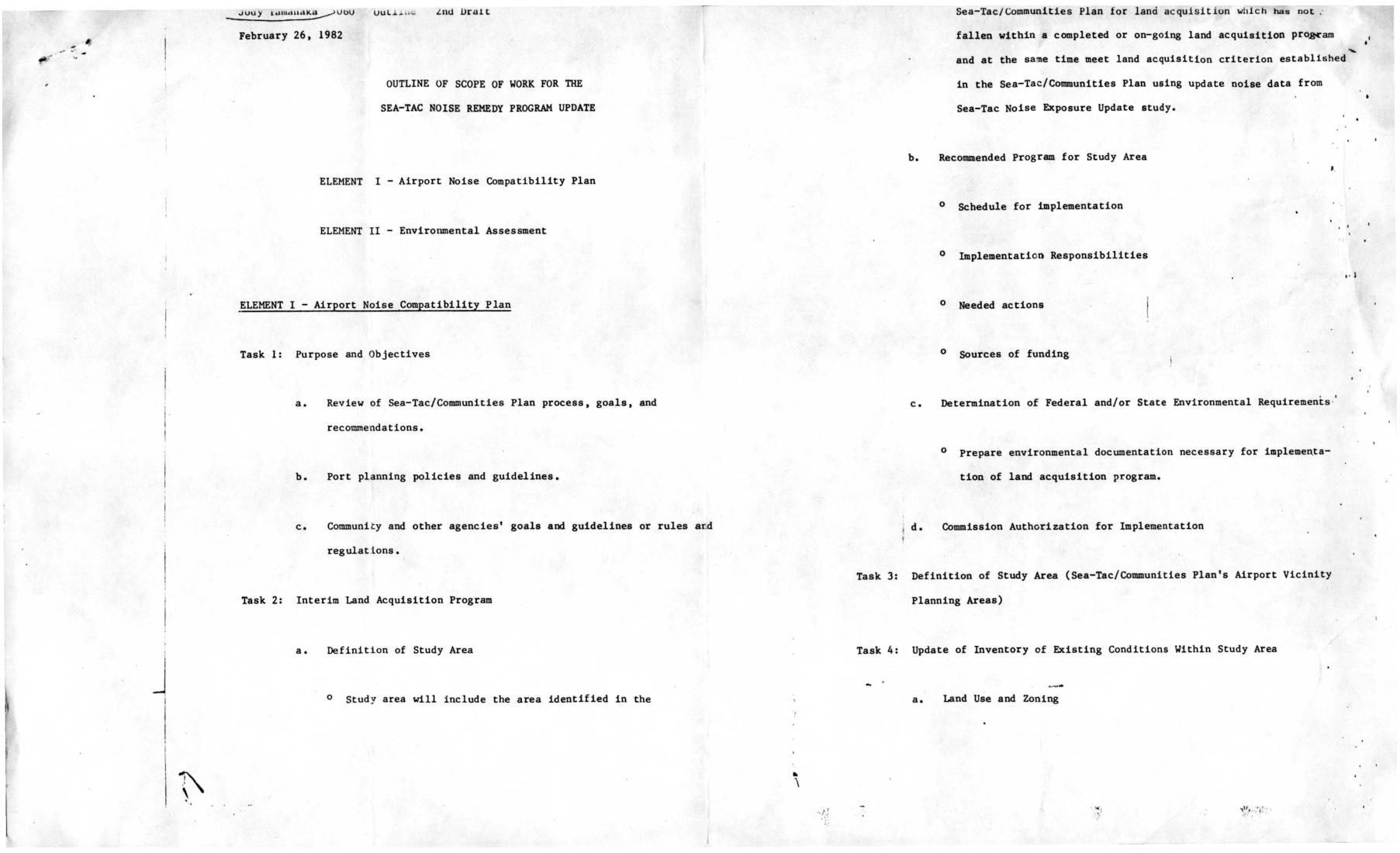
Outline of Scope of Work for the Sea-Tac Noise Remedy Program Update
This February 1982 draft document outlines the scope of work for updating the Sea-Tac Airport Noise Remedy Program, covering two main elements: an Airport Noise Compatibility Plan and an Environmental Assessment. The plan details tasks including reviewing land acquisition programs, inventorying existing community conditions (such as land use, population, housing, and noise levels), and identifying noise abatement alternatives ranging from local zoning measures to federal flight-track modifications. It also establishes criteria for evaluating those alternatives, including community sentiment, cost, and the reduction of noise-impacted populations near Seattle-Tacoma International Airport. -
 1982-02-09
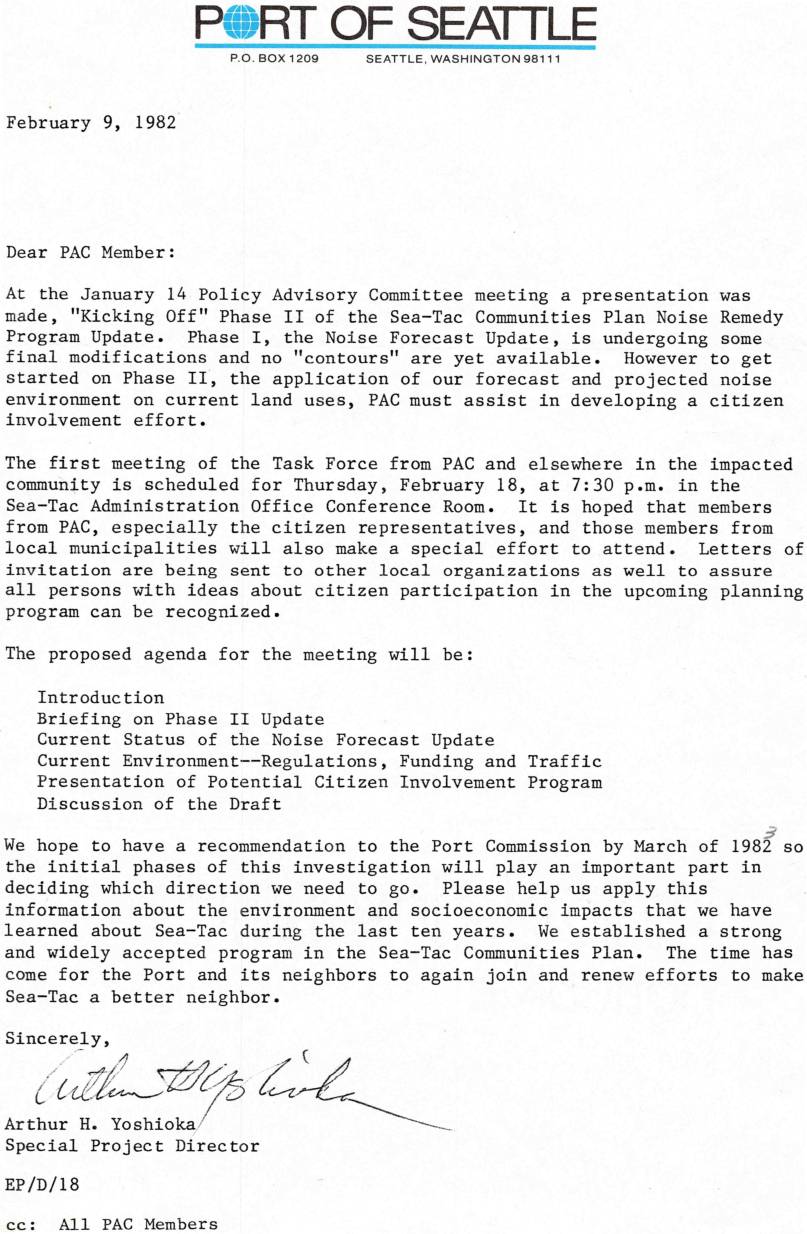
Letter to PAC members regarding Phase II of the Sea-Tac Communities Plan Noise Remedy Program Update
A February 1982 letter from Port of Seattle Special Projects Director Arthur H. Yoshioka invites Policy Advisory Committee (PAC) members to a Task Force meeting on February 18, 1982, to kick off Phase II of the Sea-Tac Communities Plan Noise Remedy Program Update. The meeting, scheduled for 7:30 p.m. at the Sea-Tac Administration Office Conference Room, would cover the current status of the Noise Forecast Update, regulations, funding, traffic, and a proposed citizen involvement program. The Port aimed to deliver a recommendation to the Port Commission by March 1982, building on a decade of research into the environmental and socioeconomic impacts of Sea-Tac Airport on surrounding communities. -
 1982-01-01
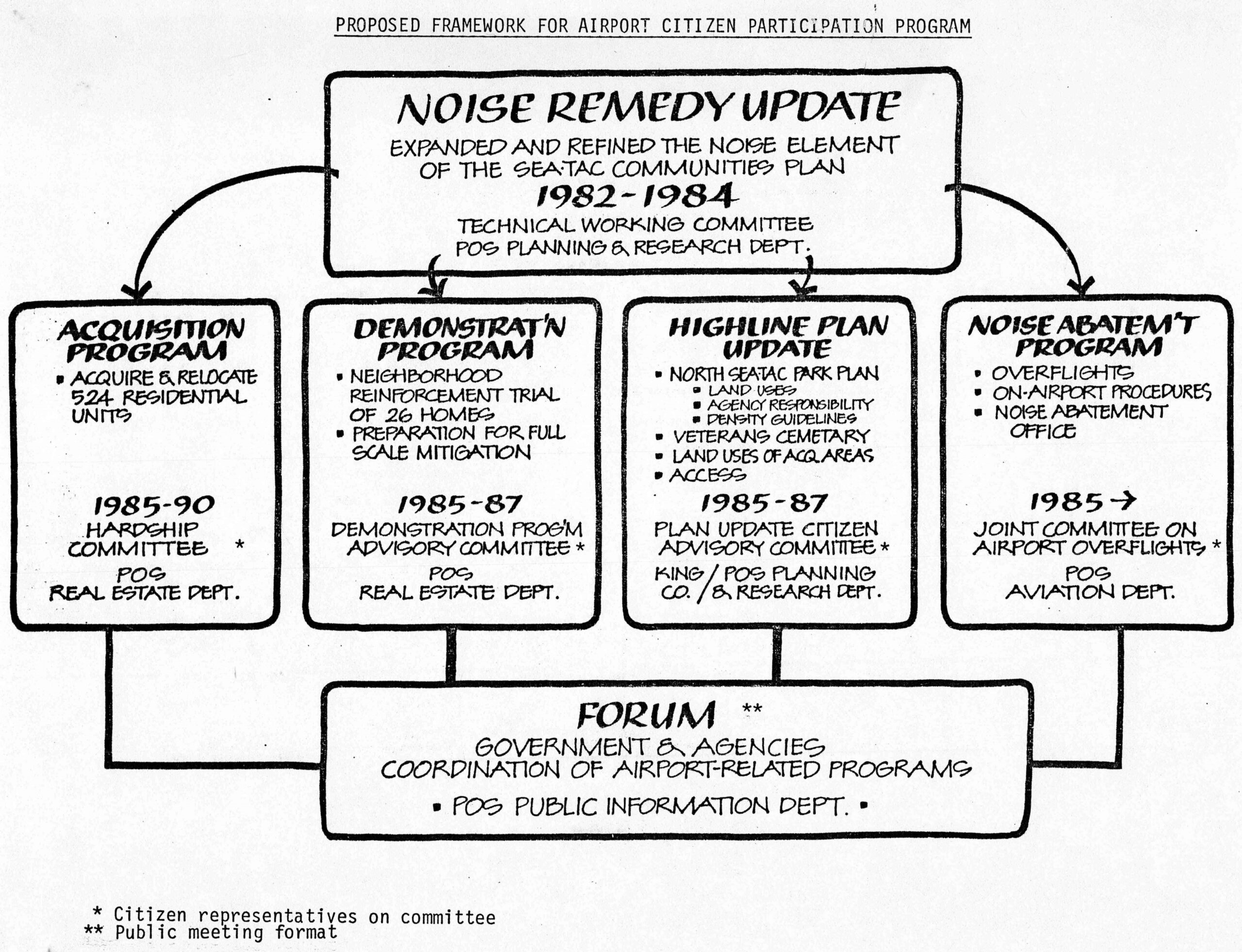
Noise Remedy Update Org Chart Airport Citizen Participation Program 1982-1990 0001
A hand-drawn organizational chart outlining the Proposed Framework for the Sea-Tac Airport Citizen Participation Program, centered on the Noise Remedy Update (1982–1984) administered by the Technical Working Committee and POS Planning & Research Dept. The framework branches into four programs—Acquisition Program (1985–90), Demonstration Program (1985–87), Highline Plan Update (1985–87), and Noise Abatement Program (1985→)—all feeding into a Forum coordinated by the POS Public Information Department. -
 1976-06-16
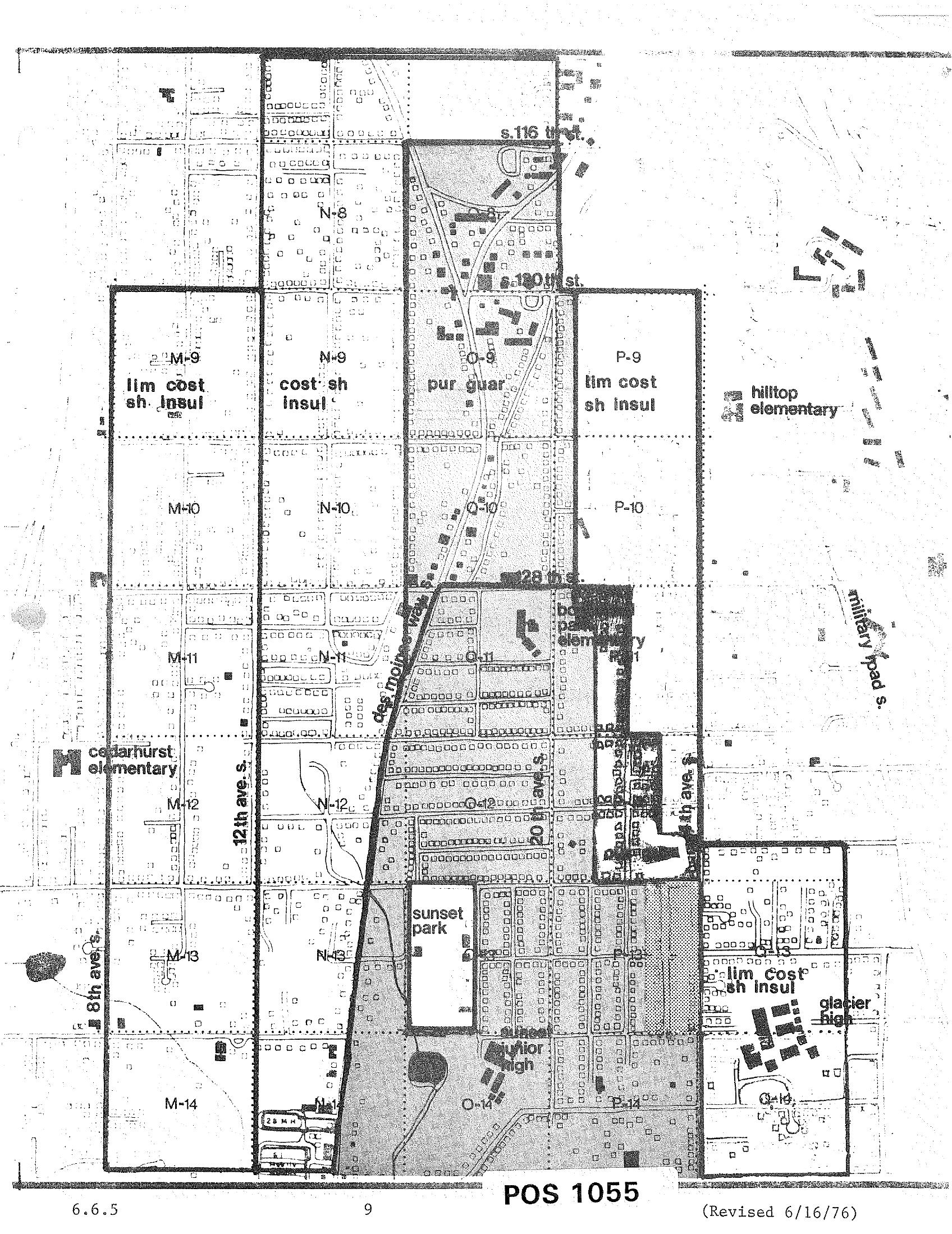
STCP Land Use and Noise Impact Zoning Grid Map, Revised June 16, 1976
A zoning/noise-impact grid map labeled 'POS 1055,' revised June 16, 1976, showing land-use designations (e.g., 'lim cost sh insul,' 'cost sh insul,' 'pur guar') in lettered and numbered grid cells around the Sea-Tac Airport corridor. Named landmarks visible include Cedarhurst Elementary, Hilltop Elementary, Bow Lake Elementary, Glacier High, Sunset Park, Sunset Junior High, 12th Ave S., 8th Ave S., Military Road S., and streets S. 116th, S. 120th, and S. 128th. -
 1975-02-02
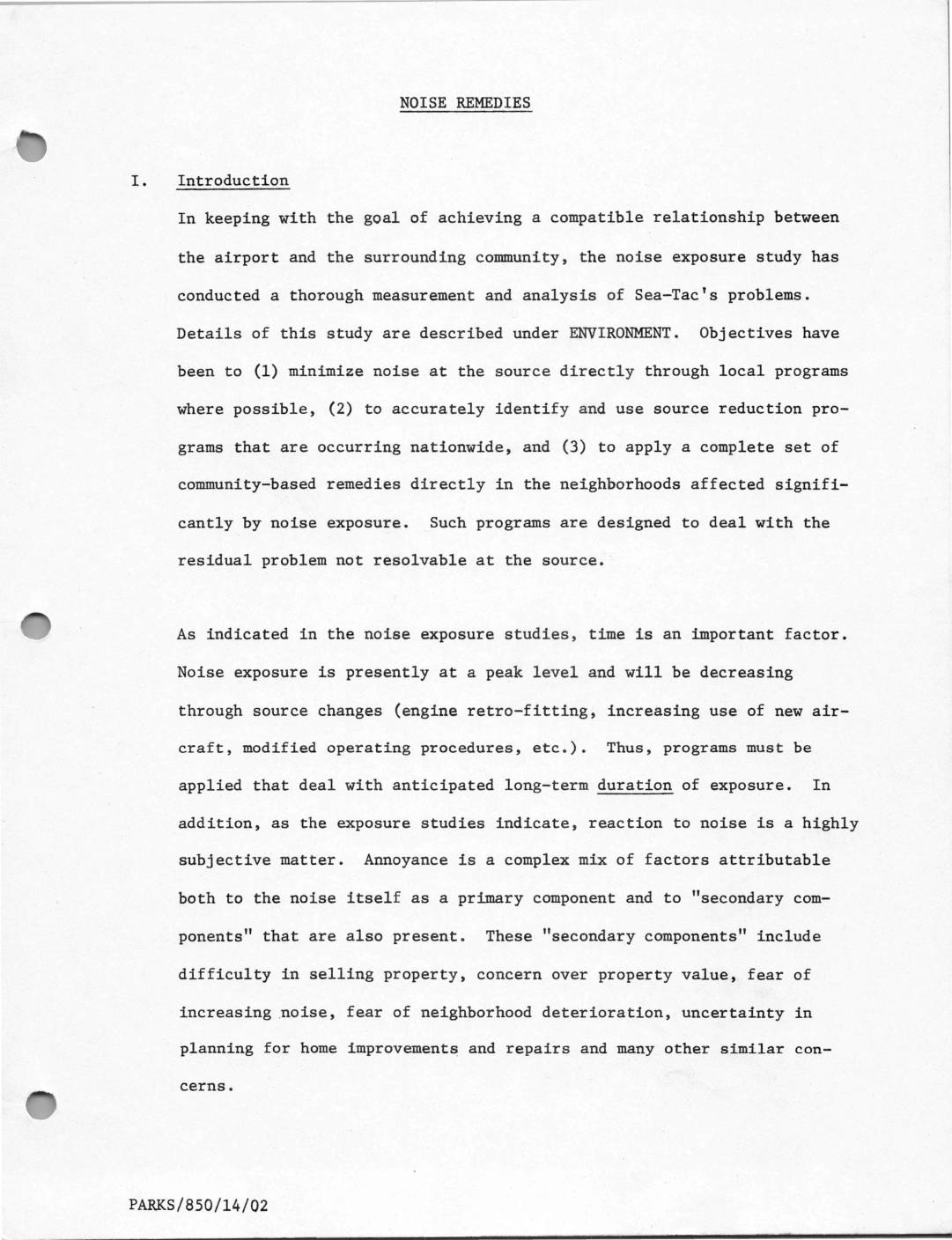
Noise Remedies (PARKS/850/14/10)
A comprehensive document from Ed Parks outlining noise remedy programs for Sea-Tac Airport post Sea-Tac Communities Plan, divided into source reduction programs and community-based remedies. The document discusses strategies to minimize aircraft noise at the source, including REFAN and Glide Slope, and addresses secondary annoyance factors affecting noise-impacted residential neighborhoods through stabilization and strengthening programs. -
 1975-01-01
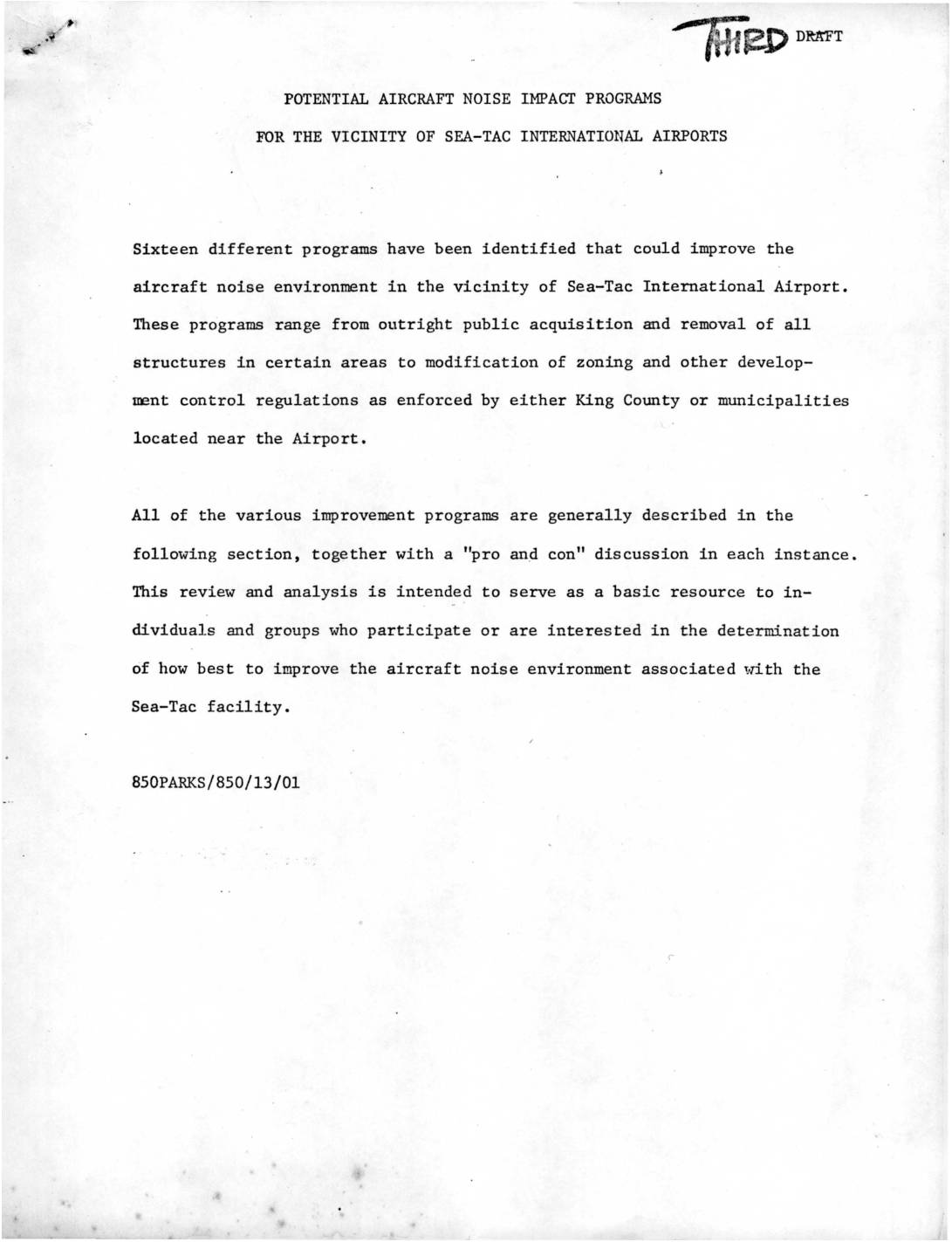
Potential Aircraft Noise Impact Programs for the Vicinity of Sea-Tac International Airports
This draft planning document outlines sixteen potential programs to address aircraft noise impacts near Seattle-Tacoma International Airport, ranging from government acquisition and demolition of affected properties to zoning changes and development controls. Each program is described along with a pros-and-cons analysis to help community members and decision-makers evaluate the options. The programs include measures such as converting noisy areas to open space, offering purchase assistance to affected homeowners, granting noise easements, soundproofing buildings, and providing property advisory services. -
 1974-08-23
Noise improvement programs: Sea-Tac/Communities Plan
This 1974 report, prepared by Peat, Marwick, Mitchell & Co., identifies thirteen potential programs to reduce aircraft noise impacts on communities surrounding Seattle-Tacoma International Airport. The programs range from government acquisition and demolition of properties in high-noise zones—converting the land to low-intensity uses like golf courses or farming—to modifications of zoning and development regulations enforced by King County and nearby municipalities. Each program is evaluated with a pros-and-cons analysis to help stakeholders determine the most effective approach to improving the noise environment near Sea-Tac. -
 1974-02-19
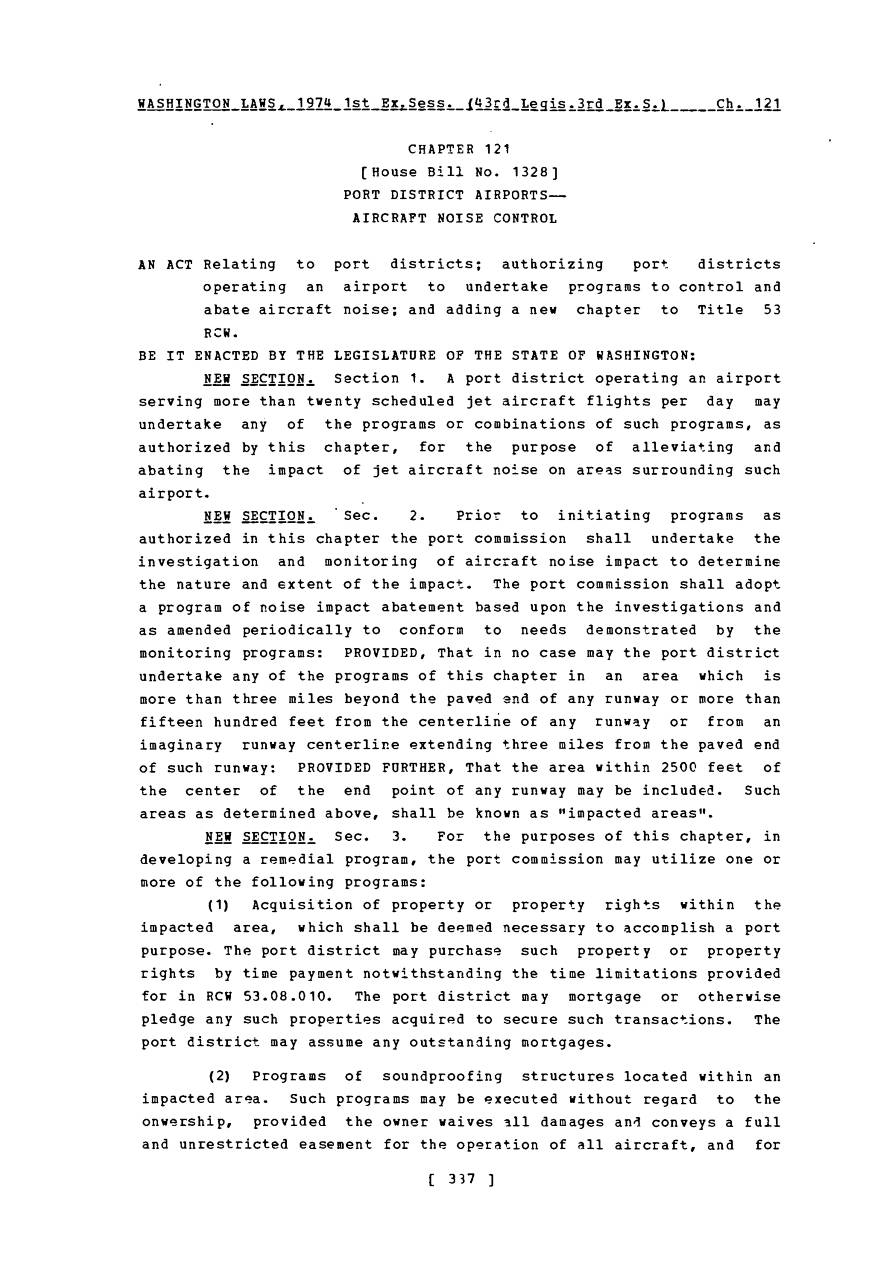
Port district airports — aircraft noise control
A 1974 Washington State law (Chapter 121, House Bill 1328) authorizes port districts operating busy airports to take action against jet aircraft noise affecting nearby communities. Programs available include buying affected properties, soundproofing structures, and providing mortgage insurance to residents who cannot obtain it due to noise impact — all within defined geographic boundaries around runways. Funding may come from federal grants, airport revenues, and general obligation bonds up to one-eighth of one percent of taxable property value in the port district.