TagLand Use(212)
-
 2024-09-07
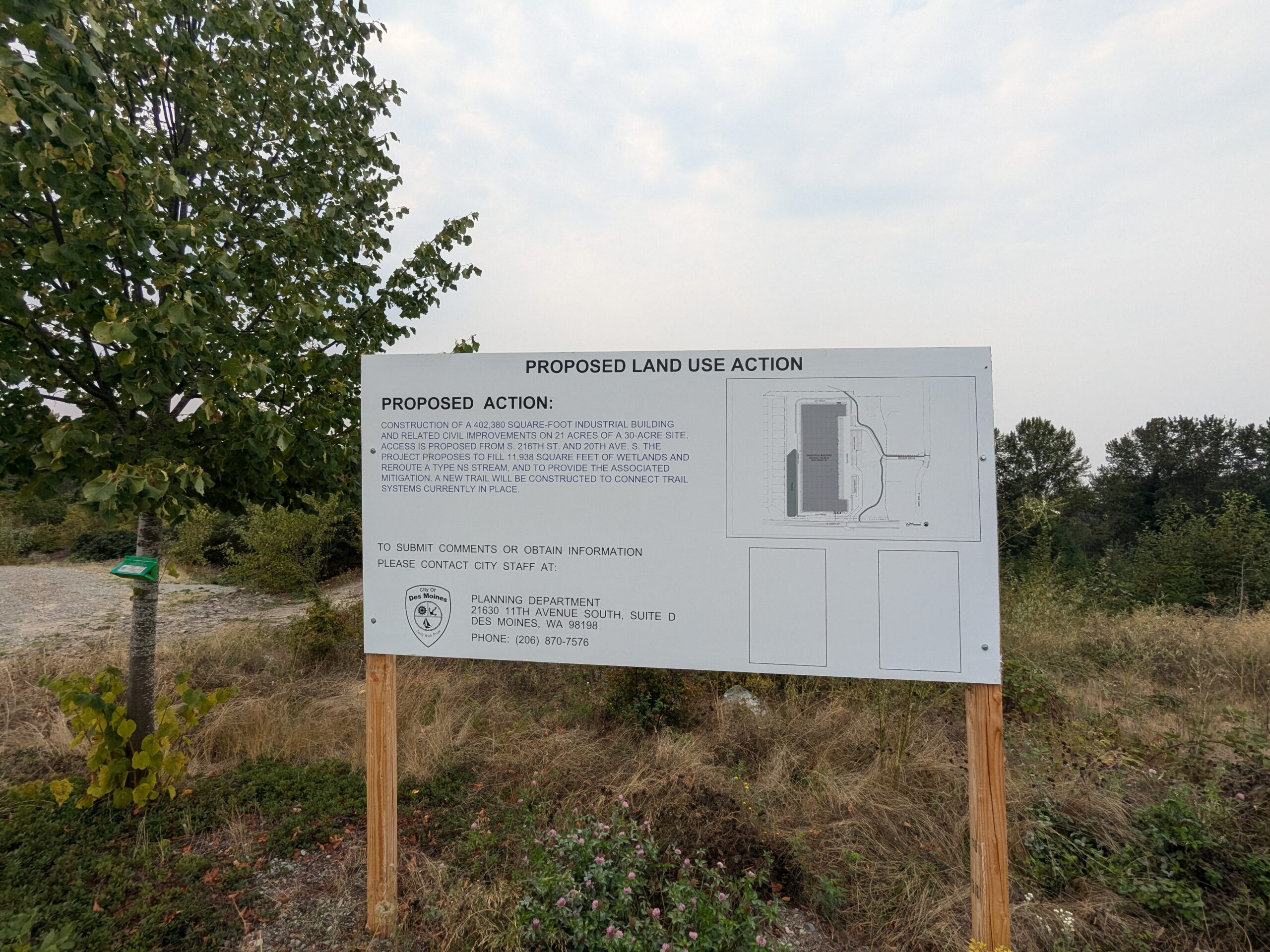
Proposed Land Use Action Sign – Des Moines, WA (City of Des Moines Planning Department)
A public notice sign posted by the City of Des Moines, WA Planning Department (21630 11th Avenue South, Suite D, Des Moines, WA 98198) announcing a proposed land use action: construction of a 402,380 square-foot industrial building and related civil improvements on 21 acres of a 30-acre site, accessed from S. 216th St. and 20th Ave. S., including filling 11,938 square feet of wetlands, rerouting a Type NS stream, and constructing a new trail connection. Contact phone listed as (206) 870-7576. -
 2024-07-08
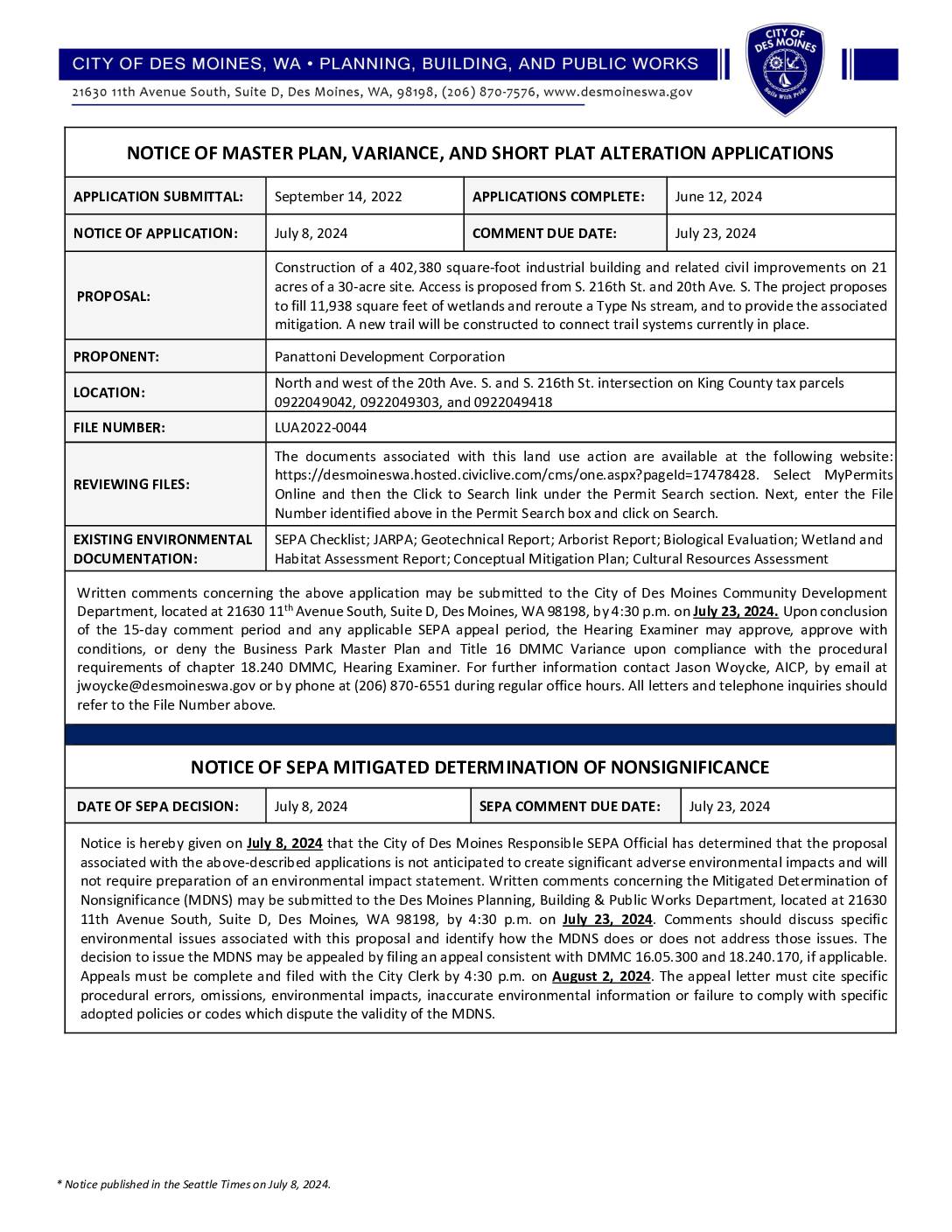
Notice of Master Plan, Variance, and Short Plat Alteration Applications and SEPA Mitigated Determination of Nonsignificance — LUA2022-0044
The City of Des Moines, WA issued a public notice in July 2024 for a proposed 402,380-square-foot industrial building on a 30-acre site near S. 216th St. and 20th Ave. S., submitted by Panattoni Development Corporation. The project, which involves filling wetlands and rerouting a stream, was granted a Mitigated Determination of Nonsignificance (MDNS) under SEPA, meaning city officials determined it would not cause significant adverse environmental impacts. Public comments and appeals of the environmental decision were accepted through late July and early August 2024. -
 2024-07-08
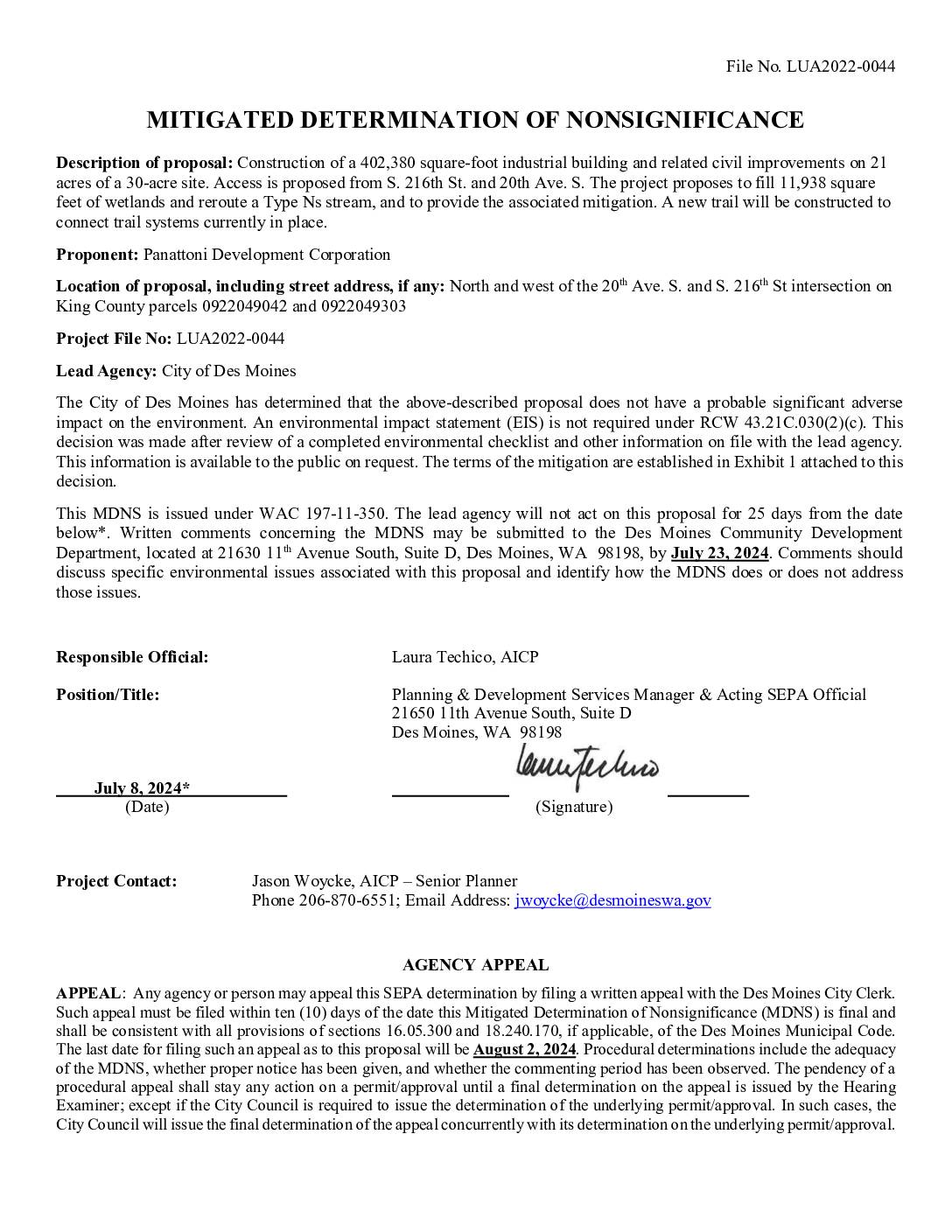
Mitigated Determination of Nonsignificance: Des Moines Creek Business Park West (LUA2022-0044)
The City of Des Moines issued a Mitigated Determination of Nonsignificance (MDNS) for a proposed 402,380-square-foot industrial building near Seattle-Tacoma International Airport, finding no significant environmental impact provided certain conditions are met. Key mitigation requirements include wetland and stream protections, long-term environmental monitoring, and compliance with FAA Advisory Circular 150/5200-33C standards to ensure the project's stormwater detention pond does not attract hazardous wildlife that could pose risks to aircraft operations. The decision, issued July 8, 2024, was open for public comment through July 23, 2024, with an appeal deadline of August 2, 2024. -
 2024-05-13
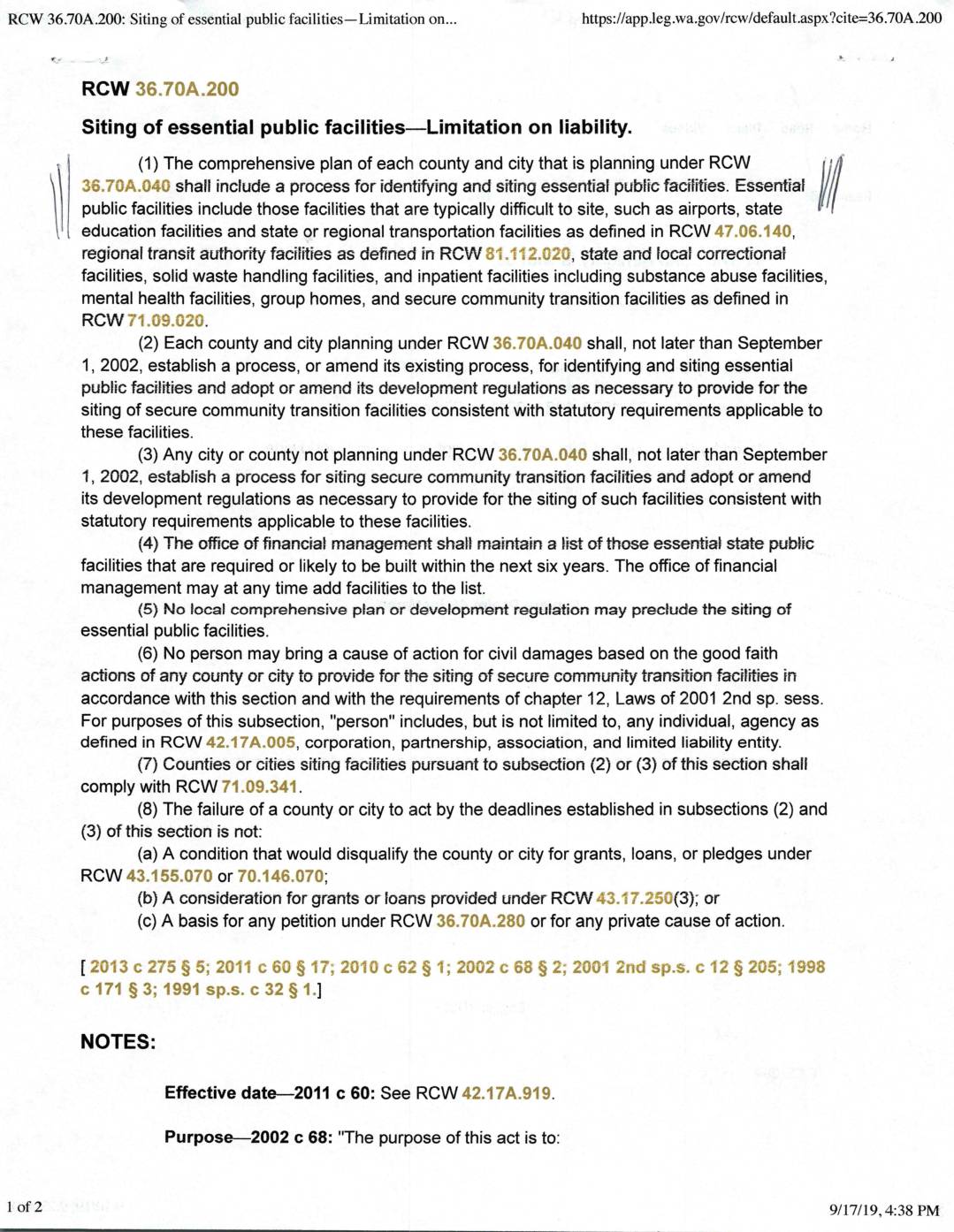
RCW 36.70A.200: Siting of essential public facilities—Limitation on liability
RCW 36.70A.200 requires counties and cities planning under Washington's Growth Management Act to include a process for identifying and siting essential public facilities — defined as those typically difficult to site, such as airports, state education facilities, regional transportation facilities, correctional facilities, solid waste handling facilities, and inpatient mental health or substance abuse facilities. The law explicitly prohibits any local comprehensive plan or development regulation from completely blocking the siting of such facilities. It also establishes liability protections for jurisdictions acting in good faith to site secure community transition facilities. -
 2024-03-01
Sea-Tac City Center Plan Update: Market Analysis
This March 2024 market analysis, prepared by Leland Consulting Group for the City of SeaTac, evaluates the feasibility of transforming the SeaTac City Center/Airport District from a predominantly auto-oriented area into a compact, walkable urban district with transit-oriented development. The report identifies key challenges including high land costs, long-term land leases, and an existing built environment dominated by hotels, airport parking lots, and multifamily housing that are economically successful but difficult to redevelop. It concludes that while achieving the City Center vision is possible, it will require significant incremental and transformative changes supported by targeted implementation actions. -
 2024-03-01
Sea-Tac City Center Plan Update: Market Analysis
This March 2024 market analysis, prepared by Leland Consulting Group for the City of SeaTac, evaluates the feasibility of transforming the SeaTac City Center/Airport District from a predominantly auto-oriented area into a compact, walkable urban district with transit-oriented development. The report identifies key challenges including high land costs, long-term land leases, and an existing built environment dominated by hotels, airport parking lots, and multifamily housing that are economically successful but difficult to redevelop. It concludes that while achieving the City Center vision is possible, it will require significant incremental and transformative changes supported by targeted implementation actions. -
 2024-01-01
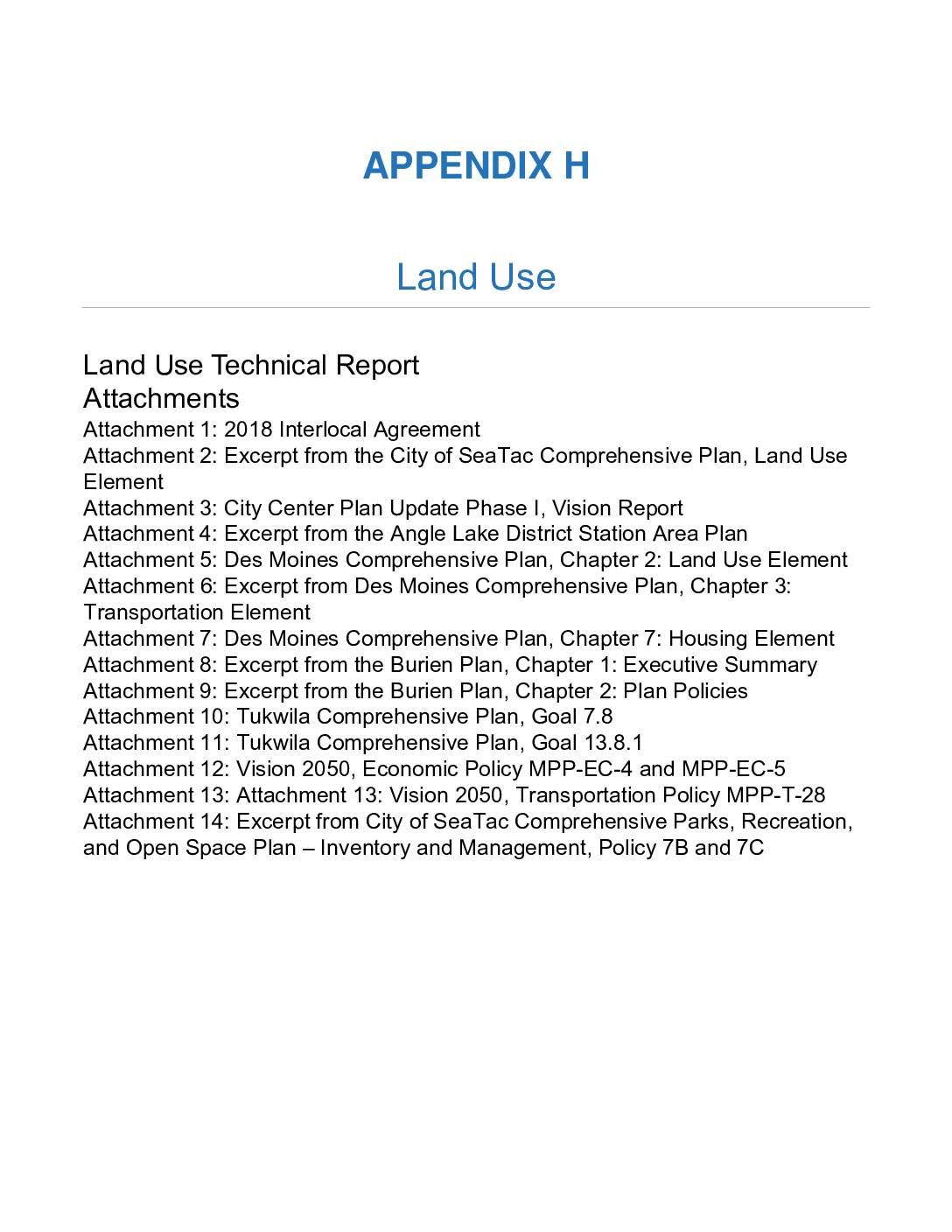
Sustainable Airport Master Plan Near-Term Projects: Land Use Technical Report
This Land Use Technical Report, prepared by Landrum & Brown for the Port of Seattle in January 2024, examines how near-term construction projects outlined in the Seattle-Tacoma International Airport Sustainable Airport Master Plan align with existing and planned land use regulations in surrounding communities. The report reviews local plans from cities including SeaTac, Des Moines, Burien, and Tukwila, as well as a 2018 Interlocal Agreement between the Port and the City of SeaTac, to assess potential land use impacts of the proposed airport expansion alternatives. It concludes by evaluating the consistency of the proposed action and a hybrid terminal option with applicable local and regional planning policies. -
 2024-01-01
Normandy Park 2044 comprehensive plan periodic update
The Normandy Park 2044 Comprehensive Plan is a long-range planning document for the city of Normandy Park, Washington, last updated in 2024 via Ordinance No. 1066. It covers eight key elements including land use, housing, transportation, capital facilities, parks and recreation, environment, and economic development. While it guides the city's growth and policy through 2044, it does not specifically address Sea-Tac Airport noise impacts. -
 2024-01-01
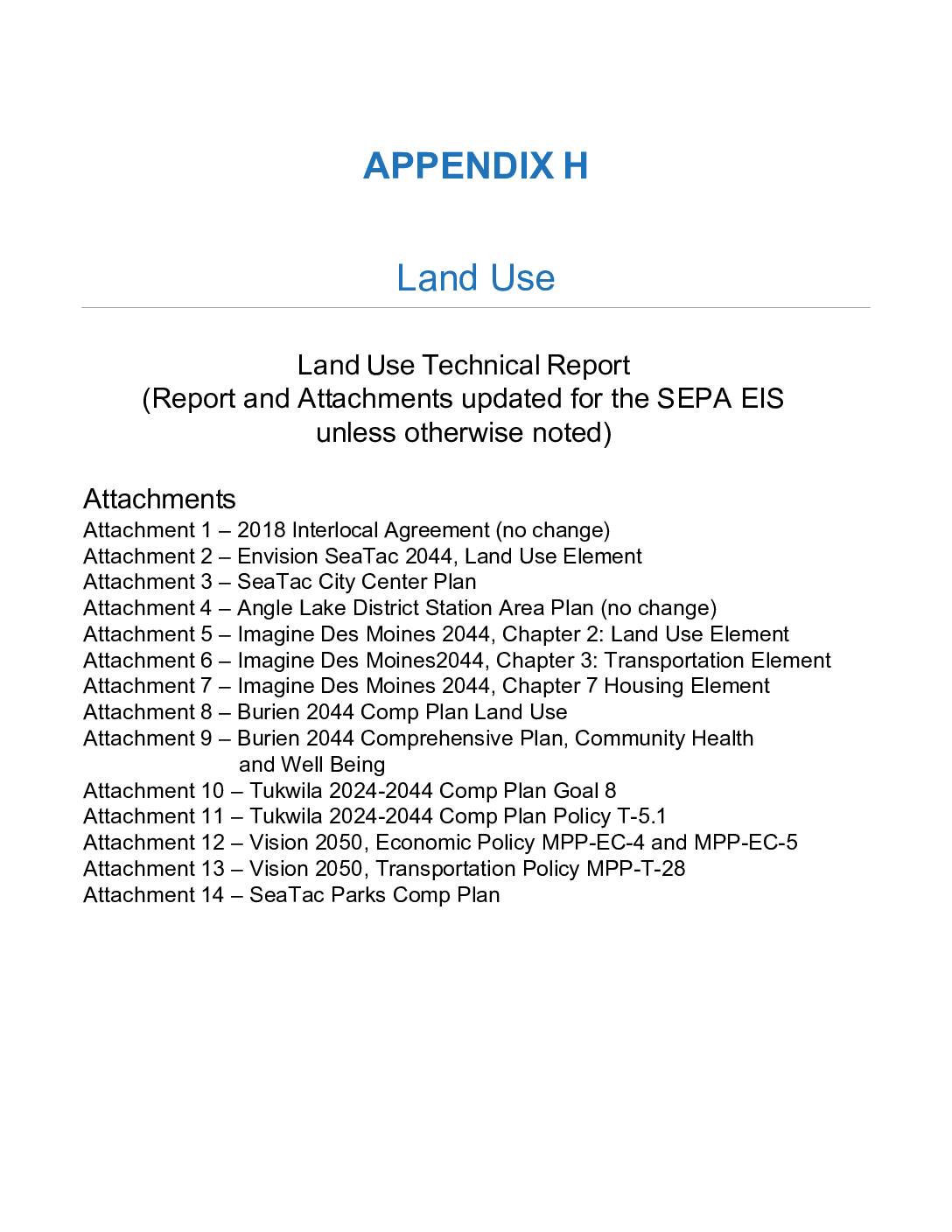
Appendix H: Land Use Technical Report
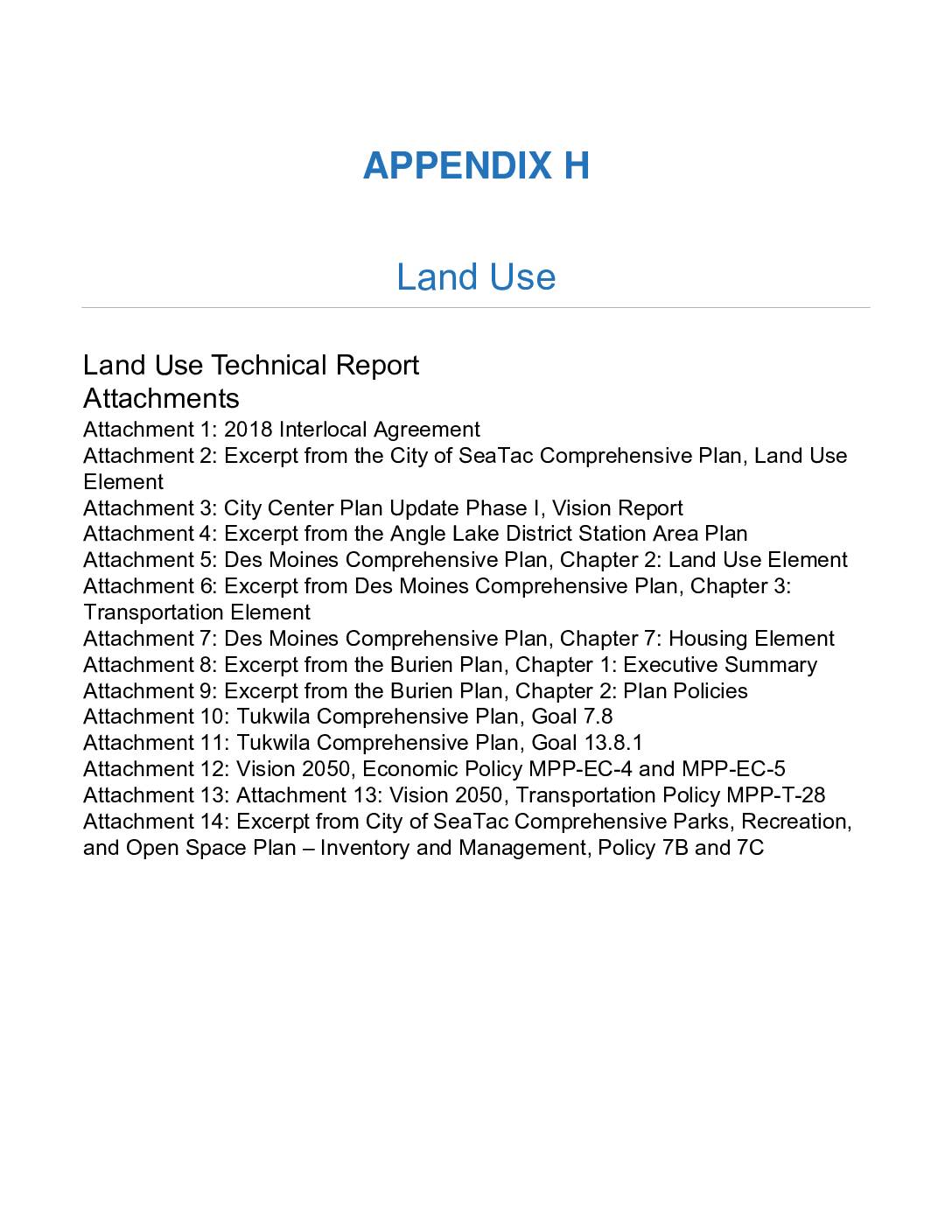
This Land Use Technical Report, prepared for the Port of Seattle's Sustainable Airport Master Plan Near-Term Projects, examines how proposed improvements at Seattle-Tacoma International Airport align with land use plans and regulations in surrounding communities including SeaTac, Des Moines, Burien, and Tukwila. It reviews existing and planned land uses, relevant local and regional planning documents, and assesses potential land use impacts under three alternatives: No Action, Proposed Action, and a Hybrid Terminal Option. The report was originally prepared in January 2024 by Landrum & Brown and later updated in April 2026 by Parametrix for the SEPA Environmental Impact Statement. -
 2024-01-01
Appendix H: Land Use Technical Report — Sustainable Airport Master Plan Near-Term Projects
This January 2024 Land Use Technical Report, prepared by Landrum & Brown for the Port of Seattle, examines how near-term construction projects at Seattle-Tacoma International Airport align with local and regional land use plans. It reviews existing and planned land uses in surrounding cities—including SeaTac, Des Moines, Burien, and Tukwila—and evaluates the potential land use impacts of proposed action alternatives. The report draws on key planning documents such as a 2018 Interlocal Agreement and the Puget Sound Regional Council's Vision 2050 to assess consistency with community goals.