TagKing County(422)
-
 1982-08-20
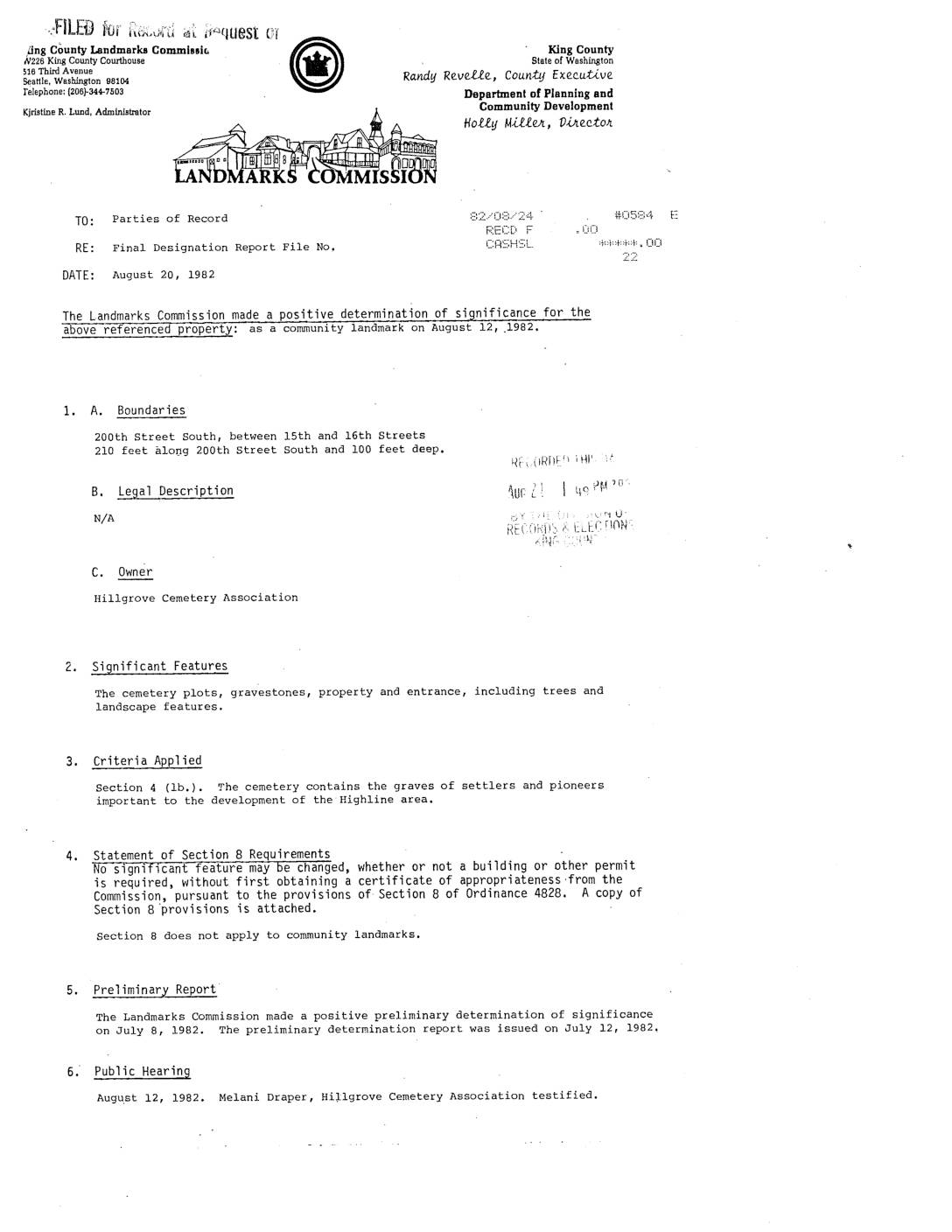
Final Designation Report: Hillgrove Cemetery Community Landmark
The King County Landmarks Commission formally designated Hillgrove Cemetery, located on 200th Street South between 15th and 16th Streets, as a community landmark on August 12, 1982. The cemetery, owned by the Hillgrove Cemetery Association, was recognized for containing the graves of settlers and pioneers significant to the development of the Highline area near what is now the Sea-Tac region. The designation protects the cemetery's plots, gravestones, entrance, trees, and landscape features from alteration without Commission approval. -
 1982-05-01
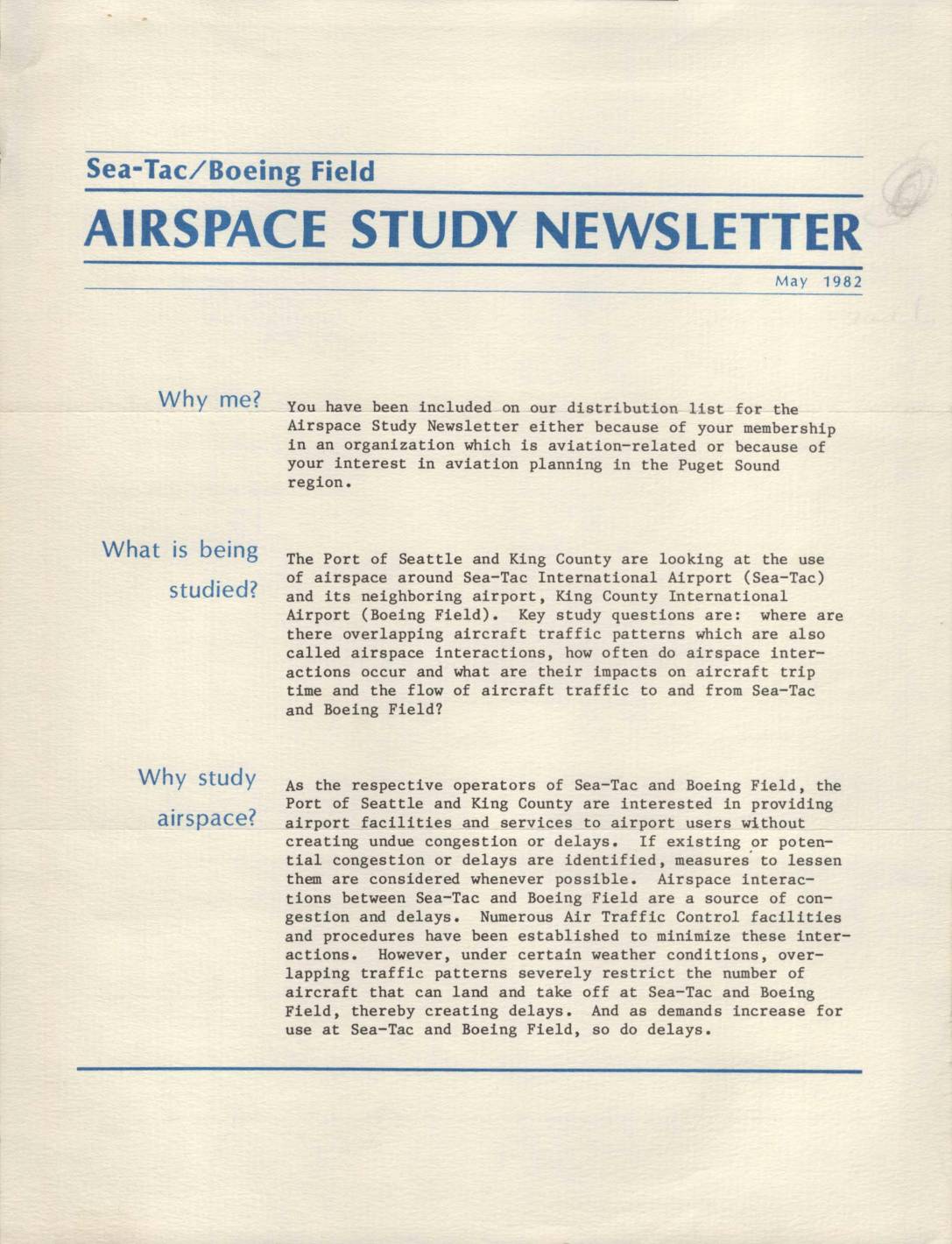
Sea-Tac/Boeing Field Airspace Study Newsletter, May 1982
A May 1982 newsletter from the Port of Seattle and King County describing an airspace study examining overlapping flight patterns between Sea-Tac International Airport and Boeing Field. The study found that delays caused by these overlapping traffic patterns were expected to grow gradually through 1990 and accelerate through 2000, particularly at Sea-Tac. The public was invited to a May 18, 1982 meeting to review preliminary findings and provide input on whether to proceed with identifying solutions to reduce aircraft delays. -
 1981-12-08
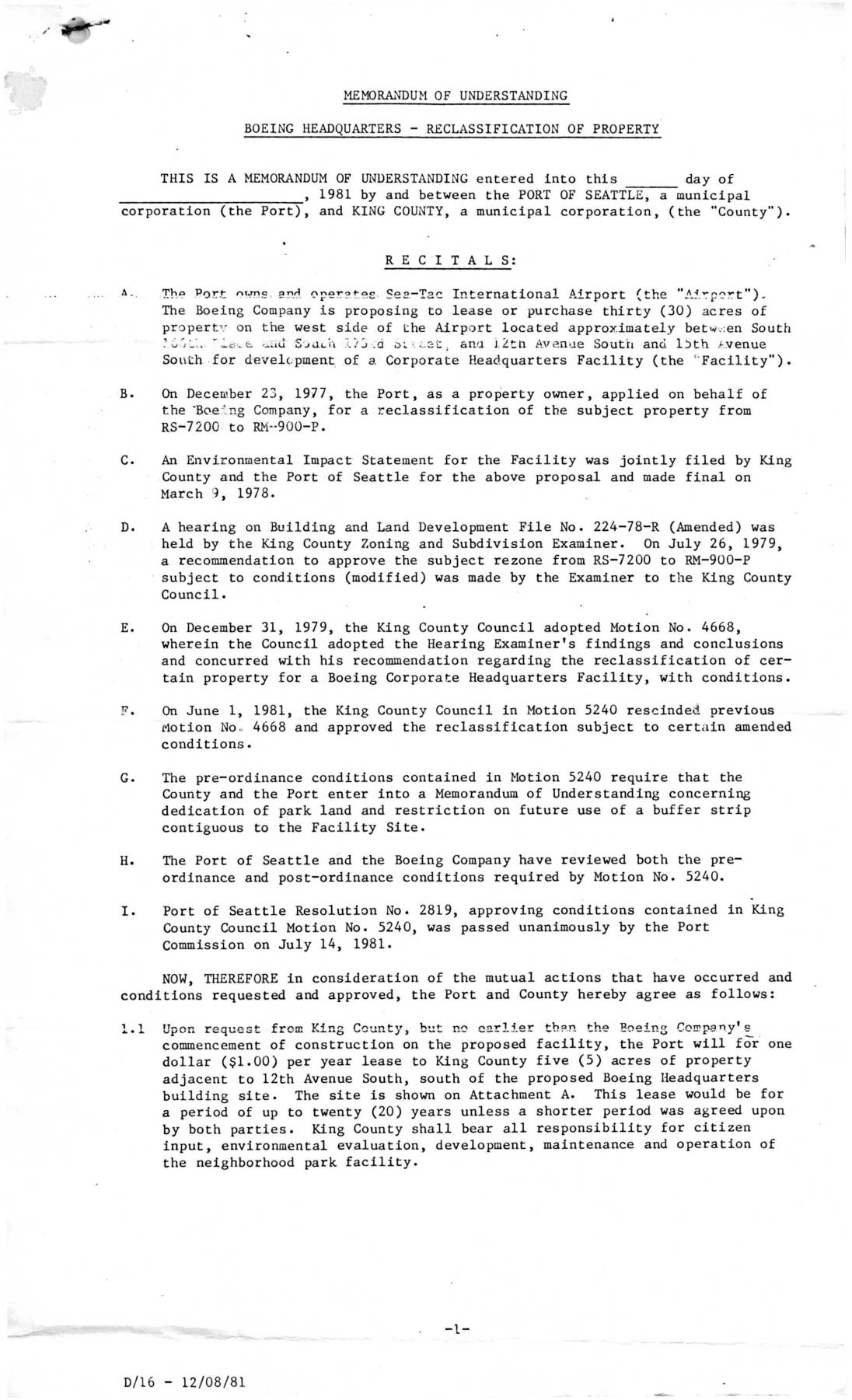
Memorandum of understanding: Boeing headquarters – reclassification of property
This 1981 Memorandum of Understanding between the Port of Seattle and King County outlines terms for reclassifying approximately 30 acres of land on the west side of Sea-Tac International Airport to allow Boeing to develop a Corporate Headquarters Facility. The agreement includes provisions for the Port to lease 5 acres to King County for a neighborhood park at $1 per year, and restricts development on an adjacent 55-acre greenbelt buffer zone for at least 10 years. The document also affirms King County's zoning authority over non-airport-related land use at Sea-Tac and establishes a dispute resolution process between the two agencies. -
Westside Hilltop v. King County
Westside Hilltop v. King County 96 Wn.2d 171 (1981) 634 P.2d 862 WESTSIDE HILLTOP SURVIVAL COMMITTEE, ET AL, Appellants, v. KING COUNTY, ET AL, Respondents. No. 46982-2. The Supreme Court of Washington, En Banc. October 8, 1981. *172 Roger M. Leed and Jeffrey M. Eustis, for appellants. Norm Maleng, Prosecuting Attorney, and Susan R. Agid, -
 1981-06-09
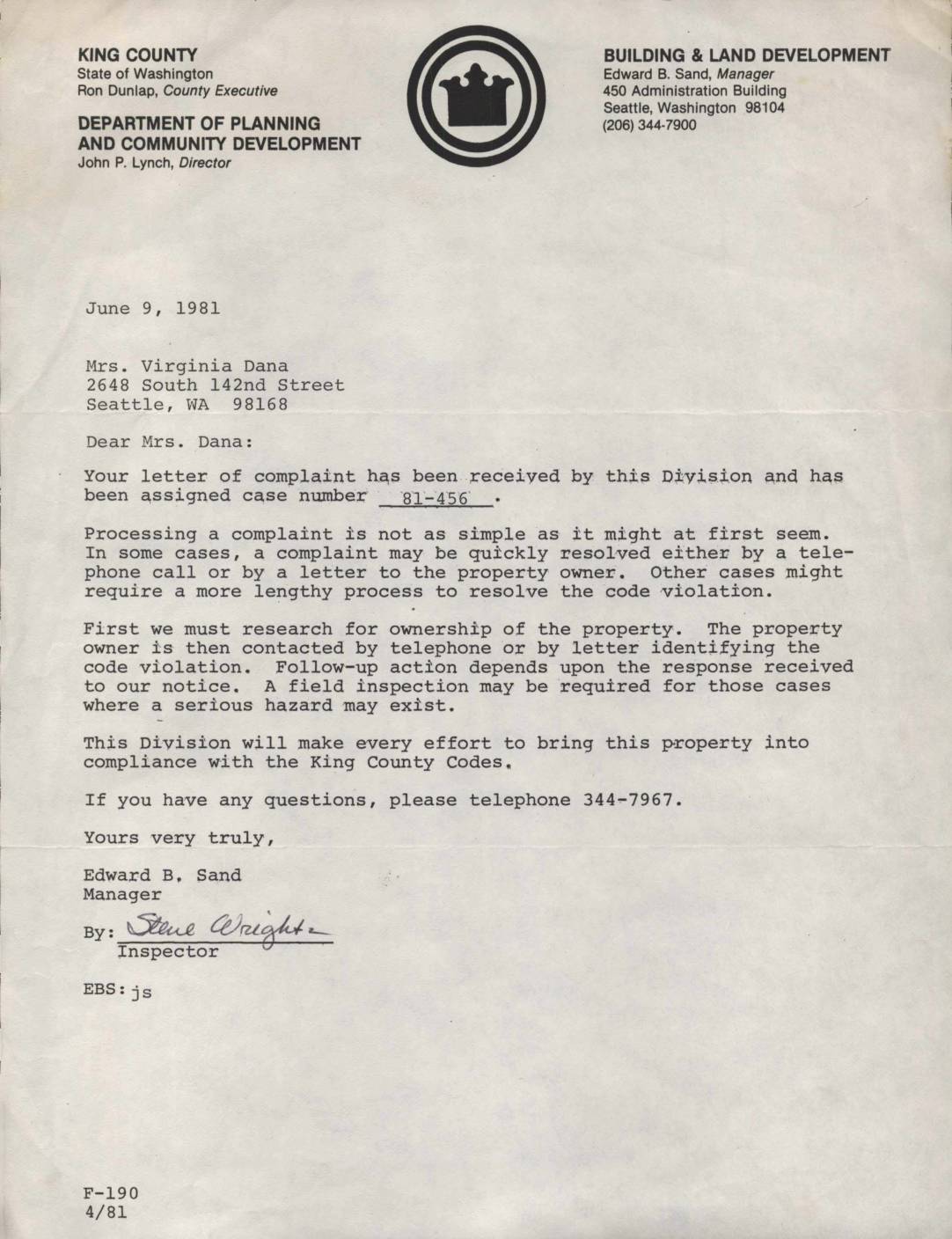
King County Department of Planning and Community Development: Letter to Virginia Dana Acknowledging Complaint Case 81-456
A June 9, 1981 letter from King County's Building & Land Development division acknowledges receipt of a complaint filed by Mrs. Virginia Dana of Seattle, assigning it case number 81-456. The letter explains the county's process for handling code violations, which may include contacting the property owner by phone or letter, and potentially conducting a field inspection if a serious hazard exists. The division pledges to make every effort to bring the property into compliance with King County Codes. -
 1981-05-13
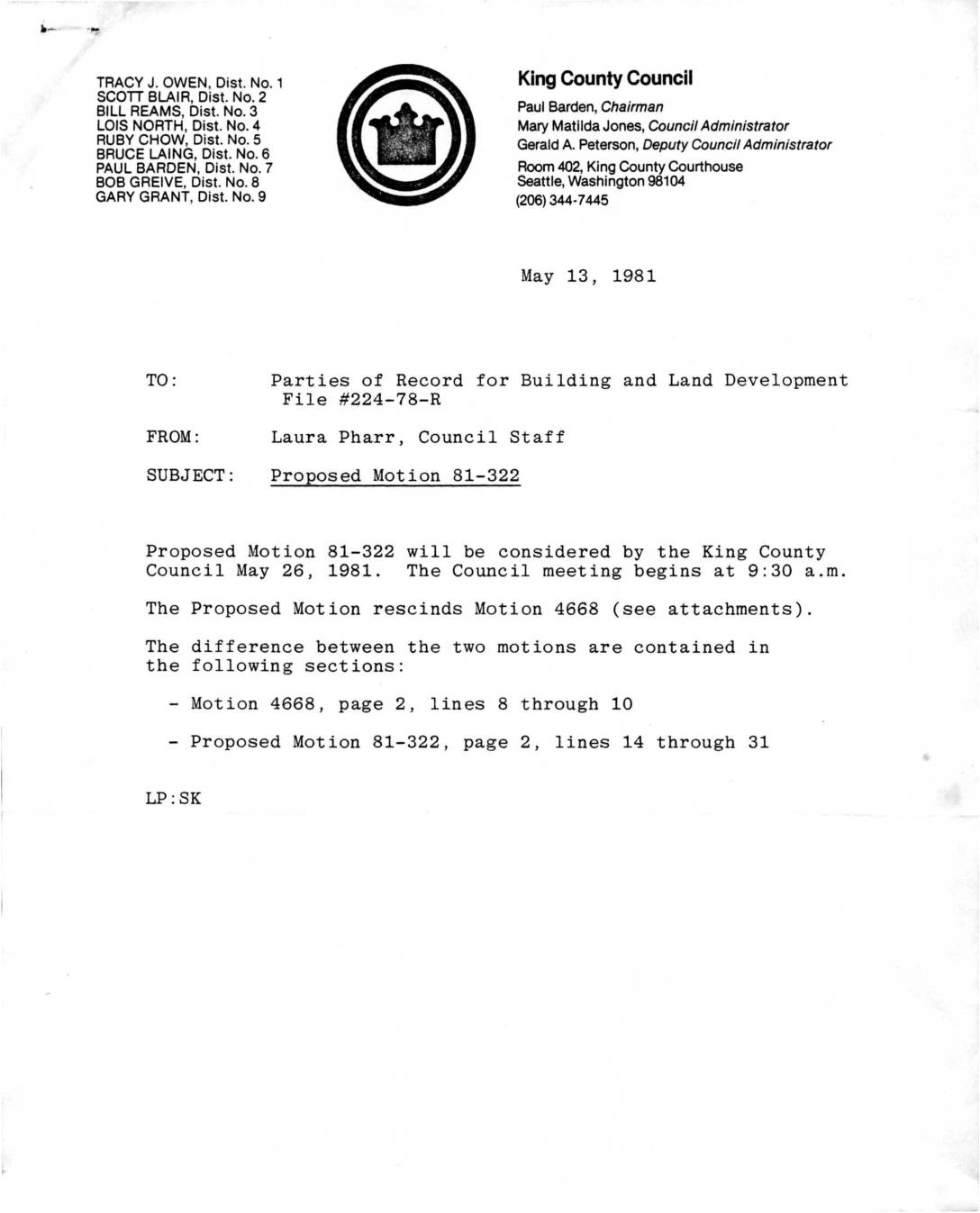
King County Council Notice: Proposed Motion 81-322 Rescinding Motion 4668, Building and Land Development File 224-78-R (Port Of Seattle Reclassification)
★ 32In December 1979, the King County Council passed Motion 4668 approving a rezone request by the Port of Seattle (Building and Land Development File No. 224-78-R), subject to conditions including the Port providing 5 acres for a neighborhood park and agreeing not to develop a 55-acre Westside Greenbelt buffer area for ten years. In May 1981, the Council proposed Motion 81-322 to rescind and replace Motion 4668, with key differences in the conditions outlined on page 2 of each motion. The matter, which had been appealed by both the applicant and neighboring property owners, required a separate public hearing in affected communities as part of the site plan approval process. -
 1981-01-15
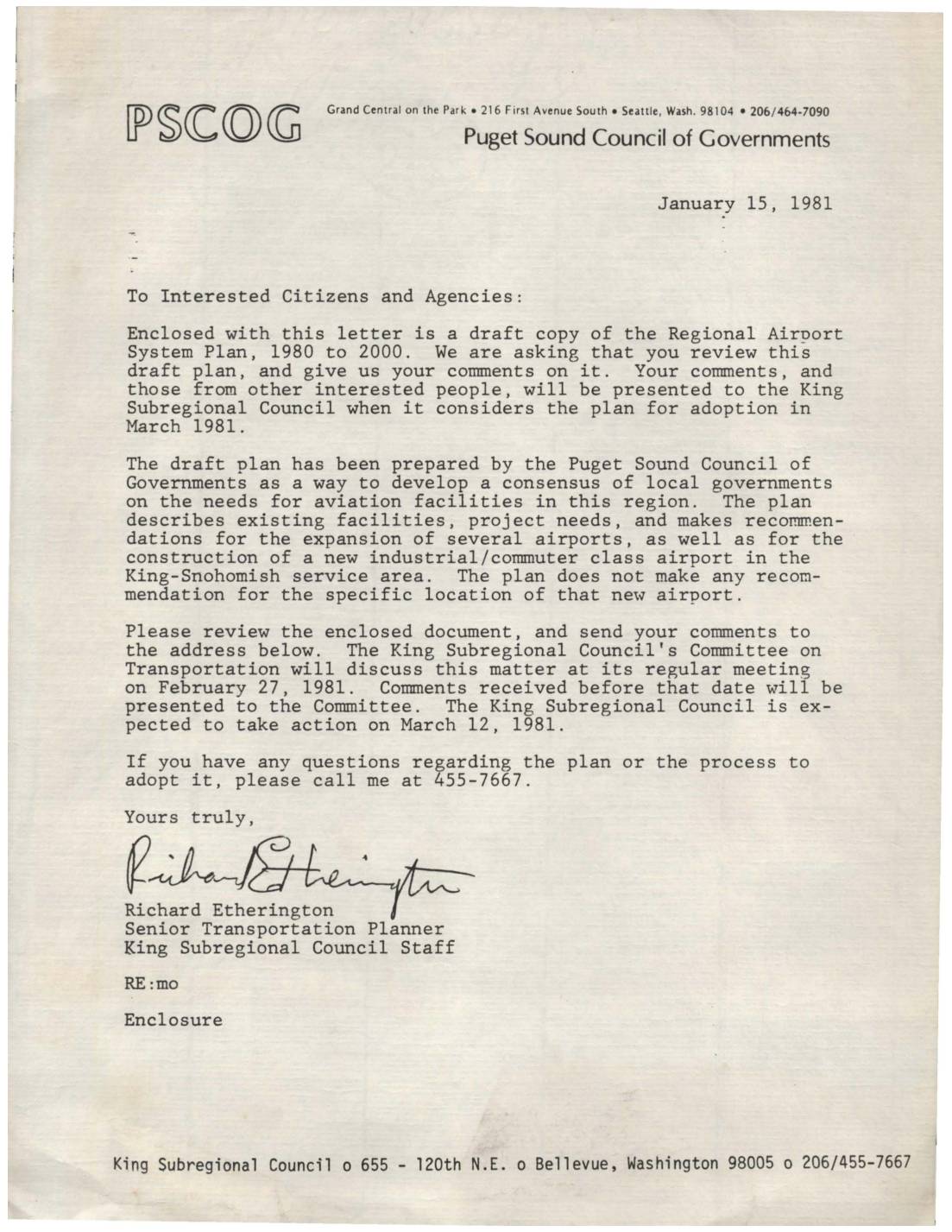
Letter regarding draft Regional Airport System Plan, 1980 to 2000
A January 1981 letter from the Puget Sound Council of Governments invites citizens and agencies to review a draft Regional Airport System Plan covering 1980 to 2000, which outlines existing aviation facilities, projected needs, and recommendations for expanding several airports in the region. The plan also calls for construction of a new industrial/commuter airport in the King-Snohomish service area, though no specific site is identified. Public comments were due before February 27, 1981, with the King Subregional Council expected to vote on adoption in March 1981. -
 1981-01-01
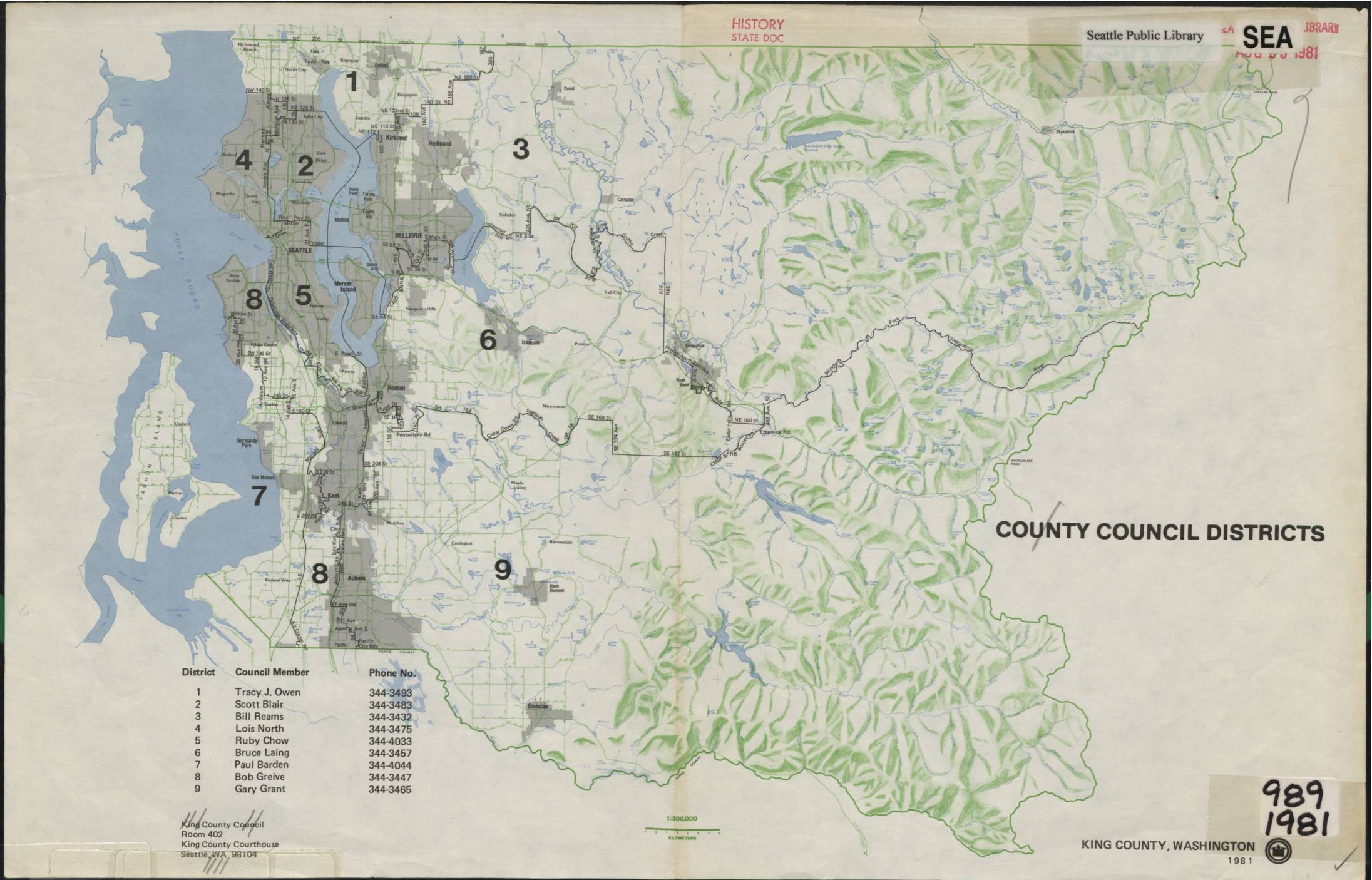
King County Council Districts Map, 1981
This 1981 King County, Washington map depicts the nine County Council Districts, listing each district's representative and contact phone number. Council members included Tracy J. Owen, Scott Blair, Bill Reams, Lois North, Ruby Chow, Bruce Laing, Paul Barden, Bob Greive, and Gary Grant. The map was produced by the King County Council and archived by the Seattle Public Library as a historical state document. -
 1980-10-22
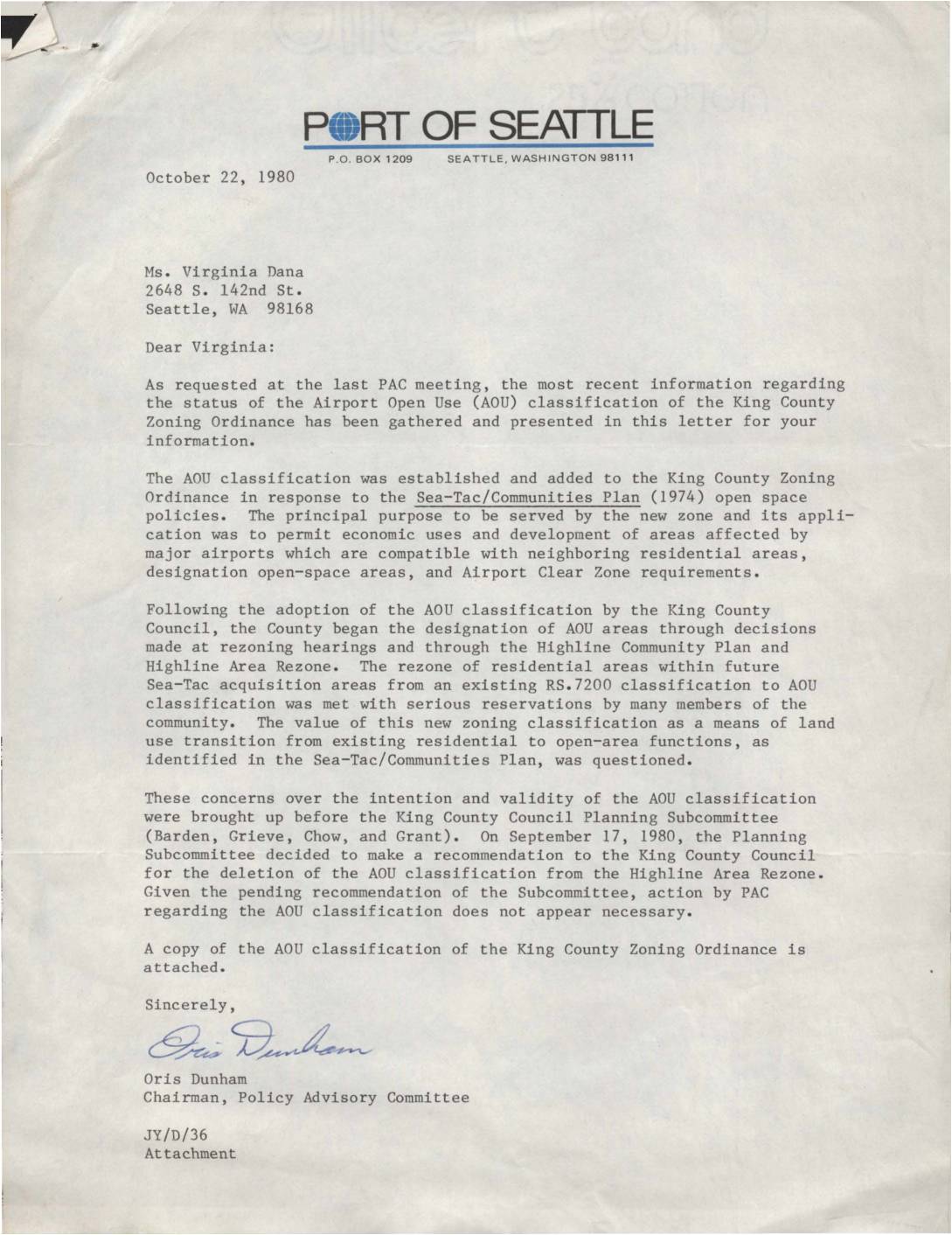
Letter from Oris Dunham Airport Open Use (AOU) Classification Status Update
Letter from Port of Seattle Policy Advisory Committee Chairman Oris Dunham to Virginia Dana providing status update on the Airport Open Use (AOU) classification in King County Zoning Ordinance. The letter explains the AOU classification’s purpose for economic development near airports and community concerns that led to a recommendation for deletion from the Highline Area -
 1980-10-21
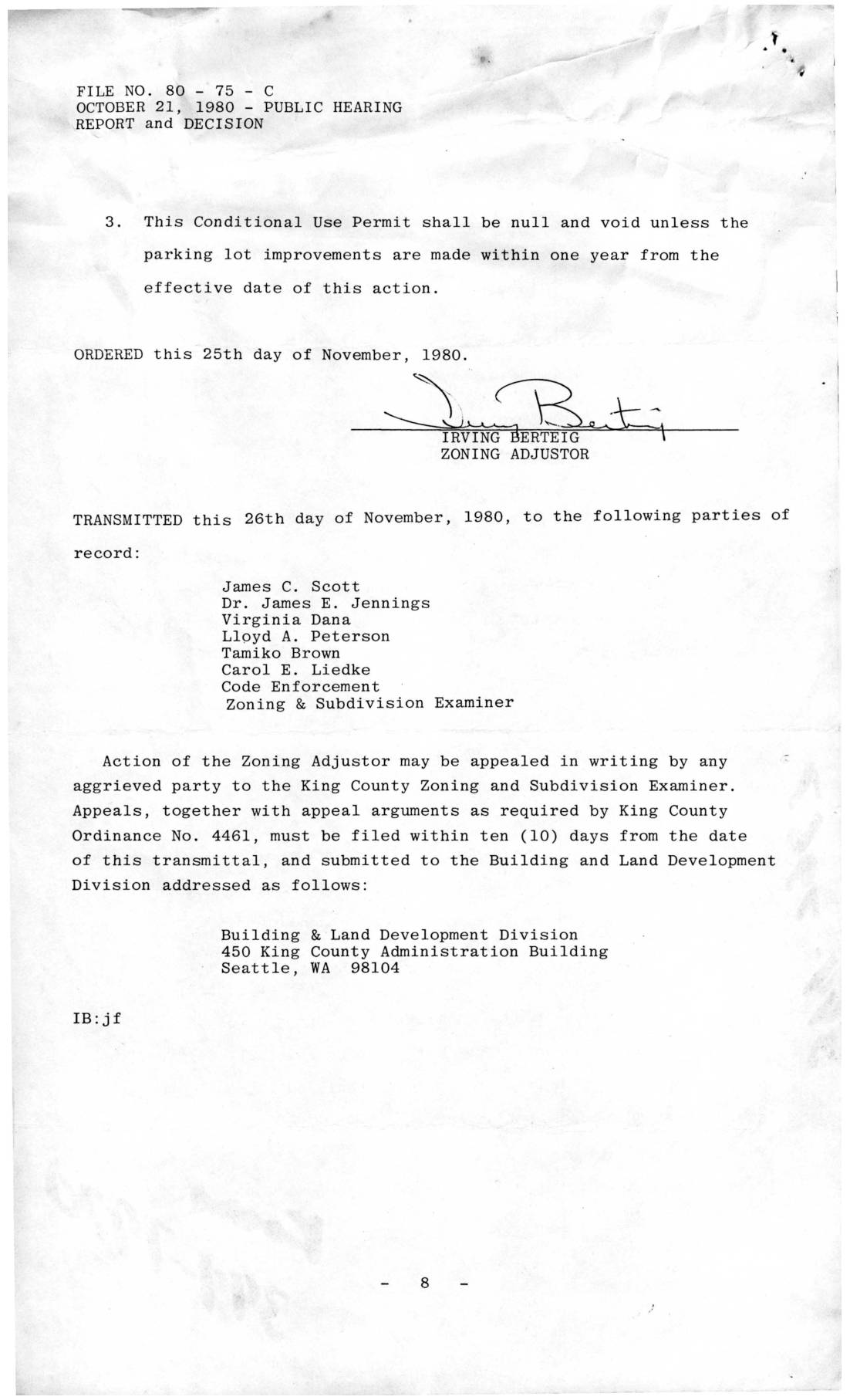
Conditional Use Permit Report and Decision – Glacier High School File No. 80-75-C
King County Zoning Adjustor report and decision approving a conditional use permit for a former high school facility to be used as a private school, with conditions for parking lot improvements and community recreation facility access. The permit was ordered on November 25, 1980, and transmitted to various parties including James C. Scott and Dr.