Skip to content
  • STNI
  • Statistics
    • Ops and Passengers
      • King County International Airport (Boeing Field) Annual Operations
    • Financials
    • Aviation fuel uplift in the State of Washington 2018 – 2025
      • Aviation Fuel Tax Revenue in the State of Washington 1983-2025
      • Aviation Fuel Uplift at Sea-Tac Airport
    • Air Quality Monitoring
    • Flight Tracking
      • Flow and Flight Tracks
      • Five Year Comparison
      • Busiest Hours and Days
    • SEL Noise Reports & Graphs
      • About The Permanent Noise Monitors
      • Minutes of Quiet by Noise Monitor
      • Noise Events mapped
      • Noise Events (SEL)
    • Runways
    • Employees
    • Real Estate
      • Port Properties and Trees mapped
    • Parking
  • Events
  • Protest
    • Regular Events
    • Legislation 2026
    • Complain about a particular flight
    • Advocacy Organizations
    • Media Outlets
    • People
    • The Port of Seattle
      • Commission Meetings
      • Public Records Requests
      • StART
      • Highline Forum
    • Contact Your Electeds
  • Resources
    • FAQs
      • FAA Occurrences/Accidents/Indents
    • The SAMP
      • SAMP Public Comment Template
        • Two versions of Appendix K: NEPA/SEPA 2018 vs 2023
      • SAMP NTP: 31 projects by the numbers
      • SEPA Draft EIS (2026)
      • SAMP Record of Decision/FONSI (2025)
      • SAMP Draft EA (October 2024)
      • 2018 Scoping
    • Port Packages
      • Port Package Property Costs
      • Port Packages mapped
      • The Port Package Explainer
      • So you want a (first-time) Port Package? Start here
      • Port Package Looker Upper
      • How do I determine if I have a Port Package or Avigation Easement?
      • Progress on Port Package Update legislation
      • Having a Port Package Problem?
      • Port Package Site Visit Follow-Up
    • Document Library
    • Explainers
      • The Airport Law Cheat Sheet
      • The Grant Explainer
    • External Articles
    • History
      • Timeline
      • The Sea-Tac Communities Plan
        • Sea-Tac Communities Plan – Planning Maps
      • PSRC Third Runway Decision Process
    • Studies
    • Videos
  • Stories
  • Mission
  • Subscribe
  • Contact
Scroll down to content

Get InformedStay Informedx

I understand that you will never share my information with anyone, you will only use it to keep me updated on relevant events and that I may unsubscribe at any time.

STNI

STNISea-Tac Noise.Info

  • Solve for Sea-Tac. Solve for every airport.
  • Since 2016, working to obtain justice for everyone living under the flight path.
  • Less Noise. Cleaner Air. Better Public Health. Compensation.
  • Everything you think you know about the airport is wrong.

TagKing County(412)

Advanced Search Options

  • Dates
  • Media
    • External Articles
    • Images
    • PDFs
    • Video
    • Audio
  • Order By
  • 1977-11-01

    Highline Community Plan

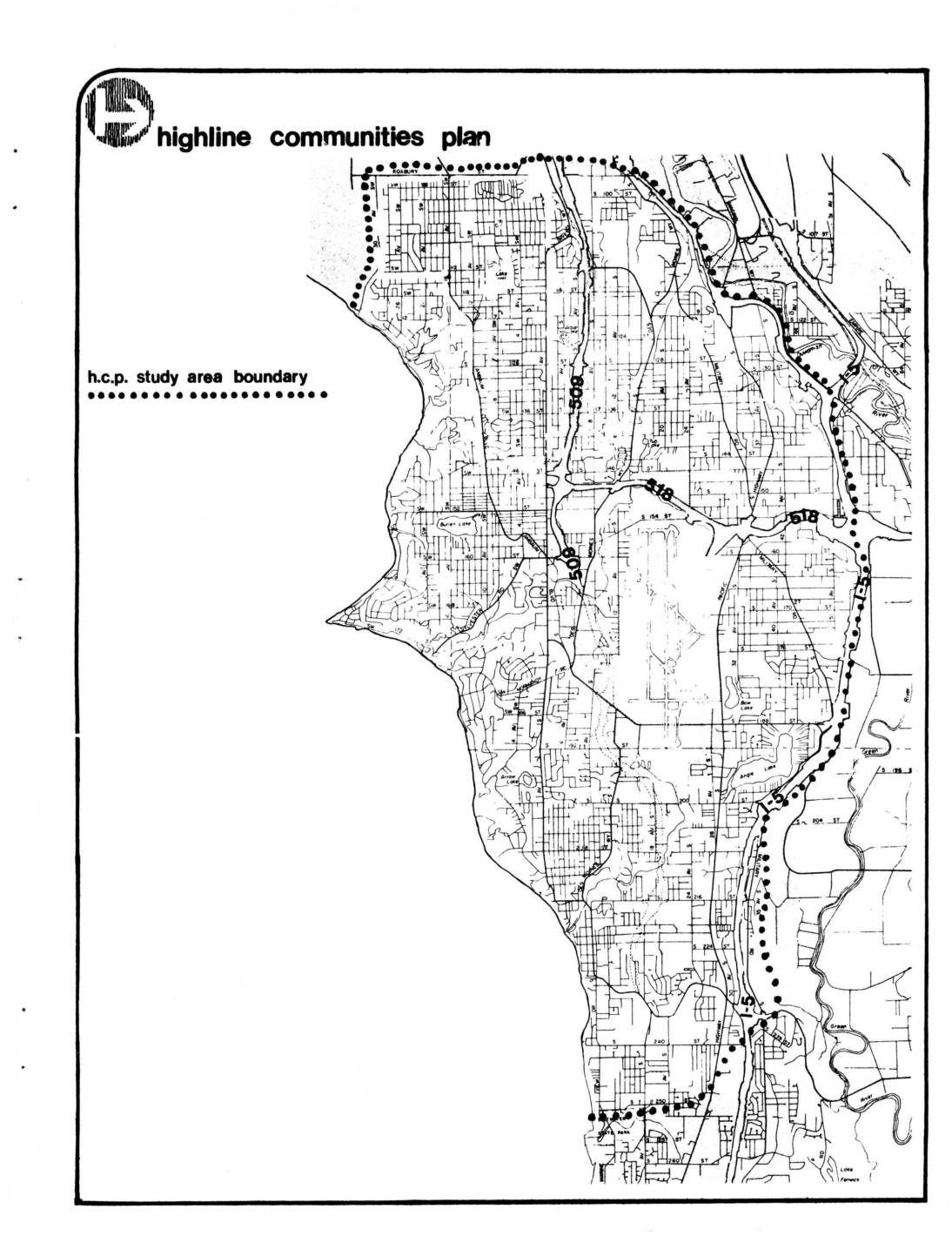
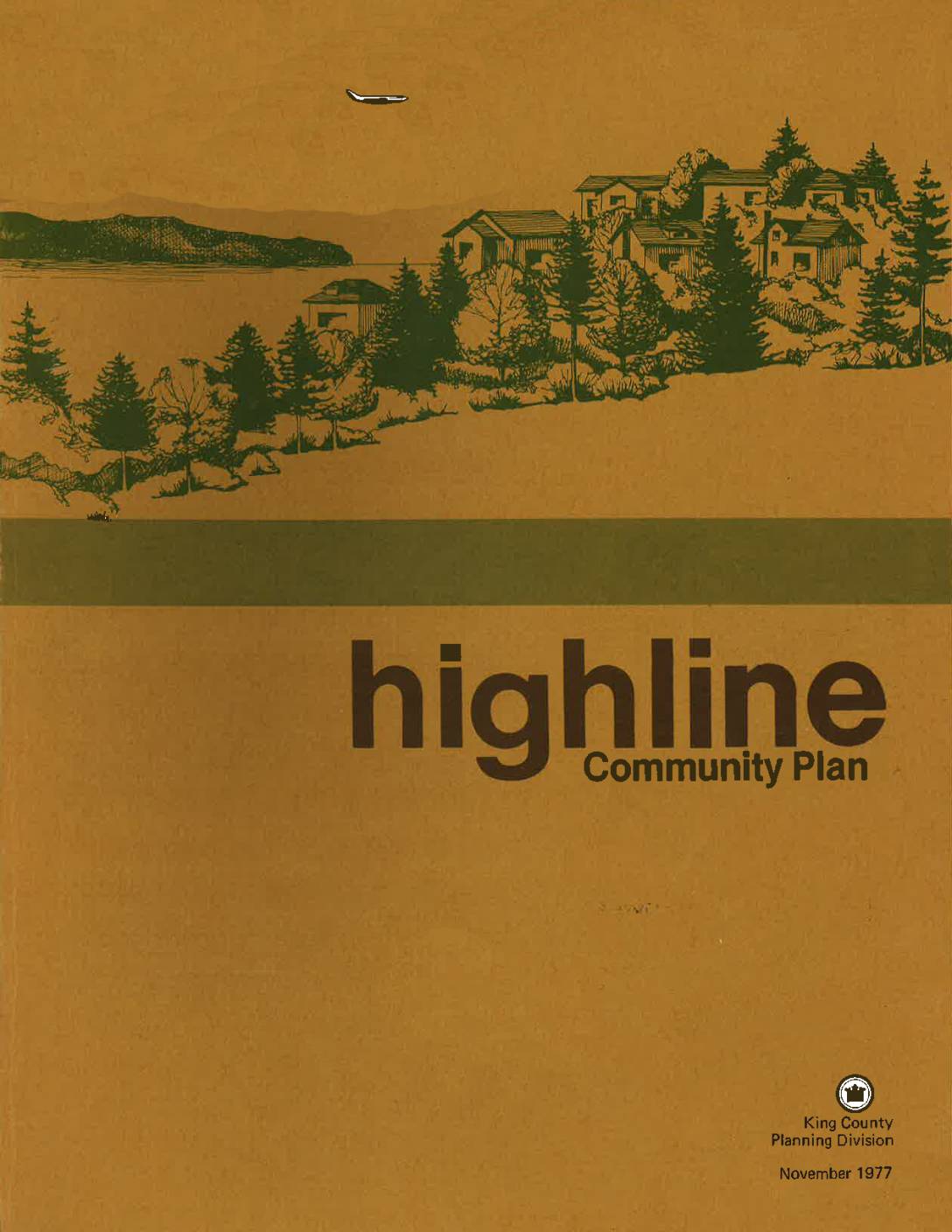
    The Highline Community Plan, published by the King County Planning Division in November 1977, outlines land use policies and development guidelines for the Highline communities in unincorporated King County near Seattle. The plan addresses topics including development limitations, drainage and pollution, neighborhood stability, transportation, and parks and recreation. It was developed through a structured community planning process under the King County Department of Planning and Community Development.
    Tagscommunity development, HCP, Highline Community Plan, King County, Land UseFolderHighline Community Plan
  • 1977-04-29

    Highline Communities EIS Draft

    The Highline Communities EIS Draft, prepared by King County Department of Planning and Community Development in 1977, proposes the adoption of a Community Plan and Area Zoning for the Highline area southwest of Seattle. The plan is intended to guide land use, capital improvements, housing, and utilities policy for communities including Burien, White Center, Des Moines, and Normandy Park. Upon adoption, it would become an element of the King County Comprehensive Plan, with expected benefits including pollution control, improved transportation, and economic stability for the region.
    TagsEIS, Environmental Impact Statement, HCP, Highline Community Plan, King CountyFolderHighline Community Plan
  • 1976-09-01

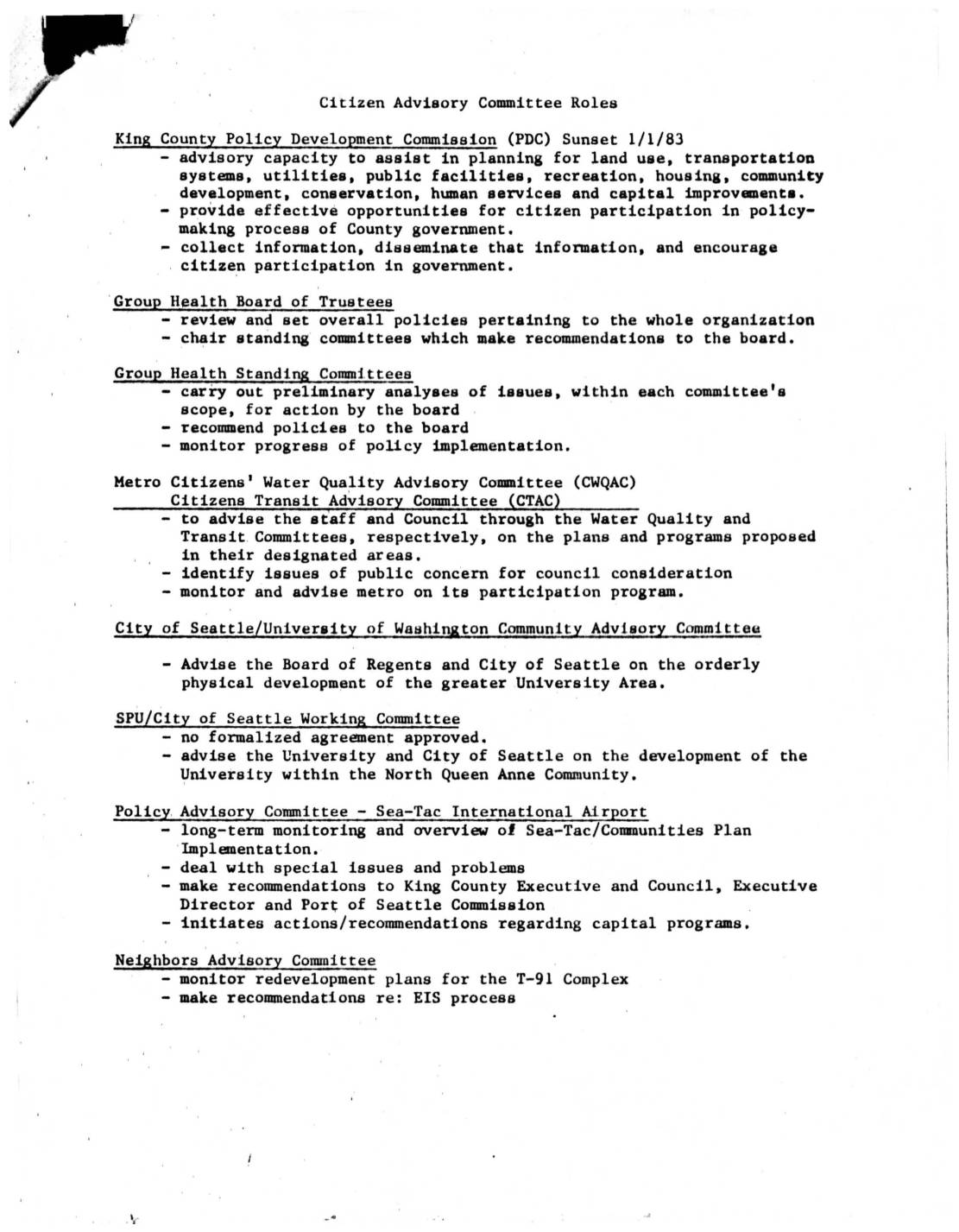
    Exhibit 16: Highline Communities Plan — Legal and Administrative Framework, Committee Members, and Forward Thrust Fund Reallocation Request (1976–1977)

    This document contains materials from the 1977 Highline Communities Plan, outlining the legal and administrative framework governing the Highline area near Sea-Tac Airport in King County, Washington. It references key planning documents including the 1964 King County Comprehensive Plan and the 1976 Sea-Tac Communities Plan, which sought to balance airport operations with surrounding residential communities through noise mitigation measures such as property acquisition, insulation programs, and land use controls. A 1976 memo from the Highline Communities Plan Committee also requests that Forward Thrust funds not be reallocated until the Highline Communities Plan was formally adopted.
    TagsHighline Communities Plan, King County, King County Council, King County Policy Development Commission, Sea-Tac Communities PlanFolderHighline Community Plan
  • 1976-07-09

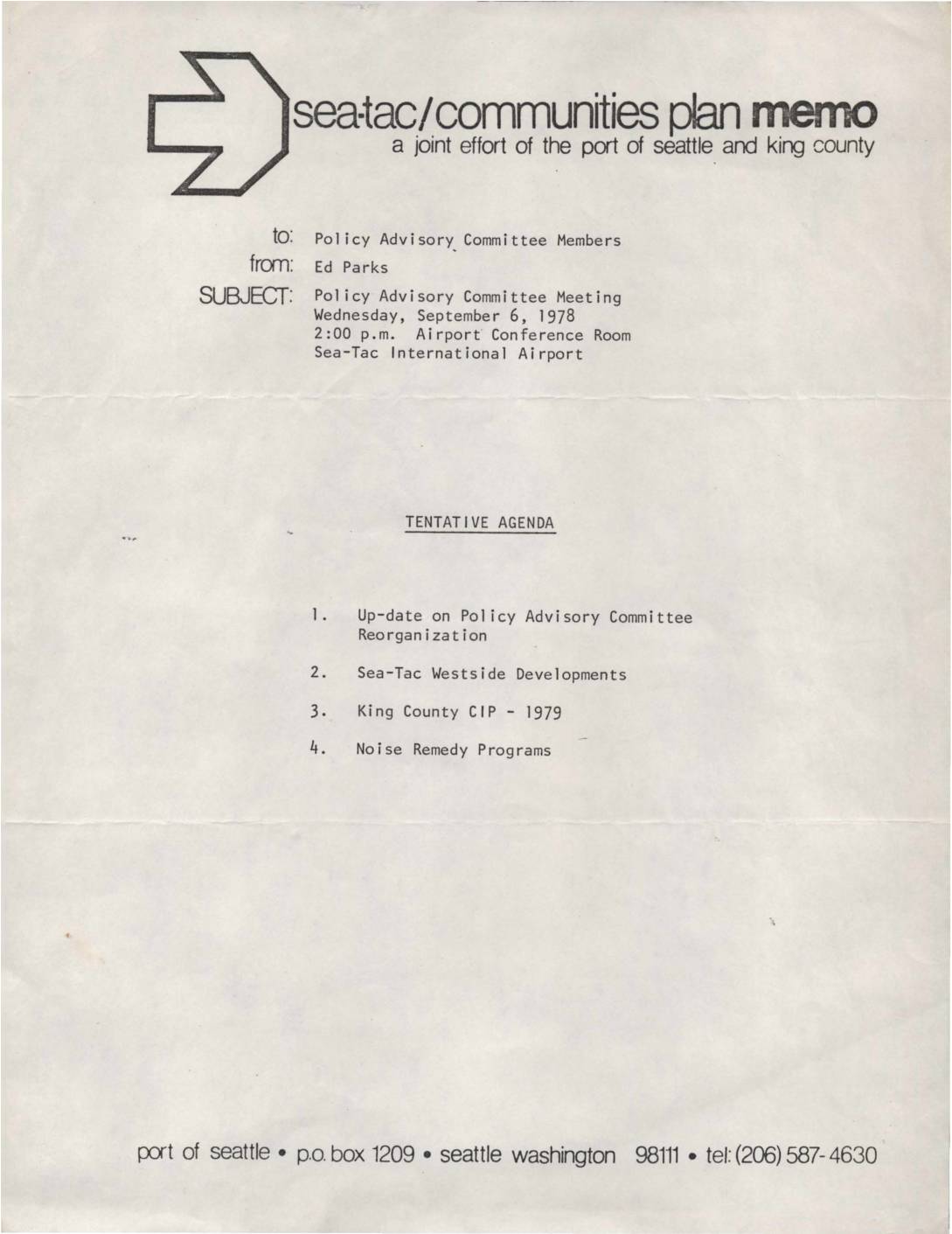
    Sea-Tac/communities plan memo: Final plan corrections and additions

    A July 9, 1976 internal memo from Ed Parks to holders of the 'Redbook' (Final Sea-Tac Communities Plan), a joint planning effort by the Port of Seattle and King County. The memo instructs recipients to insert enclosed additions and corrections into their copies of the plan, specifying which pages in sections 6.2 through 7.0 should be deleted and replaced. Chapter 7 was included in the packet, and recipients were directed to call 587-4630 for further information.
    TagsEd Parks, King County, Port Of Seattle, Sea-Tac Communities Plan, STCPFoldermisc
  • STCP 6 month map supp aesthetic and visual characteristics pg4 3 sea tac communities plan
    1976-07-01

    Sea-Tac Communities Plan: Nodes map

    A community planning map produced for the Sea-Tac Communities Plan, sponsored by the Port of Seattle and King County, showing activity-center nodes across the Sea-Tac area classified by function (learning, moving, playing, residing, trading, worshipping) and significance (major or minor element). Named locations include schools, parks, commercial concentrations, traffic concentrations, Boeing Field, and Boeing Space Center, among others.
    TagsKing County, Land Use, Map, Port Of Seattle, Sea-Tac Communities Plan, STCPFoldermaps
  • Stcp chapter 6 pg 14 sea tac communities plan conversion and reinforcement
    1976-06-16

    Sea-Tac Communities Plan Land Use Map — Conversion and Reinforcement Areas (1976)

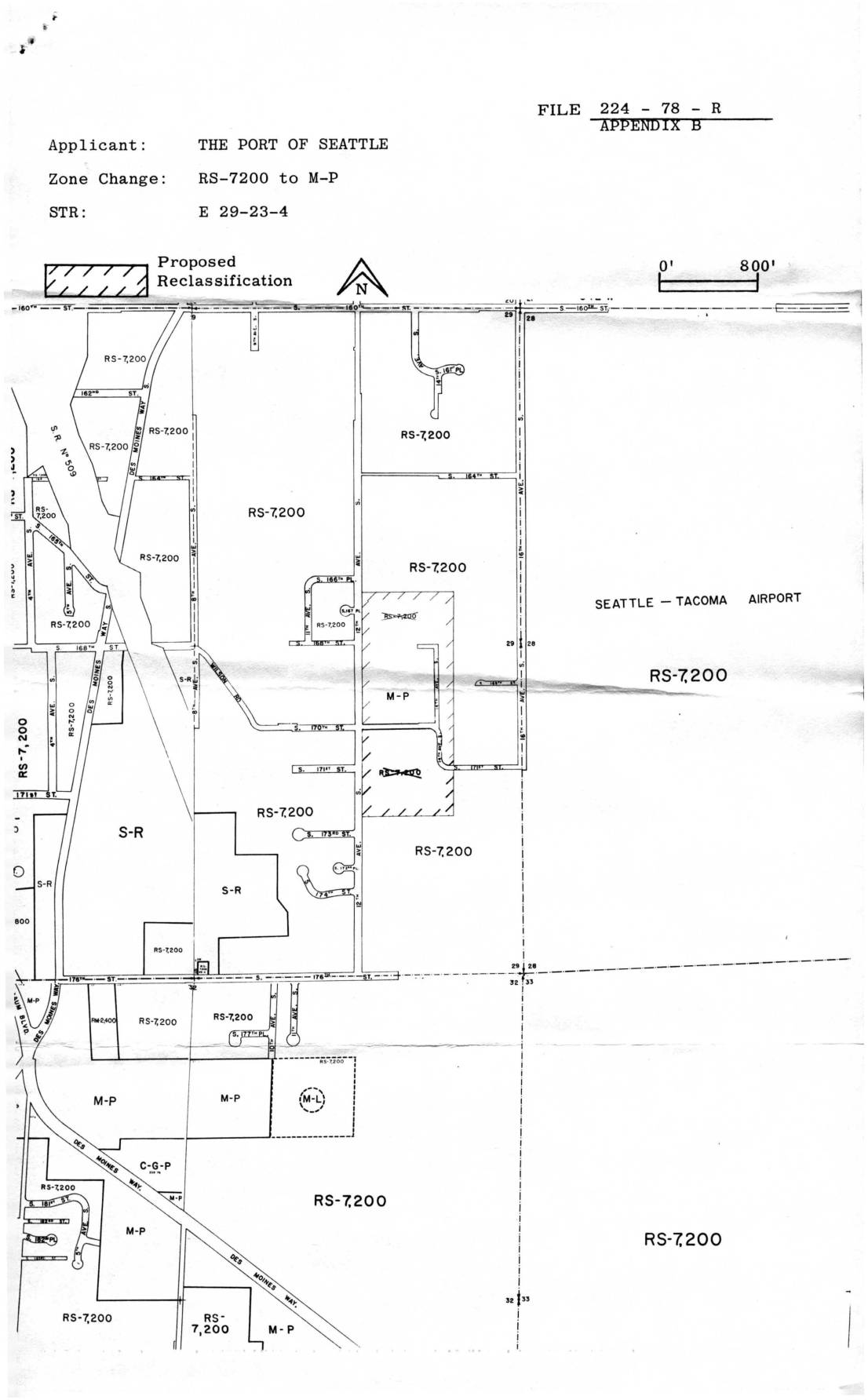
    A planning map from the Sea-Tac Communities Plan (page 14, revised June 16, 1976), sponsored by the Port of Seattle and King County, depicting current airport lands, acquisition zones, conversion areas, reinforcement areas (dotted pattern), and the S.R. 509 corridor in the Sea-Tac region along Puget Sound. The map illustrates land use strategies for communities affected by Seattle-Tacoma International Airport noise and expansion.
    TagsKing County, Land Use, Map, Sea-Tac Airport, Sea-Tac Communities PlanFoldermaps
  • 1976-05-19

    King County Council Planning and Community Development Committee meeting notice

    King County Councilman Paul Barden of the Seventh District notified constituents of a Planning and Community Development Committee meeting scheduled for May 19, 1976 at 9:30 A.M. in the King County Courthouse. The meeting was called to discuss a letter from the Port of Seattle concerning the Sea-Tac Communities Plan, a planning initiative related to the area surrounding Seattle-Tacoma International Airport. While the meeting was open to the public, it was not a formal public hearing, and no public testimony was to be accepted.
    CategoriesMeetings Tagscommunity engagement, King County, Port Of Seattle, Sea-Tac Communities Plan, STCPFoldercommittees
  • 1976-05-11

    Letter from Port Of Seattle to Councilwoman Bernice Stern regarding Sea-Tac Communities Plan areas

    In a May 1976 letter to King County Councilwoman Bernice Stern, Seattle Port Commission President Henry T. Simonson outlined two key decisions regarding land adjacent to Sea-Tac International Airport. The Port ruled out acquiring the 35-acre 'west acquisition area' due to high costs, excessive development expenses, and lack of foreseeable airport-related demand, while agreeing that any existing development there must follow carefully formulated guidelines. For the 'southeast conversion area' — 85 small homes in Lowe's Terrace Subdivision — the Port acknowledged that standard acoustic insulation treatment may not be cost-effective, and flagged the neighborhood as a candidate for a special purchase guarantee program to assist with gradual land-use conversion.
    CategoriesCorrespondence TagsAirport Expansion, King County, Noise, Port Of Seattle, Sea-Tac AirportFoldermisc
  • 1976-04-01

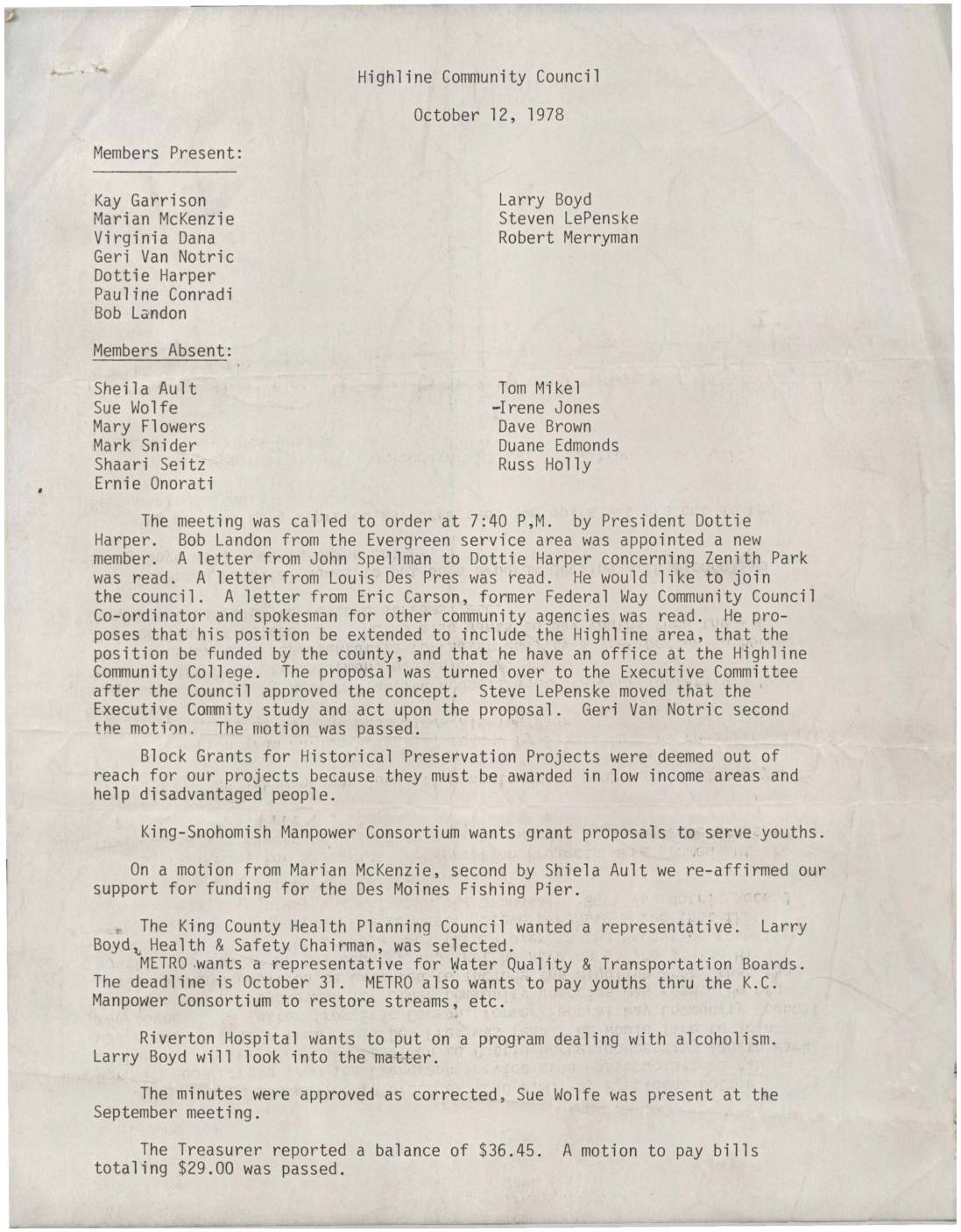
    Highline Community Council Newsletter, April 1976

    This April 1976 newsletter from the Highline Community Council covers several local government issues affecting the Highline District near Seattle, including recommendations for siting a new precinct station, county court, and community center. It also addresses the SeaTac Community Plan, a King County Charter Review proposal to potentially merge Metro and King County government, and a community service program placing court-ordered youth workers with nonprofit organizations. Residents were encouraged to participate in ongoing community planning efforts that would shape the area's future development.
    CategoriesCorrespondence Tagscommunity engagement, Highline Community Council, Highline Community Plan, King County, NewsletterFolderHighline Community Council
  • 1976-02-01

    Highline Communities Plan: Goals, Objectives, Policies

    The Highline Communities Plan (1976) is a King County planning document that builds on the Sea-Tac Communities Plan to improve neighborhoods surrounding Sea-Tac Airport. It establishes goals, policies, and implementation actions covering drainage, pollution, natural resource protection, and land use to support communities that are to be maintained rather than acquired or redeveloped due to airport noise impacts. The plan outlines specific measures such as sanitary sewering, surface water management, and open space preservation to achieve a quality living environment in the Highline area.
    CategoriesHistory TagsHCP, Highline Communities Plan, Highline Community Plan, King County, Sea-Tac Communities Plan, STCPFolderHighline Community Plan

Posts pagination

Page 1 … Page 37 Page 38 Page 39 Page 40 Page 41 Page 42
Sidebar On/Off

Upcoming Events

  • Stay Grounded Event: Night trains, not night planes!
    Add to CalendarMSunday Sep 13: 12:00am
    Ntnnp social media3

    For the past two years, more than 220 initiatives from 15 countries have declared September 13th as the International day for the ban of night flights at airports. In parallel, activists across Europe have been gathering for pyjama parties for night trains – coordinated in 2024 and 2025 by Back on Track and Stay Grounded.

    [...]
  • Burien Airport Committee Meeting September 15, 2026
    Add to CalendarMTuesday Sep 15: 6:00pm
    400 SW 152nd St, Burien, WA 98166
    Burien airport committee 15 sep 2026 agenda pdf pdf

    a) Part 150 Noise Study (Emily Inlow-Hood) — 15 minutes
    b) SAMP Update and Next Steps (Brian Davis and Sarah Moore) — 15 minutes
    c) Legislative Updates — 10 minutes
       • SCA (Sarah Moore)
       • Work with Sen. Orwall (Brian Davis)
    d) StART Reorganization (Jeff Harbaugh and Karen Veloria) — 10 minutes

    [...]

[See all...]


Help study childhood asthma. Get free HEPA filter!

read more...

Issues

Sea-Tac Airport is currently undergoing the largest and longest expansion in its history, collectively known as the Sustainable Airport Master Plan (SAMP). Some of it you can already hear, but you’re probably not aware of what it all means. Here’s what you need to know.
read more...

Read This!

As the source for federal transportation grants, the Puget Sound Regional Council was charged with developing a system to meet the growing need for commercial aviation. When the search for a second airport failed, they authorized the Port of Seattle to build the Third Runway, with a mandate to develop a noise abatement and mitigation program. In their effort to stop the Third Runway, the ACC argued over every detail of the Port's efforts--including property buyouts and sound insulation. The dispute was meant to be settled by a three member Expert Arbitration Panel. This is their final report. It finds 2-1, that the Port's program was insufficient in several respects. Despite that, funding for the Third Runway was approved by the PSRC, and the 'Port Package' program, proceeded largely unchanged. Expert Arbitration Panel's final decision finding that the Port of Seattle had not shown sufficient reduction in real on-the-ground noise impacts to satisfy noise reduction conditions required for approval of a third runway at Sea-Tac International Airport. The majority decision concluded the Port's noise abatement programs were insufficient despite being impressive in scope.
continue...

The Podcast!

Subscribe to the only podcast devoted to policies, politics, history, impacts for people living under the flight path everywhere. It’s definitely not just about noise!
  • Sea-Tac Noise.Info
  • Connect with STNI

    • Subscribe
    • Port Package Problem?
    • Donate
    • Podcast
    • Socials
      • Facebook
      • X (Twitter)
      • Bluesky
      • Instagram

    "Stantec Sea-Tac Airport Communities Impact Study: Section 2 – Background (Appendix A, pp. 9–11)" — , 2020

  • Learn

    • Frequently Asked Questions
    • Explainers
    • Youtube
    • Research Requests
    • Make a complaint
  • Goals

    Fulfill the promises of 1976:
    • Compensation
    • Reduced noise
    • Improved air quality
    • Environmental remediation
Login/Register
©2026•Data Privacy

Message

We use cookies to provide basic functionality. We also provide access to search engines in order to provide site analytics. We do not sell or share your data.
V V