TagFAA(687)
-
 2020-08-20
Comments on the FAA EA: SAMP Environmental Assessment
Public comments opposing the FAA Environmental Assessment (EA) for the Sea-Tac Airport Sustainable Airport Master Plan (SAMP), arguing the project should not be approved on seven grounds: false premise/purpose and need, disproportionate mortality and morbidity in affected communities, untrustworthy NAAQS air pollution calculations, inadequate cumulative impact analysis, missing environmental justice analysis, missing children’s health analysis, -
 2020-07-29
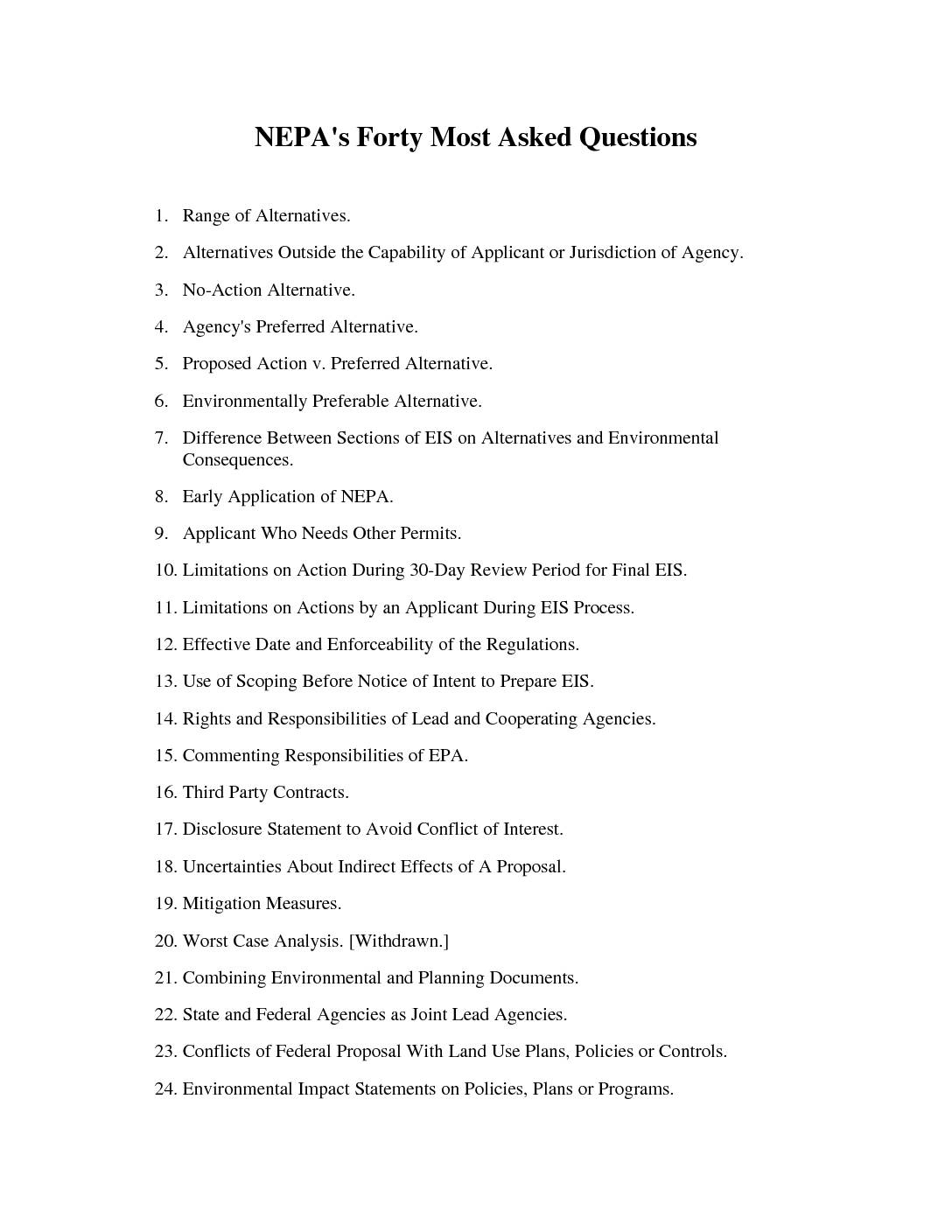
NEPA’s forty most asked questions
This document outlines the forty most frequently asked questions about the National Environmental Policy Act (NEPA), covering topics such as how agencies evaluate a range of alternatives, the role of environmental impact statements (EIS), and the use of environmental assessments (EA). It provides plain-language guidance on requirements like the no-action alternative, mitigation measures, public comment periods, and records of decision. While not specific to airport noise, it serves as a foundational reference for understanding the federal environmental review process that governs major infrastructure projects such as those at Sea-Tac Airport. -
CFR Title 14 Part 161 NOTICE AND APPROVAL OF AIRPORT NOISE AND ACCESS RESTRICTIONS
★Title 14: Aeronautics and Space PART 161—NOTICE AND APPROVAL OF AIRPORT NOISE AND ACCESS RESTRICTIONS Contents Subpart A—General Provisions §161.1 Purpose. §161.3 Applicability. §161.5 Definitions. §161.7 Limitations. §161.9 Designation of noise description methods. §161.11 Identification of land uses in airport noise study area. Subpart B—Agreements §161.101 Scope. §161.103 Notice of the proposed restriction. §161.105 Requirements for new entrants. §161.107 Implementation of the restriction. §161.109 Notice of -
Missed opportunity or necessary avoidance? FAA Noise Metrics Report to Congress
TOPICS:16hr2020 Report to Congress (“Report”)April 14average day-night level standardBarbara LichmanCDNLCNELconcentrated noise impact pointsLAeqLdenLmaxNAnoise metricsPart 150SELTA Posted By: Cynthia Schultz June 16, 2020 Share this article: Missed opportunity or necessary avoidance? Cynthia Schultz, PE While it would be easy to take the FAA to task for ignoring the congressional mandate, it is not so easy -
FAA Sidesteps Congressional Mandate to Evaluate Alternative Noise Metrics
Posted in Federal Aviation Administration (FAA) In the FAA Reauthorization Act of 2018, Pub. L. 115254, § 188, Congress required the Federal Aviation Administration (“FAA”) to “evaluate alternative noise metrics to current average day-night level standard, such as the use of actual noise sampling to address community airplane noise concerns.” In its April 14, 2020 -
 2020-05-29
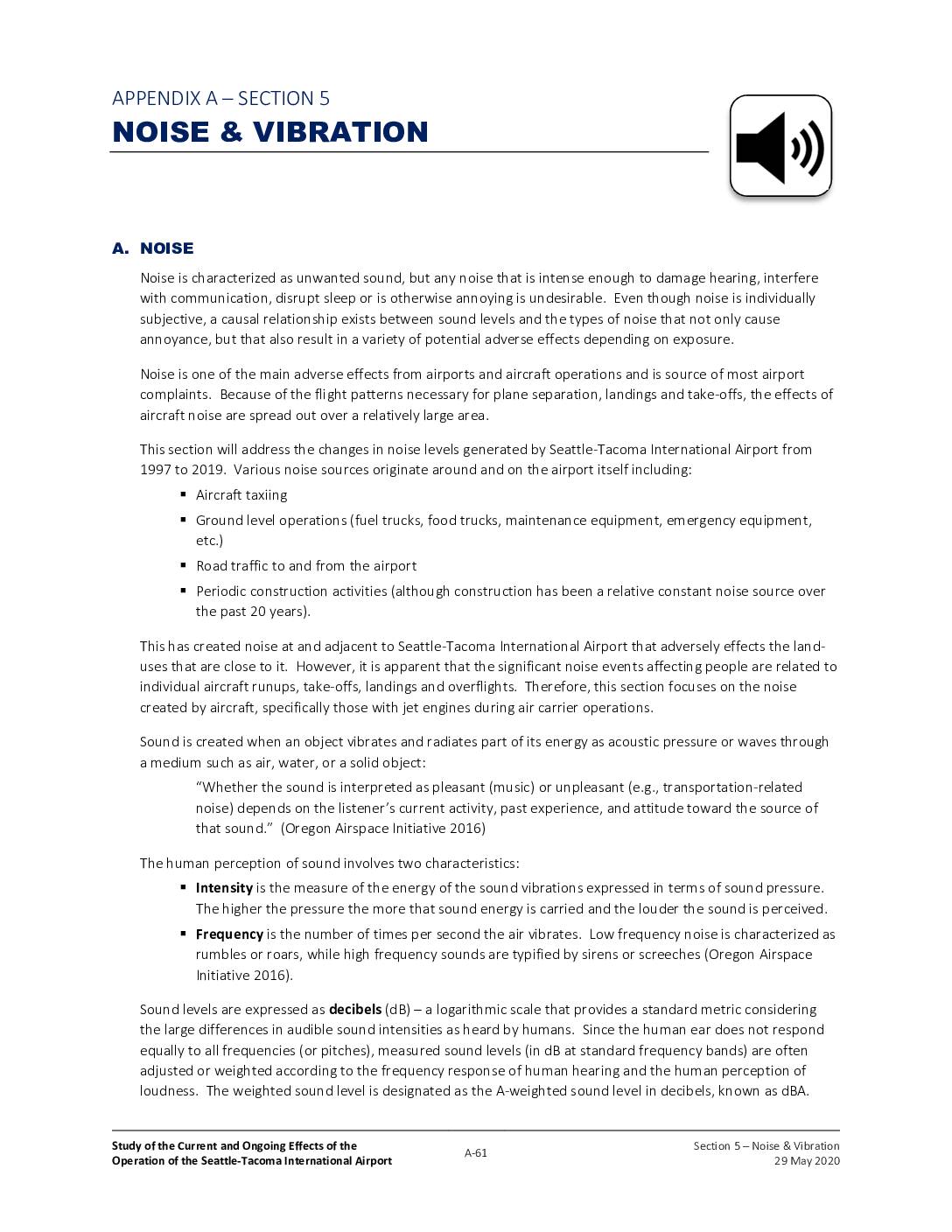
Stantec Sea-Tac Airport Communities Impact Study: Appendix A, Section 5 – Noise & Vibration
This 2020 report examines how noise from Seattle-Tacoma International Airport has changed between 1997 and 2019, focusing on the impact of aircraft takeoffs, landings, and overflights on nearby communities. It explains key noise measurement concepts—including decibels, Sound Exposure Level (SEL), and the Day-Night Average Sound Level (DNL)—and notes that while DNL is the federal regulatory standard used by the FAA, individual SEL events are often what residents find most disruptive. The report highlights a growing tension between how federal agencies measure and regulate aircraft noise and the real-world experience of people living under flight paths. -
 2020-05-19
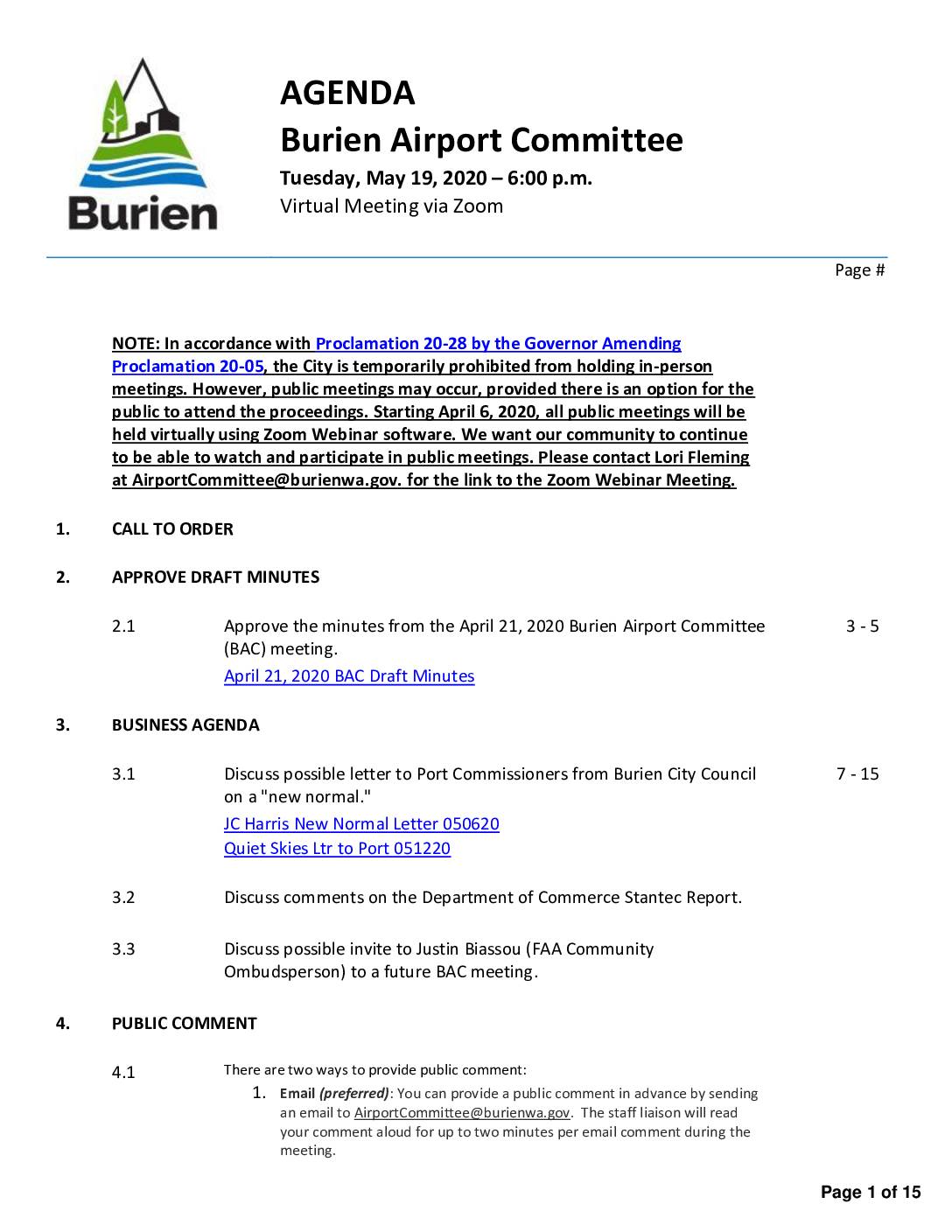
Burien Airport Committee meeting agenda, May 19, 2020
The Burien Airport Committee held a virtual meeting on May 19, 2020, to discuss airport-related policy matters, including a proposed letter to Port Commissioners about a 'new normal' for airport operations, comments on a Department of Commerce report, and a possible invitation to an FAA Community Ombudsperson. Draft minutes from the April 21, 2020 meeting were also reviewed, covering Chair Tosta's Washington, D.C. visit to advocate for a comprehensive cumulative impact assessment of the Port of Seattle's Sustainable Airport Master Plan (SAMP). The meetings, held via Zoom due to COVID-19 restrictions, reflect ongoing community and city council efforts to address noise and environmental concerns related to Sea-Tac Airport. -
 2020-04-21
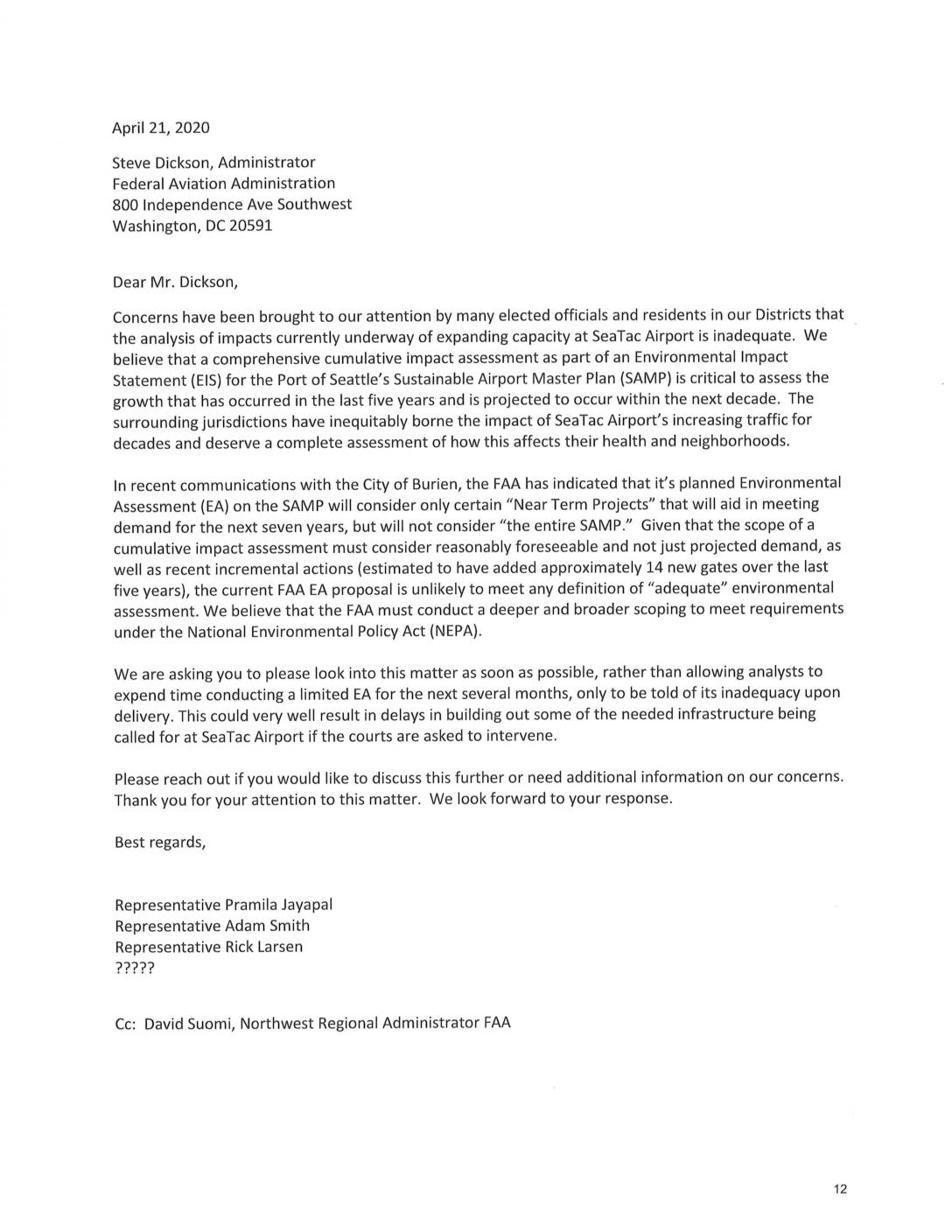
Letter to FAA Administrator Steve Dickson regarding SeaTac Airport environmental assessment
In April 2020, U.S. Representatives Pramila Jayapal, Adam Smith, and Rick Larsen wrote to FAA Administrator Steve Dickson urging a full Environmental Impact Statement (EIS) for the Port of Seattle's Sustainable Airport Master Plan (SAMP), arguing that the FAA's planned limited Environmental Assessment was inadequate. The lawmakers contended that a comprehensive cumulative impact review was necessary to properly evaluate decades of growing noise and health impacts on communities surrounding Sea-Tac Airport. They warned that proceeding with a narrower assessment risked legal challenges that could delay critical airport infrastructure projects. -
 2020-04-21
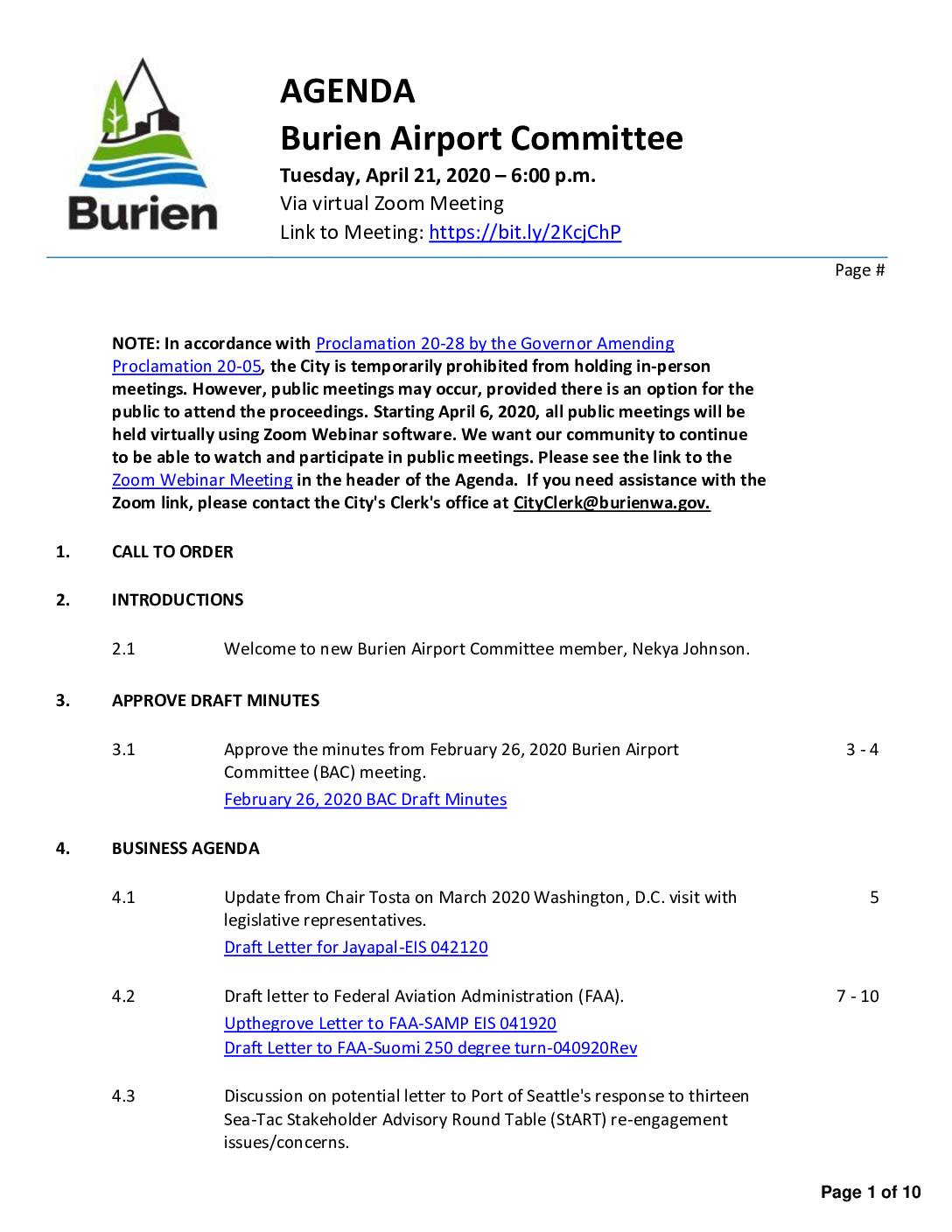
Burien Airport Committee agenda, April 21, 2020
The Burien Airport Committee held a virtual meeting on April 21, 2020, discussing key aviation issues including a draft letter to the FAA regarding the Sustainable Airport Master Plan (SAMP) Environmental Impact Statement and concerns about aircraft flight patterns over Burien. The committee also reviewed updates from a March 2020 Washington, D.C. legislative visit, discussed engagement with the Sea-Tac Stakeholder Advisory Round Table (StART), and considered inviting an FAA Community Ombudsperson to a future meeting. Draft minutes from the February 26, 2020 meeting were also presented for approval, reflecting ongoing efforts by the City of Burien to address cumulative noise and air traffic impacts from Sea-Tac Airport on surrounding communities. -
 2020-04-14
Report to Congress: FAA Reauthorization Act of 2018 (Pub. L. 115-254) Section 188 and Sec 173
This April 2020 FAA Report to Congress evaluates alternative noise metrics to the current Day-Night Level (DNL) 65 decibel standard used to measure community aircraft noise exposure, as required by the FAA Reauthorization Act of 2018. The report reviews the history and definitions of various noise measurement tools, explains why no single metric can address all aviation noise situations, and examines the roles of both noise modeling and actual noise sampling. It was produced in response to congressional direction to assess whether better methods exist for capturing and addressing community concerns about airplane noise.