TagFAA(687)
-
 2020-02-01
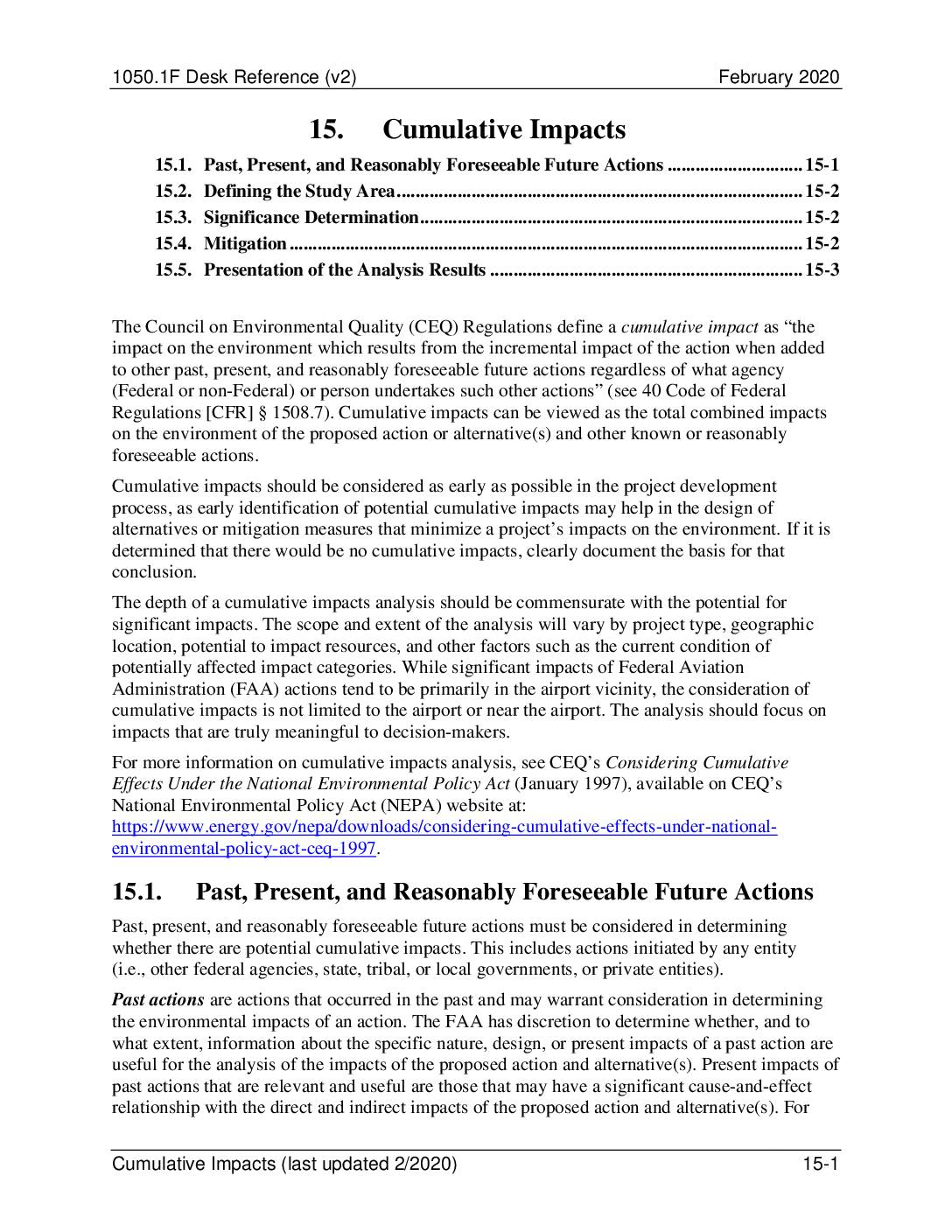
Cumulative impacts: 1050.1F desk reference (v2)
★ 32This FAA guidance document explains how to analyze cumulative environmental impacts for aviation projects, meaning the combined effect of an airport action together with other past, present, and foreseeable future actions by any agency or party. It outlines how to define the study area, determine significance, and consider mitigation, noting that even individually minor impacts can together become significant. While focused on FAA projects broadly, it is relevant to noise and environmental planning at airports like Sea-Tac, where surrounding development and multiple simultaneous projects can compound environmental effects. -
 2020-02-01
Model-extrapolated estimates of airborne lead concentrations at U.S. airports
This EPA technical report estimates airborne lead concentrations near U.S. airports caused by piston-engine aircraft burning leaded aviation gasoline (avgas). Using air quality modeling and extrapolation methods, the study identifies airports where lead levels may exceed national air quality standards, particularly in areas close to aircraft run-up zones. While not specific to Sea-Tac Airport, the findings are relevant to understanding aviation-related air quality impacts at airports nationwide. -
 2020-01-28
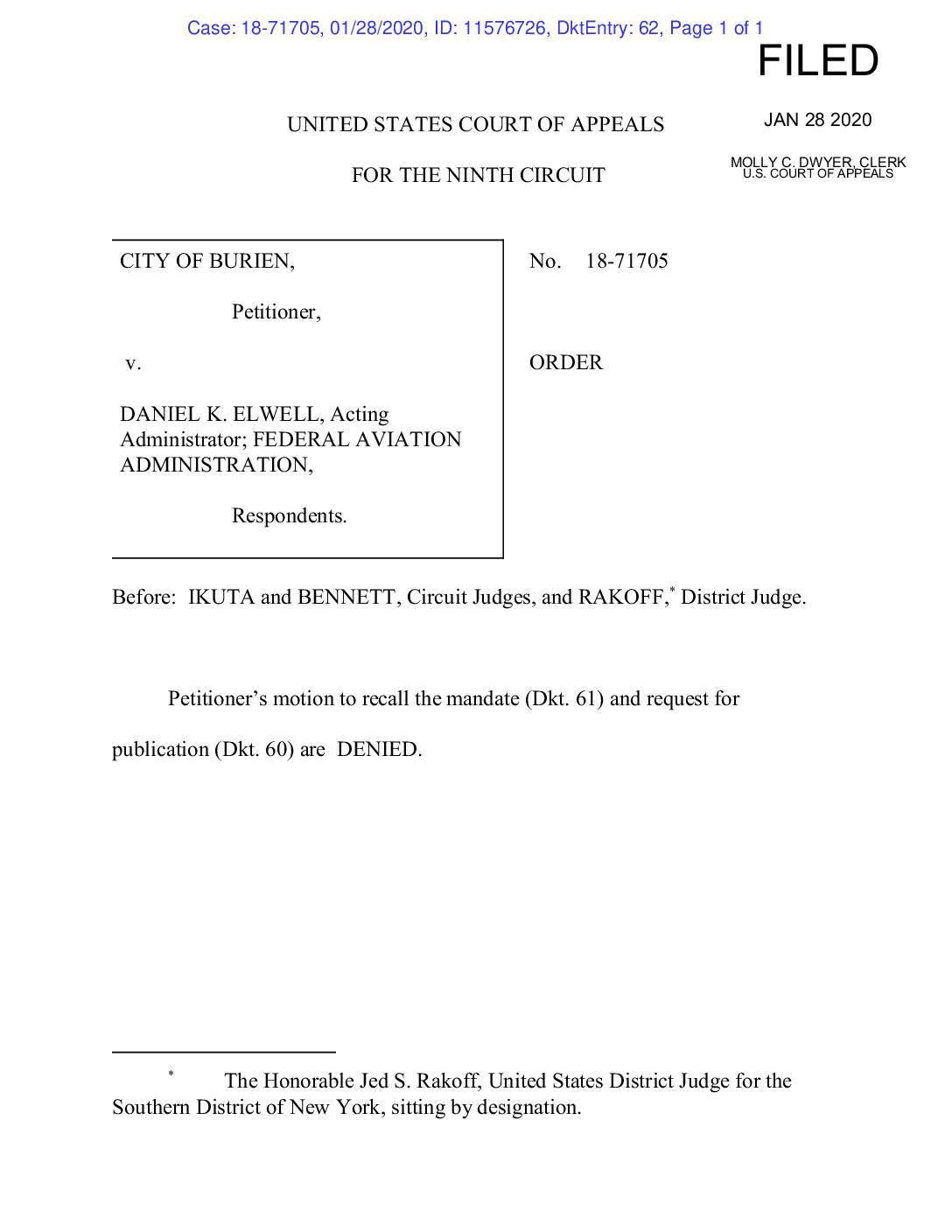
City of Burien v. FAA: Order Denying Motion to Recall Mandate and Request for Publication
Ninth Circuit Court of Appeals order filed January 28, 2020 in Case No. 18-71705, City of Burien v. Daniel K. Elwell (Acting Administrator) and Federal Aviation Administration. Panel of Judges Ikuta, Bennett, and Rakoff (sitting by designation from S.D.N.Y.) denies City of Burien’s motion to recall the mandate (Dkt. 61) and request for publication (Dkt. -
 2020-01-22
Limited Update to the Burien Categorical Exclusion on Remand: Letter of Agreement Update to Automate a 250 Degree Westerly Turn for Southbound Turboprops, Sea-Tac Airport North-Flow Operations, 6am–10pm
This January 2020 FAA document updates a noise and air traffic policy for Seattle-Tacoma International Airport (Sea-Tac), allowing the airport's control tower to automatically direct southbound turboprop aircraft to make a westerly turn shortly after takeoff during north-flow operations, between 6am and 10pm. The change, originally implemented in 2016 but suspended after a legal challenge by the City of Burien, underwent a thorough environmental and noise review before being reinstated. The FAA determined that while the procedure may slightly concentrate turboprop flight paths, the resulting noise increases remain well below federally established thresholds requiring further environmental review. -
 2020-01-22
Limited update to the Burien categorical exclusion on remand from City of Burien v. Federal Aviation Administration, 9th Circuit, No. 18-71705 (November 27, 2019)
This January 2020 FAA document updates a flight procedure at Seattle-Tacoma International Airport (SEA), allowing the airport's air traffic control tower to automatically direct southbound turboprop aircraft to make a westerly turn shortly after takeoff during north-flow operations, between 6am and 10pm. The change, which applies to roughly 90% of affected turboprop departures, was previously halted after the City of Burien filed a legal challenge. A thorough environmental and noise review found only minor noise increases in some areas, well below the FAA's thresholds requiring further review. -
 2020-01-22
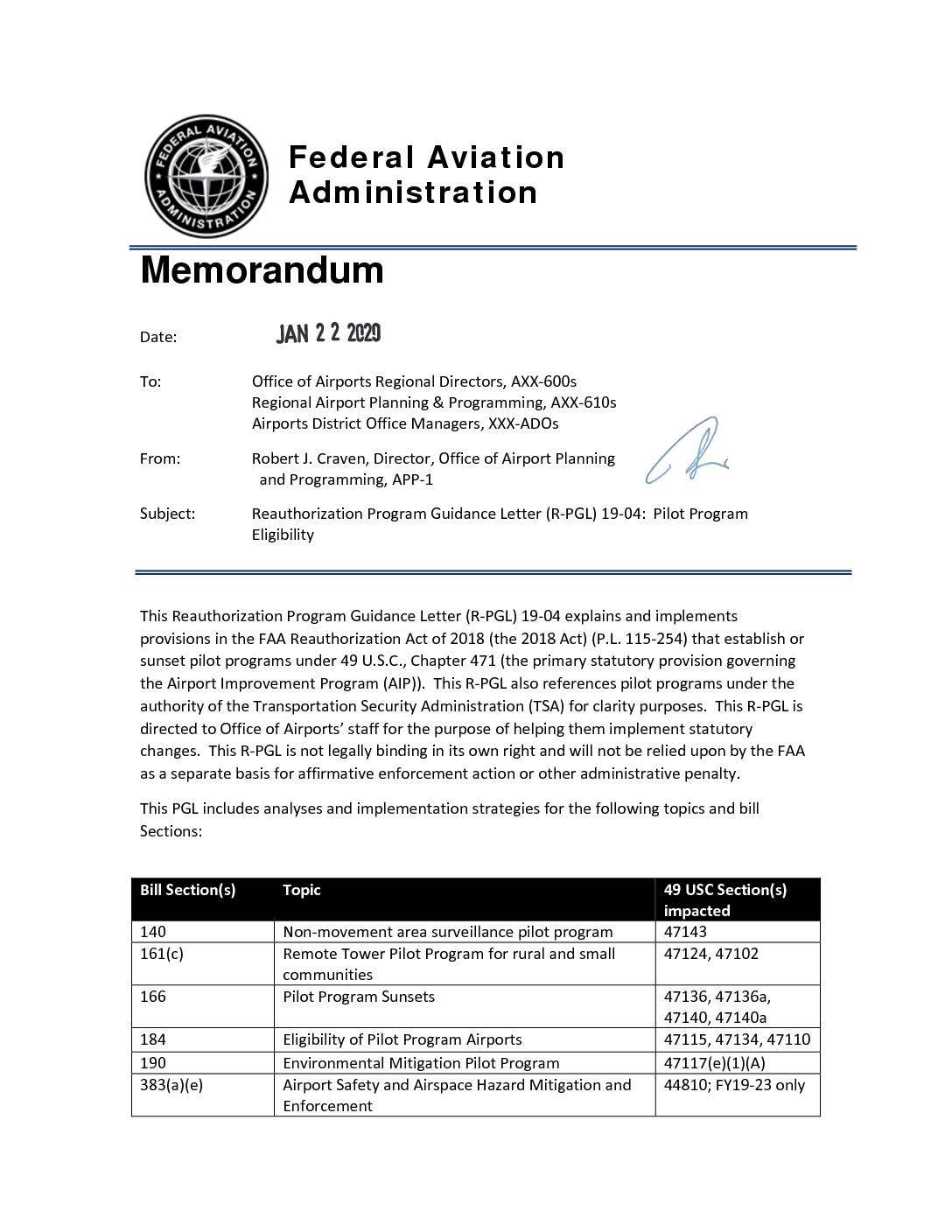
Reauthorization Program Guidance Letter (R-PGL) 19-04: Pilot program eligibility
This January 2020 FAA memorandum explains pilot programs established or sunset by the FAA Reauthorization Act of 2018, including programs for non-movement area surveillance systems, remote towers for rural communities, and environmental mitigation. It provides guidance to FAA regional and district office staff on eligibility rules, funding through the Airport Improvement Program (AIP), and sunset dates for each program. Note that this document addresses broad national airport policy and does not contain content specifically related to Sea-Tac Airport noise policy. -
 2020-01-21
City of Burien v. Federal Aviation Administration: Mandate
Ninth Circuit Court of Appeals mandate in Case No. 18-71705, City of Burien v. Daniel K. Elwell (Acting FAA Administrator) and Federal Aviation Administration. The formal mandate issued January 21, 2020 pursuant to Rule 41(a) of the Federal Rules of Appellate Procedure, giving effect to the court’s judgment entered November 27, 2019. Clerk Molly C. -
 2019-12-17
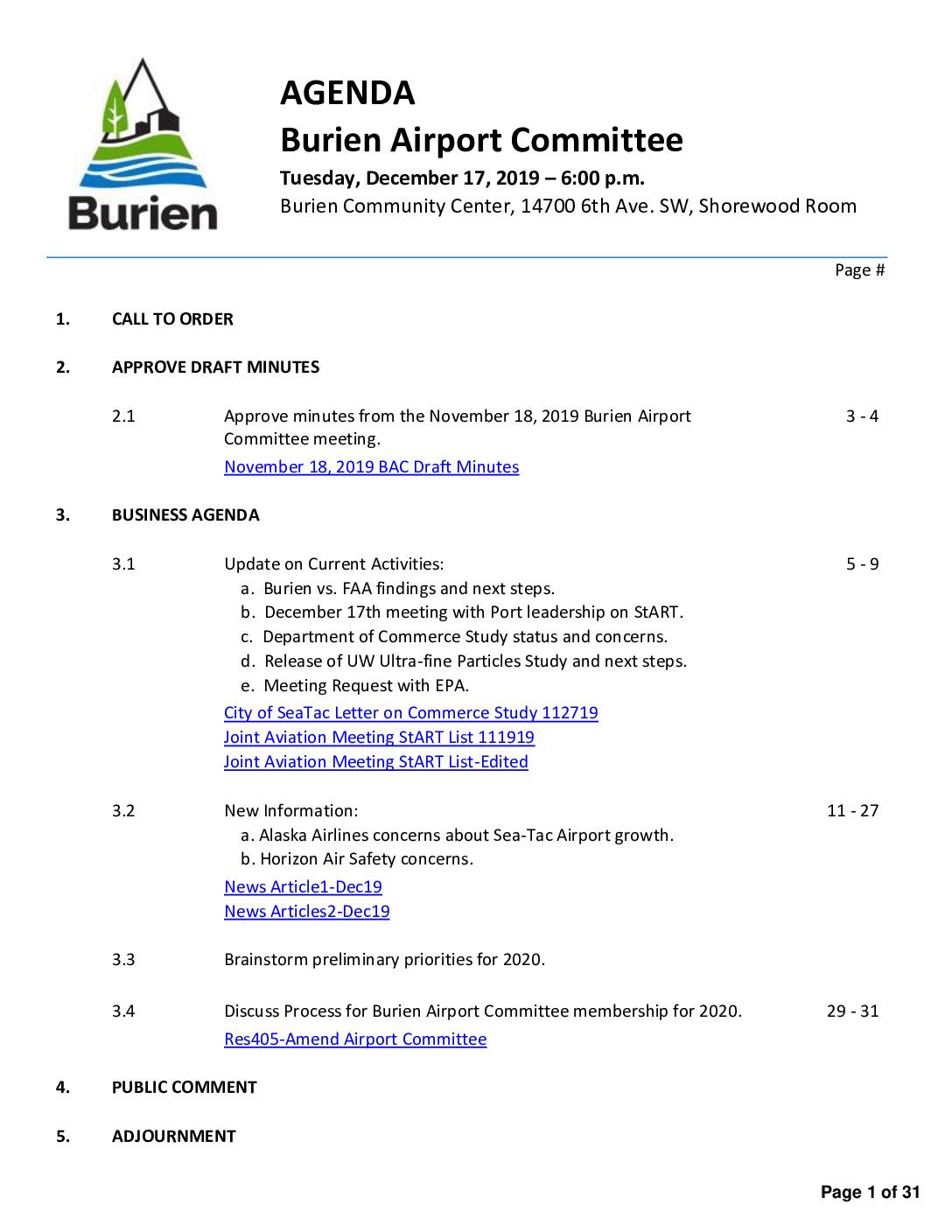
Burien Airport Committee agenda, December 17, 2019
The Burien Airport Committee met on December 17, 2019 to discuss ongoing concerns related to Sea-Tac Airport, including the city's legal findings against the FAA, the status of a University of Washington ultrafine particles study, and safety issues raised by Alaska Airlines and Horizon Air. The committee also reviewed progress on the Sea-Tac Stakeholder Advisory Round Table (StART) and a Washington State Department of Commerce study, while planning priorities for 2020. Draft minutes from the November 18, 2019 meeting were included, detailing earlier discussions on noise reduction, environmental impacts, and a potential meeting with the EPA. -
2019-12-09
CATEX Controversy: The Ninth Circuit Strikes Down FAA Decision to Exempt a Sea-Tac Operational Change from Environmental Review
The process for approving changes in airport operations and development projects may now be more complicated, time-consuming, expensive and uncertain, due to a new federal appeals court decision. The decision faults the Federal Aviation Administration (FAA) for rushing through its approval of a new procedure for turning southbound turboprops to the west in certain wind -
 2019-11-27
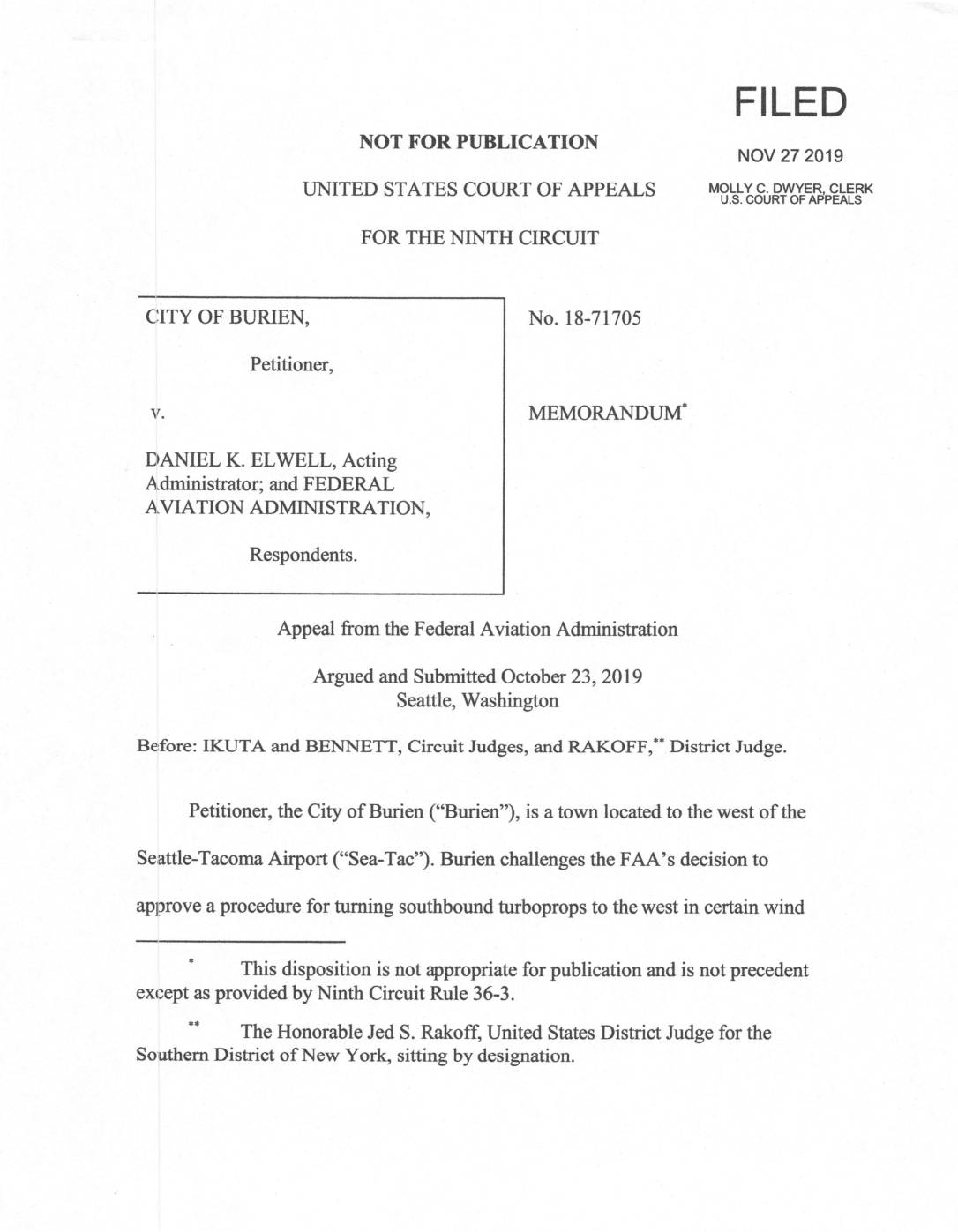
City of Burien v. Daniel K. Elwell and Federal Aviation Administration
The Ninth Circuit Court of Appeals partly sided with the City of Burien in its challenge against the FAA's approval of a flight procedure that routes low-flying turboprop planes westward over Burien after takeoff from Seattle-Tacoma Airport. The court found that the FAA acted arbitrarily and capriciously by failing to consider all reasonably foreseeable future actions at Sea-Tac when evaluating whether the procedure's cumulative environmental and noise impacts required a full environmental review under the National Environmental Policy Act (NEPA). The FAA had attempted to exempt the procedure from such review by classifying it as a 'categorical exclusion,' but the court determined that the agency's cumulative impacts analysis was incomplete.