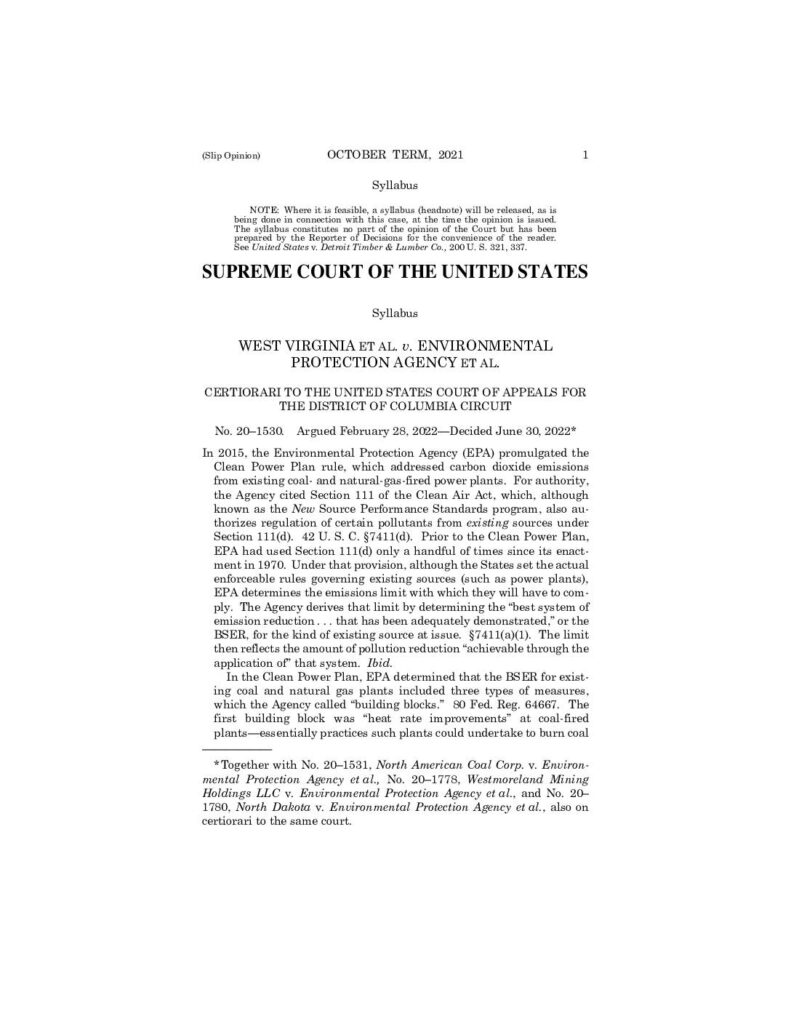
In West Virginia v. EPA (2022), the U.S. Supreme Court ruled on whether the Environmental Protection Agency had the legal authority to use the Clean Air Act's Section 111(d) to require power plants to shift electricity generation away from coal toward cleaner energy sources. The Court examined EPA's 2015 Clean Power Plan, which set carbon dioxide emissions limits so strict that coal plants could only comply by reducing their own production or investing in natural gas and renewable energy. The case ultimately turned on whether Congress had clearly granted EPA such broad authority to reshape the national energy mix, a question analyzed under the 'major questions doctrine.'Open full document
Notes
Syllabus from the Supreme Court’s 2022 decision in West Virginia v. EPA, concerning the EPA’s authority under Section 111(d) of the Clean Air Act to regulate carbon dioxide emissions from existing power plants via the Clean Power Plan. The Court considered whether EPA exceeded its statutory authority by using ‘generation shifting’ as the best system of emission reduction. The case addresses the major questions doctrine and the limits of agency rulemaking power.