TagEcology(788)
-
 2001-01-21
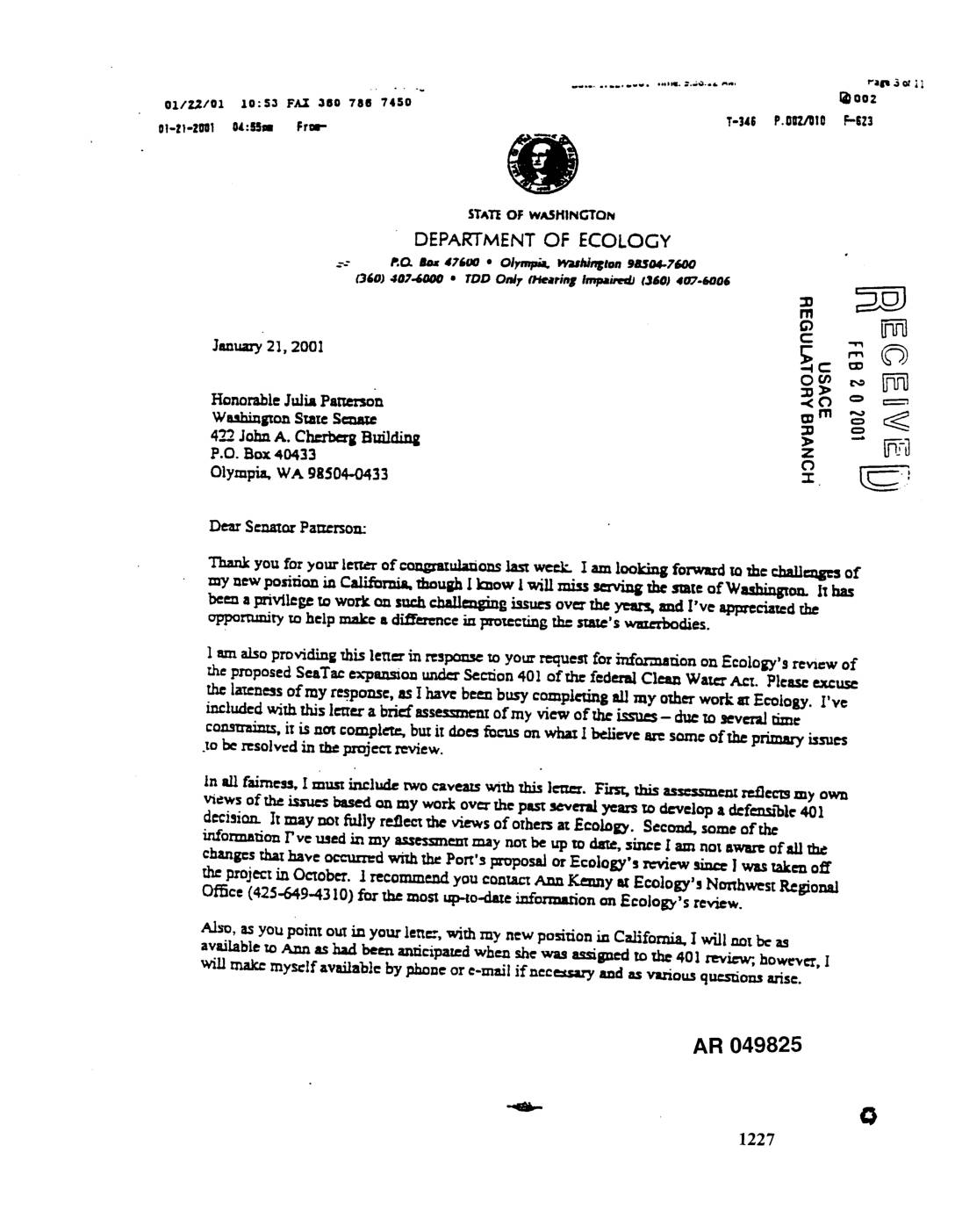
EXH AR049825: Ecology Letter to Senator Julia Patterson on Sea-Tac Airport Expansion Section 401 Water Quality Certification Review
Letter dated January 21, 2001 from Tom Luster, Washington State Department of Ecology, to Senator Julia Patterson of the Washington State Senate, responding to her request for information on Ecology’s Section 401 Clean Water Act review of the proposed SeaTac Airport expansion. Luster provides a brief assessment of key issues including antidegradation requirements, beneficial uses, -
 2001-01-17
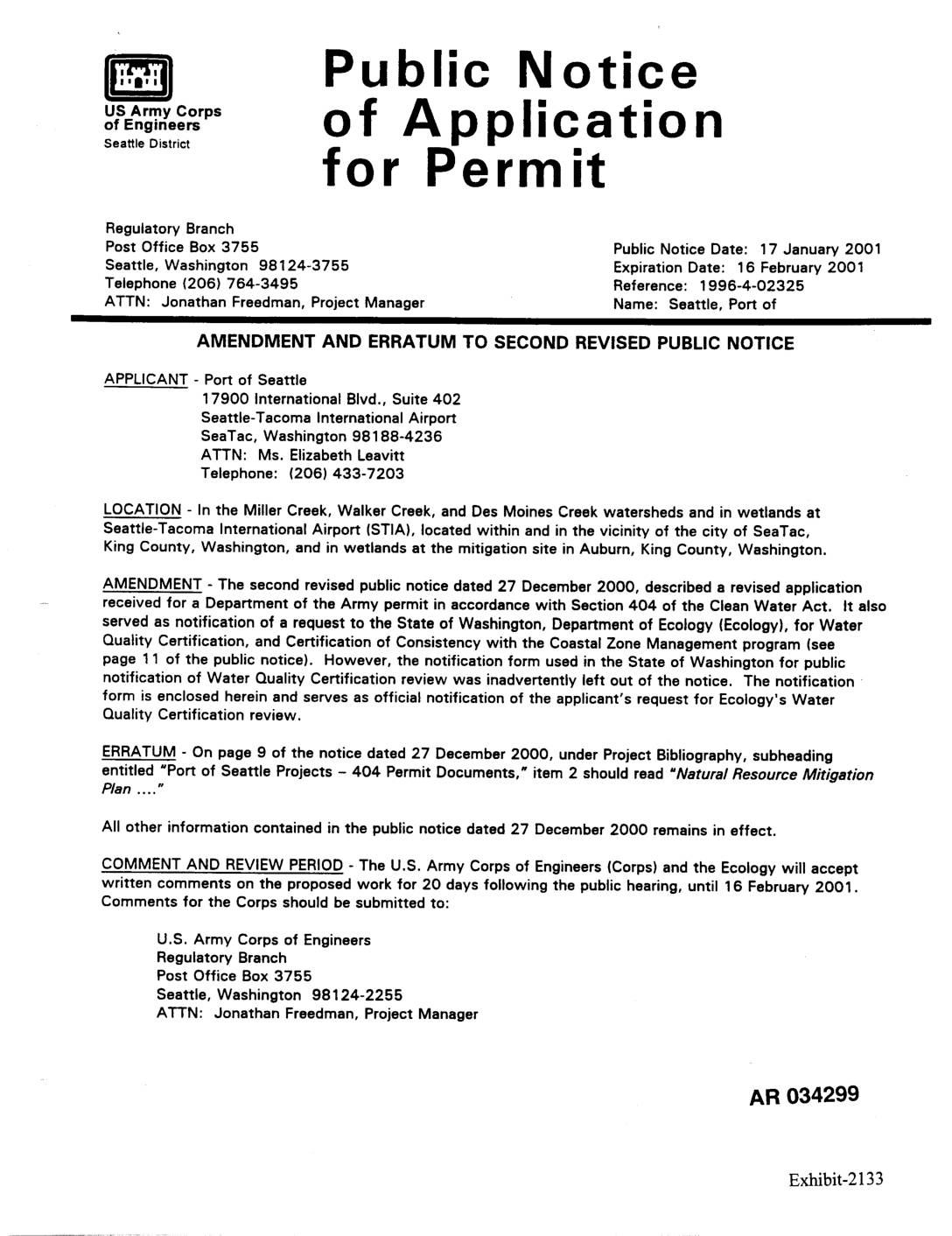
EXH AR034299: Amendment and Erratum to Second Revised Public Notice — Port Of Seattle Permit Application 1996-4-02325
U.S. Army Corps of Engineers Public Notice (Reference 1996-4-02325, dated 17 January 2001) amending the second revised public notice dated 27 December 2000 for a Department of the Army Section 404 Clean Water Act permit application by Port Of Seattle. Project located in Miller Creek, Walker Creek, and Des Moines Creek watersheds and wetlands at -
 2001-01-11
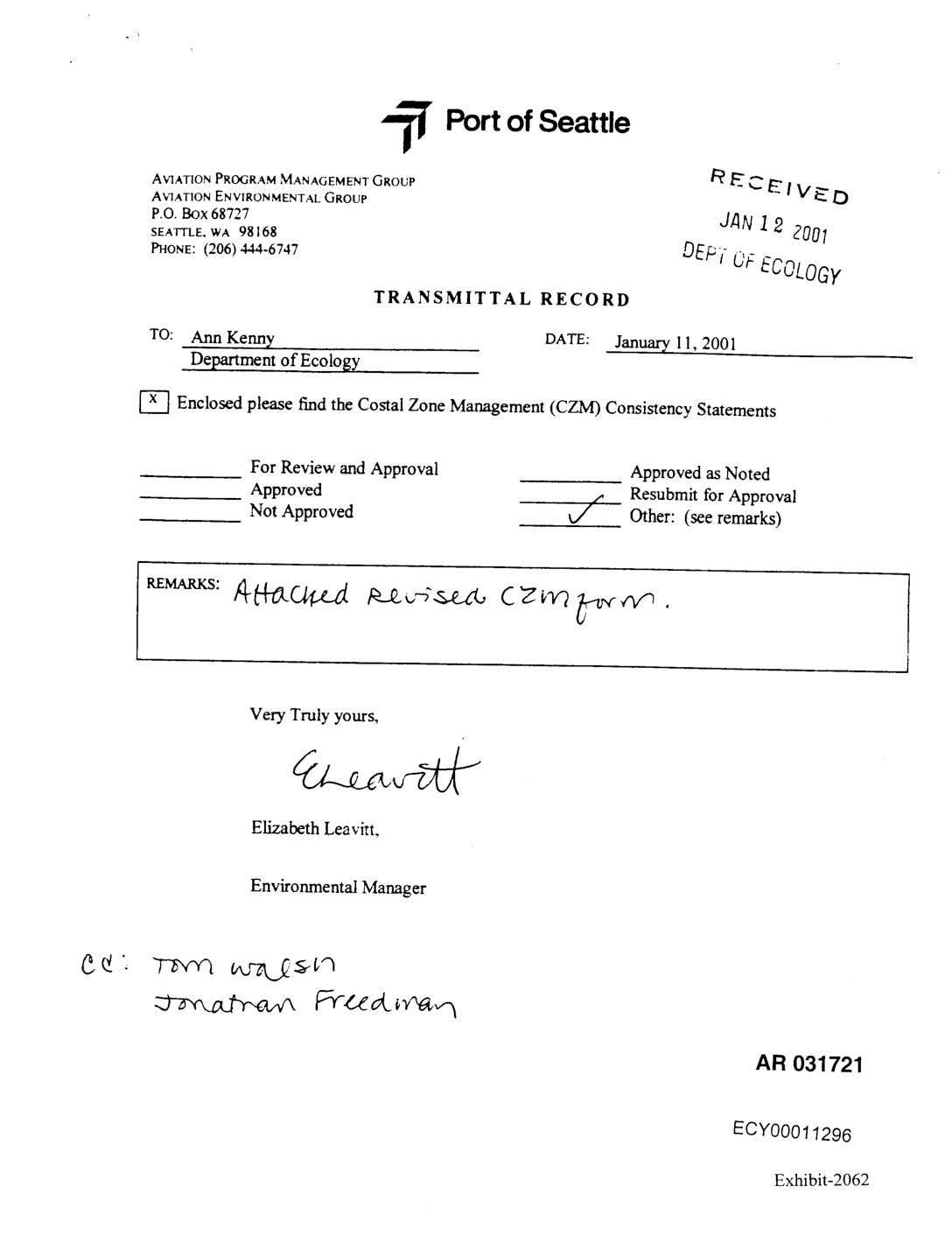
Exhibit 2062: Port Of Seattle Transmittal and CZM Consistency Certification for Third Runway at Sea-Tac Airport
Port of Seattle transmittal letter dated January 11, 2001 from Environmental Manager Elizabeth Leavitt to Ann Kenny at the Washington State Department of Ecology, transmitting a revised Coastal Zone Management (CZM) Consistency Statement (Federal Project Number 96-4-02325). The CZM certification covers construction of a third runway and other improvements at Seattle-Tacoma International Airport, including filling -
 2001-01-11
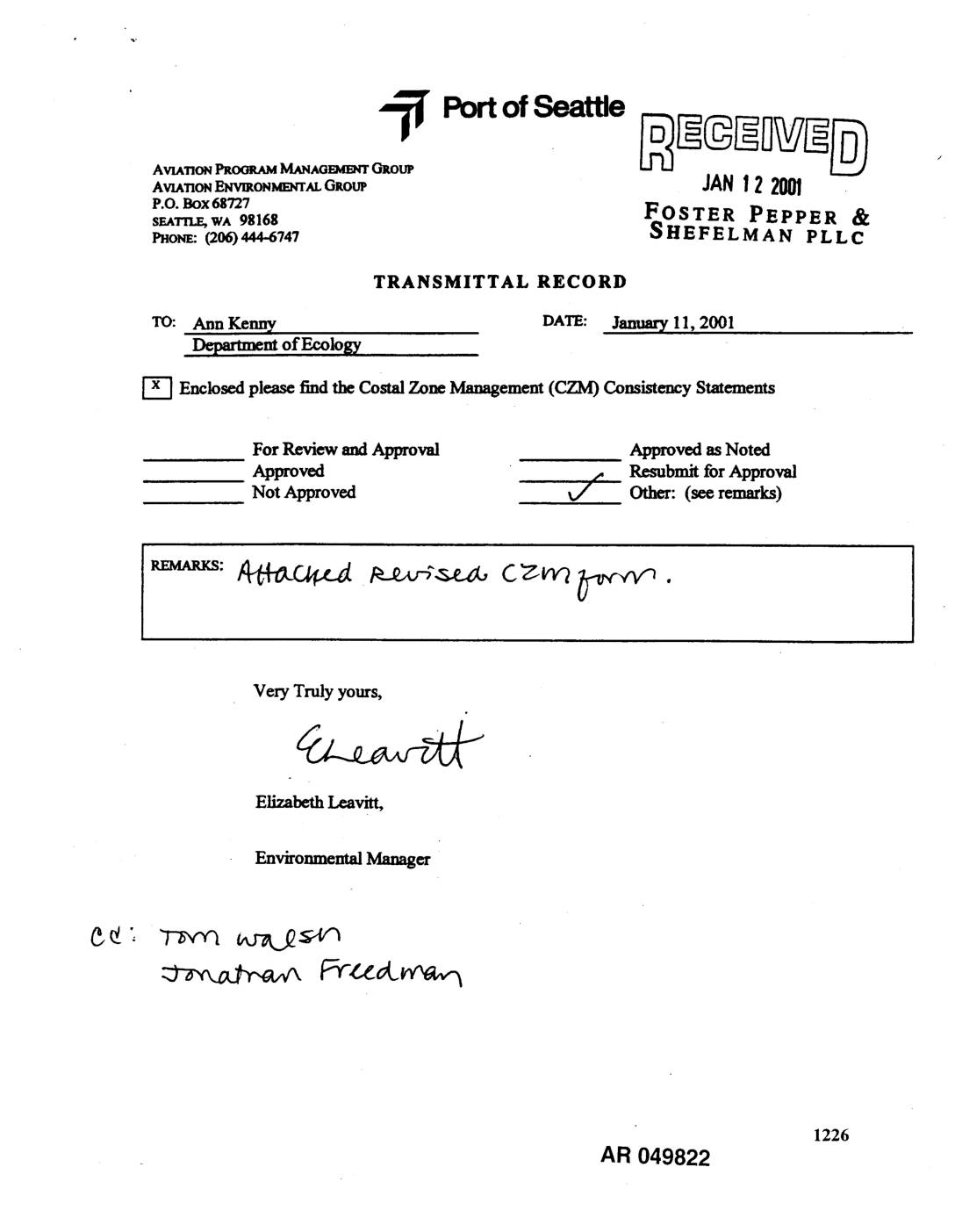
EXH AR049822: Port Of Seattle Transmittal and CZM Consistency Certification for Third Runway Construction at Sea-Tac Airport
Transmittal record dated January 11, 2001 from Elizabeth Leavitt, Environmental Manager, Port Of Seattle Aviation Environmental Group, to Ann Kenny, Department of Ecology, transmitting a revised Coastal Zone Management (CZM) Consistency Statement for Federal Project Number 96-4-02325. The CZM certification covers construction of a third runway and other improvements at Seattle-Tacoma International Airport, including filling -
 2001-01-03
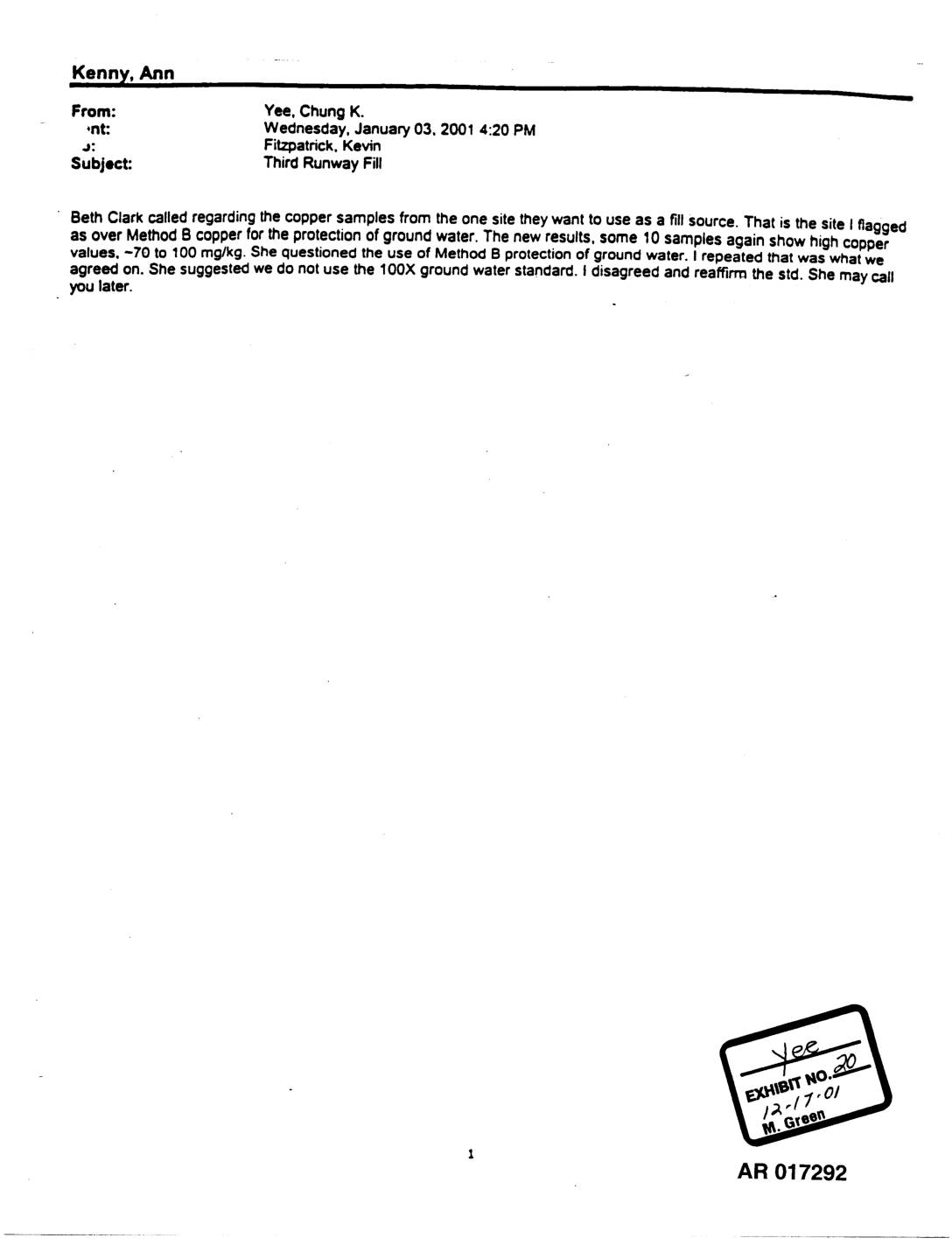
EXH AR017292: Email from Chung K. Yee to Kevin Fitzpatrick re Third Runway Fill and Copper Contamination
Email dated January 3, 2001 from Chung K. Yee to Kevin Fitzpatrick regarding copper contamination in fill soil samples from a proposed Third Runway fill source site. Beth Clark questioned use of Method B protection of groundwater standard (100X groundwater standard) for copper samples testing 70–100 mg/kg. Yee reaffirmed the Method B standard and disagreed -
 2001-01-01
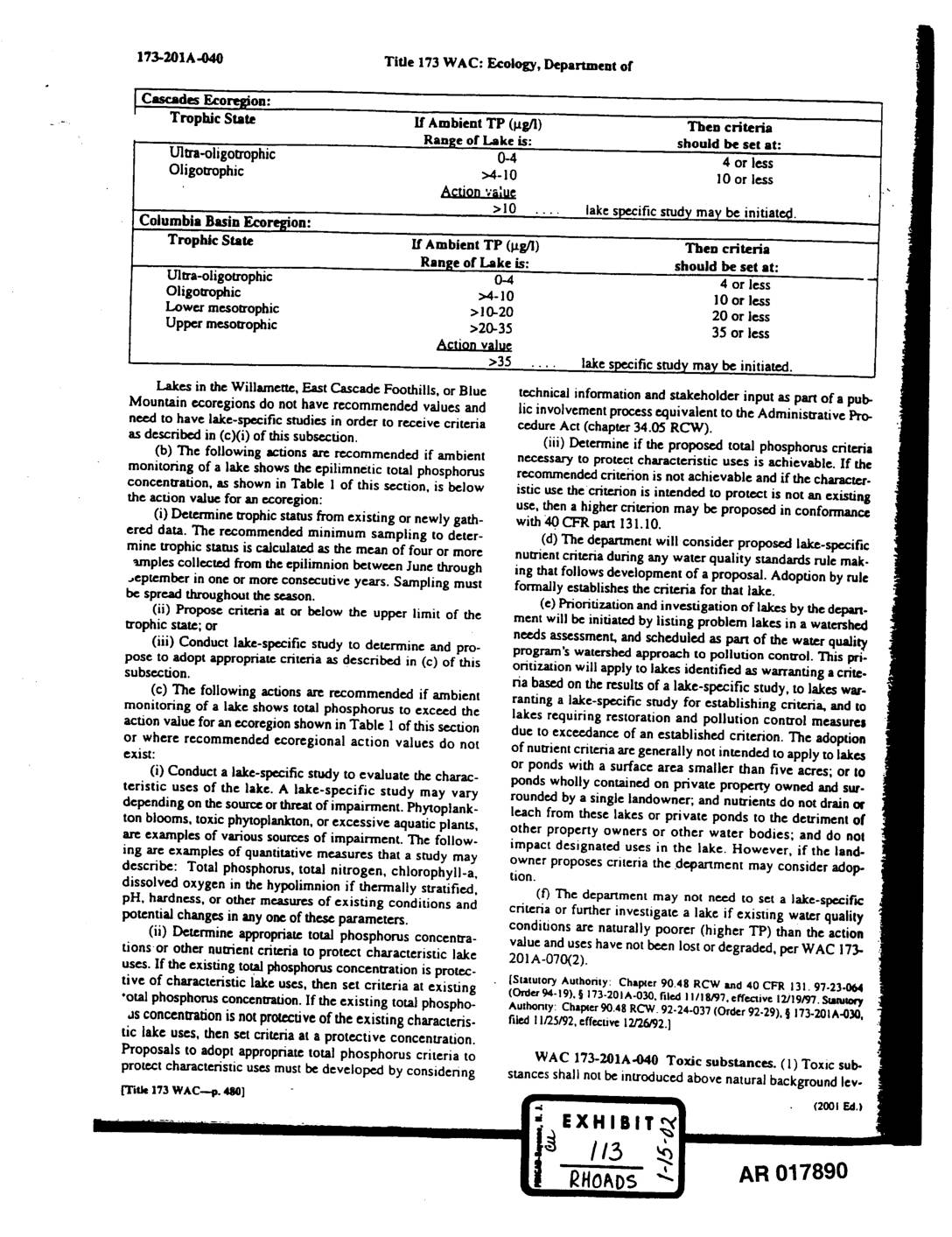
Exhibit 113: WAC 173-201A Water Quality Standards — Surface Waters, Toxic Substances and Nutrient Criteria
Washington Administrative Code (WAC) 173-201A sections 030, 040, 050, and 060 covering water quality standards for surface waters in Washington State, published by the Washington State Department of Ecology. Exhibit 113 (AR017890–AR017892) includes: lake total phosphorus (TP) nutrient criteria by ecoregion (Cascades, Columbia Basin, Willamette, East Cascade Foothills, Blue Mountain) with trophic state classifications (ultra-oligotrophic, -
 2001-01-01
EXH AR032664: Water Quality Program Permit Writer’s Manual
Washington State Department of Ecology Water Quality Program Permit Writer’s Manual, Publication Number 92-109, revised January 2001, prepared by Gary Bailey. Covers NPDES permit writing procedures and water quality standards for Washington State. AR 032664, Exhibit-2077. -
 2000-12-19
EXH 265: Comprehensive Stormwater Management Plan Agency Review — STIA Master Plan Update Improvements
This December 2000 Comprehensive Stormwater Management Plan, prepared by Parametrix, Inc. for the Port of Seattle, outlines how Seattle-Tacoma International Airport planned to manage stormwater runoff as part of its Master Plan Update improvements. The plan covers water quantity and quality standards, drainage basin conditions, hydrologic modeling, and best management practices for both existing and future airport development areas. It addresses topics such as detention storage, treatment of industrial wastewater, wildlife safety near detention ponds, and protection of nearby waterways including Miller Creek and Des Moines Creek. -
 2000-12-14
Puget Sound Water Quality Management Plan 2000
The 2000 Puget Sound Water Quality Management Plan, adopted December 14, 2000, outlines coordinated local, state, tribal, and federal actions to restore and protect the health of Puget Sound in Washington State. The plan introduces new programs addressing aquatic nuisance species and Georgia Basin water coordination, while substantially revising existing stormwater, habitat, and wetlands protection programs. It builds on earlier management plans dating back to 1987 and calls for renewed commitment to funding and policy improvements. -
 2000-12-08
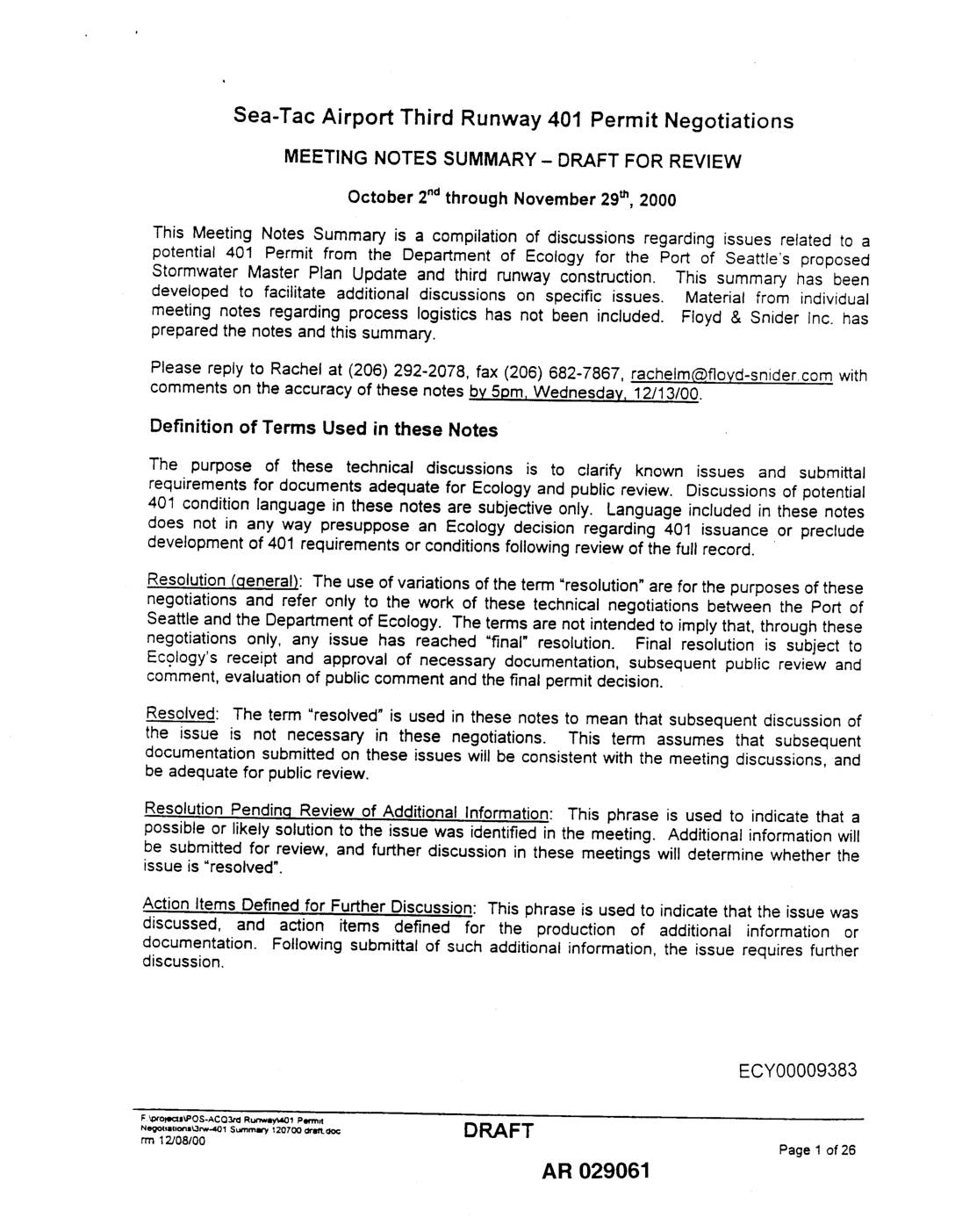
EXH AR029061: Sea-Tac Airport Third Runway 401 Permit Negotiations Meeting Notes Summary – Draft for Review
Floyd & Snider Inc. meeting notes summary (draft for review) covering 401 Permit negotiations between the Port Of Seattle and Washington State Department of Ecology (Ecology) regarding the Sea-Tac Airport Stormwater Master Plan Update and third runway construction, October 2 through November 29, 2000. Document ECY00009383/AR029061 covers technical issues including detention sizing, basin acreage discrepancies,