TagClimate(79)
-
 2021-04-19
King County 2020 Strategic Climate Action Plan
King County's 2020 Strategic Climate Action Plan outlines the county's comprehensive approach to addressing climate change through three main areas: reducing greenhouse gas emissions, supporting sustainable and resilient frontline communities, and preparing for climate change impacts. The plan emphasizes equity and community engagement, particularly for historically underserved populations, and was developed with input from a Climate Equity Community Task Force representing diverse community organizations. It builds on progress made since the county's 2015 climate plan and sets targets and policies across transportation, energy, buildings, food systems, and land use. -
 2021-02-17
Reducing emissions, contrails and climate impact from aviation – Highlights from recent aircraft campaigns
A 2021 seminar by DLR researcher Christiane Voigt examines how aviation contributes to climate change through CO2 emissions, contrail cirrus clouds, and NOx gases, with contrail cirrus identified as the largest single warming factor at 57.4 mW m⁻². The presentation outlines strategies to reduce aviation's climate footprint, including the use of alternative fuels, lean combustion technology, and contrail avoidance routing. Findings draw on data from recent aircraft measurement campaigns and observed emission reductions during the 2020 COVID-19 lockdown. -
 2021-01-19
Bill analysis: HB 1099 – Improving the state’s climate response through updates to the state’s comprehensive planning framework
HB 1099 is a Washington State bill focused on improving the state's climate response by updating the Growth Management Act to require counties and cities to include climate change and resiliency planning in their comprehensive land use plans. The bill mandates reductions in greenhouse gas emissions and vehicle miles traveled, and requires the Department of Commerce to publish guidelines for achieving statewide emissions targets. It also addresses coastal resilience by requiring Shoreline Master Programs to account for sea level rise and increased storm severity. -
 2021-01-06
House Bill 1099: Improving the state’s climate response through updates to the state’s comprehensive planning framework
Washington State House Bill 1099 proposes updates to the state's comprehensive planning framework to improve climate response, adding a new 'Climate Change' goal requiring counties and cities to adapt to and mitigate climate effects, reduce greenhouse gas emissions, and build resiliency to natural hazards. The bill amends several sections of state law governing how local governments develop comprehensive plans and development regulations. Note: This bill pertains to statewide land use and climate planning, not specifically to Sea-Tac Airport noise policy. -
 2021-01-01
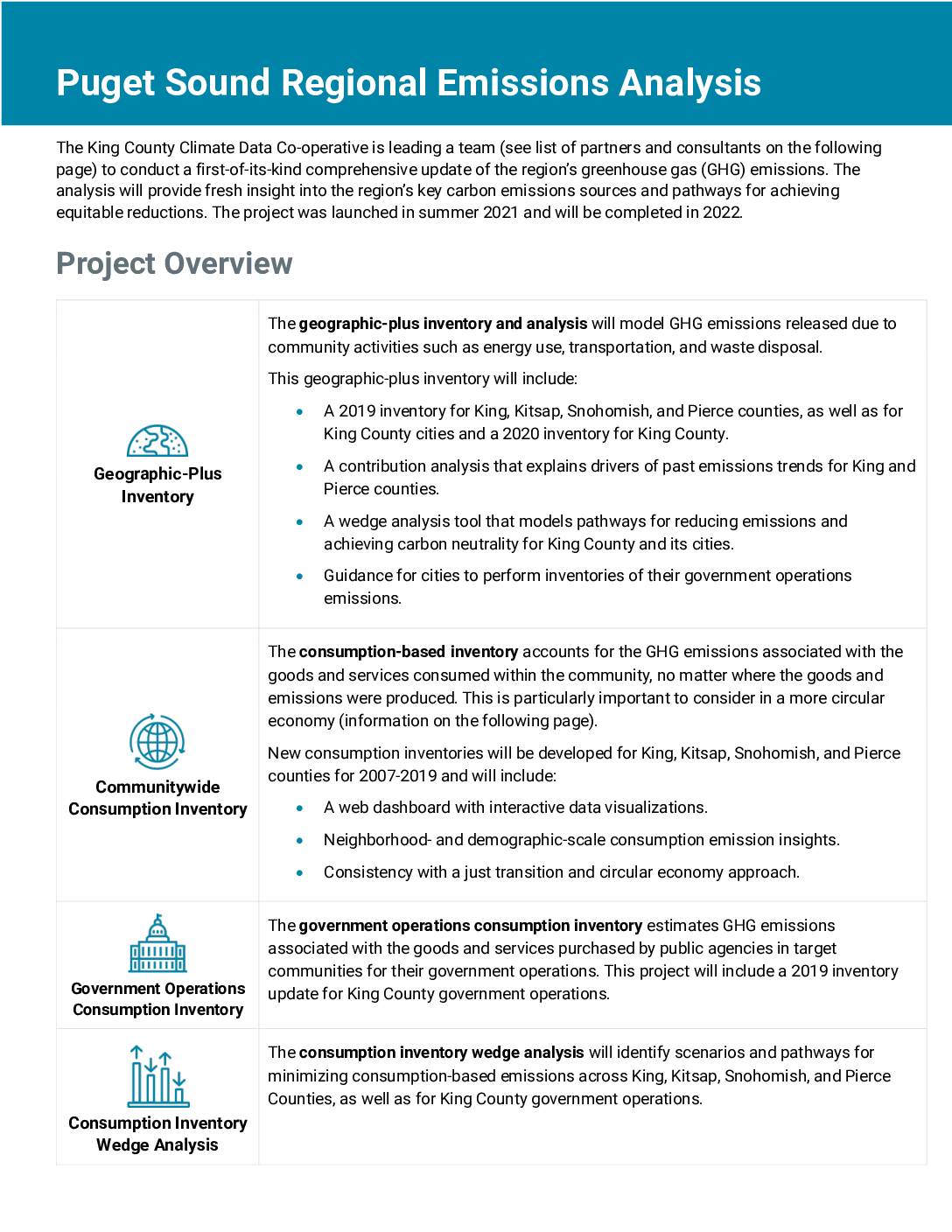
Puget Sound Regional Emissions Analysis
The Puget Sound Regional Emissions Analysis is a King County-led project launched in 2021 to comprehensively measure greenhouse gas emissions across King, Kitsap, Snohomish, and Pierce counties. The project covers multiple types of emissions inventories—including community activities, consumption of goods and services, and government operations—while also modeling pathways to reduce emissions and achieve carbon neutrality. It incorporates social equity principles to address disproportionate environmental impacts on communities of color. -
 2021-01-01
Washington State greenhouse gas emissions inventory: 1990-2018
This January 2021 report from the Washington State Department of Ecology tracks greenhouse gas emissions across Washington State from 1990 to 2018. Published by the Air Quality Program, it provides a comprehensive inventory of the state's emissions data over nearly three decades. Note that this document focuses on statewide air quality and climate data and does not specifically address Sea-Tac Airport noise policy. -
 2021-01-01
Aviation Noise & Emissions Symposium 2021: A case study: SFO tackling the challenges of COVID & climate
This 2021 presentation by San Francisco International Airport (SFO) outlines the airport's sustainability strategy, known as 'Journey Zero,' which targets zero net energy, zero waste, water conservation, healthy buildings, and cleaner transportation. It provides an overview of SFO's scale — including 58 million annual passengers and 470,000 aircraft operations in 2019 — and describes how the airport is addressing both the economic disruptions of COVID-19 and long-term climate challenges. The framework builds on goals established since 2014 and aligns with San Francisco's broader climate action commitments. -
2020-12-10
United’s 100% Green Commitment: Reducing our Greenhouse Gas Emissions 100% by 2050
Scott Kirby The COVID-19 pandemic has disrupted the world in many ways. For the airline industry, it has been the most punishing financial blow in our history. Despite the continuing challenges, we at United Airlines have dedicated ourselves every step of the way to make flying as safe as we can, and we always will. -
 2020-12-01
Washington 2021 State Energy Strategy: Transitioning to an equitable clean energy future
The Washington 2021 State Energy Strategy, published by the Washington State Department of Commerce in December 2020, outlines a blueprint for transitioning the state to clean energy by 2050, with the goal of nearly eliminating fossil fuel use while sustaining economic growth. The strategy emphasizes affordable and reliable energy, meeting science-based greenhouse gas emission limits, and ensuring that Tribes, rural communities, and low-income households are included as partners in the transition. Note: this document addresses statewide energy and climate policy and does not contain content related to Sea-Tac Airport noise policy. -
 2020-09-03
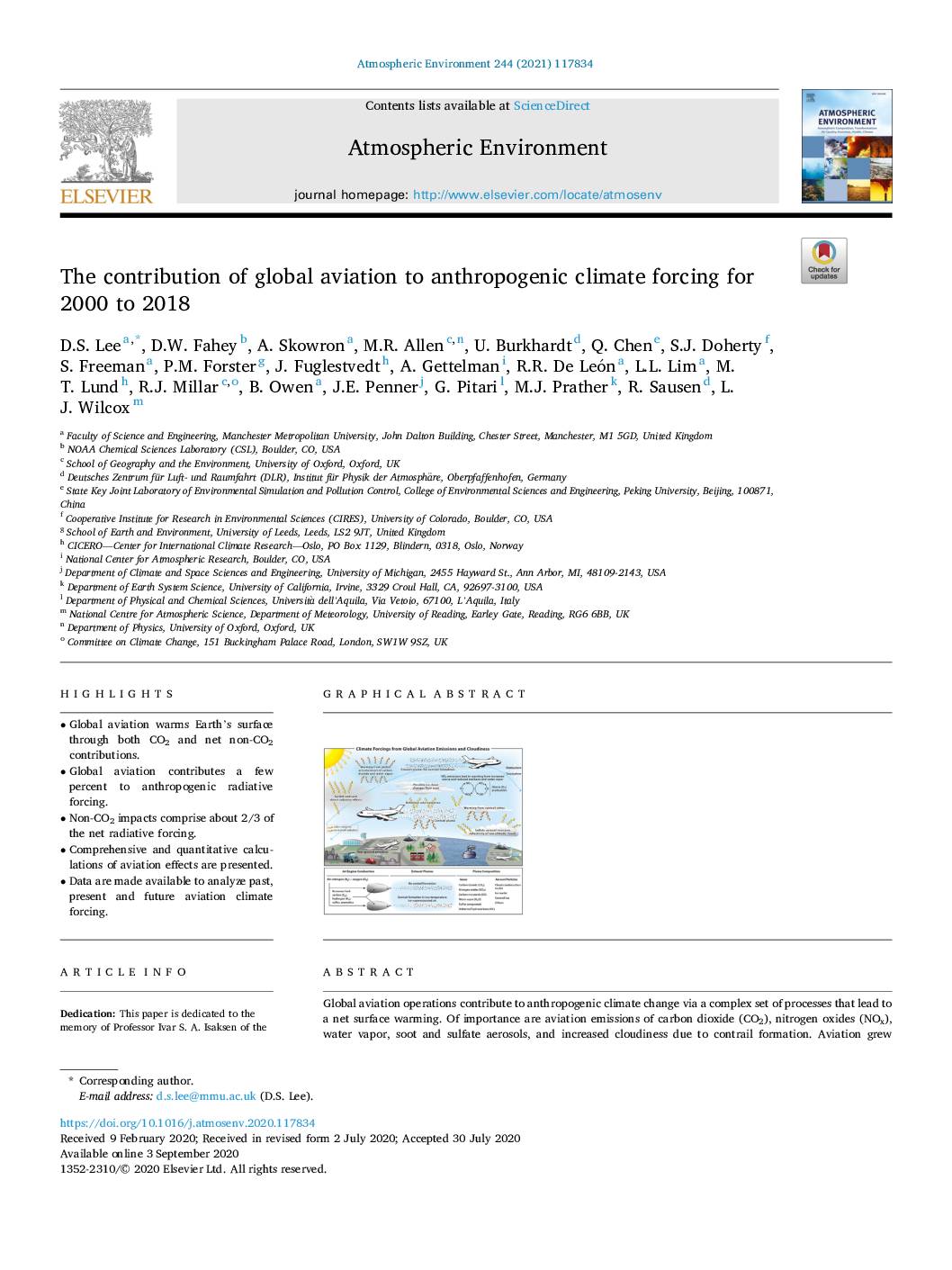
The contribution of global aviation to anthropogenic climate forcing for 2000 to 2018
A 2021 scientific study found that global aviation contributes a small but meaningful share of human-caused climate change, primarily through carbon dioxide emissions and the formation of contrail clouds at high altitude. The research, covering the years 2000 to 2018, found that non-CO2 effects such as contrails account for roughly two-thirds of aviation's total warming impact. The findings are relevant to ongoing policy discussions about reducing the climate footprint of air travel.