TagClimate(79)
-
 2017-04-01
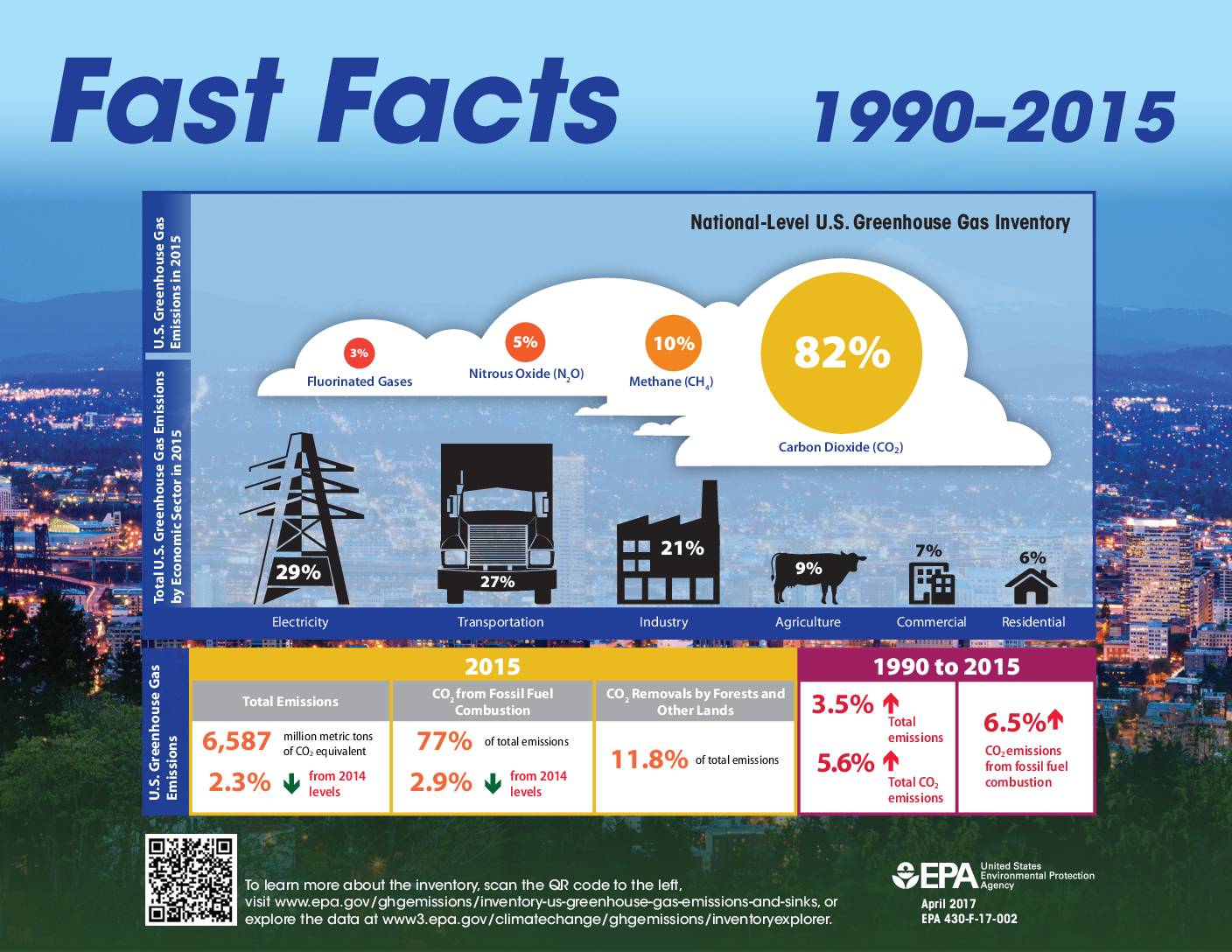
Fast facts 1990–2015: National-level U.S. greenhouse gas inventory
This EPA report summarizes U.S. greenhouse gas emissions data from 1990 to 2015, showing that total emissions reached 6,587 million metric tons of CO2 equivalent in 2015, a 2.3% decrease from 2014 levels. Carbon dioxide makes up the largest share at 82% of emissions, with electricity generation and transportation being the biggest contributing economic sectors at 29% and 27% respectively. The report includes detailed emissions breakdowns by gas type, economic sector, and fuel source, along with unit conversion tables and global warming potential values for reference. -
 2015-11-01
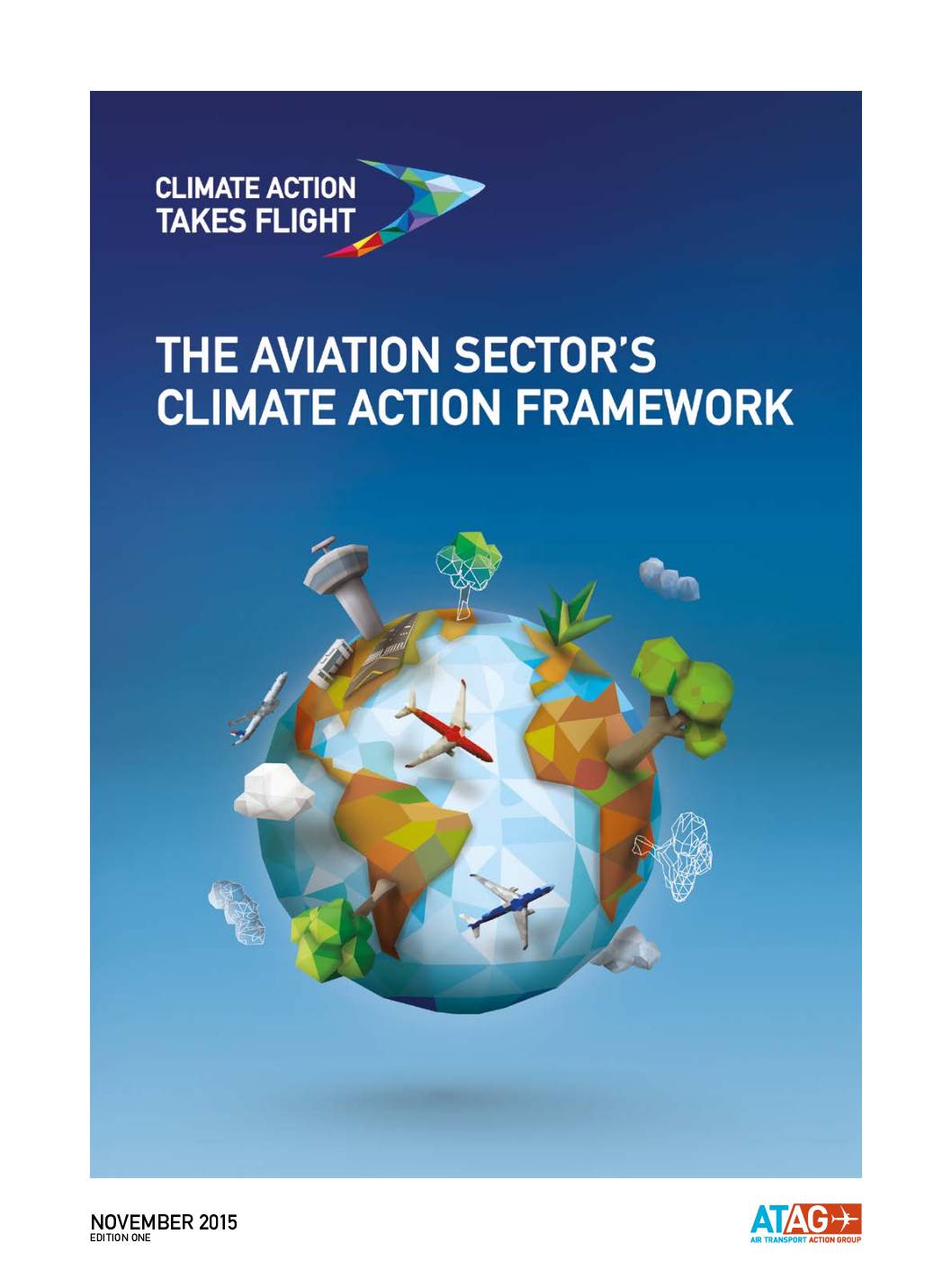
The Aviation Sector’s Climate Action Framework
This 2015 report from the Air Transport Action Group (ATAG) outlines the aviation industry's framework for addressing its climate impact, noting that while air transport carries over 3.3 billion passengers annually and supports 3.5% of global GDP, it also accounts for roughly 2% of human-induced CO2 emissions. The document presents the industry's strategies for balancing continued air traffic growth with the obligation to reduce greenhouse gas emissions. It represents a collaborative effort across airlines, airports, air navigation service providers, and aircraft manufacturers to pursue sustainable development goals. -
 2013-05-10
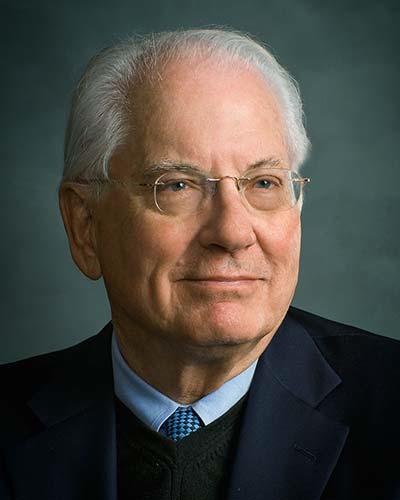
Prominent former Seattle port executive Richard Ford dies
Richard Ford, a Northwest native who rose to prominence as a port executive, attorney and civic leader, died May 5, according to Ford’s family. He was 83. Ford was born in Seattle, grew up in Spokane and graduated from Washington State University, where he met his wife, Nancy Panchot. The couple later moved to the -
 2012-01-01
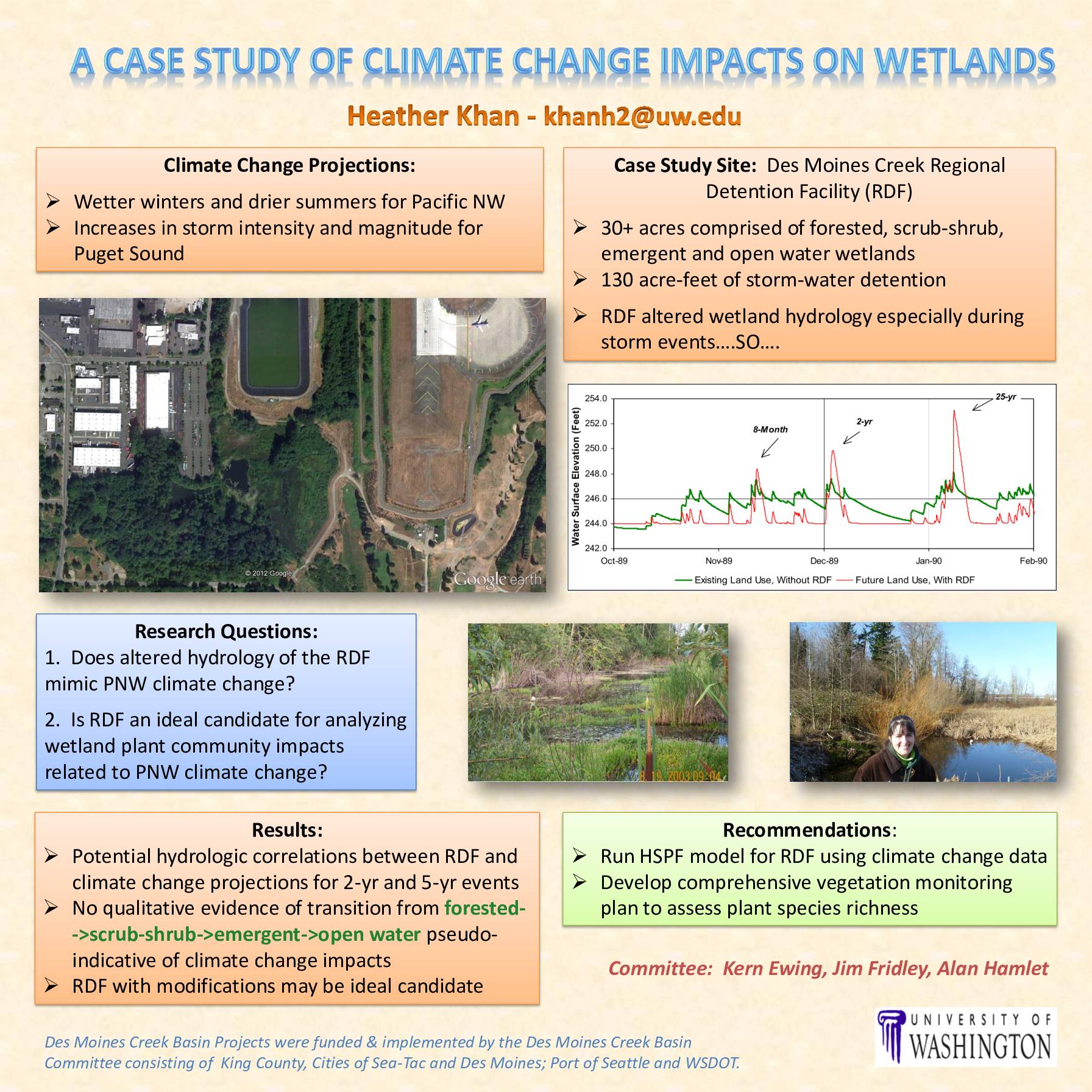
A Case Study of Climate Change Impacts on Wetlands: Des Moines Creek Regional Detention Facility
A University of Washington case study examines whether the Des Moines Creek Regional Detention Facility (RDF), a 30+ acre stormwater management site near Sea-Tac Airport, can serve as a model for understanding how projected Pacific Northwest climate changes—wetter winters, drier summers, and stronger storms—may affect local wetland ecosystems. Researchers found potential hydrologic similarities between the RDF's altered water patterns and regional climate change projections, though no clear vegetation shifts were observed. The study recommends further hydrologic modeling and a comprehensive plant monitoring program to better assess long-term wetland impacts. -
 2011-12-08
2008 King County Community Greenhouse Gas Emissions Inventory: “Geographic Plus” Methodology
This 2011 report by the Stockholm Environment Institute estimates King County, Washington's greenhouse gas emissions for 2008 using a 'geographic plus' methodology, covering sources such as transportation, buildings, industry, and waste. Total emissions reached approximately 23.4 million metric tons of CO2 equivalent in 2008, a 5% increase from 2003, with transportation accounting for roughly half of all emissions. The findings were used by King County and its partners to identify major emission sources and develop strategies to meet community greenhouse gas reduction goals. -
Did Sea-Tac’s Third Runway Change Our Climate?
Last week the Seattle Times had a front page story about the Northwest becoming warmer and wetter based on recently updated climate statistics at Seattle-Tacoma Airport. But can we use one observing site to reliably determine region climate trends? In my previous blog I noted that this is a real problem: one site is not necessarily representative -
 2011-05-03
Resolution No. 3650, as amended
Resolution No. 3650 was adopted by the Port of Seattle Commission on May 3, 2011, updating the Port's policies and procedures under the State Environmental Policy Act (SEPA) to reflect changes in law and improve effectiveness. The resolution requires the Port to analyze and, where appropriate, mitigate the environmental impacts of its proposals, including consideration of greenhouse gas emissions and climate change. It supersedes all prior related resolutions and formally designates policies that may be used to condition or deny actions under SEPA's substantive authority. -
 2011-03-01
Collaboration and Climate Action at the Local Scale
This 2011 doctoral dissertation by Linda Lyshall, submitted to Antioch University's PhD Program in Leadership and Change, examines how local-scale collaboration can drive climate action and environmental policy. The research explores the intersection of leadership, organizational behavior, and sustainability in addressing climate change at the community level. While not specific to Sea-Tac Airport noise policy, it may offer relevant frameworks for understanding collaborative governance and local environmental decision-making. -
 2000-09-01
Aircraft contrails factsheet
This EPA fact sheet explains that aircraft contrails are line-shaped clouds made of ice crystals formed when water vapor in jet engine exhaust mixes with cold air at high altitudes. Contrails are composed primarily of water and do not pose direct health risks, but persistent contrails can spread into cirrus cloud cover and may influence the Earth's climate by affecting atmospheric cloudiness. Scientists estimate that persistent contrails cover about 0.1 percent of the Earth's surface on average, with the highest concentrations occurring over heavily trafficked air corridors like Europe and the United States.