TagAirport Noise Law(31)
-
 2020-06-11
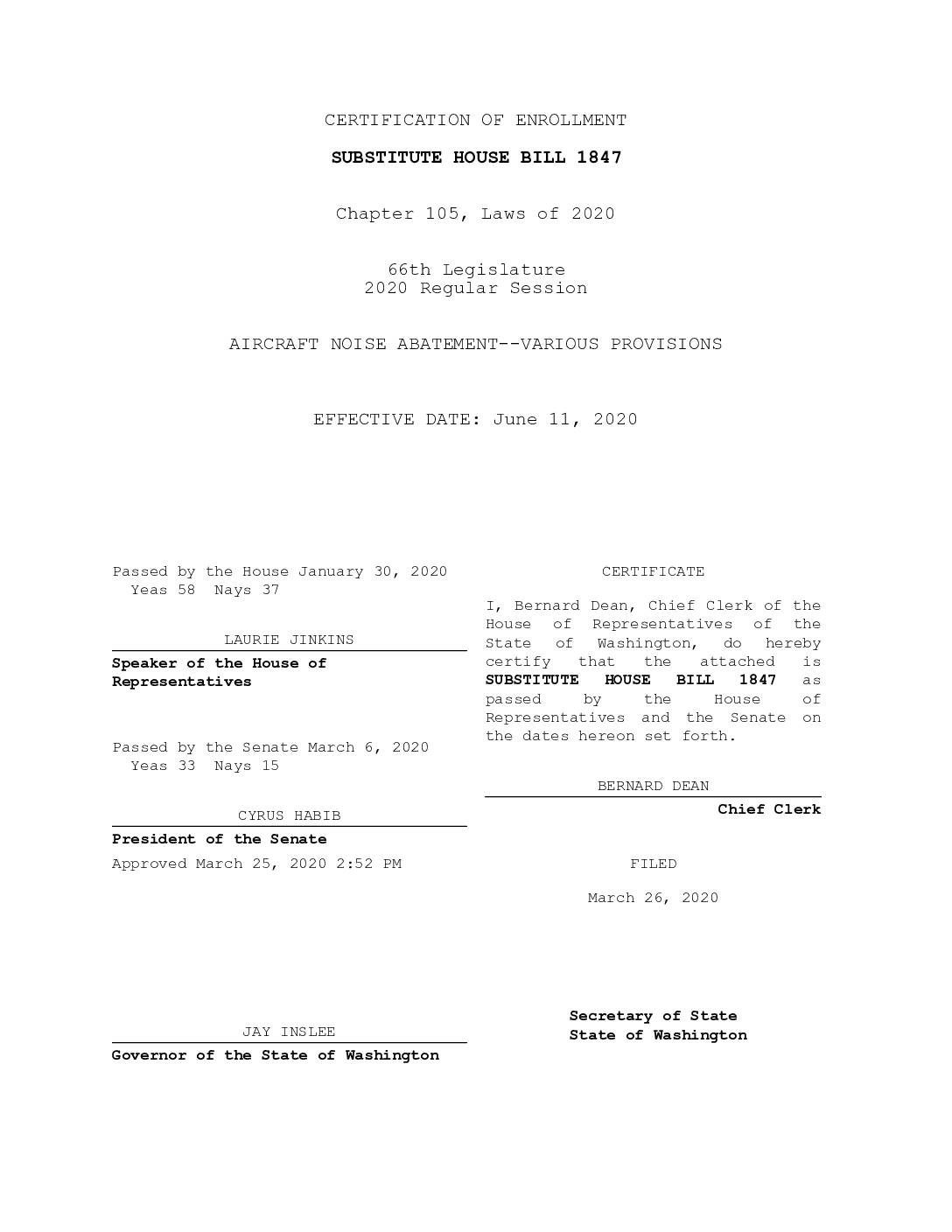
SHB1847 – Aircraft Noise Abatement Various Provisions
Washington State's Substitute House Bill 1847, signed into law on March 25, 2020, expands the aircraft noise abatement programs available to port districts by lowering the threshold for eligibility from airports serving more than 900 scheduled jet flights per day (previously 20). The law also enlarges the geographic 'impacted areas' around runways where noise relief programs—such as soundproofing, property acquisition, and transaction assistance—can be offered, extending coverage from six to ten miles north and up to thirteen miles south of runway ends, and from one to two miles from runway centerlines. -
 2020-03-24
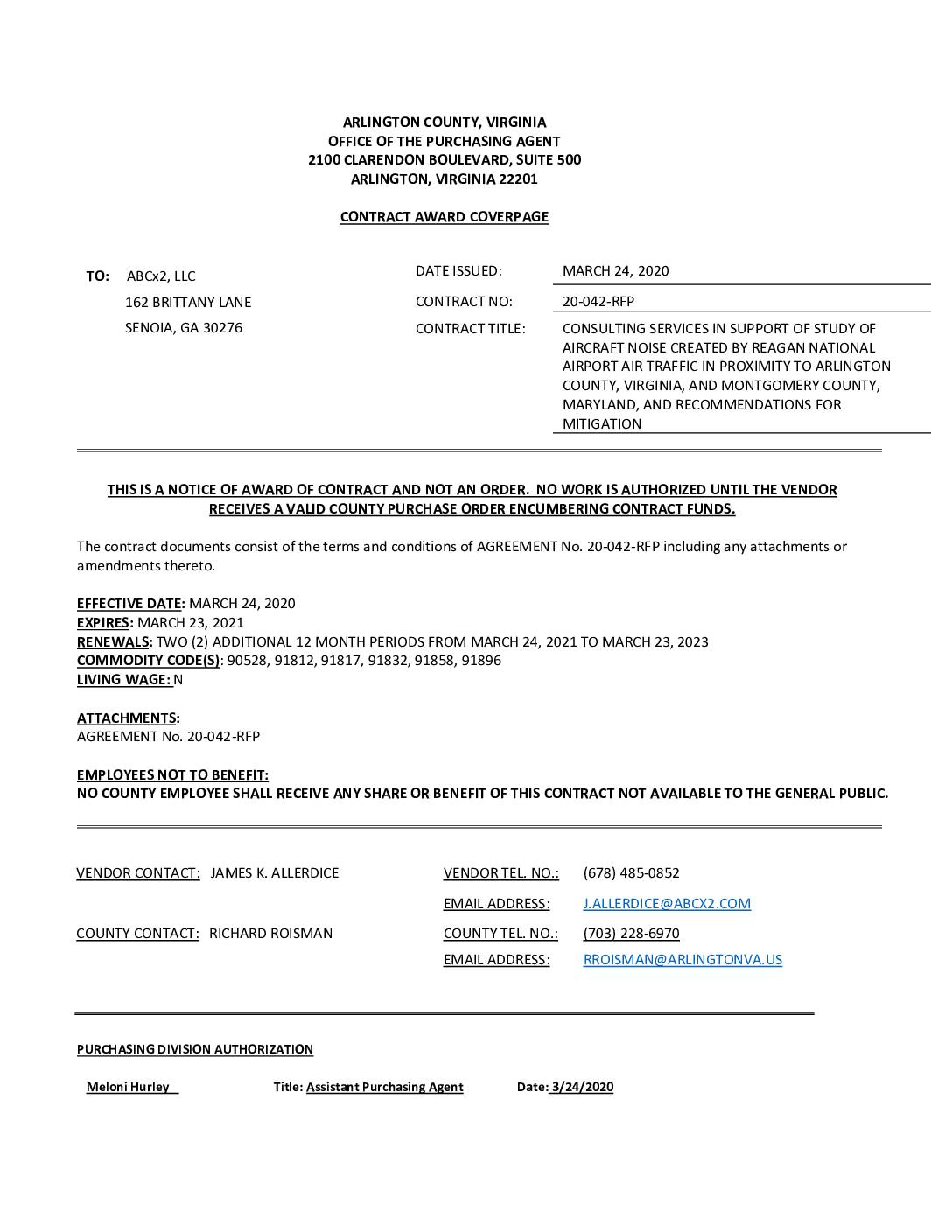
Contract Award: Agreement No. 20-042-RFP — Consulting Services for Aircraft Noise Study, Reagan National Airport
Arlington County, Virginia awarded a consulting contract (No. 20-042-RFP) to ABCx2, LLC in March 2020 to study aircraft noise generated by Reagan National Airport air traffic affecting Arlington County, Virginia, and Montgomery County, Maryland, and to recommend mitigation strategies. The fixed-price contract is valued at up to $250,000 and covers an initial 12-month term with the option for two additional one-year renewals through March 2023. Note: This contract pertains to Reagan National Airport and Arlington/Montgomery County communities, not Sea-Tac Airport. -
 2009-05-18
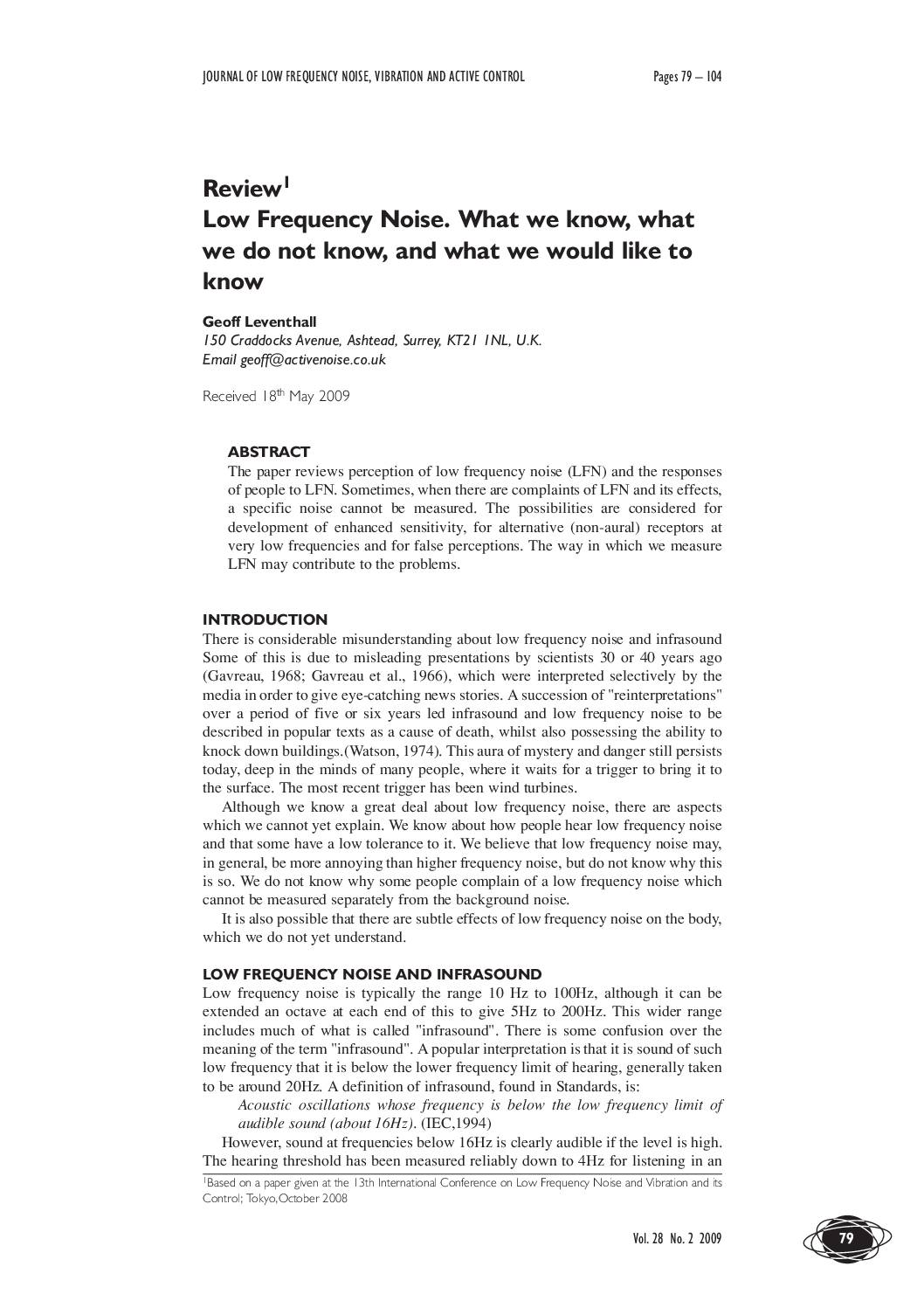
Low Frequency Noise. What we know, what we do not know, and what we would like to know
Academic review paper examining perception of low frequency noise and infrasound, including human responses, measurement challenges, and the historical misconceptions that have created public fear around these sound phenomena. The paper addresses hearing thresholds, sensitivity variations, and unexplained complaints of low frequency noise. -
 2008-11-10
Federal Aviation Administration record of approval 14 CFR Part 150 Noise compatibility program ronald reagan washington national airport
FAA record of approval for Ronald Reagan Washington National Airport’s Noise Compatibility Program under 14 CFR Part 150. The document evaluates eight noise abatement measures and six noise mitigation measures, with the FAA providing approvals and disapprovals for various proposed actions. -
 2005-08-18
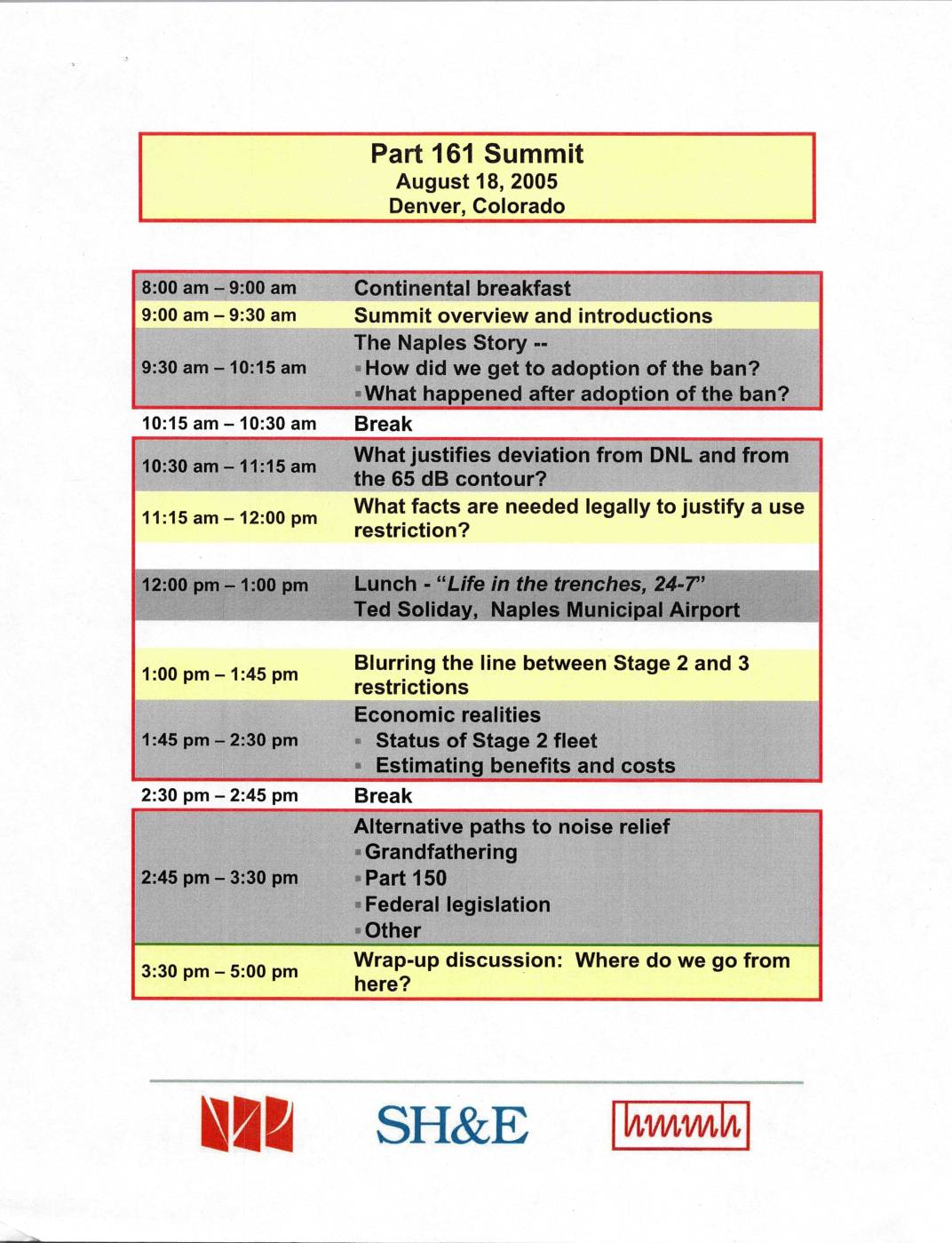
Part 161 Summit agenda
This document is an agenda and discussion outline from the Part 161 Summit held on August 18, 2005, in Denver, Colorado, focused on airport noise use restrictions. It covers topics including the Naples Municipal Airport's experience with a noise ban, the legal and factual requirements needed to justify aircraft use restrictions, and alternative paths to noise relief such as grandfathering, Part 150 programs, and federal legislation. Key criteria for imposing Stage 3 noise restrictions under the Noise Act and FAR Part 161 are outlined, including ensuring restrictions are reasonable, non-discriminatory, and do not unduly burden interstate commerce or the national aviation system. -
 2004-06-01
Guide to Airport Noise Rules and Use Restrictions
This guide, produced by law firm Kaplan Kirsch & Rockwell and noise consulting firm Harris Miller Miller & Hanson, explains the rules and regulations governing airport noise and aircraft use restrictions at publicly owned airports. It covers who is responsible for regulating airports and aircraft, what tools airports have to manage noise, and the requirements of the Airport Noise and Capacity Act of 1990. The guide is designed for airport managers, elected officials, consultants, and community groups seeking to understand how noise disputes are handled and resolved. -
 2004-05-03
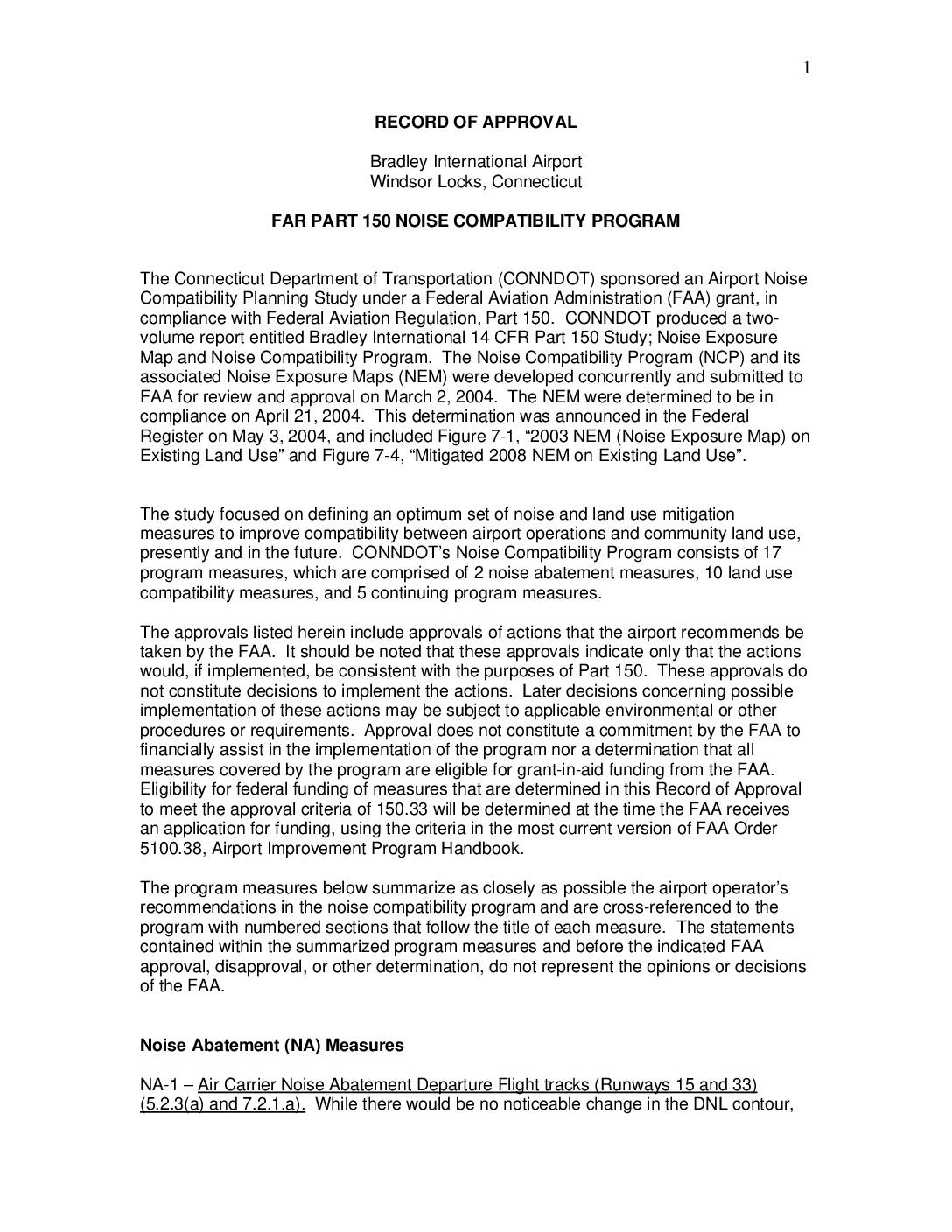
Record of Approval – Bradley International Airport FAR Part 150 Noise Compatibility Program
FAA Record of Approval for Bradley International Airport’s Part 150 Noise Compatibility Program, detailing approved and disapproved noise abatement and land use compatibility measures. The program includes 17 measures comprising 2 noise abatement measures, 10 land use compatibility measures, and 5 continuing program measures. -
 2003-05-20
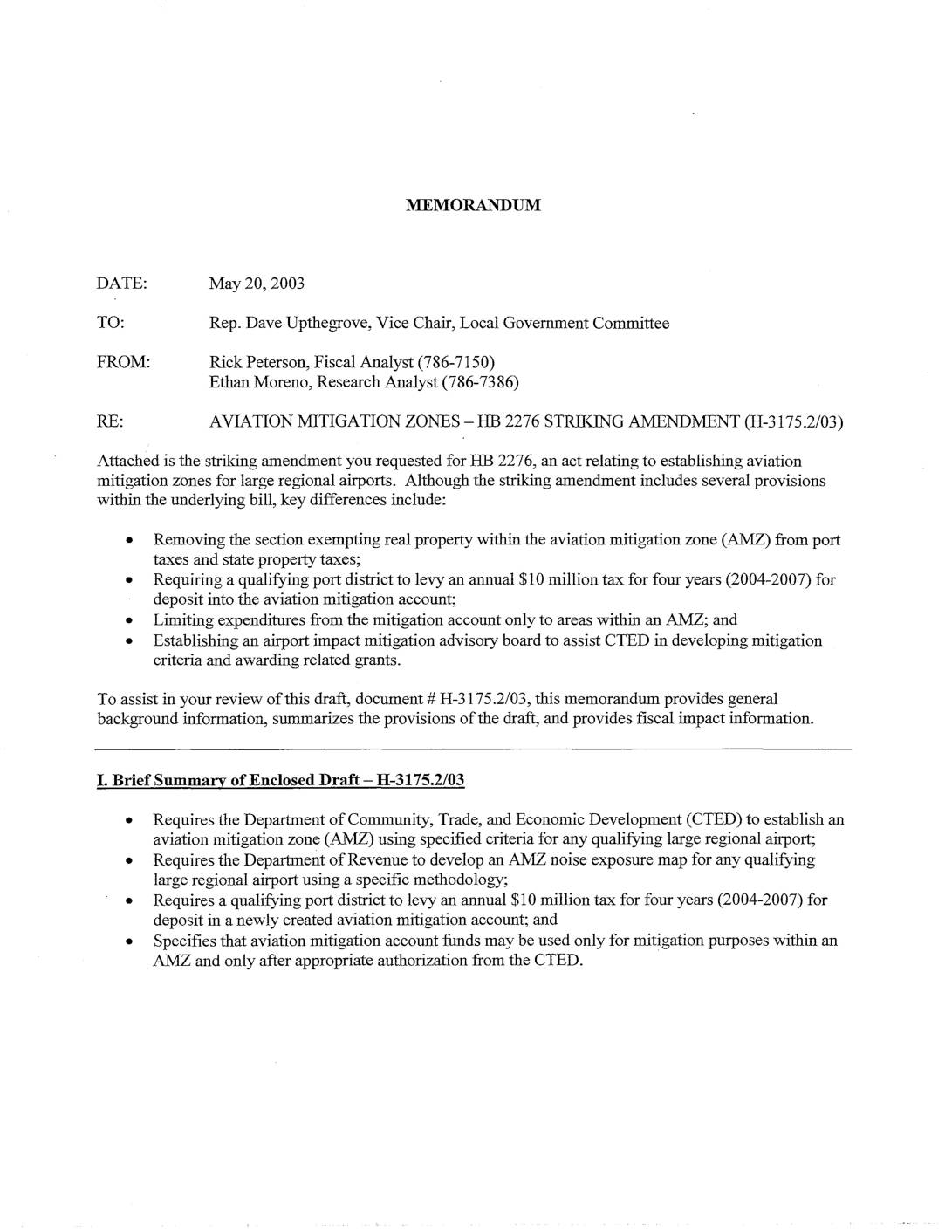
Aviation Mitigation Zones – HB 2276 Striking Amendment (H-3175.2/03)
A 2003 Washington State legislative memorandum outlines a proposed striking amendment to HB 2276, which would establish Aviation Mitigation Zones (AMZs) around large regional airports like Seattle-Tacoma International Airport to address noise impacts on nearby communities. The amendment would require the Port of Seattle to levy $10 million annually from 2004 to 2007 into a dedicated mitigation fund, with spending restricted to affected areas within the AMZ. An advisory board and competitive grant process would be created to help distribute funds to eligible local governments, schools, and nonprofits in impacted neighborhoods such as Burien, Des Moines, Tukwila, and Normandy Park. -
 1996-03-27
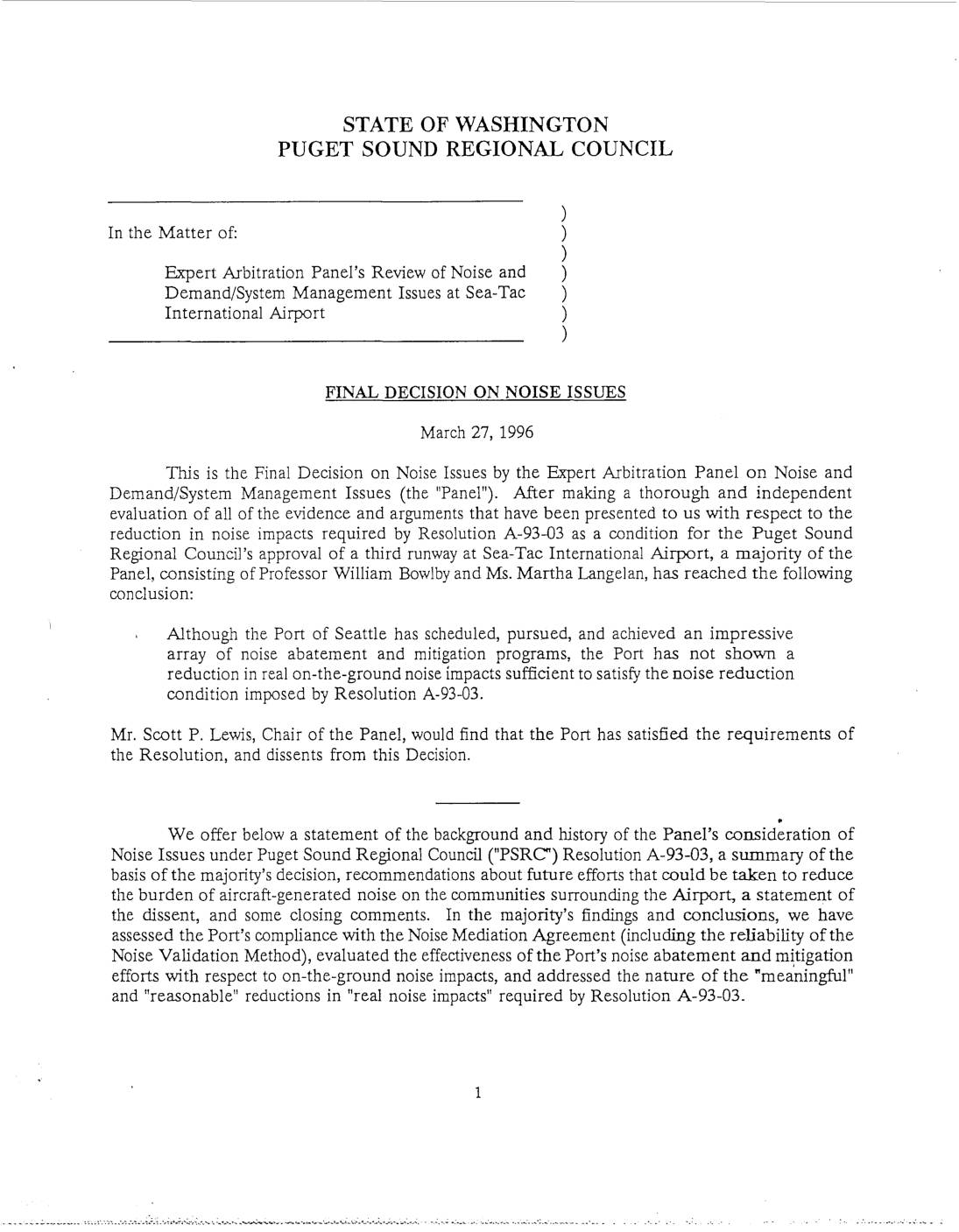
Final Decision on Noise Issues – Expert Arbitration Panel’s Review of Sea-Tac International Airport
★In March 1996, an Expert Arbitration Panel reviewed whether the Port of Seattle had met noise reduction requirements set by the Puget Sound Regional Council as a condition for approving a third runway at Sea-Tac International Airport. A majority of the Panel concluded that, despite the Port's extensive noise abatement programs, it had not demonstrated a sufficient reduction in real, on-the-ground noise impacts to satisfy Resolution A-93-03. This decision left the noise condition as the sole remaining hurdle for authorizing the third runway's construction. -
 1990-01-01
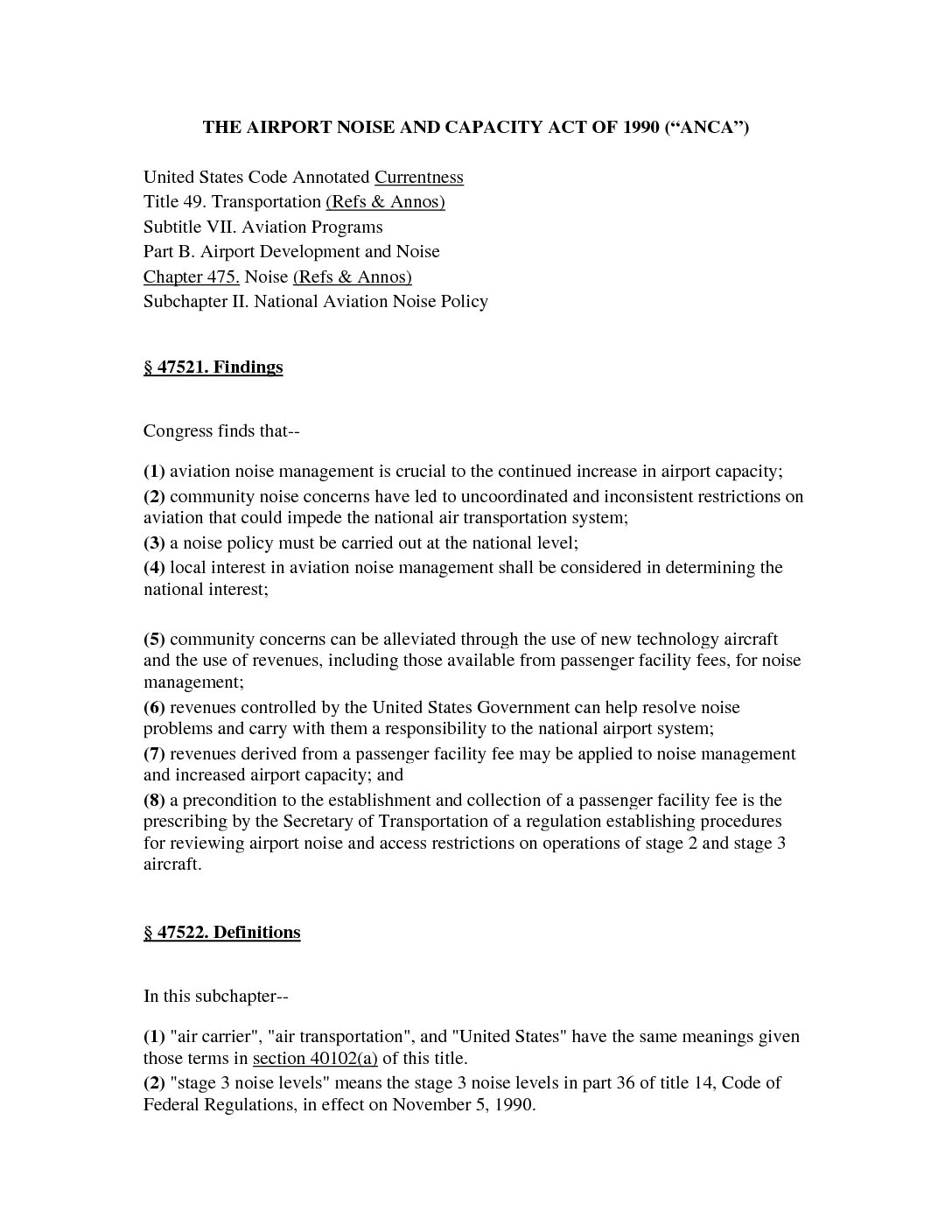
ANCA Airport Noise and Capacity Act of 1990 cover page
This is a page from the United States Code Annotated showing the Airport Noise and Capacity Act of 1990 (ANCA), Title 49, Subtitle VII, Chapter 475, Subchapter II. It includes Congressional findings (§ 47521) on aviation noise management and national noise policy, and definitions (§ 47522) including 'stage 3 noise levels' as defined in 14 CFR Part 36 effective November 5, 1990.