TagSea-Tac Airport(1835)
-
 2018-11-27
Draft 2019 state legislative agenda briefing to Port Of Seattle Commission
In November 2018, the Port of Seattle briefed its Commission on a draft 2019 State Legislative Agenda focused on reducing emissions, growing jobs, and increasing opportunities. Key priorities included supporting a Clean Fuels Standard to lower carbon intensity of transportation fuels, enhancing workforce development in maritime and industrial sectors, and securing state funding to improve transportation access to Sea-Tac Airport, including upgrades to State Route 518 and the Puget Sound Gateway program. The agenda was developed through consultation with Port subject matter experts and individual commissioners, with final adoption targeted for December 11, 2018. -
 2018-11-26
Westside Beautification – Port of Seattle style
A political cartoon by artist Kelliher depicting a massive bulldozer labeled 'Destruction Construction Company' destroying trees planted by Scouts, while a figure labeled 'Port of Seattle' holds an 'Airport Landscaping Plan' and tells an off-panel character 'Don't let the Scouts bother you — we got a lot of beautifying yet to do.' The caption reads 'Westside Beautification - Port of Seattle style,' satirizing the Port of Seattle's land-clearing activities around Sea-Tac Airport in conflict with community beautification efforts. -
 2018-11-15
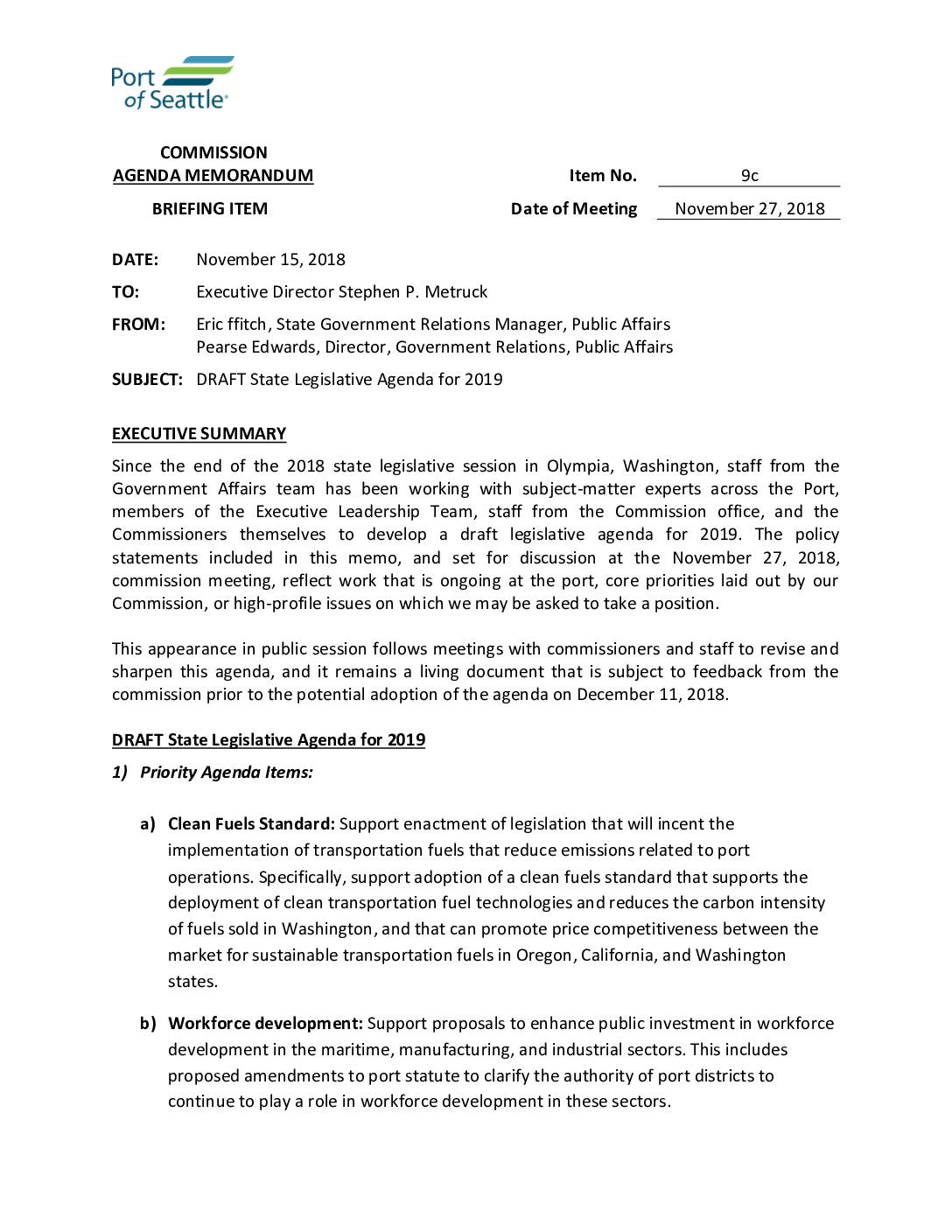
Draft state legislative agenda for 2019
This November 2018 Port of Seattle Commission memo outlines a draft state legislative agenda for 2019, covering priorities such as clean fuels standards, workforce development, and transportation access to Sea-Tac Airport. While not exclusively focused on airport noise policy, it addresses funding for transportation infrastructure upgrades around Sea-Tac, including State Route 518 improvements and the Puget Sound Gateway Program, aimed at managing growing traffic demands from airport expansion. The document also touches on land use, small business inclusion, and maritime innovation as broader port-related legislative goals. -
 2018-11-13
Draft 2019 state legislative agenda: Briefing to Port Of Seattle Commission
In November 2018, the Port of Seattle presented its Draft 2019 State Legislative Agenda to the Port Commission, outlining key priorities including workforce development in maritime and industrial sectors, transportation access improvements to Sea-Tac Airport via State Route 518 and the Puget Sound Gateway program, and support for a Clean Fuels Standard to reduce emissions from port operations. The agenda was developed through consultation with internal subject matter experts and individual commissioners, with a focus on reducing emissions, growing jobs, and increasing opportunities. Final adoption of the agenda was scheduled for the Commission's November 27, 2018 meeting. -
 2018-11-13
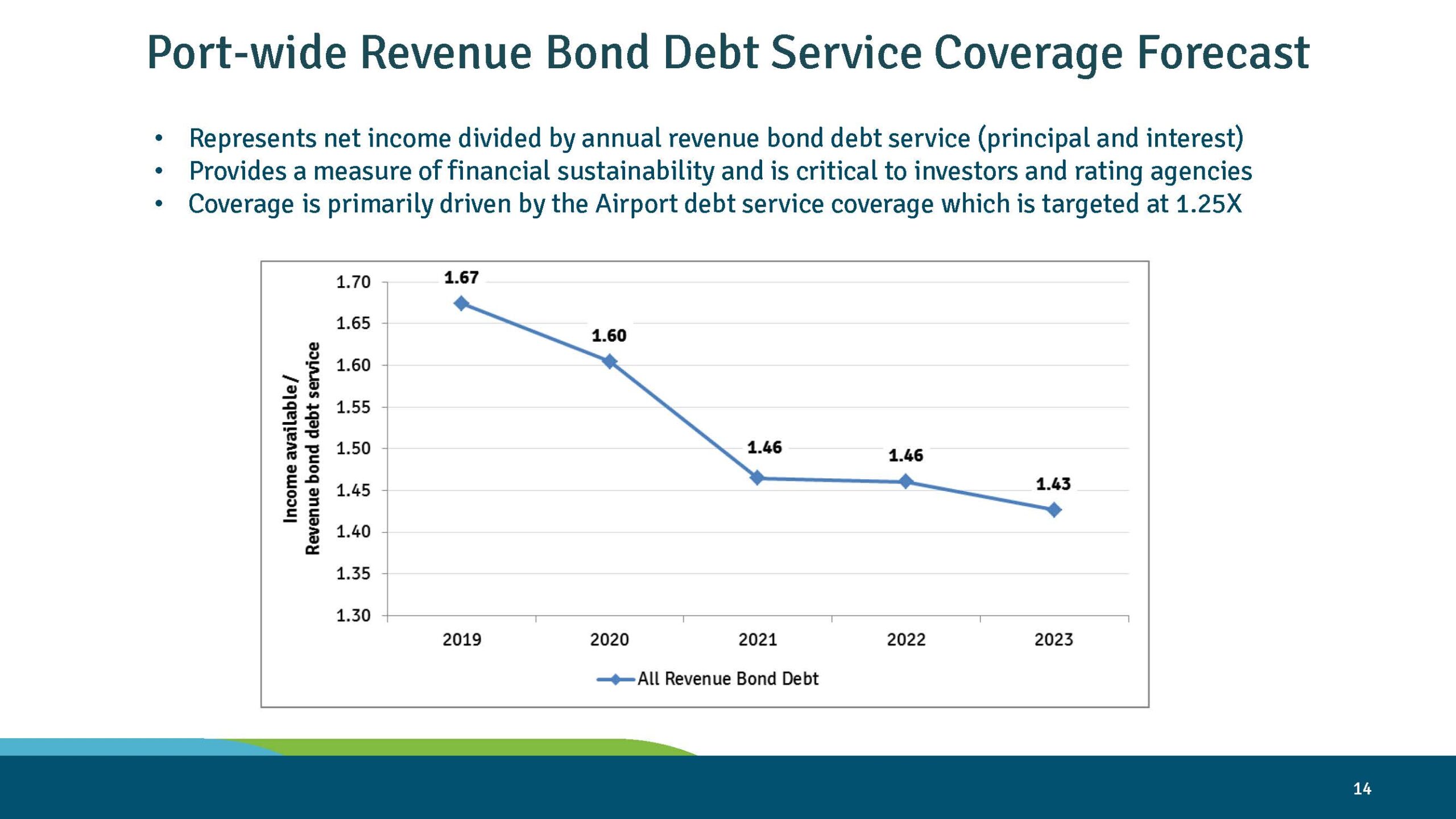
Port Of Seattle Draft Finance Plan 2019–2023 — Revenue Bond Debt Service Coverage Forecast (Page 14)
A Port of Seattle presentation slide showing the Port-wide Revenue Bond Debt Service Coverage forecast from 2019 to 2023, with coverage ratios declining from 1.67x in 2019 to a projected 1.43x in 2023. The slide notes that coverage is primarily driven by Airport debt service coverage targeted at 1.25X and serves as a measure of financial sustainability for investors and rating agencies. -
 2018-11-13
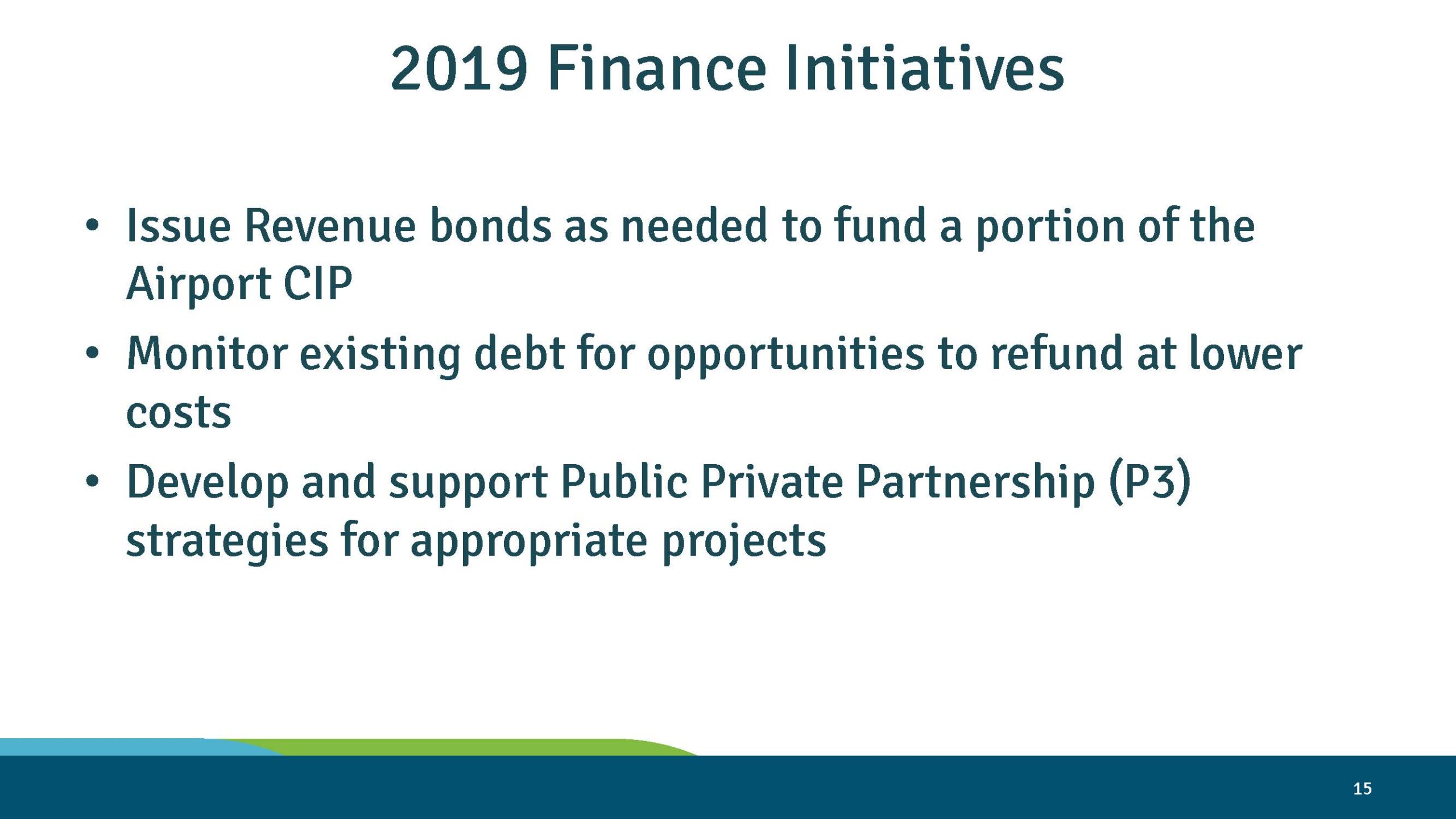
Port Of Seattle Draft Finance Plan 2019–2023 — 2019 Finance Initiatives (Slide 15, November 2018)
Slide 15 from a presentation outlining 2019 finance initiatives, including issuing revenue bonds to fund a portion of the Airport Capital Improvement Program (CIP), monitoring existing debt for refinancing opportunities, and developing Public Private Partnership (P3) strategies for appropriate projects. Context indicates this is related to Sea-Tac Airport financial planning. -
 2018-11-06
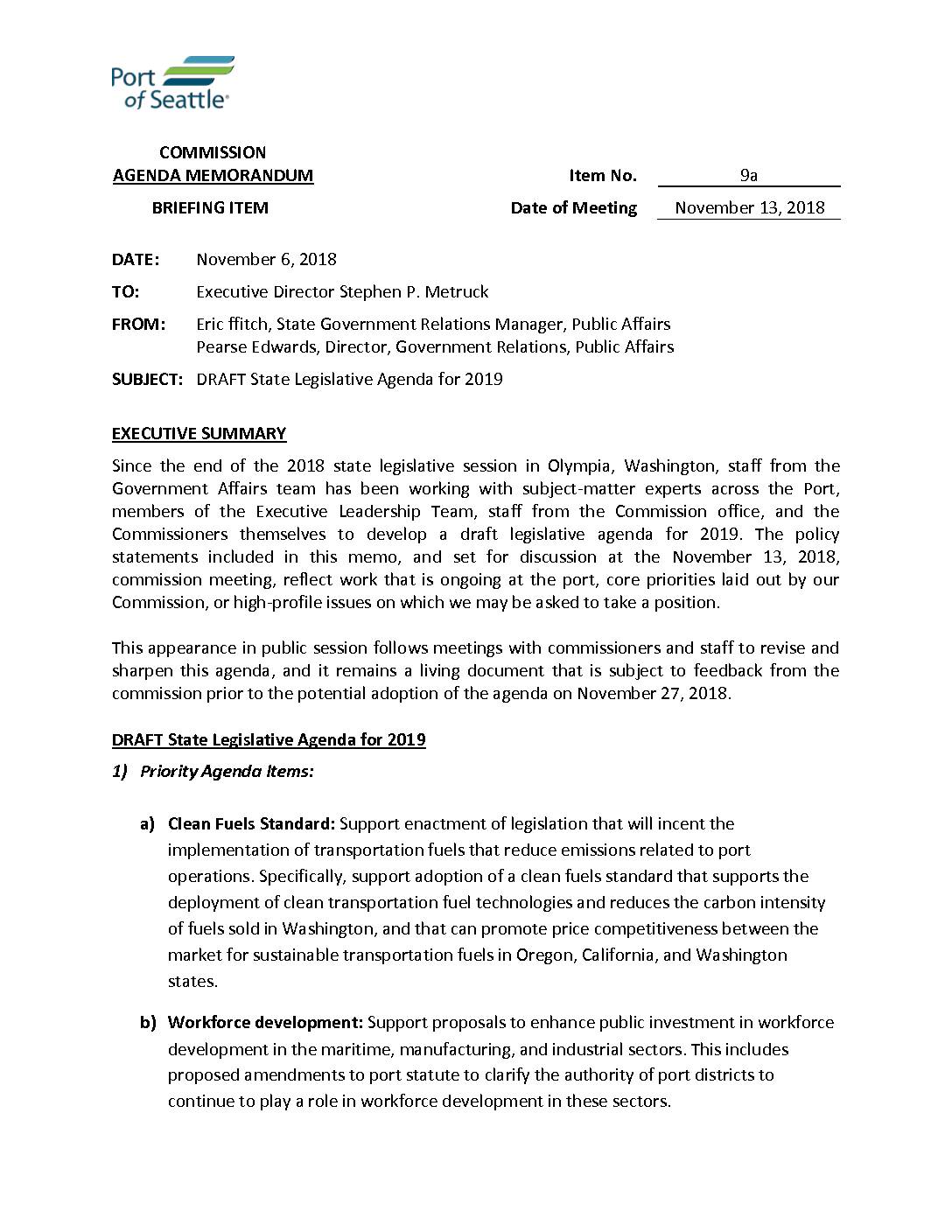
Draft state legislative agenda for 2019
The Port of Seattle's draft 2019 state legislative agenda outlines priority policy areas including support for a clean fuels standard to reduce emissions from port operations, workforce development in maritime and industrial sectors, and improved transportation access to Sea-Tac Airport via State Route 518 and the Puget Sound Gateway program. The agenda also covers land use protections for port-related zones, small business inclusion, and funding for a Maritime Innovation Center. While the document addresses transportation infrastructure near Sea-Tac, it does not specifically focus on airport noise policy. -
 2018-11-05
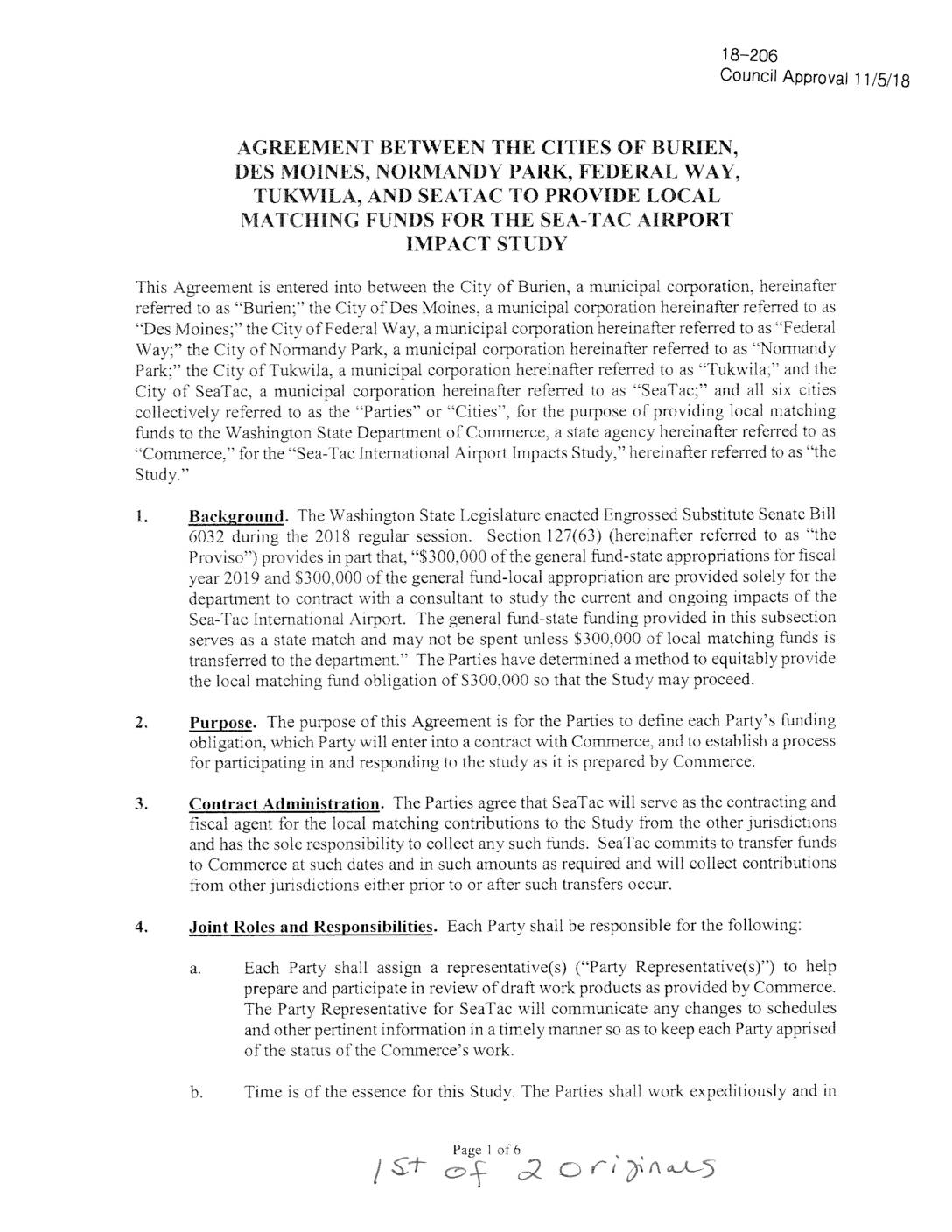
Agreement Between the Cities of Burien, Des Moines, Normandy Park, Federal Way, Tukwila, and Sea-Tac to Provide Local Matching Funds for the Sea-Tac Airport Impact Study
Six cities near Seattle-Tacoma International Airport — Burien, Des Moines, Federal Way, Normandy Park, Tukwila, and SeaTac — agreed to jointly contribute $300,000 in local matching funds to unlock an equal amount of state funding for a study of the airport's current and ongoing impacts on surrounding communities. Under the agreement, the City of SeaTac serves as the fiscal and contracting agent, collecting contributions from the other cities and transferring the combined funds to the Washington State Department of Commerce, which will hire a consultant to conduct the study. The agreement outlines each city's financial obligations, dispute resolution procedures, and the process for participating in and reviewing the study's draft findings. -
 2018-11-02
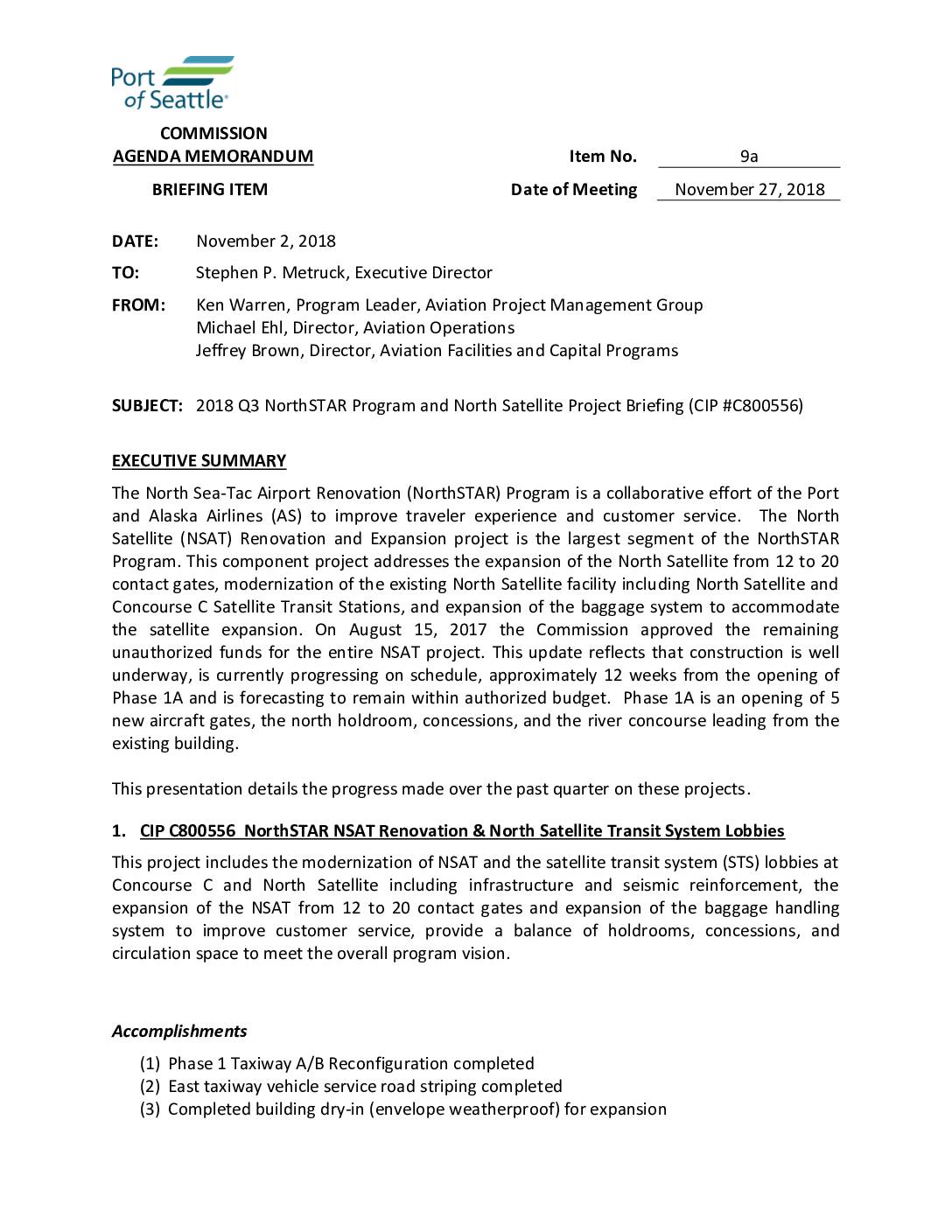
2018 Q3 NorthSTAR Program and North Satellite Project briefing (CIP #C800556)
This November 2018 Port of Seattle commission briefing provides a quarterly update on the NorthSTAR Program, a joint Port of Seattle and Alaska Airlines effort to renovate and expand Sea-Tac Airport's North Satellite facility from 12 to 20 contact gates. Construction was reported as on schedule and within its $672.1 million authorized budget, with Phase 1A — including 5 new gates, a north holdroom, and concessions — on track to open in January 2019. The report also covers workforce diversity metrics, change orders, and upcoming milestones extending through a projected project completion in July 2021. -
2018-10-25
Burien stirred up by roar from sharp increase in Sea-Tac Airport overflights
Originally published October 25, 2018 at 6:00 am Updated October 25, 2018 at 7:40 am The FAA has directed all southbound Horizon Air Q400 turboprop planes taking off from Sea-Tac to the north to make an automated turn immediately after takeoff almost due west over Burien. The flight-path change has spurred protests and a lawsuit from