TagSea-Tac Airport(1835)
-
 2018-12-11
State legislative agenda for 2019
In December 2018, the Port of Seattle Commission reviewed its draft state legislative priorities for the 2019 session, covering topics such as clean fuels standards, workforce development, and transportation access to Sea-Tac Airport. The agenda sought state funding for transportation infrastructure improvements, including potential upgrades to State Route 518 and the Puget Sound Gateway Program, to address growing demand linked to airport expansion. Additional priorities included supporting small and minority-owned businesses, maritime innovation, and land use policies affecting port competitiveness. -
 2018-12-11
2019 State legislative agenda: Request for final adoption
The Port of Seattle presented its 2019 State Legislative Agenda for final Commission adoption on December 11, 2018, outlining three priority areas: workforce development in maritime and industrial sectors, transportation access improvements to Sea-Tac Airport (including upgrades to State Route 518 and the Puget Sound Gateway program), and a Clean Fuels Standard to reduce emissions from port operations. The agenda reflects feedback gathered from subject matter experts, commissioners, and executive staff following an initial November 27, 2018 presentation. The overarching focus of the legislative priorities is reducing emissions, growing jobs, and increasing opportunities in the region. -
 2018-12-07
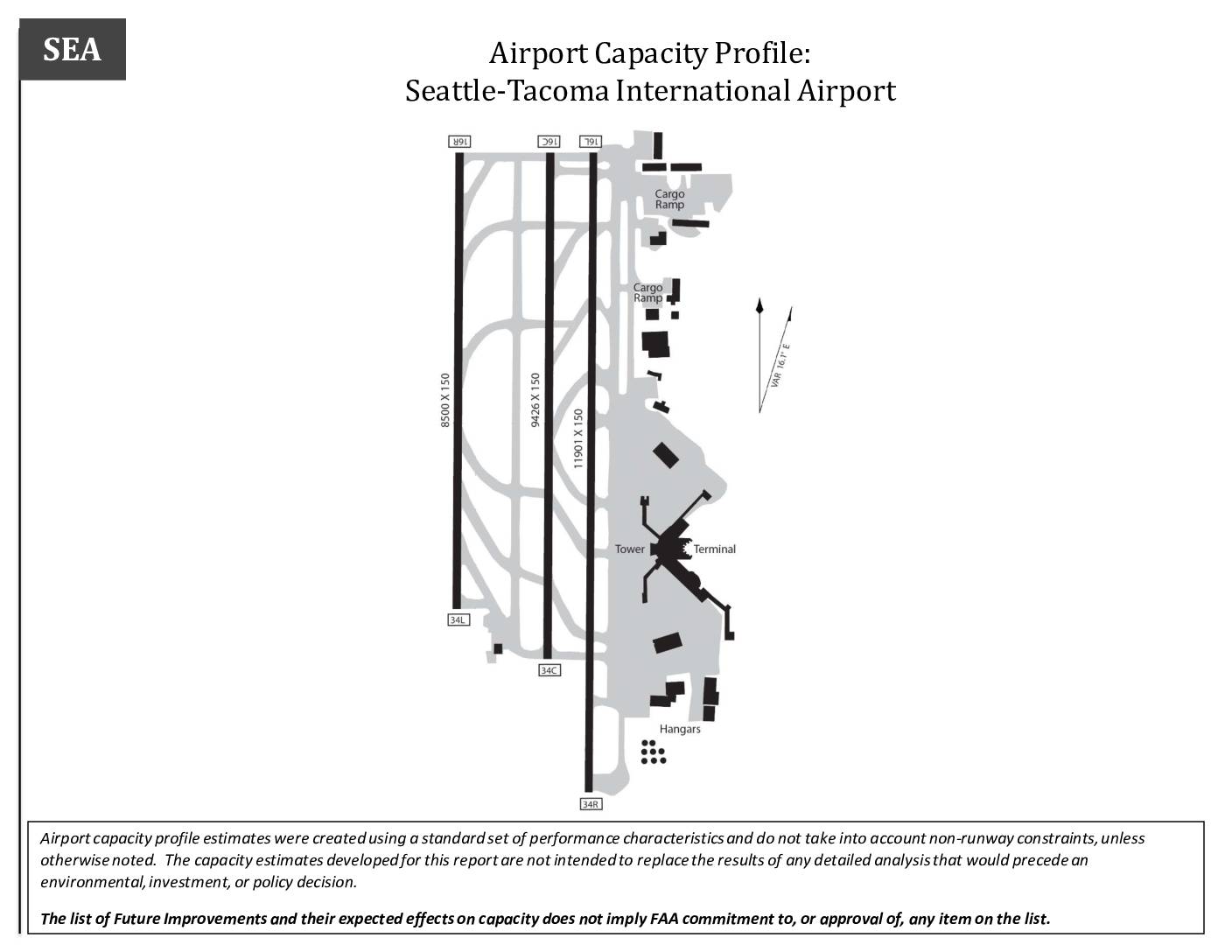
FAA Airport Capacity Profile: Sea-Tac International Airport
This FAA Airport Capacity Profile for Seattle-Tacoma International Airport (SEA) outlines the airport's runway configurations and hourly flight capacity under different weather conditions, including visual, marginal, and instrument scenarios. The document describes recent improvements such as Time-Based Flow Management and Reduced Diagonal Spacing, as well as future enhancements like improved runway delivery accuracy and Wake Recategorization Phase 2, all aimed at increasing the number of aircraft the airport can handle safely. Data covering December 2015 through December 2016 shows that visual conditions prevail 57% of the year, with instrument conditions occurring 25% of the time. -
 2018-12-04
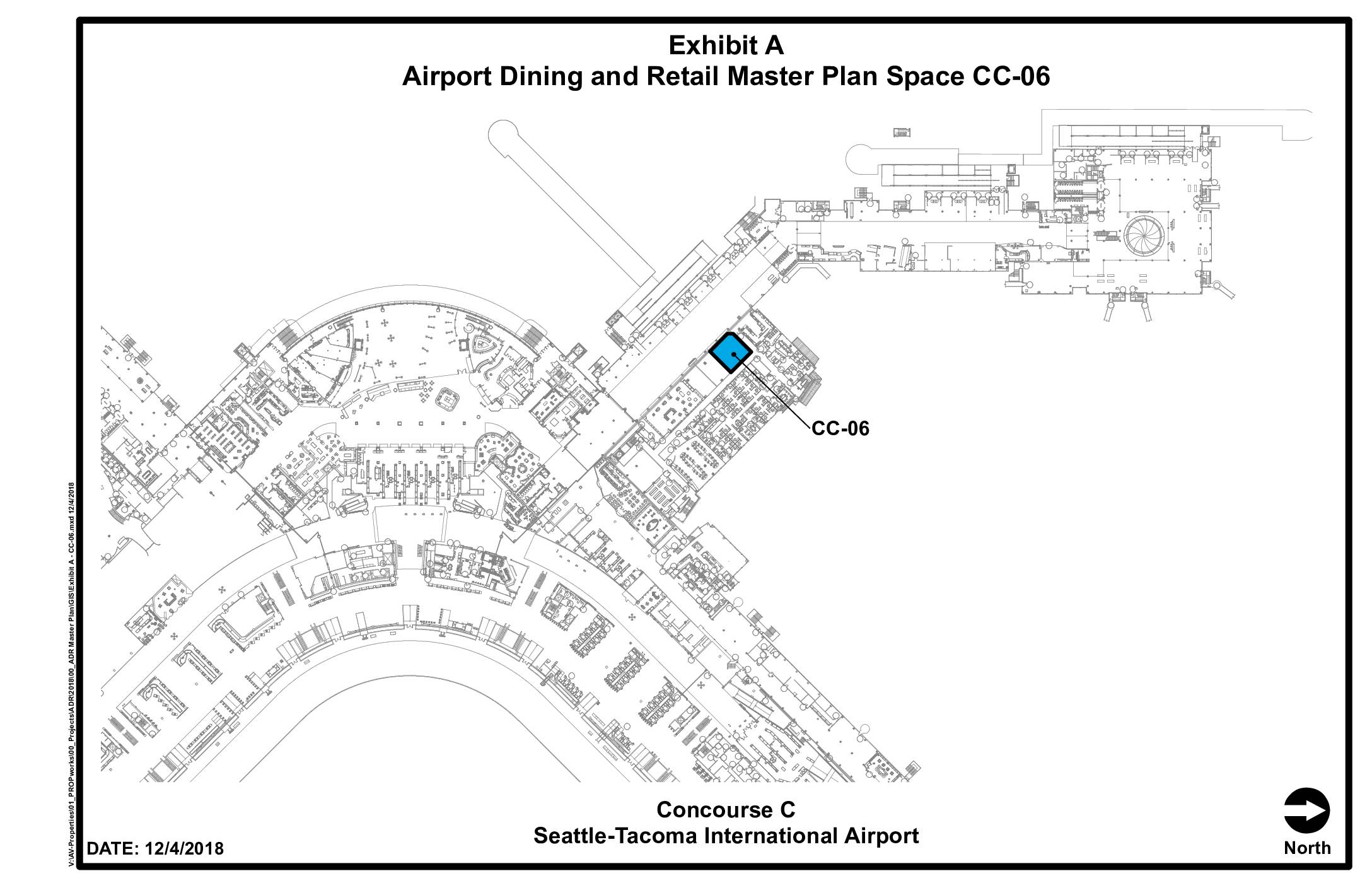
Exhibit A: Airport Dining and Retail Master Plan Space CC-06
This document is a floor plan exhibit from Seattle-Tacoma International Airport's Airport Dining and Retail Master Plan, dated December 4, 2018, identifying a specific retail or dining space designated CC-06 located in Concourse C. The highlighted space is shown on a detailed map of the concourse layout, pinpointing its position along the main concourse corridor. The exhibit was produced for planning and leasing reference purposes related to the airport's dining and retail program. -
 2018-12-04
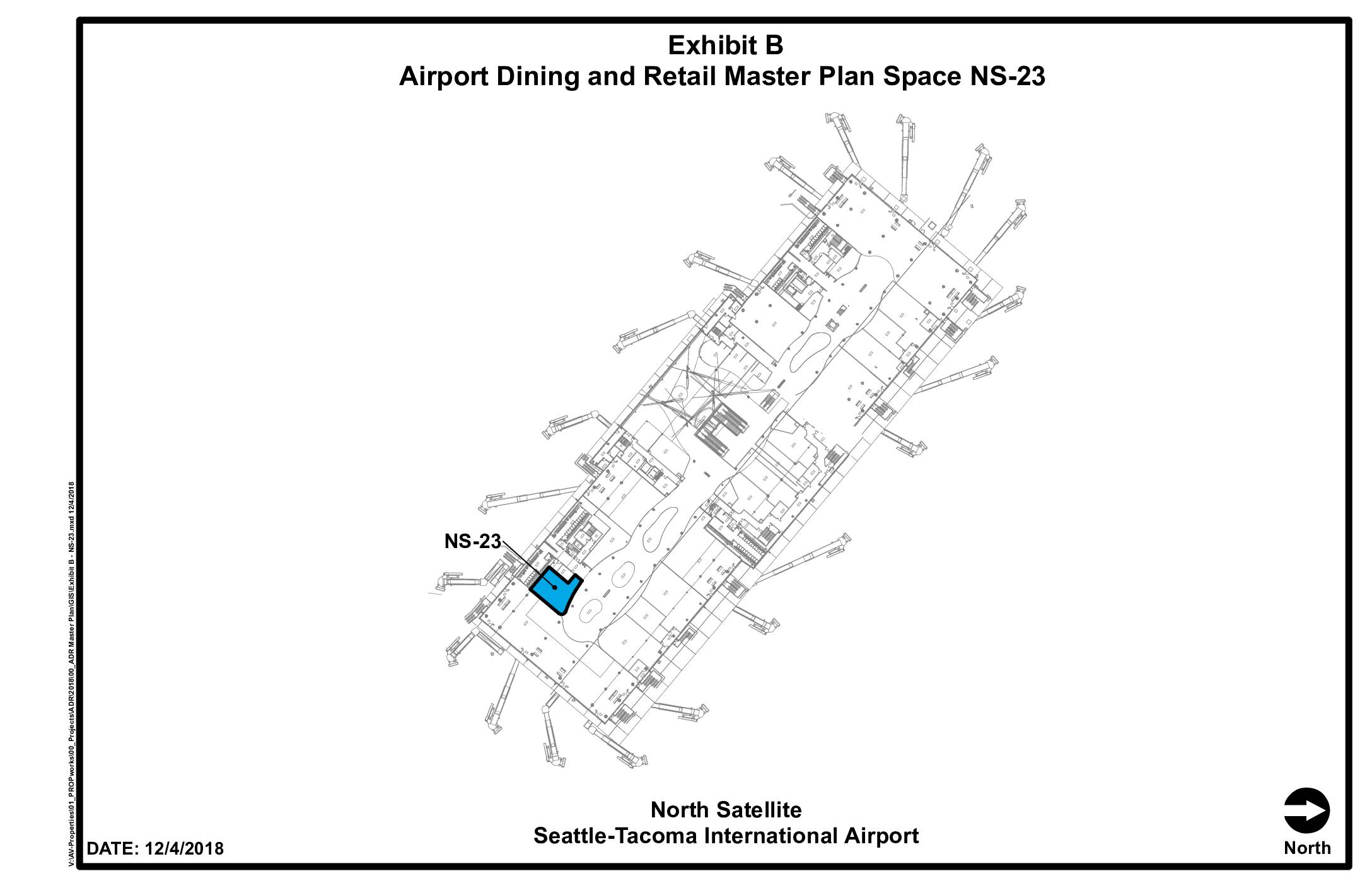
Exhibit B: Airport Dining and Retail Master Plan Space NS-23
This document is a floor plan exhibit identifying retail or dining space NS-23 located in the North Satellite terminal at Seattle-Tacoma International Airport, dated December 4, 2018. The highlighted space is part of the Airport Dining and Retail Master Plan and is shown in blue on the terminal map. It serves as a reference document for leasing or planning purposes related to commercial concession spaces within the North Satellite. -
 2018-12-04
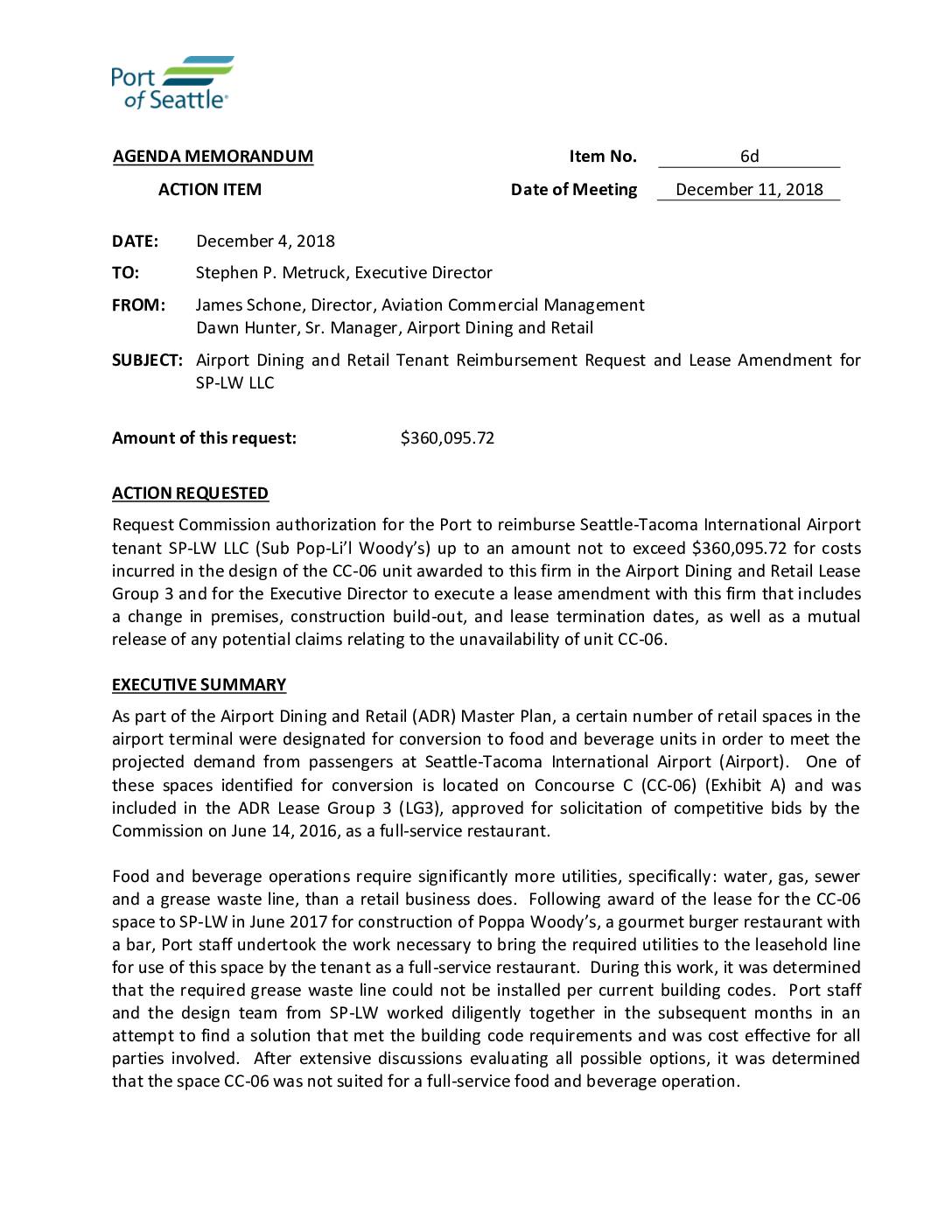
Airport Dining and Retail tenant reimbursement request and lease amendment for SP-LW LLC
The Port of Seattle requested Commission approval to reimburse airport tenant SP-LW LLC (Sub Pop-Li'l Woody's) up to $360,095.72 for design costs after it was discovered that a required grease waste line could not be installed at their originally awarded Concourse C restaurant space (CC-06) due to building code constraints. As a resolution, the Port proposed moving the tenant to a comparable space in the North Satellite (NS-23) and amending their lease accordingly, with no changes to concession fees. The situation also prompted the Port to establish new planning protocols to verify utility infrastructure viability before awarding future food and beverage spaces. -
 2018-12-02
Beacon Hill Seattle Community Noise Team presentation
The Beacon Hill Seattle Community Noise Team, a group of neighborhood residents working with the University of Washington, has been documenting the disproportionate impact of Sea-Tac Airport aircraft noise on their community. Building on decades of prior advocacy—including a landmark April 2000 report by Citizens for Aircraft Noise Equity—the team highlights that official noise impact assessments still rely on mathematical models rather than actual measured data. Beginning in October 2017, they launched a citizen science effort to conduct systematic, long-term noise measurements throughout the Beacon Hill neighborhood, with a focus on health effects and impacts on children's learning. -
 2018-11-27
Motion 2018-14: A motion of the Port Of Seattle Commission directing fund designation for 2019-2023
In November 2018, the Port of Seattle Commission passed Motion 2018-14, directing up to $10 million over 2019–2023 to support Sea-Tac Airport area communities in South King County, including efforts to address airport noise and environmental health. The motion also designated up to $5 million for sustainable aviation fuels and air emissions reduction programs, and allocated $531,000 for a two-year pilot program to educate airport workers on their labor rights. Additionally, the Executive Director was directed to review and update the Port's financial management policies by September 1, 2019. -
 2018-11-27
Port Of Seattle 2019 budget reading & final adoption
The Port of Seattle presented its 2019 Budget for final adoption at a Commission Meeting on November 27, 2018, covering operating expenses, a five-year Capital Improvement Plan, staffing, and a proposed tax levy. Key initiatives included serving growing passenger demand at Seattle-Tacoma International Airport, supporting the airport's capital improvement program, improving safety and customer service, and advancing cruise and real estate development projects. Serving increased regional demand was identified as the primary driver behind the 2019 budget. -
 2018-11-27
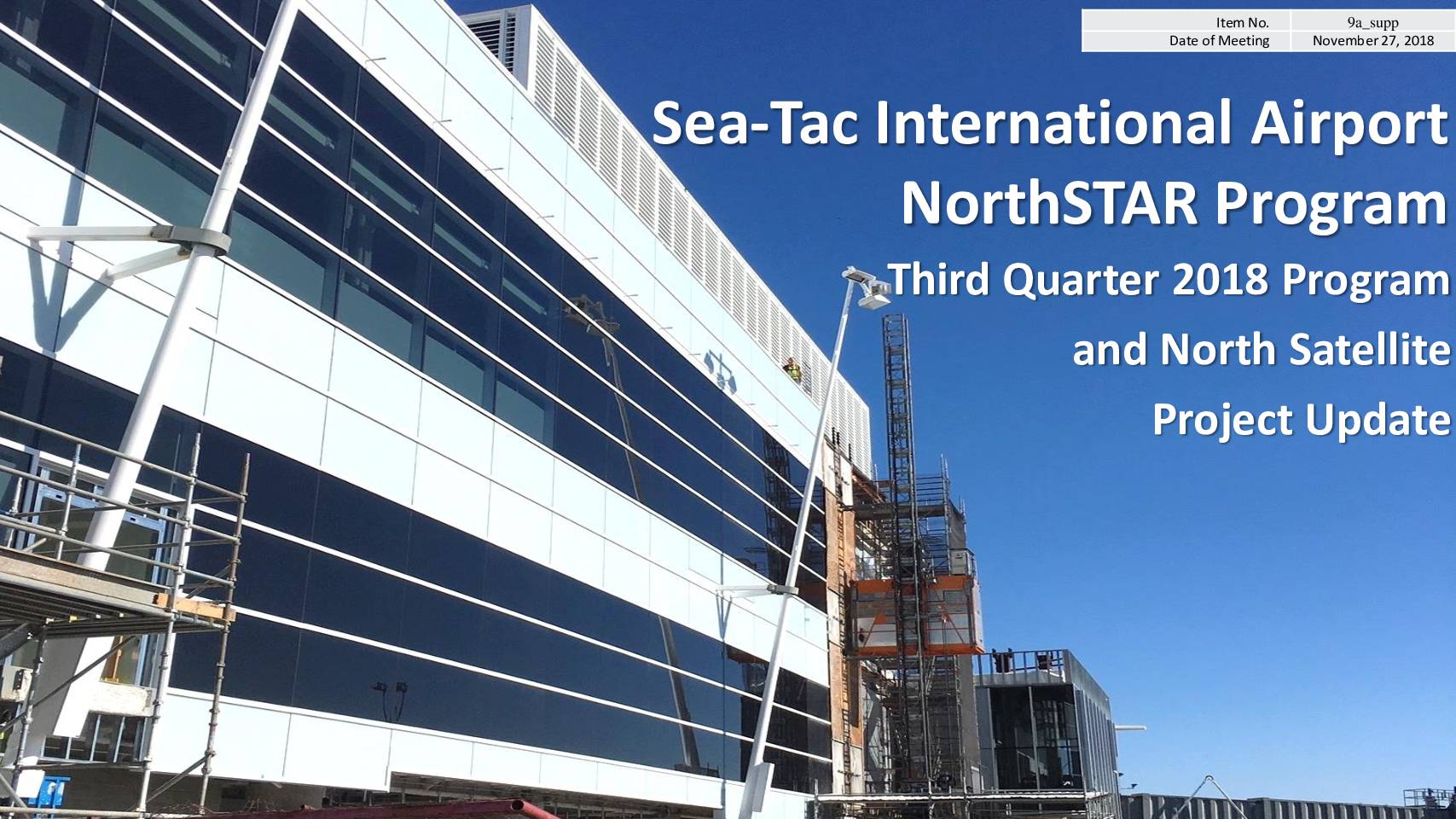
Sea-Tac International Airport NorthSTAR Program: Third quarter 2018 program and North Satellite project update
This document is a Third Quarter 2018 progress update on the NorthSTAR Program and North Satellite Modernization project at Seattle-Tacoma International Airport, presented to the Port of Seattle Commission on November 27, 2018. The project expands the North Satellite terminal from 12 to 20 contact gate positions, growing the facility from 263,000 to 428,000 square feet, and includes upgrades to infrastructure, seismic reinforcement, marketplace concessions, technology, and airline services. The update covers budget status, schedule, challenges, accomplishments, and sustainability initiatives as of Q3 2018.