TagSea-Tac Airport(1855)
-
 2001-06-22
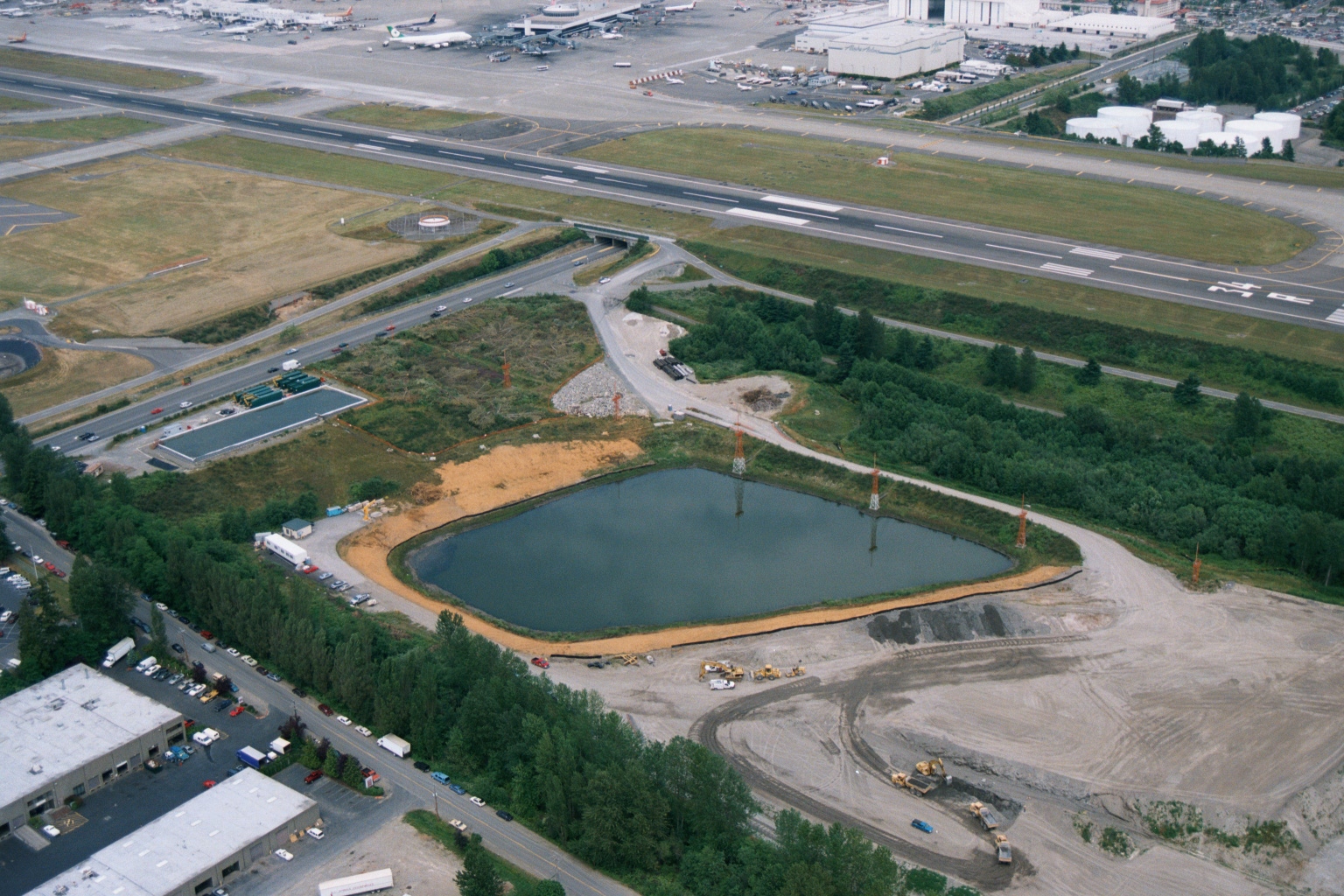
Aerial View of Stormwater Retention Pond Under Construction Near Sea-Tac Airport Runways
Aerial photograph showing an artificial retention or stormwater pond under active construction adjacent to a major airport runway complex, with construction equipment visible along the earthen berms. Industrial and commercial buildings are visible in the lower left, with airport taxiways, runways, and terminal infrastructure visible in the upper portion of the image. -
 2001-06-13
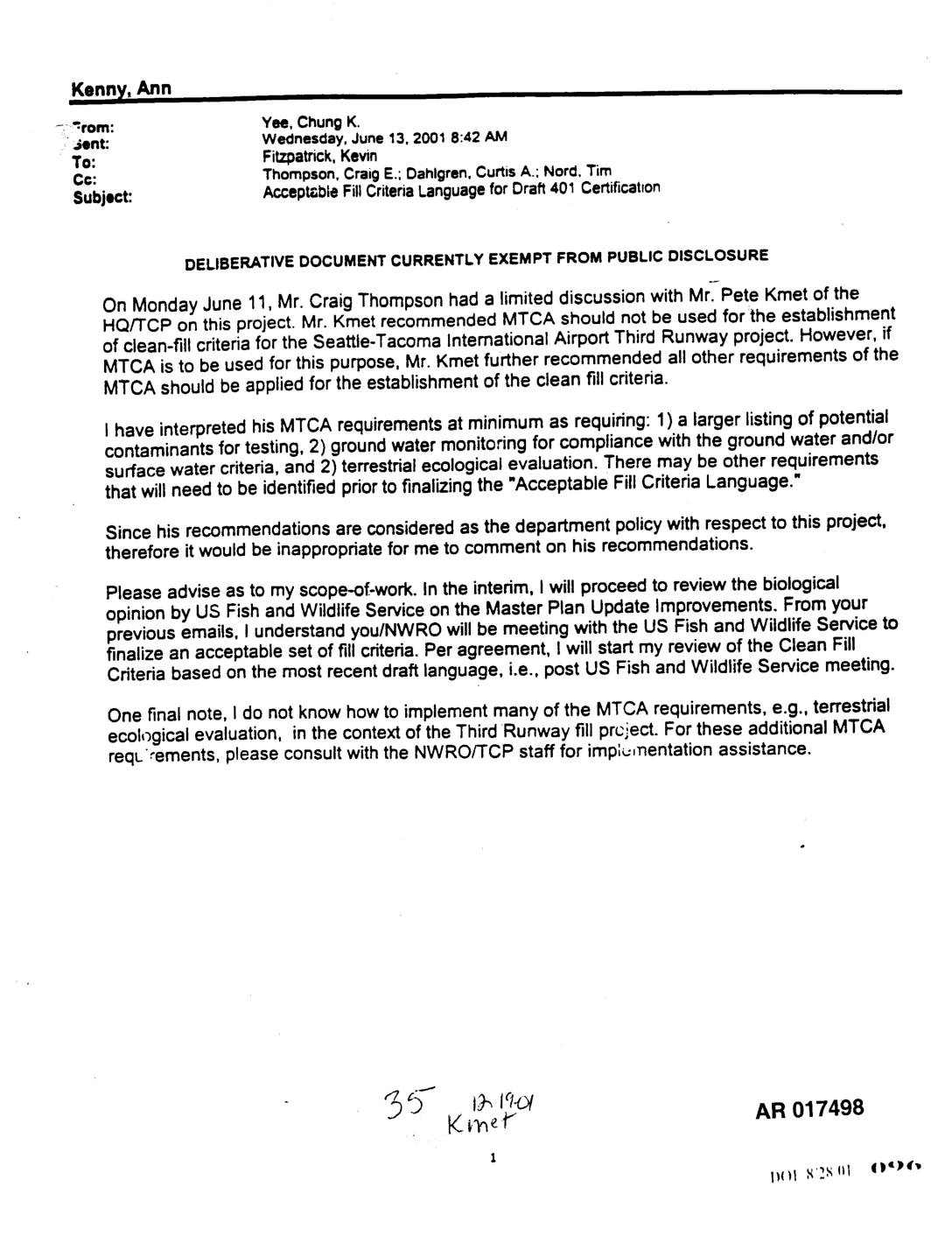
EXH AR017498: Email on Acceptable Fill Criteria Language for Draft 401 Certification — MTCA Requirements for Third Runway
Email from Chung K. Yee to Kevin Fitzpatrick (cc: Craig E. Thompson, Curtis A. Dahlgren, Tim Nord), dated June 13, 2001, regarding acceptable fill criteria language for the Draft 401 Certification for the Seattle-Tacoma International Airport Third Runway project. References June 11 discussion between Craig Thompson and Pete Kmet of HQ/TCP, who recommended MTCA (Model -
 2001-06-07
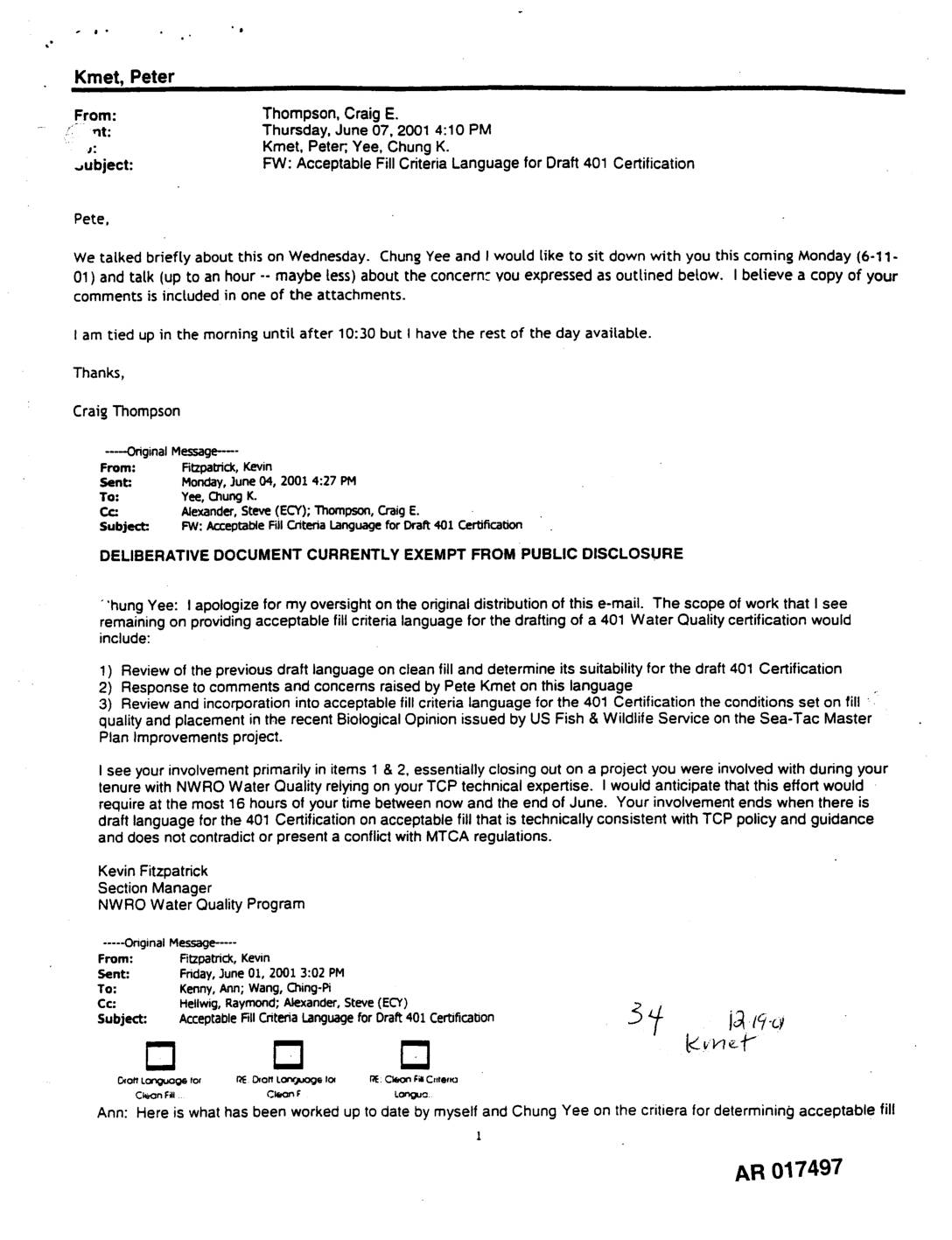
EXH AR017497: Email Chain — Acceptable Fill Criteria Language for Draft 401 Certification, Sea-Tac Master Plan Improvements
Email chain among Craig Thompson, Kevin Fitzpatrick, Chung Yee, Peter Kmet, Ann Kenny, and Ching-Pi Wang of Ecology NWRO Water Quality Program regarding acceptable fill criteria language for the draft 401 Water Quality Certification for the Sea-Tac Master Plan Improvements project. Discusses review of previous clean fill draft language, response to Pete Kmet’s comments and -
 2001-06-05
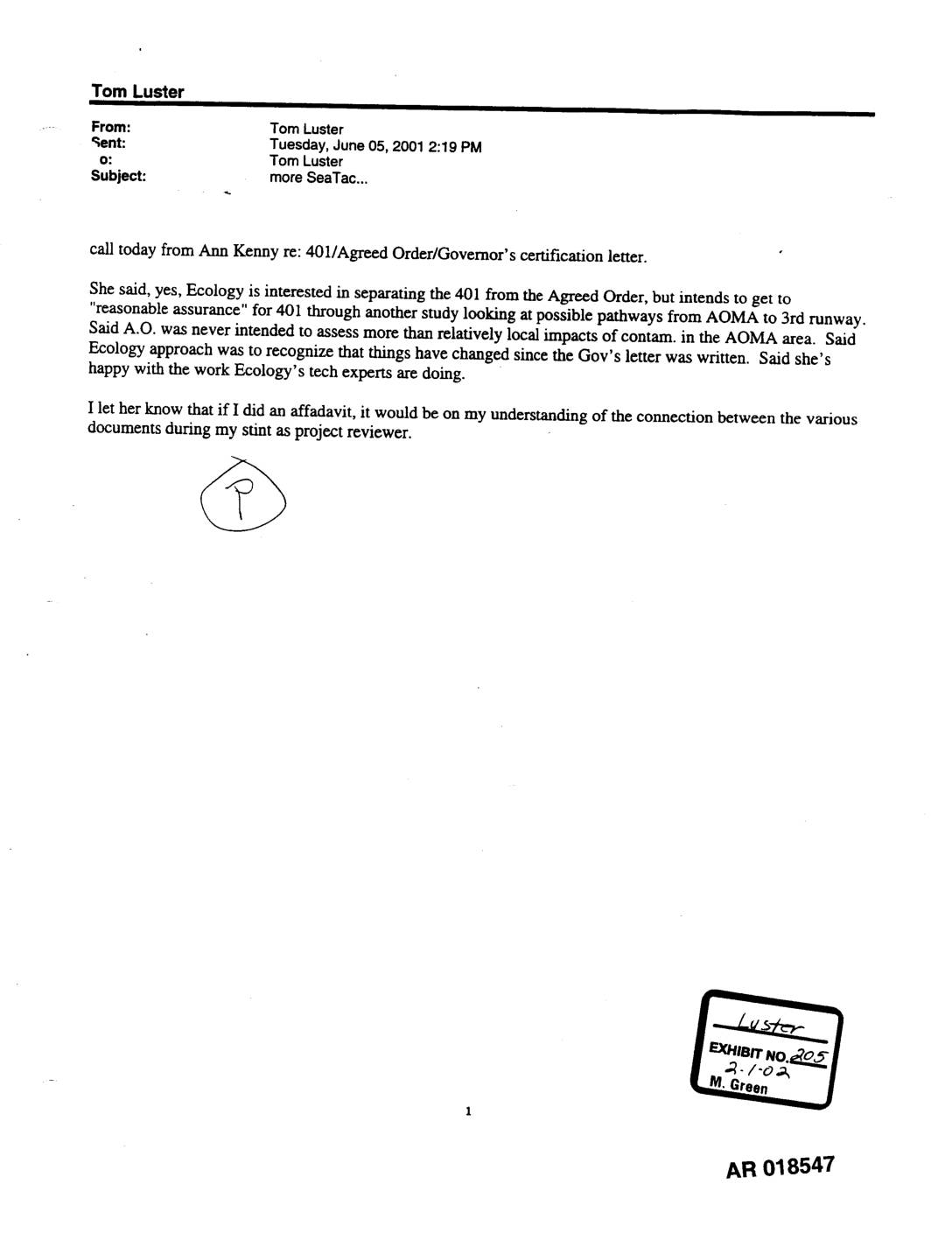
Exhibit 205: Tom Luster Notes on Call with Ann Kenny re 401/Agreed Order/Governor’s Certification Letter
In a June 2001 internal memo, Tom Luster notes a call from Ann Kenny of the Washington Department of Ecology regarding the Sea-Tac Airport third runway project. Kenny indicated that Ecology intended to separate the Section 401 water quality certification from the Agreed Order, planning a new study to examine possible contamination pathways from the Airport Operations and Maintenance Area (AOMA) to the third runway site. Luster noted that if called upon for an affidavit, his testimony would reflect his understanding of how the key documents were connected during his time as project reviewer. -
 2001-05-31
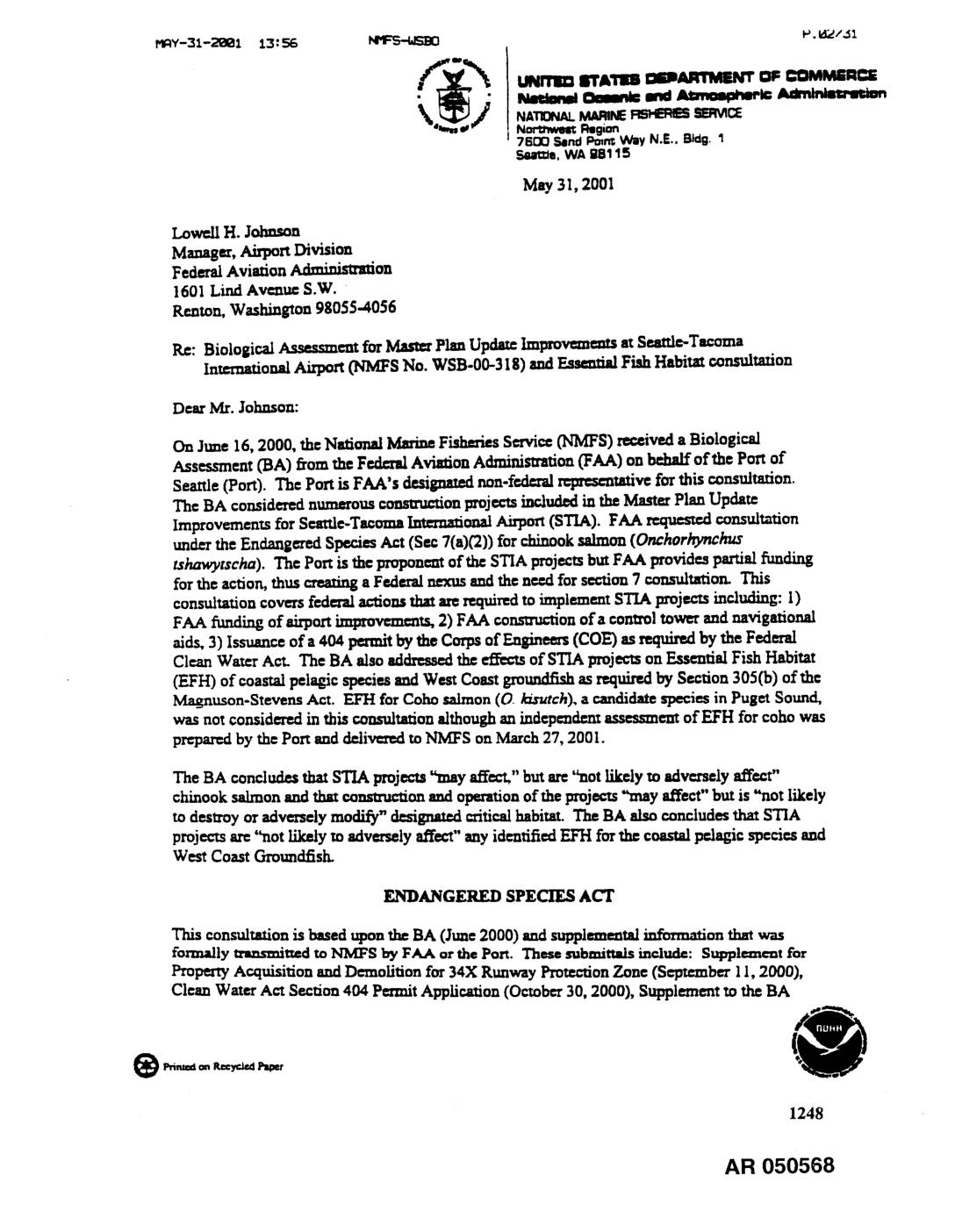
EXH AR050568: NMFS Biological Opinion Letter — STIA Master Plan Update Improvements, Chinook Salmon ESA Section 7 Consultation and Essential Fish Habitat
Letter dated May 31, 2001 from NMFS Northwest Region (Seattle, WA) to Lowell H. Johnson, FAA Airport Division Manager, concurring with the ‘may affect, not likely to adversely affect’ determination for threatened Puget Sound chinook salmon (Oncorhynchus tshawytscha) and designated critical habitat under ESA Section 7(a)(2) for Seattle-Tacoma International Airport (STIA) Master Plan Update Improvements -
 2001-05-30
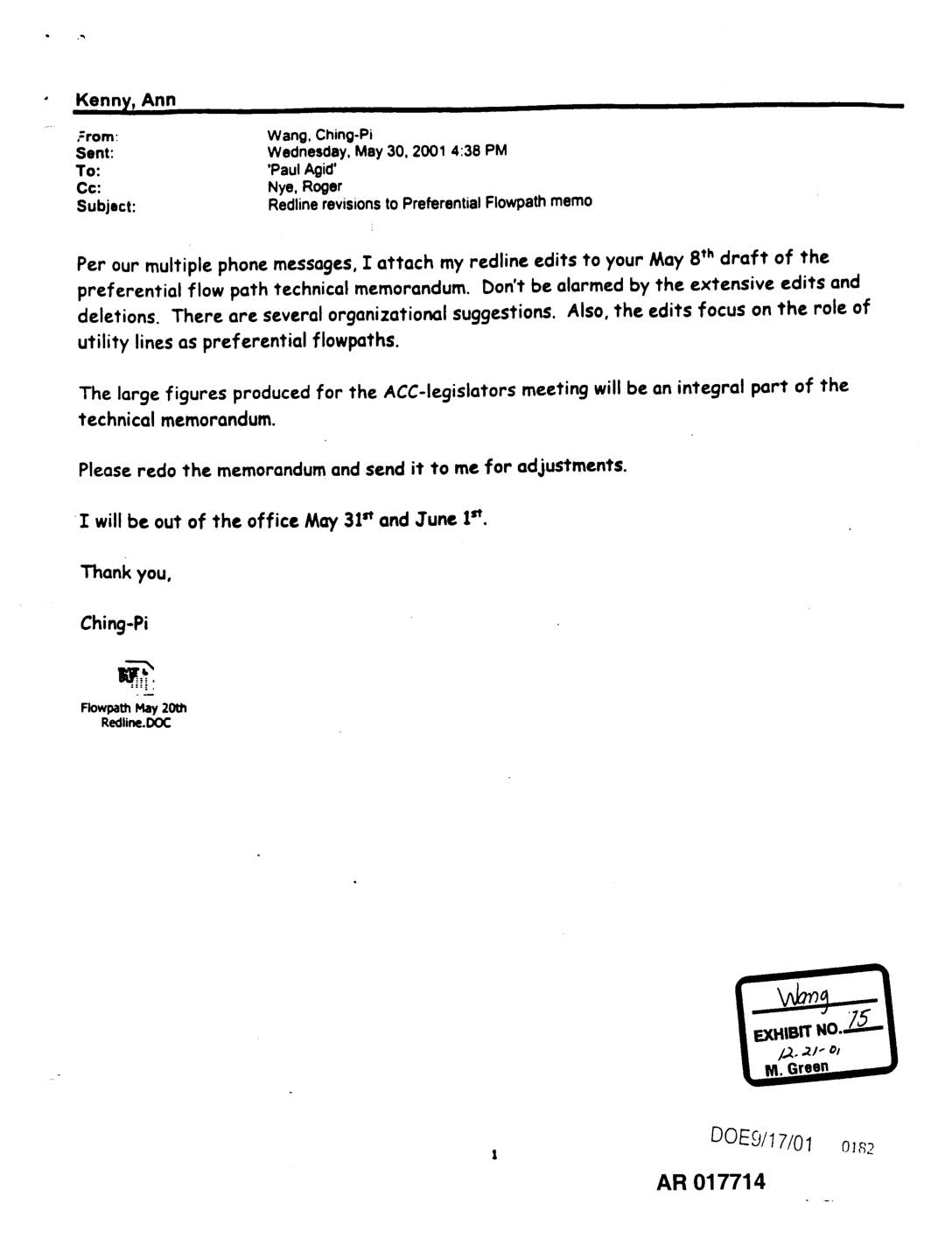
EXH AR017714: Email and Redline Revisions to Preferential Flowpath Technical Memorandum — Third Runway Construction
Email from Ching-Pi Wang (Port Of Seattle) to Paul Agid, cc Roger Nye, dated May 30, 2001, transmitting redline edits to the May 8th draft of the preferential ground-water flowpath technical memorandum related to construction of the Third Runway at Sea-Tac Airport. Attached redlined memorandum (From Port to Ecology, May 30, 2001) addresses preferential flowpaths -
 2001-05-22
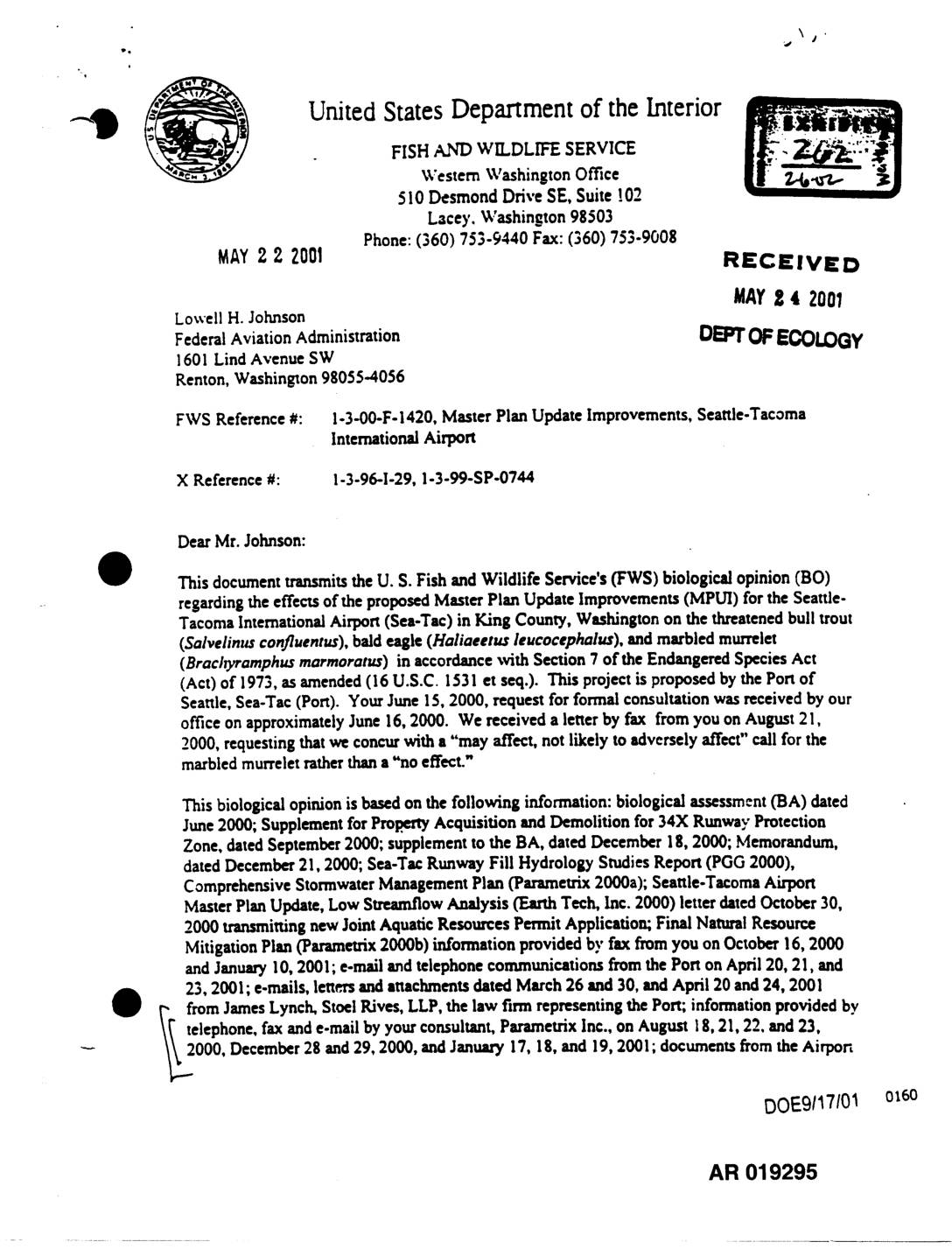
EXH AR019295: Biological Opinion — FWS Sec 7 Consultation STIA Master Plan Update (Bull Trout, Bald Eagle, Marbled Murrelet)
The U.S. Fish and Wildlife Service issued a biological opinion in May 2001 evaluating the potential effects of proposed Master Plan Update Improvements at Seattle-Tacoma International Airport on three protected species: bull trout, bald eagle, and marbled murrelet. The review was conducted under Section 7 of the Endangered Species Act at the request of the Federal Aviation Administration, which had determined the project was 'not likely to adversely affect' any of the three species. The opinion covers planned airport development in the cities of SeaTac and Des Moines, along with off-site wetland mitigation near the Green River in Auburn, Washington. -
 2001-05-22
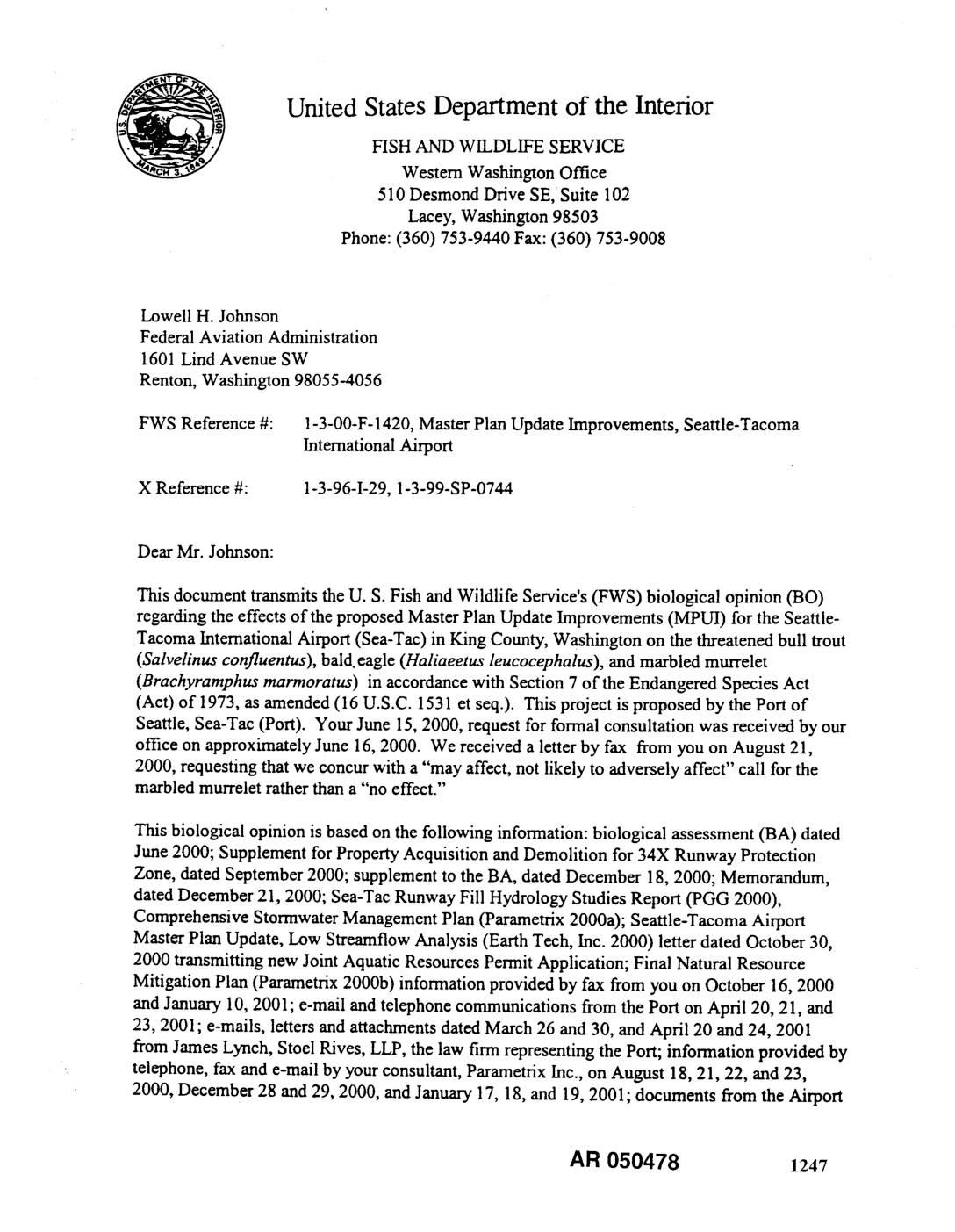
EXH AR050478: U.S. Fish and Wildlife Service Biological Opinion — Master Plan Update Improvements, Sea-Tac Airport
U.S. Fish and Wildlife Service (FWS) biological opinion (FWS Reference #1-3-00-F-1420) transmitted to Lowell H. Johnson of the Federal Aviation Administration (FAA) regarding effects of the proposed Master Plan Update Improvements (MPUI) for Seattle-Tacoma International Airport (Sea-Tac) in King County, Washington on threatened bull trout (Salvelinus confluentus), bald eagle (Haliaeetus leucocephalus), and marbled murrelet (Brachyramphus -
 2001-05-14
EXH AR050078: Draft Memorandum — Proposed Liquefaction Procedure Under Walls and Slopes, Third Runway Embankment
Draft memorandum dated May 14, 2001, from Douglas Lindquist (E.I.T.) and Michael Bailey (P.E.) of Hart Crowser, Inc. to Pete Douglass (P.E.) and Embankment Technical Review Board (ETRB), CC Jim Thomson (P.E.) HNTB, project 4978-30. Describes proposed liquefaction potential evaluation procedure for areas beneath walls and slopes of the Third Runway embankment at Sea-Tac Airport. -
 2001-05-06
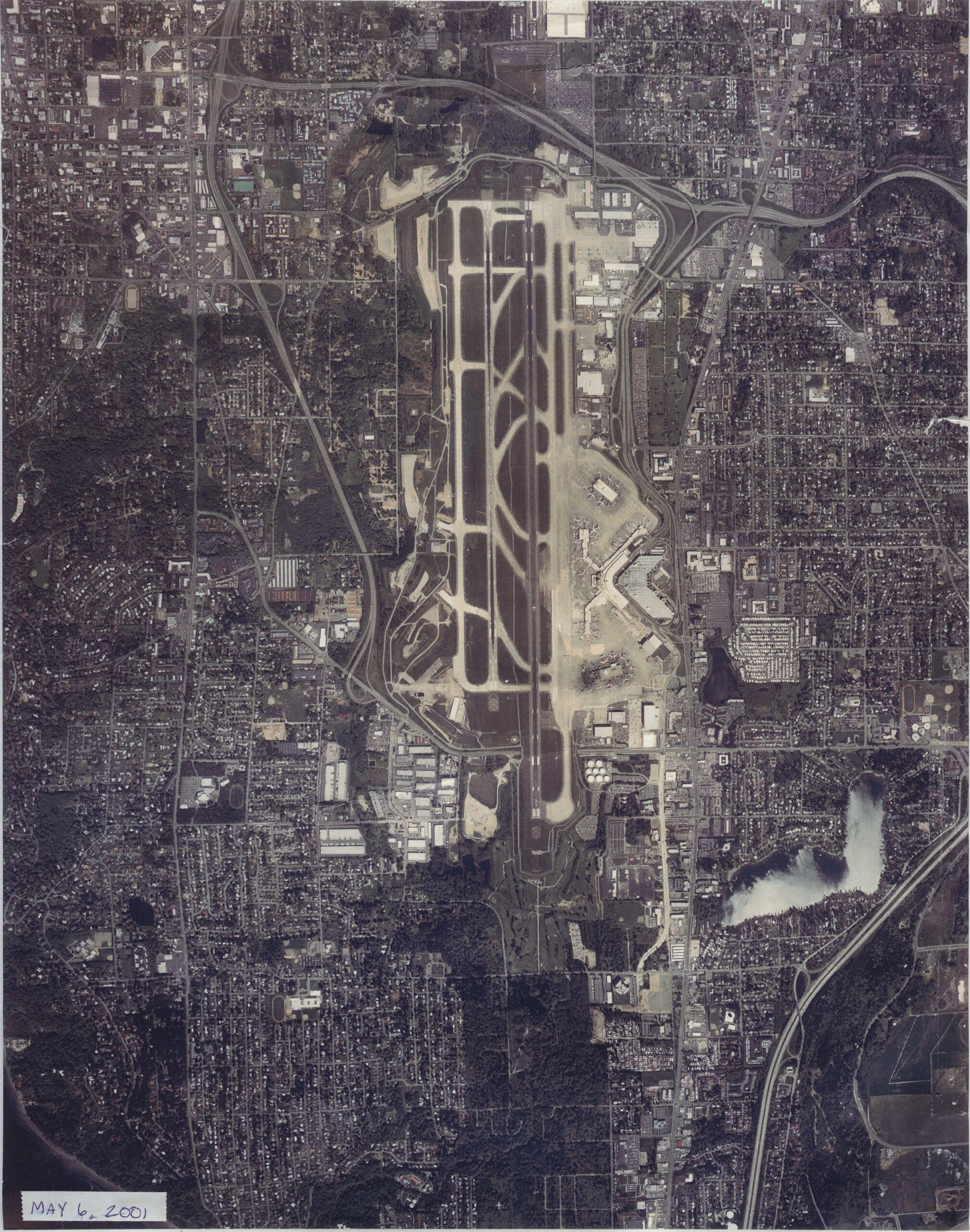
Sea-Tac Airport Runway Aerial Photograph, May 2001
Overhead aerial photograph of Seattle-Tacoma International Airport (Sea-Tac) and surrounding urban areas, dated May 6, 2001 as noted in the lower-left corner. The image shows the airport's parallel runway configuration, terminal area, taxiways, and the dense residential and commercial development surrounding the facility.