TagPuget Sound Clean Air Agency(18)
-
 2017-09-27
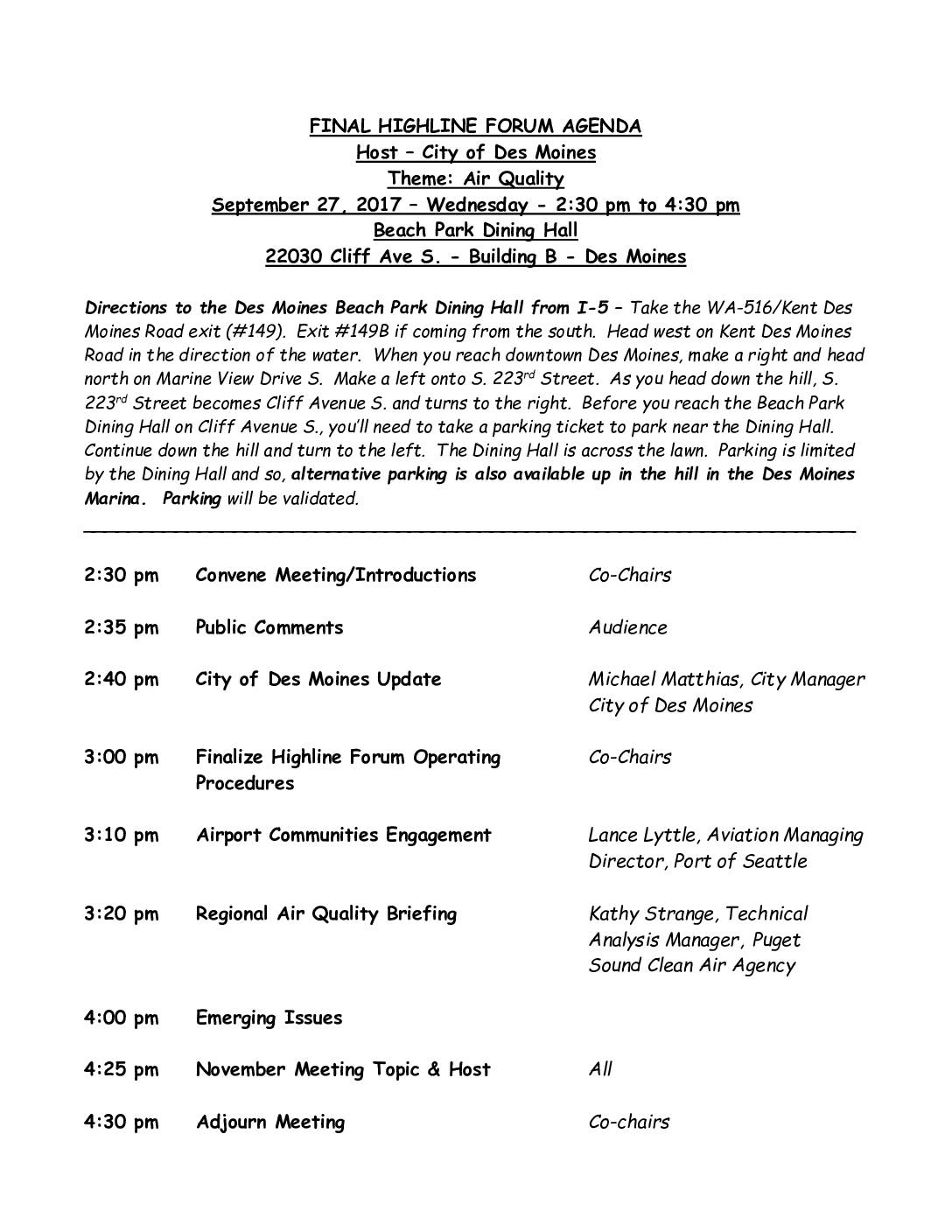
Final Highline Forum agenda – Air Quality
The Highline Forum held its September 27, 2017 meeting at the Des Moines Beach Park Dining Hall, focusing on the theme of air quality in communities surrounding Seattle-Tacoma International Airport. The agenda featured presentations from Port of Seattle Aviation Managing Director Lance Lyttle on airport community engagement, and a regional air quality briefing from the Puget Sound Clean Air Agency. The forum also included an update from the City of Des Moines, finalization of operating procedures, and discussion of topics for the next scheduled meeting. -
 2017-09-27
Regional air quality briefing: Highline Forum
A September 2017 regional air quality briefing presented by the Puget Sound Clean Air Agency to the Highline Forum covers air pollution sources, trends in south King County, and efforts to improve air quality in the region. The presentation also introduces an upcoming University of Washington study on ultrafine particle pollution, which is particularly relevant to communities near high-traffic corridors. The agency's vision emphasizes clean and healthy air for all residents regardless of socioeconomic status or location, covering four counties: King, Pierce, Snohomish, and Kitsap. -
 2004-04-01
Air quality: Focus on Puget Sound
This April 2004 report by the League of Women Voters examines air quality in the Puget Sound region, tracing the history of air pollution regulation from King Edward I's coal ban in 1305 through the creation of the U.S. Environmental Protection Agency in 1970. It focuses on the role of the Puget Sound Clean Air Agency in monitoring and reducing local air pollutants, with particular attention to small particles and diesel emissions. The report provides background on federal clean air legislation and outlines the League's related policy positions. -
 2003-10-01
Final report: Puget Sound air toxics evaluation
This 2003 report by the Puget Sound Clean Air Agency evaluates air toxic chemicals in the Puget Sound region, assessing potential cancer and non-cancer health risks based on air monitoring data and EPA modeling. It identifies priority chemicals of concern, estimates human exposure levels, and draws conclusions about the health impacts of pollutants such as diesel exhaust and woodsmoke on local residents. -
 2001-03-21
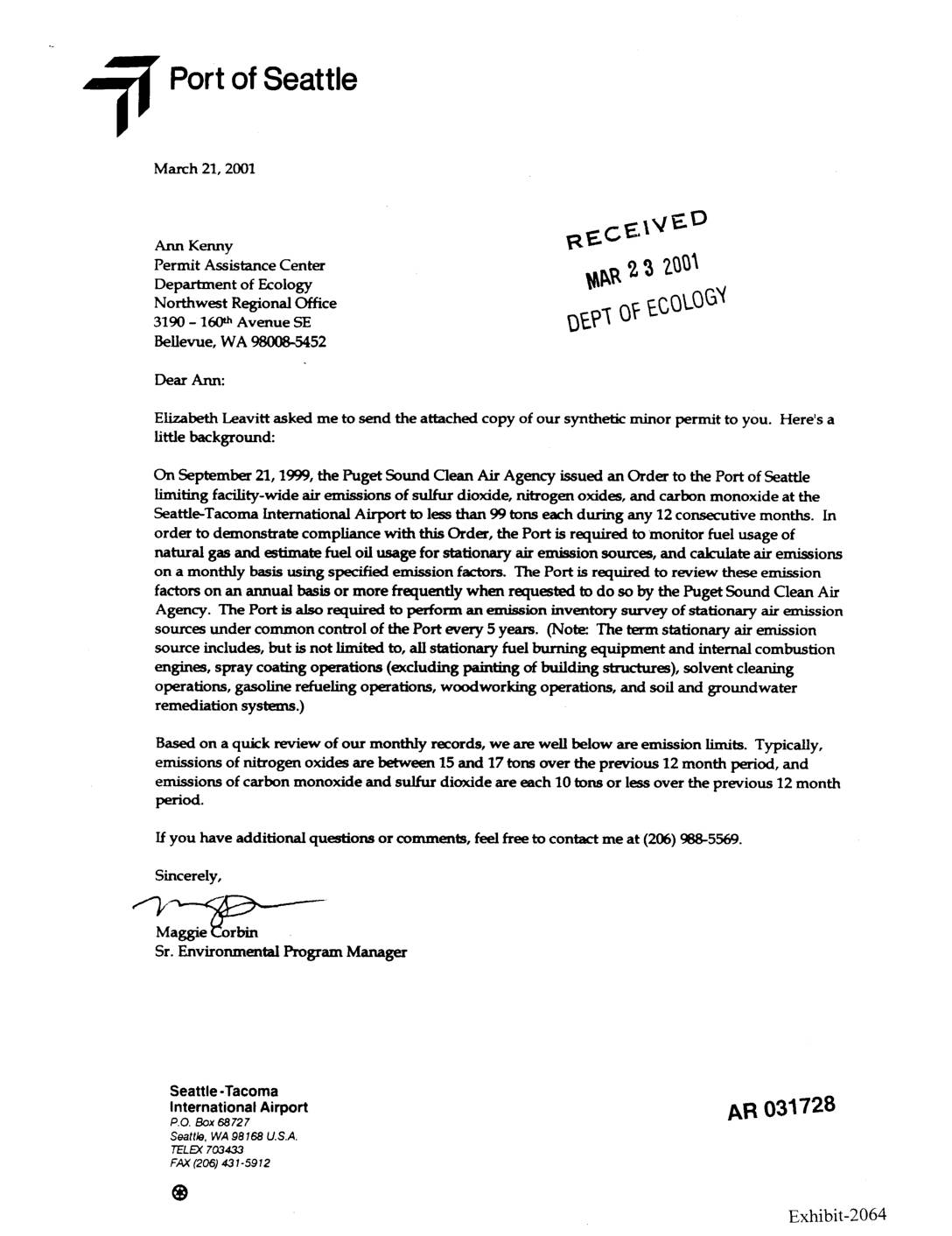
EXH AR031728: Port Of Seattle Letter to Ecology Transmitting Synthetic Minor Permit and PSCAA Order for Sea-Tac Airport Air Emissions
Letter dated March 21, 2001 from Maggie Corbin, Sr. Environmental Program Manager, Port Of Seattle Seattle-Tacoma International Airport, to Ann Kenny at the Washington Department of Ecology Northwest Regional Office, transmitting a synthetic minor permit. Background: Puget Sound Clean Air Agency (PSCAA) issued Order dated September 21, 1999 (Construction No. 7777, Registration No. 21408) limiting -
 2000-03-01
Addressing community health concerns around SeaTac Airport: Response to the question, ‘Is it possible to monitor jet engine exhaust emissions or to model their path using data on prevailing winds and takeoff patterns?’
This March 2000 report, prepared by Washington State health and environmental agencies, examines whether jet engine exhaust emissions from Seattle-Tacoma International Airport can be monitored or modeled using wind and takeoff data. It reviews previous air quality studies, outlines health and environmental justice concerns for nearby communities, and recommends a structured air quality monitoring study with specific methods, data analysis approaches, and estimated costs. The report was developed in consultation with community representatives, the EPA, and local universities. -
 2000-03-01
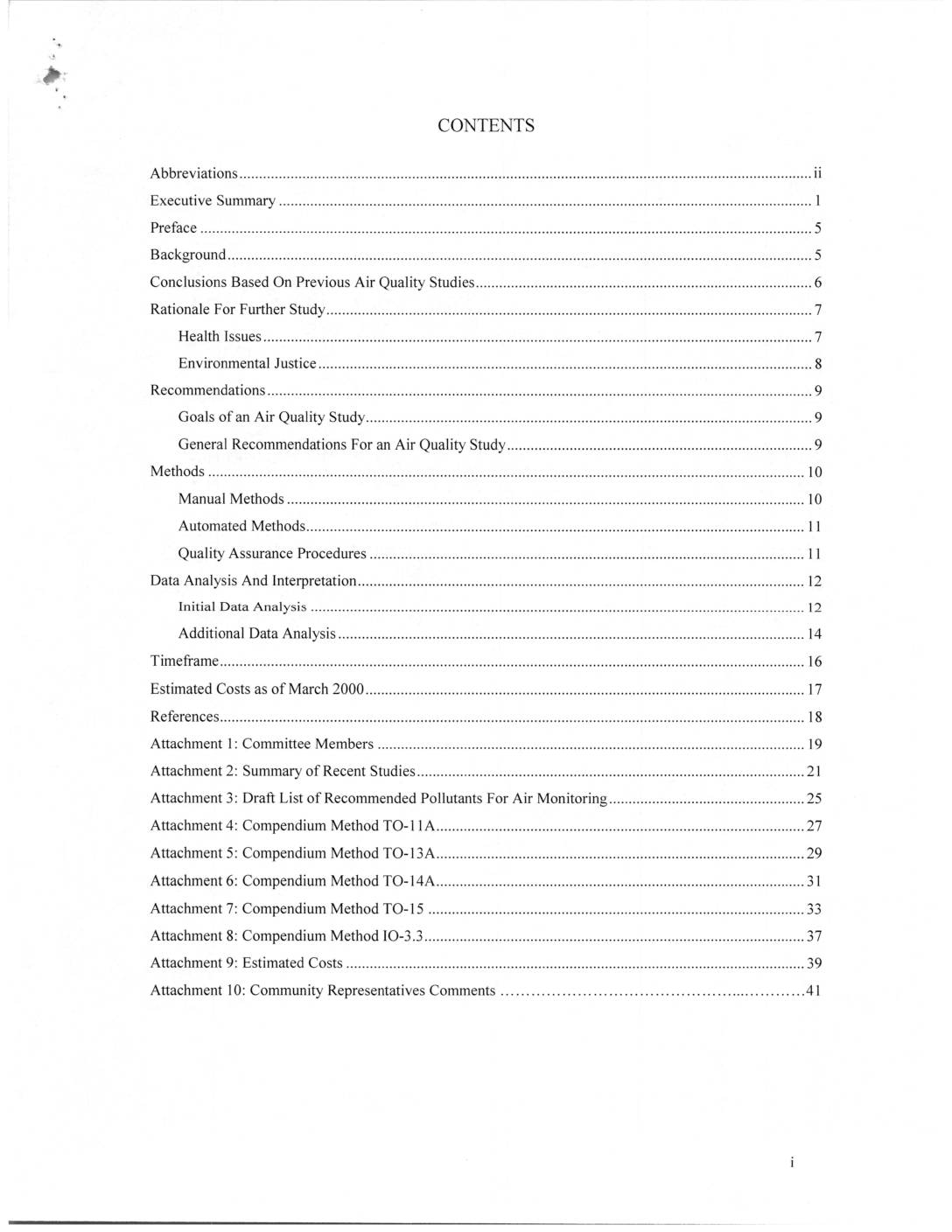
Addressing community health concerns around SeaTac Airport: Response to the question, ‘Is it possible to monitor jet engine exhaust emissions or to model their path using data on prevailing winds and takeoff patterns?’
This March 2000 report, prepared by Washington State health and environmental agencies, addresses community health concerns about air quality around Seattle-Tacoma (Sea-Tac) Airport by examining whether jet engine exhaust emissions can be monitored or modeled using wind and takeoff data. It outlines recommendations for conducting a comprehensive air quality study, including monitoring methods, data analysis approaches, and estimated costs, while also considering health impacts and environmental justice issues for nearby residents. The report was developed in consultation with public health officials, community representatives, the EPA, and local universities. -