TagNoise(310)
-
 1979-03-01
Quiet Communities: Minimizing the Effects of Noise through Land Use Controls
Published in March 1979 by the National Association of Counties Research, Inc., this guide examines how local governments can use land use controls—such as zoning and planning regulations—to reduce the impact of noise on residential communities. It covers noise sources including highway and transportation corridors, offering practical strategies for buffering noise-sensitive land uses from high-noise areas. The document is a foundational reference for planners and policymakers working to protect communities from airport, highway, and industrial noise. -
 1979-01-01
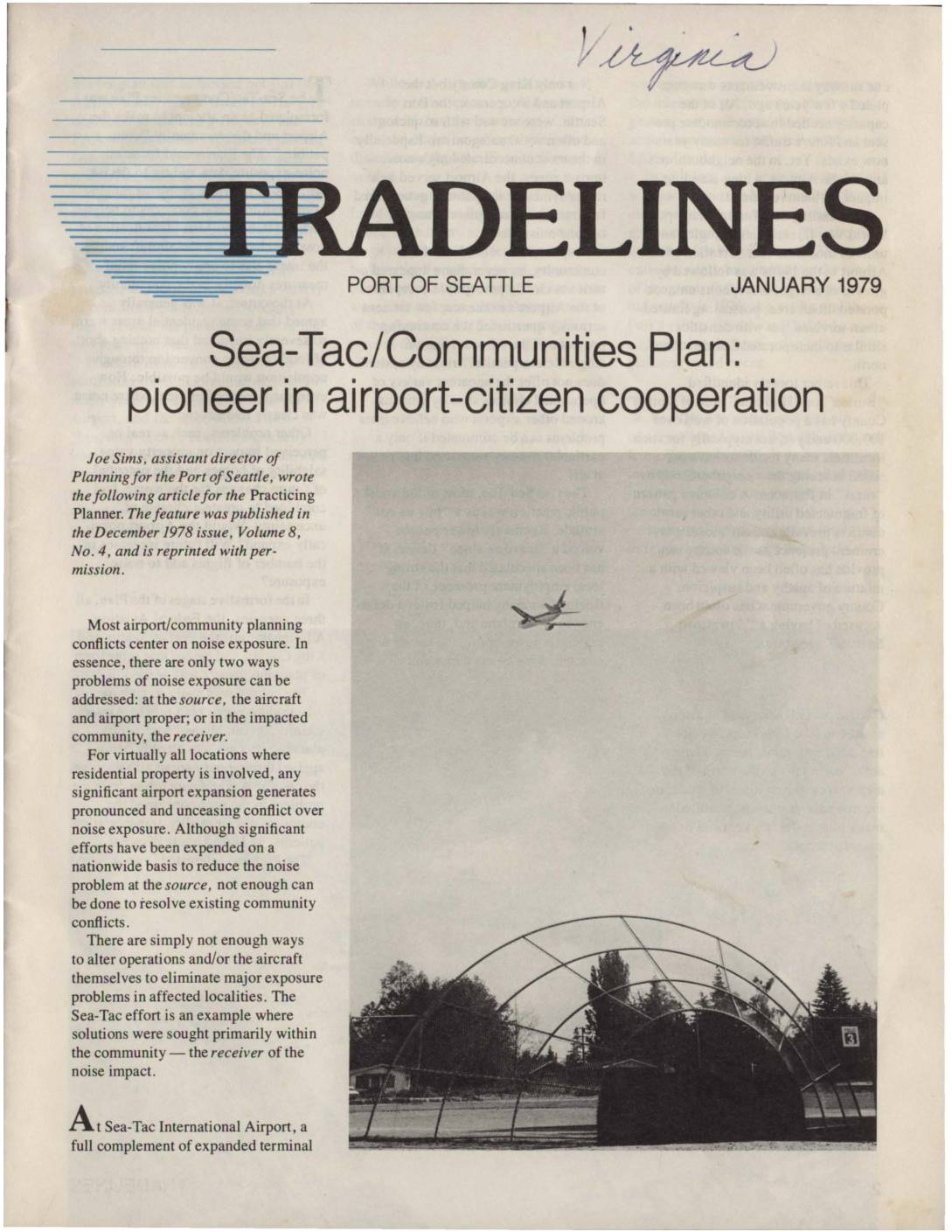
Sea-Tac/Communities Plan: Pioneer in Airport-Citizen Cooperation
This 1979 article from the Port of Seattle's Tradelines newsletter describes the Sea-Tac/Communities Plan, a pioneering cooperative effort between the Port of Seattle, King County, and the FAA to address aircraft noise impacts on neighborhoods surrounding Sea-Tac International Airport. Rather than focusing solely on reducing noise at its source, the plan targeted the affected communities directly through measures such as home acquisitions in severely impacted areas, 'purchase guarantees' for moderately impacted zones, and residential insulation cost-sharing programs. Adopted in 1976, the plan is presented as an innovative model for airport-community compatibility planning, though the article acknowledges it represents only a partial solution to the broader challenges airports and their neighboring communities face. -
 1978-08-28
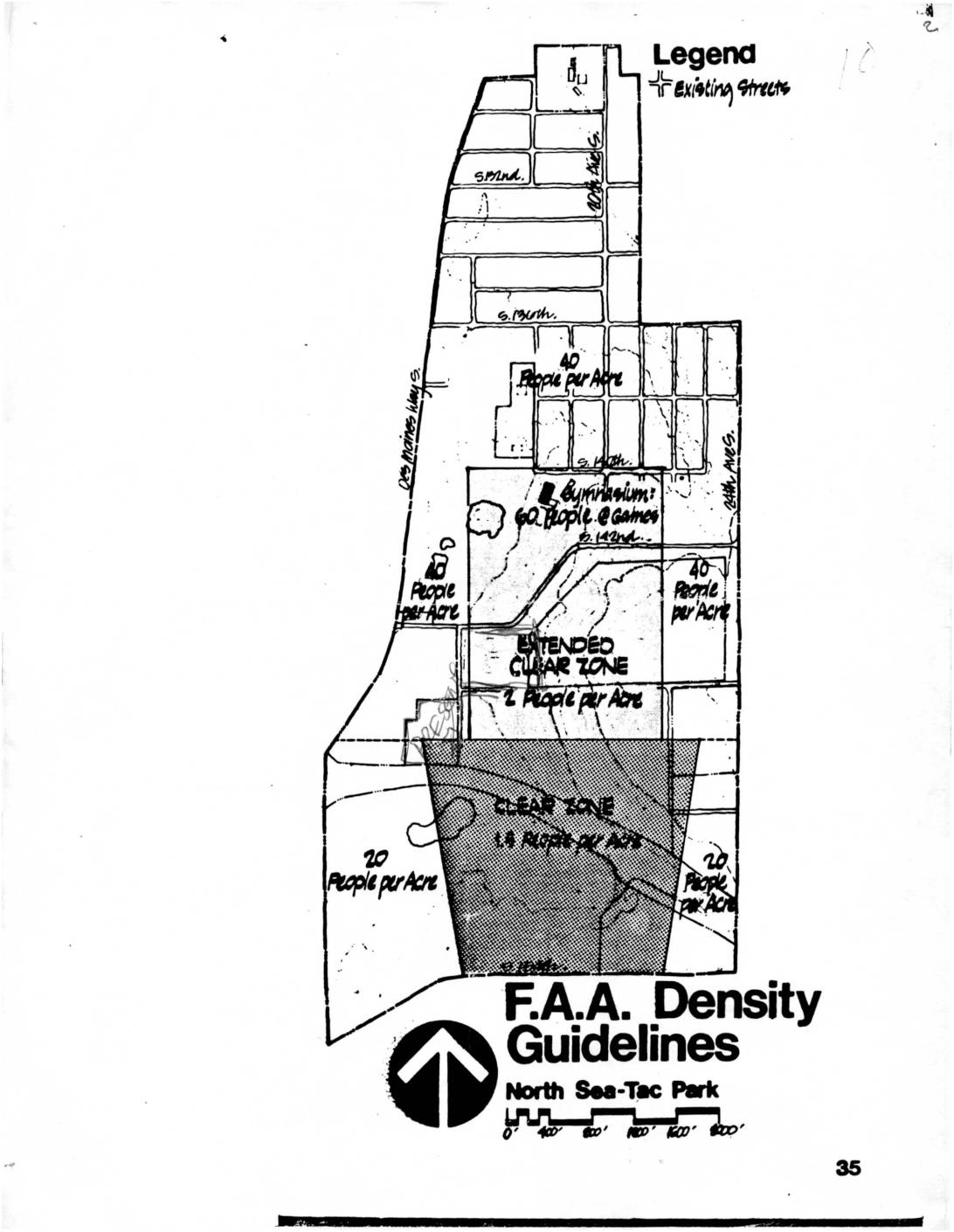
FAA Noise Density Guidelines North Sea-Tac Park
This document presents F.A.A. Density Guidelines for North Sea-Tac Park, a neighborhood near Seattle-Tacoma International Airport. It maps out population density limits across different zones, ranging from 1.5 people per acre in the Clear Zone closest to the airport, to 2 people per acre in the Extended Clear Zone, up to 20-40 people per acre in areas farther from the runway. The guidelines reflect FAA safety and noise policy restrictions that limit how many residents can live in areas most directly affected by airport flight paths. -
 1977-09-27
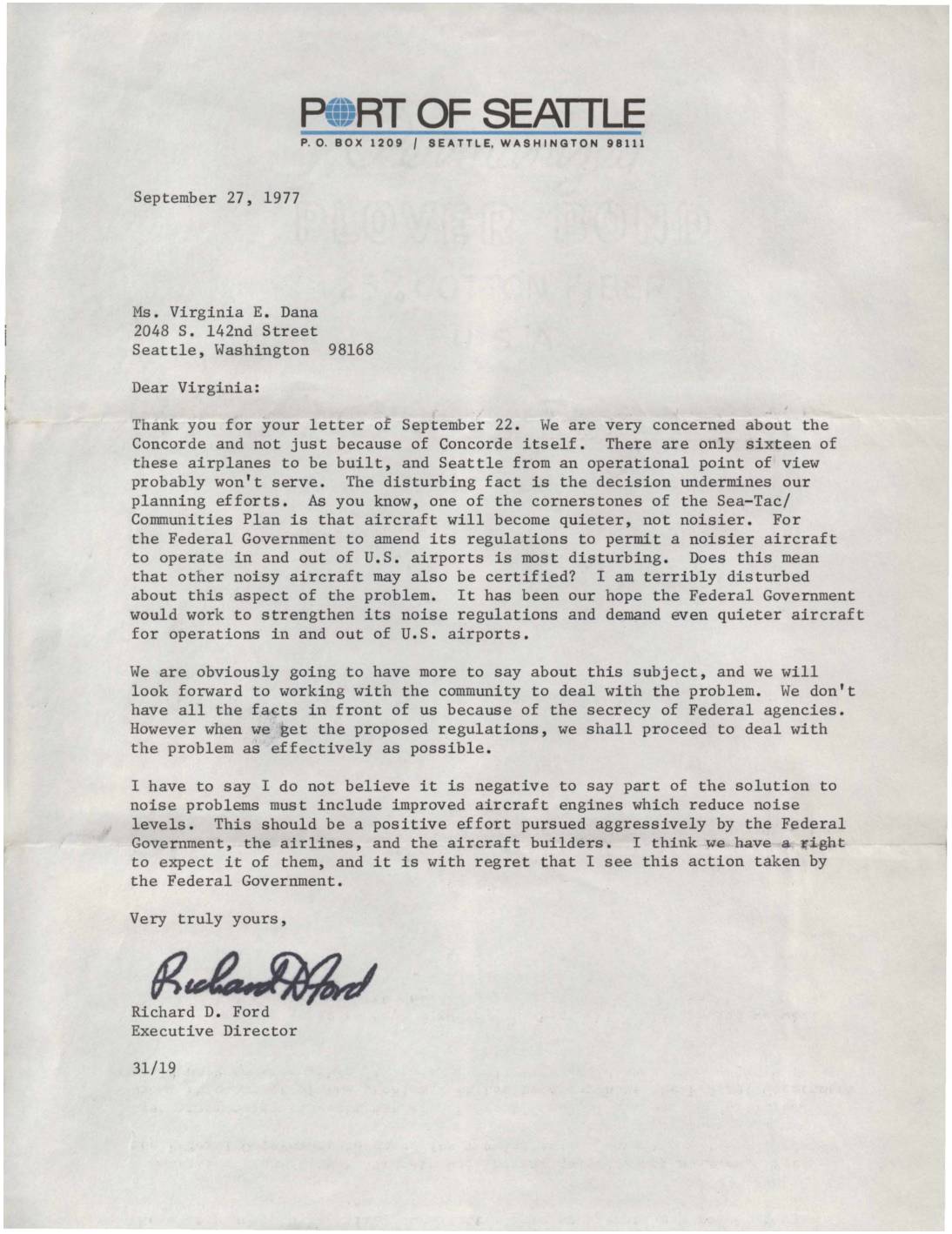
Letter from Port of Seattle Executive Director Richard D. Ford regarding Concorde aircraft noise concerns
In this September 1977 letter, Port of Seattle Executive Director Richard D. Ford responds to a community member's concerns about the Concorde supersonic jet, expressing alarm that the Federal Government amended its noise regulations to allow a noisier aircraft to operate at U.S. airports. Ford warns this decision undermines the Sea-Tac/Communities Plan, which was built on the expectation that aircraft would become progressively quieter over time. He calls on the federal government, airlines, and aircraft manufacturers to aggressively pursue quieter engine technology as a necessary solution to airport noise problems. -
 1976-08-01
FAA integrated noise model data base
This 1976 Federal Aviation Administration report documents the data library underlying the FAA Integrated Noise Model (INMPROG), a computer program used to calculate various noise exposure indices around airports. The library contains both acoustic measurements and operational flight procedure data for standard aircraft types. The report serves as a reference for analysts seeking to reproduce noise studies or customize the model with their own flight procedures. -
 1976-05-11
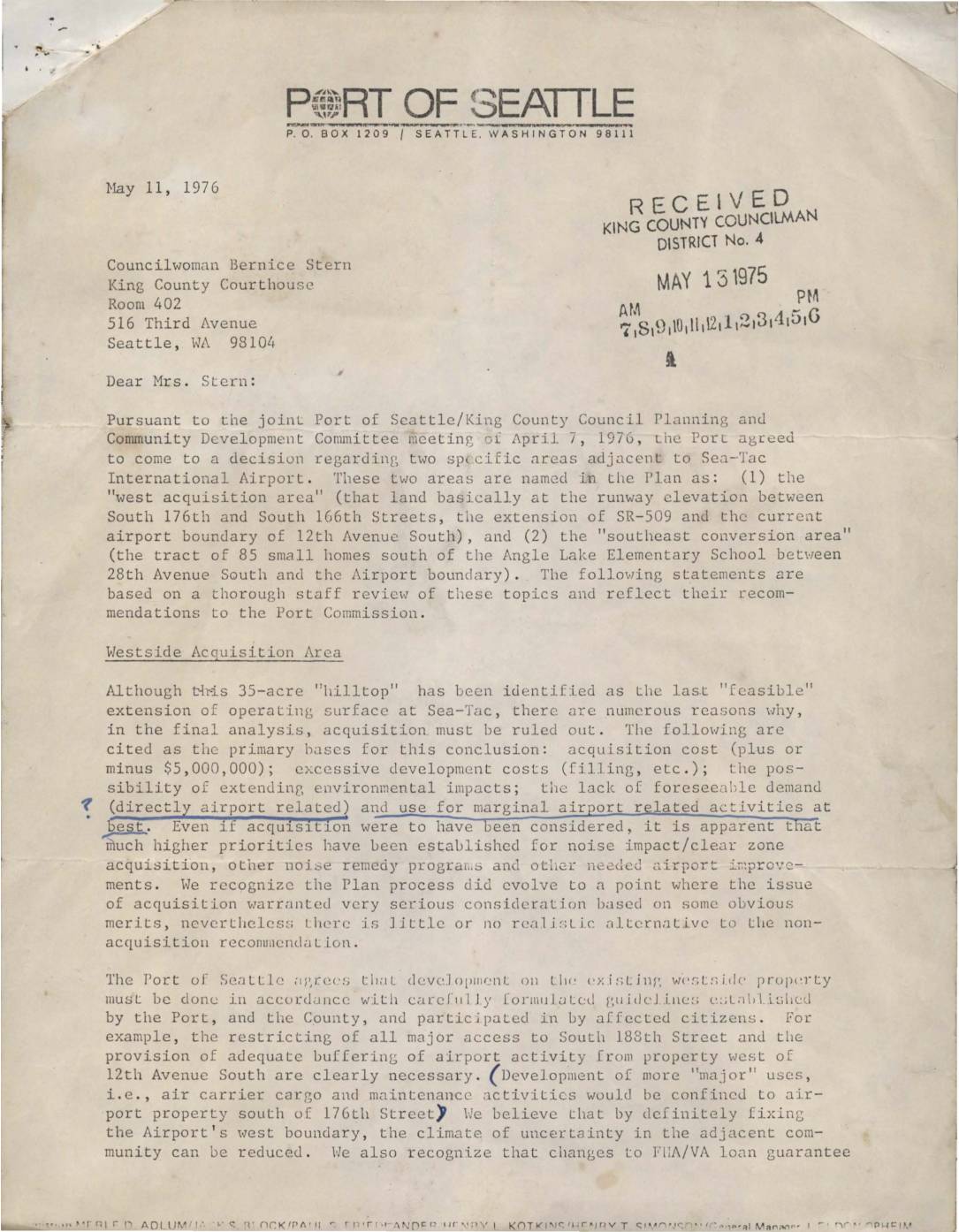
Letter from Port Of Seattle to Councilwoman Bernice Stern regarding Sea-Tac Communities Plan areas
In a May 1976 letter to King County Councilwoman Bernice Stern, Seattle Port Commission President Henry T. Simonson outlined two key decisions regarding land adjacent to Sea-Tac International Airport. The Port ruled out acquiring the 35-acre 'west acquisition area' due to high costs, excessive development expenses, and lack of foreseeable airport-related demand, while agreeing that any existing development there must follow carefully formulated guidelines. For the 'southeast conversion area' — 85 small homes in Lowe's Terrace Subdivision — the Port acknowledged that standard acoustic insulation treatment may not be cost-effective, and flagged the neighborhood as a candidate for a special purchase guarantee program to assist with gradual land-use conversion. -
 1975-12-01
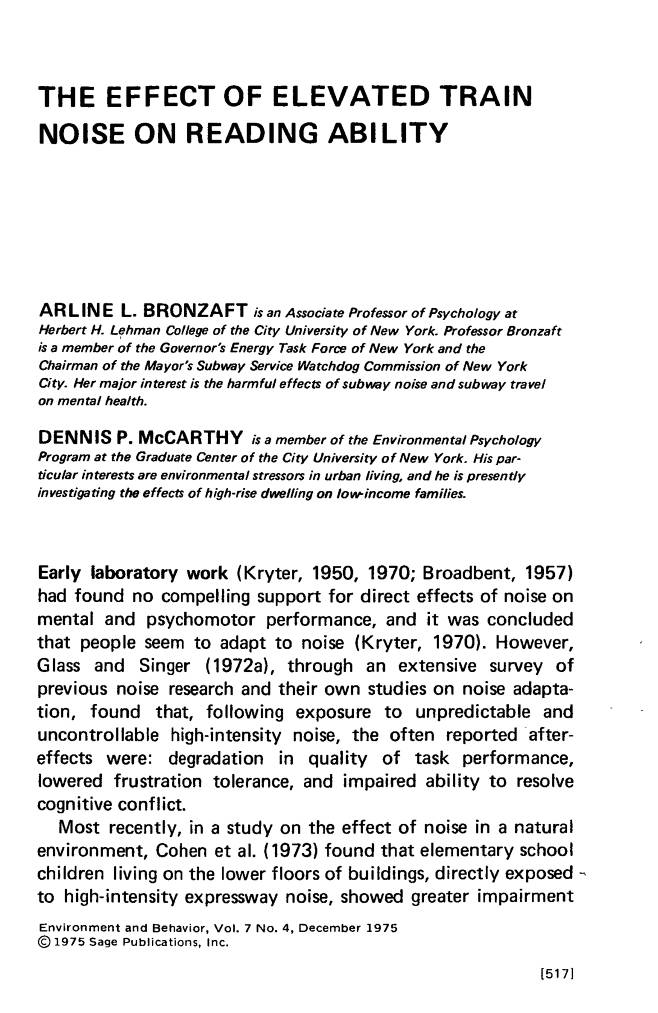
The effect of elevated train noise on reading ability
A 1975 study by Bronzaft and McCarthy examined how noise from passing elevated subway trains affected the reading ability of elementary school children at a New York City school located approximately 220 feet from the tracks. Researchers compared reading scores of students in classrooms on the noisy train-facing side of the building versus the quieter opposite side, finding that chronic exposure to loud, unpredictable noise was associated with measurable reading deficits. The findings built on earlier research suggesting that children in high-noise environments struggle to distinguish relevant speech cues, which can hinder their ability to learn to read. -
 1975-09-01
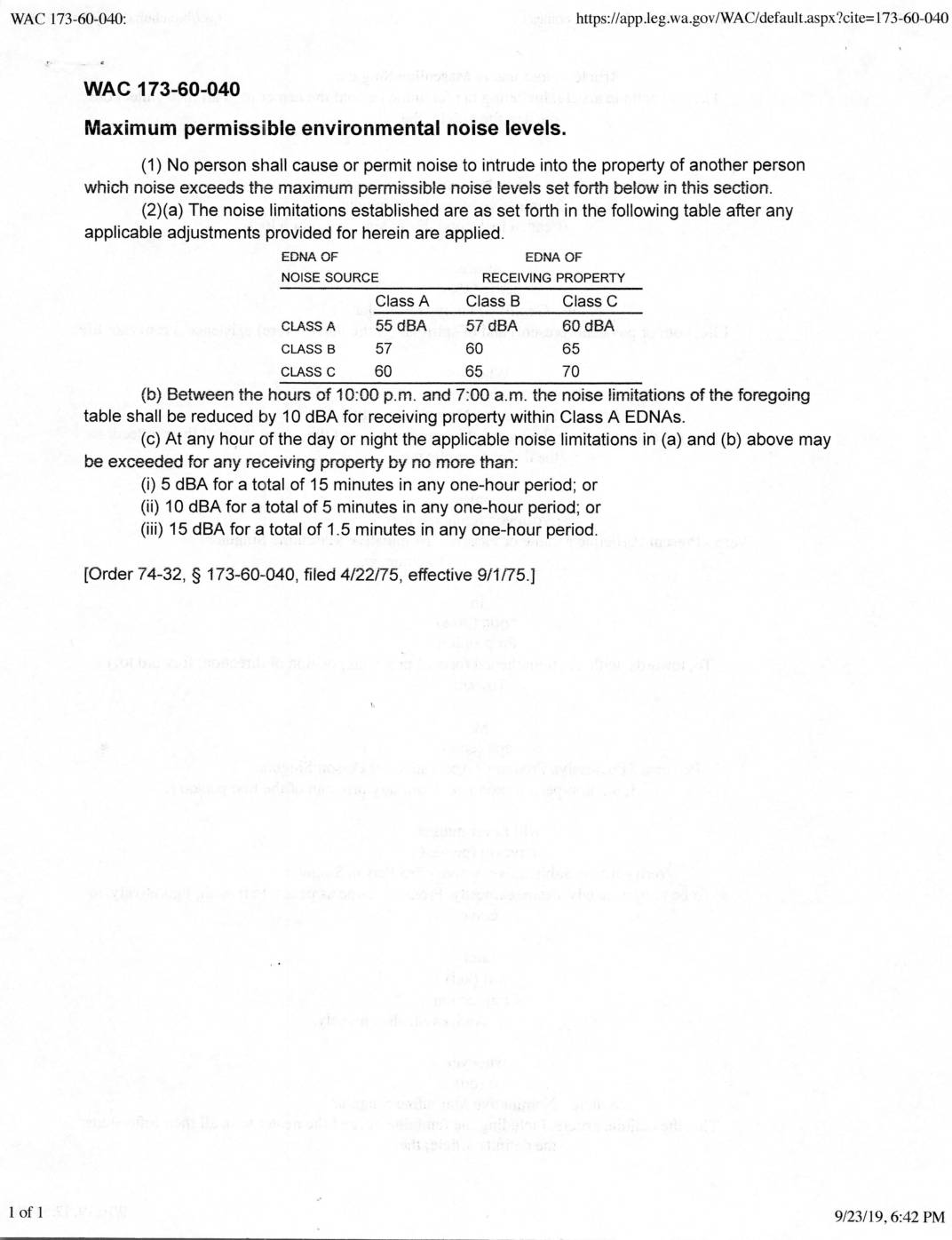
WAC 173-60-040 and WAC 173-60-090: Maximum permissible environmental noise levels and enforcement policy
Washington State law (WAC 173-60-040) sets maximum allowable noise levels based on the zoning class of both the noise source and the receiving property, ranging from 55 to 70 dBA, with nighttime limits reduced by 10 dBA for residential areas between 10 p.m. and 7 a.m. Short-duration noise spikes are permitted, allowing up to 15 dBA above the limit for no more than 1.5 minutes per hour. Enforcement is complaint-driven, measured at the receiving property, and each 24-hour period of violation counts as a separate offense under RCW 70.107.050. -
 1975-05-27
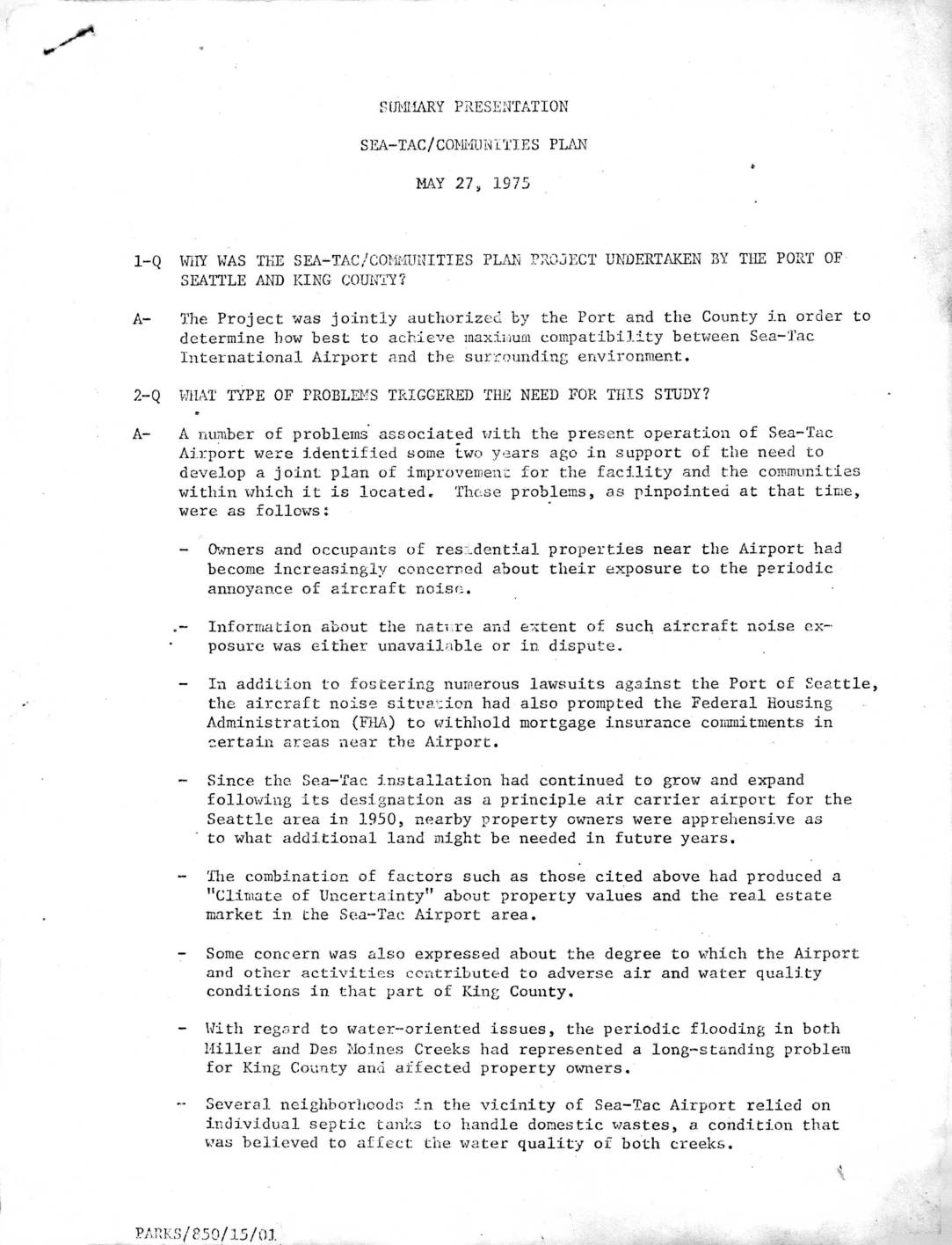
Summary presentation: Sea-Tac/Communities Plan
A 1975 summary presentation of the Sea-Tac/Communities Plan, jointly undertaken by the Port of Seattle and King County, outlines the key problems that prompted the study, including aircraft noise complaints from nearby residents, related lawsuits and FHA mortgage restrictions, flooding issues, and neighborhood blight. The plan aimed to achieve compatibility between Sea-Tac International Airport and surrounding communities through technical studies, citizen participation, and advisory committees. Key findings indicated that no major airport expansion was needed, but noise would remain a significant environmental concern, and many property owners believed they deserved relief or compensation. -
 1975-04-22
Development concept: the airport and the communities
This document outlines a development concept addressing the relationship between Sea-Tac International Airport and its surrounding communities. While the airport contributes significantly to the regional economy—supporting over 15,200 jobs and $390 million in annual business activity—local residents have long struggled with aircraft noise, uncertainty about airport expansion, and the impact on property values and neighborhood character. The concept seeks to find greater compatibility between the airport's growth and the needs of the communities it affects.