TagNoise Mitigation(218)
-
 2023-06-07
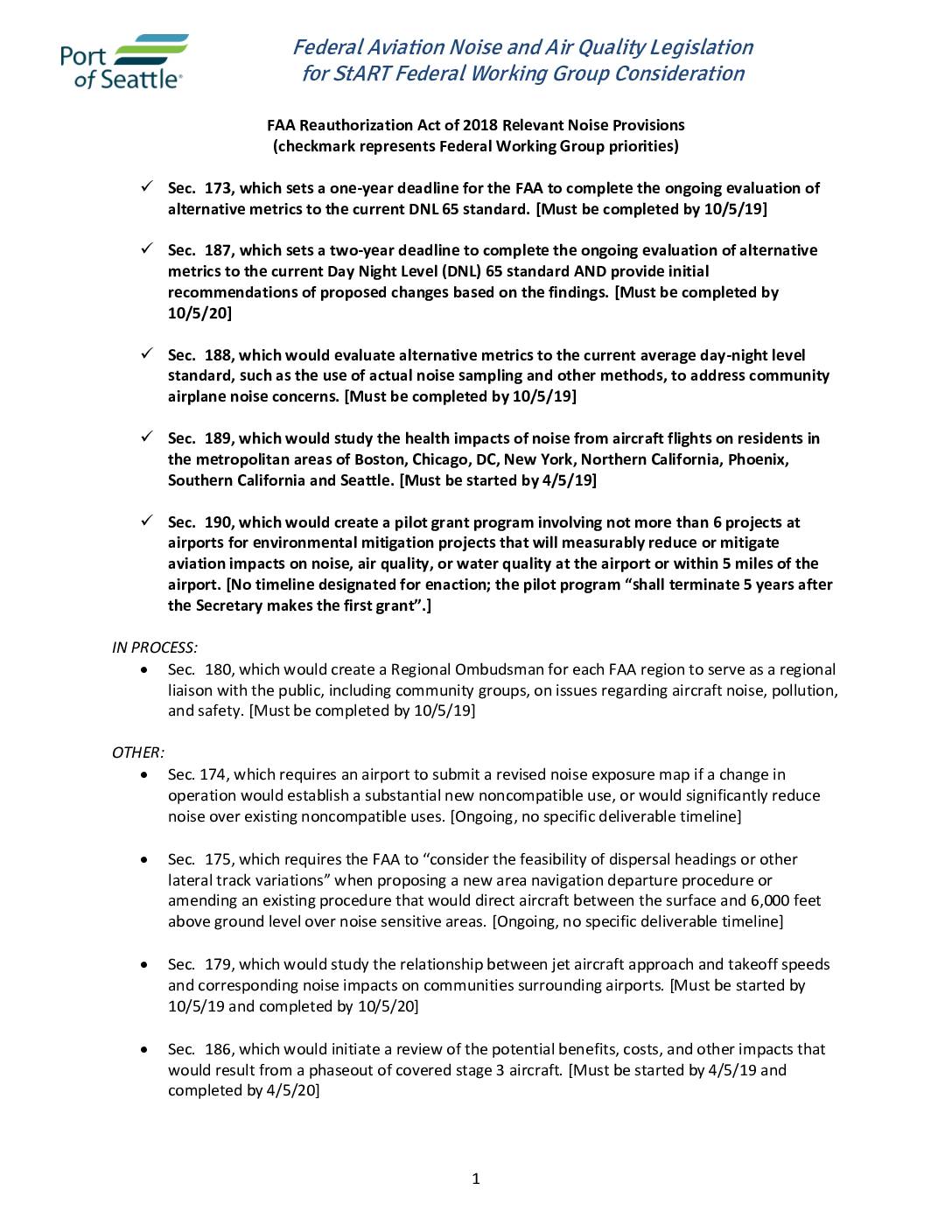
Federal aviation noise and air quality legislation for StART Federal Working Group consideration
This Port of Seattle document outlines key federal aviation noise and air quality legislation relevant to the StART (Sea-Tac Airport Roundtable) Federal Working Group, including provisions from the FAA Reauthorization Act of 2018 and proposed 2019 legislation. It highlights priority items such as evaluating alternatives to the DNL 65 noise standard, studying health impacts of aircraft noise in major metro areas including Seattle, and creating environmental mitigation grant programs for airports. Additional considerations include secondary noise insulation, increased funding for federal noise programs, and greater flexibility for local communities to address aviation impacts. -
 2023-04-26
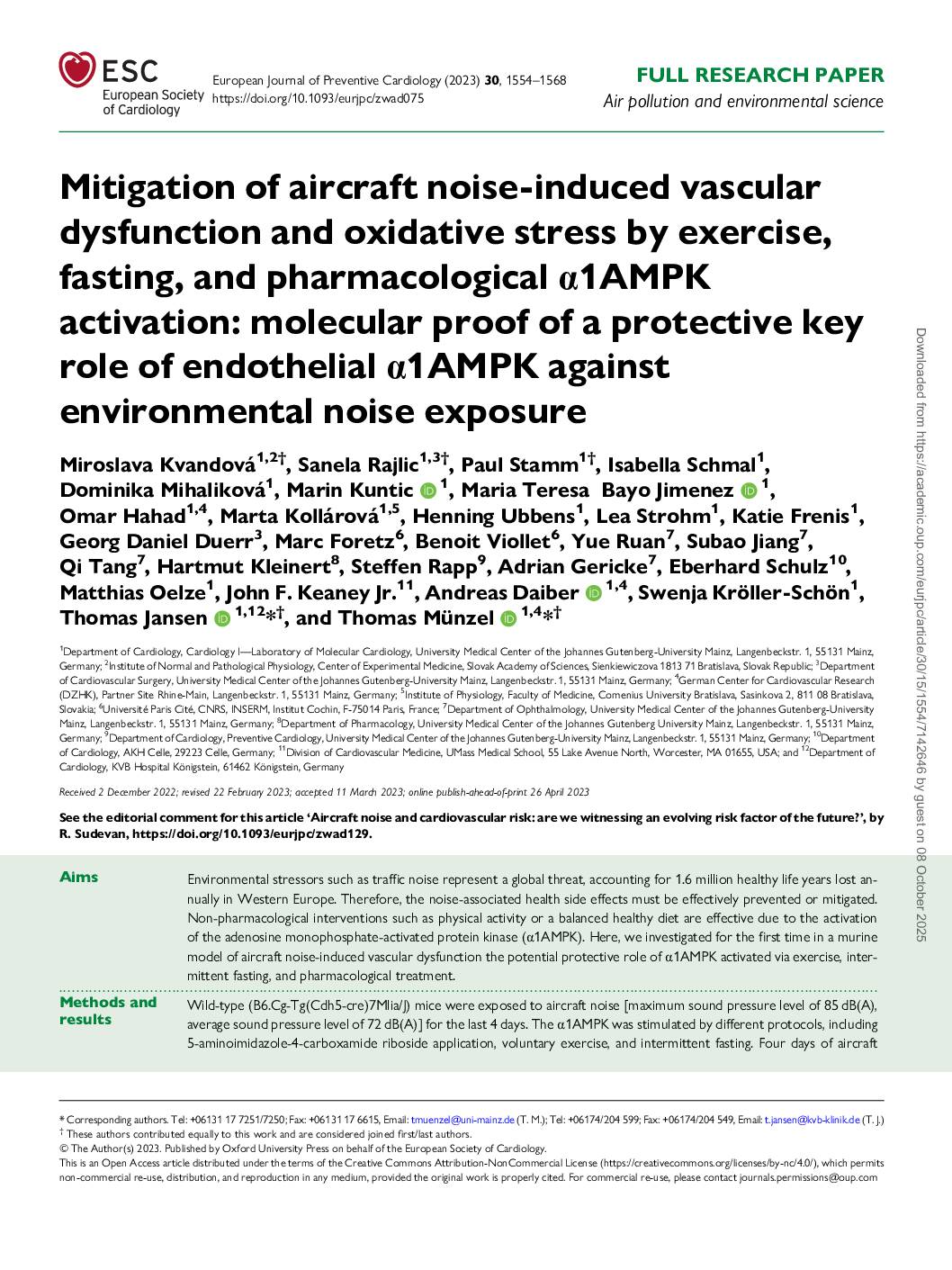
Mitigation of aircraft noise-induced vascular dysfunction and oxidative stress by exercise, fasting, and pharmacological α1AMPK activation: molecular proof of a protective key role of endothelial α1AMPK against environmental noise exposure
A scientific study found that aircraft noise exposure causes measurable damage to blood vessel function and increases harmful oxidative stress in mice, mimicking cardiovascular risks seen in human populations living near airports. Researchers demonstrated that three interventions — regular physical exercise, intermittent fasting, and a drug that activates a protective enzyme called α1AMPK — can each effectively prevent or reduce this noise-induced vascular damage. These findings suggest that lifestyle changes like exercise and dietary restriction may offer practical, evidence-based strategies for mitigating the cardiovascular health risks associated with aircraft noise exposure. -
 2023-04-24
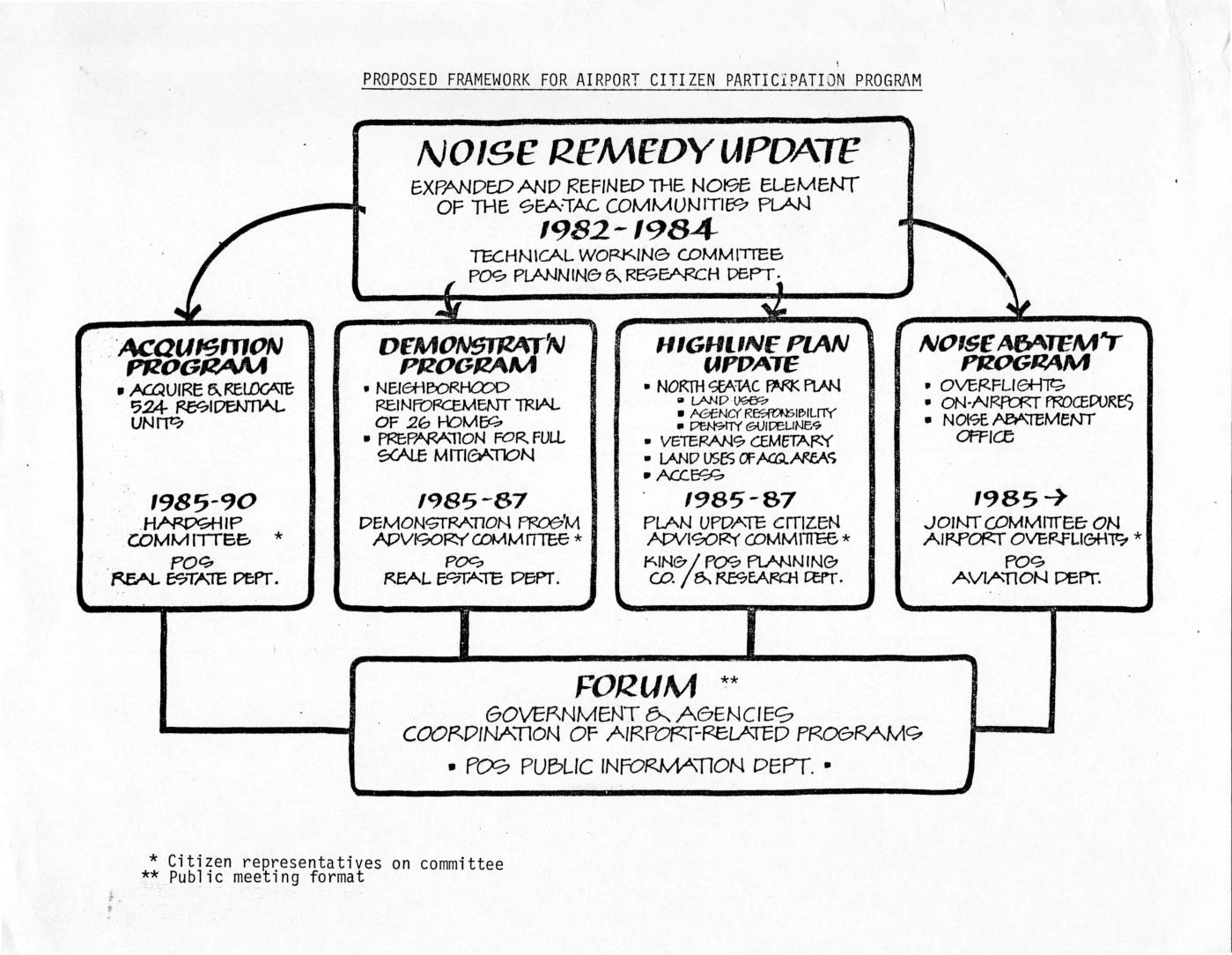
Proposed framework for Airport Citizen Participation Program
This document outlines a proposed framework for an Airport Citizen Participation Program centered on the Noise Remedy Update, which expanded and refined the noise element of the Sea-Tac Communities Plan from 1982 to 1984. It details four key programs — Acquisition, Demonstration, Highline Plan Update, and Noise Abatement — each with specific goals such as relocating 524 residential units, trialing neighborhood reinforcement for 26 homes, and establishing a Joint Committee on Airport Overflights. All programs feed into a public Forum coordinated by the Port of Seattle's Public Information Department, with citizen representatives serving on advisory committees. -
 2023-04-17
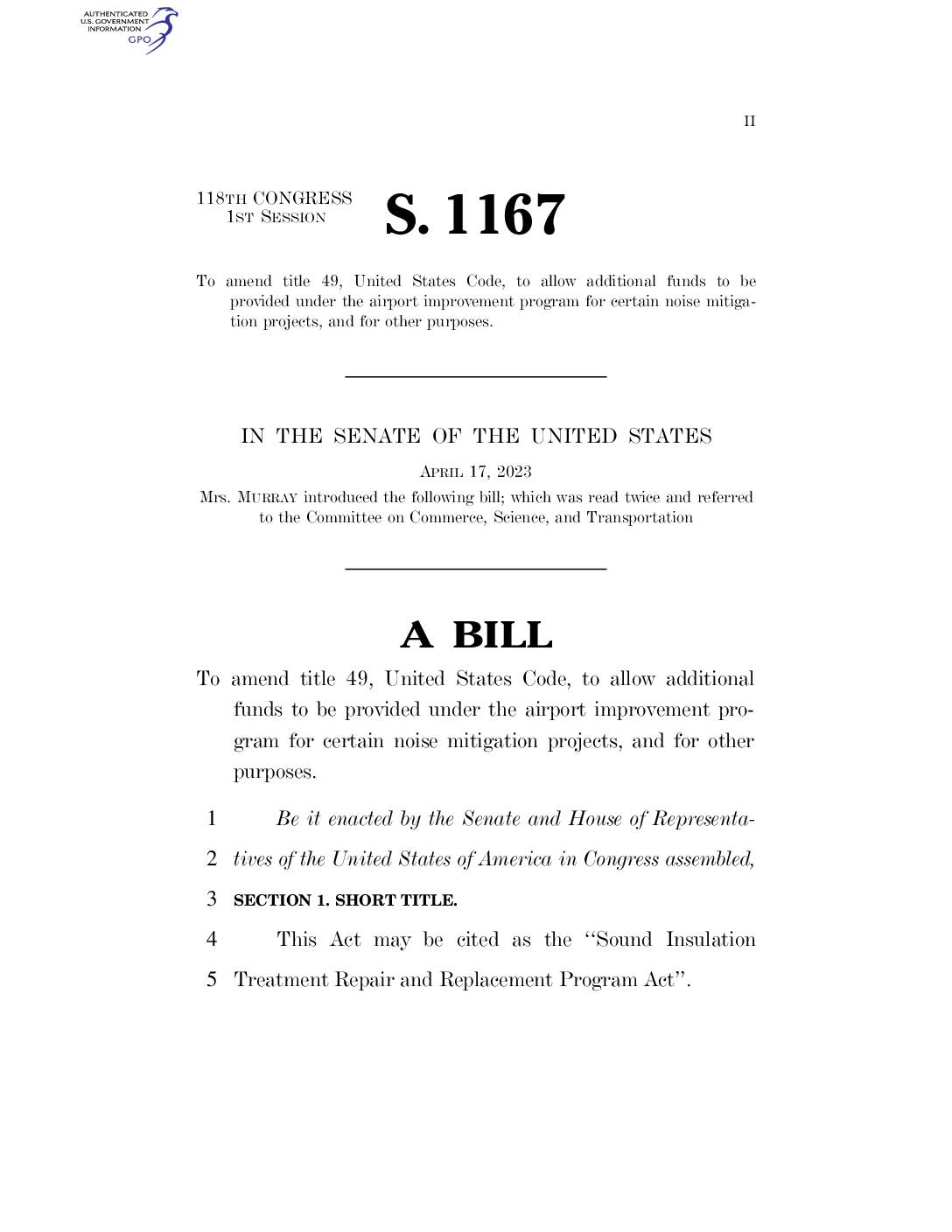
Sound Insulation Treatment Repair and Replacement Program Act (S. 1167)
Senate Bill 1167, introduced by Sen. Patty Murray in April 2023, would allow airports to receive additional federal funding to repair or replace sound insulation previously installed in nearby homes under the Airport Improvement Program. The bill provides a one-time waiver allowing airports to seek new federal assistance for sound insulation projects without prior government costs counting against them, provided the homes fall within the DNL 65 noise threshold or the original insulation caused physical damage. This legislation is particularly relevant to communities around Sea-Tac Airport, where aging soundproofing materials and ongoing aircraft noise concerns have prompted calls for updated noise mitigation support. -
 2023-04-10
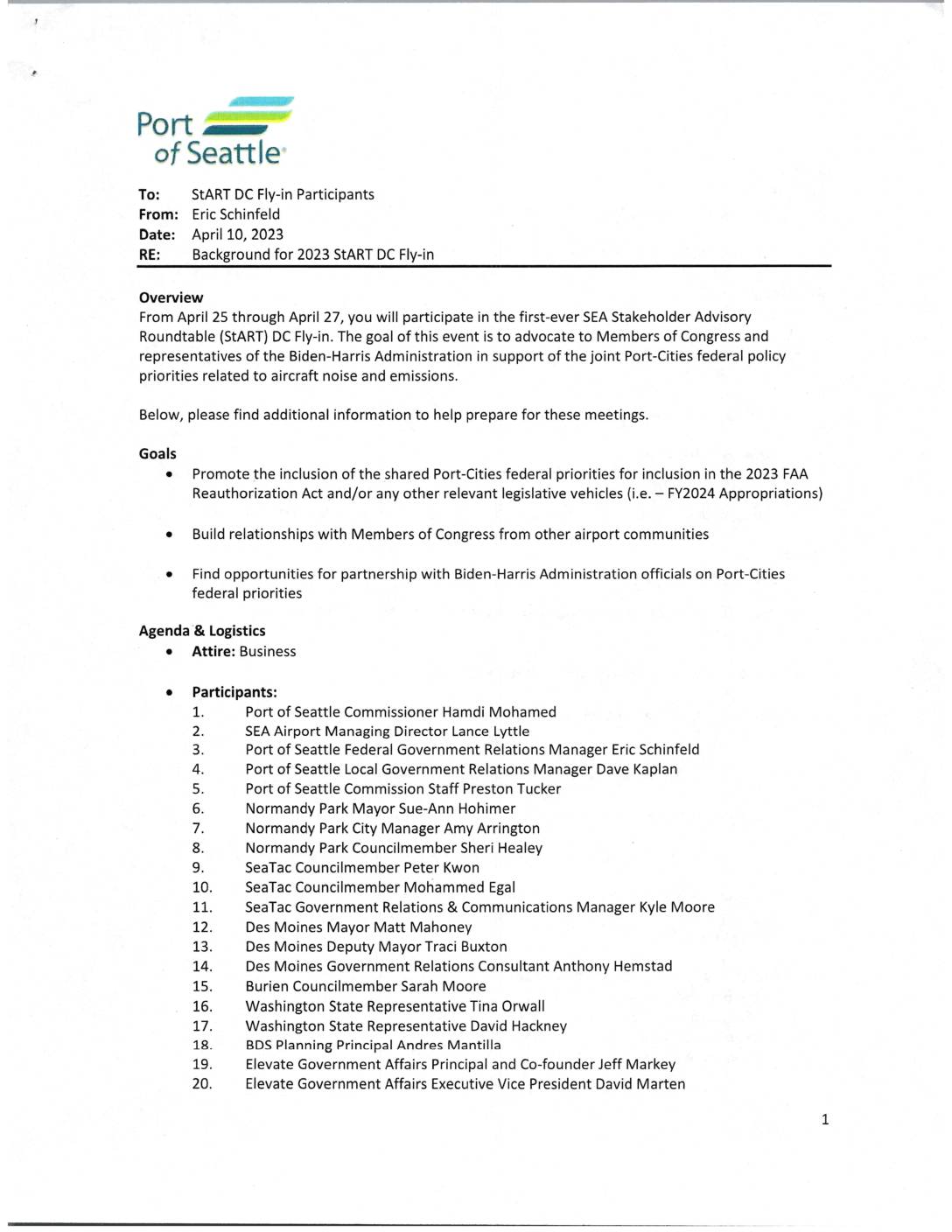
Background for 2023 StART DC Fly-in
This April 2023 memo from the Port of Seattle outlines the agenda and goals for the first-ever StART DC Fly-in, a trip in which Port and local city officials traveled to Washington, DC to advocate for federal policies addressing aircraft noise and emissions near Seattle-Tacoma International Airport. The delegation met with members of Congress, including Senator Maria Cantwell and several House Representatives, to push for legislation such as the Sound Insulation Treatment Repair and Replacement Program Act and the Aviation Noise and Emissions Mitigation Act. Key priorities included expanding eligibility for home sound insulation funding, involving the EPA in noise mitigation efforts, and establishing a formal Aircraft Noise Advisory Committee with a clear timeline for policy action. -
 2023-04-06
Sound Insulation Treatment Repair and Replacement Program Act
The Sound Insulation Treatment Repair and Replacement Program Act, introduced by Rep. Adam Smith (WA-09), would allow the FAA to waive a rule that currently prevents airports from using Airport Improvement Program (AIP) funds to repair or replace sound insulation in the same home more than once. The bill addresses problems caused by faulty materials and poor installation during noise mitigation programs in the 1980s and 1990s, which have led to structural damage and mold in some homes near airports like Sea-Tac. Eligible homeowners must have their issues verified by an FAA-compliant noise auditor, and repairs are generally limited to residences still within the airport's current 65 DNL noise contour. -
 2023-04-06
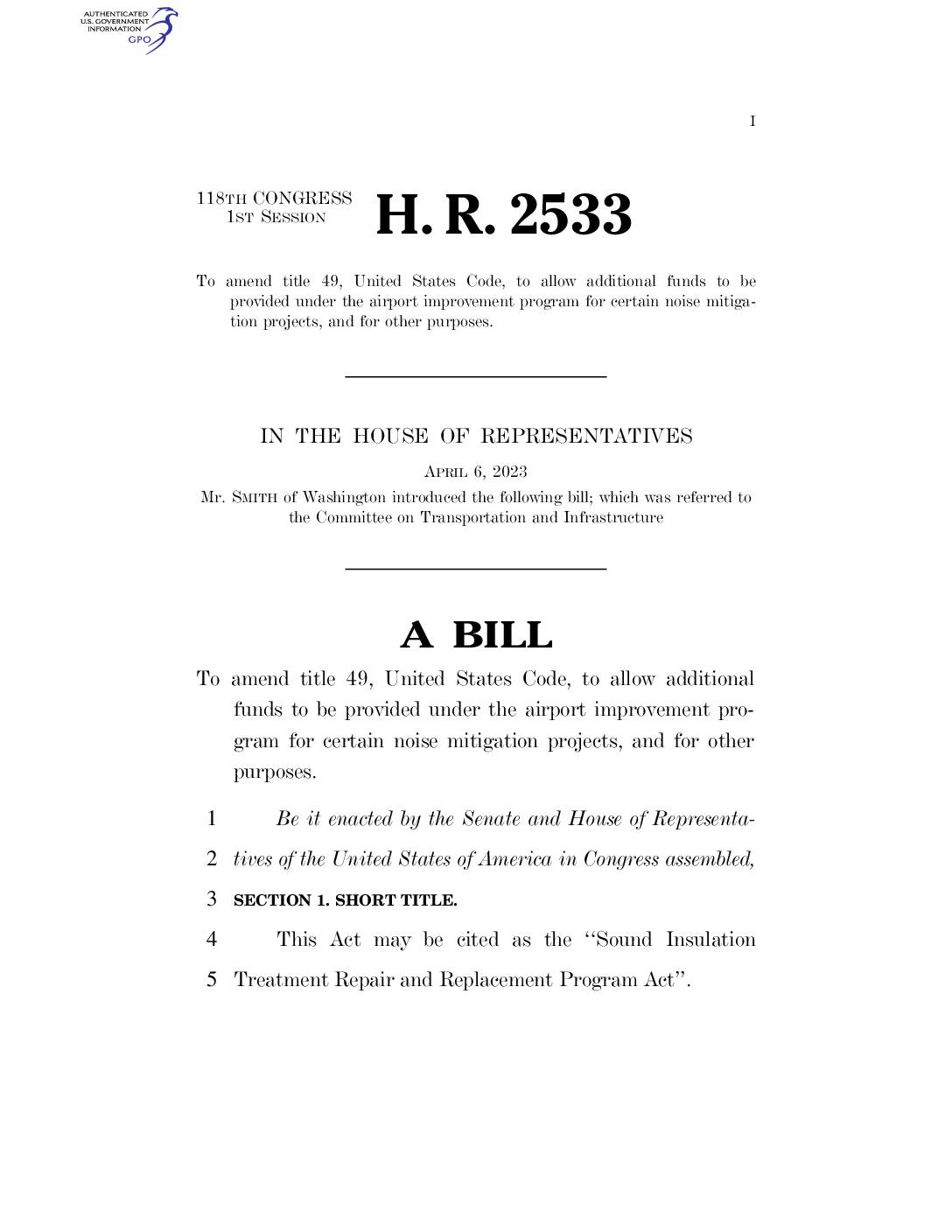
H.R. 2533 – Sound Insulation Treatment Repair and Replacement Program Act
H.R. 2533, the Sound Insulation Treatment Repair and Replacement Program Act, was introduced in April 2023 to allow airports to receive additional federal funding to repair or replace previously installed sound insulation in homes affected by aircraft noise. The bill allows the Secretary of Transportation to grant a one-time waiver so that prior government spending on a home's soundproofing does not count against the allowable project cost for new work. Homes are eligible if they fall within the FAA's DNL 65 noise standard or if an FAA-certified auditor determines that the original soundproofing caused physical damage to the residence. -
 2023-03-07
Aircraft noise mitigation study and plan: The City of Alexandria, VA
This 2023 study, prepared by aviation consulting firm Vianair for the City of Alexandria, Virginia, assesses aircraft noise impacts on communities south of Ronald Reagan Washington National Airport (DCA) and proposes solutions acceptable to the FAA. The work involves analyzing historical flight operations and noise exposure data from 2014–2019, examining changes in flight paths and procedures, and developing recommendations to reduce noise for residents in Alexandria, Fairfax County, and Prince George's County. The findings are intended to be accessible to the general public and local policymakers, not just aviation experts. -
 2023-02-14
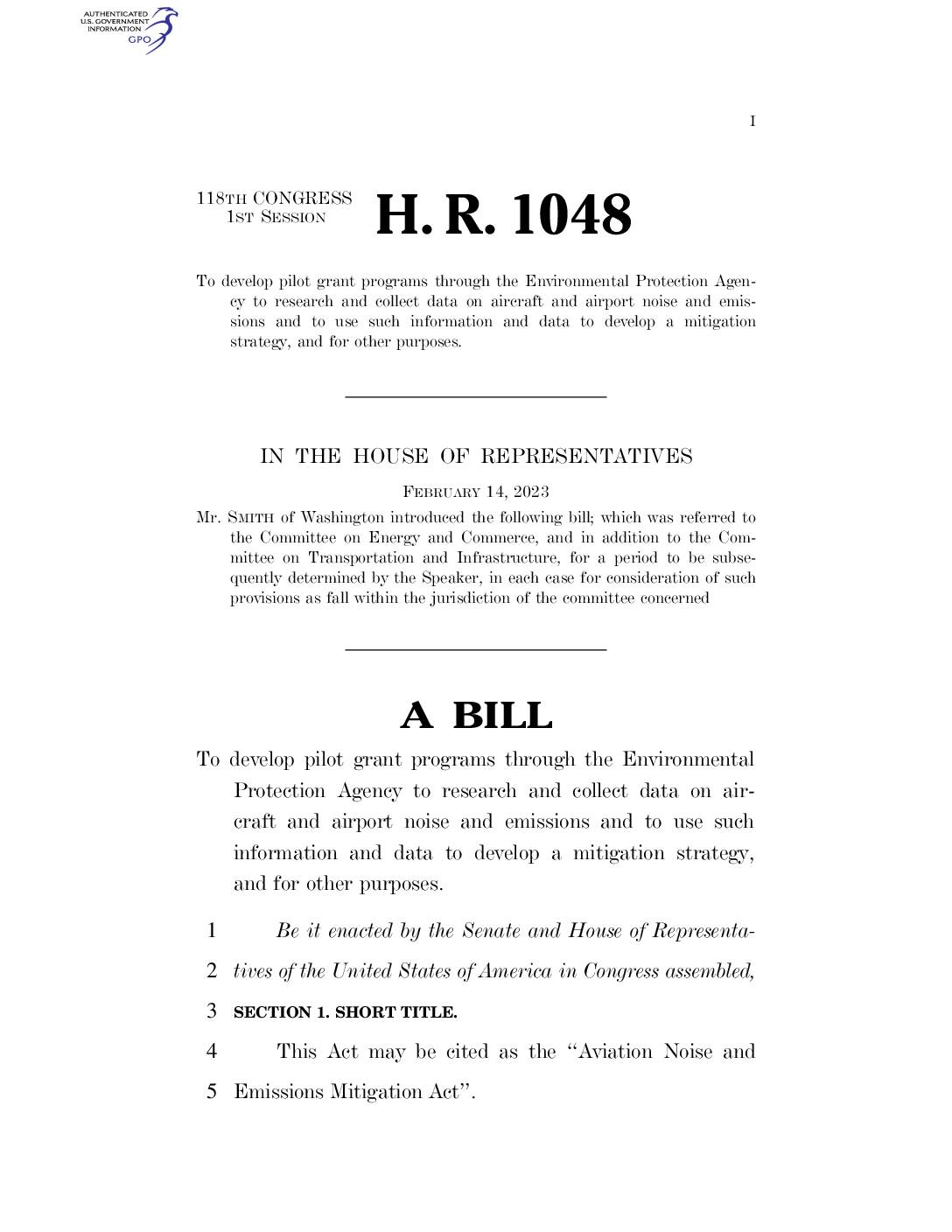
Aviation Noise and Emissions Mitigation Act (H.R. 1048)
H.R. 1048, the Aviation Noise and Emissions Mitigation Act, introduced in February 2023, would direct the EPA to establish a 3-year pilot grant program to measure aircraft and airport noise and emissions—including greenhouse gases, particulate matter, and ultrafine particles—in communities near airports and flight paths. Grant recipients would be required to use technology capable of tracing noise and emissions to specific sources, produce neighborhood- and ZIP Code-level data, and work with local organizations to develop mitigation strategies. The program aims to create a replicable national model for ongoing monitoring and to identify frontline communities disproportionately impacted by aviation-related pollution. -