TagNoise Mitigation(218)
-
 2024-02-20
Bill Analysis: E2SSB 5955 – Mitigating Harm and Improving Equity in Large Port Districts
Washington State bill E2SSB 5955 creates a grant program, running through July 1, 2029, managed by the Department of Commerce to help large port districts — primarily the Port of Seattle, which operates Sea-Tac Airport — repair or replace faulty noise mitigation equipment installed in nearby homes, and address any structural damage caused by that equipment. Port districts can hire building inspectors or partner with their county to inspect affected properties, and must apply for grant funds when inspections reveal problems. The Joint Legislative Audit and Review Committee will review the program's effectiveness by July 1, 2028. -
 2024-02-20
House Bill Analysis: E2SSB 5955 – Mitigating Harm and Improving Equity in Large Port Districts
Washington State Bill E2SSB 5955 creates a grant program, running through July 1, 2029, managed by the Department of Commerce to help port districts — primarily the Port of Seattle, which operates Sea-Tac Airport — repair or replace faulty noise mitigation equipment installed in nearby homes, and to fix any structural damage caused by that equipment. The program is funded through a new 'port district equity fund' drawing from legislative appropriations, local government contributions, and private donations. An independent review by the Joint Legislative Audit and Review Committee is required by July 1, 2028, to assess how many homes have been remediated and how many still need attention. -
 2024-02-04
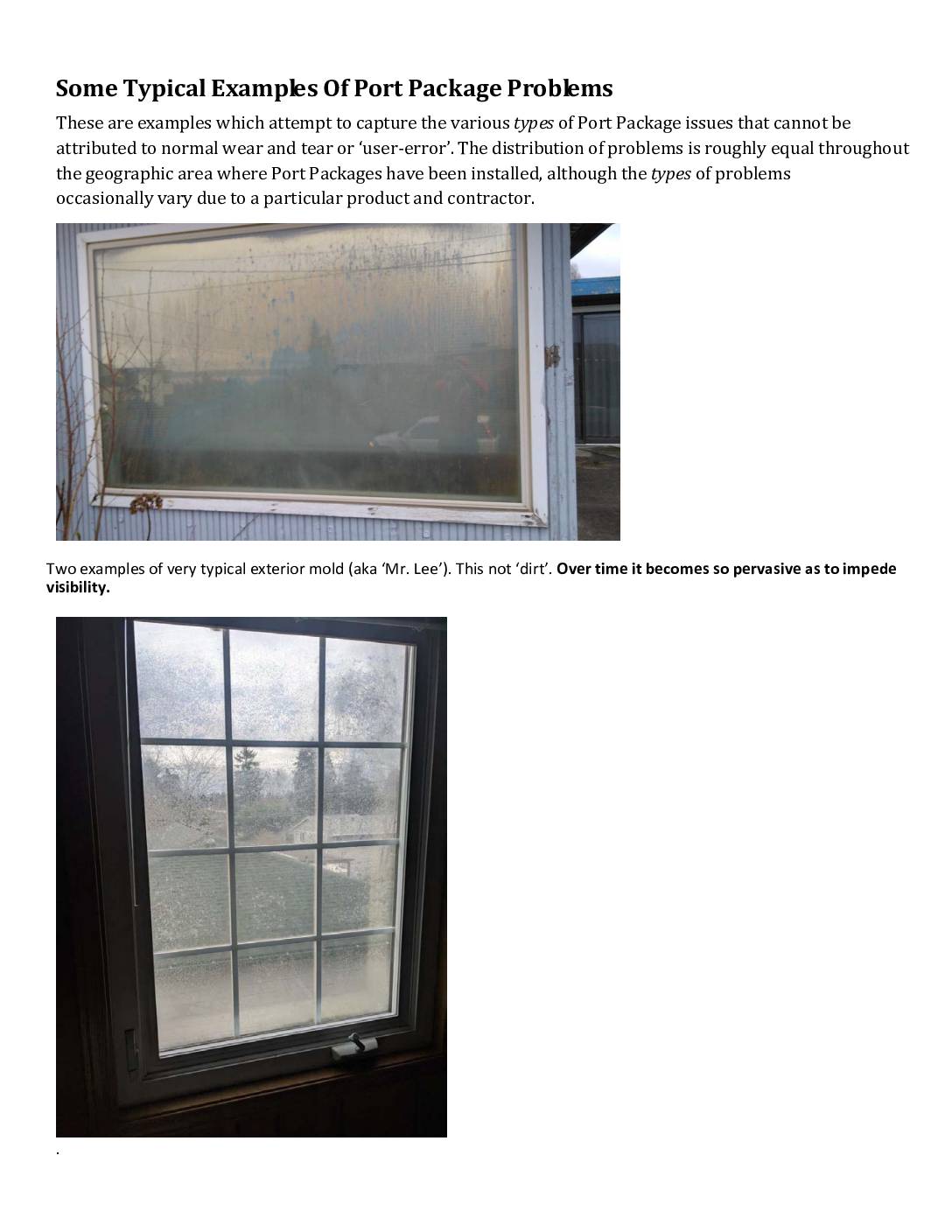
Some typical examples of Port Package problems
This document illustrates common defects found in Port Package window and door installations in homes near Sea-Tac Airport, showing problems that go beyond normal wear and tear. Issues documented include exterior mold growth that impairs visibility, active water leakage between window panes, and serious structural damage caused by water infiltrating wall framing — in one case requiring a full wall replacement costing $100,000. These problems are reported across the geographic area where Port Packages have been installed and are not attributed to homeowner misuse. -
 2024-02-03
Senate bill report SB 5955: Mitigating harm and improving equity in large port districts
Washington Senate Bill 5955 proposes creating a 'port district equity fund' to help large port districts—such as the one operating Sea-Tac Airport—pay for aircraft noise mitigation programs. The fund would be seeded with a $10 million appropriation for fiscal year 2025 and subsequently replenished by sales and use tax revenue collected on capital construction projects at the airport, with the port district required to match at least half of state-provided funds. The Department of Commerce would administer grants from the fund to cover costs such as inspecting and repairing soundproofing equipment in nearby homes and addressing any structural damage caused by its installation. -
 2024-01-29
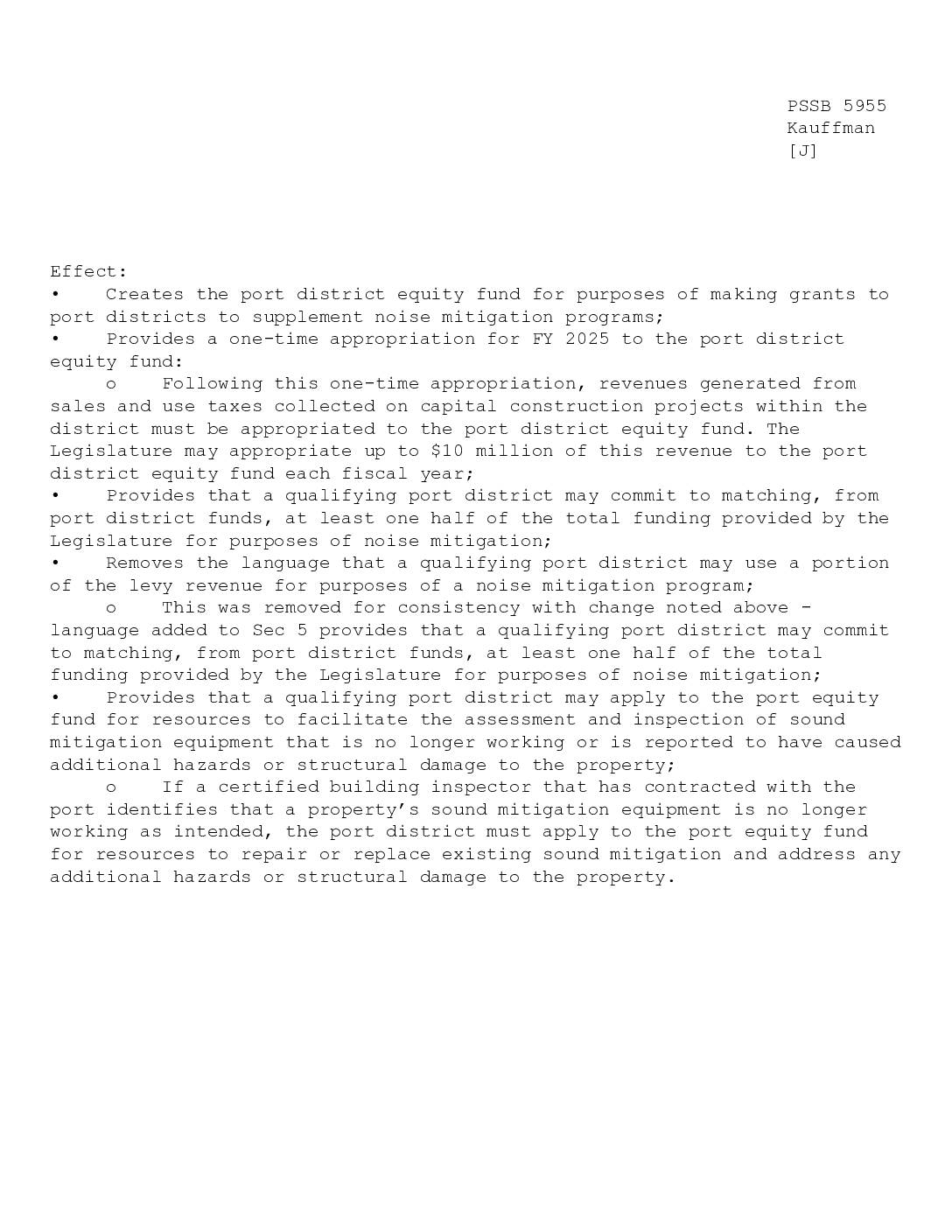
PSSB 5955 – Mitigating harm and improving equity in large port districts
Washington State Senate Bill 5955 creates a 'port district equity fund' to help large port districts, such as the Port of Seattle operating Sea-Tac International Airport, pay for aircraft noise mitigation programs in nearby communities. The bill provides an initial one-time appropriation for FY 2025, followed by ongoing funding of up to $10 million per year drawn from sales and use taxes on capital construction projects within the district. It also requires port districts to apply for fund resources to repair or replace noise mitigation equipment that is no longer working or has caused structural damage to properties, with port districts required to match at least half of the Legislature's contribution. -
 2024-01-16
Senate bill report SB 5955: Mitigating harm and improving equity in large port districts
Washington Senate Bill 5955 would require large port districts operating airports with more than 900 daily flights — such as Sea-Tac — to launch a remedial mitigation program addressing failed soundproofing, air quality, green space, and community facilities in noise-impacted neighborhoods. The bill would fund these programs through a portion of the port's annual property tax levy revenue and establish a state environmental equity fund, managed by the Department of Commerce, to provide grants and loans to qualifying ports. Property owners within ten miles of the airport experiencing 55 decibels or more of aircraft noise would be eligible for free inspections and mitigation equipment, with priority given to homes where previously installed soundproofing has failed. -
 2024-01-03
House Bill 2103: Mitigating Harm and Improving Equity in Large Port Districts
Washington House Bill 2103 (2024) requires large port districts operating major airports, such as Seattle-Tacoma International Airport, to dedicate a growing portion of their property tax levy revenue toward programs that reduce noise and air pollution impacts on nearby communities. The bill was prompted by health and equity concerns, as studies show that communities of color living close to Sea-Tac face higher rates of asthma, heart disease, premature births, and other health disparities. Mitigation programs funded under the bill may include repairing failed soundproofing equipment, providing air purifiers, creating urban green spaces, and supporting indoor community facilities in affected neighborhoods. -
 2024-01-01
Senate Bill 5955: Mitigating Harm and Improving Equity in Large Port Districts
Washington Senate Bill 5955 (2024) requires large port districts operating airports, such as the Port of Seattle which runs Sea-Tac International Airport, to dedicate a growing share of their annual property tax levy revenue toward programs that reduce noise and air pollution impacts on nearby communities. Starting in 2024, at least half of any levy revenue increase must fund mitigation efforts, rising to a minimum of 1% of total levy revenue by 2025 and increasing by 1% each year up to a cap of 10%. The bill was introduced in response to documented health disparities—including higher rates of asthma, heart disease, and premature births—affecting Black, Hispanic, Native Hawaiian, and Pacific Islander residents who disproportionately live within 10 miles of Sea-Tac Airport. -
 2023-11-19
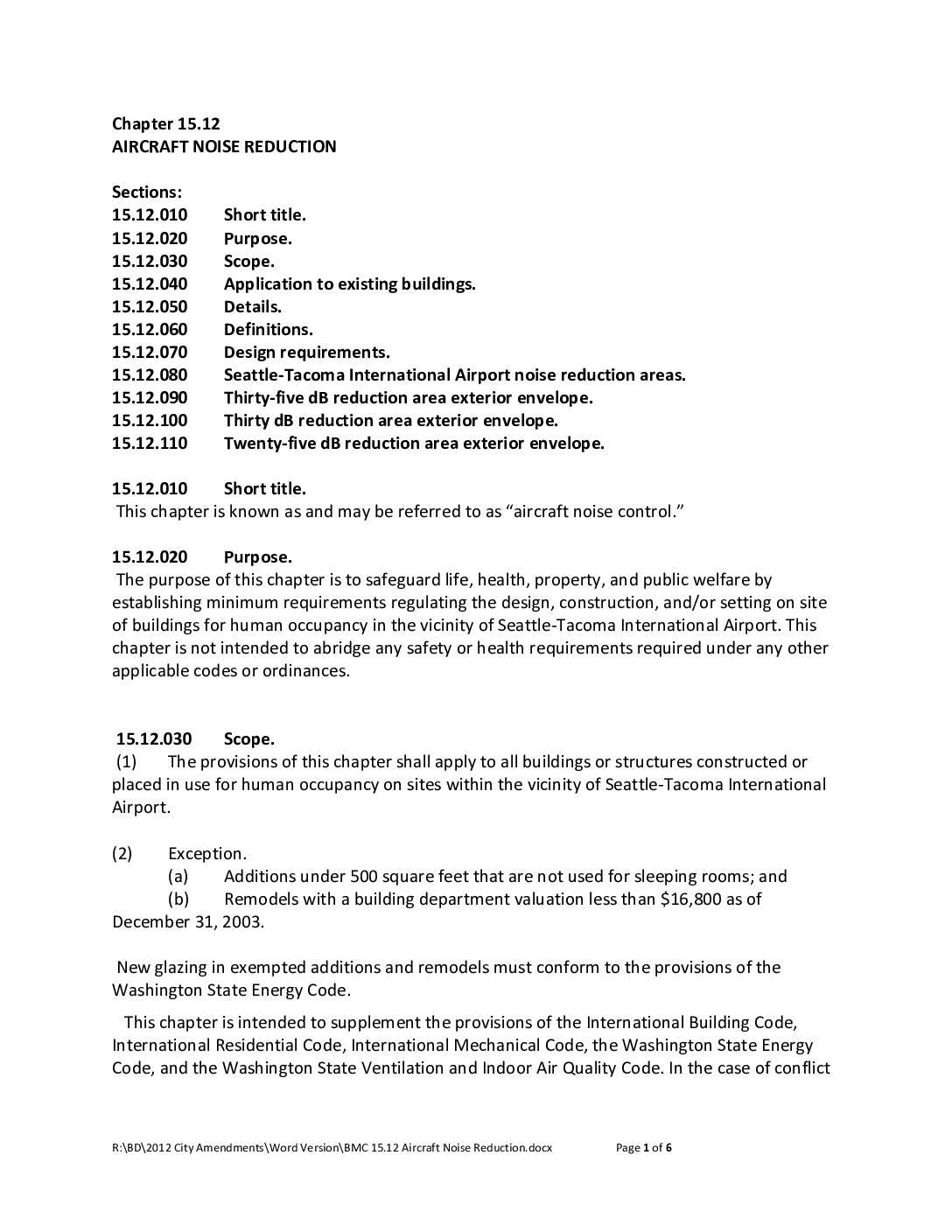
Aircraft noise reduction
Chapter 15.12 of the Burien Municipal Code establishes minimum building construction standards to reduce aircraft noise for properties near Seattle-Tacoma International Airport. Buildings are divided into three noise reduction zones (35 dB, 30 dB, and 25 dB), each requiring progressively higher sound transmission ratings for walls, windows, doors, roofs, and ventilation systems. The code applies to all new construction and most additions intended for human occupancy, with limited exceptions for small remodels and non-inhabited structures like warehouses and garages. -
 2023-06-07
Noise programs & NextGen briefing
This Port of Seattle briefing, presented by Noise Programs Manager Stan Shepherd, covers key topics related to aircraft noise management at Seattle-Tacoma International Airport, including flight procedures, noise contours, and mitigation programs. It highlights a steady rise in noise complaints received through the Noise Information Hotline and online forms, growing from 2,172 inquiries in 2014 to 2,959 in 2016, with a small number of repeat callers accounting for the majority of contacts each year.