TagKing County(422)
-
 2021-04-19
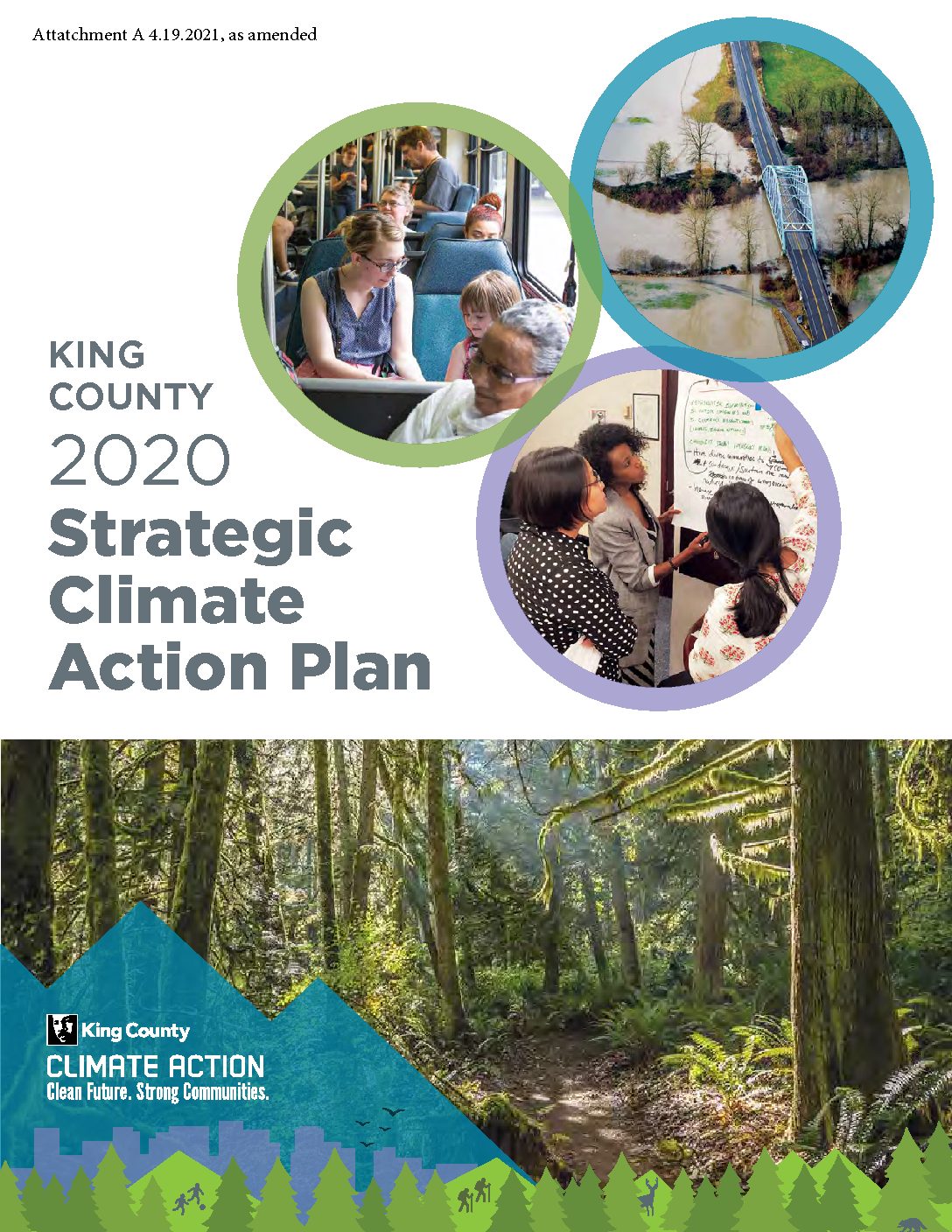
King County 2020 Strategic Climate Action Plan
King County's 2020 Strategic Climate Action Plan outlines the county's comprehensive approach to addressing climate change through three main areas: reducing greenhouse gas emissions, supporting sustainable and resilient frontline communities, and preparing for climate change impacts. The plan emphasizes equity and community engagement, particularly for historically underserved populations, and was developed with input from a Climate Equity Community Task Force representing diverse community organizations. It builds on progress made since the county's 2015 climate plan and sets targets and policies across transportation, energy, buildings, food systems, and land use. -
 2021-03-09
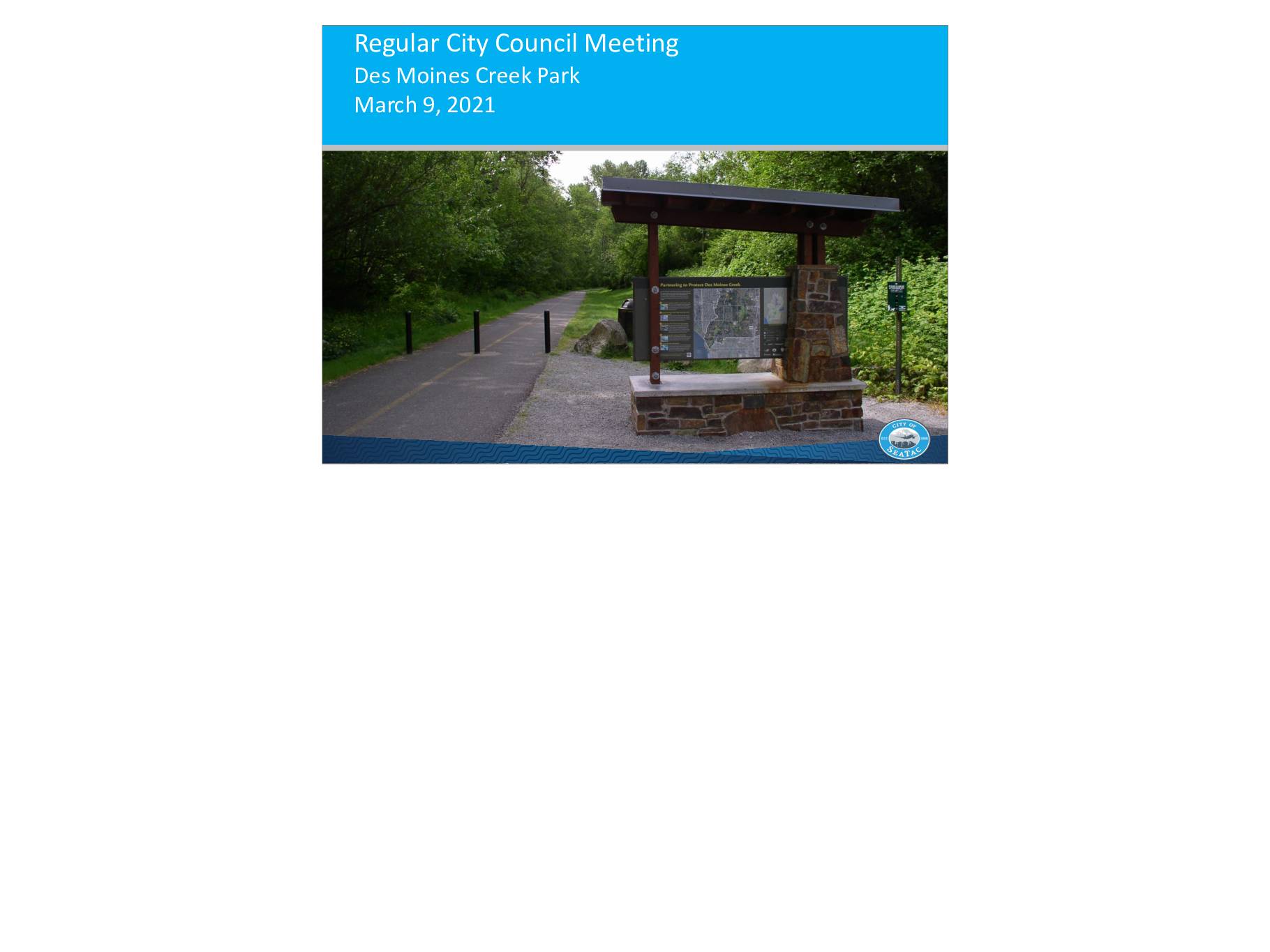
Des Moines Creek Park: Interlocal Agreement Amendment with King County for Conservation Future Tax Levy Grant
At a March 9, 2021 City Council meeting, the City of SeaTac considered a motion to authorize an amendment to an Interlocal Agreement with King County to receive a $500,000 Conservation Future Tax Levy grant, matched equally by the City, for acquiring approximately 8 acres of surplus Washington State Department of Transportation land adjacent to Des Moines Creek Park. The acquisition aims to expand open space, improve trail access, add a new trailhead with educational amenities, and preserve forested land along a salmon-bearing stream. The City has been pursuing this land purchase since 2018 as part of its Parks, Recreation, and Open Space (PROS) Plan. -
 2021-03-01
Lake to Sound Trail – Segment C: 100% alignment
This King County map document shows the planned alignment for Segment C of the Lake to Sound Trail, a recreational trail corridor connecting Burien and SeaTac. The 100% alignment, dated March 2021, traces the trail route along Des Moines Memorial Drive and through residential areas near Des Moines Creek, terminating near Des Moines Creek Park at S 200th Street. The map was produced by King County's Department of Natural Resources and Parks, Parks and Recreation Division. -
 2021-02-18
Port Of Seattle Economic Development Partnership Program: 2021 Authorization Request
The Port of Seattle's 2021 Economic Development Partnership Program authorization request outlines the Port's collaborative investments with cities across King County to support local economic development. In 2020, the program funded 65 projects totaling $1.4 million in combined investment, focusing primarily on small business assistance, buy-local campaigns, tourism, and business attraction. Funds were distributed across North, South, and East King County, with South King County receiving the largest Port share at $0.4 million in 2020. -
 2021-02-10
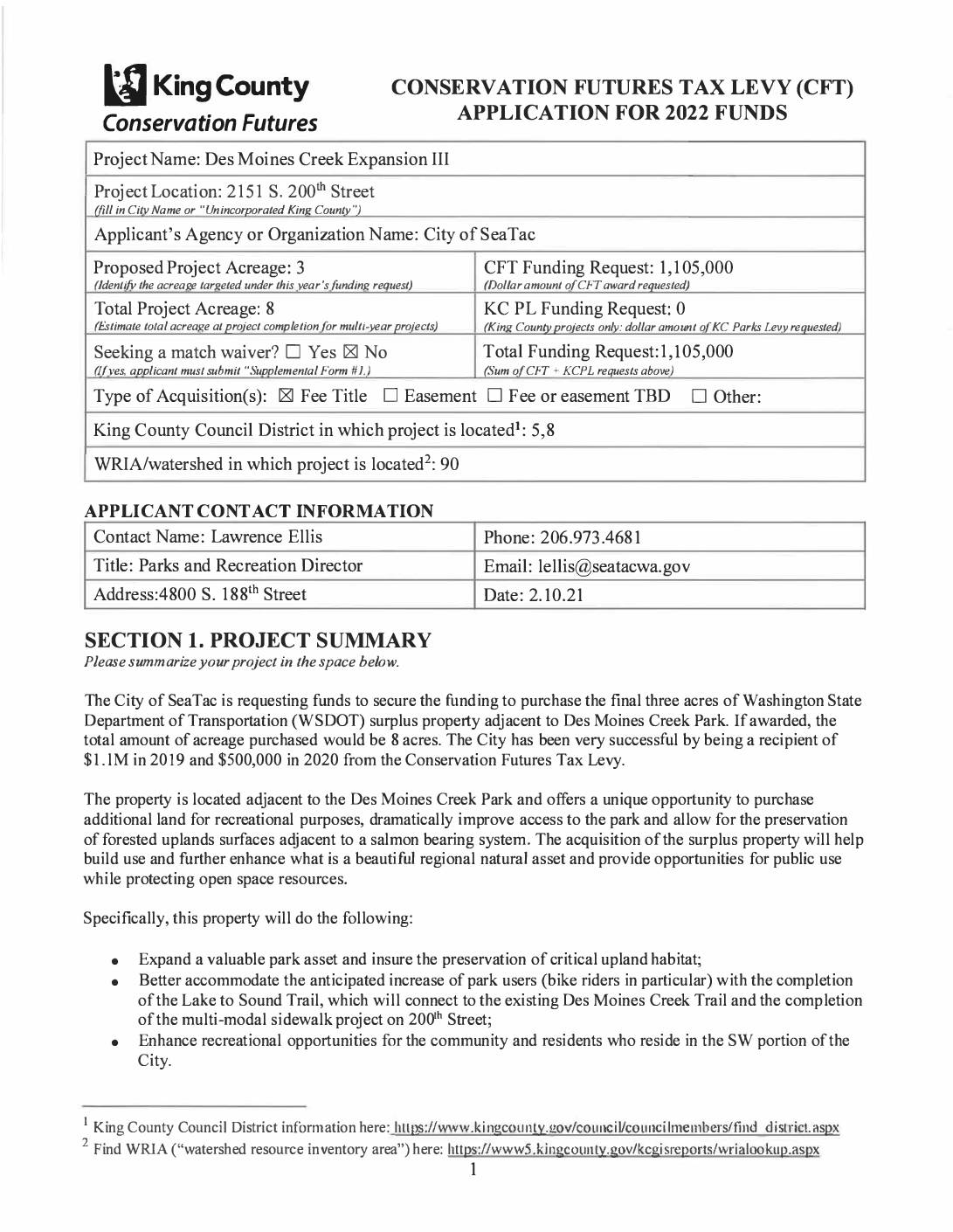
Conservation Futures Tax Levy (CFT) application for 2022 funds: Des Moines Creek Expansion III
The City of SeaTac applied for $1,105,000 in King County Conservation Futures Tax Levy funds in 2022 to purchase the final three acres of surplus Washington State Department of Transportation land adjacent to Des Moines Creek Park, bringing the total acquired acreage to eight acres. The project aims to preserve forested upland habitat along a salmon-bearing stream, improve public park access from the west side via 18th Avenue South, and support trail connectivity including the Lake to Sound Trail. This was the third phase of a multi-year acquisition effort, following prior CFT awards of $1.1 million in 2019 and $500,000 in 2020. -
 2021-01-01
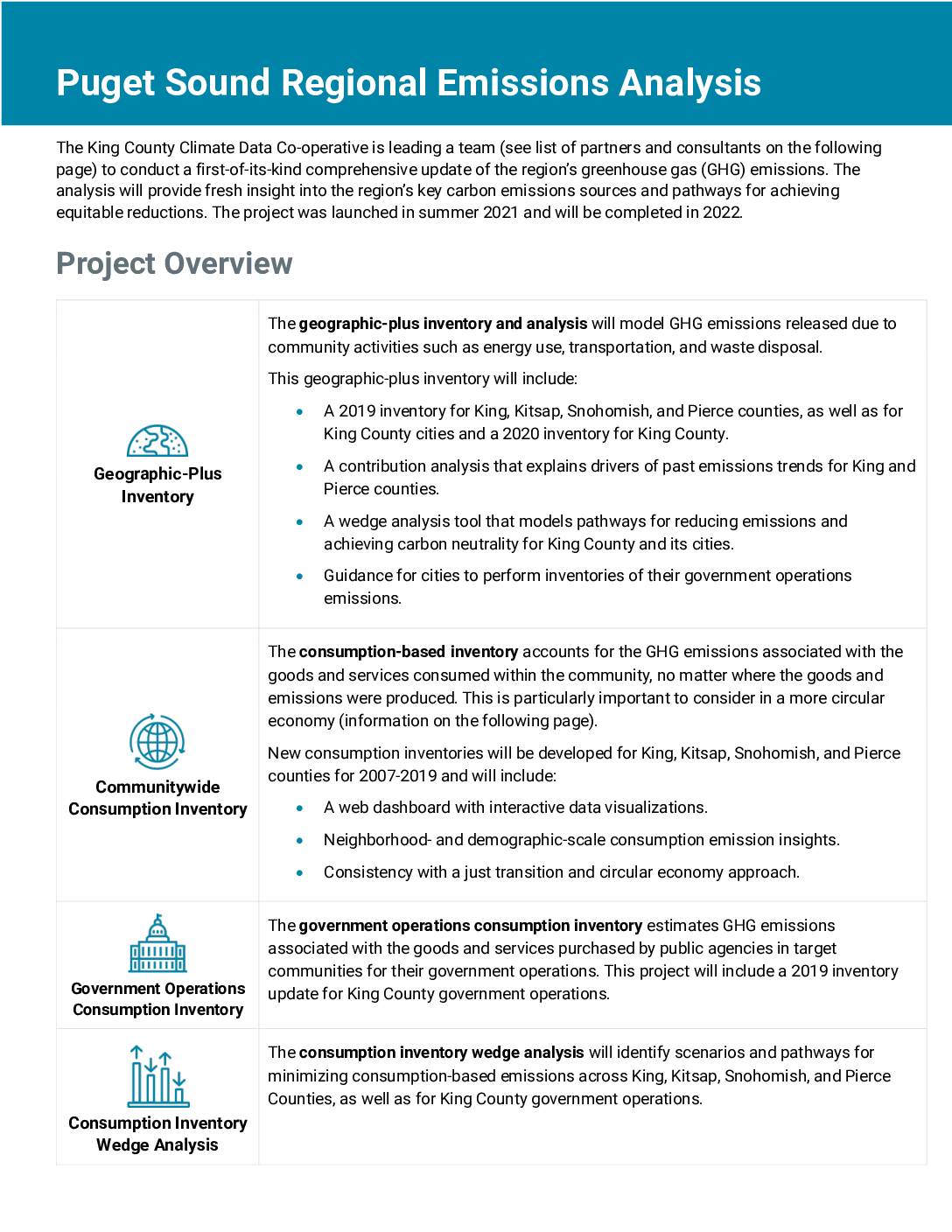
Puget Sound Regional Emissions Analysis
The Puget Sound Regional Emissions Analysis is a King County-led project launched in 2021 to comprehensively measure greenhouse gas emissions across King, Kitsap, Snohomish, and Pierce counties. The project covers multiple types of emissions inventories—including community activities, consumption of goods and services, and government operations—while also modeling pathways to reduce emissions and achieve carbon neutrality. It incorporates social equity principles to address disproportionate environmental impacts on communities of color. -
 2020-12-05
The Relationship between Airplane Emissions & Pre-Mature Births
A December 2020 presentation by Public Health Seattle and King County researcher Kris Johnson, PhD, examines the link between airplane emissions and premature births. The slides outline serious health risks associated with preterm birth, including cognitive delays, hearing and vision problems, SIDS, ADHD, and greater likelihood of chronic diseases such as heart disease and diabetes in adulthood. Mothers who deliver preterm also face elevated risks of hypertension, cardiovascular disease, and repeated preterm deliveries. -
 2020-07-12
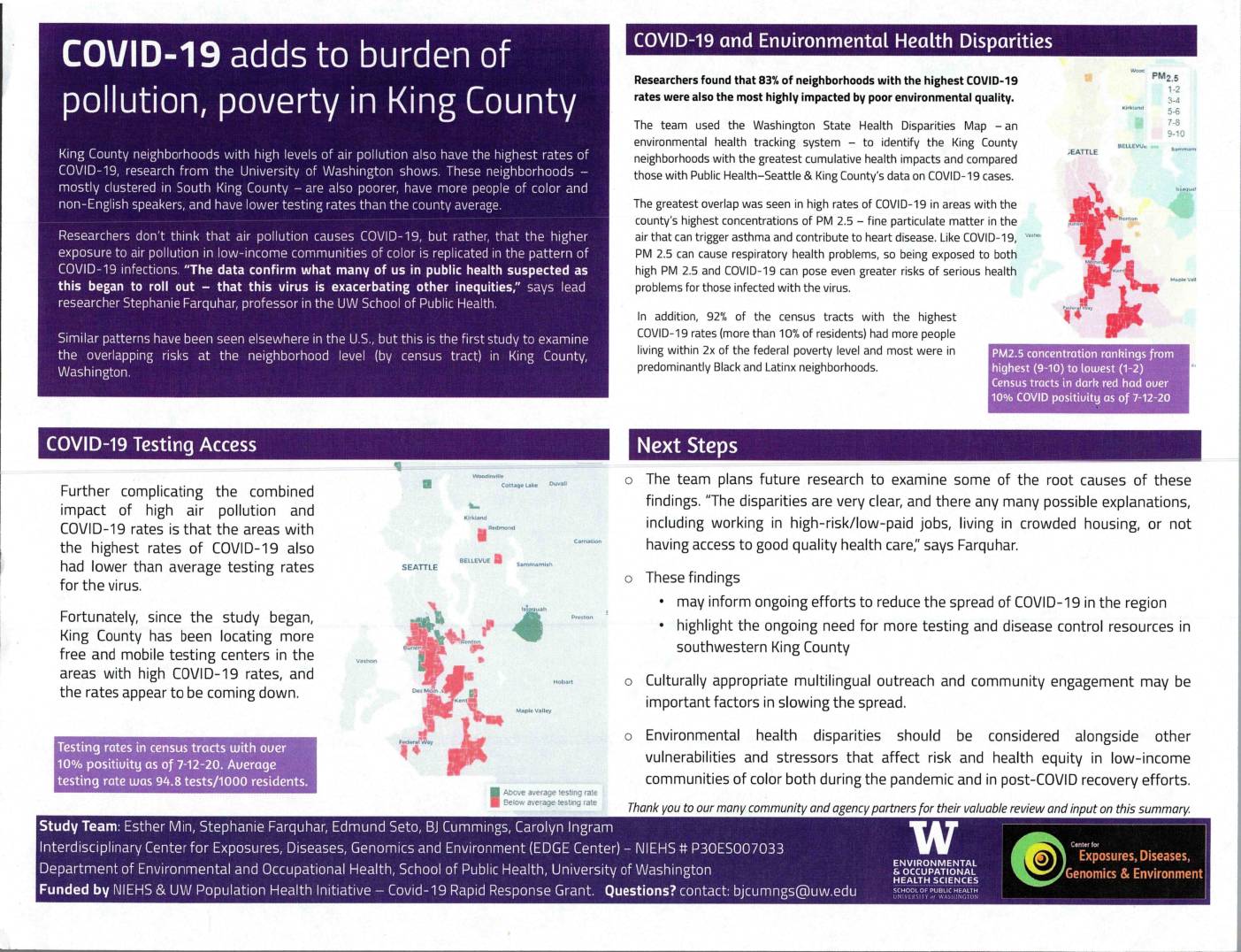
COVID-19 adds to burden of pollution, poverty in King County
A University of Washington study found that King County neighborhoods with the highest air pollution levels, concentrated in South King County, also experienced the highest COVID-19 infection rates. These areas are predominantly lower-income communities of color with below-average COVID-19 testing access. Researchers note that environmental health disparities, not air pollution as a direct cause, mirror the patterns of COVID-19 spread, and call for more testing resources and culturally appropriate outreach in affected communities. -
 2020-05-29
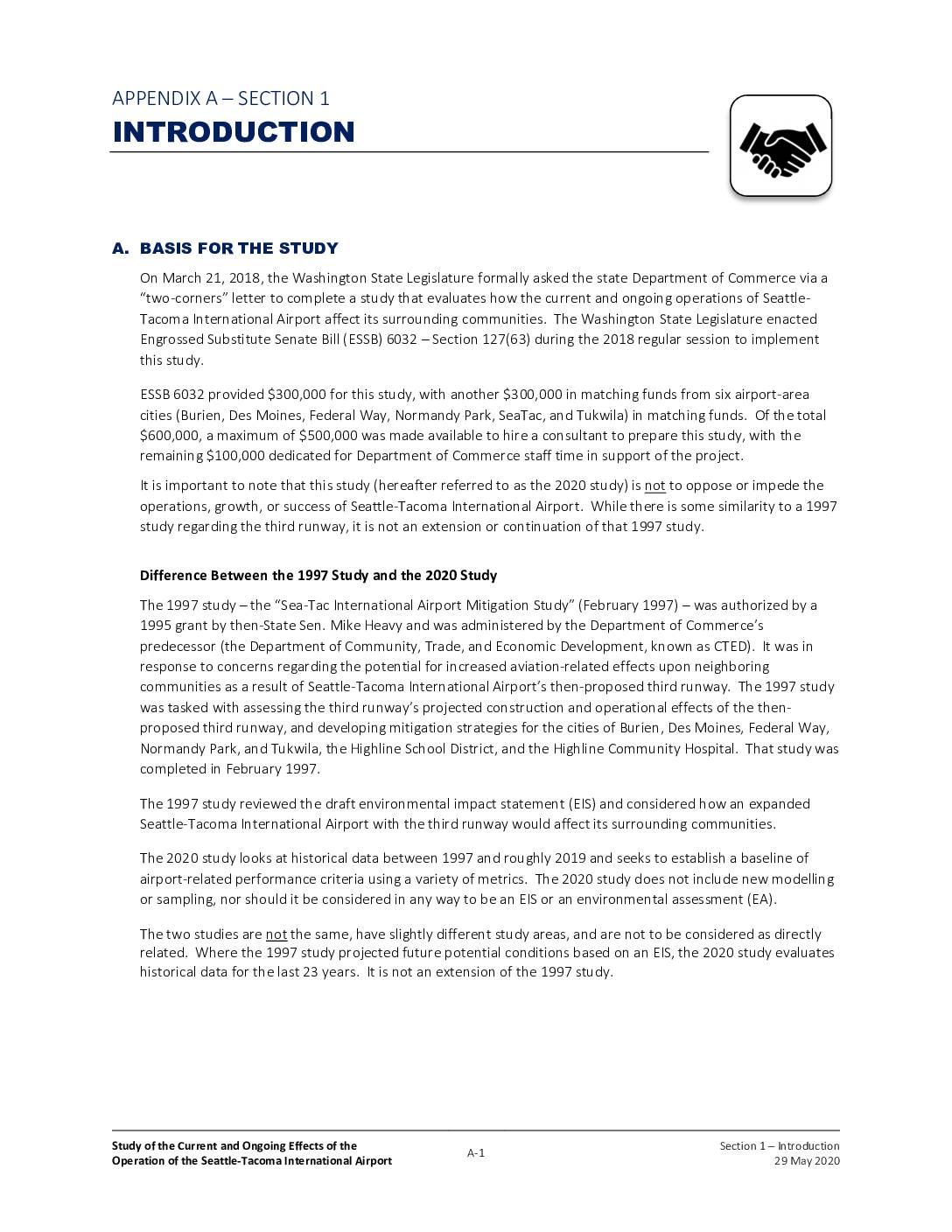
Section 1: Introduction — Study of the Current and Ongoing Effects of the Operation of the Seattle-Tacoma International Airport
A 2020 Washington State study, funded by the legislature and six nearby cities with a combined $600,000 budget, examines how Seattle-Tacoma International Airport's operations have historically affected surrounding communities including Burien, Des Moines, Federal Way, Normandy Park, SeaTac, and Tukwila. Unlike a similar 1997 study that projected future impacts from a proposed third runway, this study reviews historical data from 1997 to 2019 to establish a baseline of airport-related impacts across a range of metrics. The study area covers about 61 square miles and is home to over 237,000 residents, a population density roughly 3.3 times greater than the King County average. -
 2020-05-29
Stantec Sea-Tac Airport Communities Impact Study: Section 12 – Public Health (Pages 285–307)
This 2020 public health study examines the effects of Seattle-Tacoma International Airport operations on nearby communities, analyzing health indicators such as cancer, heart disease, and Alzheimer's disease death rates between 2012 and 2016. Study area cities like Burien, Des Moines, Federal Way, SeaTac, and Tukwila generally showed higher cancer and heart disease death rates than King County as a whole, though rates declined somewhat over the period. The report aims to identify whether airport operations contributed to adverse health outcomes and recommends strategies for ongoing investigation and mitigation.