TagFAA(687)
-
 2025-09-12
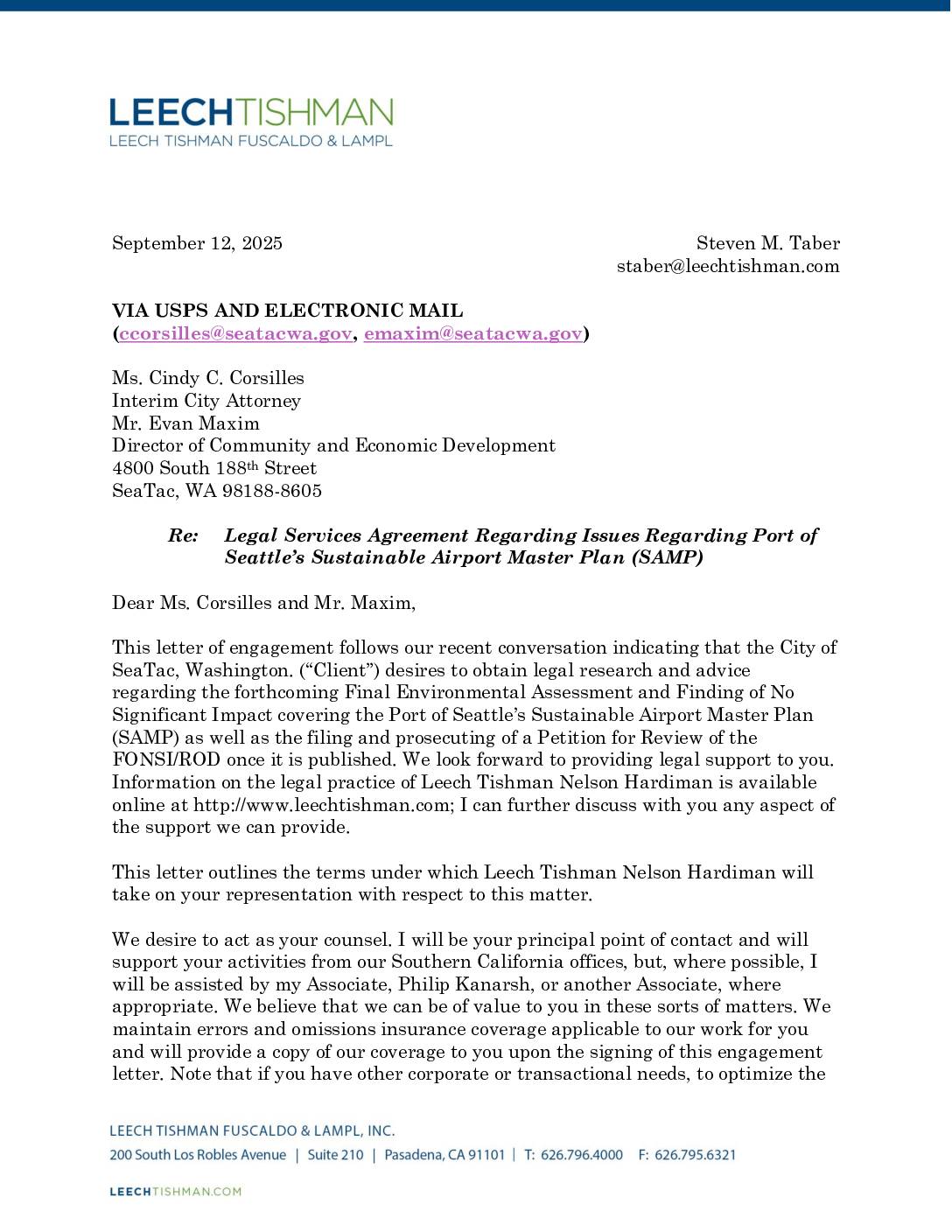
Legal Services Agreement: Leech Tishman Engagement Letter to City of Sea-Tac Regarding Port Of Seattle SAMP FONSI/ROD Review
The City of SeaTac, Washington has engaged the law firm Leech Tishman Nelson Hardiman to provide legal counsel regarding the Port of Seattle's Sustainable Airport Master Plan (SAMP), specifically in connection with the forthcoming Final Environmental Assessment and Finding of No Significant Impact (FONSI). The firm will advise the City, prepare legal memoranda, and file a Petition for Review with a federal appeals court challenging the FAA's Record of Decision once it is published in late 2025. The engagement is capped at $300,000, with an initial retainer of $10,000, and hourly rates ranging from $300–$540 per hour. -
 2025-09-08
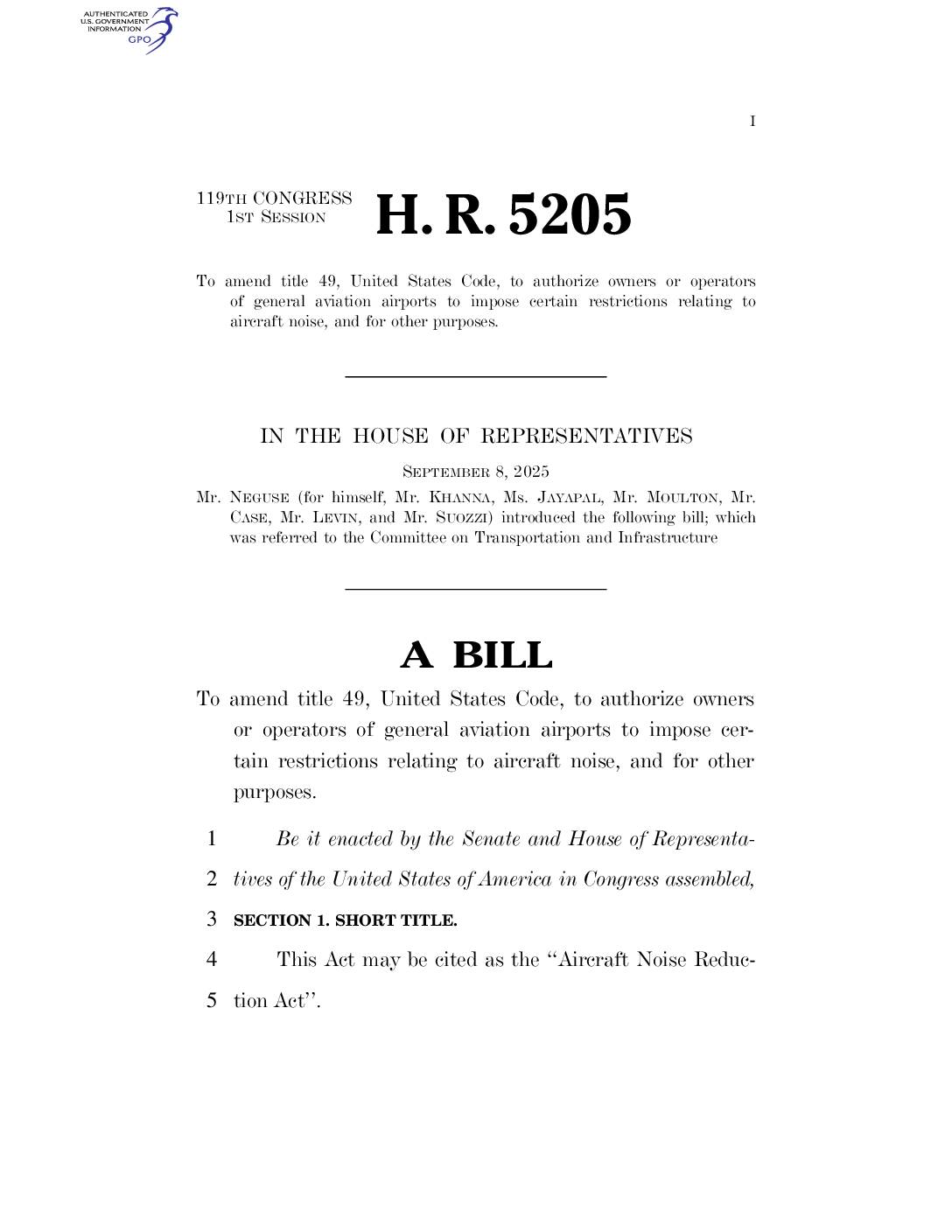
Aircraft Noise Reduction Act (H.R. 5205)
H.R. 5205, the Aircraft Noise Reduction Act, is a bill introduced in September 2025 that would allow owners and operators of general aviation airports to work with the FAA to adjust air traffic and training flight patterns in order to reduce aircraft noise in surrounding communities. The bill protects airports from losing federal funding simply for pursuing these noise-reduction measures and requires community input to be considered in the process. It also directs the Secretary of Transportation to update federal regulations to make noise abatement measures more accessible to general aviation airports. -
 2025-09-04
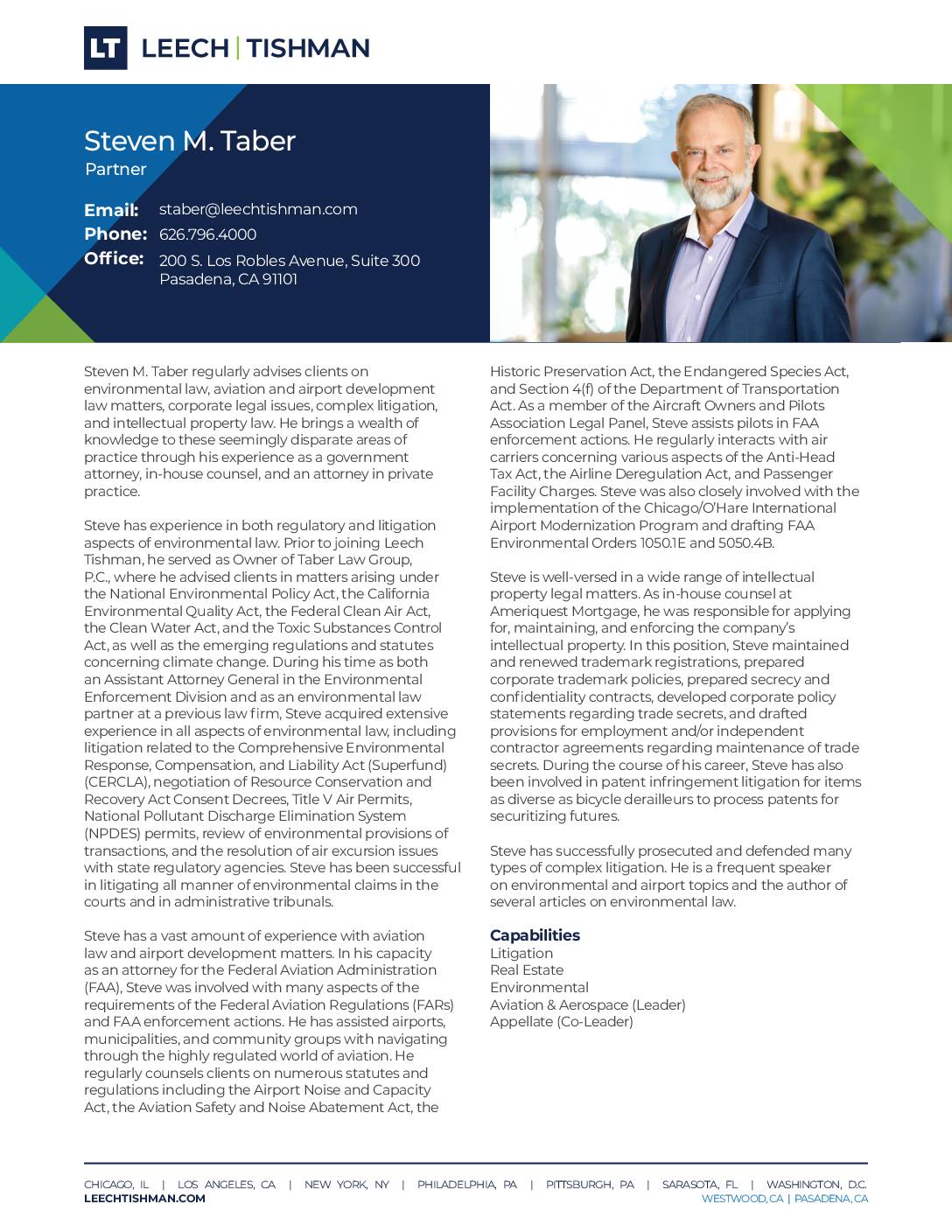
Steven M. Taber: Attorney Profile, Leech Tishman
Steven M. Taber is a Partner at Leech Tishman law firm specializing in environmental law, aviation and airport development, and related regulatory matters, with experience advising airports, municipalities, and community groups on noise and capacity issues under statutes such as the Airport Noise and Capacity Act and the Aviation Safety and Noise Abatement Act. He previously served as an attorney for the Federal Aviation Administration (FAA), where he was involved in drafting FAA Environmental Orders 1050.1E and 5050.4B, and has counseled clients navigating FAA enforcement actions and airport modernization programs. While his profile does not reference Sea-Tac Airport specifically, his broad expertise in aviation noise policy, environmental review processes, and federal aviation regulations makes him a relevant figure in airport noise policy research. -
 2025-09-01
Finding of No Significant Impact/Record of Decision for the Sustainable Airport Master Plan Near-Term Projects at the seattle-tacoma international airport
★ 32FAA’s Finding of No Significant Impact and Record of Decision for the Sustainable Airport Master Plan Near-Term Projects at Seattle-Tacoma International Airport. The document provides final agency determinations and approvals for federal actions necessary to implement 31 near-term improvement projects addressing efficiency, safety, and passenger processing needs at SEA. -
 2025-09-01
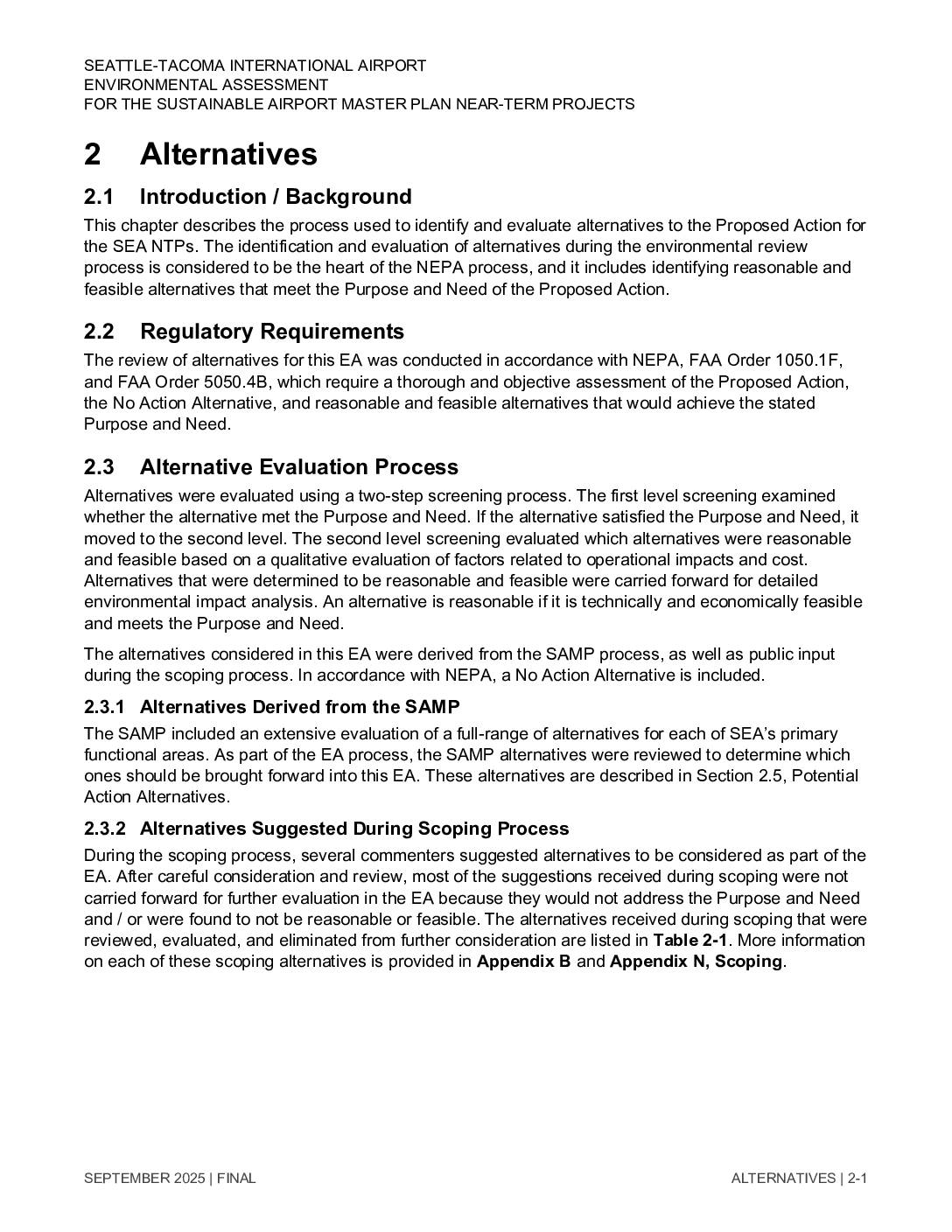
Seattle-Tacoma International Airport Environmental Assessment for the Sustainable Airport Master Plan Near-Term Projects: Chapter 2 — Alternatives
This section of the Seattle-Tacoma International Airport Environmental Assessment describes how planners evaluated different alternatives to the airport's near-term expansion projects, using a two-step screening process to determine whether each option met the project's stated goals and was practical to implement. Public suggestions submitted during the scoping process—such as building a new airport, using high-speed rail, limiting growth, or relying on other existing airports—were largely rejected because they could not meet current and future passenger demand at SEA. A No Action Alternative is also included, representing a future scenario in which none of the proposed new construction takes place. -
 2025-09-01
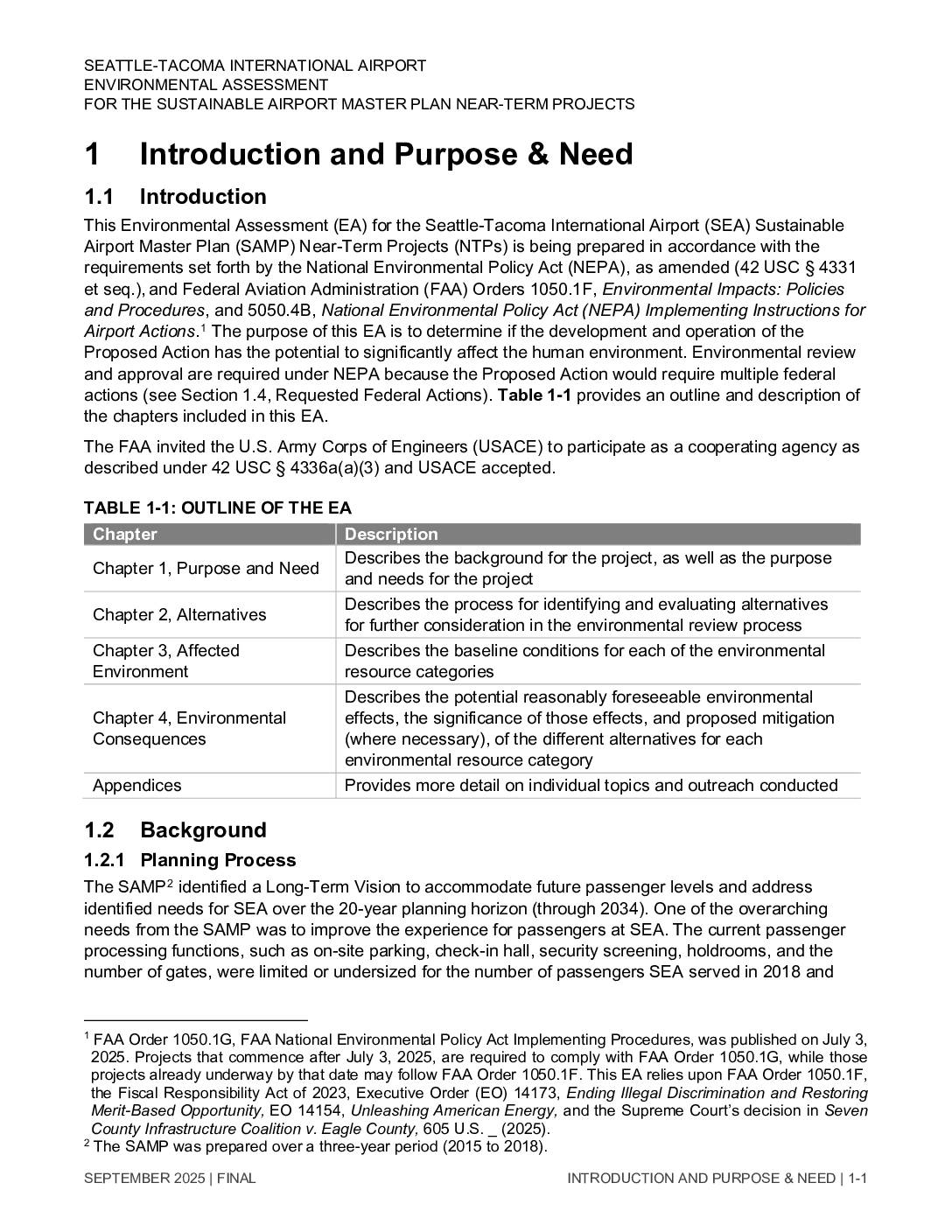
Seattle-Tacoma International Airport Environmental Assessment for the Sustainable Airport Master Plan Near-Term Projects: Chapter 1, Introduction and Purpose & Need
The Port of Seattle is conducting an Environmental Assessment (EA) under federal law for 31 near-term improvement projects at Seattle-Tacoma International Airport (SEA), covering airfield upgrades, taxiway extensions, and passenger facility improvements. The projects, collectively known as the Sustainable Airport Master Plan Near-Term Projects, are intended to reduce congestion, improve safety, and enhance the passenger experience, with construction potentially beginning in late 2025 and completion targeted for 2032. The federal review will determine whether the projects could significantly impact the surrounding human environment, including potential noise and other effects on neighboring communities. -
 2025-09-01
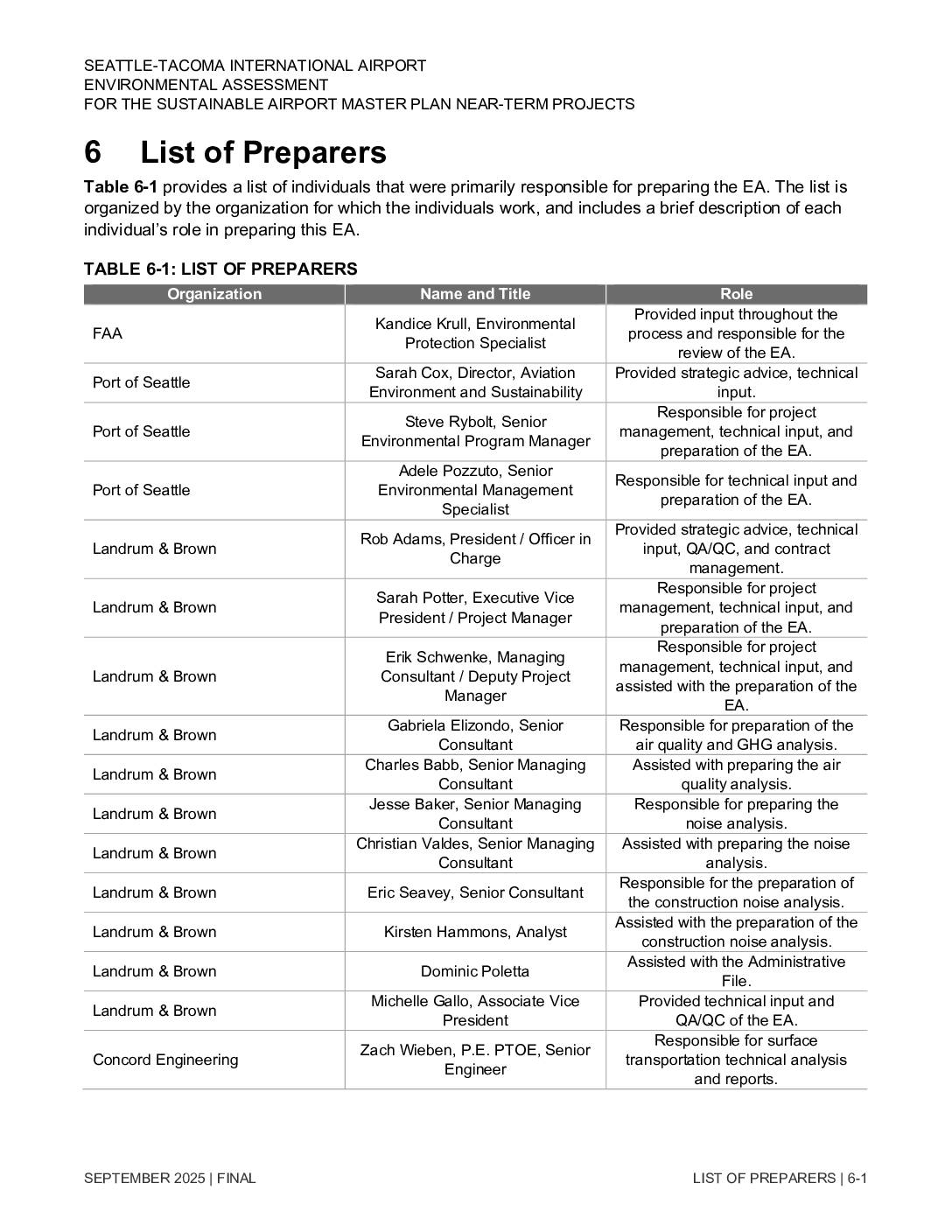
Seattle-Tacoma International Airport Environmental Assessment for the Sustainable Airport Master Plan Near-Term Projects: List of Preparers
This section of the Seattle-Tacoma International Airport Environmental Assessment lists the individuals and organizations responsible for preparing the EA for the Sustainable Airport Master Plan Near-Term Projects, finalized in September 2025. It includes contributors from the FAA, Port of Seattle, and multiple consulting firms covering areas such as noise analysis, air quality, surface transportation, wetlands, cultural resources, and public engagement. Key organizations involved include Landrum & Brown, Concord Engineering, Confluence Environmental Company, Parametrix, Stell Environmental, and others. -
 2025-09-01
Appendix O Agency & Public Engagement
Appendix O of the FAA NEPA Draft Environmental Assessment (EA) for the Sustainable Airport Master Plan (SAMP) at Sea-Tac Airport. Summarizes agency and public engagement activities during the EA process, including coordination under NEPA (42 U.S.C. 4321 et seq.), FAA Orders 1050.1F and 5050.4B, and CEQ regulations (40 CFR parts 1500-1508). Notes regulatory changes since -
 2025-08-28
Aviation meteorologists: Urgent actions needed to address staffing concerns
A August 2025 U.S. Government Accountability Office report warns that staffing shortages among National Weather Service meteorologists embedded at FAA air traffic control centers may pose risks to the safety and efficiency of the National Airspace System. These meteorologists provide critical real-time weather briefings to air traffic controllers to help route flights safely around severe weather, but a February 2025 amendment to the FAA-NWS interagency agreement reduced the required staffing level from 90 to 81 positions. The GAO urges urgent action from the Departments of Transportation and Commerce before the interagency agreement expires in September 2025. -
 2025-08-26
NATCA: A History of Air Traffic Control
NATCA (National Air Traffic Controllers Association), founded in 1987, represents over 15,000 aviation safety professionals including air traffic controllers, engineers, and health care workers across the United States and its territories. The organization was established after the 1981 firing of more than 11,000 air traffic controllers following a strike that led to the decertification of the previous union, PATCO. NATCA serves as the exclusive bargaining representative for FAA aviation safety professionals and works with government officials, airlines, and the FAA to promote safe and efficient air travel.