TagEnvironmental Impact Statement(328)
-
 2024-02-01
Appendix M: SAMP Near Term Projects: Water Resources Wetlands and Streams Report
This technical report, prepared by Parametrix for the Port of Seattle in February 2024, documents the wetlands and streams found at Seattle-Tacoma International Airport as part of the Sustainable Airport Master Plan (SAMP) Near Term Projects. It covers the delineation of wetland and stream boundaries, assessments of potential impacts to these aquatic areas from planned airport projects, and proposed mitigation measures and permitting strategies to address those impacts. -
 2024-02-01
Seattle-Tacoma International Airport SAMP Near Term Projects: Wetlands and Streams Report
This technical report, prepared by Parametrix for the Port of Seattle in February 2024, documents the wetlands and streams found at Seattle-Tacoma International Airport as part of the Sustainable Airport Master Plan (SAMP) Near Term Projects. It covers the delineation of wetland and stream boundaries, assesses potential impacts to these aquatic areas from planned airport improvements, and outlines mitigation measures and permitting approaches to address those impacts. -
 2024-01-08
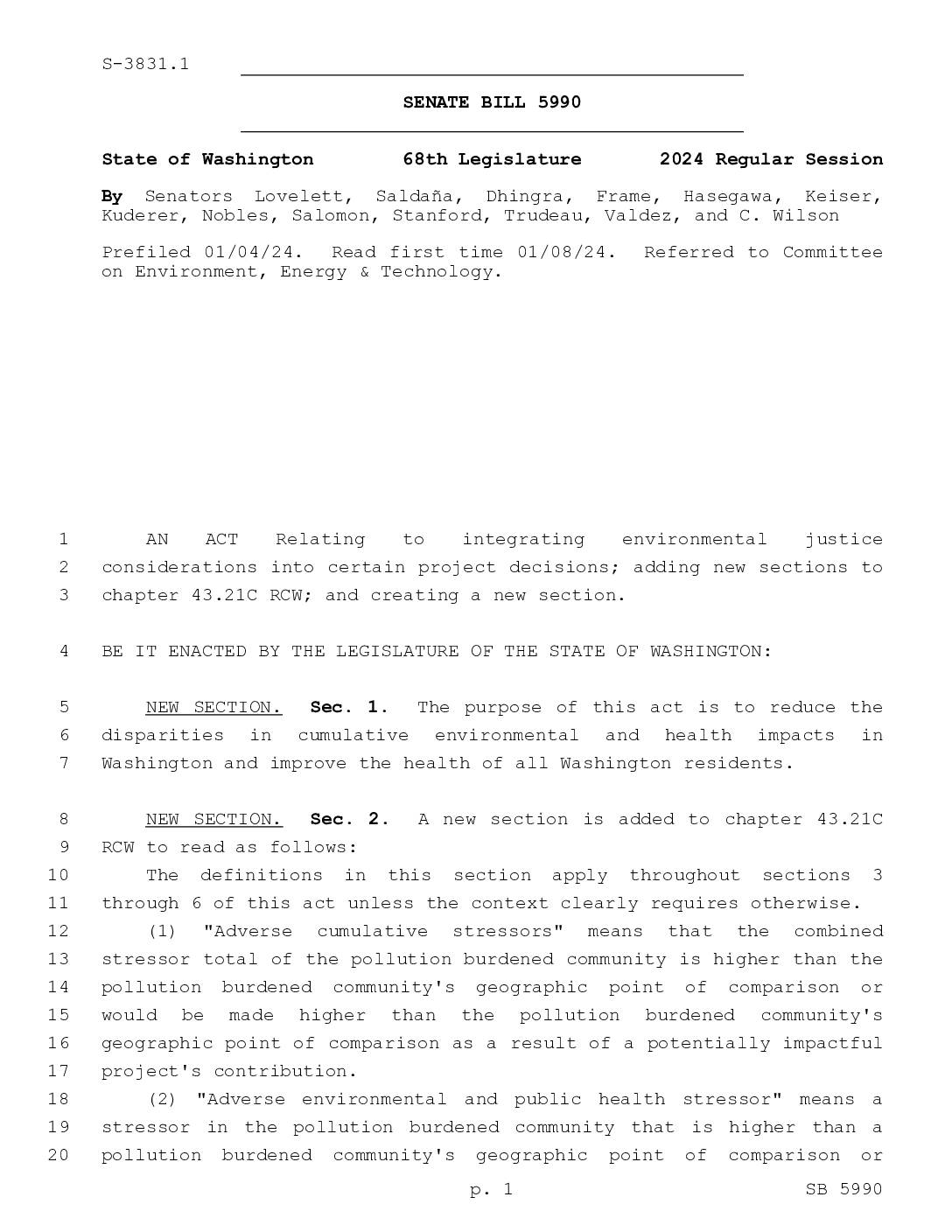
Senate Bill 5990: Integrating Environmental Justice Considerations into Certain Project Decisions
Washington Senate Bill 5990, introduced in January 2024, aims to reduce environmental health disparities by requiring assessment of cumulative pollution burdens on overburdened communities before approving new projects. The bill defines key terms such as 'disproportionate impact' and 'environmental justice impact statement,' and establishes a framework to evaluate stressors like air pollution, water quality, and public health risks. Note: this bill addresses broad environmental justice concerns statewide and does not specifically address Sea-Tac Airport noise policy. -
 2024-01-01
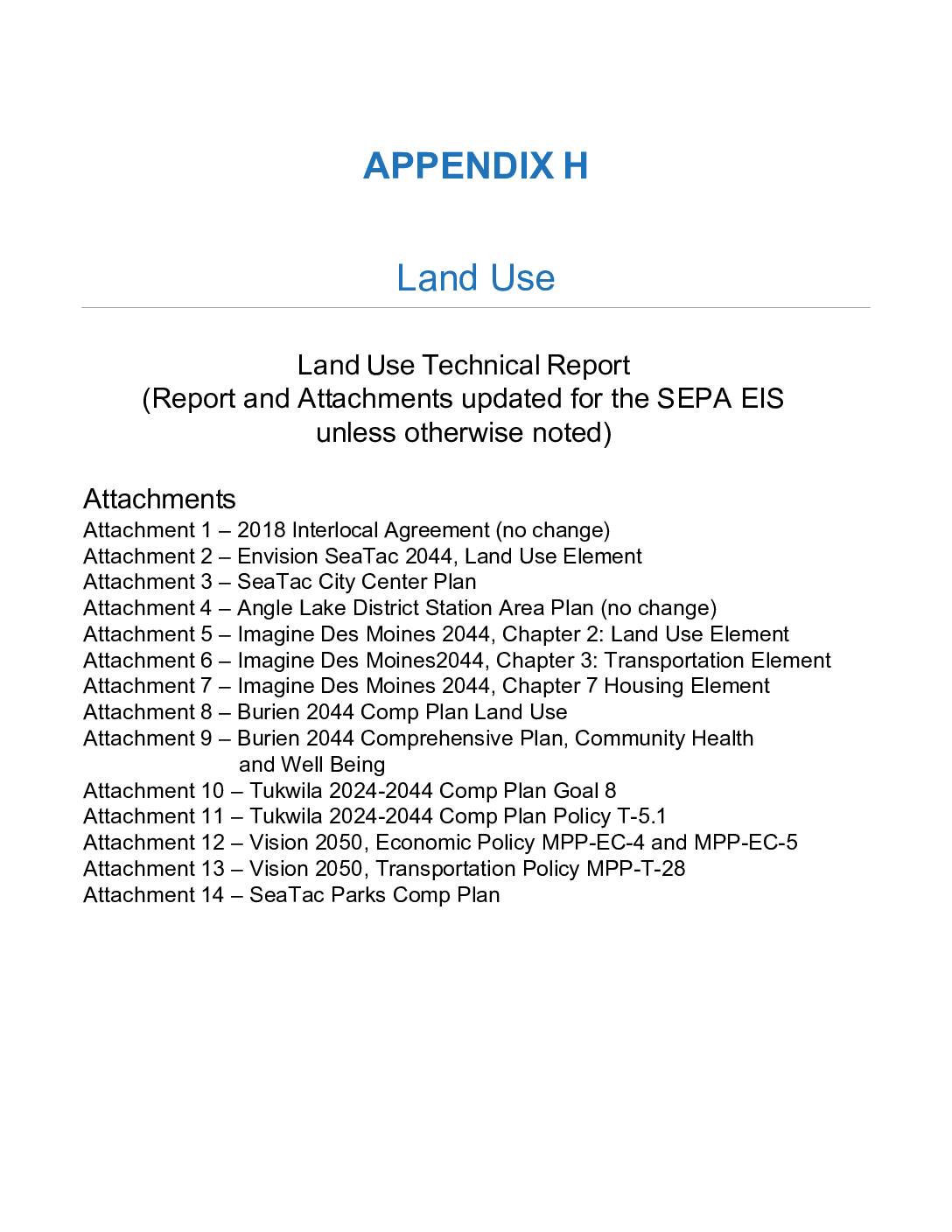
Appendix H: Land Use Technical Report
This Land Use Technical Report, prepared for the Port of Seattle's Sustainable Airport Master Plan Near-Term Projects, examines how proposed improvements at Seattle-Tacoma International Airport align with land use plans and regulations in surrounding communities including SeaTac, Des Moines, Burien, and Tukwila. It reviews existing and planned land uses, relevant local and regional planning documents, and assesses potential land use impacts under three alternatives: No Action, Proposed Action, and a Hybrid Terminal Option. The report was originally prepared in January 2024 by Landrum & Brown and later updated in April 2026 by Parametrix for the SEPA Environmental Impact Statement. -
 2023-09-26
Attachment 4f: Scoping Comments Received — Actual Comments with Assigned Topic Code
This document contains scoping comments submitted to the Port of Seattle regarding the Sustainable Airport Master Plan (SAMP) environmental review process, compiled by the Quiet Skies Coalition. Community members raised concerns about the lack of long-term human health and environmental impact studies related to aircraft noise and emissions, questioning why the Port had not studied the effects of a four-year increase of 97,000 additional annual flights. The comments request comprehensive assessments covering neighborhoods such as Des Moines, Burien, Tukwila, and Normandy Park, and call for the Port to include worldwide scientific studies on the health effects of aircraft noise and pollution in its environmental review. -
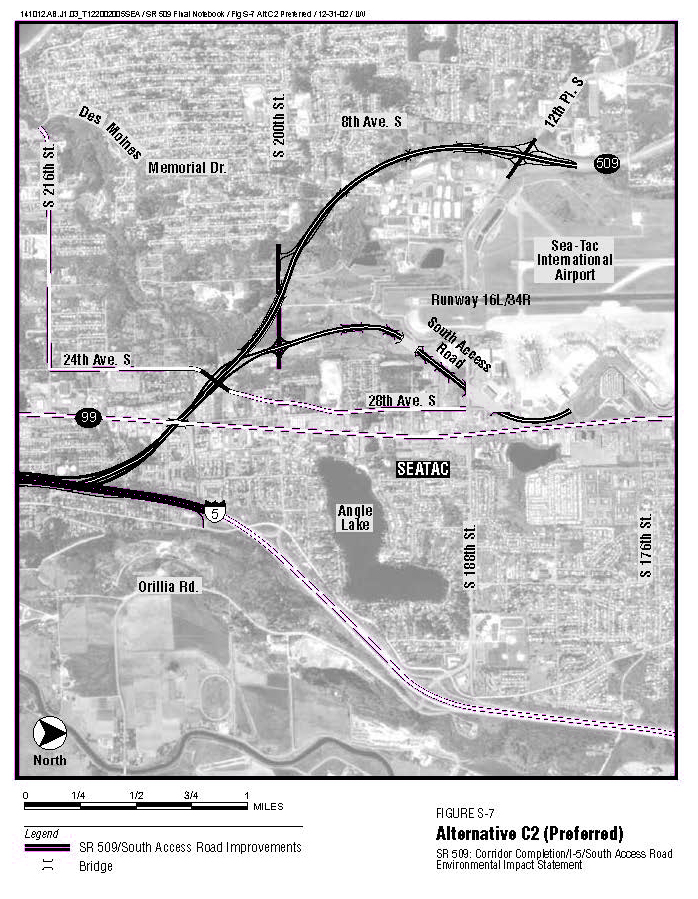
Page 33 from SR-509-FEIS-ocr Alternative C2 (preferred)
This is Figure S-7 from the SR 509 Corridor Completion/I-5/South Access Road Environmental Impact Statement, showing the preferred Alternative C2 alignment. The aerial map depicts proposed SR 509 and South Access Road improvements near Sea-Tac International Airport, connecting to I-5 via Orillia Road, with key landmarks including Angle Lake, Runway 16L/34R, and surrounding streets in SeaTac, Washington, dated December 31, 2002. -
 2022-09-12
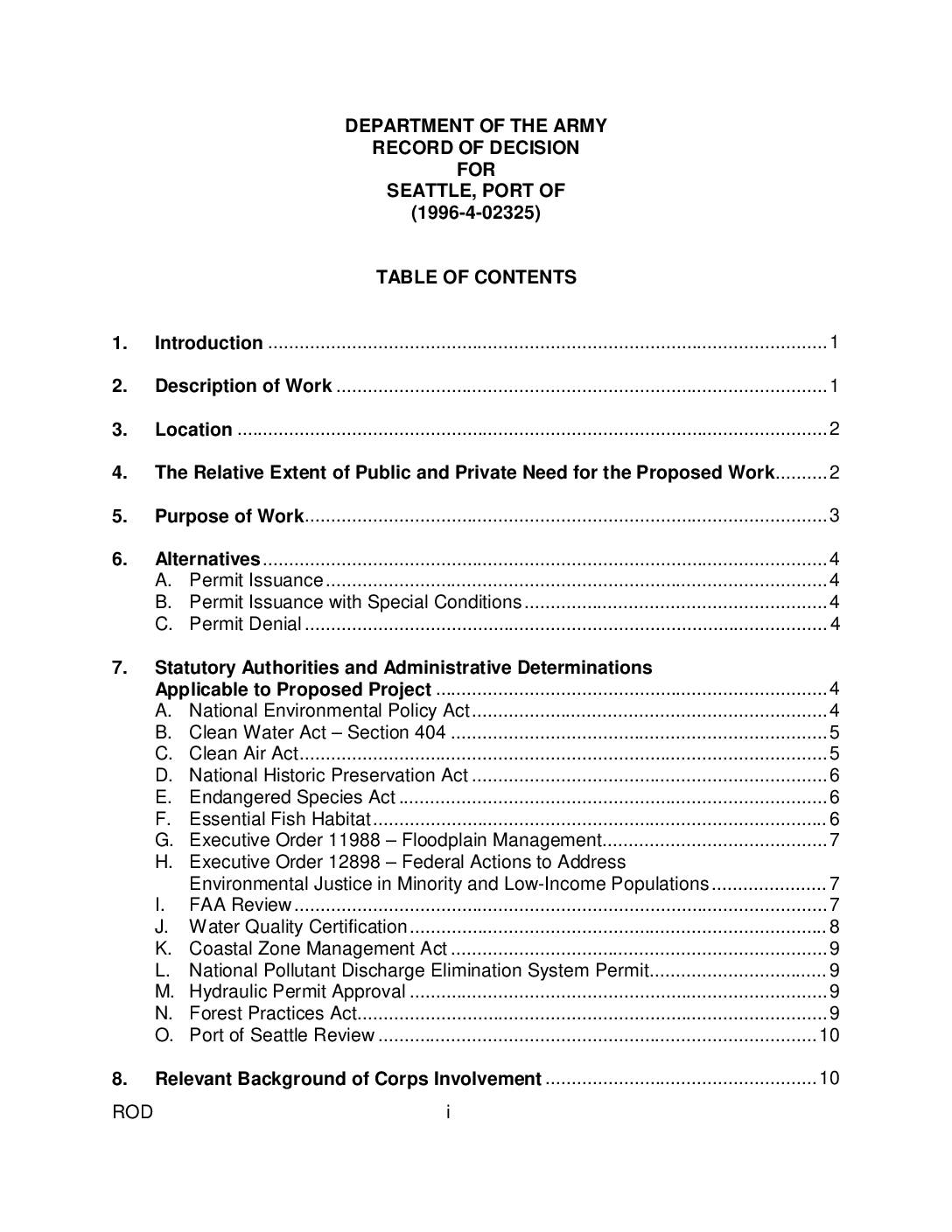
Department of the Army record of decision for Seattle, Port of (1996-4-02325)
This U.S. Army Corps of Engineers Record of Decision evaluates a permit application from the Port of Seattle (case 1996-4-02325) for construction work in the Seattle area, assessing environmental impacts including effects on wetlands, fish habitat, water quality, air quality, and noise. The document reviews compliance with numerous federal and state laws—such as the Clean Water Act, Endangered Species Act, and National Environmental Policy Act—and addresses public and agency concerns, including those related to airport and aircraft safety. It ultimately documents the Corps' findings and determinations regarding whether to issue, conditionally issue, or deny the requested permit. -
 2022-09-12
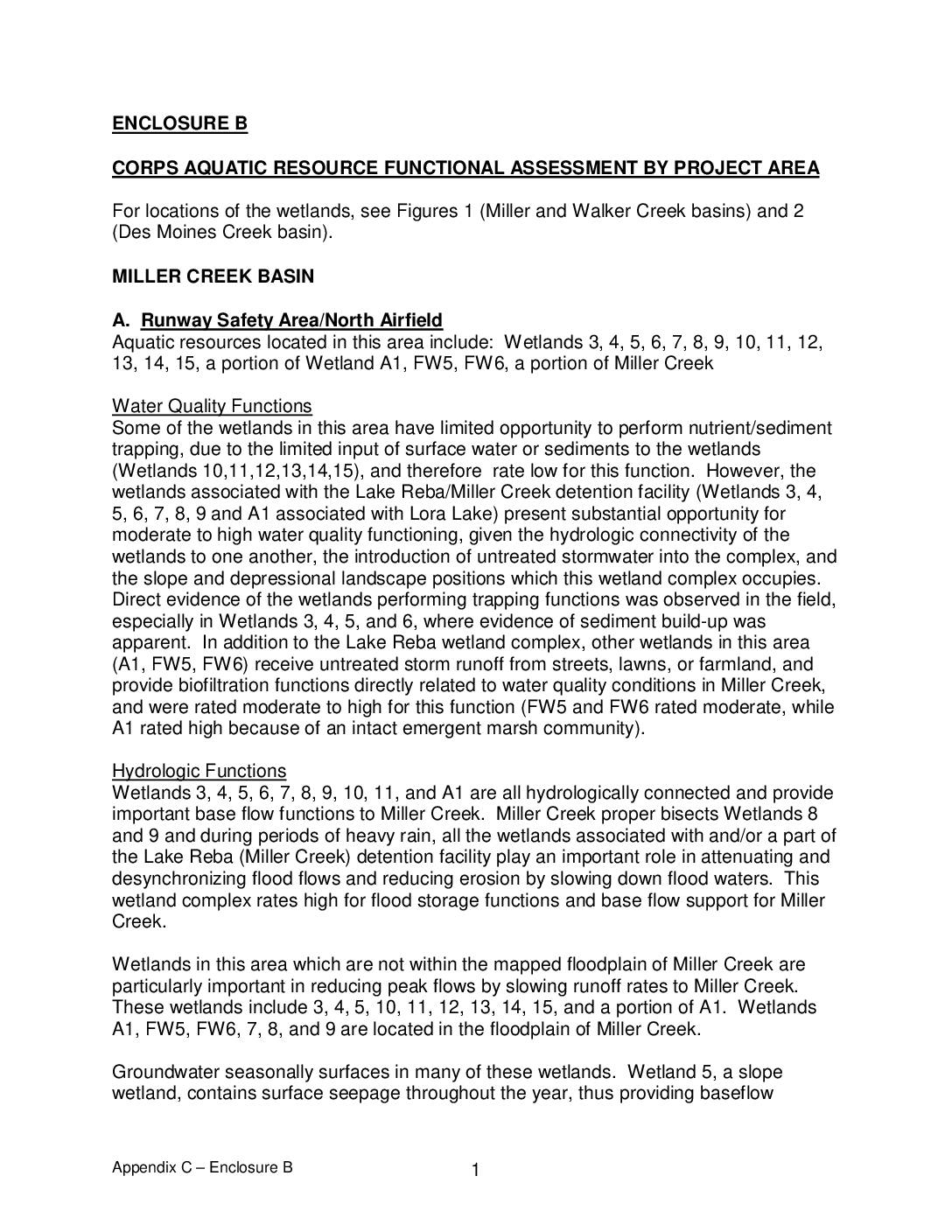
Corps aquatic resource functional assessment by project area
This document assesses the ecological functions of wetlands and aquatic resources in the Miller Creek and related basins near Sea-Tac Airport, evaluating their roles in water quality, flood storage, and wildlife habitat. Wetlands in the Runway Safety Area and Vacca Farm areas are rated across functions such as nutrient trapping, groundwater exchange, and habitat for fish, waterfowl, amphibians, and small mammals. The assessment finds that interconnected wetland complexes like Lake Reba provide high-value flood attenuation and baseflow support for Miller Creek, while farmed wetlands perform at lower functional levels due to sparse vegetation and agricultural runoff. -
 2022-09-12
Functional assessment, impact and mitigation plan review to the record of decision for Seattle, Port of (1996-4-02325)
This U.S. Army Corps of Engineers document reviews the environmental impact of construction projects at Seattle-Tacoma International Airport, including the Third Runway and related Master Plan Update improvements, focusing on impacts to wetlands and waterways. The Corps conducted an independent assessment of wetland functions and evaluated whether the Port of Seattle's proposed mitigation plans adequately compensated for the destruction or alteration of aquatic resources. After finding the Port's initial December 2000 mitigation plan insufficient, the Corps worked with the Port to develop a revised plan, accepted in November 2001, that better addressed the loss of wetland functions caused by airport construction. -
 2022-09-12
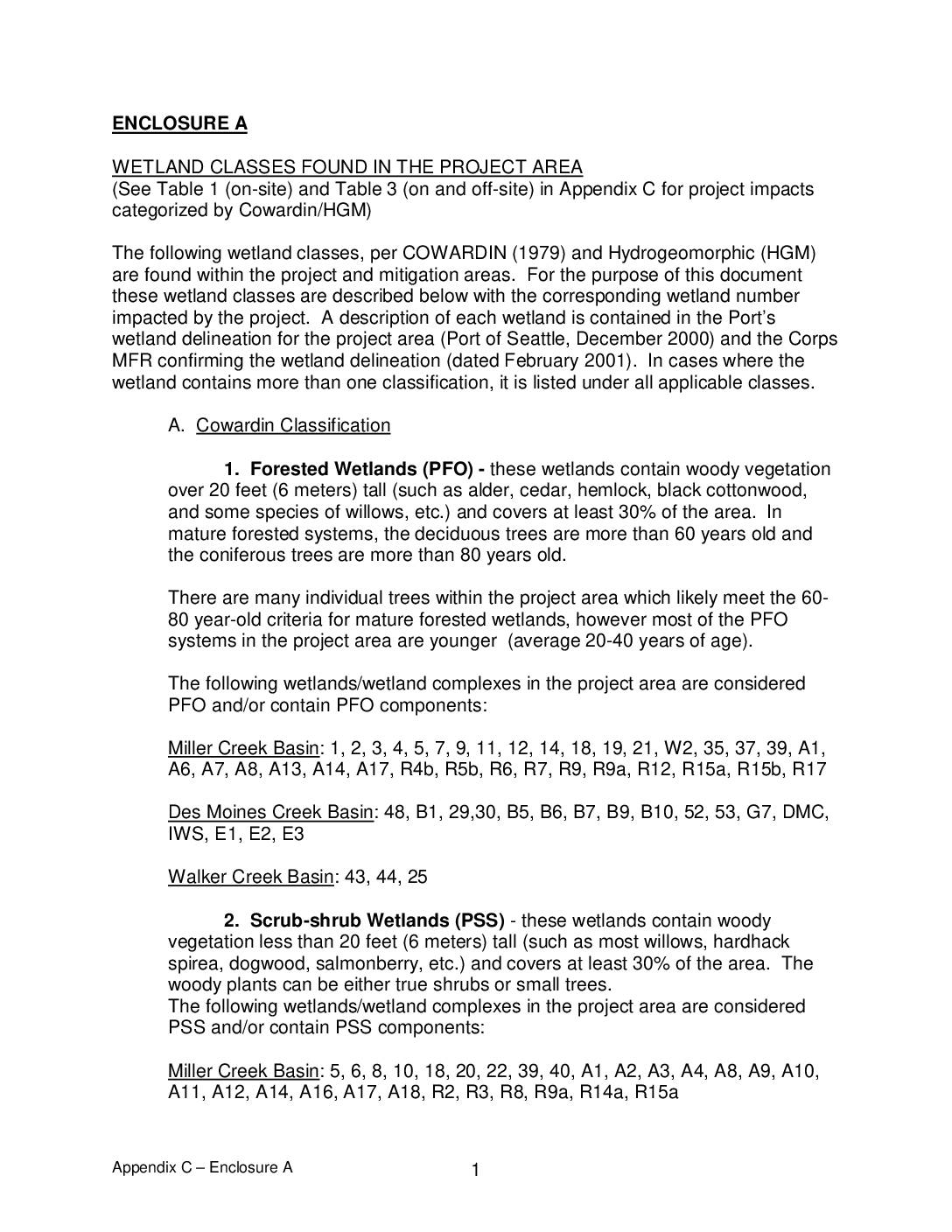
Wetland classes found in the project area
This document classifies and describes the various wetland types found within the Sea-Tac Airport project area, using both the Cowardin (1979) and Hydrogeomorphic (HGM) classification systems. It identifies forested, scrub-shrub, emergent, aquatic bed, and riverine wetlands across three drainage basins — Miller Creek, Des Moines Creek, and Walker Creek — listing the specific wetland units belonging to each category. The classifications support environmental impact assessment and mitigation planning associated with airport development activities.