TagAviation Emissions(88)
-
 2020-12-05
The Relationship between Airplane Emissions & Pre-Mature Births
A December 2020 presentation by Public Health Seattle and King County researcher Kris Johnson, PhD, examines the link between airplane emissions and premature births. The slides outline serious health risks associated with preterm birth, including cognitive delays, hearing and vision problems, SIDS, ADHD, and greater likelihood of chronic diseases such as heart disease and diabetes in adulthood. Mothers who deliver preterm also face elevated risks of hypertension, cardiovascular disease, and repeated preterm deliveries. -
 2020-09-23
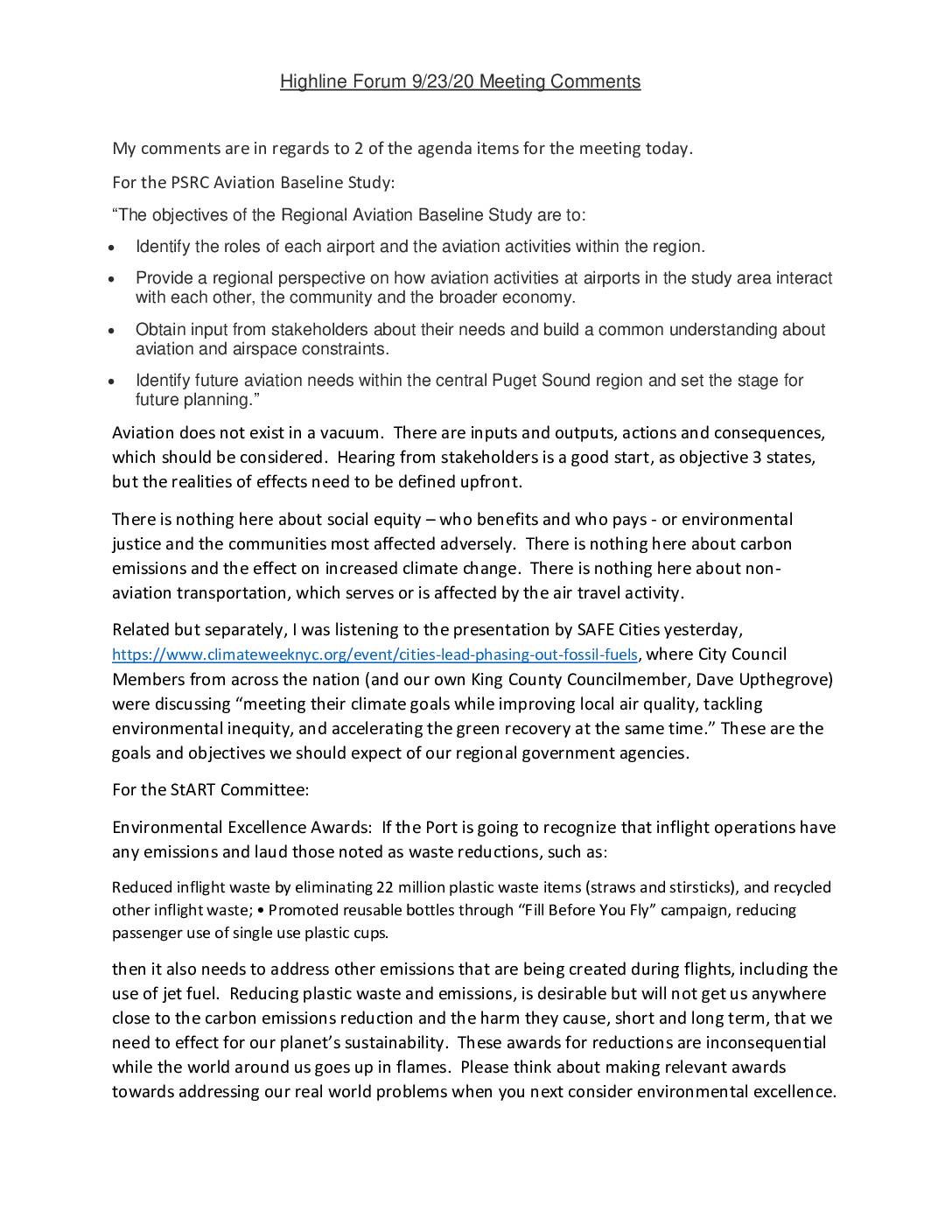
Highline Forum 9/23/20 Meeting Comments
A community member submitted comments to the Highline Forum on September 23, 2020, criticizing the PSRC Regional Aviation Baseline Study for failing to address social equity, environmental justice, carbon emissions, and impacts on non-aviation transportation. The commenter also challenged the Port's Environmental Excellence Awards, arguing that recognizing minor reductions like eliminating plastic straws is insignificant compared to the much larger carbon emissions produced by jet fuel during flights. The comments call on regional government agencies to align their aviation planning and recognition programs with meaningful climate and environmental justice goals. -
 2020-09-22
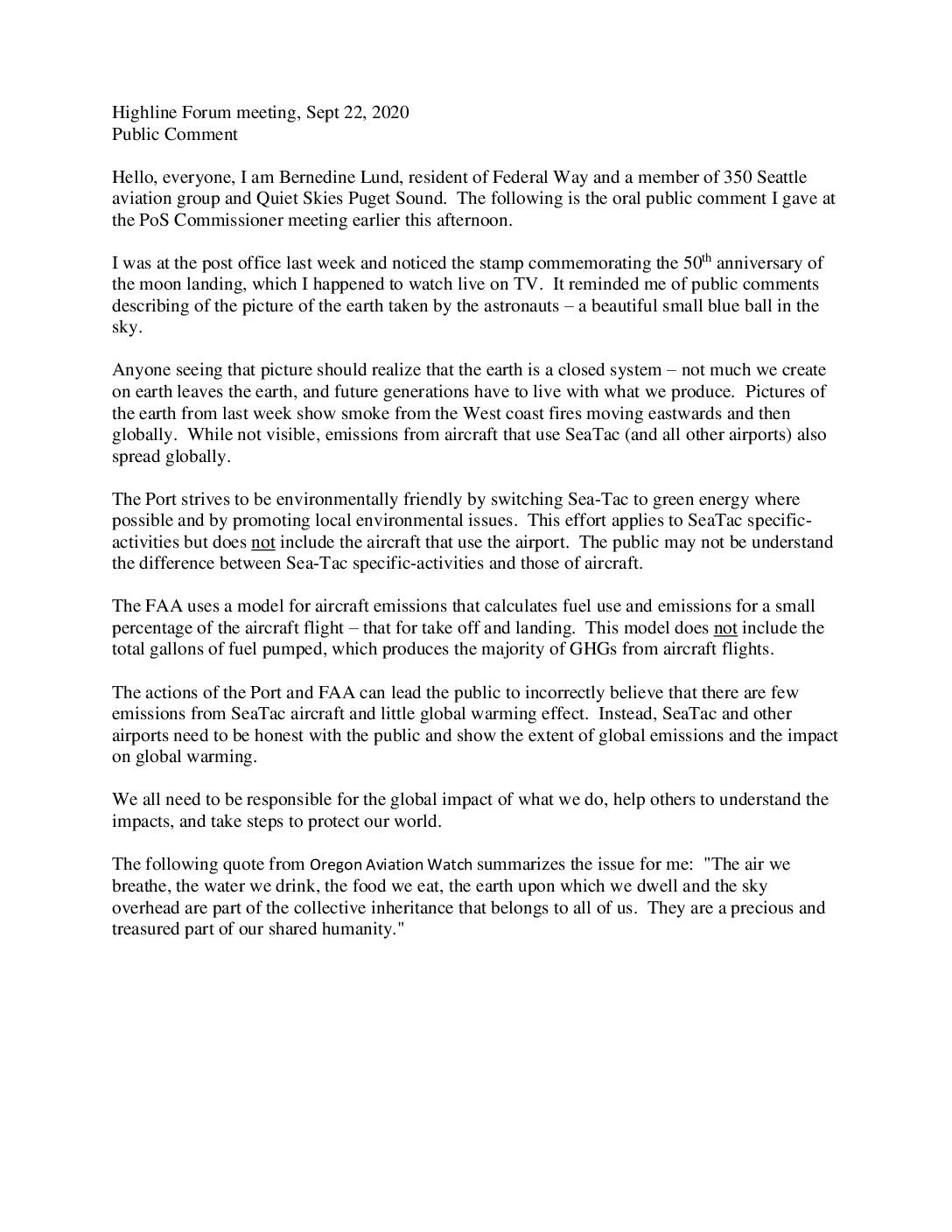
Highline Forum Public Comment by Bernedine Lund on Aircraft Emissions and Sea-Tac Airport
At a September 2020 Highline Forum meeting, Federal Way resident Bernedine Lund argued that Sea-Tac Airport and the FAA are misleading the public about aircraft emissions by only measuring fuel use during takeoff and landing, while ignoring the far larger greenhouse gas output of full flights. She called on the Port and FAA to be transparent about the total global climate impact of aircraft using Sea-Tac. Her comments emphasized that environmental responsibility must extend beyond airport-specific operations to include the aircraft themselves. -
 2020-09-03
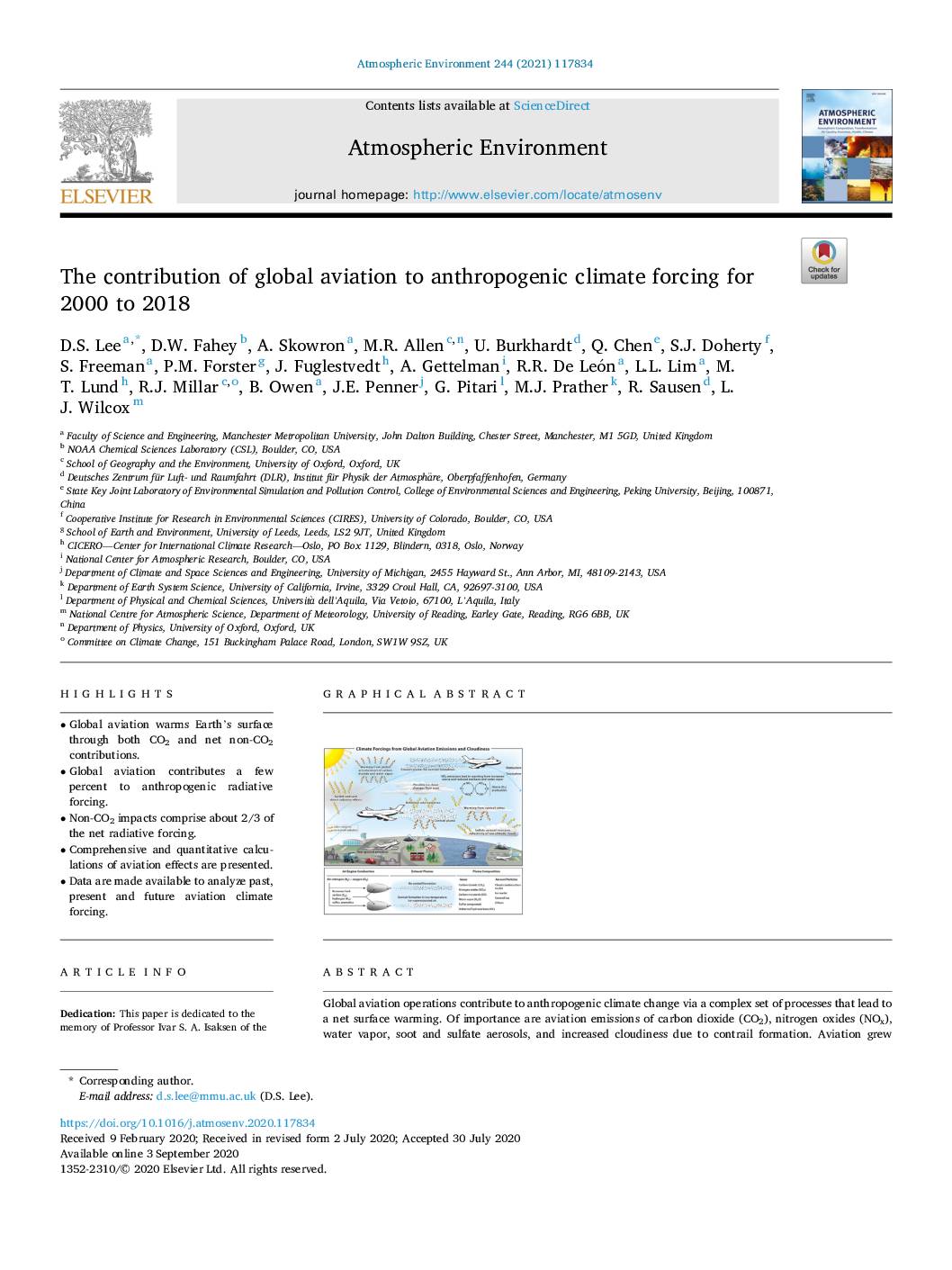
The contribution of global aviation to anthropogenic climate forcing for 2000 to 2018
A 2021 scientific study found that global aviation contributes a small but meaningful share of human-caused climate change, primarily through carbon dioxide emissions and the formation of contrail clouds at high altitude. The research, covering the years 2000 to 2018, found that non-CO2 effects such as contrails account for roughly two-thirds of aviation's total warming impact. The findings are relevant to ongoing policy discussions about reducing the climate footprint of air travel. -
 2020-07-01
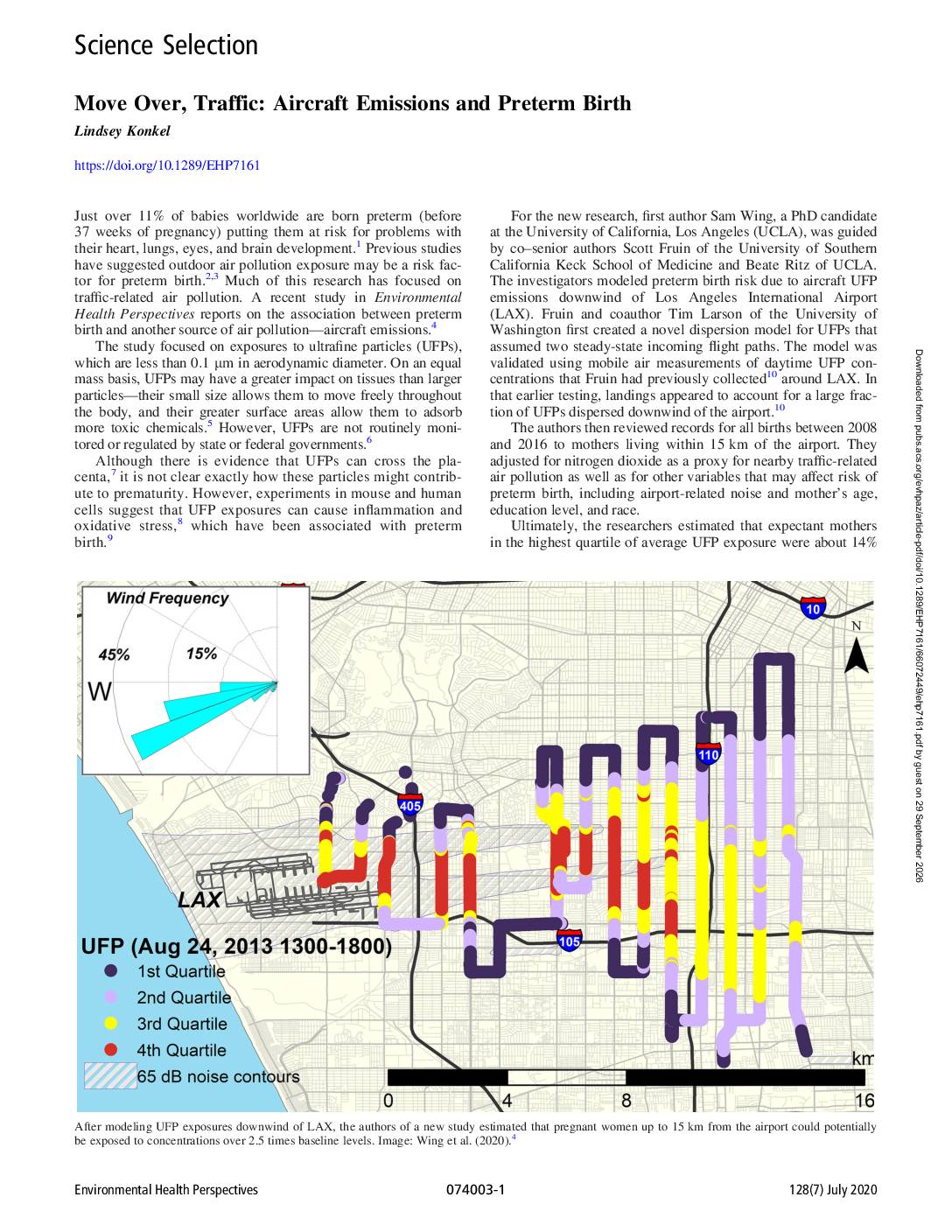
Move Over, Traffic: Aircraft emissions and preterm birth
Science selection article by Lindsey Konkel published in Environmental Health Perspectives (July 2020, vol. 128, no. 7, doi:10.1289/EHP7161) summarizing a UCLA/USC study by Sam Wing, Scott Fruin, and Beate Ritz on preterm birth risk associated with ultrafine particle (UFP) aircraft emissions downwind of Los Angeles International Airport (LAX). The study modeled UFP dispersion from LAX -
 2020-04-02
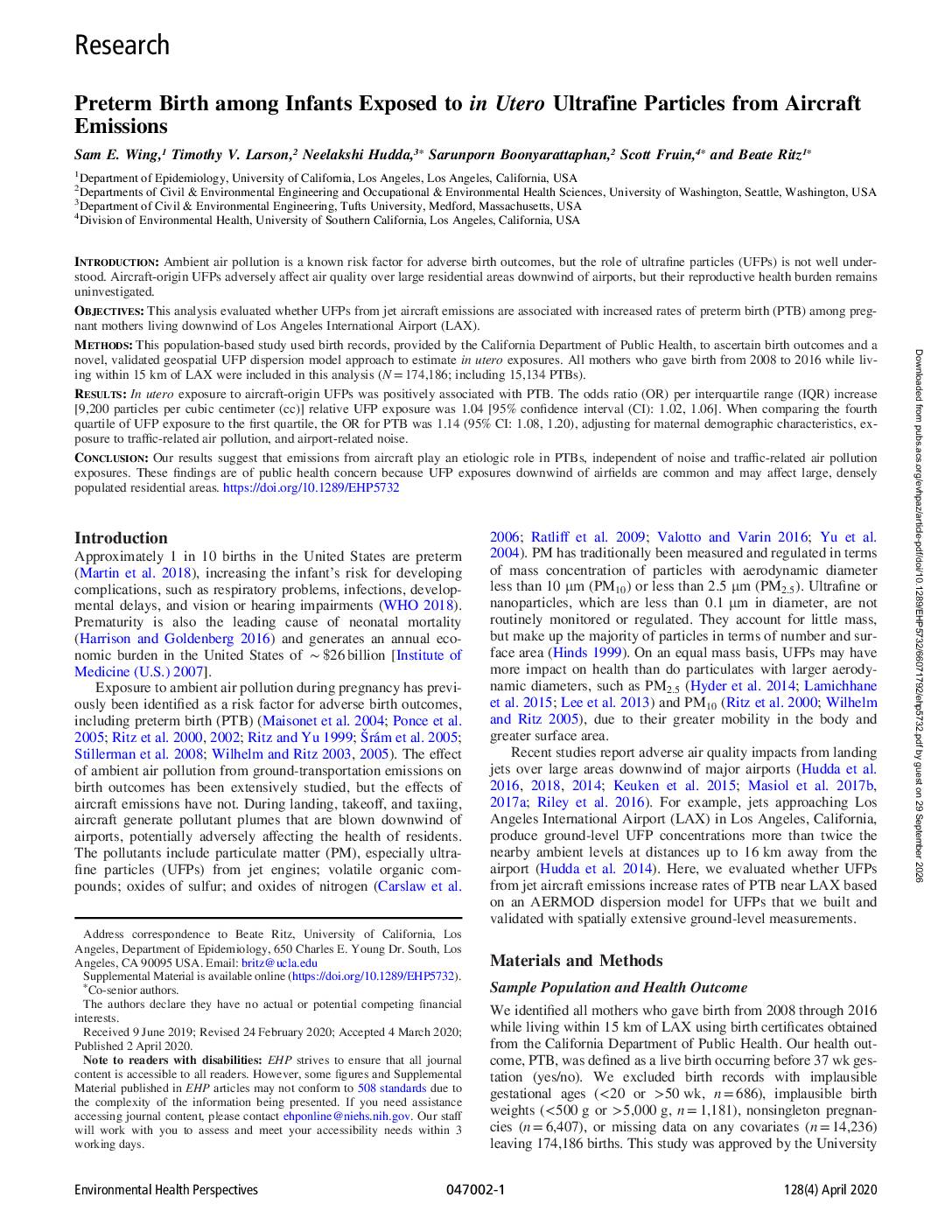
Preterm Birth among Infants Exposed to in Utero Ultrafine Particles from Aircraft Emissions
Academic journal article published in Environmental Health Perspectives (April 2020, Vol. 128(4)) by Wing, Larson, Hudda, Boonyarattaphan, Fruin, and Ritz examining whether ultrafine particles (UFPs) from jet aircraft emissions at Los Angeles International Airport (LAX) are associated with increased preterm birth (PTB) rates. Study used California Department of Public Health birth records (2008–2016) for 174,186 -
 2020-04-01
Preterm birth rates among mothers exposed to ultrafine particles from jet exhaust
A peer-reviewed study by researchers from Tufts, UCLA, USC, and the University of Washington found that mothers living near airports and exposed to ultrafine particles from jet exhaust face elevated rates of preterm birth. The research, published in Environmental Health Perspectives in 2020, is particularly relevant to communities near large airports like Sea-Tac, where millions of residents live within the impact zone of aircraft emissions. The findings carry significant environmental justice implications, as near-airport communities with high pollution exposure are often among the most vulnerable populations. -
 2020-01-01
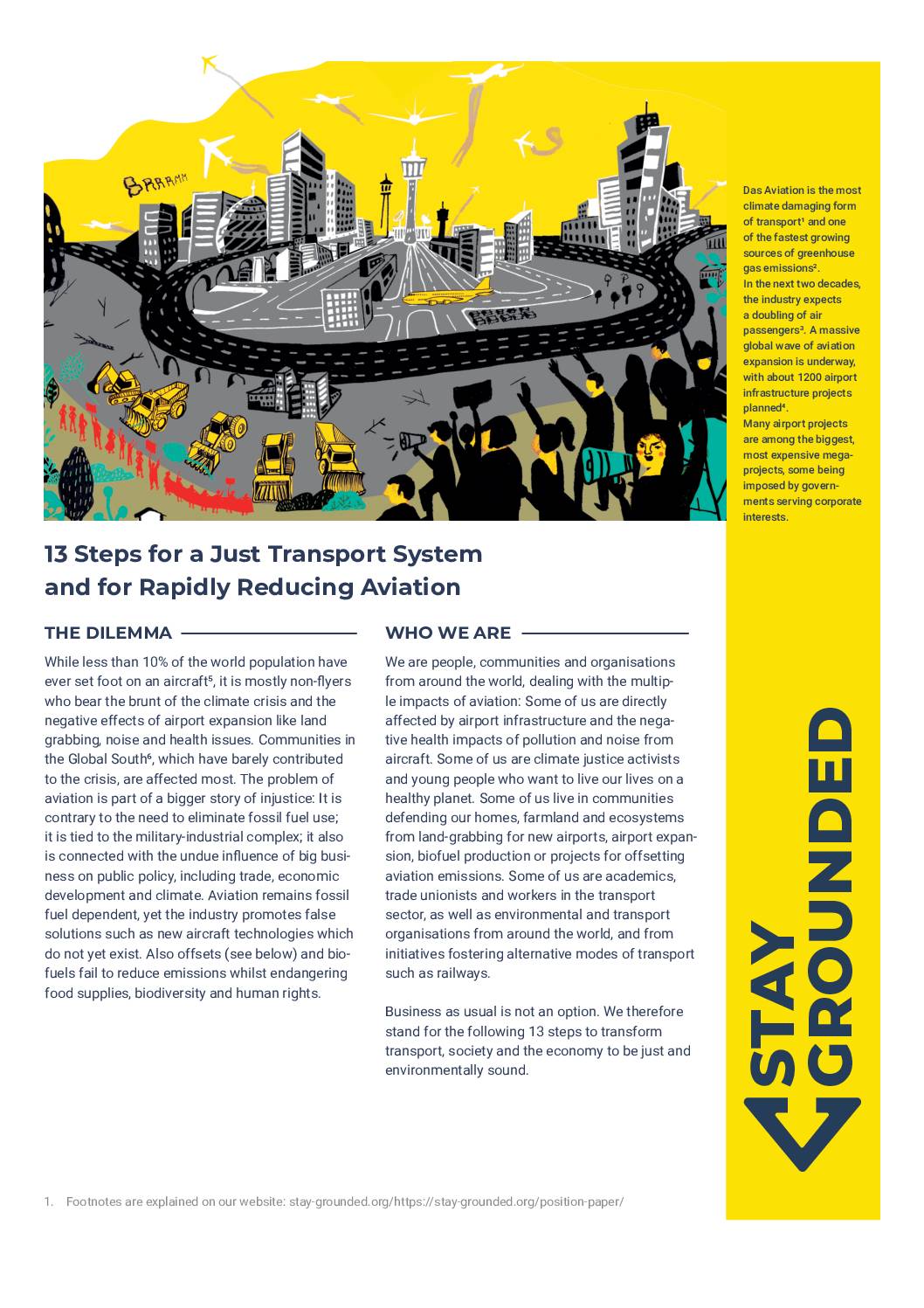
13 Steps for a Just Transport System and for Rapidly Reducing Aviation
The Stay Grounded network outlines 13 steps to reduce aviation's climate and community impacts, calling for a shift to trains and other low-carbon transport, an end to airport expansion, and the elimination of industry subsidies and tax breaks. The document highlights how airport noise, pollution, and land displacement disproportionately harm local communities and Global South populations who rarely fly. It also rejects carbon offsets and unproven technologies as false solutions, instead demanding binding emissions limits and democratic oversight of transport policy. -
 2020-01-01
King County Joint Aircraft Emissions Technical & Community Task Force Report
A King County task force report examines aircraft emissions from airports including Seattle-Tacoma International Airport (SEA) and King County International Airport (KCIA), finding that aviation accounts for 15 percent of King County's total emissions and disproportionately harms nearby frontline communities. The report identifies key challenges to reducing aviation pollution at the local level, including limited regulatory authority and immature clean-energy technologies. Near-term recommendations focus on improving air quality around airports and phasing out leaded aviation fuel, while acknowledging that significant emissions reductions are unlikely in the short to medium term. -
 2019-12-11
Cleaner, Quieter Airplanes Act
The 'Cleaner, Quieter Airplanes Act,' introduced in the 116th Congress by Mr. Beyer, would require NASA to establish an initiative to develop and demonstrate new aircraft technologies capable of reducing both greenhouse gas emissions and noise emissions by at least 50 percent compared to the best-performing aircraft in service as of December 31, 2019. The bill responds to findings that aviation noise pollution is worsening in some communities as air traffic increases and performance-based navigation technology is adopted. It reflects a broader U.S. goal of carbon-neutral aviation growth from 2020 onward.