TagAviation Emissions(88)
-
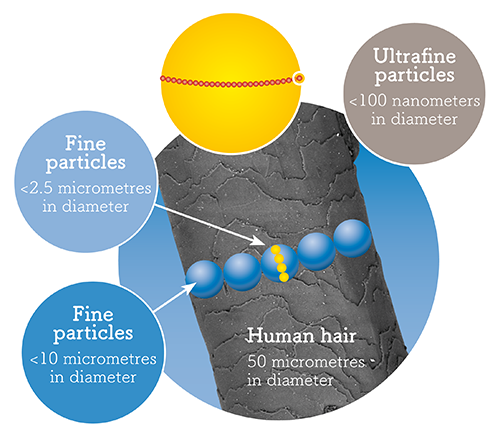
ultrafine particles
Infographic comparing sizes of airborne particulate matter relative to a human hair (50 micrometres in diameter): ultrafine particles (<100 nanometers), fine particles (<2.5 micrometres), and coarse fine particles (<10 micrometres). The diagram uses scaled spheres to visually illustrate how these pollution particles relate in size to a strand of human hair. -
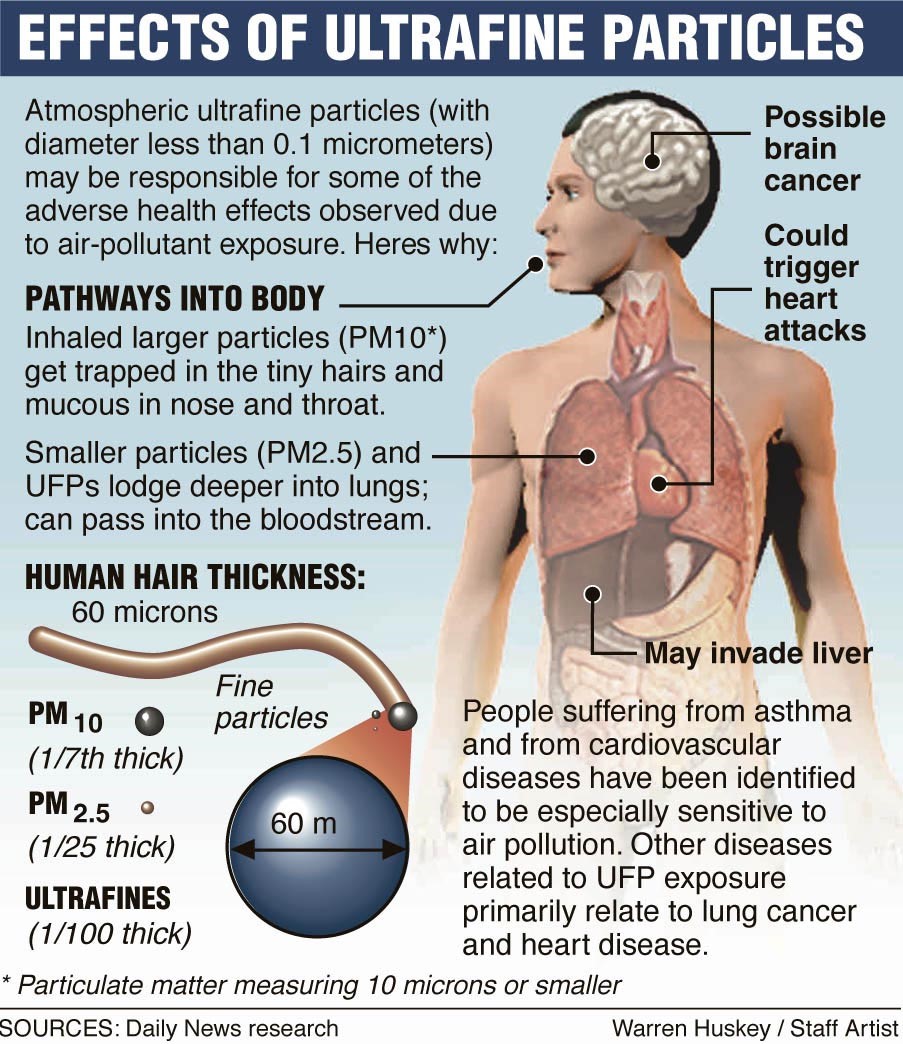
Effects of Ultrafine Particles
Infographic from Daily News, illustrated by staff artist Warren Huskey, explaining how atmospheric ultrafine particles (diameter less than 0.1 micrometers) enter the human body and cause adverse health effects including possible brain cancer, heart attacks, and liver invasion. It details particle size comparisons (PM10, PM2.5, and ultrafines) relative to human hair thickness of 60 microns. -
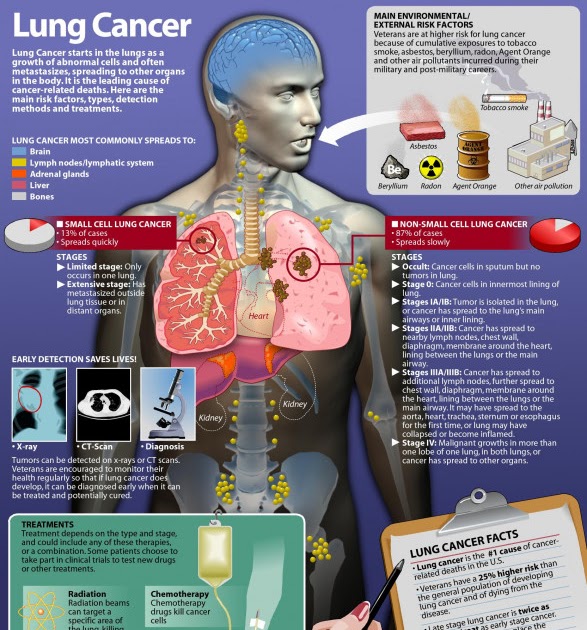
Lung Cancer
A detailed medical infographic titled 'Lung Cancer' covering risk factors, types (small cell and non-small cell), stages, early detection methods, and treatments. Includes sections on environmental/external risk factors such as asbestos, beryllium, radon, and Agent Orange, with particular relevance to veterans. -
 2022-08-01
King County Communitywide Geographic Greenhouse Gas Emissions: Puget Sound Regional Emissions Analysis
This August 2022 report by Cascadia Consulting Group analyzes greenhouse gas emissions across King County, Washington, examining where emissions come from, what is driving trends over time, and how the county can meet its climate goals. The report covers sectors including transportation, electricity, natural gas, solid waste, and land use, tracking data from multiple inventory years and comparing per-capita emissions across jurisdictions. It also models future emissions scenarios to assess the impact of federal, state, and regional policies on reaching reduction targets through 2050. -
 2022-07-01
Making Net-Zero Aviation Possible: An Industry-Backed, 1.5°C-Aligned Transition Strategy
This July 2022 report from the Mission Possible Partnership outlines a global strategy for reducing aviation's greenhouse gas emissions to net zero by 2050, in line with the 1.5°C climate target. It identifies key milestones, technologies, and investments needed across the aviation value chain, including sustainable aviation fuels and new propulsion systems. The strategy is intended to guide airlines, policymakers, and financial institutions in taking coordinated action this decade. -
PSCAA Community Workshop 6 1 2022
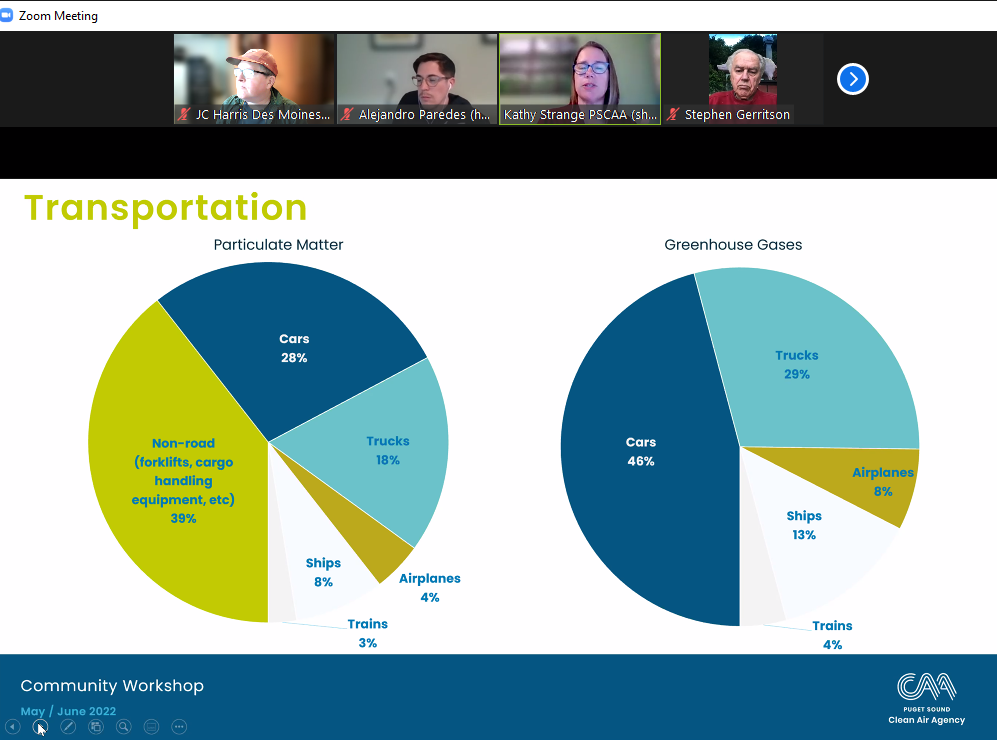
A Zoom meeting screenshot shows a Puget Sound Clean Air Agency (PSCAA) Community Workshop presentation from May/June 2022 on transportation emissions. The slide displays two pie charts comparing sources of Particulate Matter and Greenhouse Gases from transportation, with participants including Kathy Strange (PSCAA), JC Harris (Des Moines), Alejandro Paredes, and Stephen Gerritson visible in the video tiles. -
 2021-02-25
Recovering from COVID-19: The airline perspective
A February 2021 presentation by Airlines for America outlines how COVID-19 devastated the airline industry, with worldwide passenger traffic dropping 66% and U.S. carrier revenues falling 61.5% year-over-year. Despite these financial losses, airlines remained committed to environmental progress, including accelerating the retirement of older, less fuel-efficient aircraft in favor of newer, cleaner models. The presentation also highlights the role of Sustainable Aviation Fuel (SAF) and aviation's broader responsibility in achieving a sustainable future. -
 2021-02-23
Civil society expectations for a green recovery
A presentation by Tim Johnson of the Aviation Environment Federation, delivered at the Aviation Noise & Emission Symposium in February 2021, examines what civil society expects from a green recovery in the aviation sector. It highlights growing airline commitments to net-zero emissions by 2050, including pledges from British Airways, United Airlines, and others, while raising the question of whether 2019 may have been the peak year for aviation CO2 emissions. The talk explores the intersection of post-pandemic recovery and environmental accountability in the airline industry. -
 2021-02-17
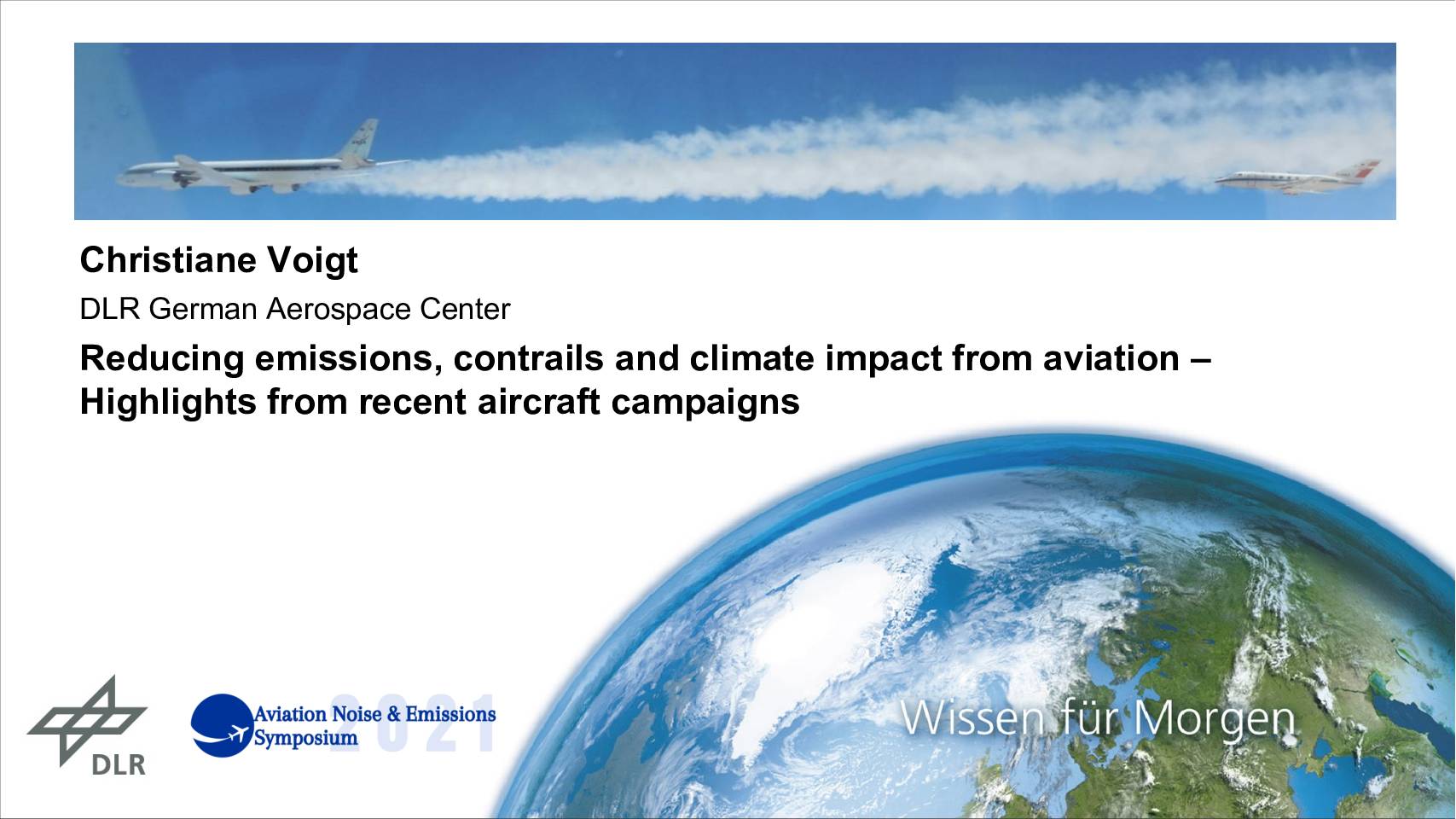
Reducing emissions, contrails and climate impact from aviation – Highlights from recent aircraft campaigns
A 2021 seminar by DLR researcher Christiane Voigt examines how aviation contributes to climate change through CO2 emissions, contrail cirrus clouds, and NOx gases, with contrail cirrus identified as the largest single warming factor at 57.4 mW m⁻². The presentation outlines strategies to reduce aviation's climate footprint, including the use of alternative fuels, lean combustion technology, and contrail avoidance routing. Findings draw on data from recent aircraft measurement campaigns and observed emission reductions during the 2020 COVID-19 lockdown. -
 2021-01-01
Climate change and aviation: Opportunities in the midst of adversity
A 2021 EUROCONTROL presentation examines how COVID-19 devastated European aviation, with flights dropping as much as 88% below 2019 levels and airlines, airports, and air navigation service providers suffering €56.2 billion in net losses. The presentation outlines three recovery scenarios ranging from an optimistic return to 2019 traffic levels by 2024 (if vaccines proved effective quickly) to a prolonged recovery not expected until 2029 if vaccines failed. It frames the crisis as an opportunity to advance aviation sustainability, including reduced carbon emissions and noise impacts.