TagAviation Emissions(88)
-
 2017-04-01
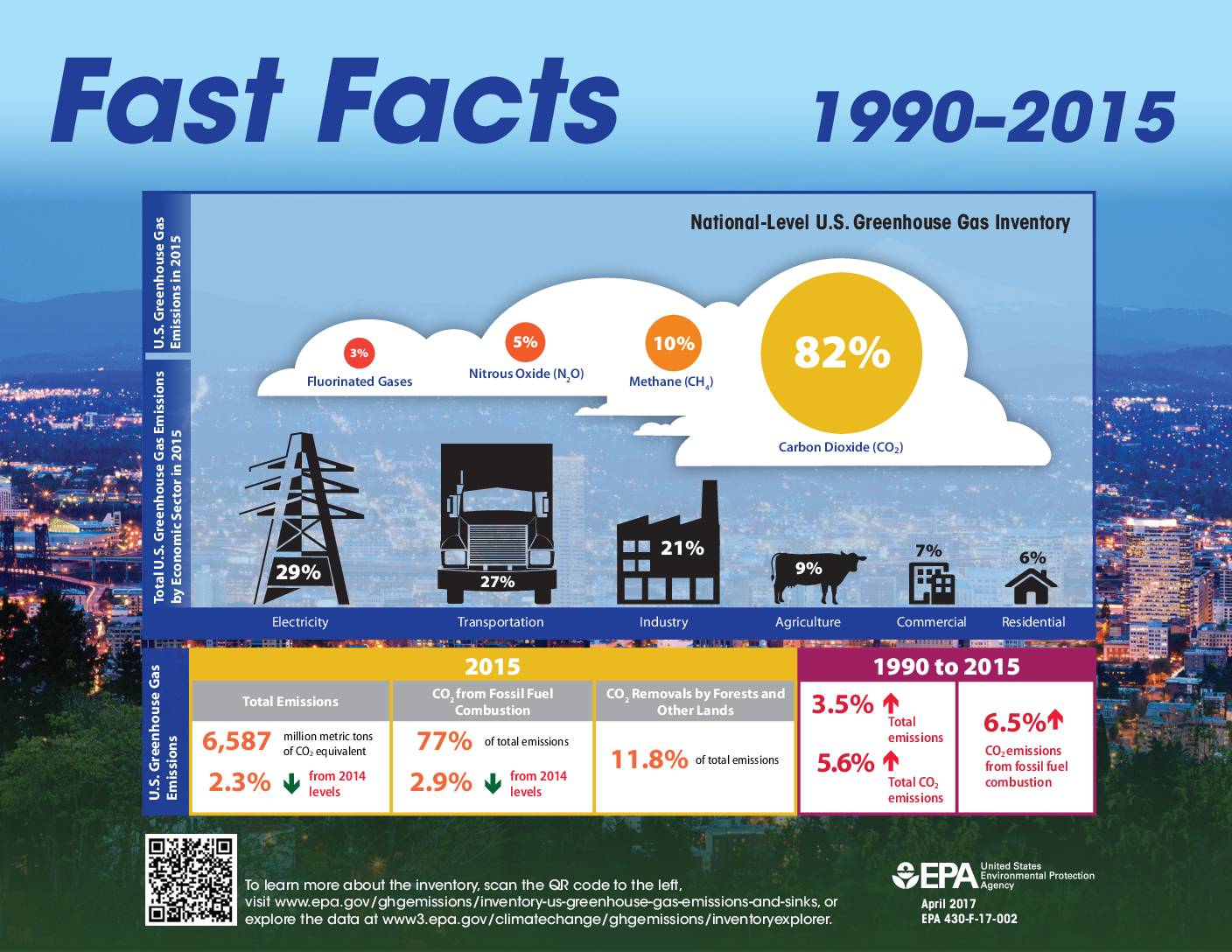
Fast facts 1990–2015: National-level U.S. greenhouse gas inventory
This EPA report summarizes U.S. greenhouse gas emissions data from 1990 to 2015, showing that total emissions reached 6,587 million metric tons of CO2 equivalent in 2015, a 2.3% decrease from 2014 levels. Carbon dioxide makes up the largest share at 82% of emissions, with electricity generation and transportation being the biggest contributing economic sectors at 29% and 27% respectively. The report includes detailed emissions breakdowns by gas type, economic sector, and fuel source, along with unit conversion tables and global warming potential values for reference. -
 2016-11-17
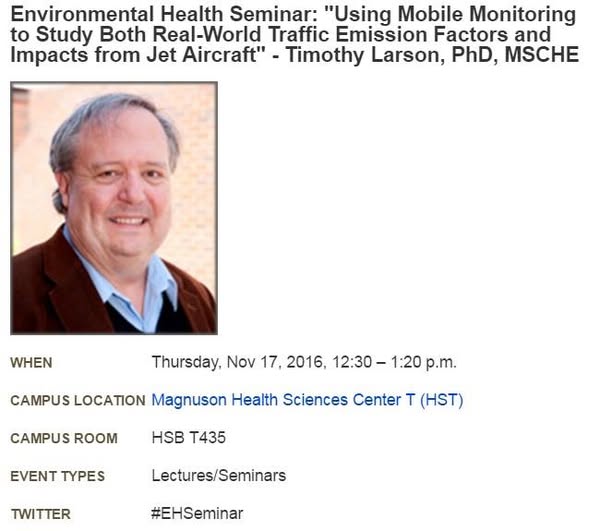
Timothy Larson UW DEOHS seminar flyer — mobile monitoring of traffic emissions and jet aircraft impacts
Flyer for a University of Washington Environmental Health Seminar titled 'Using Mobile Monitoring to Study Both Real-World Traffic Emission Factors and Impacts from Jet Aircraft,' presented by Timothy Larson, PhD, MSCHE. The event was held Thursday, November 17, 2016, 12:30–1:20 p.m. at Magnuson Health Sciences Center T, Room HSB T435. -
 2016-08-16
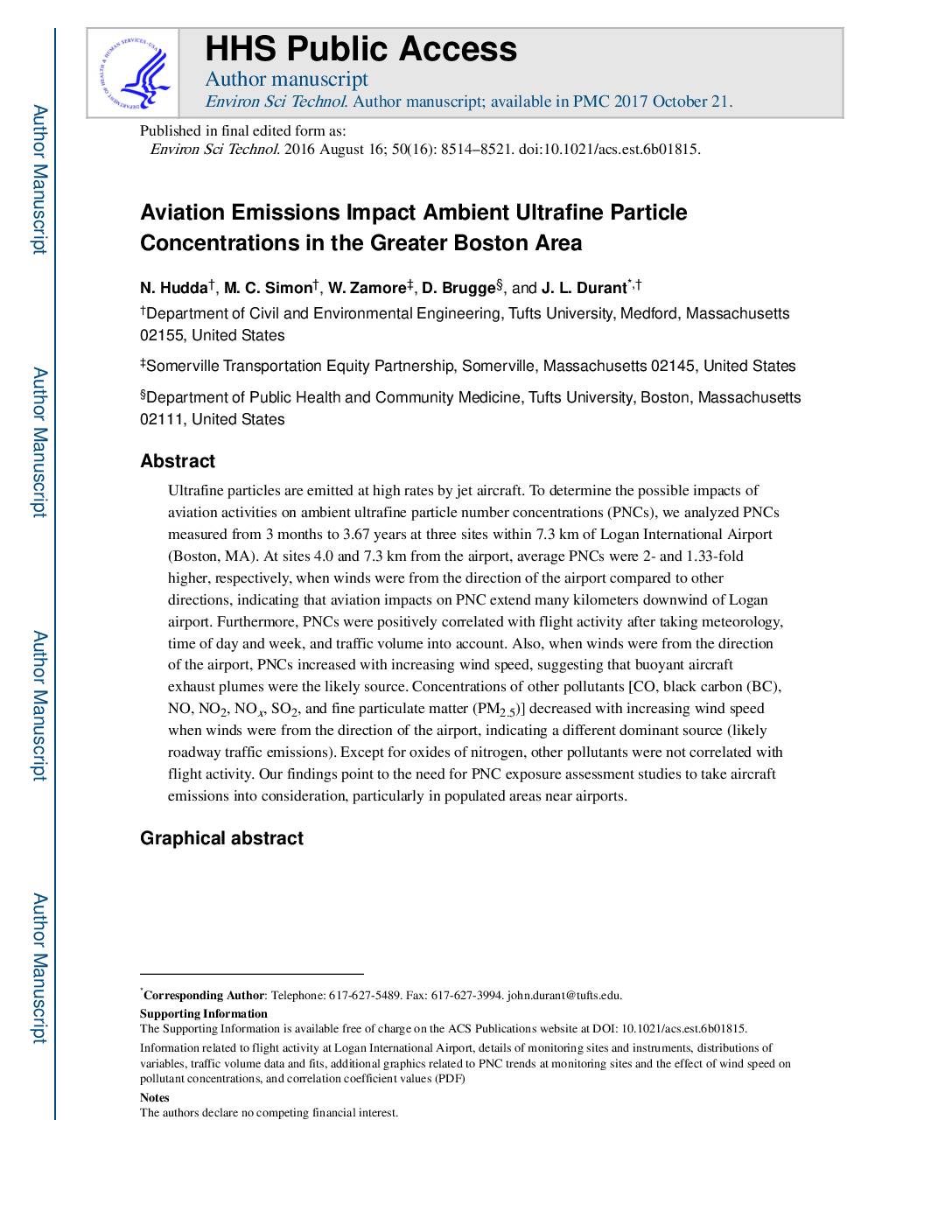
Aviation Emissions Impact Ambient Ultrafine Particle Concentrations in the Greater Boston Area
Peer-reviewed study by Hudda, Simon, Zamore, Brugge, and Durant (Tufts University, Somerville Transportation Equity Partnership) published in Environmental Science & Technology (2016), examining aviation emission impacts on ambient ultrafine particle number concentrations (PNCs) at three monitoring sites within 7.3 km of Logan International Airport (Boston, MA). PNCs measured via condensation particle counters (CPCs, TSI model -
 2016-07-15
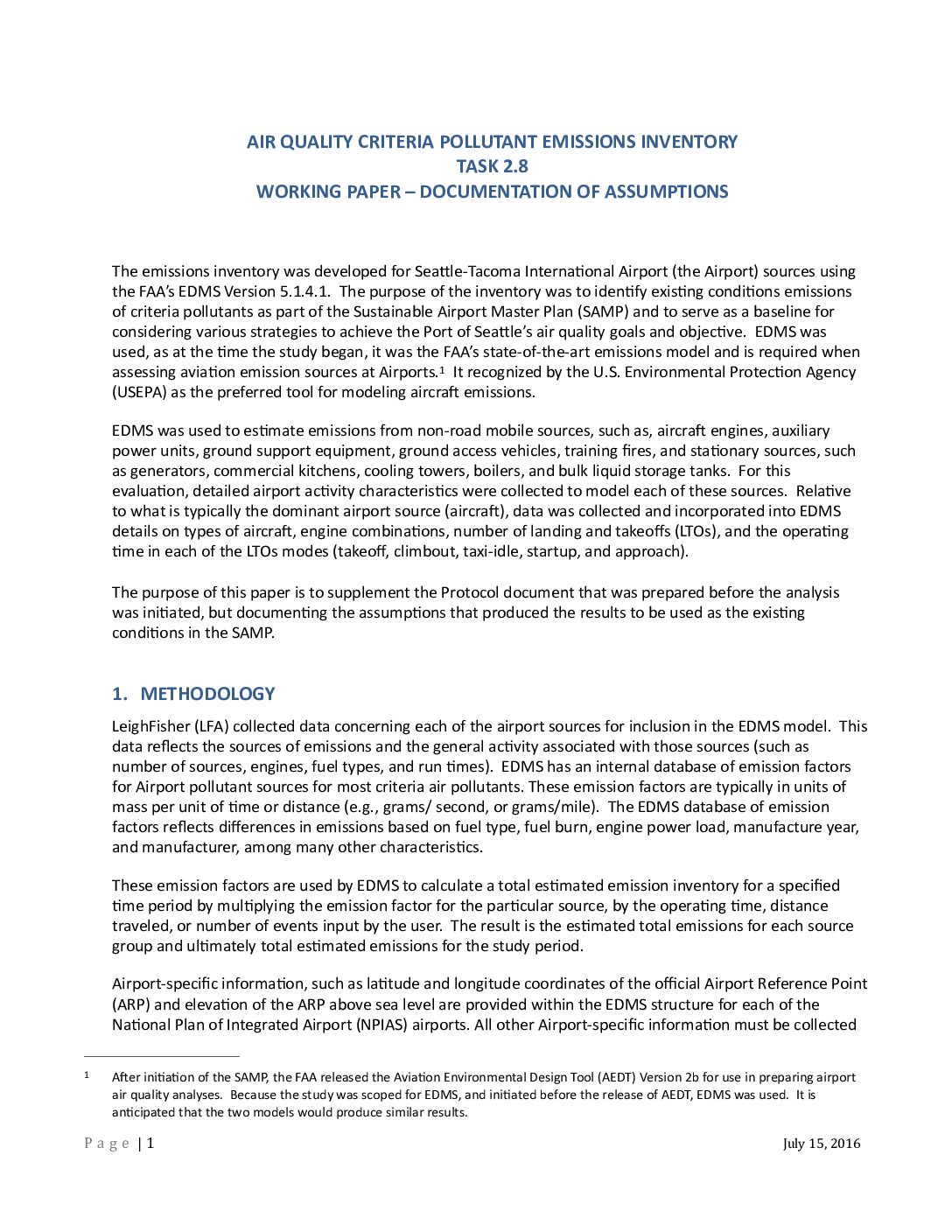
Air Quality Criteria Pollutant Emissions Inventory Task 2.8: Working Paper – Documentation of Assumptions
This 2016 working paper documents the methods and assumptions used to build an air quality emissions inventory for Seattle-Tacoma International Airport as part of the Sustainable Airport Master Plan. Using the FAA's EDMS modeling software, analysts estimated pollution from sources including aircraft engines, ground support equipment, parking, and stationary facilities such as generators and boilers. Aircraft operation data for 2014 was gathered from multiple sources, including FAA tower records, airline guides, and the Port of Seattle's own noise monitoring system. -
 2015-11-01
The Aviation Sector’s Climate Action Framework
This 2015 report from the Air Transport Action Group (ATAG) outlines the aviation industry's framework for addressing its climate impact, noting that while air transport carries over 3.3 billion passengers annually and supports 3.5% of global GDP, it also accounts for roughly 2% of human-induced CO2 emissions. The document presents the industry's strategies for balancing continued air traffic growth with the obligation to reduce greenhouse gas emissions. It represents a collaborative effort across airlines, airports, air navigation service providers, and aircraft manufacturers to pursue sustainable development goals. -
 2014-05-29
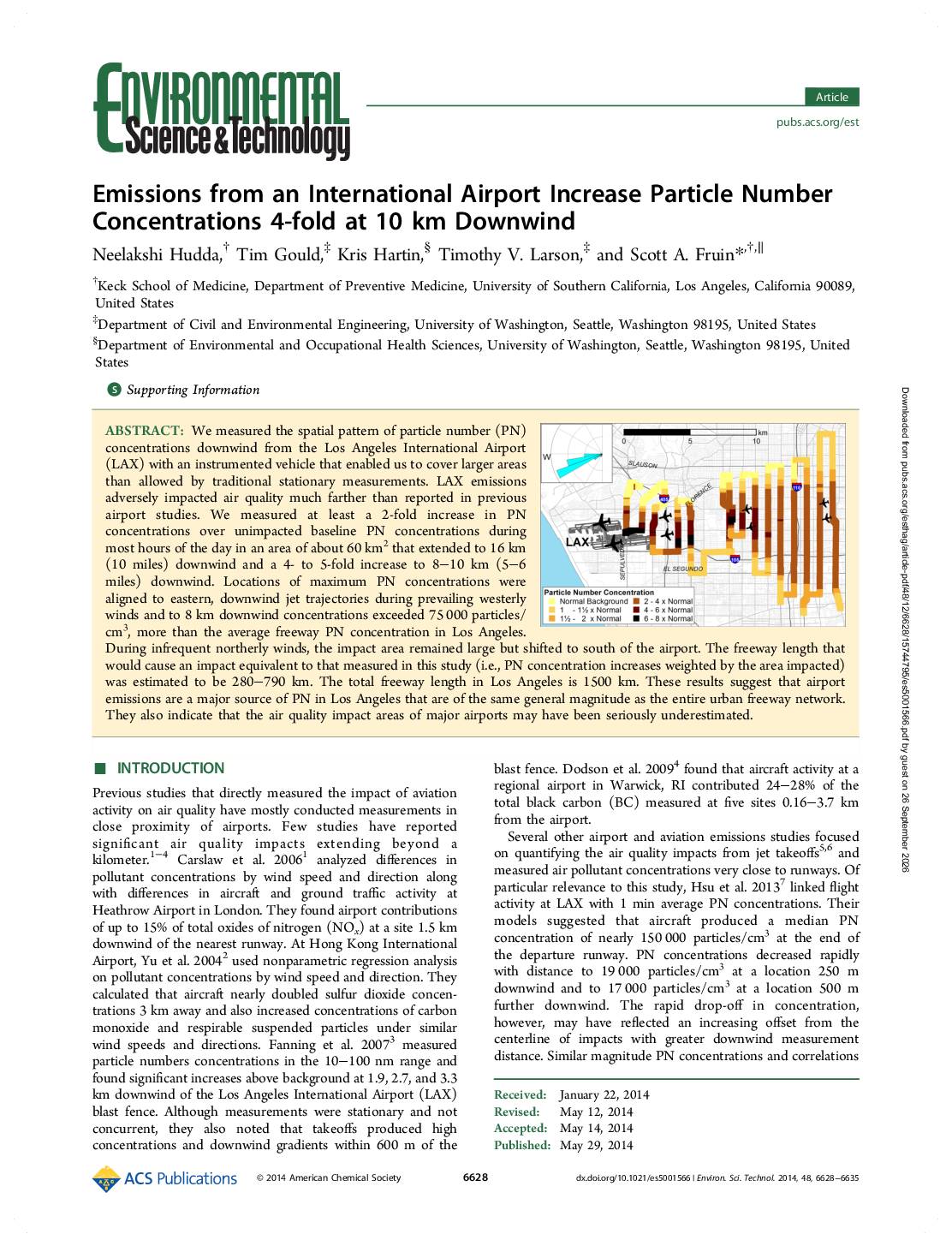
Emissions from an International Airport Increase Particle Number Concentrations 4-fold at 10 km Downwind
Peer-reviewed study published in Environmental Science & Technology (American Chemical Society, 2014) by Neelakshi Hudda, Tim Gould, Kris Hartin, Timothy V. Larson, and Scott A. Fruin measuring spatial patterns of particle number (PN) concentrations downwind of Los Angeles International Airport (LAX) using mobile monitoring platforms (MMP) from USC and University of Washington. Study found at -
 2014-05-29
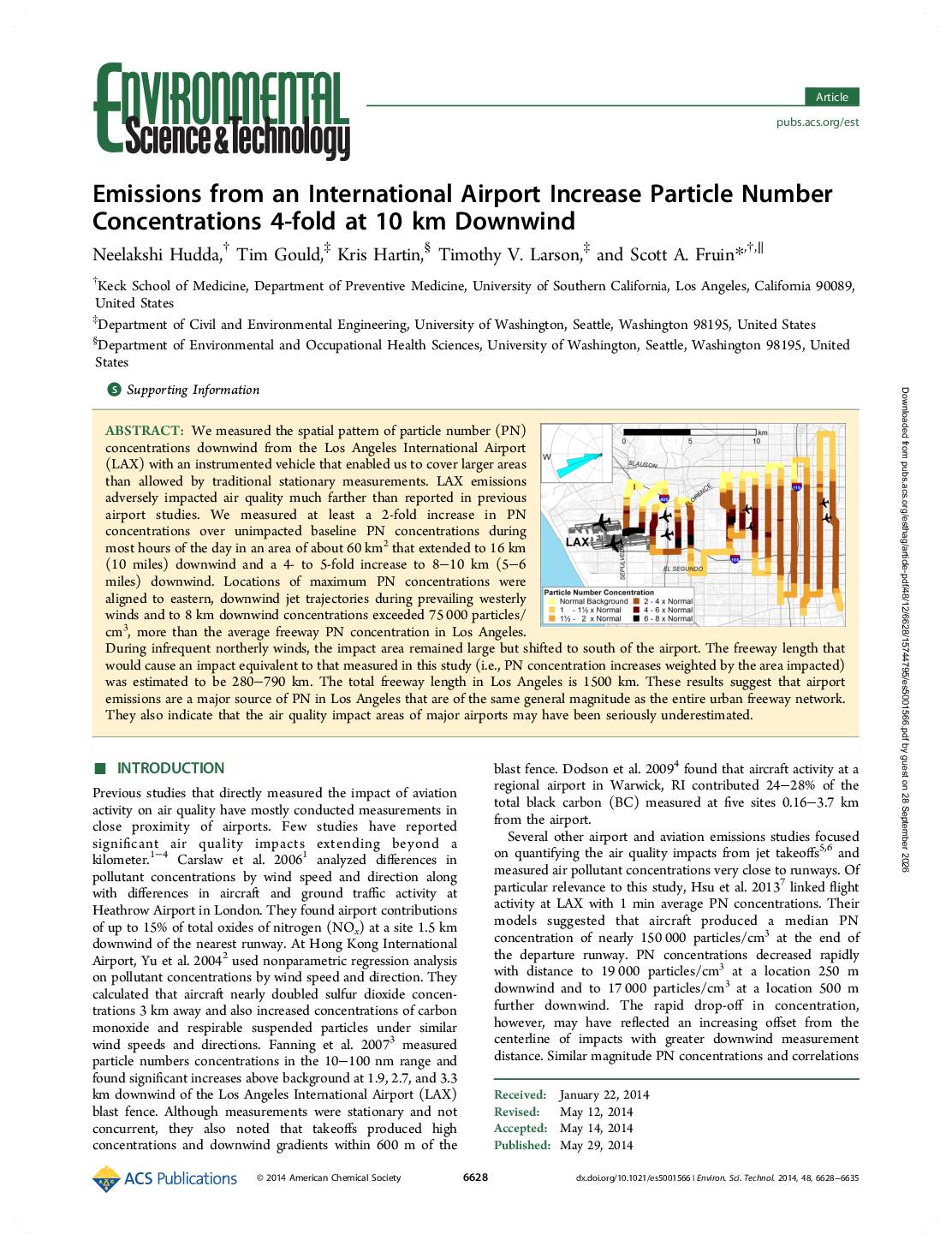
Emissions from an International Airport Increase Particle Number Concentrations 4-fold at 10 km Downwind
Peer-reviewed study published in Environmental Science & Technology (American Chemical Society, 2014) by Neelakshi Hudda, Tim Gould, Kris Hartin, Timothy V. Larson, and Scott A. Fruin (USC Keck School of Medicine / University of Washington) measuring spatial patterns of particle number (PN) concentrations downwind from Los Angeles International Airport (LAX). Using mobile monitoring platforms (MMP) -
 2014-05-29
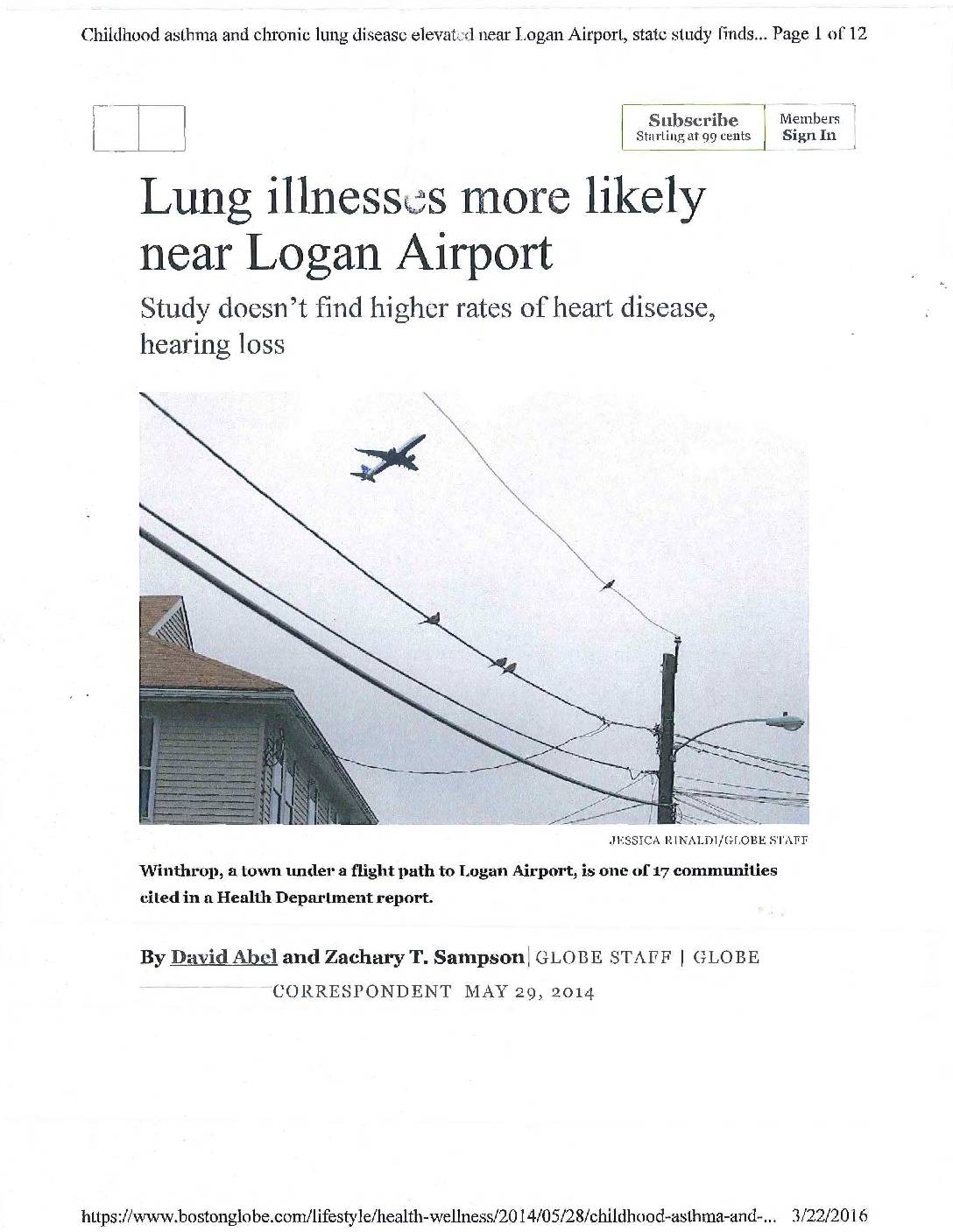
Childhood asthma and chronic lung disease elevated near Logan Airport, state study finds
Two studies highlight serious air pollution concerns near major U.S. airports. A 2014 Massachusetts state health study found that children living near Boston's Logan Airport are up to four times more likely to develop asthma symptoms, while nearby adults are nearly twice as likely to suffer chronic lung disease. A 2015 NJIT study reinforced these concerns nationwide, finding pollution levels up to 10 times higher within nine square miles of airports—with Seattle-Tacoma Airport specifically cited for carbon monoxide levels exceeding federal guidelines. -
2011-12-29
Obama’s Climate Betrayal
Elizabeth Kolbert Some international disputes are significant for symbolic reasons, others for substantive ones. The current conflict between the United States and the European Union over airline-emissions limits is both. Unfortunately this means that the U.S. is doubly on the wrong side. The Obama Administration ought to be applauding the Europeans. Instead it’s threatening a -
 2002-08-30
Myths and Facts: Airport Pollutants, Aircraft Emissions, and Pollution Simulators
This document debunks common myths about airport air pollution, noise, and emissions regulation, explaining that invisible pollutants can still reach dangerous levels, that fine particles from jet engines bypass the body's natural defenses, and that shoreline communities like those near Sea-Tac may face higher pollution concentrations due to wind patterns. It also reveals that neither the EPA nor FAA effectively regulates aircraft emissions or noise in ways that truly protect nearby residents, as regulatory authority rests with bodies like ICAO that are dominated by airline and airport interests. Additionally, the document highlights that official pollution modeling tools may significantly underestimate actual pollution levels, and that so-called 'noise abatement' programs often fail to reduce noise at all.