TagPuget Sound(124)
-
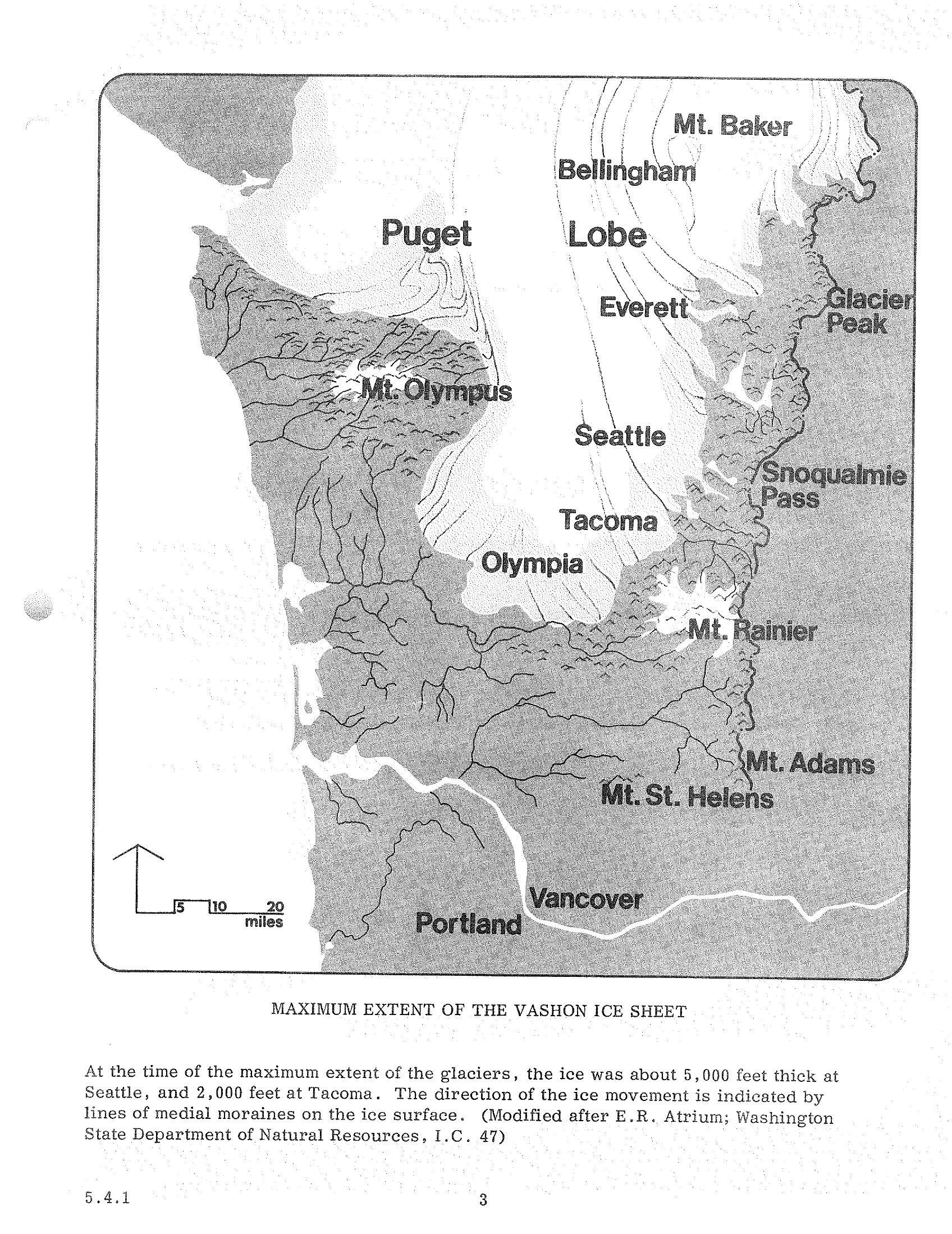
Maximum Extent of the Vashon Ice Sheet over Western Washington
Map showing the maximum extent of the Vashon glacial ice sheet over western Washington state, including the Puget Lobe, with labeled locations including Seattle, Tacoma, Olympia, Portland, and surrounding peaks. Caption notes the ice was approximately 5,000 feet thick at Seattle and 2,000 feet at Tacoma; modified after E.R. Atrium, Washington State Department of Natural Resources, I.C. 47. -
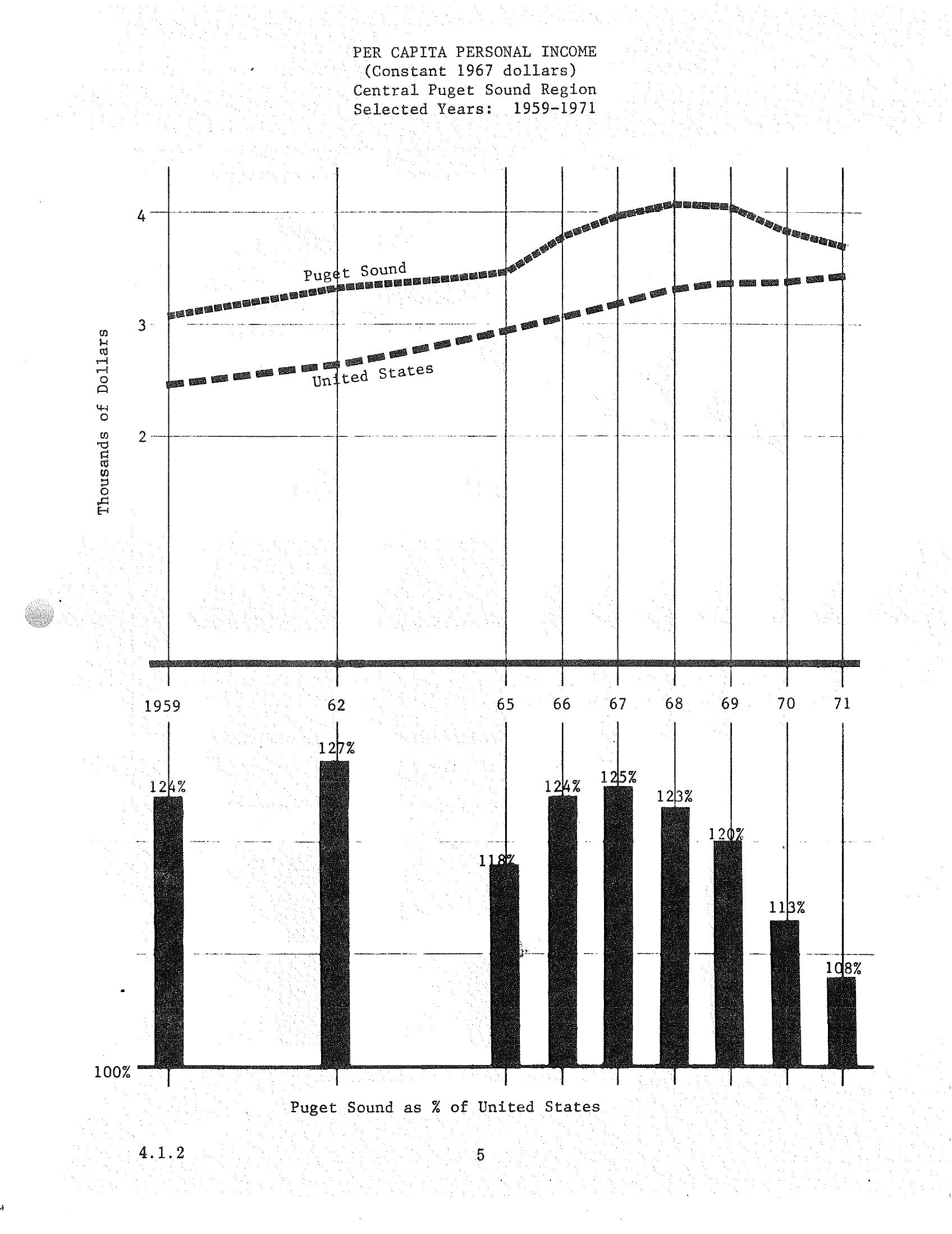
Per Capita Personal Income in Constant 1967 Dollars: Central Puget Sound Region vs. United States, 1959–1971 (STCP Figure 4.1.2)
A dual-panel chart showing per capita personal income in constant 1967 dollars for the Central Puget Sound Region compared to the United States for selected years 1959–1971. The lower bar chart expresses Puget Sound income as a percentage of the U.S. figure, peaking at 127% in 1962 and declining to 108% by 1971, labeled as figure 4.1.2. -
 2025-10-06
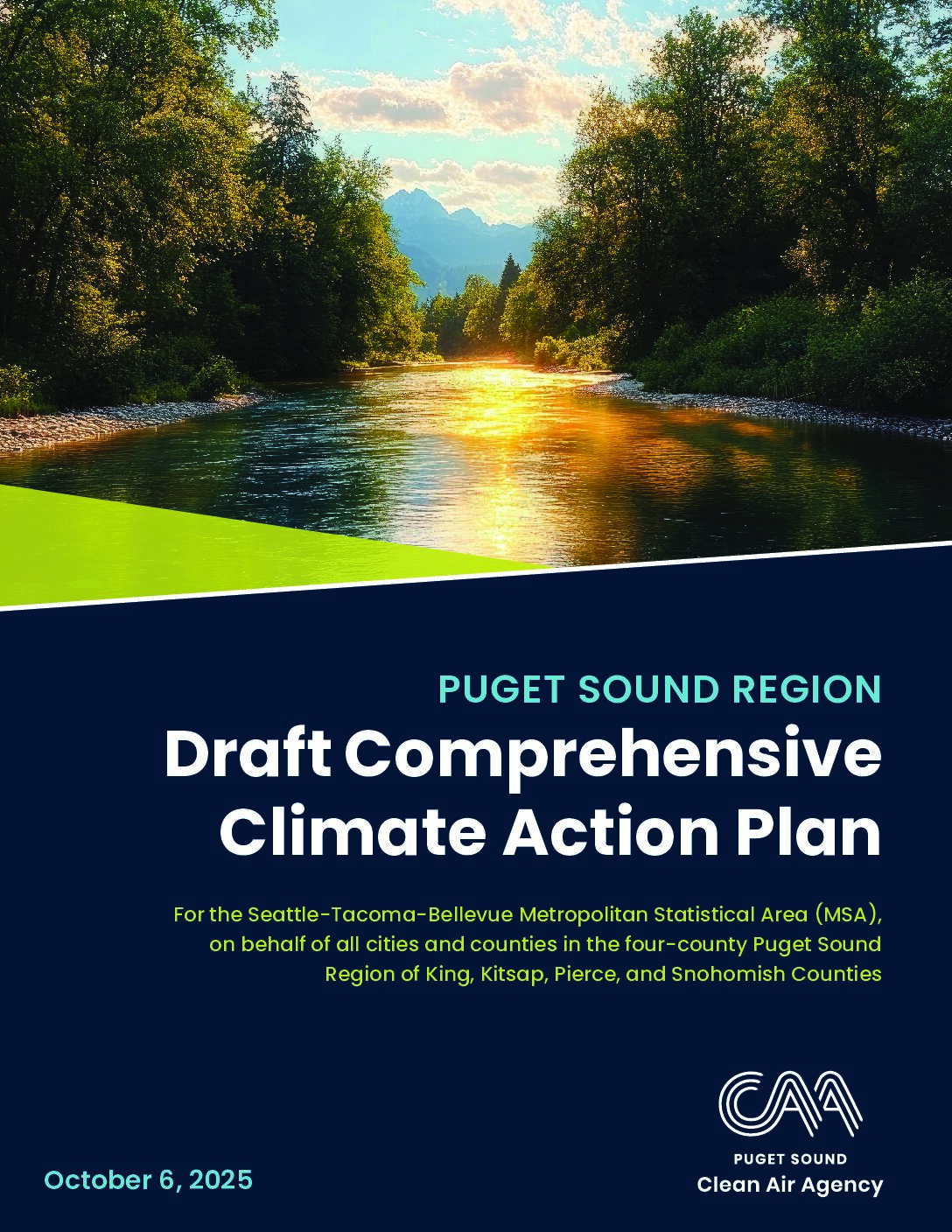
PSCAA Draft Comprehensive Climate Action Plan
Cover page of the Puget Sound Clean Air Agency's Draft Comprehensive Climate Action Plan for the Seattle-Tacoma-Bellevue Metropolitan Statistical Area (MSA), prepared on behalf of cities and counties in King, Kitsap, Pierce, and Snohomish Counties, dated October 6, 2025. The document bears the Puget Sound Clean Air Agency (CAA) logo and features a nature photograph of a sunlit river. -
 2025-09-01
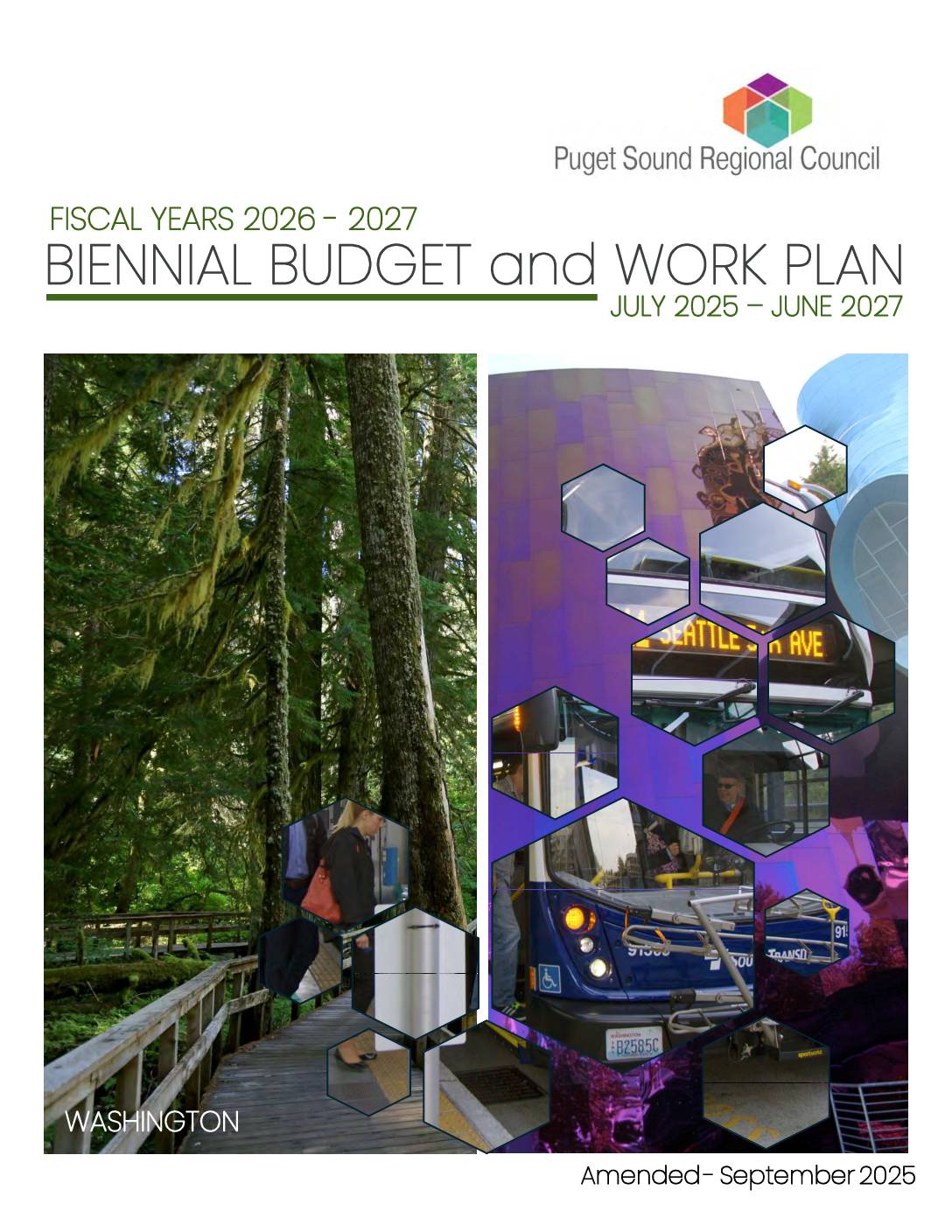
PSRC Fiscal years 2026-2027 biennial budget and work plan: July 2025 – June 2027
This document is the Puget Sound Regional Council's Fiscal Years 2026–2027 Biennial Budget and Work Plan, covering July 2025 through June 2027, which outlines the agency's revenues, expenditures, staffing, and regional planning priorities for the greater Seattle–Tacoma area. It includes demographic data on population, housing, and employment growth across member jurisdictions, along with financial tables and an integrated planning timeline. Note that this budget document does not address Sea-Tac Airport noise policy; researchers seeking noise-related planning materials should consult dedicated airport or environmental planning resources. -
 2025-05-06
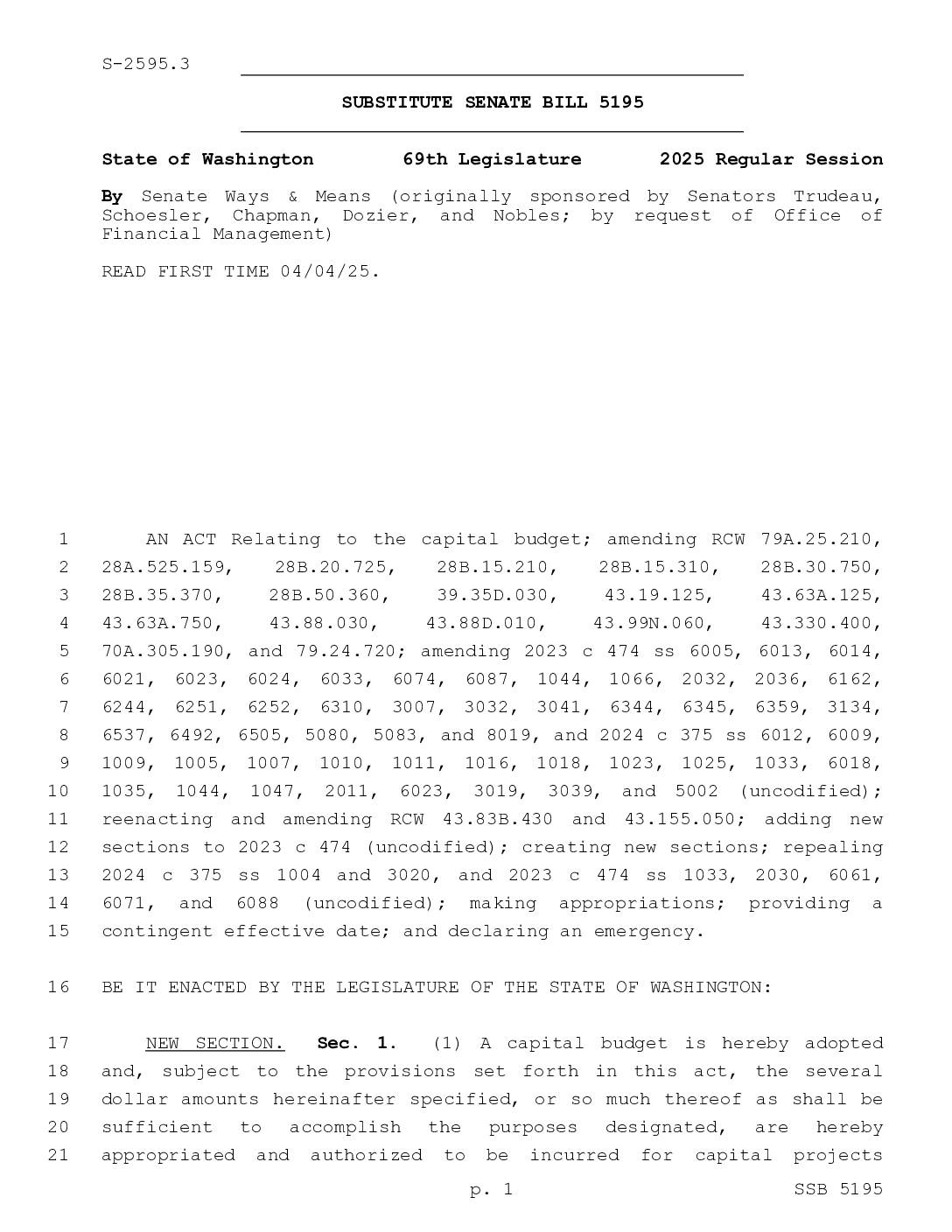
Substitute Senate Bill 5195: Capital budget act
Washington State Senate Bill 5195 is a capital budget act for the 2025-2027 biennium, appropriating funds for various state construction and infrastructure projects. It includes allocations for projects such as stadium security and field improvements to support Seattle's hosting of the 2026 FIFA World Cup, early learning facility upgrades, and other general government building needs. The bill covers spending from the effective date of the act through June 30, 2027, drawing from several state funds. -
 2024-06-25
SR 509 Completion Project: Des Moines Historical Society Presentation
A June 2024 WSDOT presentation to the Des Moines Historical Society outlines the SR 509 Completion Project, part of the broader Puget Sound Gateway Program alongside the SR 167 Completion Project in Pierce County. The project aims to improve freight and passenger connections between the Port of Seattle, Sea-Tac Airport, and key regional distribution centers in King County. The presentation covers the project's history and two construction stages, with WSDOT emphasizing efficiencies gained by managing both highway projects under a single program. -
 2023-08-09
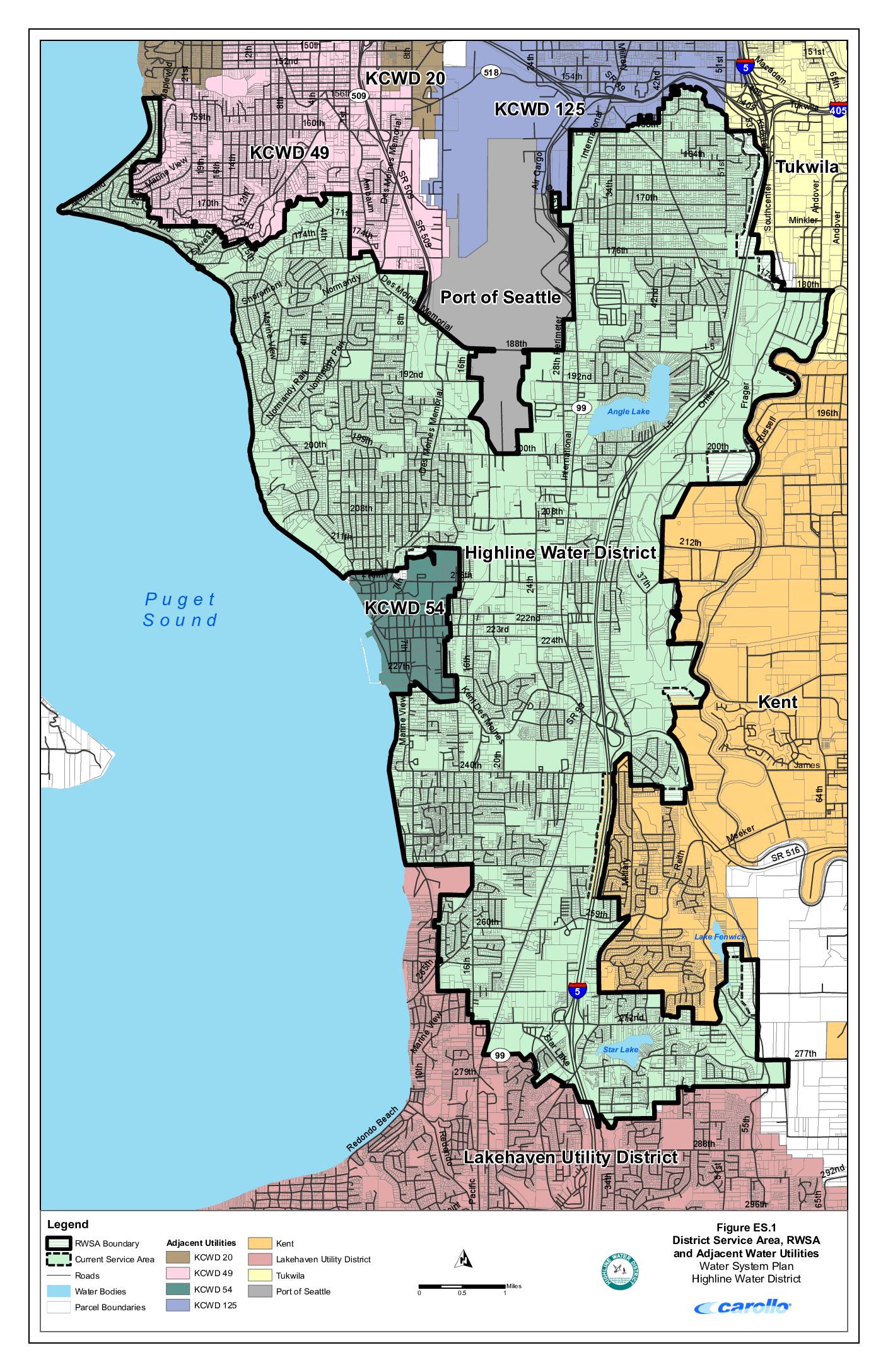
District service area, RWSA and adjacent water utilities – Highline Water District water system plan
This map from Highline Water District's Water System Plan shows the district's service area and surrounding water utilities in the communities south of Seattle, including areas near Sea-Tac Airport. It identifies neighboring providers such as the Port of Seattle, KCWD 20, KCWD 49, KCWD 54, KCWD 125, Tukwila, Kent, and Lakehaven Utility District, along with key landmarks like Angle Lake, Star Lake, and Lake Fenwick. The map delineates the Regional Water Service Area (RWSA) boundary and current service areas relative to major roads and Interstate 5. -
 2023-06-05
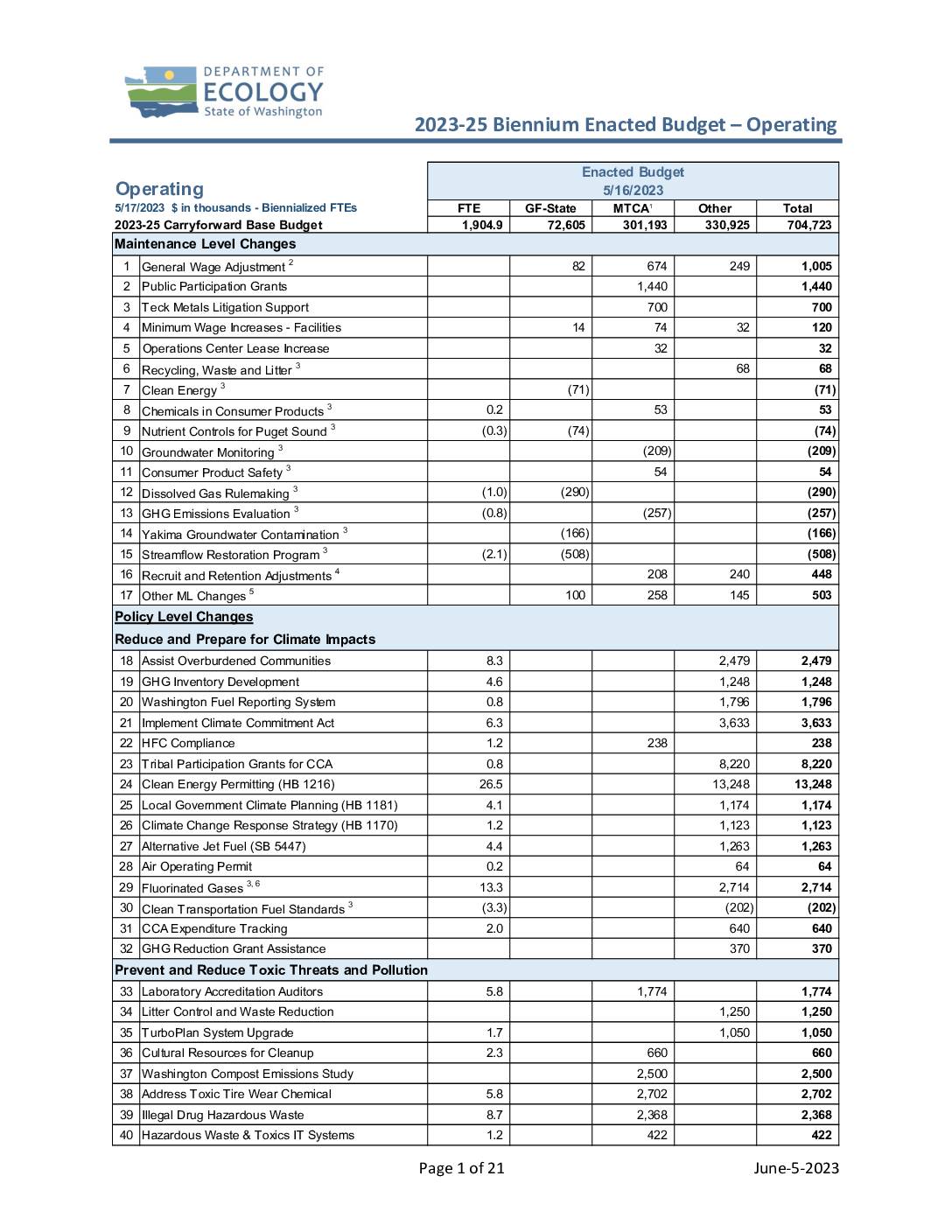
2023-25 Biennium Enacted Budget – Operating
This document outlines the Washington State Department of Ecology's 2023-25 Biennium Enacted Operating Budget, totaling approximately $862.6 million with 2,136.5 full-time employees. It details funding changes across priority areas including climate impact reduction, toxic threat prevention, and water protection, with notable investments in Clean Energy Permitting, Climate Commitment Act implementation, and water quality programs. The budget reflects a net increase of roughly $157.8 million over the carryforward base budget through a combination of maintenance level adjustments and new policy-level initiatives. -
 2023-04-26
Fred Felleman speaking at Quiet Skies Puget Sound event
Fred Felleman, identified by on-screen caption, is speaking and gesturing at what appears to be an outdoor coastal or waterfront location. He is wearing glasses and a Columbia-brand fleece jacket, with other individuals visible in the background. -
 2022-12-14
Puget Sound Regional Council
The Puget Sound Regional Council (PSRC) is a metropolitan planning organization founded in 1956 that oversees transportation planning, economic development, and growth management across King, Kitsap, Pierce, and Snohomish counties in the greater Seattle area. It serves as a collaborative forum for cities, counties, transit agencies, port districts, and tribal governments to address regional infrastructure and land-use issues. The PSRC maintains a regional Transportation Improvement Program and develops long-range strategies, such as VISION 2040, to guide the area's growth as its population approaches 5 million.