TagFAA(687)
-
 2019-08-20
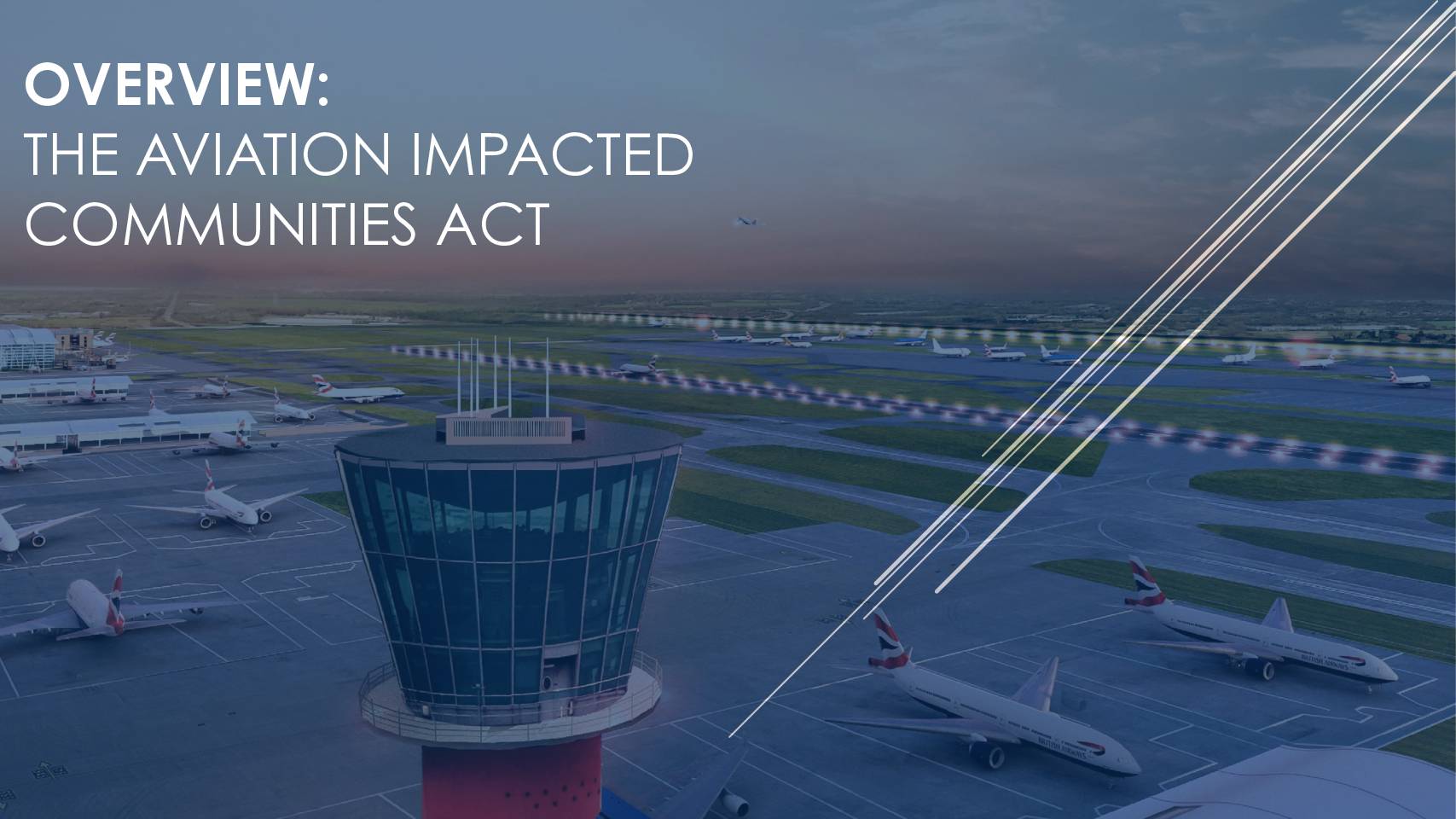
Overview: The Aviation Impacted Communities Act
The Aviation Impacted Communities Act establishes a structured process to help neighborhoods affected by aircraft noise, starting with the FAA identifying eligible communities and ending with grants for noise mitigation. A community qualifies as 'aviation impacted' if it is located within 1 mile of any point where a commercial or cargo jet route passes at or below 3,000 feet above ground level. Once designated, communities can form boards, conduct studies, and develop action plans to address aviation-related impacts near airports like Sea-Tac. -
 2019-08-20
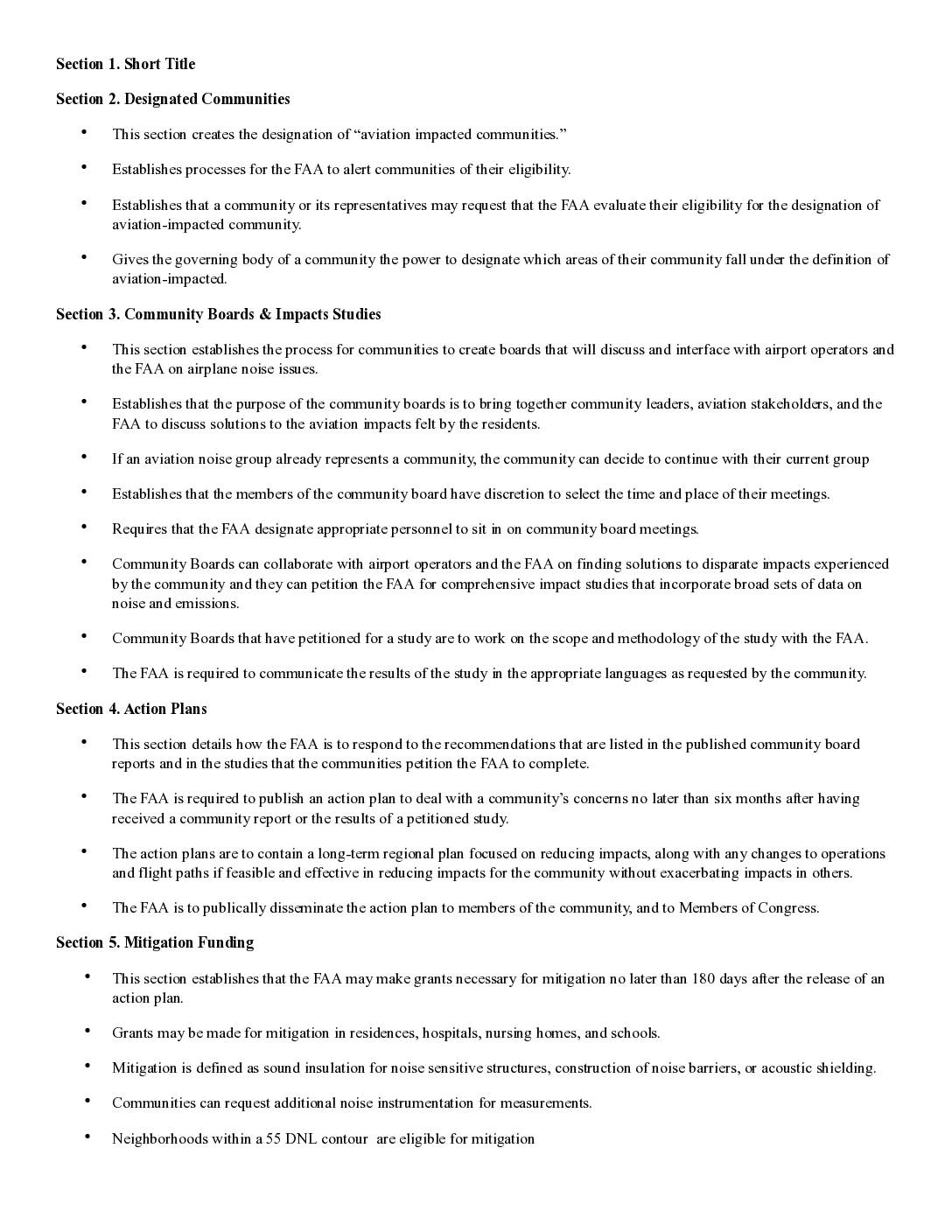
Airport Impacted Communities Act: Section-by-Section Summary
This legislative summary outlines a proposed bill aimed at protecting communities affected by airport noise and aviation emissions. It establishes a formal designation for 'aviation-impacted communities' located within one mile of low-flying commercial or cargo jet routes, creates local community boards to engage with the FAA and airport operators, and requires the FAA to develop action plans and provide mitigation funding — such as sound insulation and noise barriers — for affected residences, schools, hospitals, and nursing homes. -
UproarLA: Nextgen Nightmare @ Burbank Airport (FAA and BUR LIED)
FAA and BUR LIED | www.uproarla.org UproarLA has discovered the truth of how San Fernando Valley communities were sacrificed by the FAA and Burbank Airport in the name of efficiency and NextGen technology. Burbank Airport was alerted back in 2015 that new “condensed” flight paths would inundate quiet neighborhoods with airplane noise and pollution, and -
FAA concern might mean less noise relief for O’Hare’s DuPage neighbors
DuPage County Finding a way to evenly distribute nighttime jet noise is proving difficult for the O’Hare Noise Compatibility Commission. Daily Herald File Photo Marni Pyke Months of discussions on creating an overnight runway rotation at O’Hare International Airport hit turbulence after federal officials warned Tuesday that one option for incoming jets was potentially unsafe. -
 2019-06-11
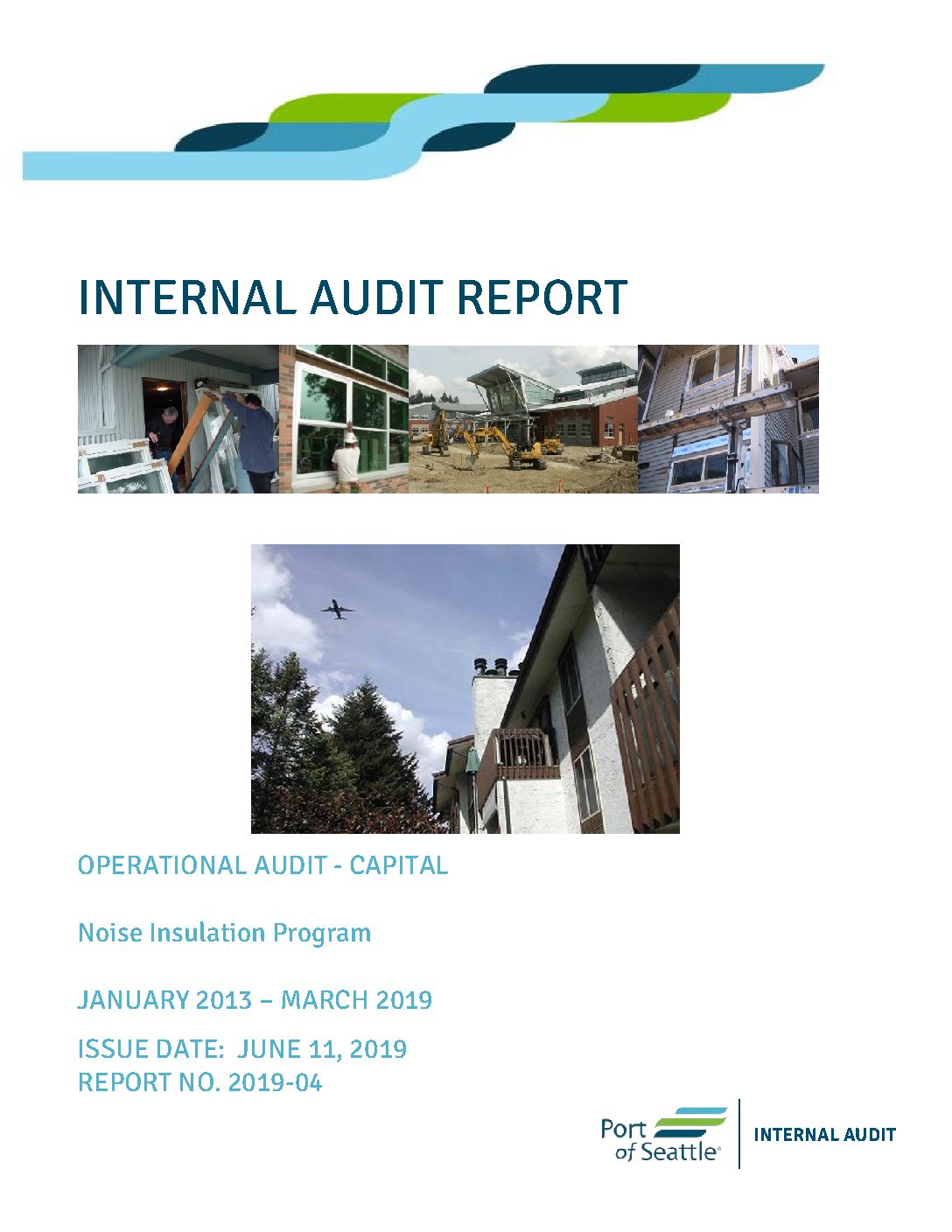
Internal Audit Report: Noise Insulation Program, January 2013 – March 2019
A 2019 Port of Seattle internal audit of the Noise Insulation Program — which has invested over $400 million since 1985 to reduce aircraft noise in homes and schools near Sea-Tac Airport — found two key problems: a contractor called Burton Construction overbilled the Port by an average markup of 51% above subcontractor costs, and the Highline School District failed to consistently meet federal grant requirements for disadvantaged business enterprises and Buy American standards. The audit covered January 2013 through March 2019 and assessed compliance with FAA federal grant rules. -
S46 TRACON Weather Briefing
This page gives industry professionals information on the current regional weather within the boundaries of the SEA S46 TRACON. https://www.weather.gov/zse/OLv6?&ln=-122.135<=47.395&zm=9.25&obs=10&bndry=1&jetrte=1&rangerings=KSEA,50 -
FAA Releases Aerospace Forecast
With aircraft operations expected to increase more than 25 percent over the next 20 years, the FAA is advancing major airspace modernization and infrastructure improvements to meet this tremendous projected growth. WASHINGTON – All safety, efficiency and economic indicators show that air travel in the United States is strong, according to the FAA Aerospace Forecast Fiscal Years -
 2019-05-01
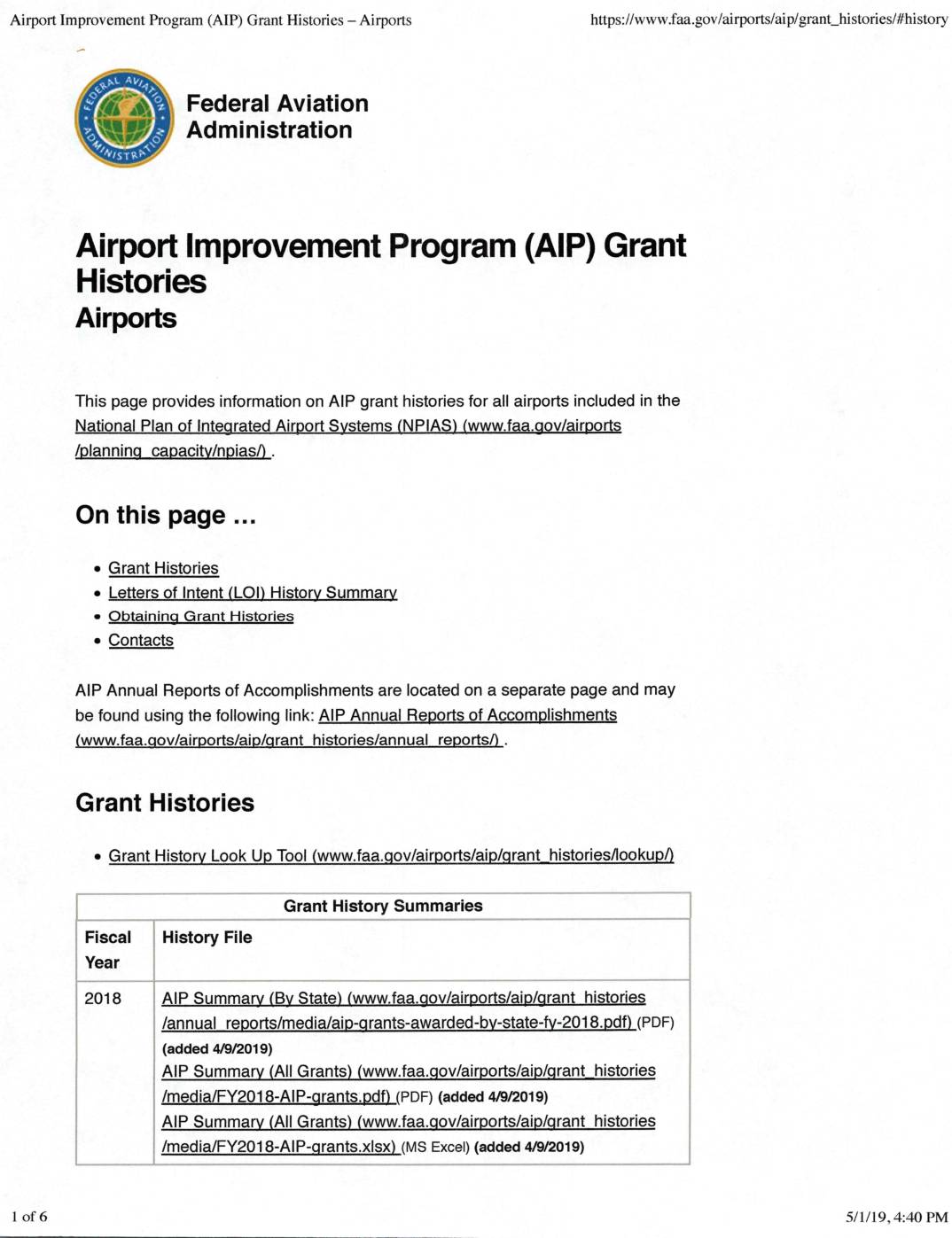
Airport Improvement Program (AIP) grant histories – airports
The FAA's Airport Improvement Program (AIP) Grant Histories page provides access to annual summaries of federal airport grants dating back to 2006, organized by fiscal year and available in both PDF and MS Excel formats. Users can look up grant histories for individual airports included in the National Plan of Integrated Airport Systems (NPIAS) using an online tool. While this resource covers AIP funding across all U.S. airports, it may be referenced when researching federal grants awarded to Seattle-Tacoma International Airport for noise mitigation and other improvement projects. -
Fact Sheet – The Federal Aviation Administration (FAA) Aerospace Forecast Fiscal Years (FY) 2019-2039
Contact: Hank Price Phone: 202-267-3883 I. 2018[1] SUMMARY: ECONOMIC ACTIVITY AND AIR TRAVEL In Calendar Year (CY) 2018, U.S. real Gross Domestic Product (GDP) increased 2.9 percent; world real GDP increased 3.2 percent. Domestic mainline air carrier[2] yields were flat while international yields increased 5.5 percent in 2017. In real terms (adjusted for inflation in -
Paine Field is cleared for passenger takeoff, FAA says
Paine Field is cleared for passenger takeoff, FAA says After years of planning and litigation, airlines can begin service at Everett’s new terminal. by Janice Podsada and Chuck Taylor Thursday, February 21, 2019 6:08amHerald Business JournalLocal NewsAviation and spaceEverettMukilteoPaine Field EVERETT — Federal regulators on Wednesday approved the start of commercial air service at Paine