TagEnvironmental Impact Statement(328)
-
 1996-02-01
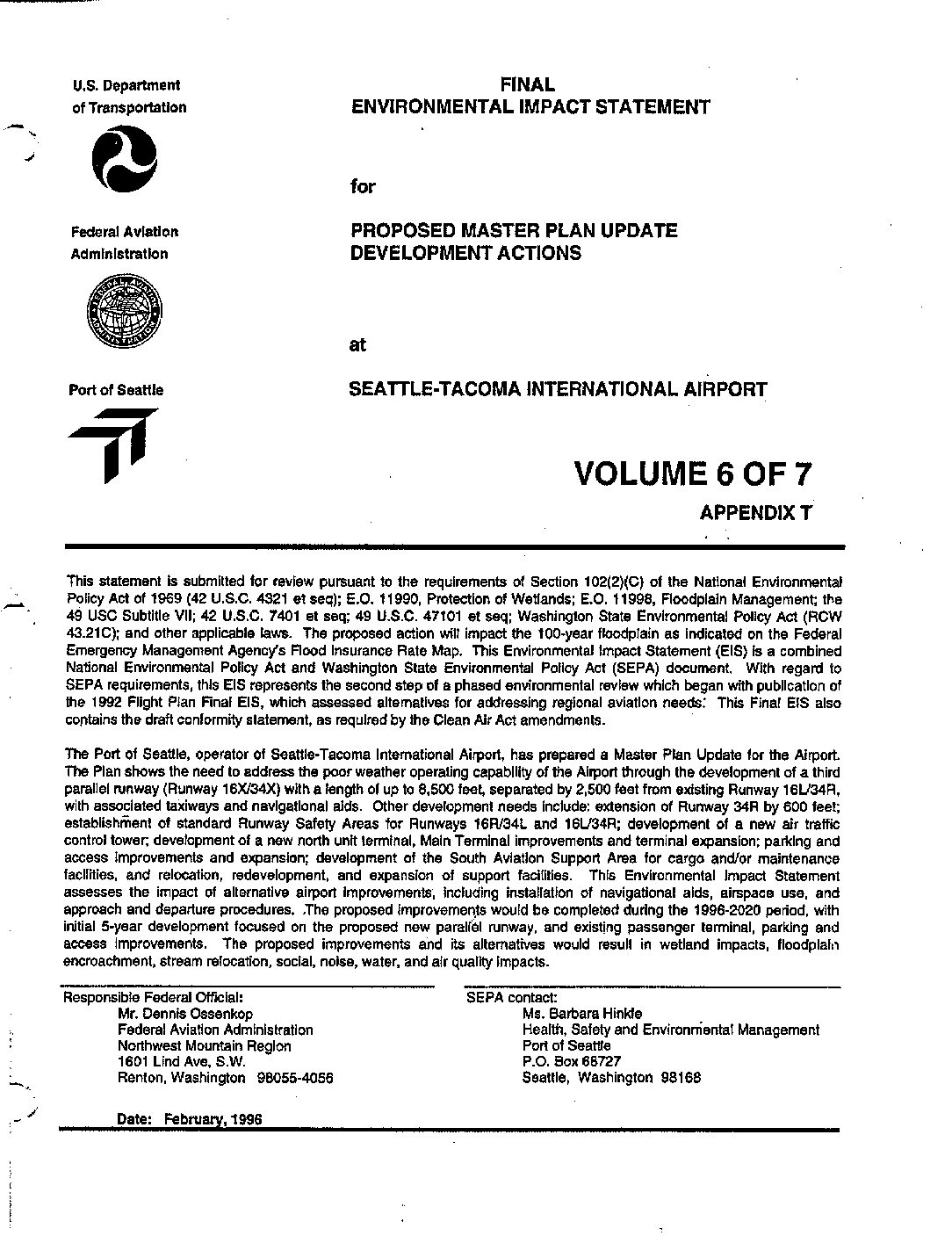
Final Environmental Impact Statement for proposed Master Plan Update development actions at Seattle-Tacoma International Airport, Volume 6 of 7, Appendix T: Public comments
This document is Volume 6 of the Final Environmental Impact Statement for the proposed Master Plan Update at Seattle-Tacoma International Airport, published in February 1996. It covers planned airport improvements from 1996 to 2020, including the construction of a third parallel runway, terminal expansions, and parking upgrades, while assessing impacts on noise, air quality, wetlands, and surrounding communities. The appendix compiles public hearing transcripts and approximately 250 written comments submitted in response to the Draft EIS, addressing key concerns such as aircraft noise, air pollution, and surface transportation impacts. -
 1996-02-01
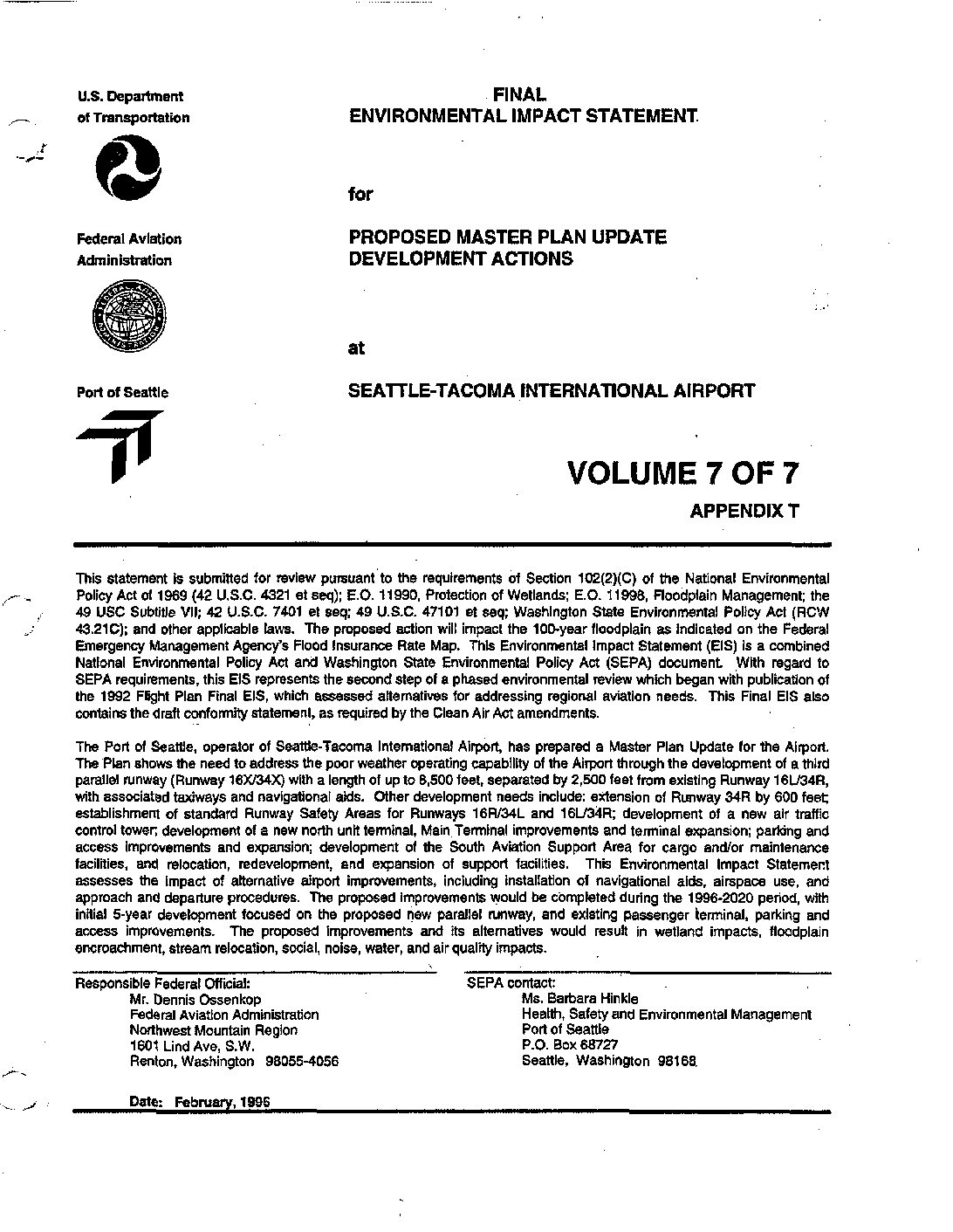
Final Environmental Impact Statement for proposed Master Plan Update development actions at Seattle-Tacoma International Airport, Volume 7 of 7, Appendix T
This 1996 Final Environmental Impact Statement (EIS), prepared by the FAA and Port of Seattle, evaluates the environmental effects of proposed expansion plans at Seattle-Tacoma International Airport, including construction of a third parallel runway, terminal upgrades, and parking improvements planned through 2020. The document addresses key community concerns such as aircraft noise, air quality, surface traffic, and impacts on wetlands and floodplains. It includes transcripts and written comments from two public hearings held in June 1995, attended by community members and agencies who raised significant concerns about noise, health, and environmental impacts. -
 1995-12-14
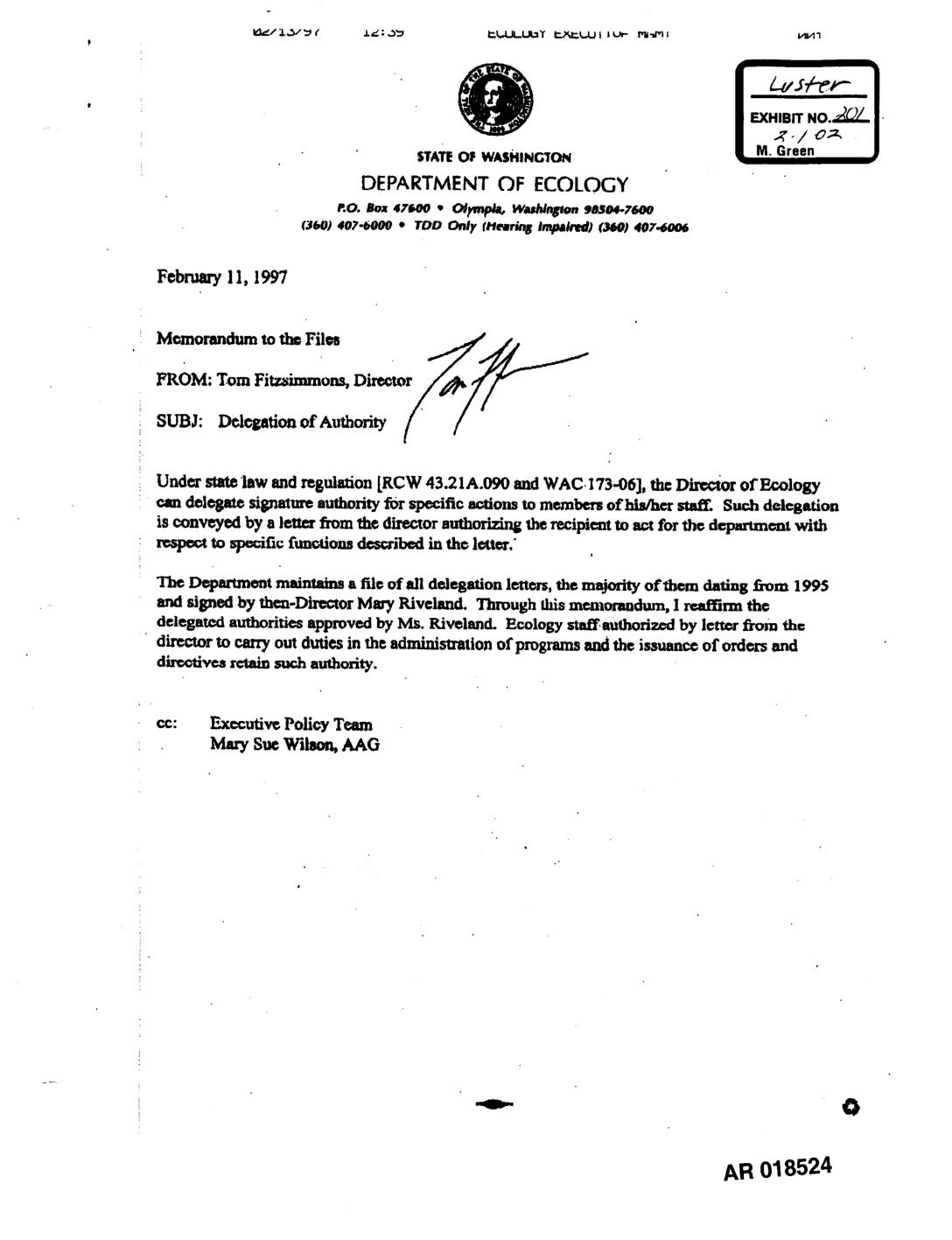
Exhibit 201: Ecology Delegation of Authority — Tom Luster, Section 401 Certifications and CZM Consistency Determinations
These three pages from the Washington State Department of Ecology document the delegation of signature authority to staff member Tom Luster, allowing him to issue routine Section 401 water quality certifications, Coastal Zone Management consistency determinations, and related administrative orders. Originally signed by Director Mary Riveland in December 1995, the authority was reaffirmed by Director Tom Fitzsimmons in February 1997. The delegation includes a succession of authority chain to ensure continuity if Luster is absent or leaves his position. -
 1995-08-16
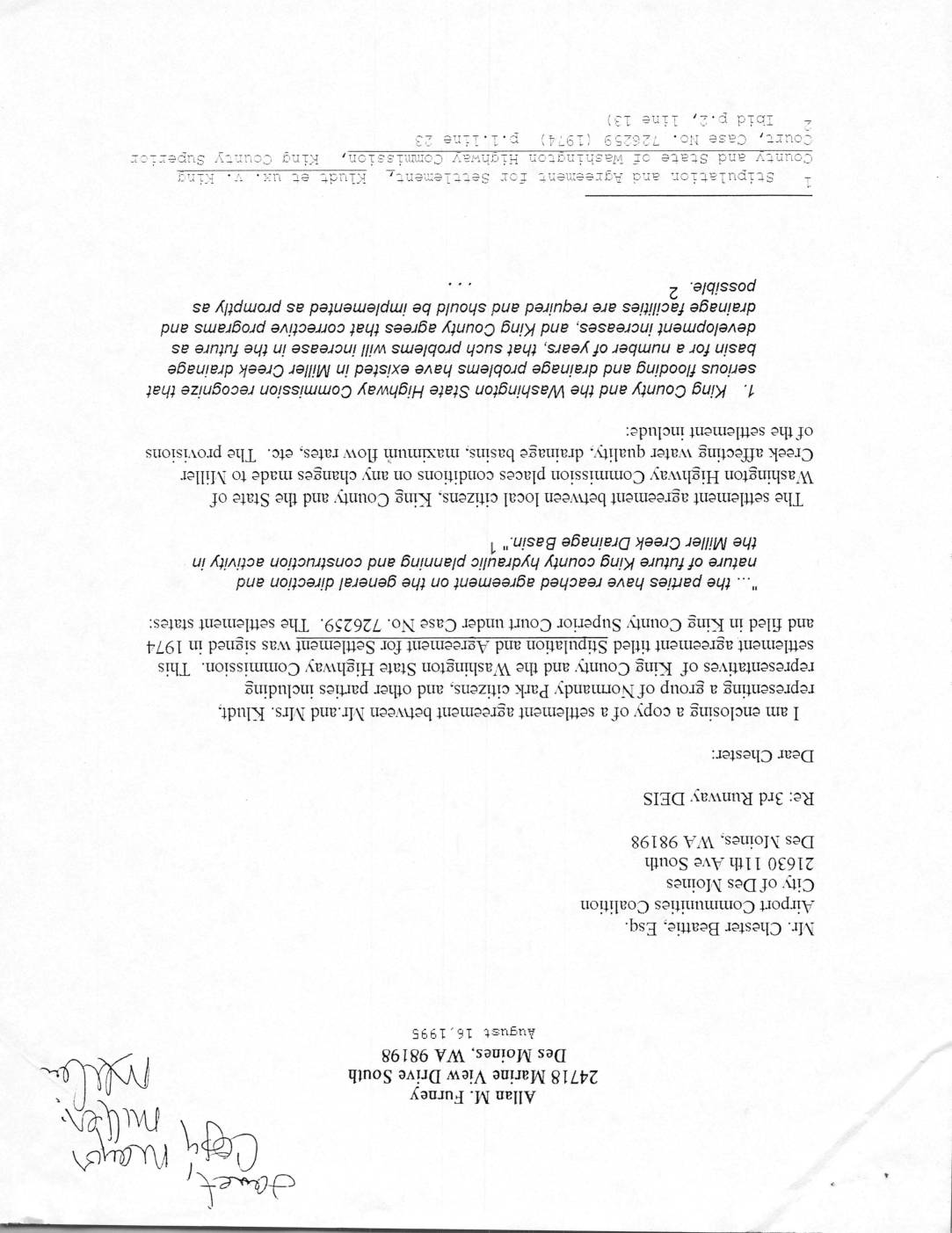
Letter regarding 3rd Runway DEIS and Miller Creek drainage settlement agreement
A 1995 letter from Allan M. Furney to Chester Beattie of the Airport Communities Coalition summarizes a 1974 settlement agreement between King County, the Washington State Highway Commission, and local citizens regarding flooding and drainage problems in the Miller Creek watershed. The settlement requires King County to improve water quality, prevent excess stormwater runoff into Miller Creek, and construct appropriate drainage facilities, while prohibiting full channelization of the creek. The letter raises concerns that proposed SeaTac Airport third-runway expansion plans, as outlined in the Draft EIS, would violate these settlement provisions by significantly increasing impervious surface area and stormwater flows into the Miller Creek drainage basin. -
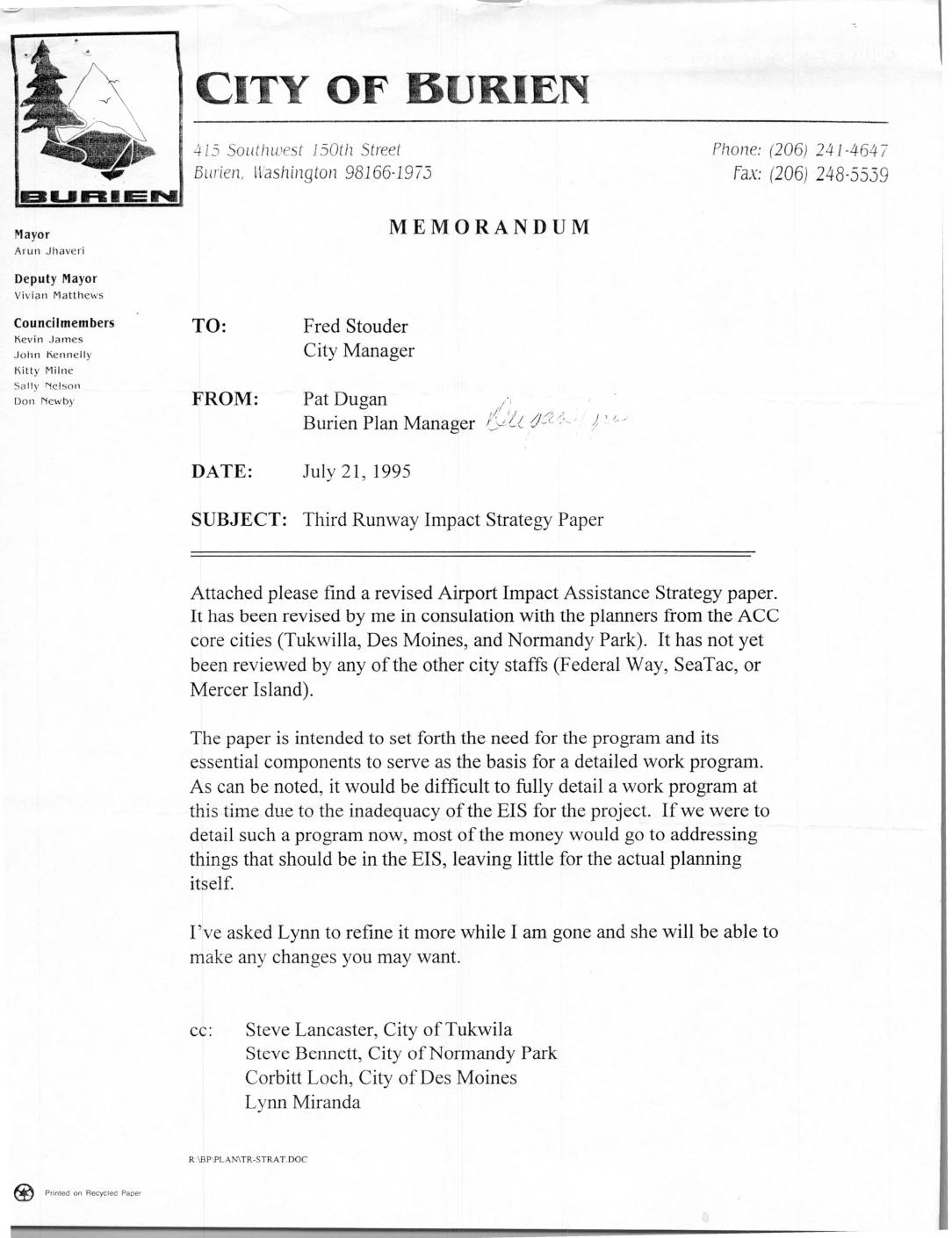 1995-07-21
Airport Impact Assistance Strategy: Work Program Draft, City of Burien
A 1995 City of Burien memorandum and accompanying draft strategy paper outline concerns about the negative impacts of constructing a third runway at Seattle-Tacoma International Airport on surrounding communities, including increased noise, traffic, and neighborhood blight. The document warns that heavy truck traffic, expanded air traffic noise 'shadow,' and construction disruption could drive down property values, destabilize local businesses, and accelerate community deterioration. It calls for proactive planning and mitigation efforts, while criticizing the Environmental Impact Statement (EIS) for inadequately addressing these impacts. -
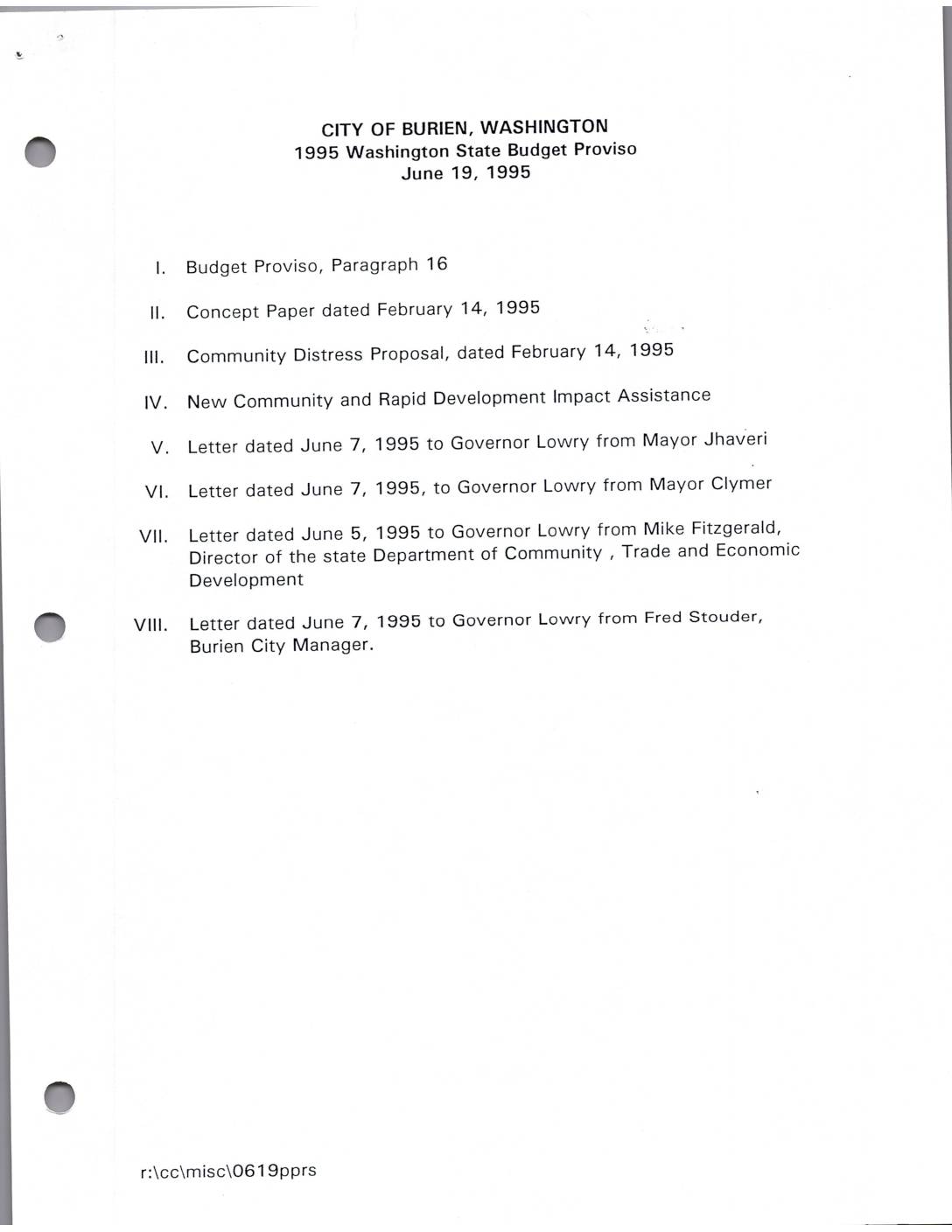 1995-06-19
City of Burien: 1995 Washington State Budget Proviso — Third Runway Impact Assistance
Background material on the 1997 HOK Study. This document packet from City of Burien, Washington dated June 19, 1995, concerns the 1995 Washington State Budget Proviso, Paragraph 16 which appropriated $500,000 of general fund-state funds solely for distribution to the City of Burien for analysis of the proposed Port of Seattle third runway at Sea-Tac -
 1995-04-20
City of Normandy Park letter to Port Of Seattle re: DEIS – Sea-Tac International Airport Hotel
In April 1995, the City of Normandy Park submitted formal comments to the Port of Seattle opposing the proposed Sea-Tac International Airport Hotel, raising concerns that the project would increase traffic congestion and reduce parking availability for local, tax-paying air travelers. The city criticized the Draft Environmental Impact Statement (DEIS) for proposing only 15 new parking spaces to serve a 16-story, 384-room hotel that could generate demand for up to 323 garage spaces at peak periods. The city recommended either no action or a smaller-scale hotel alternative that would fully accommodate its own parking needs without negatively impacting existing airport users. -
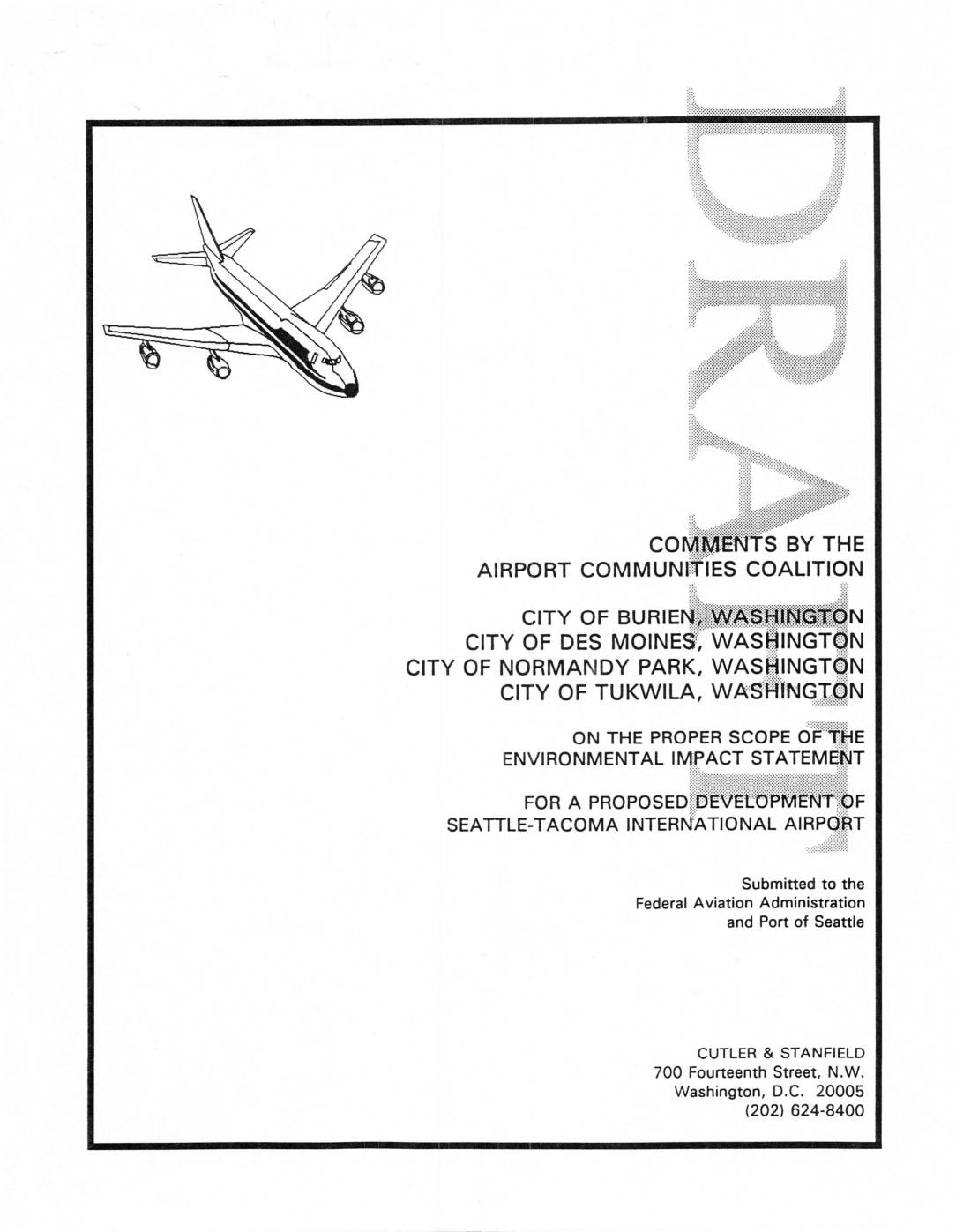 1995-04-01
ACC Comments on the Proper Scope of the Environmental Impact Statement for a Proposed Development of Seattle-Tacoma International Airport
The Airport Communities Coalition, representing the cities of Burien, Des Moines, Normandy Park, and Tukwila, Washington, submitted formal scoping comments to the FAA and Port of Seattle regarding the proper scope of an Environmental Impact Statement for a proposed expansion of Seattle-Tacoma International Airport. The comments address key issues including the purpose and need for the project, the role of Puget Sound Regional Council planning, and the requirement for the FAA to independently fulfill its obligations under the National Environmental Policy Act. The document also calls for the EIS to account for connected and cumulative impacts, including planned land-side facility improvements and the Part 150 Noise Mitigation Program. -
 1995-03-20
Sea-Tac International Airport Hotel draft environmental impact statement
This March 1995 Draft Environmental Impact Statement, prepared by Kato & Warren, Inc. for the Port of Seattle, evaluates the proposed construction of a 16-story, 384-room hotel on a 77,000-square-foot site at Sea-Tac International Airport, located between the 'D' Concourse and the airport entry drives. The hotel, which would include 10,000 square feet of meeting rooms plus a restaurant and lounge, was to be connected to the terminal and parking garage via pedestrian skybridges on land then occupied by a United Airlines office building. The document was issued for public comment under Washington State's Environmental Policy Act (SEPA), with responses due by April 20, 1995. -
 1994-03-01
Port Of Seattle South Aviation Support Area final environmental impact statement
This March 1994 Final Environmental Impact Statement, prepared jointly by the Federal Aviation Administration's Seattle Airports District Office and the Port of Seattle, evaluates the proposed South Aviation Support Area at Seattle-Tacoma International Airport. The document assesses the potential environmental effects of developing aviation support facilities in the southern portion of the airport, covering impacts such as noise, land use, and related concerns. It was produced as part of the federally required environmental review process before any major airport infrastructure decisions could be approved.