TagAir Quality Monitors(111)
-
2020 Washington State Senate Bill 6168 Sec. 603 (42) Indoor Air Quality Study
State Budget (SENATE BILL 6168, Sec. 603) (42) $50,000 of the general fund—state appropriation for fiscal year 2021 is provided solely for the department of environmental and occupational health sciences to provide an air quality report. The report will study the relationship between indoor and outdoor ultrafine particle air quality at sites with vulnerable populations, -
2019-03-01
Priorities
I attended my first StART meeting in a while last night. The first thing I noticed was how ‘official’ it has become. By that I mean, it was sparsely attended, quiet and the attendees were engaged in some very fine-grained the work, mostly on the whole Glide Slope thing. The second half of the meeting -
 2019-01-07
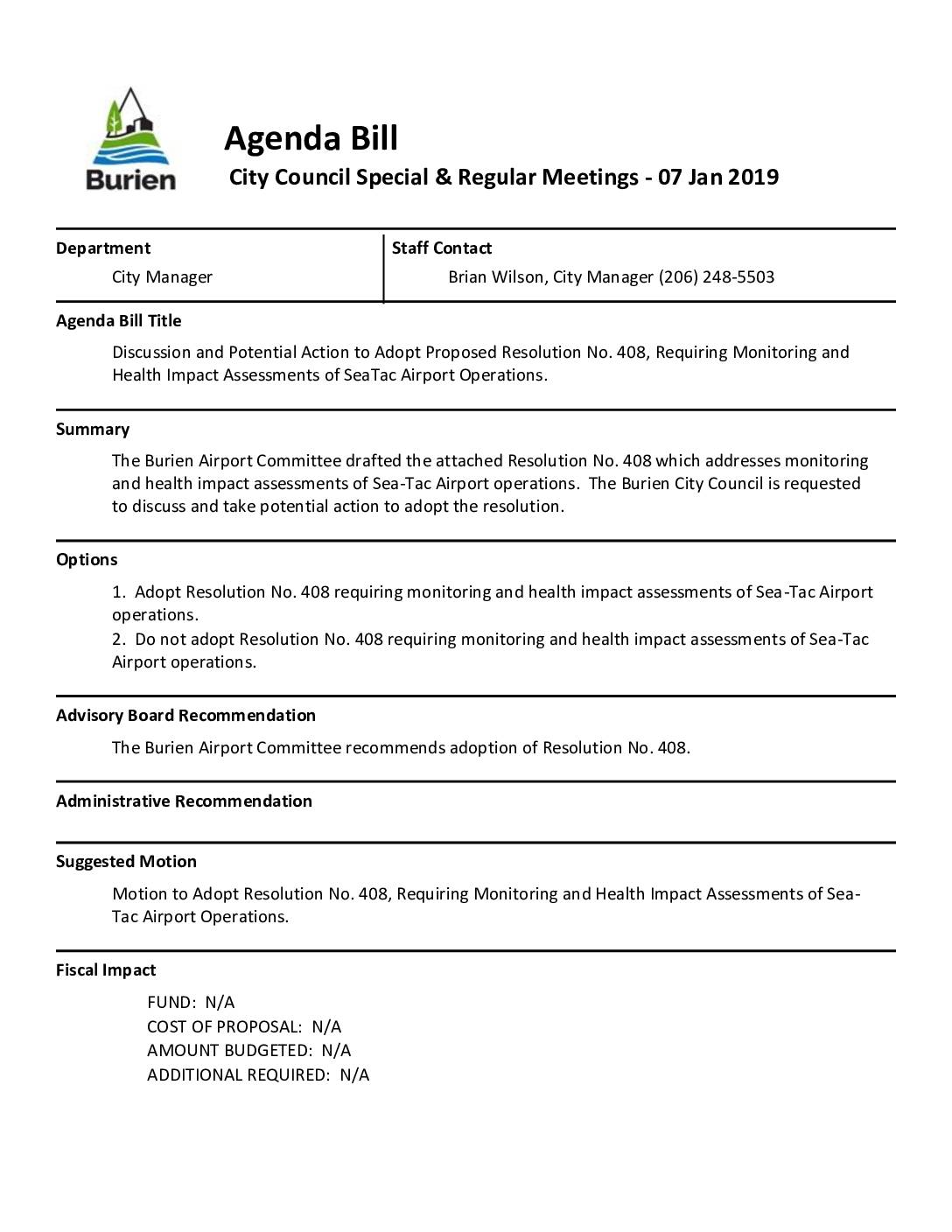
Resolution No. 408 requiring monitoring and health impact assessments of Sea-Tac Airport operations
In January 2019, the City of Burien, Washington considered Resolution No. 408, which called for air quality monitoring and health impact assessments of Sea-Tac Airport operations. The resolution highlighted that air traffic had exceeded the airport's projected levels by over 30% and that no air quality monitors existed near the six closest cities to the airport. The Burien Airport Committee recommended adopting the resolution, citing concerns about residents' exposure to pollutants linked to cancer, cardiovascular disease, and other serious health conditions. -
2017 Washington State Senate Bill 6032 Sec. 602 (19) MOV-UP Study
“$125,000 of the general fund—state appropriation for fiscal year 2018 and $125,000 of the general fund—state appropriation for fiscal year 2019 are provided solely for the University of Washington school of public health to study the air quality implications of air traffic at the international airport in the state that has the highest total annual -
 2017-11-15
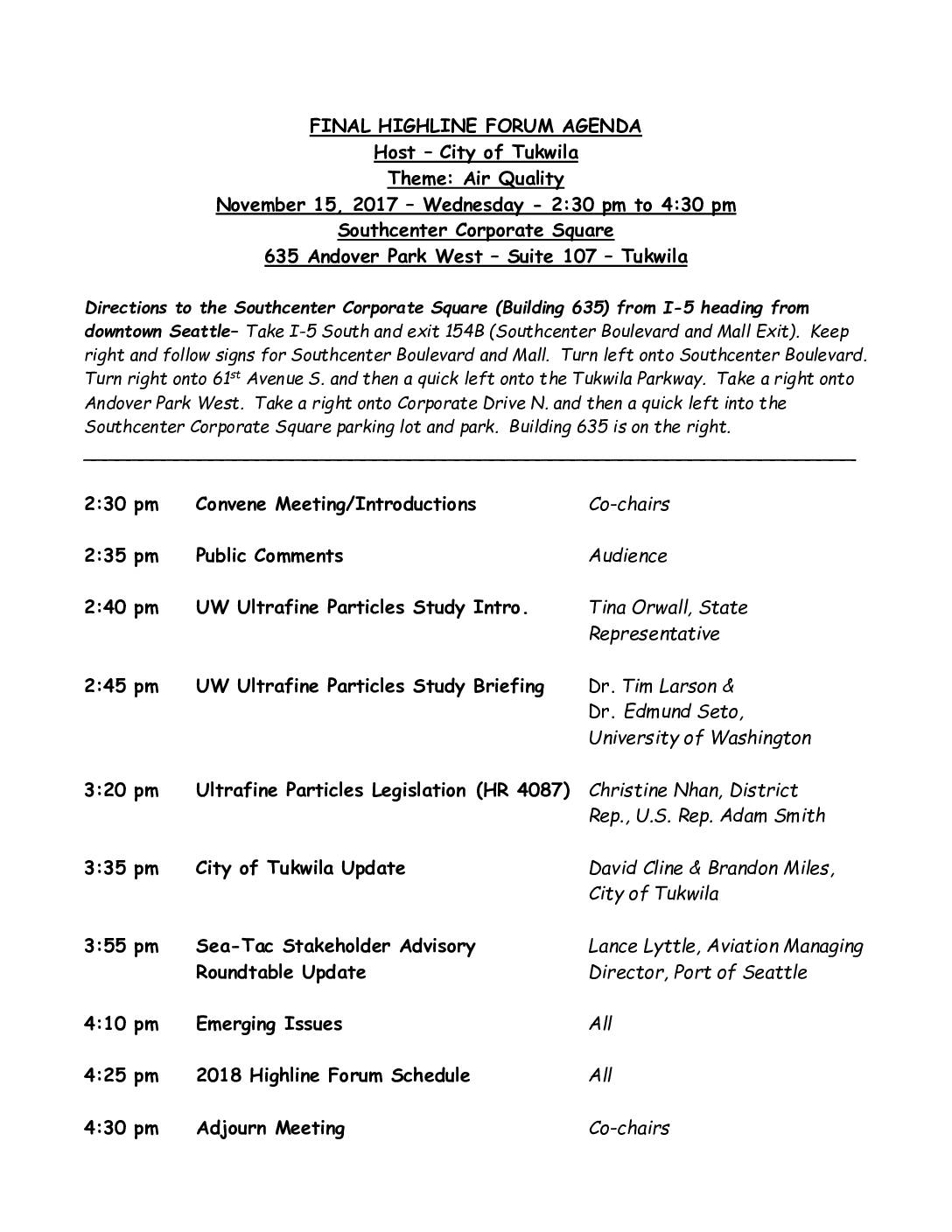
Final Highline Forum agenda: Air quality
The Highline Forum meeting, hosted by the City of Tukwila on November 15, 2017, focused on air quality concerns related to Sea-Tac Airport, featuring a briefing from University of Washington researchers on an ultrafine particles study and a discussion of related federal legislation (HR 4087). The agenda also included updates from the City of Tukwila and the Sea-Tac Stakeholder Advisory Roundtable, presented by Port of Seattle Aviation Managing Director Lance Lyttle. The two-hour session concluded with a discussion of emerging issues and planning for the 2018 Highline Forum schedule. -
 2017-11-15
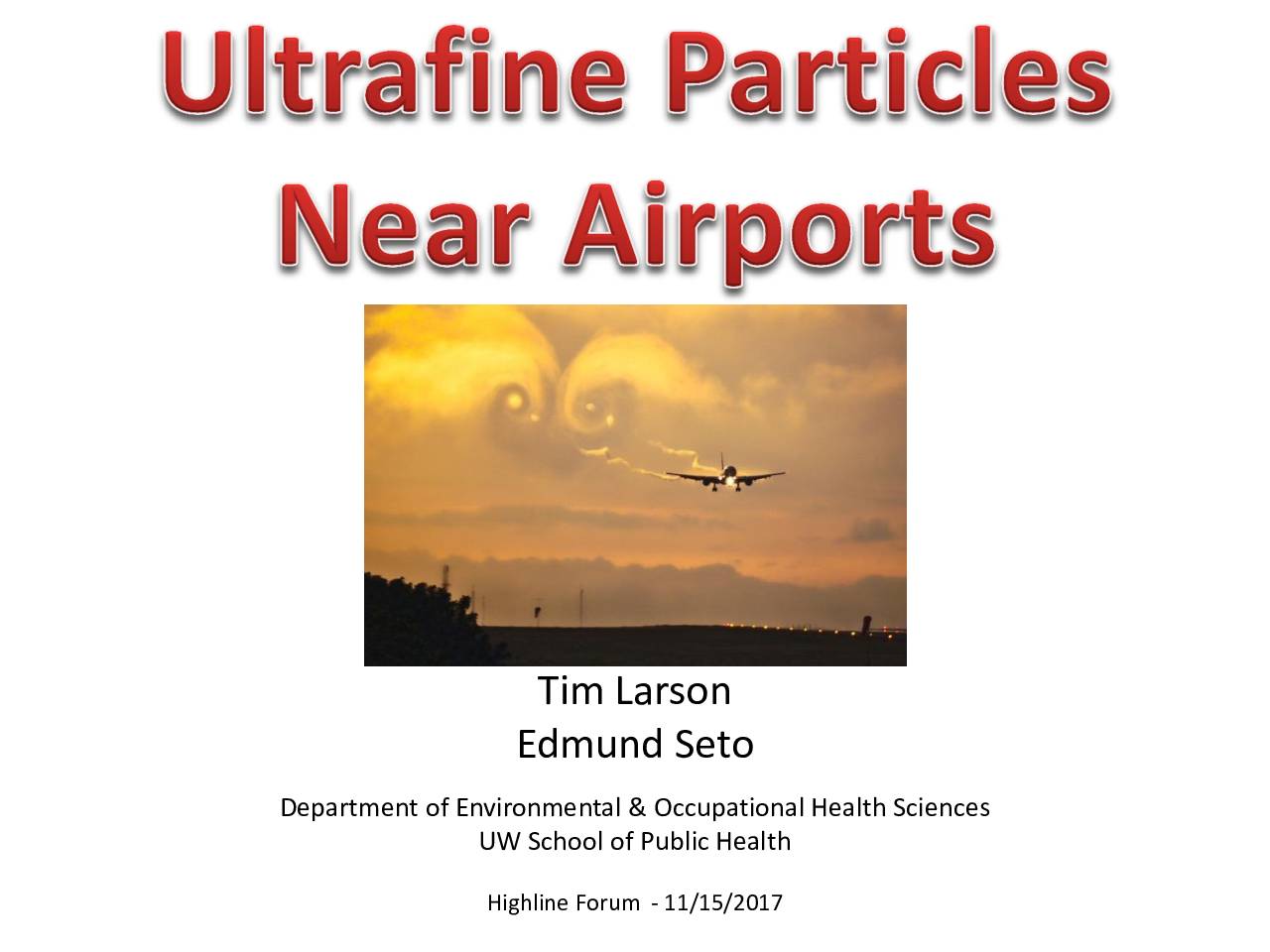
Ultrafine particles near airports
Researchers from the University of Washington School of Public Health were commissioned by Washington State to study ultrafine particle air pollution near Sea-Tac Airport, the busiest international airport in the state. The study, presented in November 2017, required measuring ultrafine particulate matter within ten miles of the airport along flight paths, distinguishing aircraft emissions from other pollution sources, and comparing affected areas to unaffected ones. Findings and recommendations on whether to proceed with a second phase of research were due to the state legislature by December 1, 2019. -
 2017-09-27
Regional air quality briefing: Highline Forum
A September 2017 regional air quality briefing presented by the Puget Sound Clean Air Agency to the Highline Forum covers air pollution sources, trends in south King County, and efforts to improve air quality in the region. The presentation also introduces an upcoming University of Washington study on ultrafine particle pollution, which is particularly relevant to communities near high-traffic corridors. The agency's vision emphasizes clean and healthy air for all residents regardless of socioeconomic status or location, covering four counties: King, Pierce, Snohomish, and Kitsap. -
 2017-07-26
Air Quality Initiatives at Sea-Tac Airport
This July 2017 presentation by Port of Seattle Sustainability Manager Leslie Stanton outlines air quality initiatives at Seattle-Tacoma International Airport, covering the types and sources of air pollution, the Port's environmental goals, and efforts to reduce emissions. It highlights that while the Port has limited regulatory authority, it is pursuing innovative programs with multiple benefits and tracking emerging science around ultrafine particulates and particulate matter reductions tied to climate strategies. The document serves as an overview of Sea-Tac's approach to managing and improving local air quality amid growing aviation activity. -
 2015-07-01
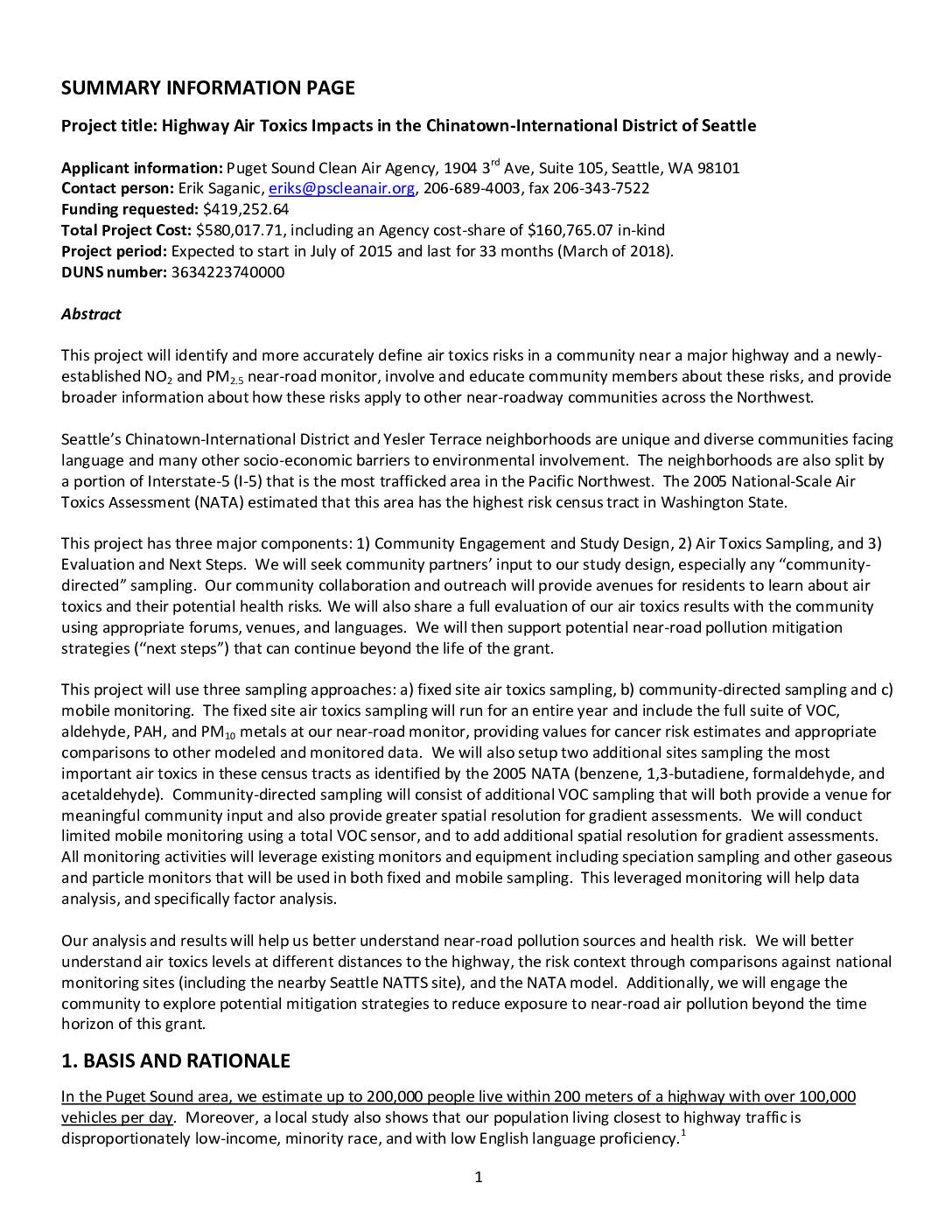
Highway Air Toxics Impacts in the Chinatown-International District of Seattle
This document describes a 2015–2018 air quality research project by the Puget Sound Clean Air Agency focused on measuring highway-related air toxics near Interstate 5 in Seattle's Chinatown-International District and Yesler Terrace neighborhoods. The study aimed to assess cancer risks from pollutants such as benzene, formaldehyde, and diesel particulate matter in communities identified as among the most environmentally and economically vulnerable in Washington State. While not directly related to Sea-Tac Airport noise policy, the project represents regional efforts to address transportation-related environmental health impacts on minority and low-income communities in the greater Puget Sound area. -
2015-03-12
Harbor Communities Monitoring Study
This page last reviewed March 12, 2015 This website contains information pertaining to the Harbor Communities Monitoring Study (HCMS), conducted to characterize air quality in the communities of the greater Wilmington area. The air pollution measurement phase occurred during 2007. The primary goal of this study is to characterize the spatial variations in air