TagACC(1531)
-
 2001-07-18
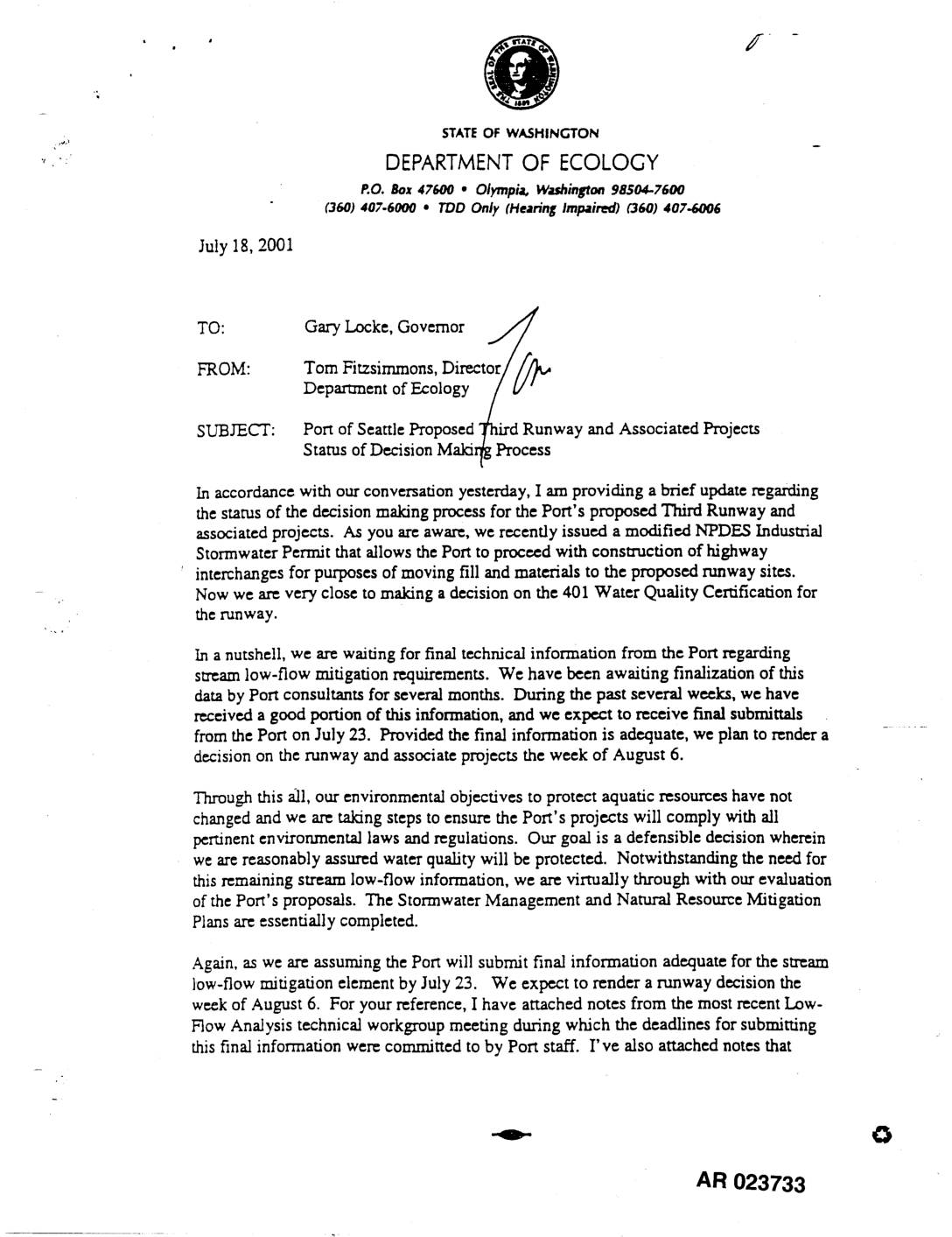
EXH AR023733: Ecology Memo to Gov. Locke – Third Runway 401 WQ Certification Status
In a July 18, 2001 memo to Governor Gary Locke, Washington State Department of Ecology Director Tom Fitzsimmons provided an update on the permitting process for the Port of Seattle's proposed Third Runway at Sea-Tac Airport. The department was awaiting final technical data from the Port on stream low-flow mitigation, expected by July 23, 2001, before issuing a 401 Water Quality Certification decision. Provided the information was satisfactory, Ecology planned to render a final decision on the runway project during the week of August 6, 2001. -
 2001-07-17
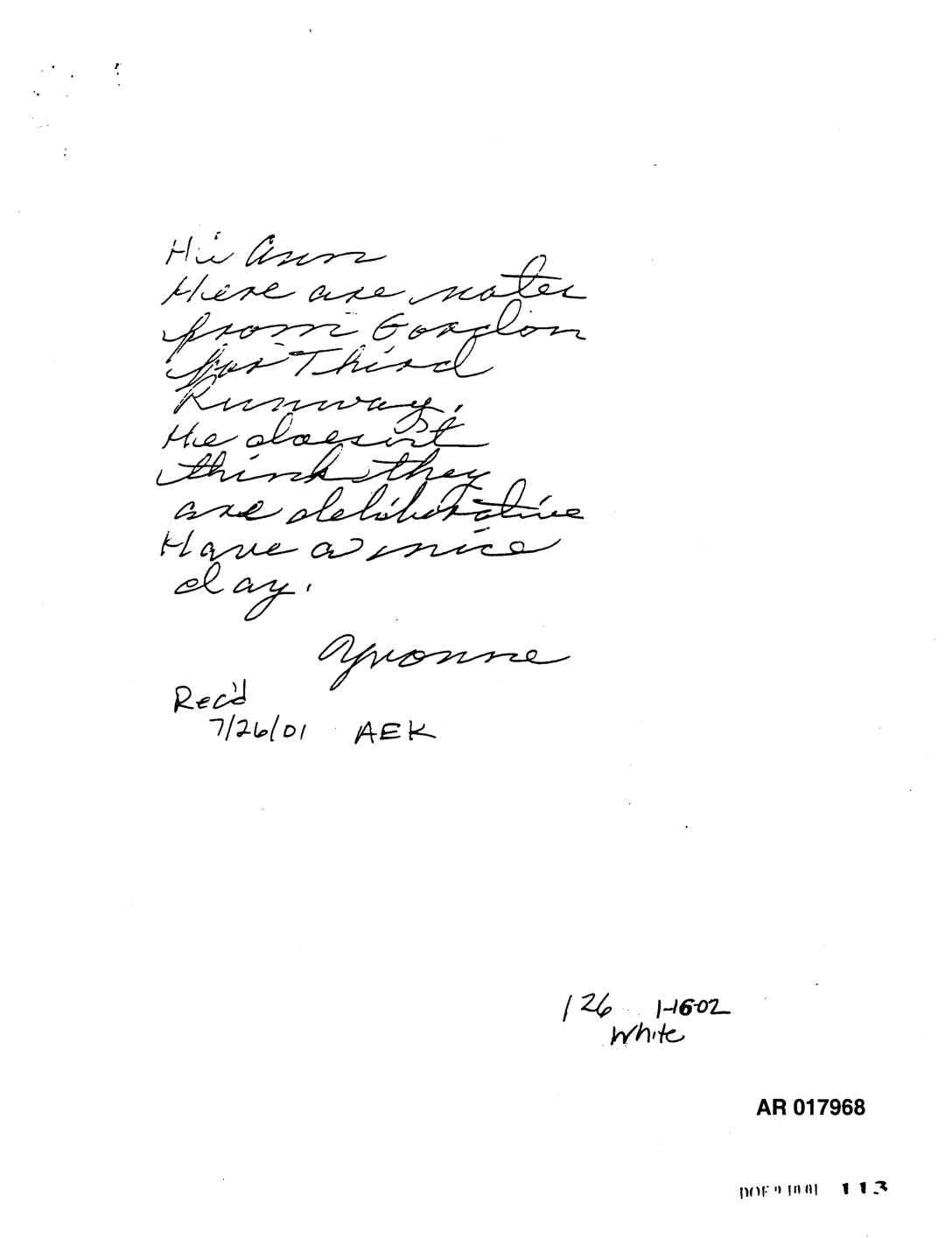
EXH AR017968: Handwritten Notes from Yvonne — Third Runway SMP/Low Flow Status Meeting, 7/17/01
Handwritten note from Yvonne to ‘Azura’ transmitting notes from Gordon regarding the Third Runway, noting he does not think they are deliberative. Also includes meeting notes dated 7/17/01 at 10pm for a Third Runway Project Update attended by Ann K, Ray H, John M, Kevin F, Tania Sorenson, Kelly Whittig. Notes cover SMP/Low Flow status: -
 2001-07-16
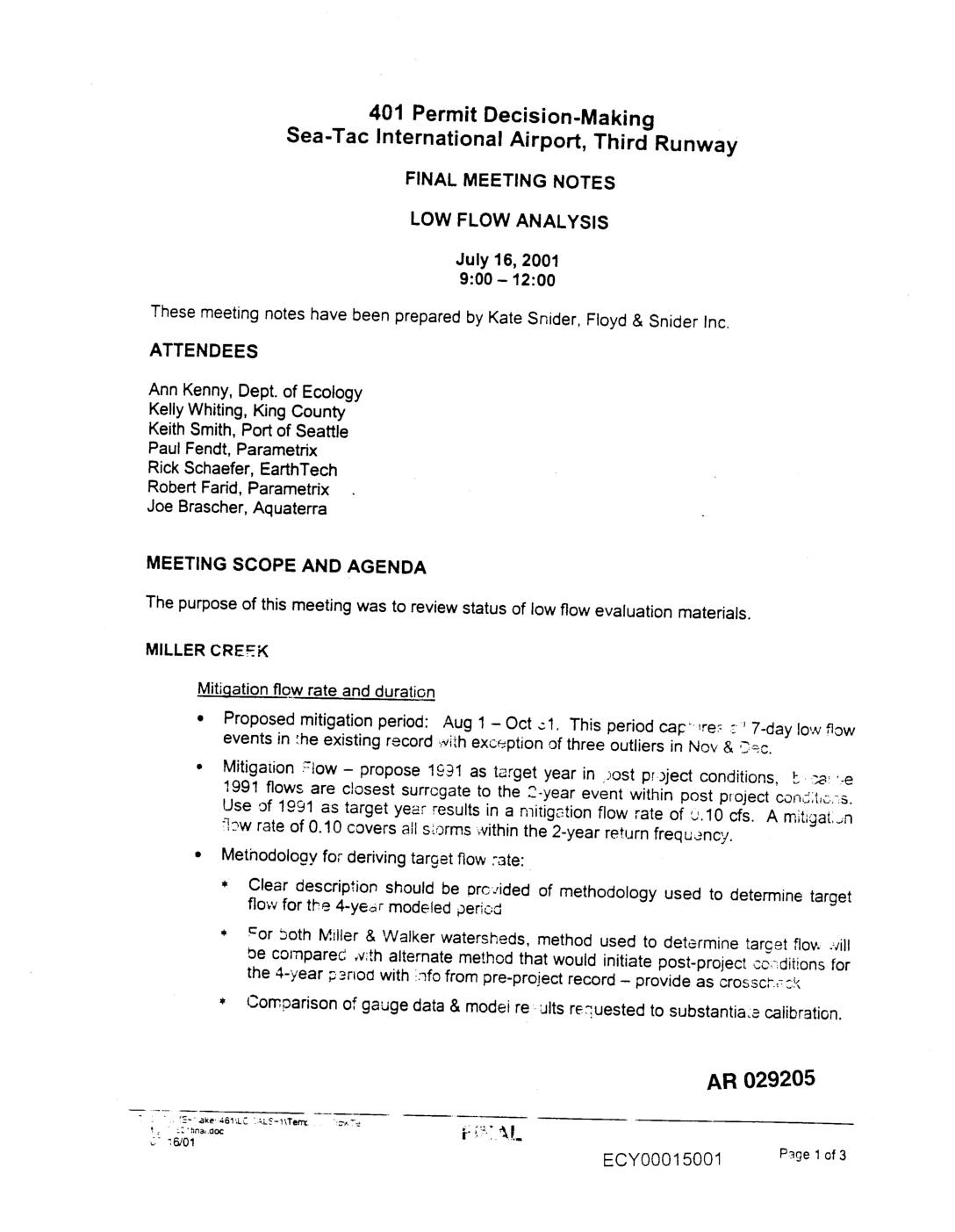
EXH AR029205: 401 Permit Decision-Making Sea-Tac International Airport Third Runway — Final Meeting Notes, Low Flow Analysis
Final meeting notes prepared by Kate Snider of Floyd & Snider Inc. for the 401 Permit Decision-Making process for the Sea-Tac International Airport Third Runway project, dated July 16, 2001. Attendees included representatives from Washington State Department of Ecology (Ann Kenny), King County (Kelly Whiting), Port of Seattle (Keith Smith), Parametrix, EarthTech, and Aquaterra. Document -
 2001-07-16
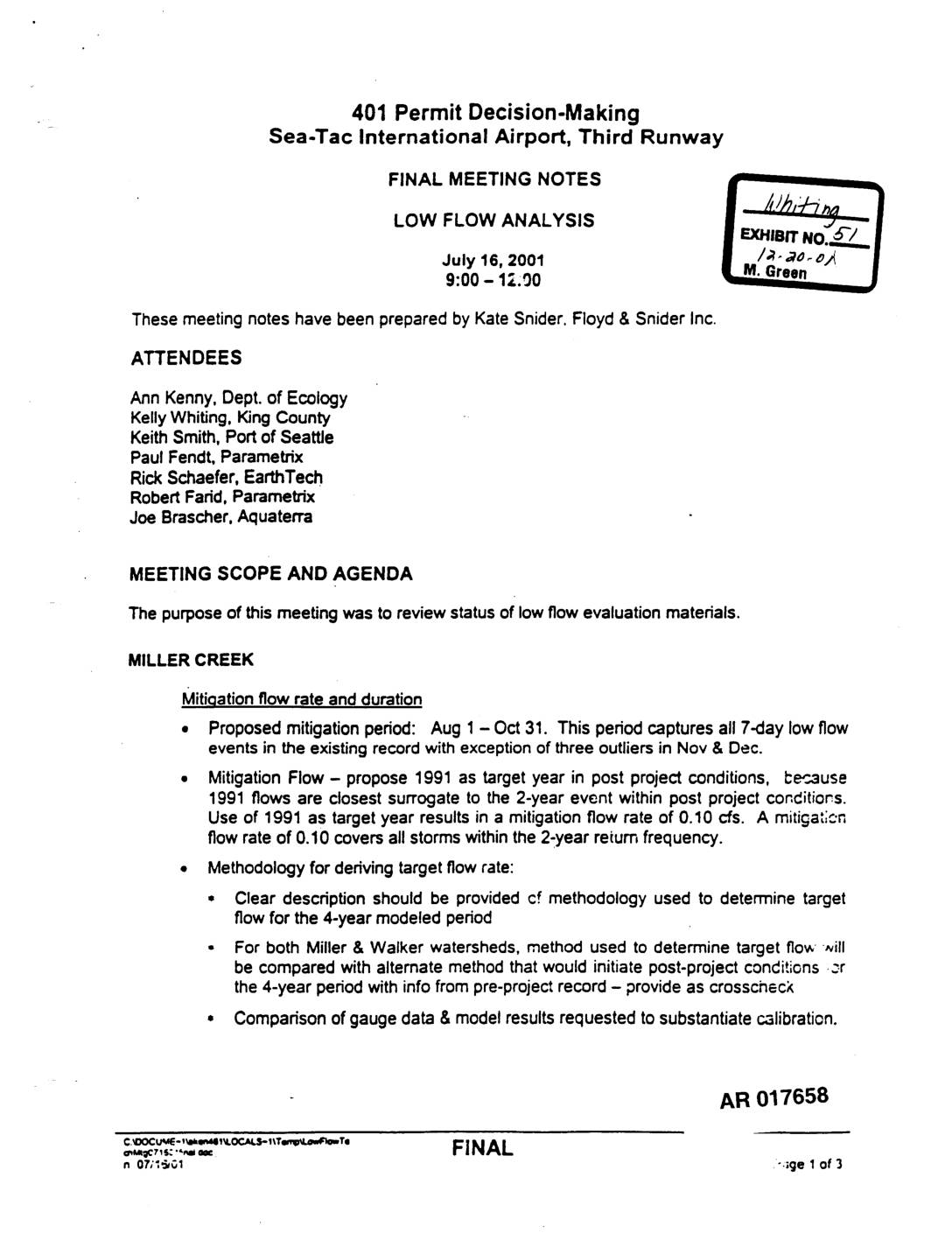
Exhibit 51: 401 Permit Decision-Making, Sea-Tac Airport Third Runway — Final Meeting Notes, Low Flow Analysis
Final meeting notes from July 16, 2001 for the 401 Permit Decision-Making process for Sea-Tac International Airport Third Runway, covering low flow analysis for Miller Creek and Walker Creek. Attendees included Ann Kenny (Dept. of Ecology), Kelly Whiting (King County), Keith Smith (Port of Seattle), Paul Fendt and Robert Farid (Parametrix), Rick Schaefer (EarthTech), and -
 2001-07-13
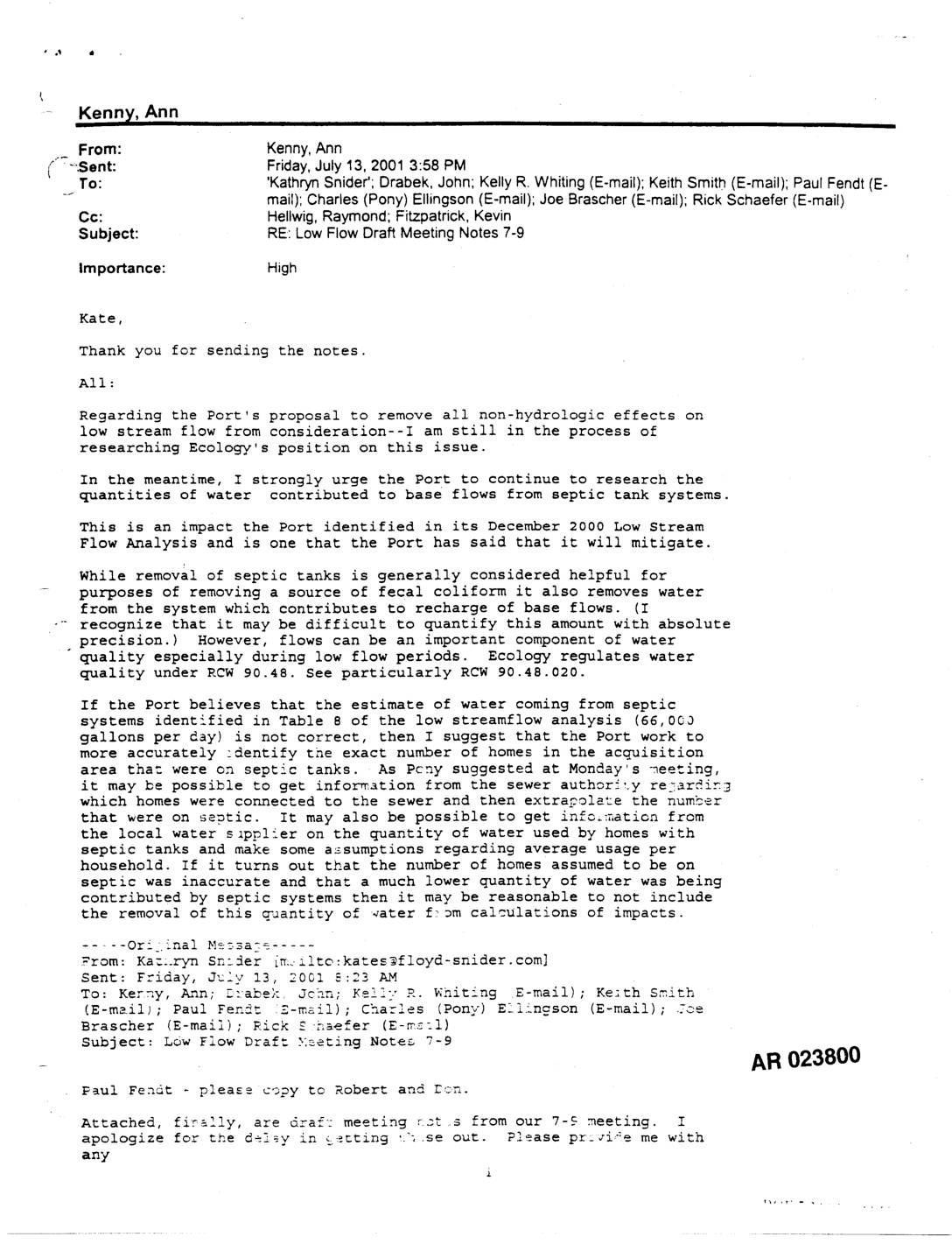
EXH AR023800: Email from Ann Kenny (Ecology) Re: Low Flow Draft Meeting Notes 7-9 — Septic Tank Impacts on Base Stream Flows
In a July 13, 2001 email, Ann Kenny of Washington State Department of Ecology urged the Port of Seattle to continue researching the water quantities contributed to base stream flows by septic tank systems slated for removal in the airport acquisition area. She noted that while eliminating septic tanks helps reduce fecal coliform contamination, it also removes water that recharges base flows — a water quality concern regulated under RCW 90.48. Kenny suggested the Port work to verify the accuracy of a 66,000-gallons-per-day estimate from its December 2000 Low Stream Flow Analysis by cross-referencing sewer authority and water supplier records. -
 2001-07-12
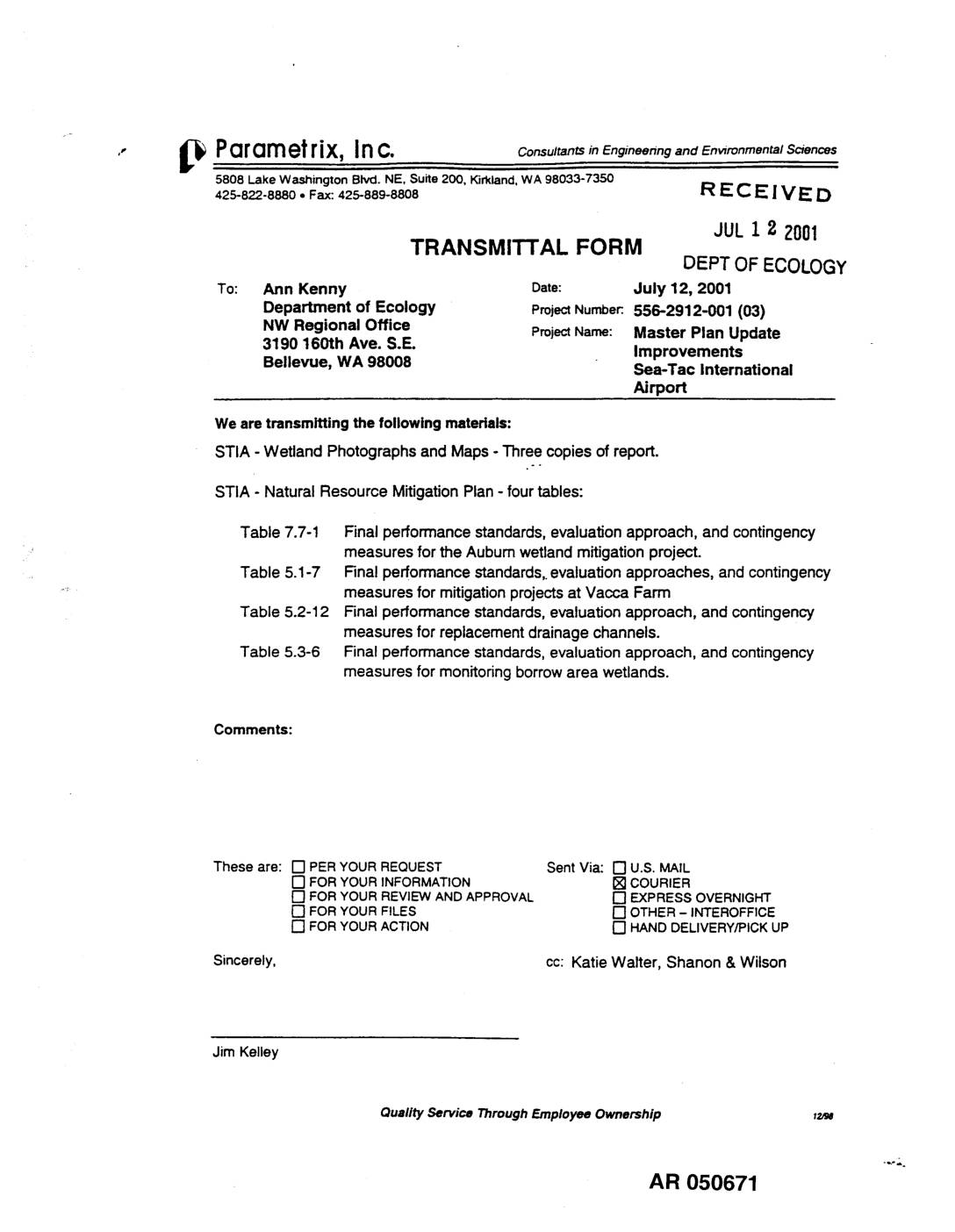
EXH AR050671: Transmittal Form — STIA Natural Resource Mitigation Plan Tables and Wetland Photographs, Parametrix to Ecology
Transmittal form dated July 12, 2001 from Jim Kelley at Parametrix, Inc. (Kirkland, WA) to Ann Kenny at Washington Department of Ecology NW Regional Office (Bellevue, WA), project number 556-2912-001 (03), transmitting materials for the Sea-Tac International Airport Master Plan Update Improvements. Materials include three copies of STIA Wetland Photographs and Maps report, and four -
 2001-07-11
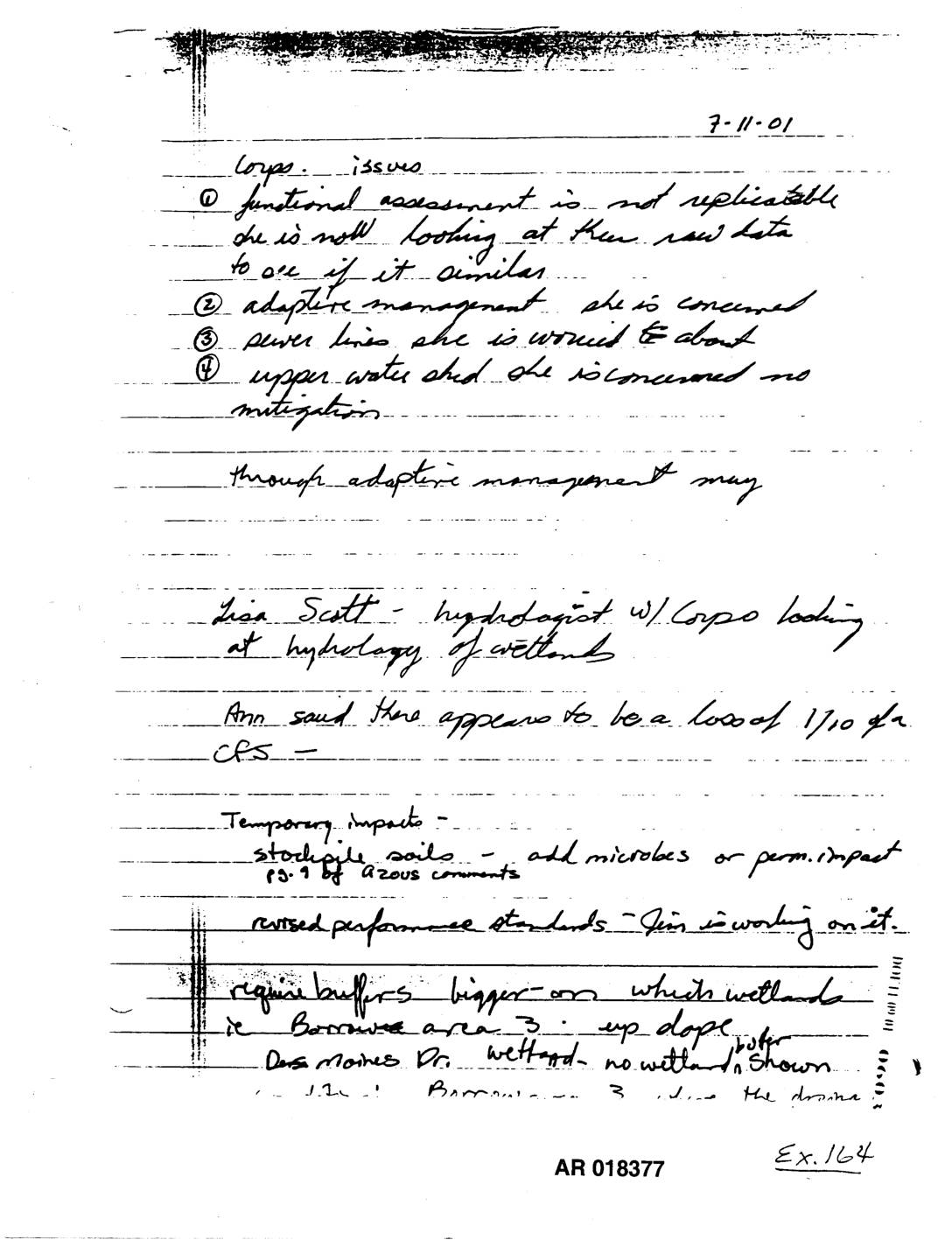
Exhibit 164: Handwritten Notes on Corps Issues — Wetlands Hydrology, Adaptive Management, Des Moines
Handwritten meeting notes dated 7-11-01 (AR 018377, Exhibit 164) regarding Army Corps of Engineers issues with wetland functional assessment, hydrology (Lisa Scott, Corps hydrologist), adaptive management, sewer lines, upper water shed mitigation, and Des Moines Dr. wetland. Notes reference a loss of 1/10 CFS, temporary impacts from stockpile soils and microbes, revised performance standards, buffer -
 2001-07-10
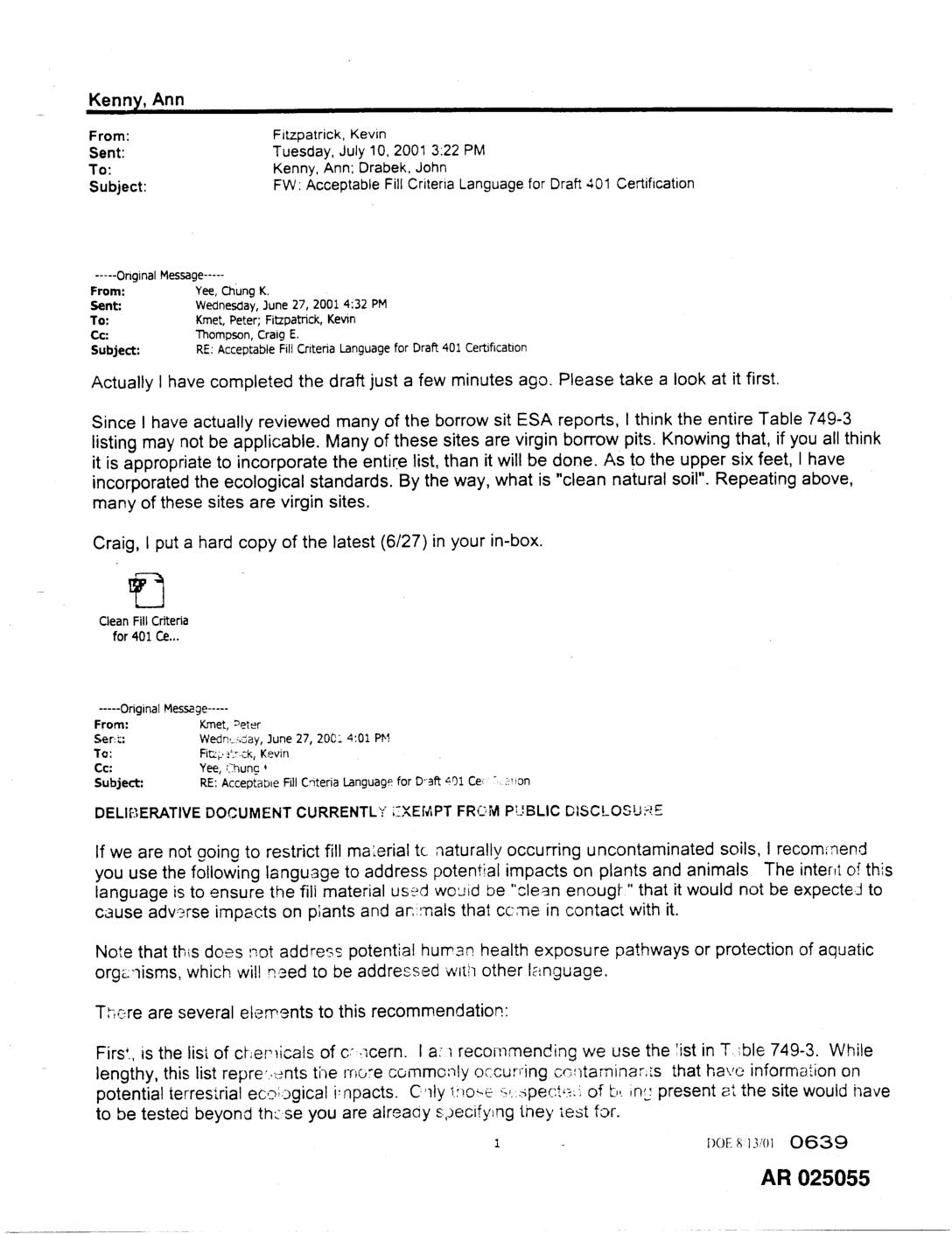
EXH AR025055: Email Chain — Acceptable Fill Criteria Language Draft 401 Certification STIA Third Runway
This document is an email chain from June-July 2001 between Washington State Department of Ecology staff discussing acceptable fill material criteria for the Seattle-Tacoma International Airport Third Runway project. Officials debated whether to restrict fill to naturally occurring uncontaminated soils or to allow other materials subject to contamination testing standards, with recommendations including requiring the top six feet of fill to be clean natural soil and using Table 749-3 screening values to protect plants and animals. The discussion also addressed whether the state's Model Toxics Control Act (MTCA) standards should apply, including requirements for contaminant testing, groundwater monitoring, and terrestrial ecological evaluation. -
 2001-07-09
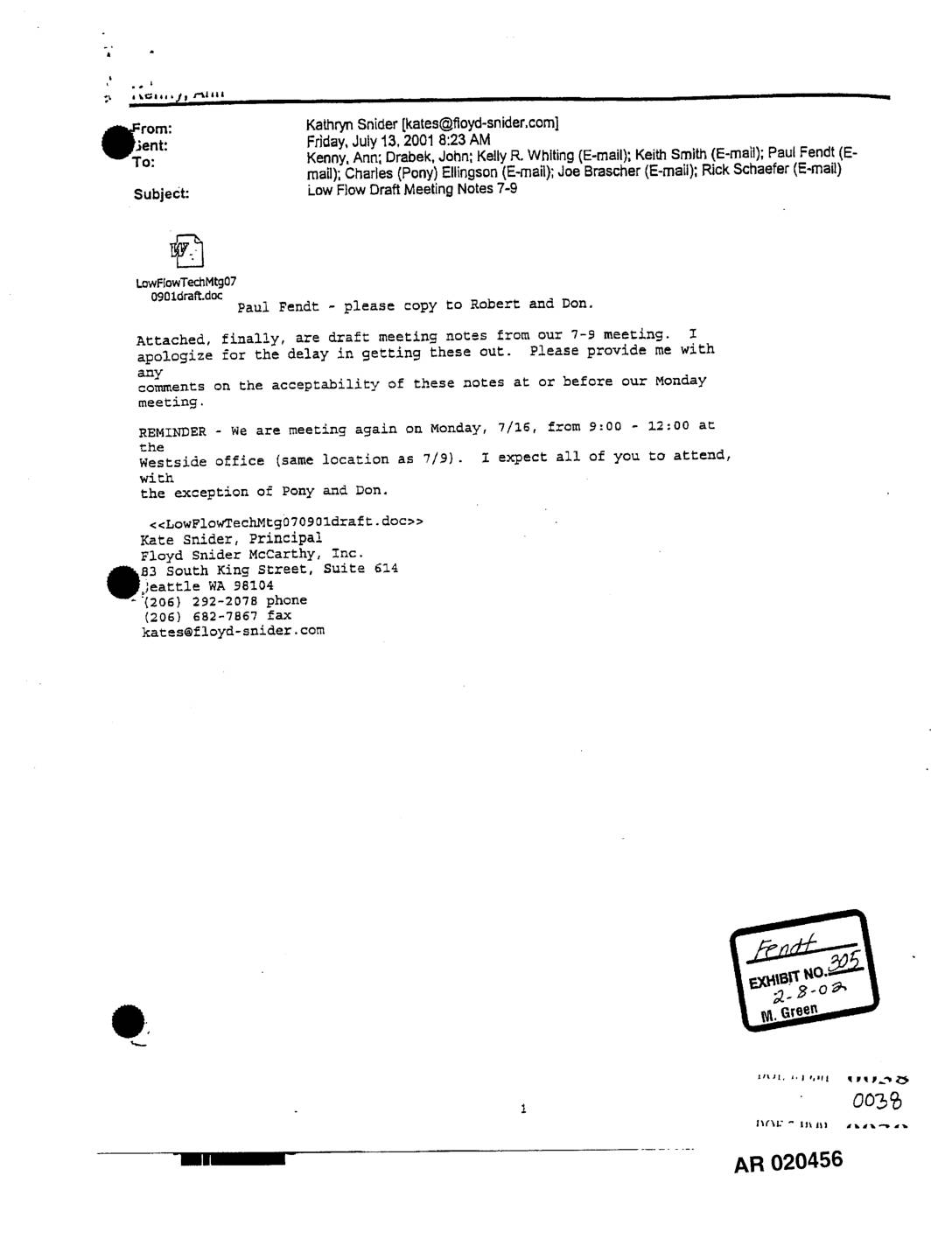
EXH AR020456: Draft Meeting Notes – Low Flow Analysis, STIA Third Runway 401 Permit, July 9, 2001
These draft meeting notes from a July 9, 2001 technical meeting cover low flow analysis related to the 401 Permit decision-making process for Sea-Tac International Airport's Third Runway project. Attendees from the Department of Ecology, King County, Port of Seattle, and several consulting firms discussed methods for determining low stream flow impacts and mitigation requirements across affected watersheds. Key topics included biological effects on fish habitat, a proposed 0.1 cfs mitigation flow for the Des Moines Watershed, and the use of 2-year 7-day low flow rates to guide mitigation planning. -
 2001-07-09
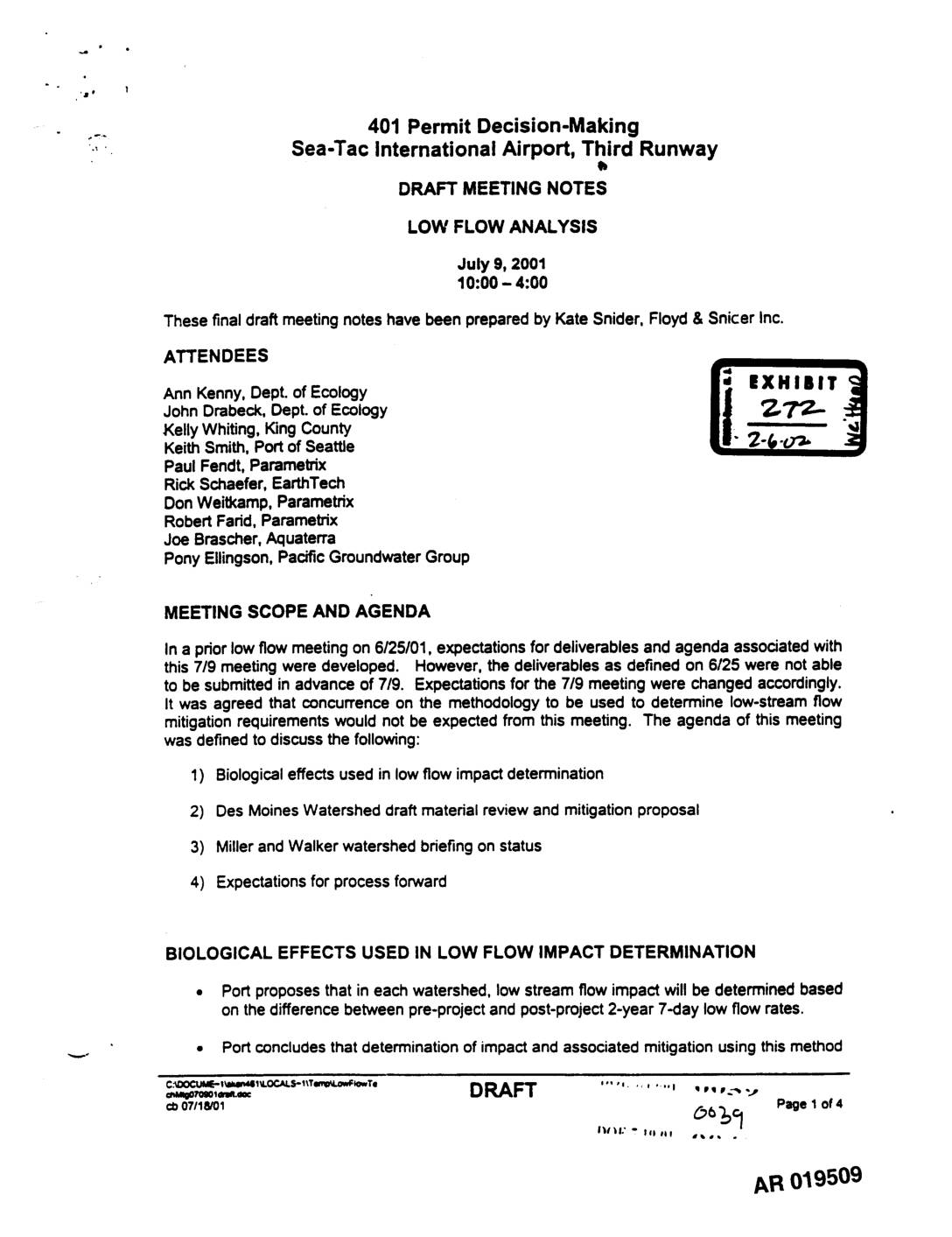
EXH 272: Draft Meeting Notes — Low Flow Analysis, 401 Permit Decision-Making, STIA Third Runway (July 9, 2001)
These draft meeting notes from July 9, 2001 document a technical working session between the Port of Seattle, Washington Department of Ecology, and King County regarding low stream flow analysis for the Sea-Tac International Airport Third Runway project. The group discussed methods for determining low flow impacts on fish habitat, reviewed a mitigation proposal for the Des Moines Watershed involving a 0.1 cfs compensatory flow release from July 24 through October 24, and received a status briefing on the Miller and Walker watershed analyses. Key topics included the use of 2-year 7-day low flow rates to calculate mitigation requirements, reserve vault sizing, and how to handle non-hydrologic effects such as water rights removal and septic system impacts in the property acquisition area.