TagACC(1531)
-
 2001-07-01
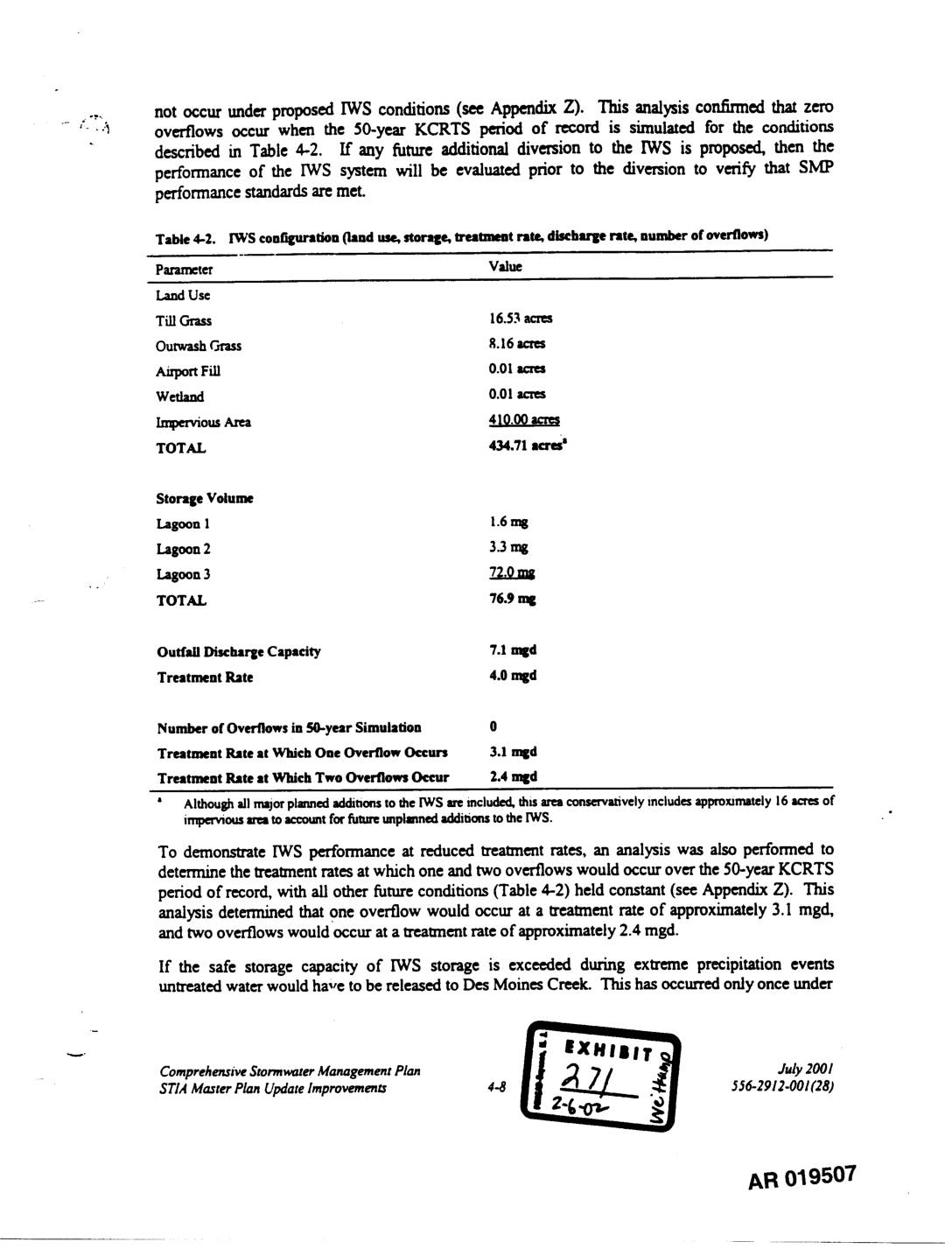
EXH 271: Comprehensive Stormwater Management Plan — IWS Config & Overflow Analysis (Table 4-2)
This document describes the Integrated Water System (IWS) stormwater management configuration at Seattle-Tacoma International Airport (Sea-Tac), detailing storage lagoons totaling 76.9 million gallons and a treatment rate of 4.0 million gallons per day across approximately 435 acres. Simulations over a 50-year period confirmed zero overflow events under proposed conditions, with overflows only beginning to occur if treatment rates dropped below 3.1 million gallons per day. The system experienced only one historical overflow during an extreme rain-on-snow event in December 1996–January 1997, with no petroleum hydrocarbons detected downstream. -
 2001-07-01
EXH AR010824: Port Of Seattle Memo Opposing ACC’s Motion for Stay — Declaration of Paul S. Fendt, Volume 2 of 3 (SMP Volume 3)
Port Of Seattle memo opposing Airport Communities Coalition (ACC) motion for stay in PCHB No. 01-133, Volume 2 of 3, containing Declaration of Paul S. Fendt and SMP Volume 3 materials. Includes preface to the Comprehensive Stormwater Management Plan (SMP) for Seattle-Tacoma International Airport Master Plan Update Improvements, July 2001, with replacement pages developed in -
 2001-07-01
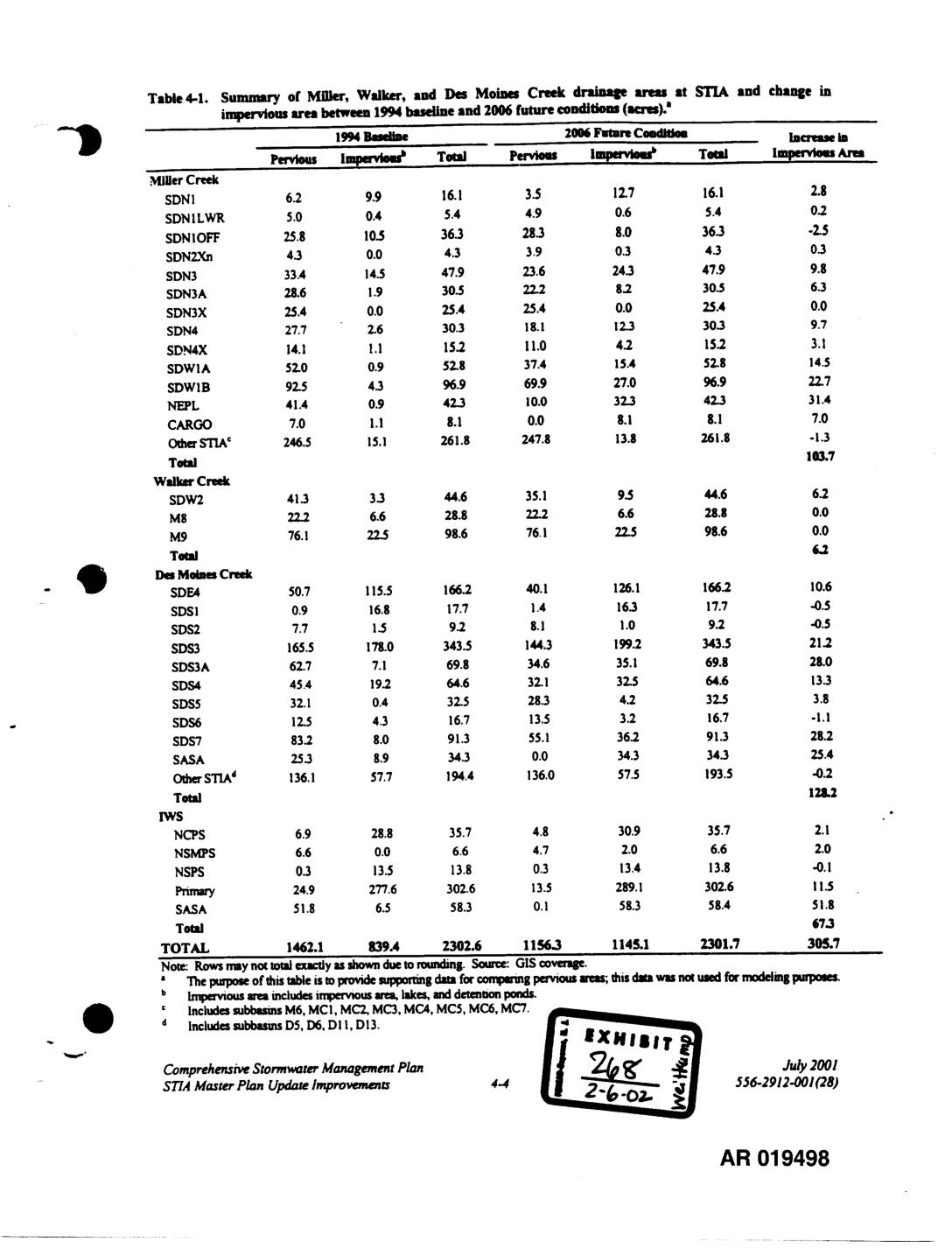
EXH 268: Summary Table Miller Creek, Walker Creek, Des Moines Creek Drainage Areas STIA Impervious Area Change 1994 Baseline vs 2006 Future Conditions
This table from a July 2001 Comprehensive Stormwater Management Plan summarizes drainage area measurements and changes in impervious surfaces (such as pavement and rooftops) across Miller Creek, Walker Creek, and Des Moines Creek watersheds at Seattle-Tacoma International Airport (STIA). It compares 1994 baseline conditions to projected 2006 future conditions, showing a total increase of approximately 305.7 acres of impervious area across all drainage basins. The data was compiled from GIS coverage to support stormwater management planning for the airport's master plan update. -
 2001-07-01
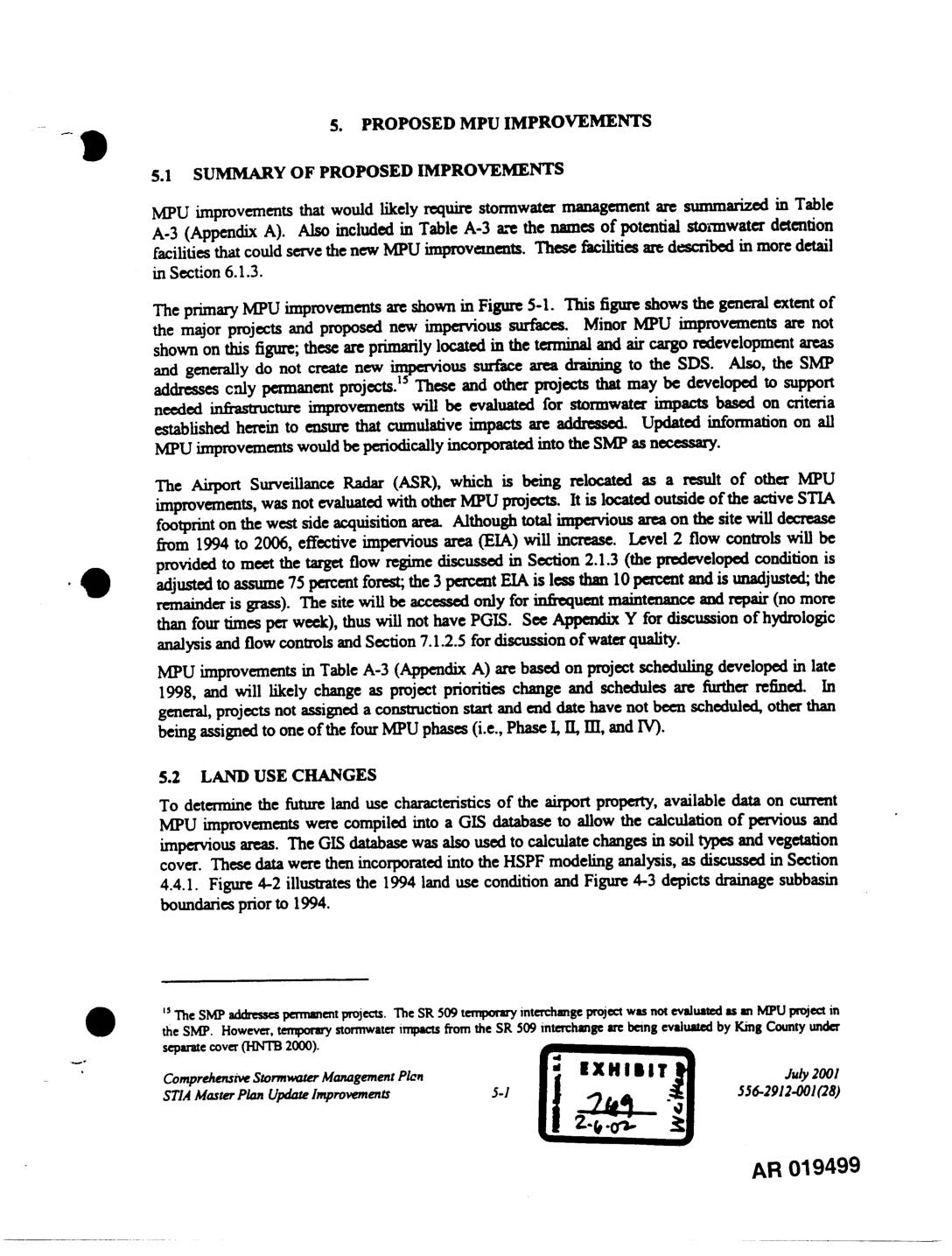
EXH AR019499: Proposed MPU Improvements — STIA Comprehensive Stormwater Mgmt Plan §5
This section of Sea-Tac International Airport's Comprehensive Stormwater Management Plan outlines proposed Master Plan Update (MPU) improvements and their likely stormwater management requirements. It describes how land use changes — including increases in impervious surfaces across various airport development phases — were analyzed using GIS and hydrologic modeling to assess drainage impacts. The document also notes that projects such as the relocated Airport Surveillance Radar required specific flow controls to manage stormwater runoff on the west side acquisition area. -
 2001-06-28
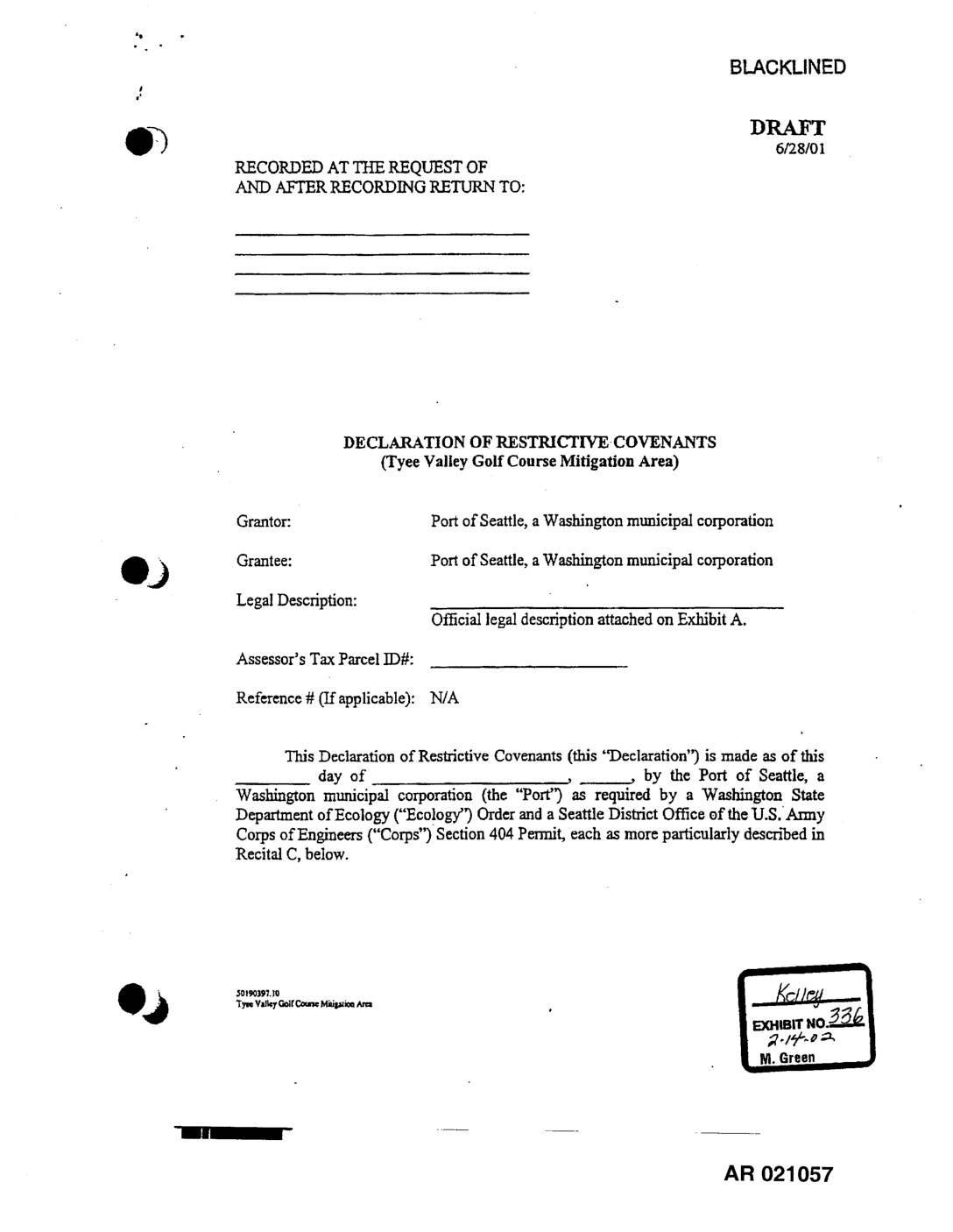
EXH AR021057: Declaration of Restrictive Covenants — Tyee Valley Golf Course Mitigation Area
The Port of Seattle recorded this Declaration of Restrictive Covenants to permanently protect the Tyee Valley Golf Course Mitigation Area as a natural wetland, as required by the Washington State Department of Ecology and the U.S. Army Corps of Engineers in connection with the construction of Sea-Tac Airport's third runway. The declaration prohibits clearing, grading, filling, and construction within the mitigation area, with limited exceptions for approved wildlife management, monitoring, maintenance, and stormwater infrastructure. It was established to satisfy federal Clean Water Act requirements and state water quality standards by preserving and enhancing wetland and riparian habitat displaced by airport expansion. -
 2001-06-28
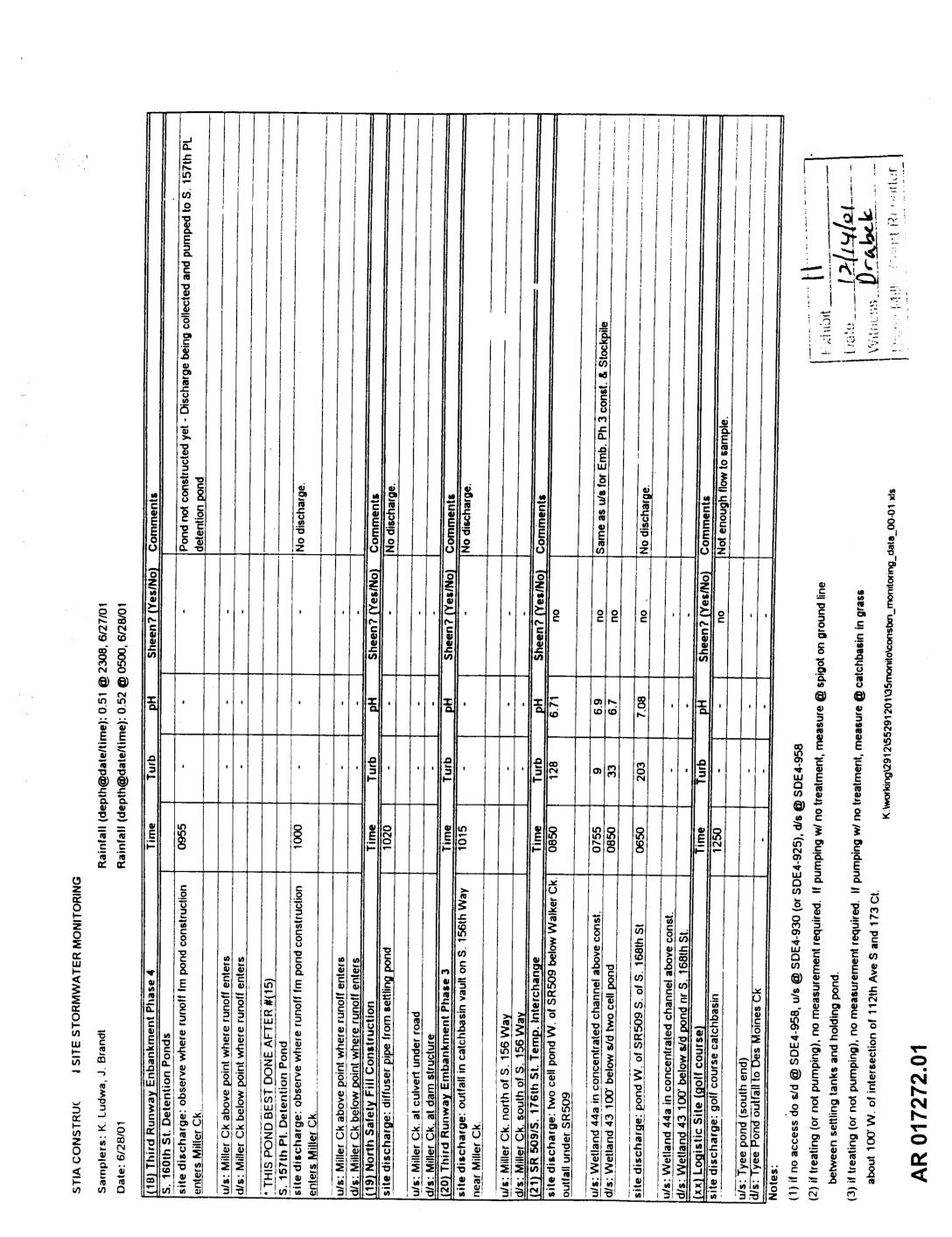
EXH AR017272: STIA Construction Site Stormwater Monitoring Report
STIA construction site stormwater monitoring report dated 6/28/01, sampled by K. Ludwa and J. Brandt. Documents monitoring of multiple construction sites including Third Runway Embankment Phase 4, S. 160th St. Detention Ponds, S. 157th Pl. Detention Pond, North Safety Fill Construction, Third Runway Embankment Phase 3, North Runway Embankment Phase 3, Wetland 44a, Lonistic Site -
 2001-06-28
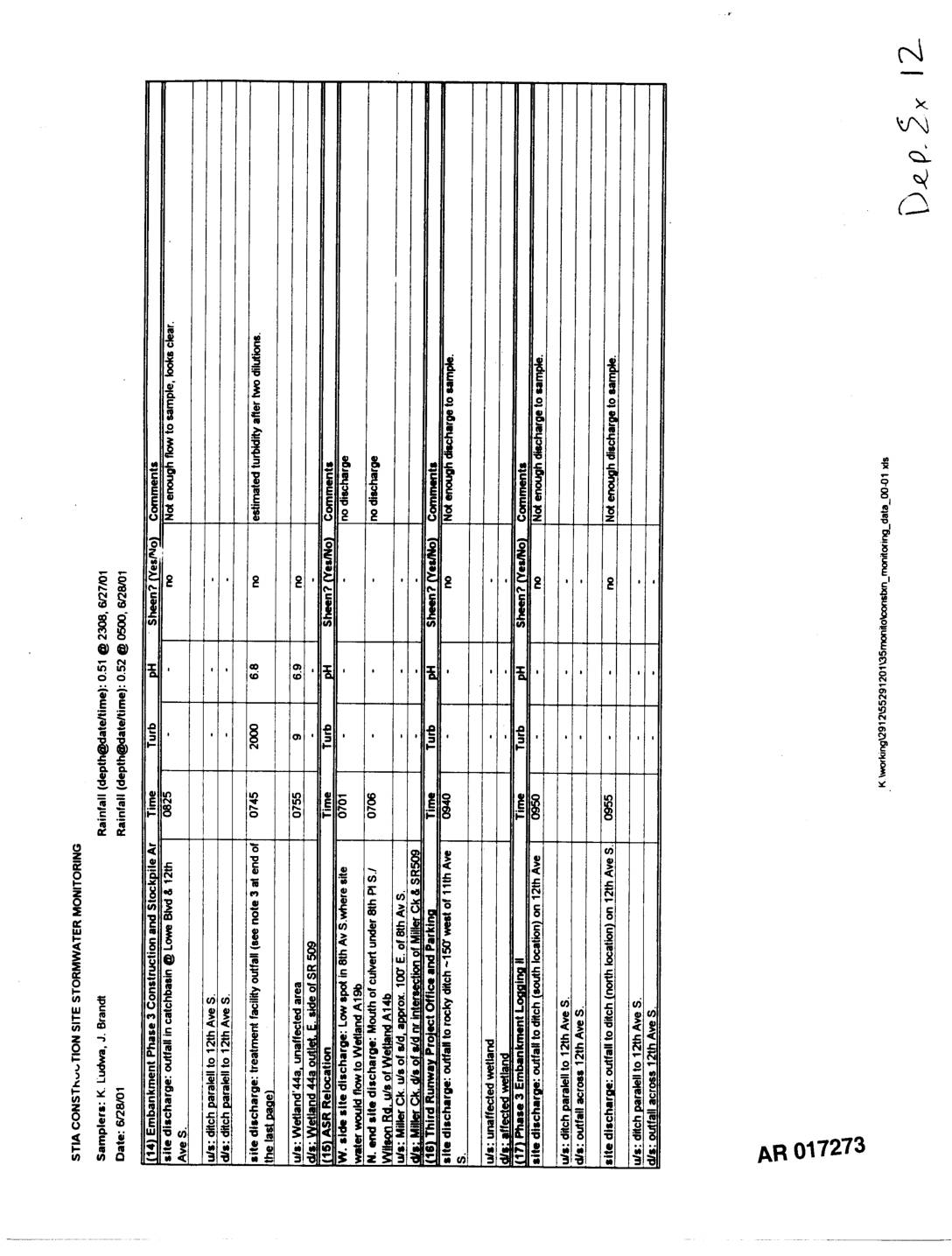
EXH AR017273: STIA Construction Site Stormwater Monitoring Report, 6/28/01
STIA construction site stormwater monitoring log dated 6/28/2001, samplers K. Ludwa and J. Brandt. Documents field observations for Phase 3 Embankment Construction, ASR Relocation, and Third Runway Project Office and Parking areas near Lowe Blvd & 12th Ave S, 8th Ave S, Miller Creek, SR509, Wilson Rd, and 12th Ave S. Records pH, turbidity, sheen -
 2001-06-27
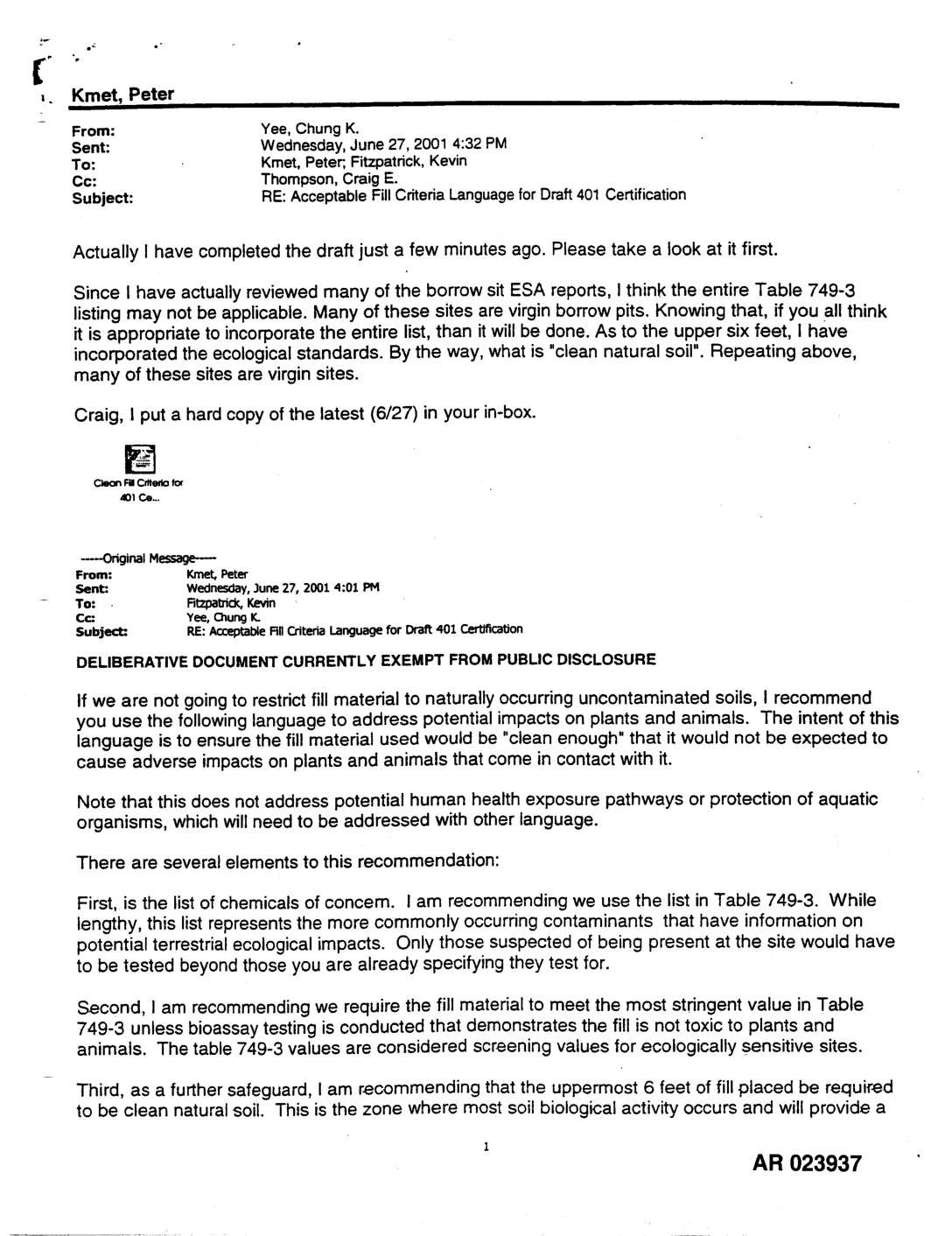
EXH AR023937: Email Chain — Acceptable Fill Criteria Language Draft 401 Certification STIA Third Runway
This 2001 email chain among Washington State Department of Ecology staff discusses recommended criteria for fill material to be used in the Seattle-Tacoma International Airport Third Runway project. Staff member Peter Kmet proposed requiring fill material to meet ecological screening values from Table 749-3, with the uppermost six feet consisting of clean, naturally occurring soil free of manmade organic compounds and metals above natural background levels. The discussion also covers the applicability of the Model Toxics Control Act (MTCA) standards and the need to address potential impacts on plants, animals, groundwater, and aquatic organisms. -
 2001-06-27
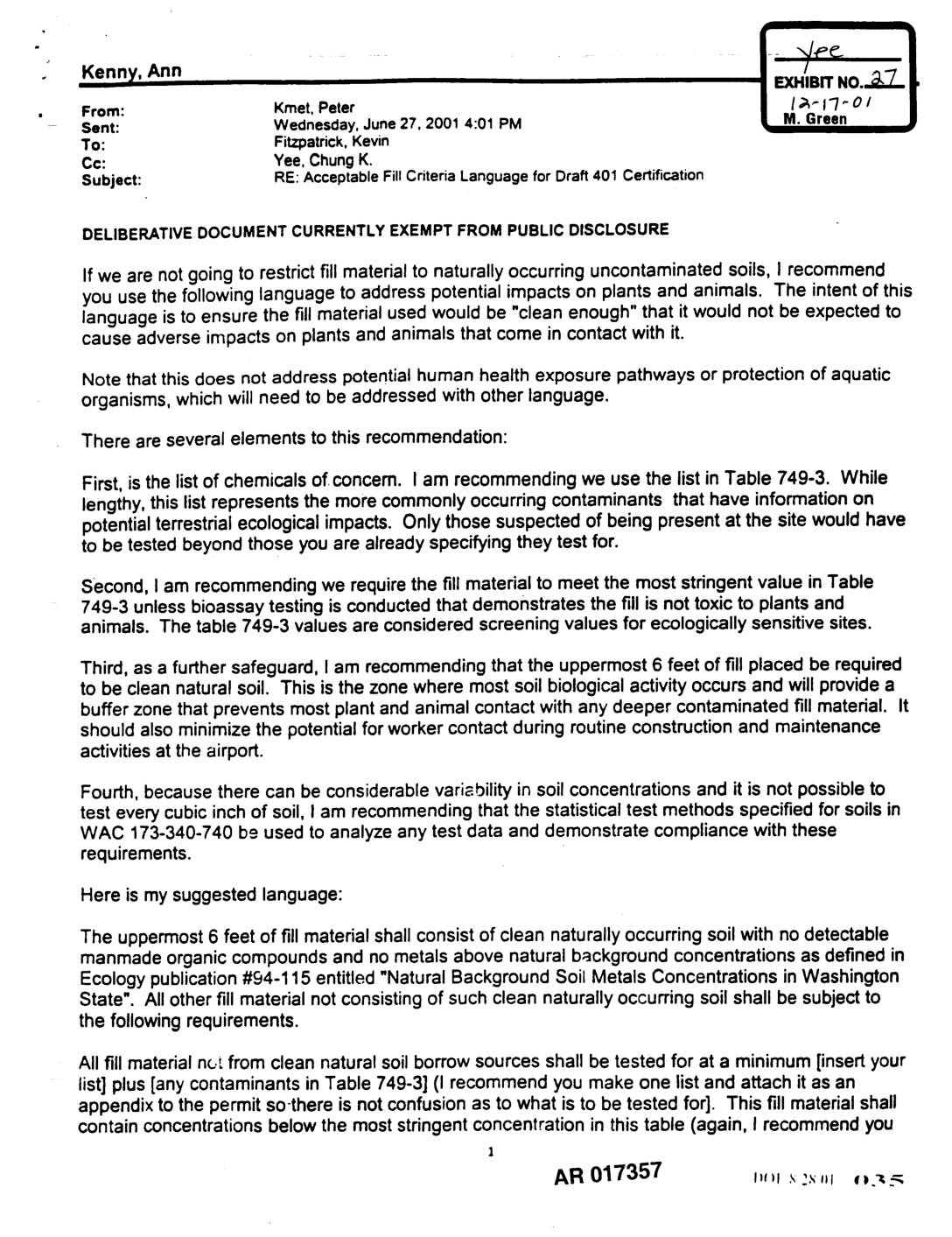
EXH AR017357: Email Chain RE: Acceptable Fill Criteria Language for Draft 401 Certification — Sea-Tac Airport Third Runway
Internal email chain dated June 27, 2001 from Peter Kmet (Ecology HQ/TCP) to Kevin Fitzpatrick, cc Chung K. Yee, marked ‘Deliberative Document Currently Exempt From Public Disclosure.’ Kmet recommends language for fill material criteria in the Draft 401 Certification for the Seattle-Tacoma International Airport Third Runway project, including: requiring the uppermost 6 feet of fill -
 2001-06-27
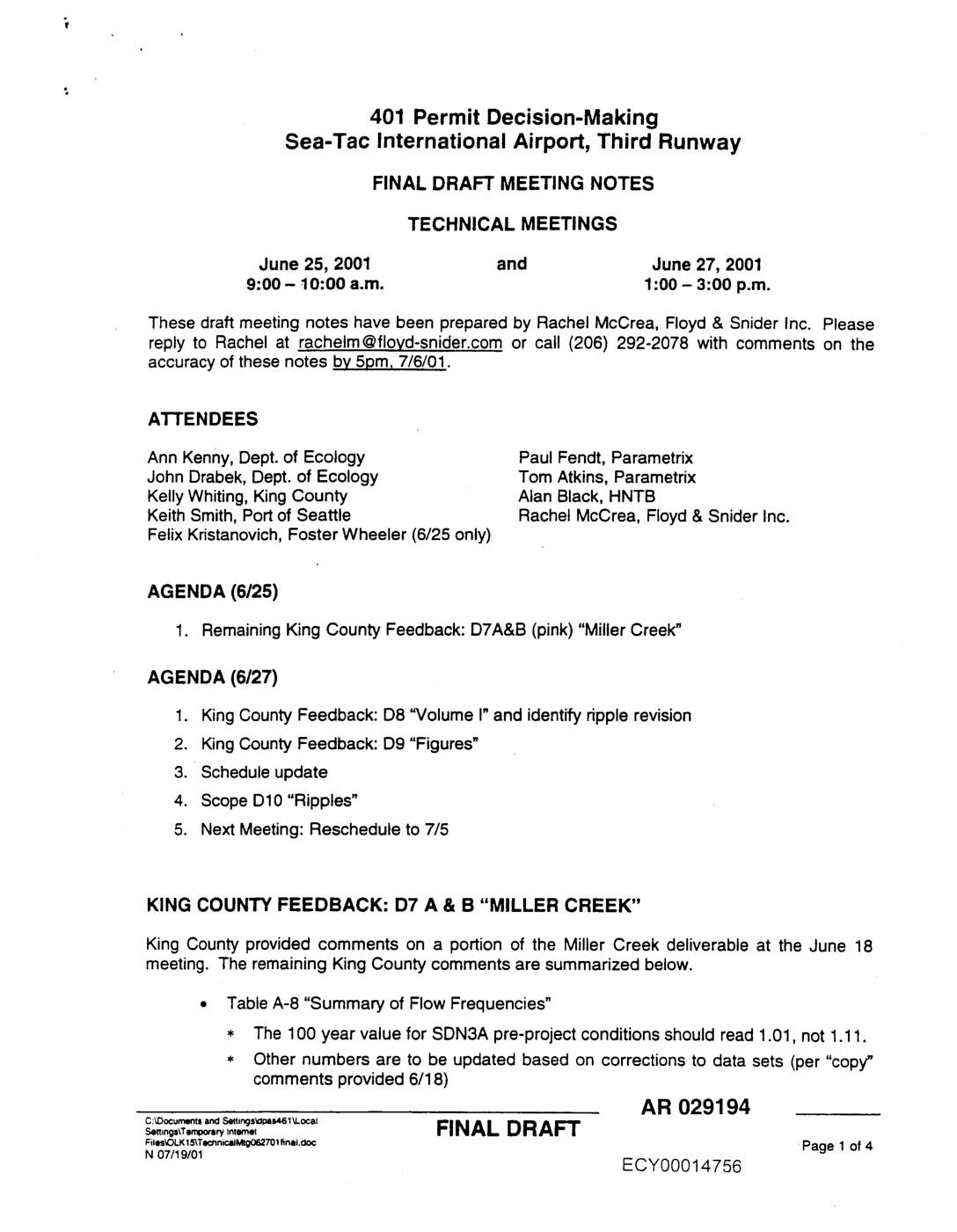
EXH AR029194: 401 Permit Decision-Making, Sea-Tac Airport Third Runway — Final Draft Technical Meeting Notes, June 25 & 27, 2001
Final draft meeting notes prepared by Rachel McCrea of Floyd & Snider Inc. for 401 Permit Decision-Making technical meetings on June 25 and June 27, 2001, regarding Sea-Tac International Airport Third Runway. Attendees included Ann Kenny and John Drabek (Dept. of Ecology), Kelly Whiting (King County), Keith Smith (Port of Seattle), Paul Fendt and Tom