Skip to content
  • STNI
  • Statistics
    • Ops and Passengers
      • King County International Airport (Boeing Field) Annual Operations
    • Financials
    • Aviation fuel uplift in the State of Washington 2018 – 2025
      • Aviation Fuel Uplift at Sea-Tac Airport
    • Air Quality Monitoring
    • Flight Tracking
      • Flow and Flight Tracks
      • Five Year Comparison
      • Busiest Hours and Days
    • SEL Noise Reports & Graphs
      • About The Permanent Noise Monitors
      • Minutes of Quiet by Noise Monitor
      • Noise Events mapped
      • Noise Events (SEL)
    • Runways
    • Employees
    • Real Estate
      • Port Properties and Trees mapped
    • Parking
  • Events
  • Protest
    • Regular Events
    • Legislation 2026
    • Complain about a particular flight
    • Advocacy Organizations
    • Media Outlets
    • People
    • The Port of Seattle
      • Commission Meetings
      • Public Records Requests
      • StART
      • Highline Forum
    • Contact Your Electeds
  • Resources
    • FAQs
      • FAA Occurrences/Accidents/Indents
    • The unSustainable Airport Master Plan
      • SAMP Public Comment Template
        • Two versions of Appendix K: NEPA/SEPA 2018 vs 2023
      • SAMP NTP: 31 projects by the numbers
      • SEPA Draft EIS (2026)
      • SAMP Record of Decision/FONSI (2025)
      • SAMP Draft EA (October 2024)
      • 2018 Scoping
    • Port Packages
      • Port Package Property Costs
      • Port Packages mapped
      • The Port Package Explainer
      • So you want a (first-time) Port Package? Start here
      • Port Package Looker Upper
      • How do I determine if I have a Port Package or Avigation Easement?
      • Progress on Port Package Update legislation
      • Having a Port Package Problem?
      • Port Package Site Visit Follow-Up
    • Document Library
    • Explainers
      • The Airport Law Cheat Sheet
      • The Grant Explainer
    • External Articles
    • History
      • Timeline
      • The Sea-Tac Communities Plan
        • Sea-Tac Communities Plan – Planning Maps
      • PSRC Third Runway Decision Process
    • Studies
    • Videos
  • Stories
  • Mission
  • Subscribe
  • Contact
Scroll down to content

Get InformedStay Informedx

I understand that you will never share my information with anyone, you will only use it to keep me updated on relevant events and that I may unsubscribe at any time.

STNI

STNISea-Tac Noise.Info

  • Solve for Sea-Tac. Solve for every airport.
  • Since 2016, working to obtain justice for everyone living under the flight path.
  • Less Noise. Cleaner Air. Better Public Health. Compensation.
  • Everything you think you know about the airport is wrong.

TagAcademic Journals(48)

Advanced Search Options

  • Dates
  • Media
    • External Articles
    • Images
    • PDFs
    • Video
    • Audio
  • Order By
  • 2001-07-01

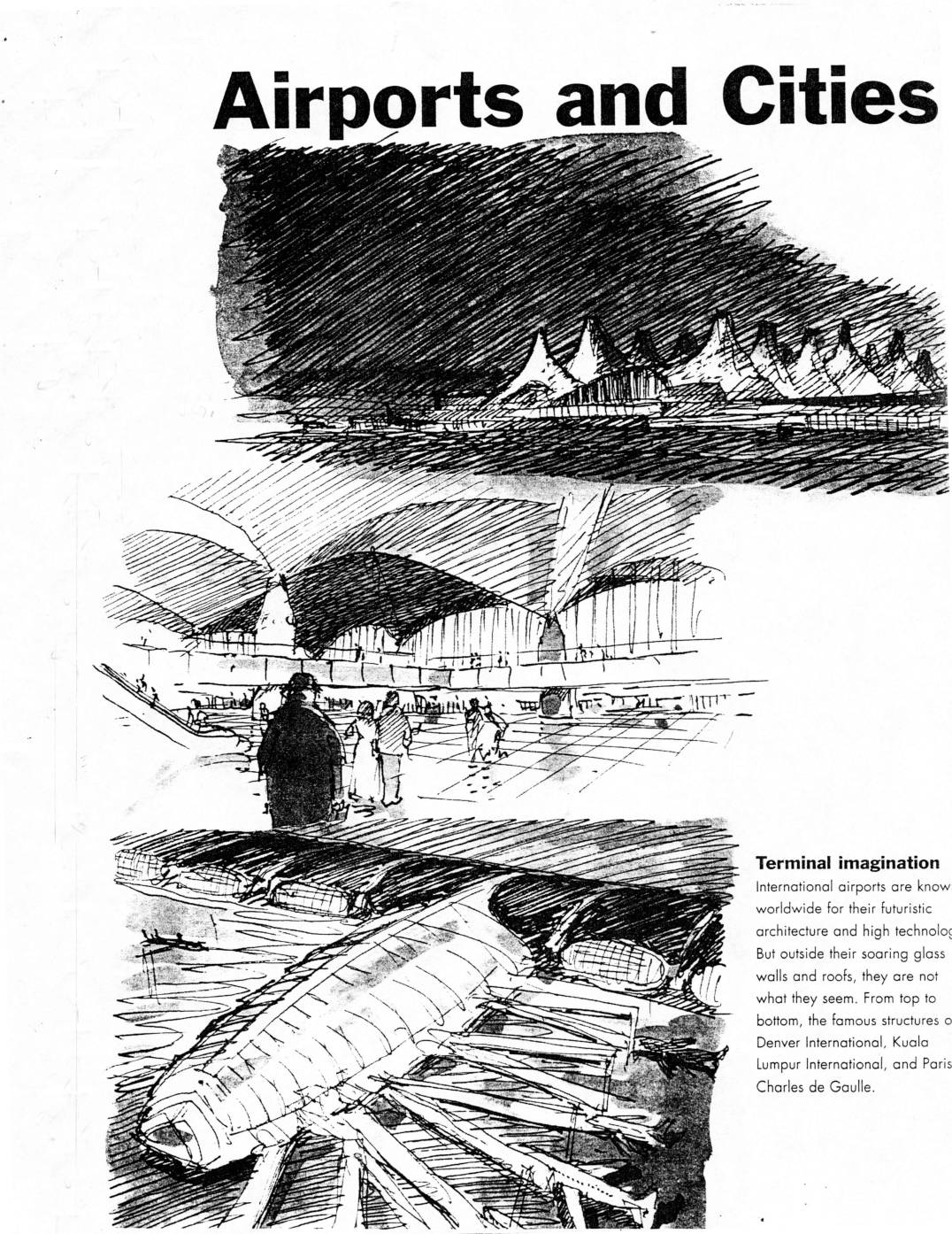
    Airports and cities: Can they coexist?

    This 2001 World Watch article by Ed Ayres examines the growing conflict between expanding airports and the cities surrounding them, highlighting the serious health, environmental, and noise impacts on nearby residents. It challenges the conventional mindset of simply building more airport capacity, noting that a 747 takeoff produces as much air pollution in two minutes as 3,000 cars, and that people living near airports face higher rates of illness and psychological harm. The article explores innovative design alternatives, such as inclined runways and energy-recovering landing systems, as more sustainable solutions to meeting rising air travel demand.
    TagsAcademic Journals, Airport Expansion, Airports, Aviation Emissions, Noise Pollution
  • 2000-08-06

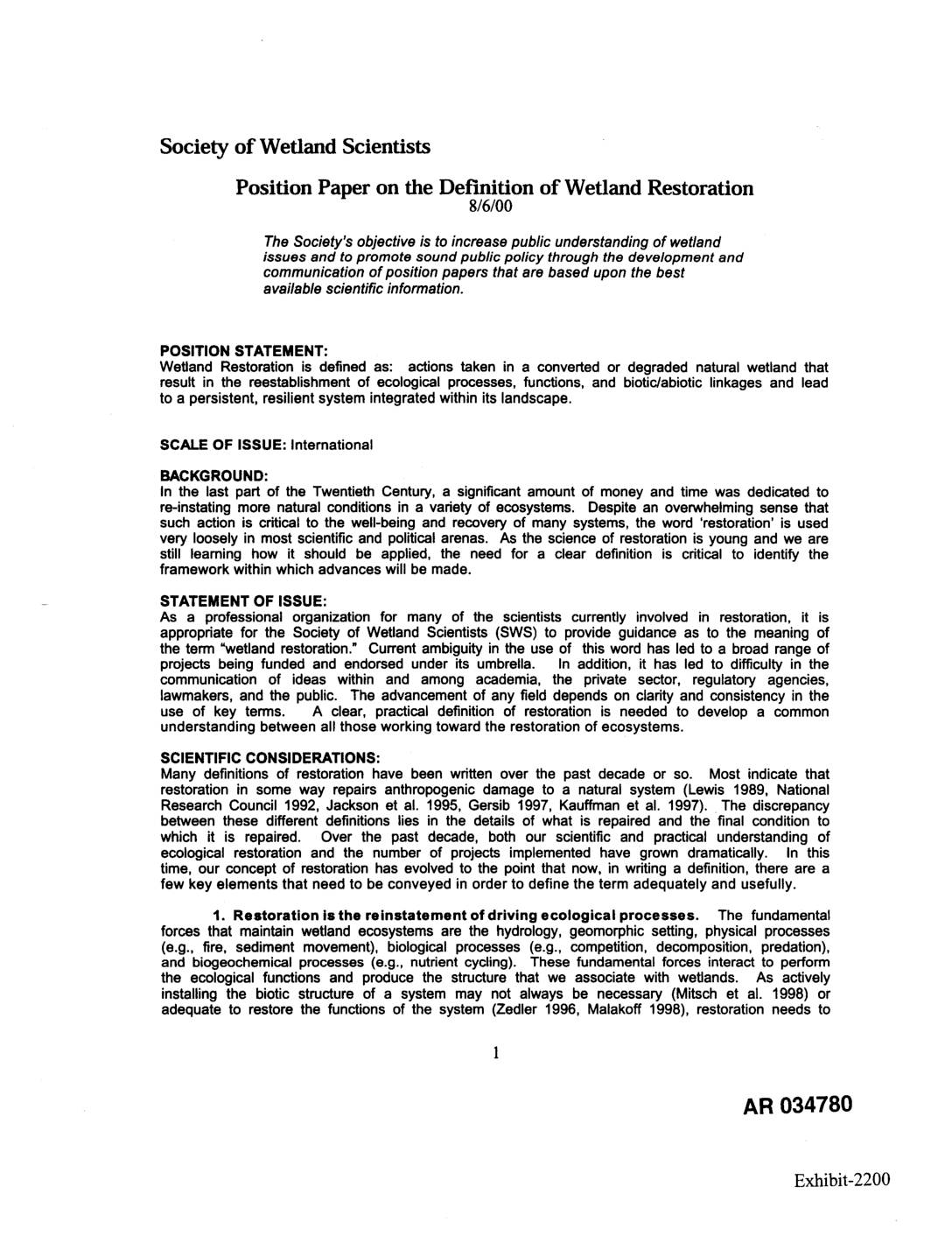
    EXH AR034780: Society of Wetland Scientists Position Paper on the Definition of Wetland Restoration

    Society of Wetland Scientists (SWS) position paper dated August 6, 2000 defining ‘wetland restoration’ as actions taken in a converted or degraded natural wetland that reestablish ecological processes, functions, and biotic/abiotic linkages leading to a persistent, resilient system integrated within its landscape. The paper covers five key scientific considerations: reinstatement of driving ecological processes (hydrology,
    TagsAcademic Journals, ACC, Ecology, Environment, Pollution Control Hearings Board
  • 2000-04-01

    EXH AR044580: Critical Review of the Use of Bioconcentration Factors for Hazard Classification of Metals and Metal Compounds

    Report prepared by Kevin V. Brix and David K. DeForest of Parametrix, Inc. for the International Lead Zinc Research Organization, International Copper Association, and Nickel Producers Environmental Research Association (NiPERA), April 2000. Reviews bioconcentration factors (BCFs) for metals including cadmium, copper, lead, nickel, silver, and zinc in aquatic organisms (fish, bivalves, invertebrates, algae, diatoms). Covers
    TagsAcademic Journals, ACC, Environment, EPA, Pollution Control Hearings Board, Water Quality
  • 1995-01-01

    EXH AR034578: Wetlands: Characteristics and Boundaries (1995) — Chapter 6, Especially Controversial Wetlands

    National Research Council publication ‘Wetlands: Characteristics and Boundaries’ (1995), Committee on Characterization of Wetlands, Water Science and Technology Board, Board on Environmental Studies and Toxicology, Commission on Geosciences, Environment, and Resources. Exhibit AR034578. Chapter 6 covers especially controversial wetlands including permafrost wetlands, riparian ecosystems, isolated and headwater wetlands, shallow wetlands, agricultural wetlands, nonagricultural altered sites,
    TagsAcademic Journals, ACC, Environment, Land, National Academies of Sciences, Pollution Control Hearings Board
  • 1995-01-01

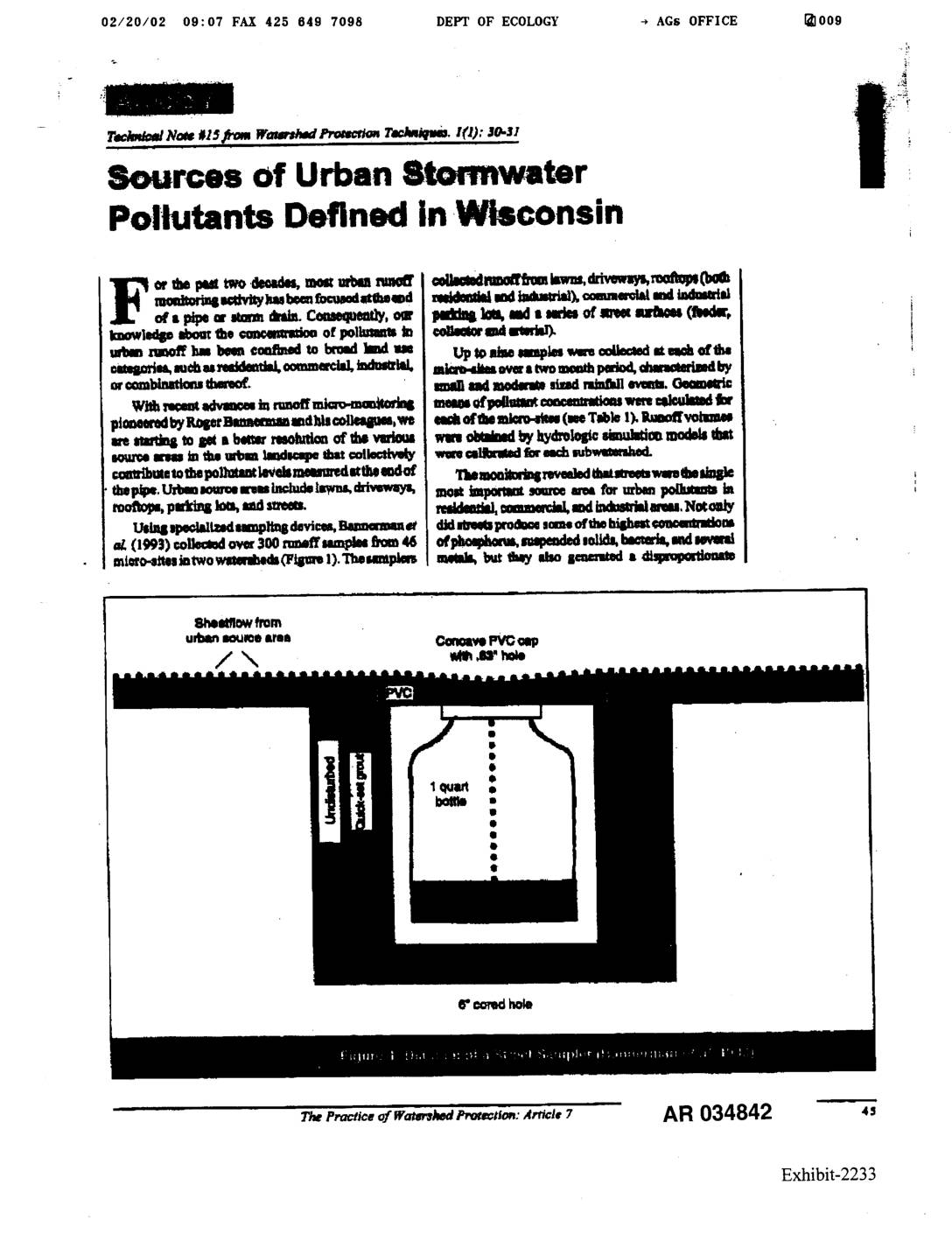
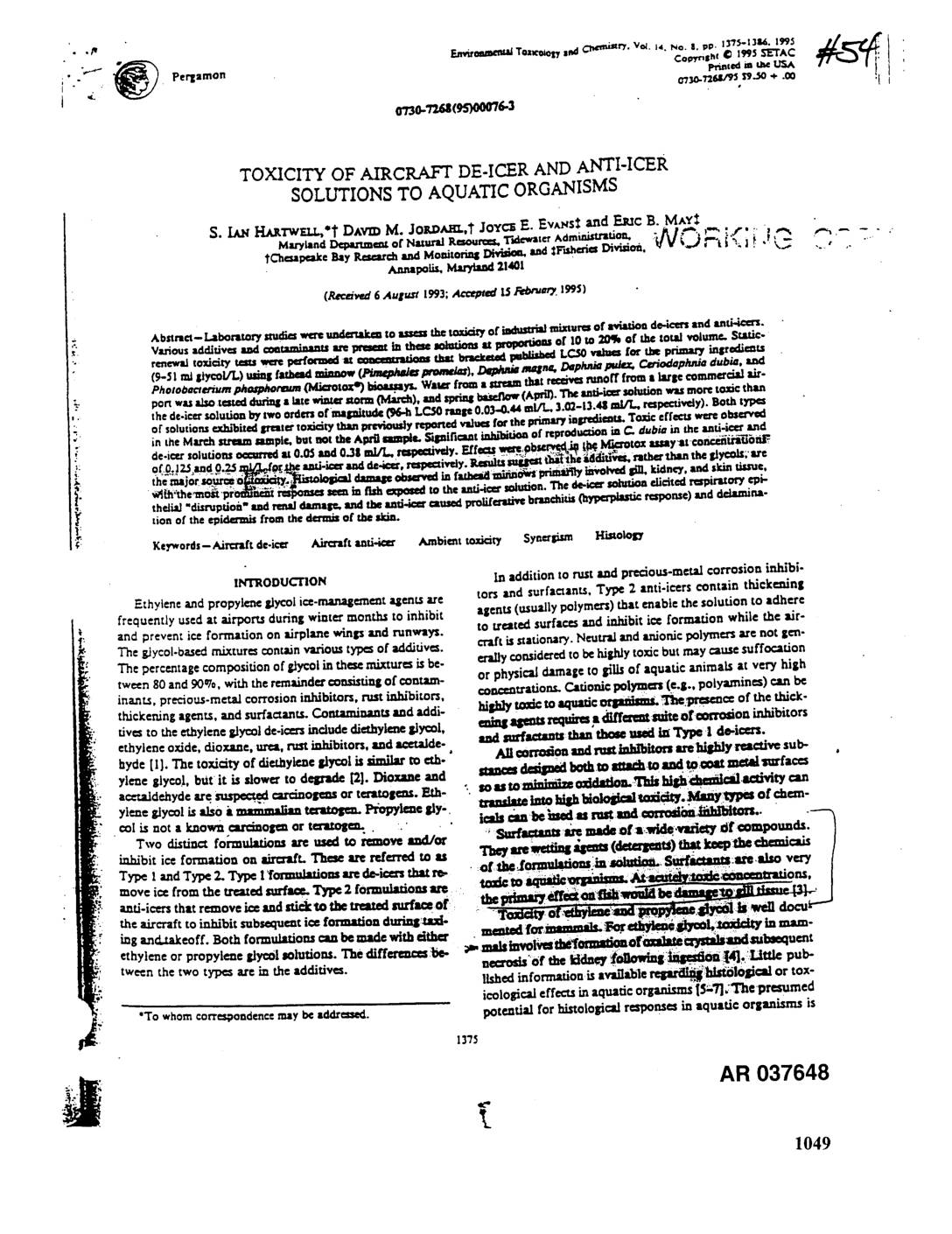
    EXH AR037648: Toxicity of Aircraft De-Icer and Anti-Icer Solutions to Aquatic Organisms

    Peer-reviewed article by S. Ian Hartwell, David M. Jordahl, Joyce E. Evans, and Eric B. May (Maryland Department of Natural Resources) published in Environmental Toxicology and Chemistry, Vol. 14, No. 8, 1995. Study assesses toxicity of ethylene glycol-based de-icer and propylene glycol-based anti-icer solutions from Baltimore-Washington International Airport (BWI) to aquatic organisms including fathead minnow
    TagsAcademic Journals, ACC, Deicing, Environment, Ethylene Gycol, Pollution Control Hearings Board, Water Quality
  • 1993-03-01

    EXH AR034597: Wildlife Use of Riparian Habitats: A Literature Review

    TFW-WL1-93-001 literature review compiled by Margaret A. O’Connell (Eastern Washington University), James G. Hallett (Washington State University), and Stephen D. West (University of Washington) for the Timber, Fish & Wildlife (TFW) program. Reviews empirical studies on wildlife use of riparian habitats in Washington State, covering amphibians, reptiles, birds, small mammals, bats, carnivores, and ungulates. Includes
    TagsAcademic Journals, ACC, Environment, Pollution Control Hearings Board, State of Washington, University of Washingon, Washington State University
  • 1991-09-01

    EXH AR034565: An Ecosystem Perspective of Riparian Zones — Focus on Links Between Land and Water

    Academic article by Stanley V. Gregory, Frederick J. Swanson, W. Arthur McKee, and Kenneth W. Cummins published in BioScience Vol. 41 No. 8 (September 1991). Presents an ecosystem perspective of riparian zones as three-dimensional interfaces between terrestrial and aquatic ecosystems, focusing on geomorphic processes, valley floor landforms (floodplains, terraces, alluvial fans, active channels), terrestrial plant
    TagsAcademic Journals, ACC, Environment, Land, Pollution Control Hearings Board, Water Quality
  • 1980-01-01

    EXH AR020939: Closed-Form Equation Predicting Hydraulic Conductivity Unsaturated Soils

    This 1980 soil science paper by M.Th. van Genuchten presents a closed-form mathematical equation for predicting how well water moves through unsaturated (partially dry) soils. The equation relates soil-water retention to hydraulic conductivity using a small set of measurable parameters, offering a simpler and more computationally reliable alternative to earlier methods. The model was validated against observed data for several soils with widely varying properties.
    TagsAcademic Journals, ACC, PCHB, Pollution Control Hearings Board, soil, Third Runway

Posts pagination

Page 1 … Page 3 Page 4 Page 5
Sidebar On/Off

Upcoming Events

  • StART SEA Stakeholder Advisory Round Table
    Add to CalendarMWednesday Aug 26, 5:00pm - 7:00pm
    Zoom (Virtual Meeting)
    START meetingagenda 2026826 final 0 pdf

    Meeting Objectives Introduce the primary feedback themes identified by StART members regarding StART’s Operating Procedures and determine areas that may warrant future discussion. 5:00 PM – Welcome Meeting Management Welcome Lead: Andrés Mantilla, Facilitator, Uncommon Bridges; Wendy Reiter, Airport Managing Director, POS 5:15 PM – Dinner: All participants eat. 5:30 PM – StART Operating Procedures

    [...]
  • Commercial Aviation Work Group
    Add to CalendarMThursday Sep 3, 10:00am - 1:30pm
    Virtual Meeting (Zoom)
    Cawg agenda sep 3 26 virtual pdf

    Meeting Agenda 10:00 a.m. – 10:15 a.m. | Welcome – Evan Nordby, Chair a. Introductions and Agenda Reviewb. Status of appointments and non-voting member invitationsc. Other updates as necessary 10:15 a.m. – 11:00 a.m. | Is it practical and legal to operate the western Washington [Puget Sound] airports as a single airport system? – Consultant

    [...]

[See all...]


Help study childhood asthma. Get free HEPA filter!

read more...

Issues

Sea-Tac Airport is currently undergoing the largest and longest expansion in its history, collectively known as the Sustainable Airport Master Plan (SAMP). Some of it you can already hear, but you’re probably not aware of what it all means. Here’s what you need to know.
read more...

Read This!

As the source for federal transportation grants, the Puget Sound Regional Council was charged with developing a system to meet the growing need for commercial aviation. When the search for a second airport failed, they authorized the Port of Seattle to build the Third Runway, with a mandate to develop a noise abatement and mitigation program. In their effort to stop the Third Runway, the ACC argued over every detail of the Port's efforts--including property buyouts and sound insulation. The dispute was meant to be settled by a three member Expert Arbitration Panel. This is their final report. It finds 2-1, that the Port's program was insufficient in several respects. Despite that, funding for the Third Runway was approved by the PSRC, and the 'Port Package' program, proceeded largely unchanged. Expert Arbitration Panel's final decision finding that the Port of Seattle had not shown sufficient reduction in real on-the-ground noise impacts to satisfy noise reduction conditions required for approval of a third runway at Sea-Tac International Airport. The majority decision concluded the Port's noise abatement programs were insufficient despite being impressive in scope.
continue...

The Podcast!

Subscribe to the only podcast devoted to policies, politics, history, impacts for people living under the flight path everywhere. It’s definitely not just about noise!
  • Sea-Tac Noise.Info
  • Connect with STNI

    • Subscribe
    • Port Package Problem?
    • Donate
    • Podcast
    • Socials
      • Facebook
      • X (Twitter)
      • Bluesky
      • Instagram

    "Washington State House Capital Budget Committee Hearing, February 26, 2024" — , 2024

  • Learn

    • Frequently Asked Questions
    • Explainers
    • Youtube
    • Research Requests
    • Make a complaint
  • Goals

    Fulfill the promises of 1976:
    • Compensation
    • Reduced noise
    • Improved air quality
    • Environmental remediation
Login/Register
©2026•Data Privacy

Message

We use cookies to provide basic functionality. We also provide access to search engines in order to provide site analytics. We do not sell or share your data.
V V