TagWater Quality(475)
-
 2002-10-22
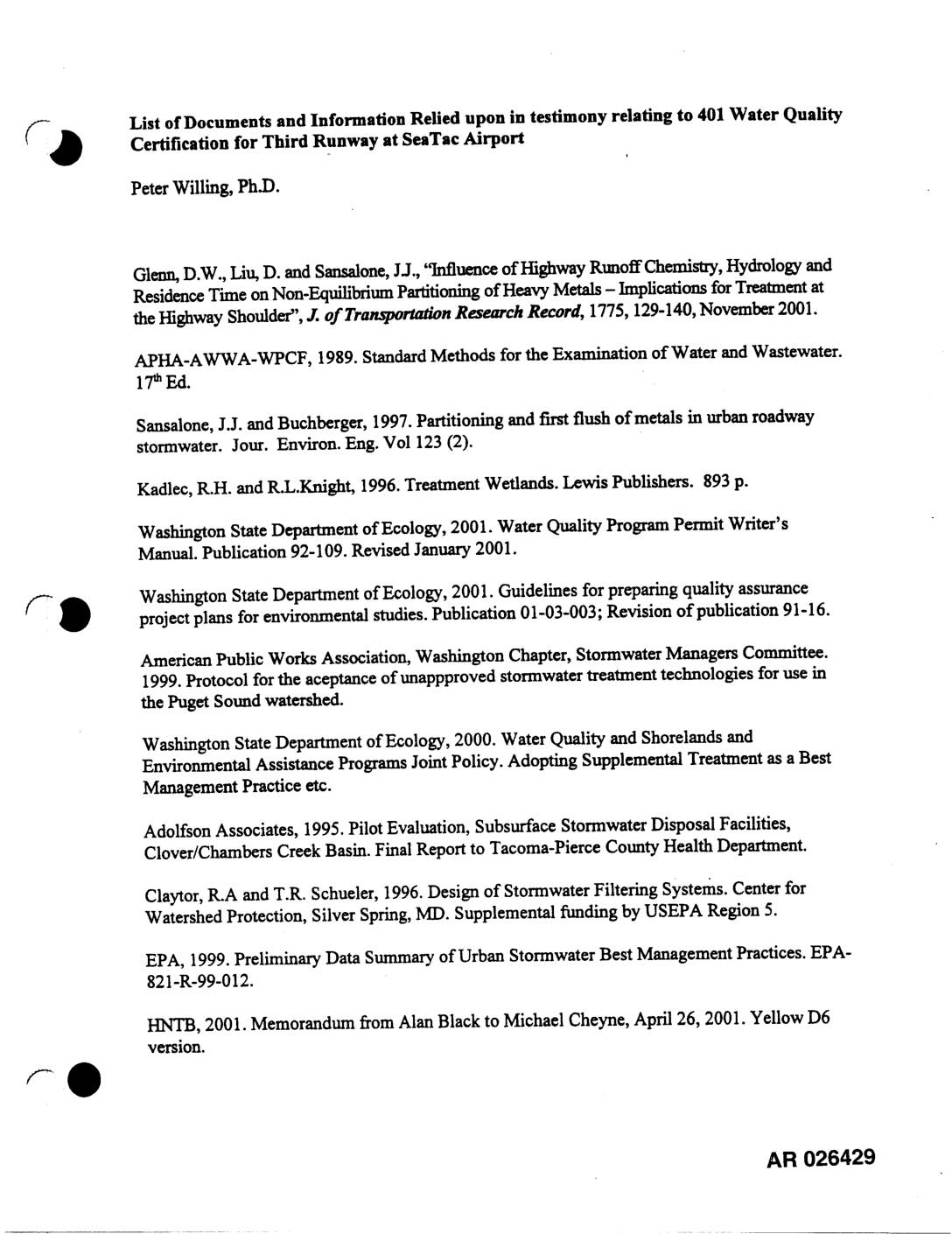
Exhibit 713: List of Documents and Information Relied Upon in Testimony Relating to 401 Water Quality Certification for Third Runway at Sea-Tac Airport
Reference list compiled by Peter Willing, Ph.D., of documents relied upon in testimony regarding the 401 Water Quality Certification for the Third Runway at Sea-Tac Airport. Sources cited include studies on highway runoff chemistry, heavy metals partitioning, urban stormwater BMPs, treatment wetlands, NPDES permits, and Port of Seattle annual stormwater monitoring reports (1998–2001). Key references -
 2002-10-22
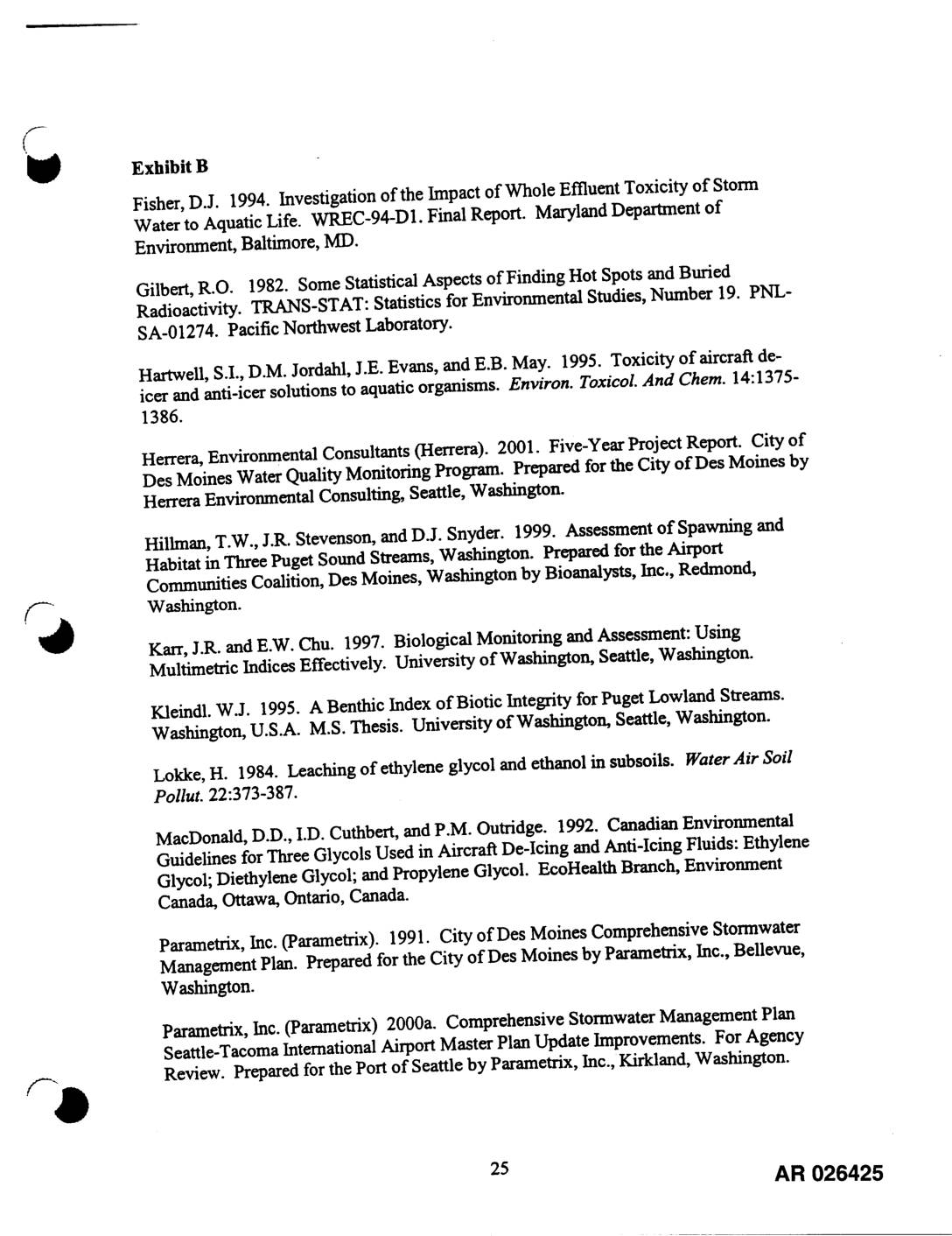
EXH 711: Bibliography — Stormwater & Aquatic Environmental References, STIA EIS
This document is a reference bibliography (Exhibit B) listing scientific and regulatory sources related to environmental monitoring at Seattle-Tacoma International Airport. It includes studies on stormwater quality, aircraft de-icing and anti-icing fluid toxicity, aquatic habitat assessment, and sediment guidelines, drawn from sources such as the Port of Seattle, Parametrix Inc., and various environmental agencies. The references support environmental compliance reporting under the airport's NPDES stormwater permit. -
 2002-10-22
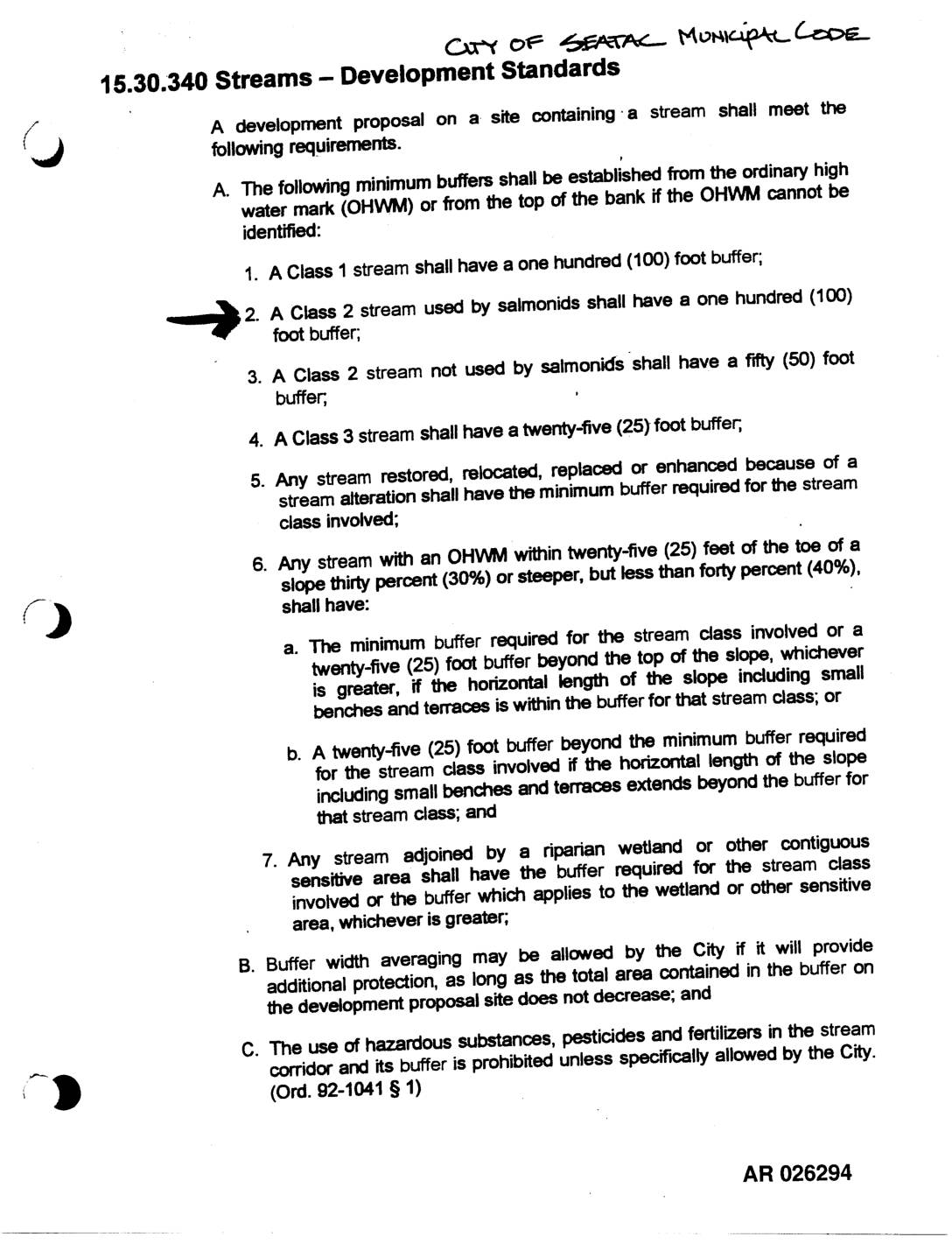
Exhibit 701: Streams — Development Standards (Sea-Tac Municipal Code 15.30.340 and King County Code 21A.24.360)
City of SeaTac Municipal Code section 15.30.340 and King County Code section 21A.24.360 establishing stream development standards and minimum buffer requirements from the ordinary high water mark (OHWM). Specifies buffers for Class 1 streams (100 feet), Class 2 streams used by salmonids (100 feet), Class 2 streams not used by salmonids (50 feet), and Class -
 2002-10-22
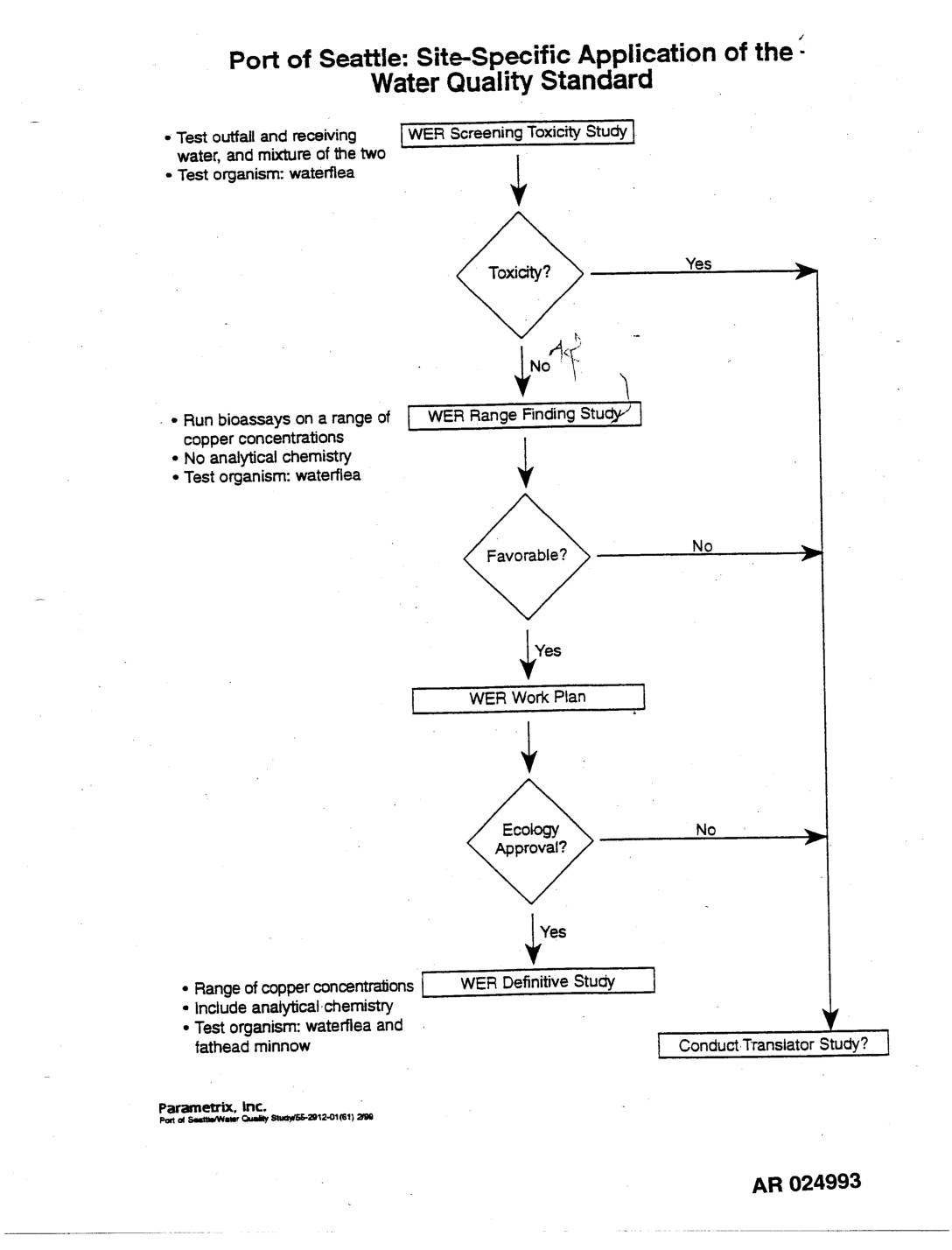
EXH AR024993: Site-Specific Water Quality Standard WER Study Process Flowchart
This document outlines the Port of Seattle's step-by-step process for applying water quality standards at a specific site, focusing on copper toxicity testing in local waterways. The flowchart guides researchers through a series of studies — including screening, range-finding, and definitive toxicity tests using waterfleas and fathead minnows — to determine whether copper levels in outfall and receiving waters pose environmental risks. Depending on test results and regulatory approval from the Washington State Department of Ecology, the process may lead to a Water Effect Ratio (WER) study or a Translator Study. -
 2002-10-22
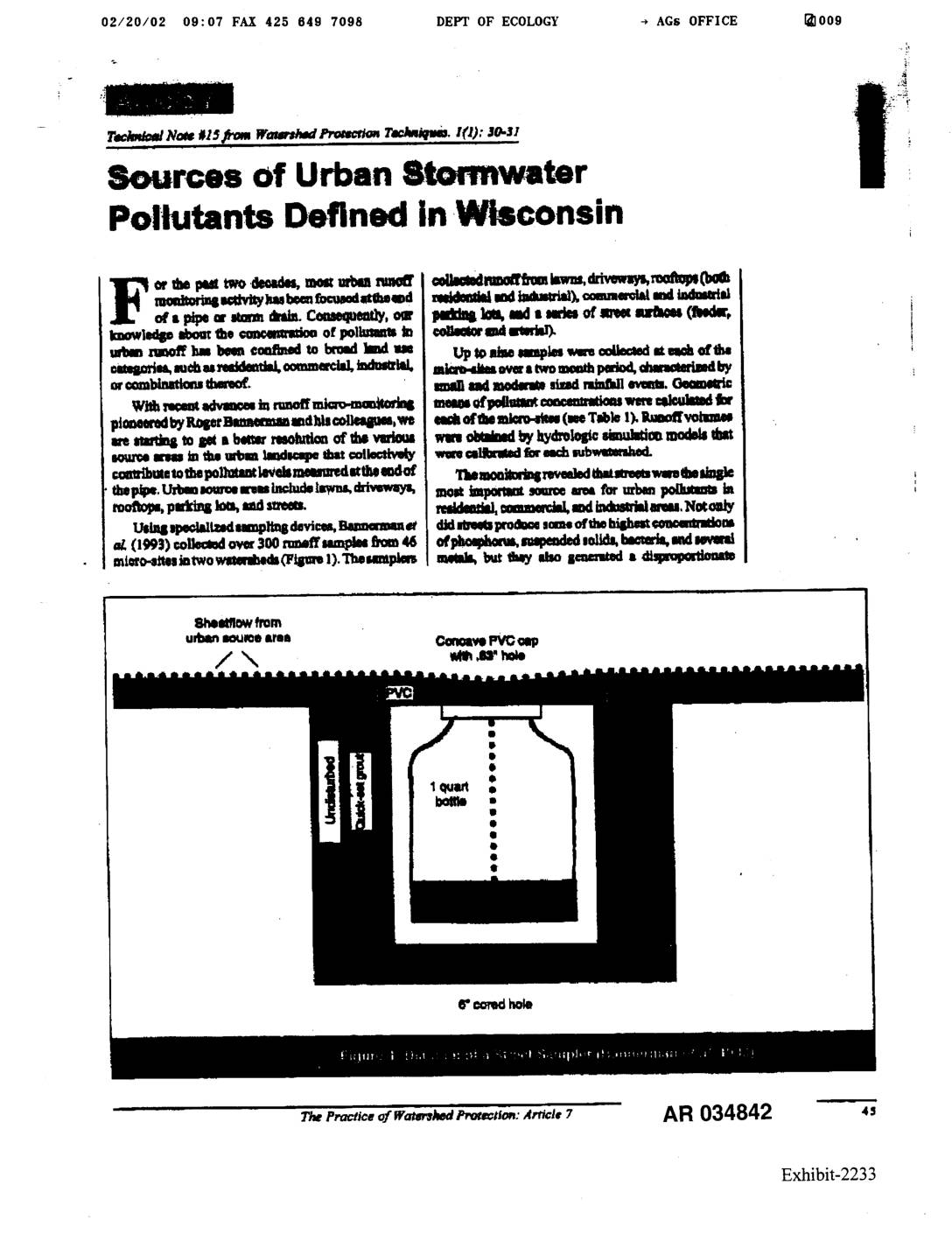
Exhibit 2233: Sources of Urban Stormwater Pollutants Defined in Wisconsin
Technical Note #15 from Watershed Protection Techniques, I(1):30-31, covering sources of urban stormwater pollutants as defined in Wisconsin. Based on Bannerman, R., D. Owens, R. Dodds, and N. Hornewer (1993) study published in Water Science & Technology (28):3-5, pp. 241-259. Over 300 runoff samples collected from 46 micro-sites in two watersheds. Documents pollutant concentrations of -
 2002-10-22
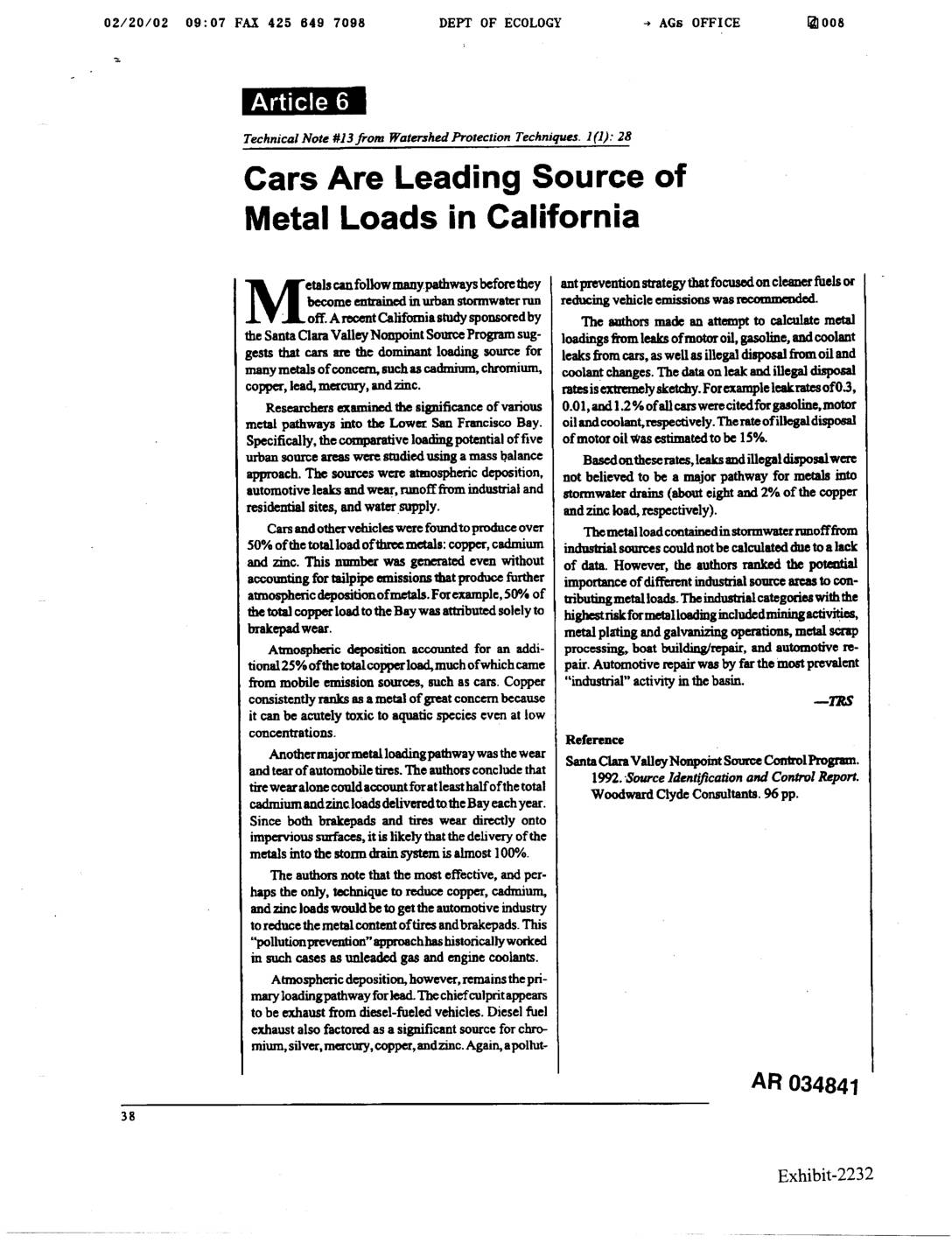
EXH AR034841: Cars Are Leading Source of Metal Loads in California
Technical Note #13 from Watershed Protection Techniques 1(1):28, summarizing a Santa Clara Valley Nonpoint Source Program study on metal pathways into the Lower San Francisco Bay. Cars and vehicles found to produce over 50% of total loads of copper, cadmium, and zinc; brake pad wear alone accounts for 50% of total copper load; tire wear -
 2002-10-22
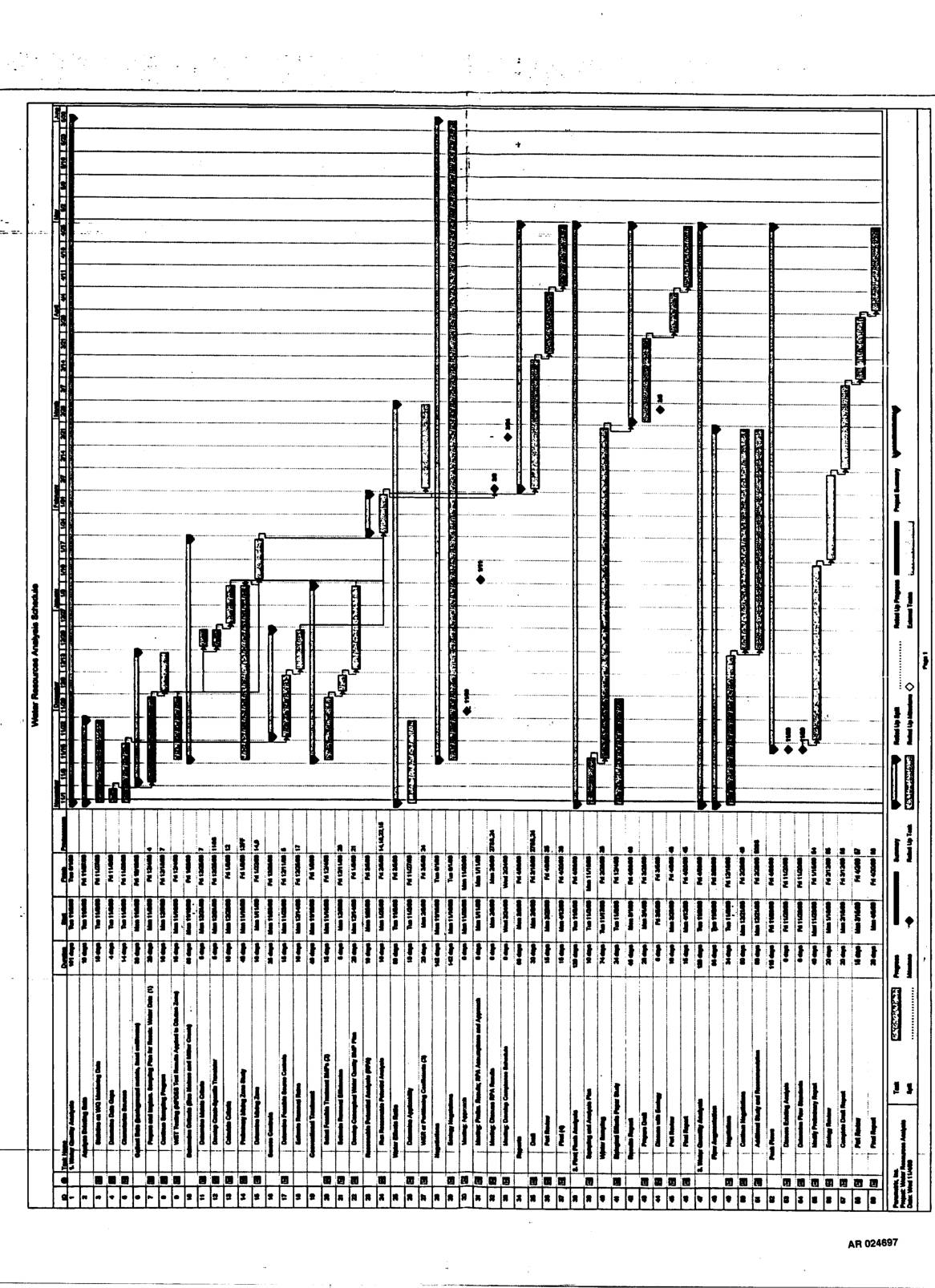
EXH AR024697: Water Resources Analysis Schedule
This document presents a Water Resources Analysis Schedule, displayed as a Gantt-style project timeline chart. It outlines the sequencing and duration of various technical tasks related to water resources analysis, including data collection, feasibility studies, treatment evaluations, and report preparation. The schedule appears to track project milestones and dependencies across multiple phases of a water resources planning effort. -
 2002-10-22
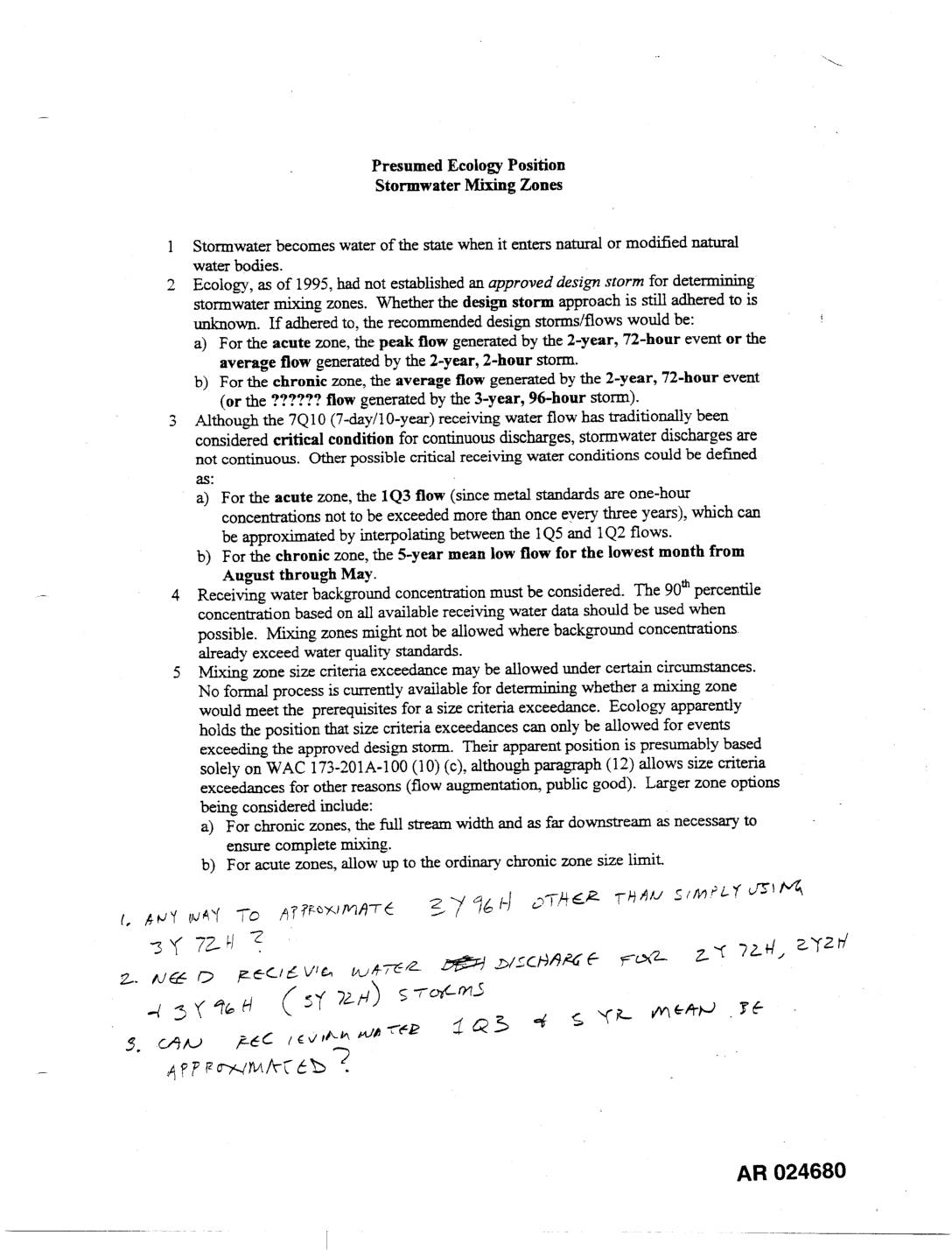
EXH AR024680: Presumed Ecology Position — Stormwater Mixing Zones
This document outlines Washington State Department of Ecology's presumed policy positions on stormwater mixing zones, addressing when stormwater becomes regulated state water and how mixing zones should be calculated. It details recommended design storms for acute and chronic mixing zones, critical receiving water flow conditions, and background concentration requirements. The document also discusses circumstances under which mixing zone size criteria exceedances may be permitted under state regulations. -
 2002-10-22
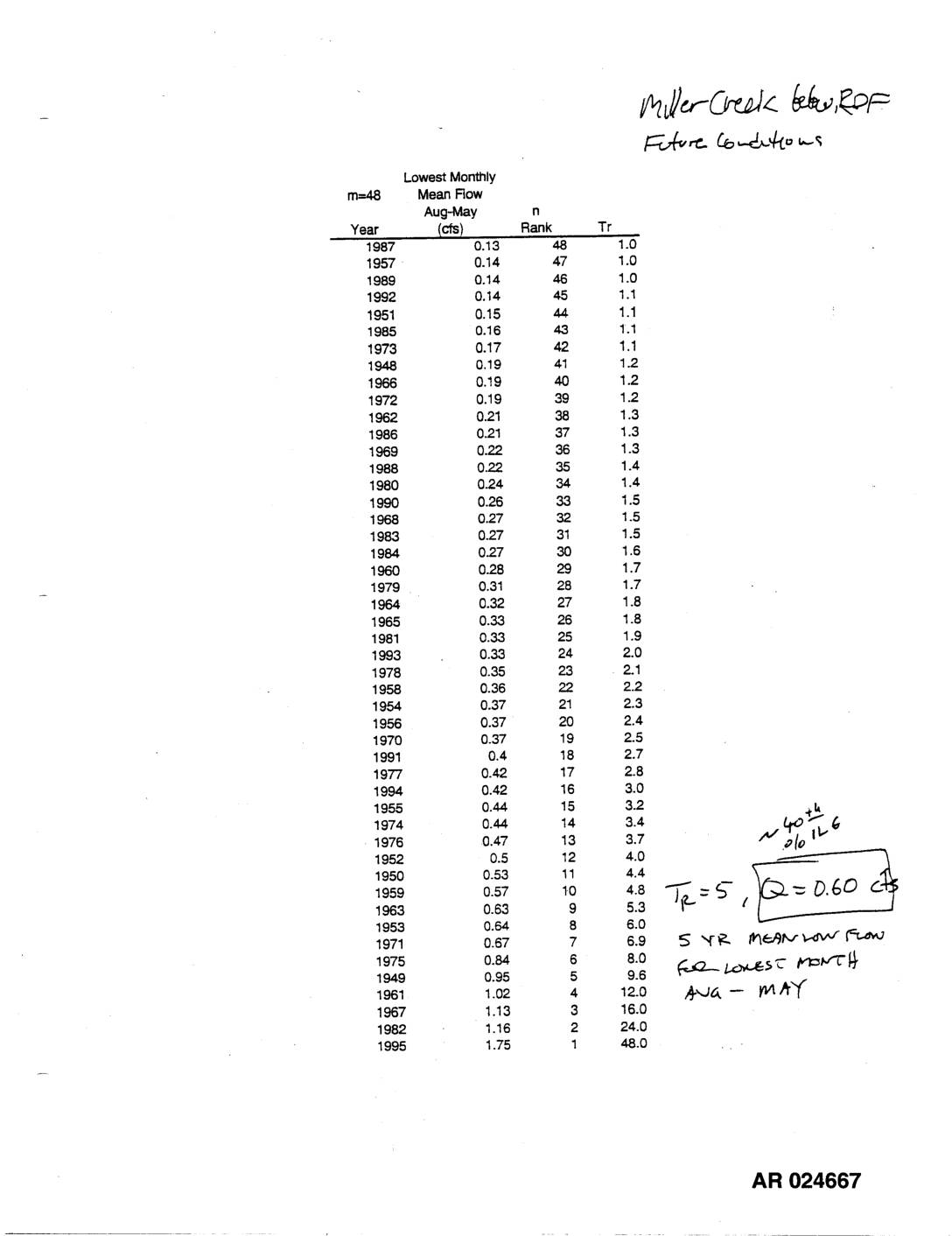
EXH AR024667: Miller Creek Below ROF — Future Low Flow Frequency & Storm Event Daily Flows
This document contains hydrological flow data for Miller Creek, including a ranked frequency analysis of the lowest monthly mean streamflows recorded between August and May from 1948 to 1995, alongside modeled daily and hourly stream flow outputs from 2-year/72-hour and 2-year/2-hour storm events simulated in August 1996. The analysis identifies a 5-year mean low flow of approximately 0.60 cubic feet per second for the lowest month in the August–May period. Acute and chronic water quality standards are also evaluated in relation to effluent and receiving water flows during the storm event. -
 2002-10-22
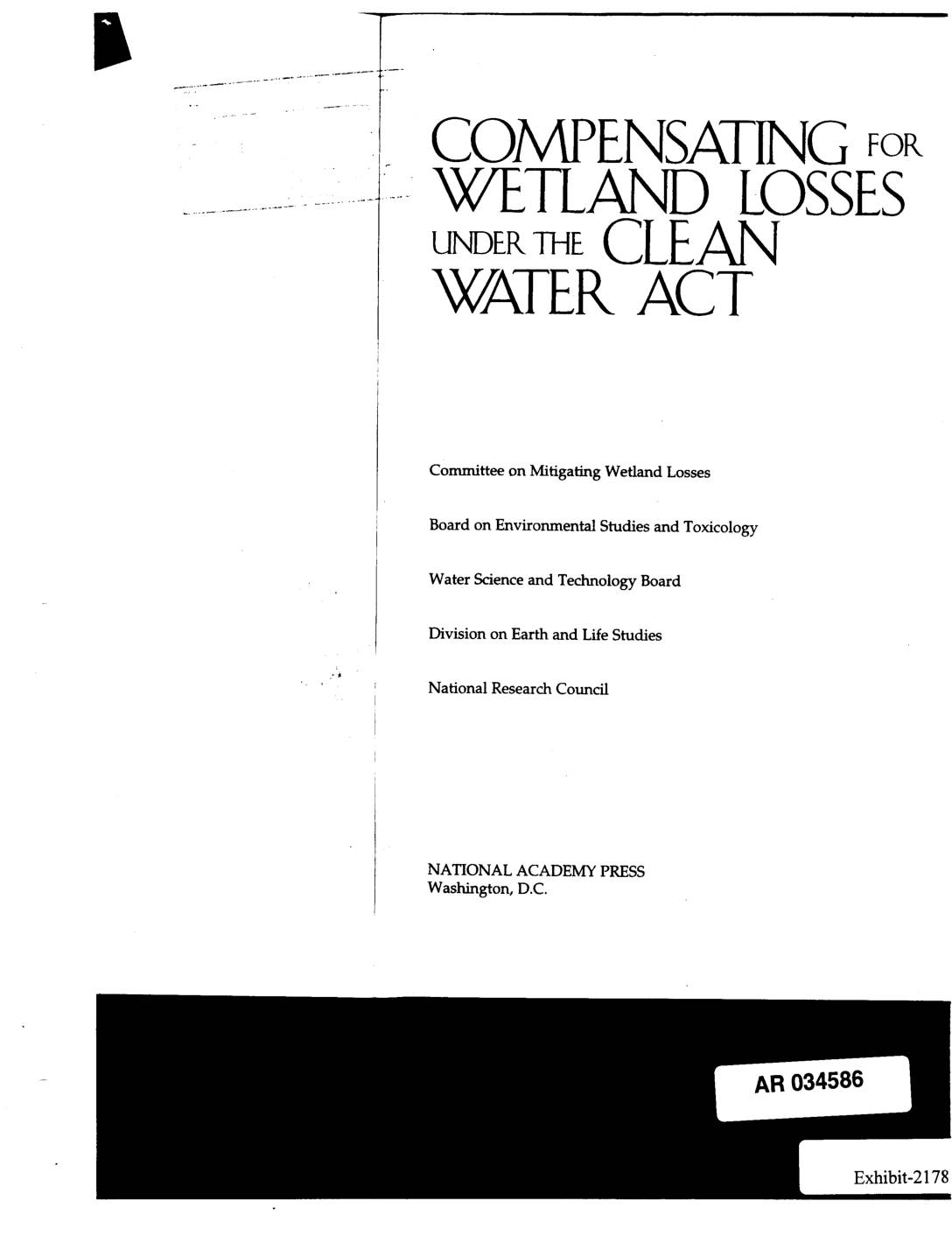
EXH AR034586: Compensating for Wetland Losses Under the Clean Water Act
National Research Council publication by the Committee on Mitigating Wetland Losses, Board on Environmental Studies and Toxicology, and Water Science and Technology Board titled ‘Compensating for Wetland Losses Under the Clean Water Act.’ AR034586, Exhibit-2178. Covers mitigation compliance standards including jurisdictional hydrology, wetland delineation, hydrological performance standards, design standards for mitigation sites, USACE wetland filling