Notes
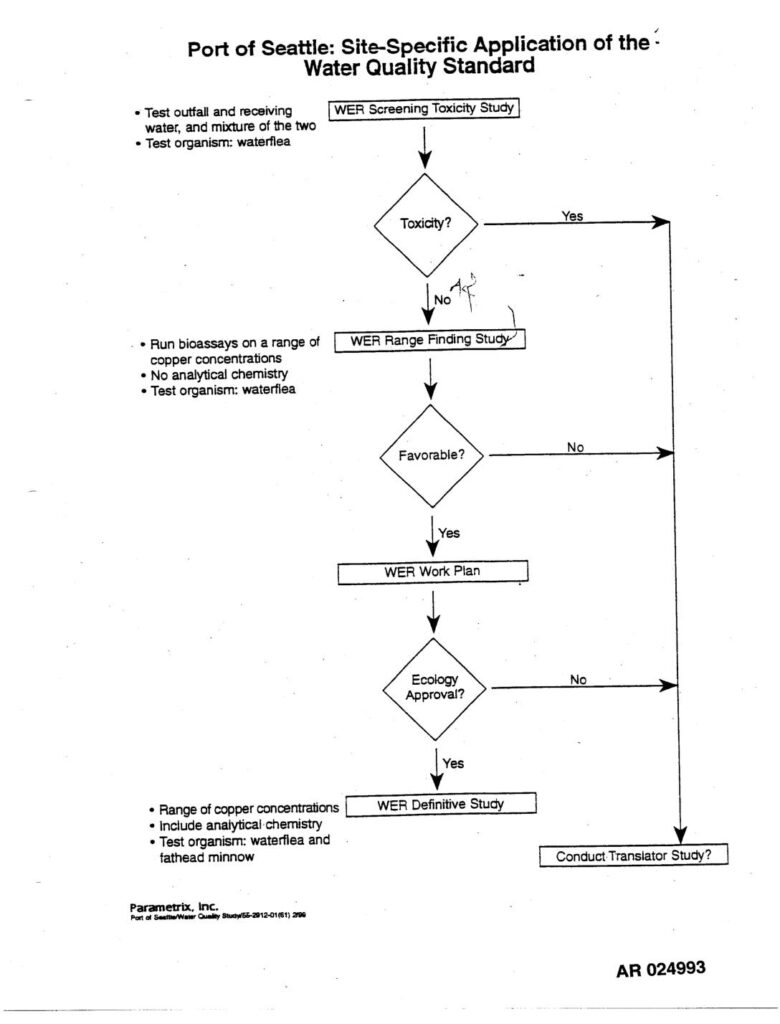
Exhibit AR024993 from the PCHB Third Runway EIS administrative record. Parametrix, Inc. flowchart depicting the Port Of Seattle site-specific process for applying the Water Quality Standard via Water Effect Ratio (WER) studies for copper. Diagram shows sequential decision steps: WER Screening Toxicity Study (testing outfall and receiving water mixtures using waterflea), WER Range Finding Study (bioassays across copper concentrations, no analytical chemistry, waterflea), WER Work Plan, Ecology Approval, WER Definitive Study (range of copper concentrations, analytical chemistry, waterflea and fathead minnow), and Conductor Translator Study. Decision nodes include toxicity presence/absence and favorable/unfavorable results.