TagWater Quality(475)
-
 2002-10-22
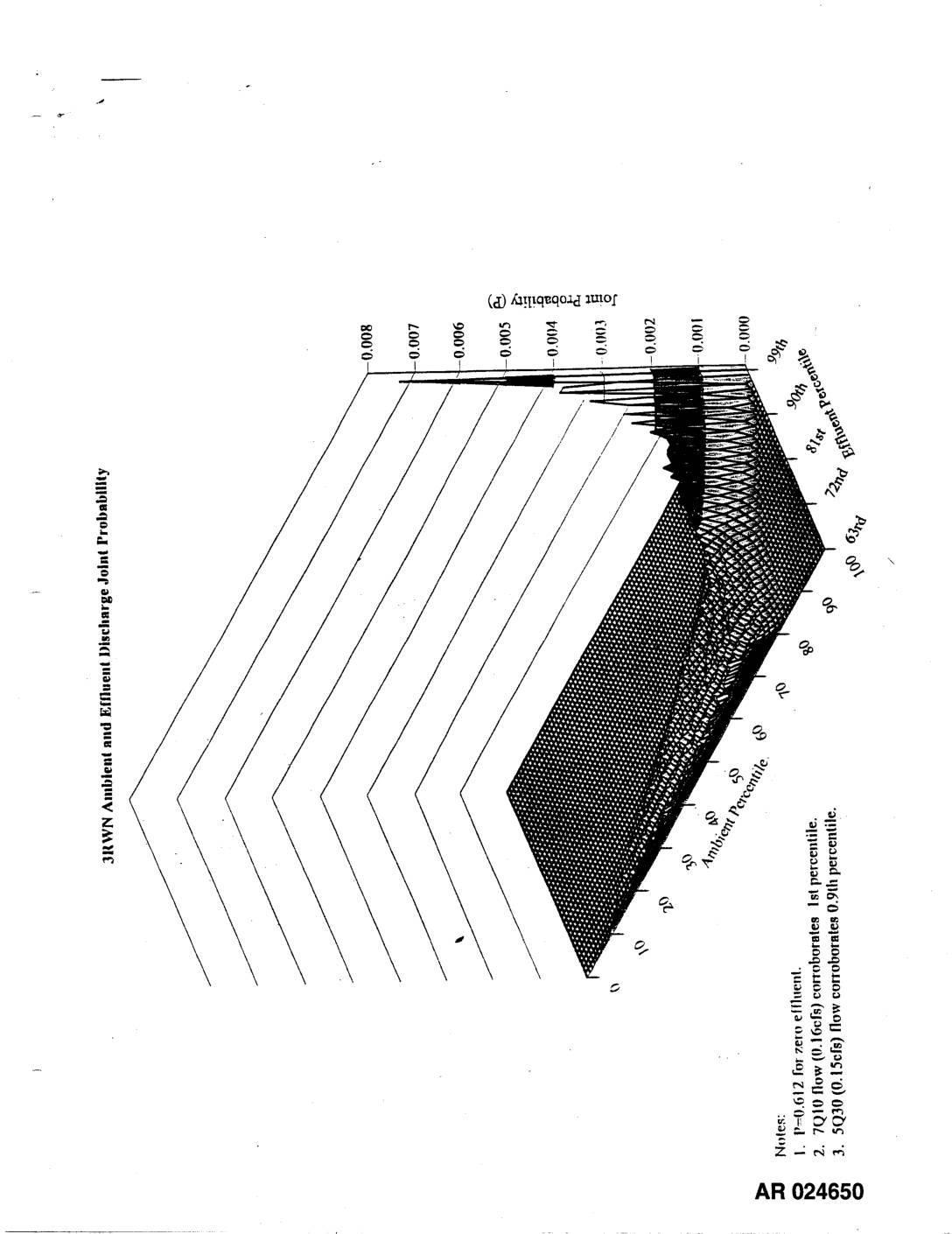
EXH AR024650: 3RWN Ambient & Effluent Discharge Joint Probability Analysis
This document presents a statistical analysis of ambient water conditions and effluent discharge at a location designated 3RWN, examining the joint probability of stream flow and discharge occurring simultaneously. It includes a 3D probability surface chart, a data table showing dilution factors ranging from 3.6 to 5,294 at various probability levels, and a distribution curve of ambient stream discharge measured in cubic feet per second. The analysis notes that effluent is present approximately 38% of the time, with the 7Q10 flow of 0.16 cfs corroborating the 1st percentile and the 5Q30 flow of 0.15 cfs corroborating the 0.9th percentile. -
 2002-10-22
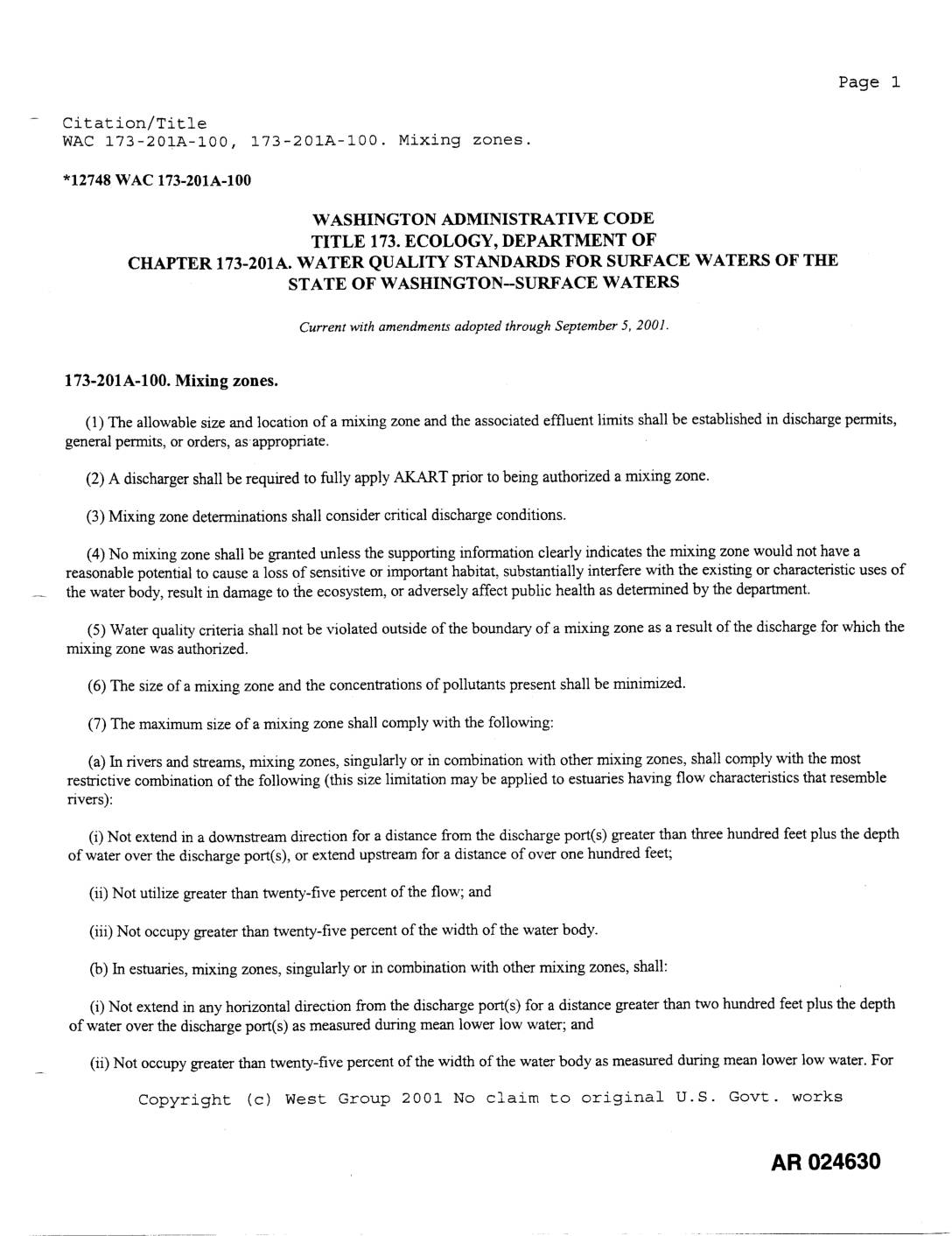
EXH AR024630: WAC 173-201A-100 Mixing Zones WA Water Quality Standards Surface Waters
This Washington State administrative regulation establishes rules for 'mixing zones,' which are designated areas in bodies of water where pollutant discharges are allowed to mix and dilute before meeting water quality standards. The rules set strict size limits for mixing zones in rivers, estuaries, lakes, and ocean waters, and require that dischargers apply all available pollution-reduction technology before a mixing zone is approved. Special provisions are also included for storm water discharges and combined sewer overflows. -
 2002-10-22
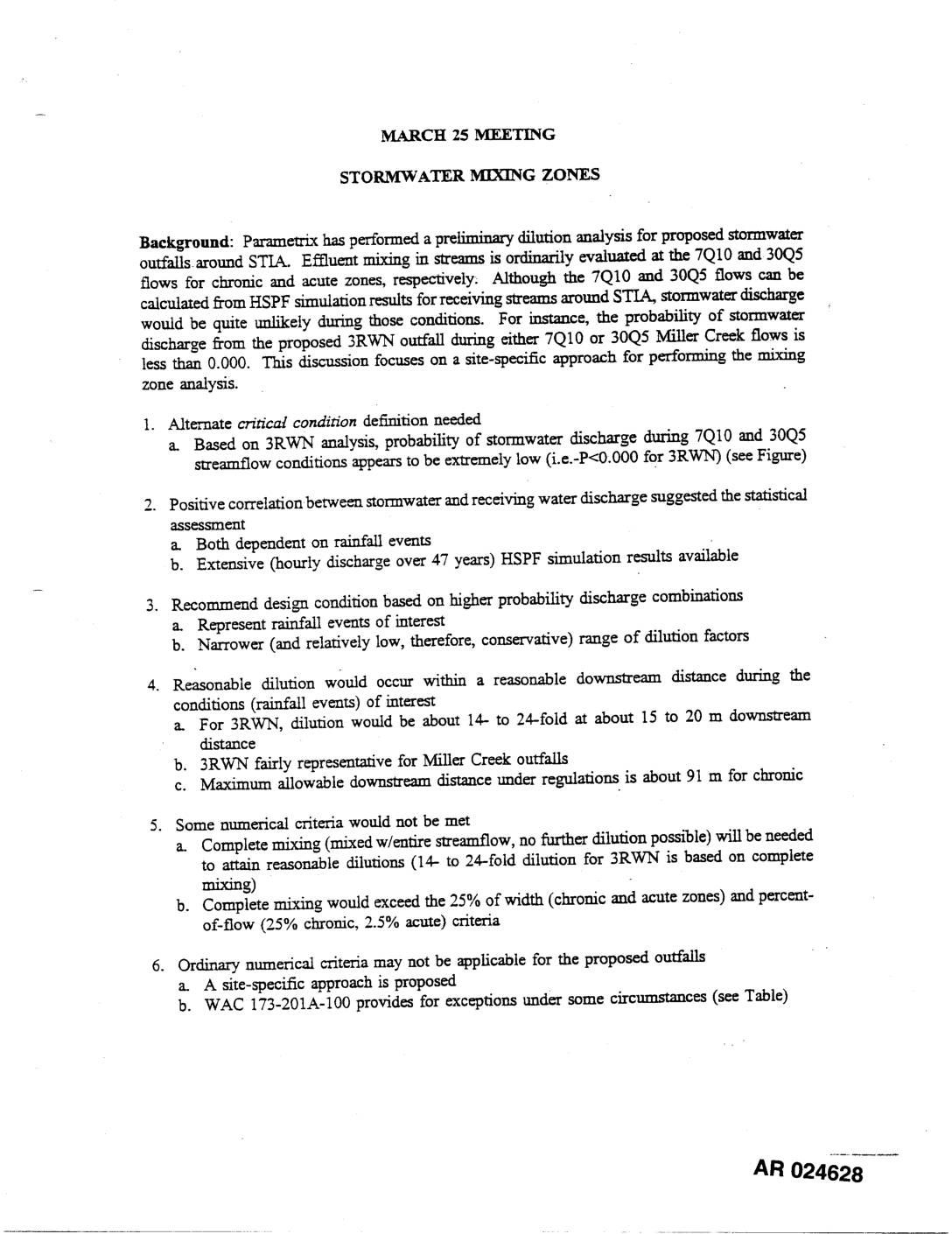
EXH AR024628: Stormwater Mixing Zones Mar 25 Meeting Discussion Doc STIA Third Runway EIS
This technical document from a March 25 meeting discusses stormwater mixing zone analysis for proposed outfalls around Seattle-Tacoma International Airport (STIA). Because standard stream flow conditions (7Q10 and 30Q5) are extremely unlikely to coincide with stormwater discharge events, Parametrix proposed a site-specific approach using higher-probability rainfall-based discharge combinations instead. The analysis found that reasonable dilution of 14- to 24-fold could occur within about 15 to 20 meters downstream, though complete mixing requirements would exceed standard regulatory width and flow percentage criteria, prompting a request for exceptions under WAC 173-201A-100. -
 2002-10-22
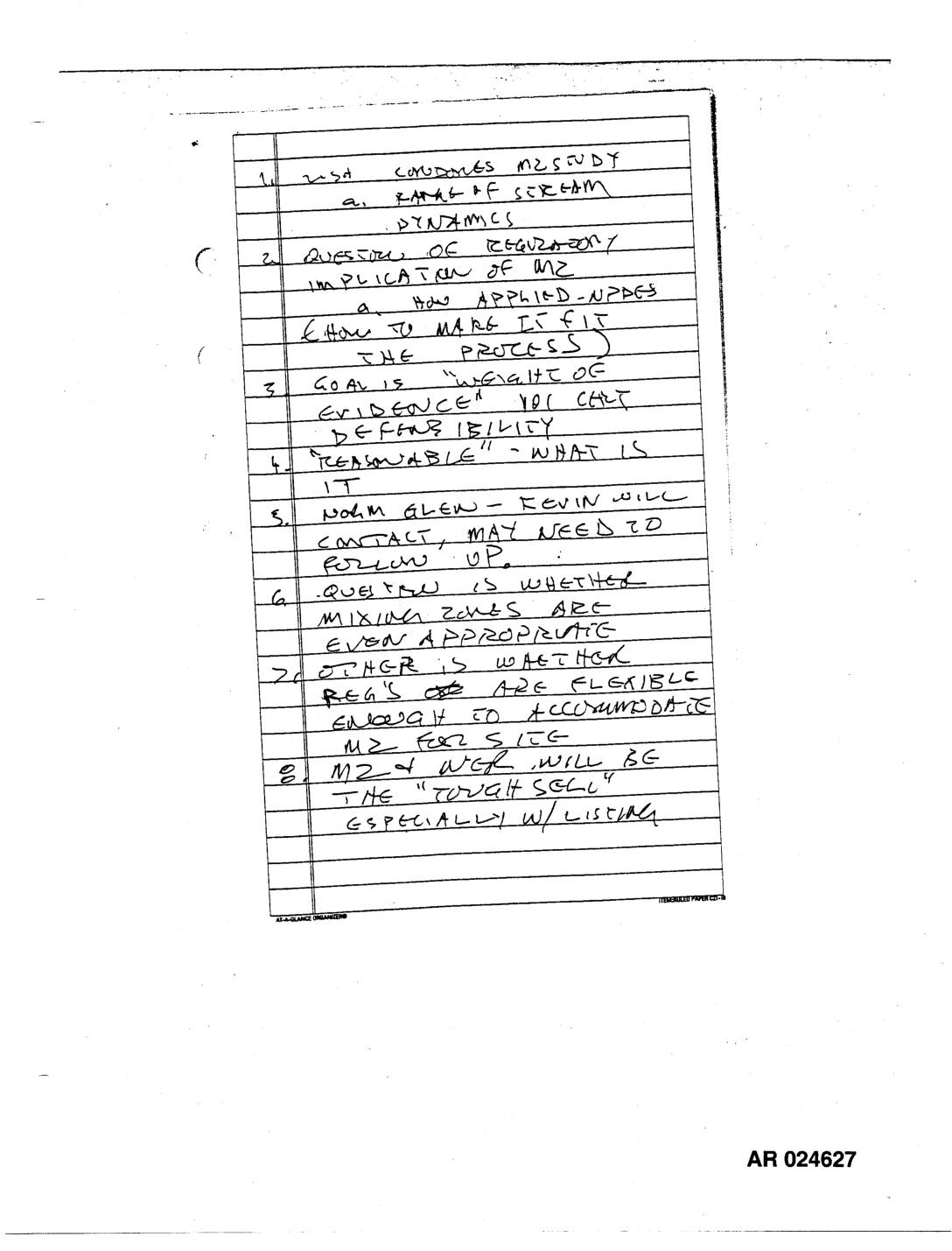
EXH AR024627: Handwritten Notes – Mixing Zones, NPDES, Regulatory Implications, Third Runway EIS
Handwritten notes outline eight key discussion points related to a mixing zone (MZ) study, including an examination of stream dynamics, regulatory questions about MZ implications under NPDES permitting, and how to weigh evidence for defensibility. The notes raise questions about whether mixing zones are appropriate at all, and whether existing regulations are flexible enough to accommodate site-specific MZ conditions. A final point flags that mixing zones near water quality listing designations will be a particularly difficult policy 'sell.' -
 2002-10-22
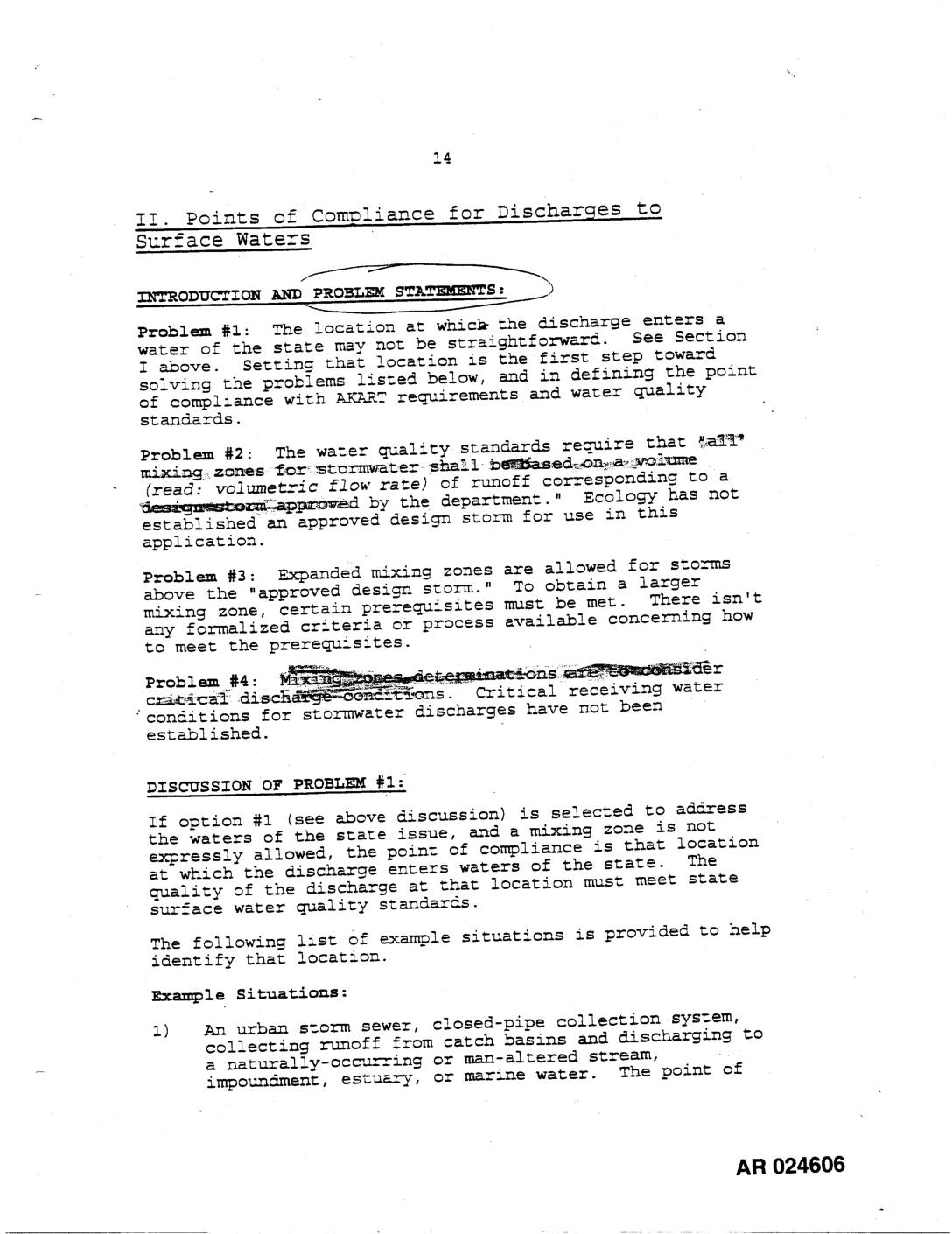
EXH AR024606: Points of Compliance — Mixing Zones & Stormwater Discharges to Surface Waters
This document outlines regulatory problems and compliance points for stormwater discharges into Washington State surface waters, focusing on where discharges must meet water quality standards. It identifies four key unresolved issues, including the lack of an approved design storm for mixing zones and undefined critical receiving water conditions. Various example situations are provided to help determine the exact location where stormwater discharge compliance must be measured. -
 2002-10-22
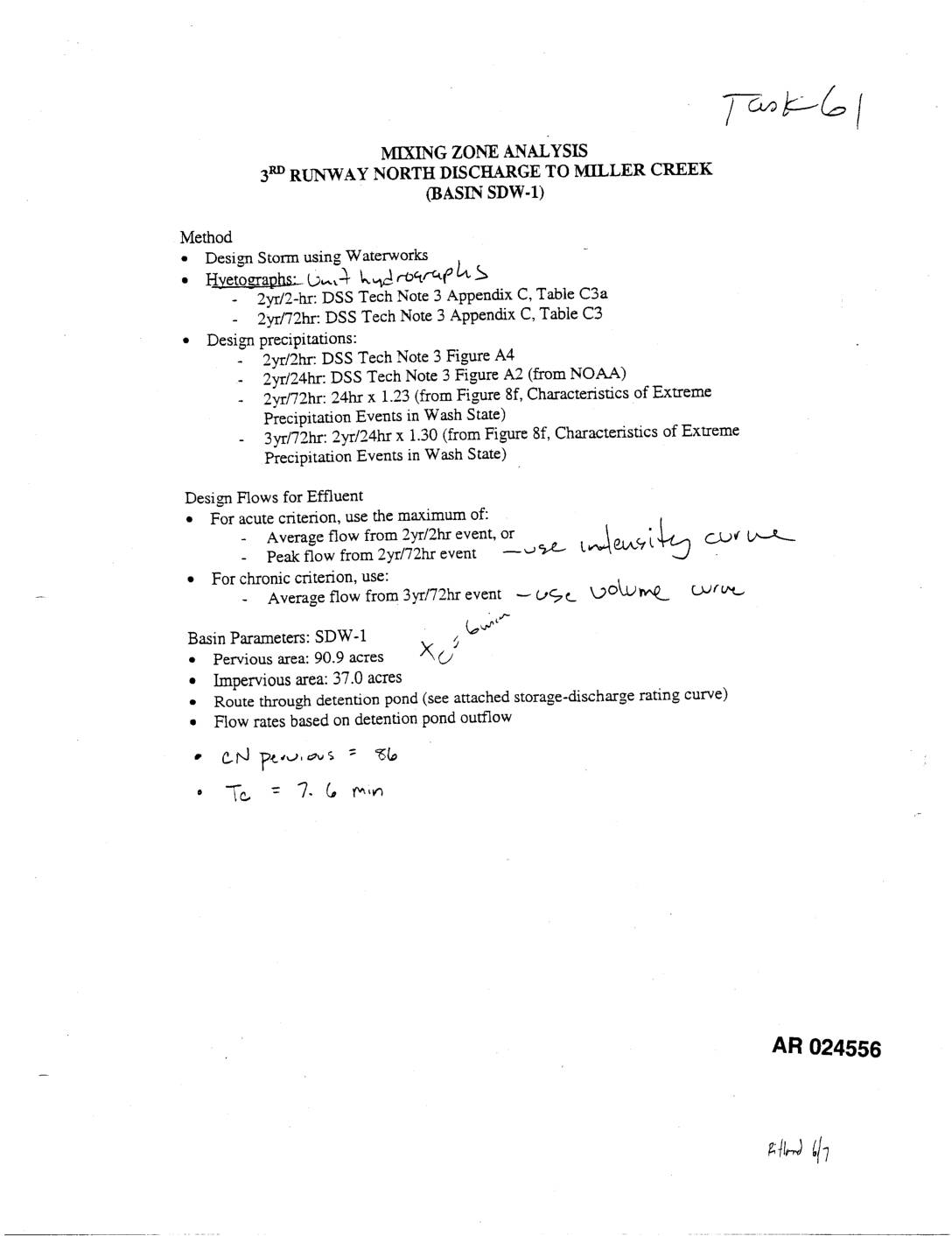
EXH AR024556: Mixing Zone Analysis — 3rd Runway North Discharge Miller Creek (Basin SDW-1)
This technical document describes a mixing zone analysis for stormwater discharge from the 3rd Runway North at Sea-Tac Airport into Miller Creek, designated as Basin SDW-1. The analysis uses design storm modeling with various rainfall scenarios (2-year/2-hour, 2-year/72-hour, and 3-year/72-hour events) to calculate effluent flow rates for both acute and chronic water quality criteria. Stormwater from the basin's approximately 128 acres of pervious and impervious area is routed through a detention pond before discharge, with outflow rates determined by a storage-discharge rating curve. -
 2002-10-22
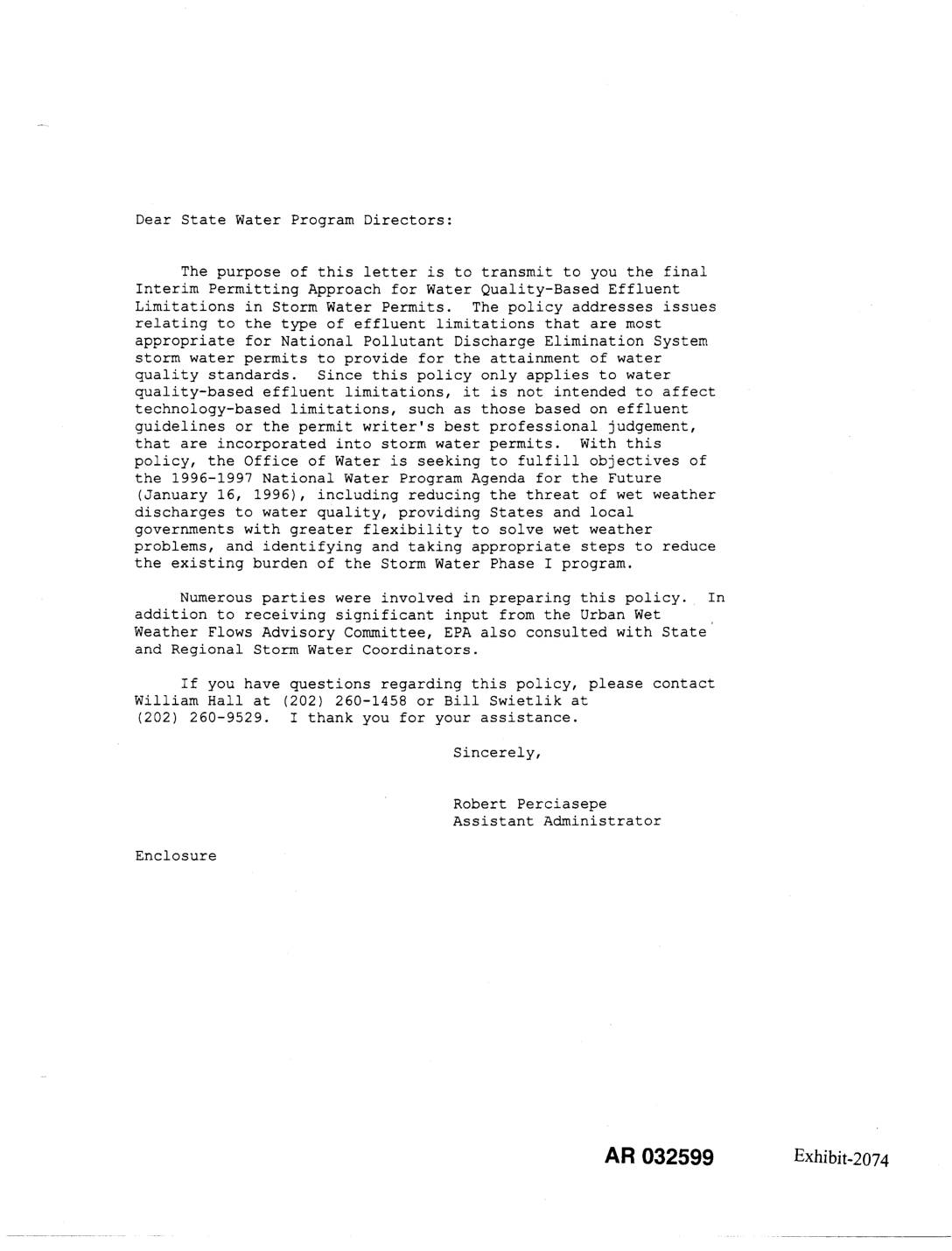
EXH AR032599: Interim Permitting Approach for Water Quality-Based Effluent Limitations in Storm Water Permits
Letter and memorandum from EPA Assistant Administrator Robert Perciasepe transmitting the final Interim Permitting Approach for Water Quality-Based Effluent Limitations in Storm Water Permits to State Water Program Directors and EPA Water Management Division Directors. The policy addresses NPDES storm water permit effluent limitations, adopting best management practices (BMPs) in lieu of numeric water quality-based -
 2002-10-22
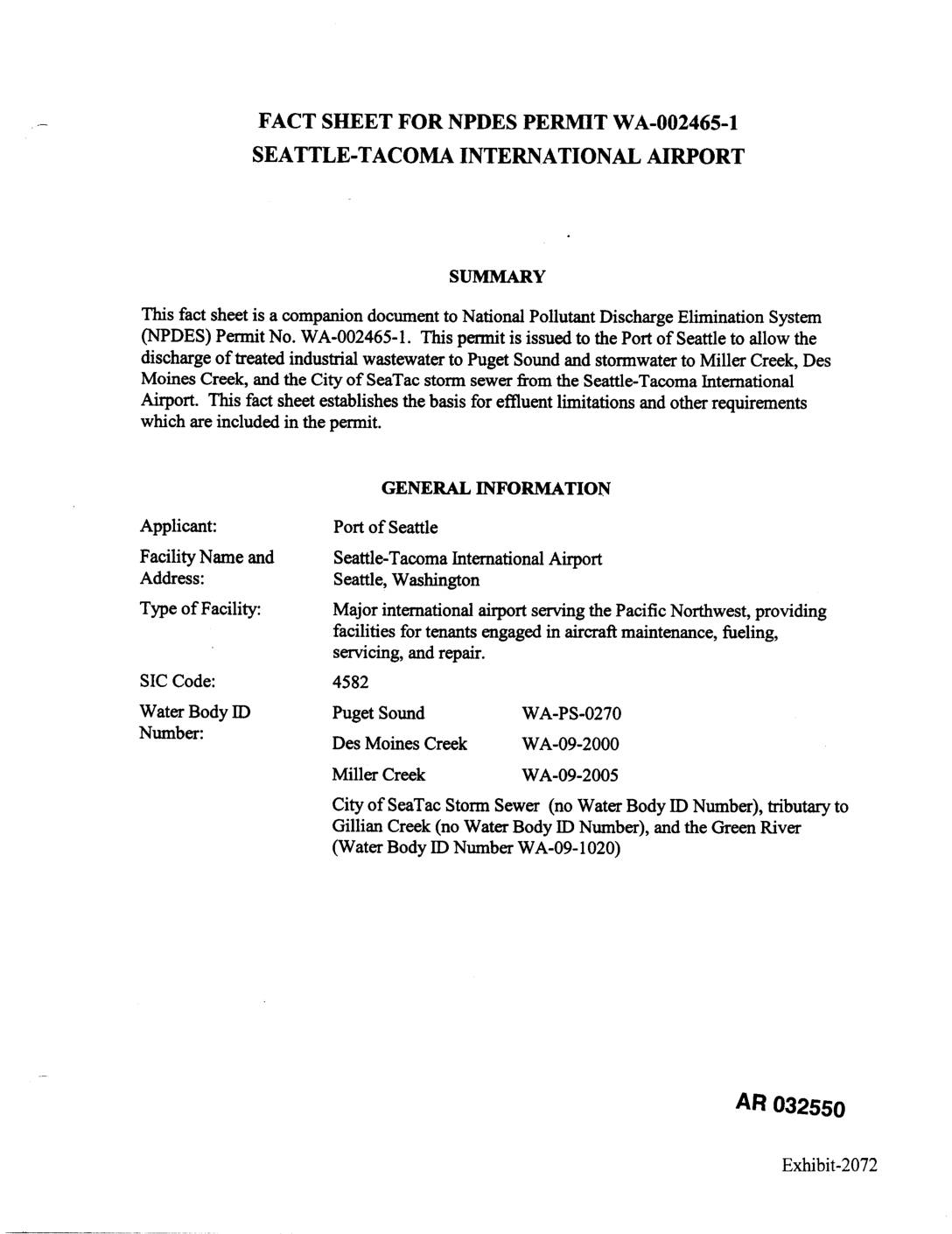
EXH 2072: Fact Sheet NPDES Permit WA-002465-1 STIA
This document is a fact sheet accompanying an NPDES (National Pollutant Discharge Elimination System) permit issued to the Port of Seattle for Seattle-Tacoma International Airport, governing how the airport manages and discharges treated industrial wastewater and stormwater. It covers discharge locations into Puget Sound, Des Moines Creek, Miller Creek, and the City of SeaTac storm sewer system, and establishes effluent limitations and monitoring requirements. The permit addresses water quality standards, pollution prevention plans, and compliance schedules to protect surrounding waterways from airport-related contaminants. -
 2002-10-22
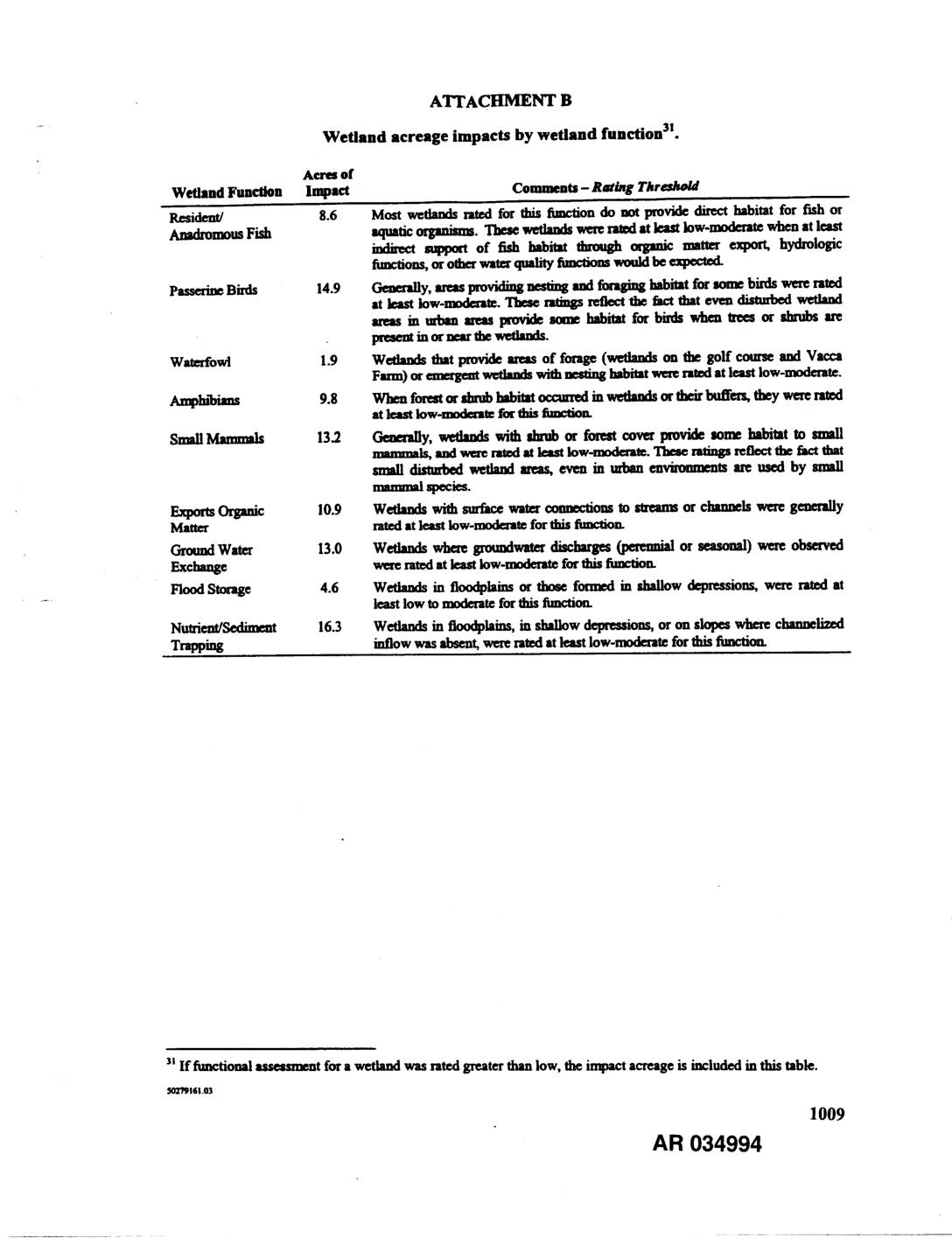
EXH AR034994: Attachment B — Wetland Acreage Impacts by Wetland Function
Attachment B table summarizing wetland acreage impacts by wetland function, associated with AR034994. Lists nine wetland functions including Resident/Anadromous Fish (8.6 acres), Passerine Birds (14.9 acres), Waterfowl (1.9 acres), Amphibians (9.8 acres), Small Mammals (13.2 acres), Exports Organic Matter (10.9 acres), Ground Water Exchange (13.0 acres), Flood Storage (4.6 acres), and Nutrient/Sediment Trapping (16.3 acres). -
 2002-10-22
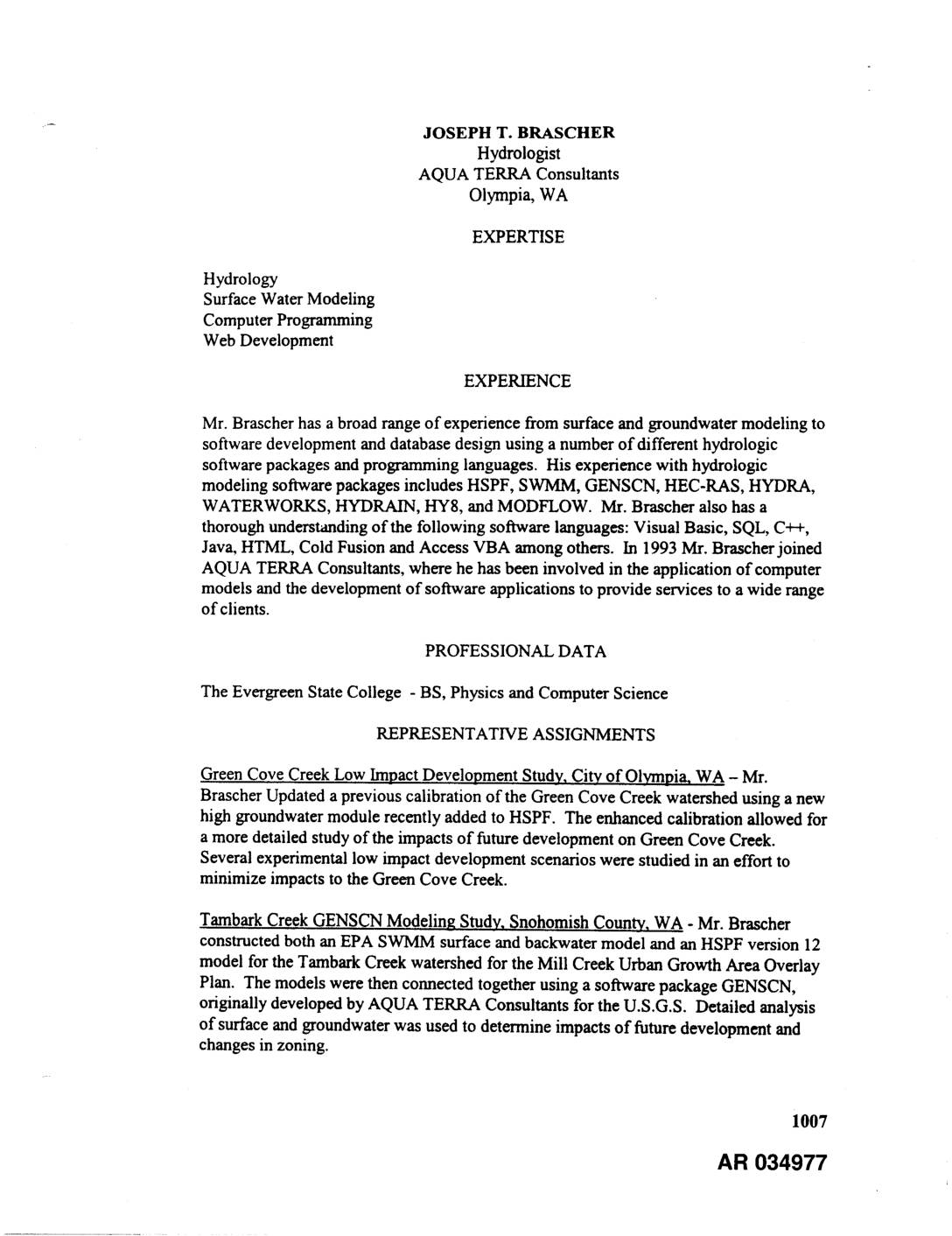
EXH AR034977: Resume of Joseph T. Brascher, Hydrologist, AQUA TERRA Consultants
Resume of Joseph T. Brascher, Hydrologist at AQUA TERRA Consultants, Olympia, WA. Details expertise in hydrology, surface water modeling, computer programming, and web development. Experience with hydrologic modeling software packages including HSPF, SWMM, GENSCN, HEC-RAS, HYDRA, WATERWORKS, HYDRAIN, HY8, and MODFLOW. Representative assignments include Green Cove Creek Low Impact Development Study (City of Olympia), Tambark