TagUltrafine Particulates(77)
-
 2019-04-01
Ambient Ultrafine Particles Near Sea-Tac Airport: Presentation to the Federal Way Transportation & Planning Commission
Researchers from the University of Washington studied ultrafine particles (UFPs) — tiny airborne pollutants less than 100 nanometers in diameter — near Seattle-Tacoma International Airport. Their findings highlight that jet aircraft engines produce exceptionally small particles (under 30 nanometers), while diesel vehicles also contribute elevated UFP levels within about 200 meters of major roads. Although UFPs are currently unregulated, a growing body of scientific evidence suggests they pose significant health risks to nearby communities. -
2019-04-01
Ambient Ultrafine Particles Near Sea-Tac Airport: Presentation to the Federal Way Transportation & Planning Commission
Presentation by University of Washington researchers Timothy Larson, Edmund Seto, Elena Austin, Timothy Gould, and Michael Yost to the Federal Way Transportation & Planning Commission on April 1, 2019, covering ambient ultrafine particles (UFPs) near Sea-Tac Airport. Topics include UFP size classification (under 100 nanometers), health effects compared to PM2.5, diesel engine emissions elevating UFP -
 2019-01-23
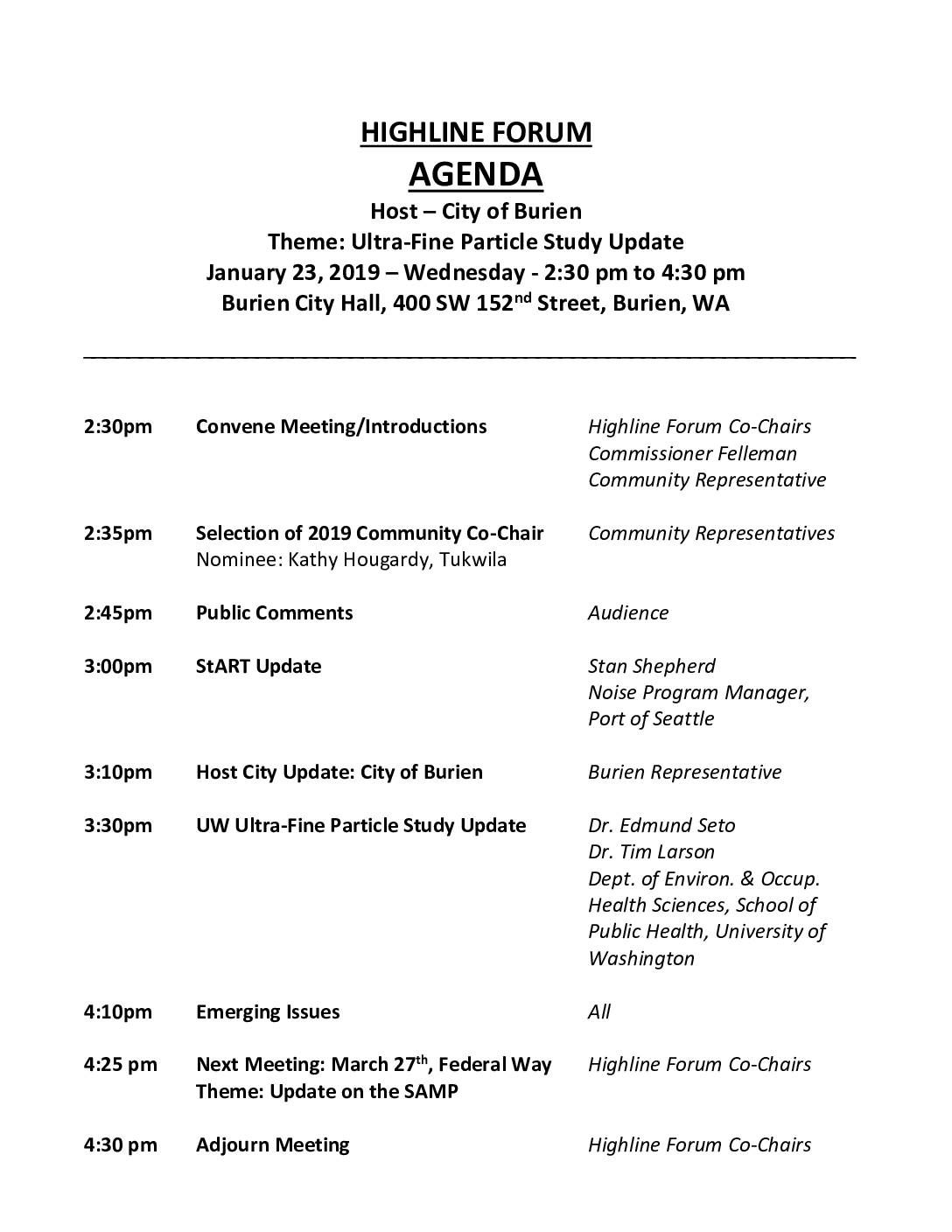
Highline Forum agenda: Ultra-Fine Particle Study Update, January 23, 2019
The Highline Forum held its January 23, 2019 meeting at Burien City Hall, focusing on an update of the University of Washington's Ultra-Fine Particle Study presented by researchers from the UW School of Public Health. The agenda also included a StART program update from the Port of Seattle's Noise Program Manager, selection of a 2019 Community Co-Chair, and a City of Burien host update. The forum scheduled six bimonthly meetings throughout 2019, rotating among cities near Seattle-Tacoma International Airport including Federal Way, SeaTac, Tukwila, and Des Moines. -
 2019-01-23
Mobile ObserVations of Ultrafine Particles (MOV-UP) advisory
The MOV-UP (Mobile ObserVations of Ultrafine Particles) study, presented at the Highline Forum in January 2019, was commissioned under a Washington State proviso to investigate air quality impacts from Sea-Tac Airport traffic. Researchers from the University of Washington measured ultrafine particle (UFP) concentrations in communities surrounding the airport, aiming to distinguish aircraft-related pollution from other sources. A final study report was due to local governments and the community by December 1, 2019. -
 2018-12-19
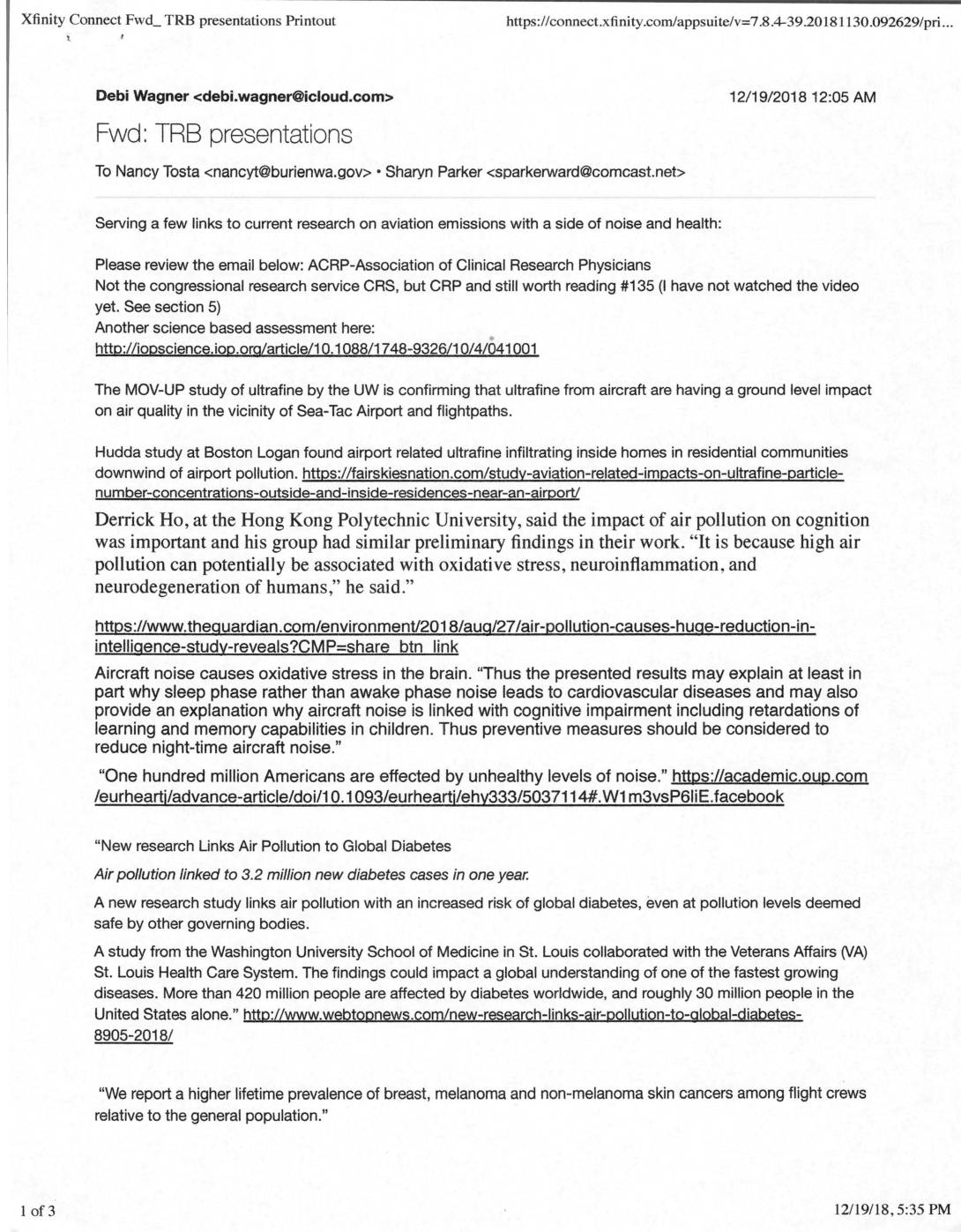
Fwd: TRB presentations
A December 2018 email chain forwarded by community advocate Debi Wagner to Burien city officials shares research links connecting aviation emissions and aircraft noise to serious public health concerns, including ultrafine particle pollution, cognitive impairment, cardiovascular disease, and cancer. The email references studies such as the University of Washington's MOV-UP study confirming ground-level ultrafine particle impacts near Sea-Tac Airport, as well as EPA Region X recommendations for resources on airport air quality and public health. The correspondence highlights growing community and regulatory interest in understanding the health effects of airport operations on neighborhoods surrounding Sea-Tac. -
 2018-06-01
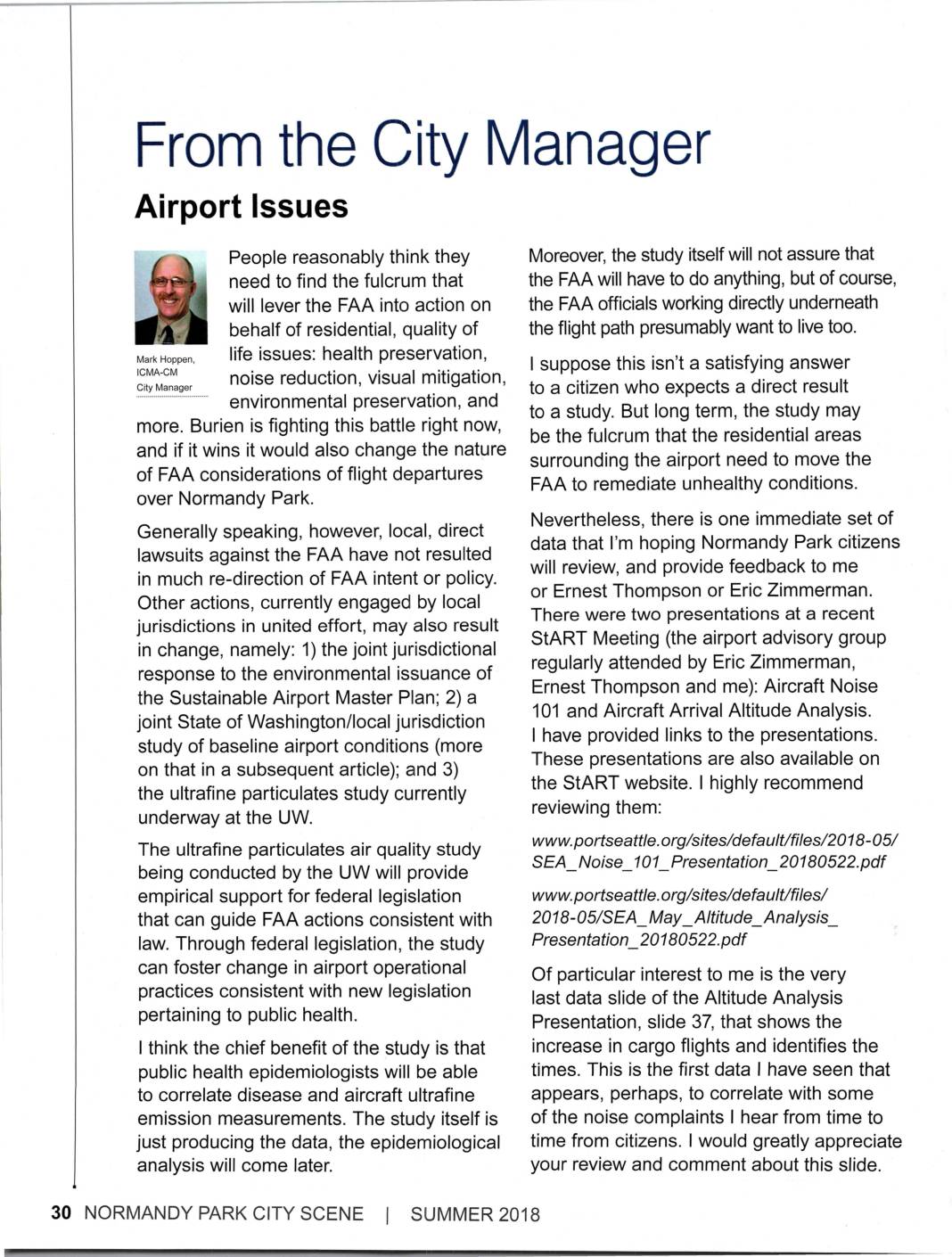
From the City Manager: Airport issues
Normandy Park City Manager Mark Hoppen outlines the city's efforts to address Sea-Tac Airport noise and air quality concerns, noting that direct lawsuits against the FAA have had limited success. Key initiatives include a joint jurisdictional response to the Sustainable Airport Master Plan, a Washington State baseline airport conditions study, and a University of Washington ultrafine particulates study aimed at building evidence for federal health-based legislation. Residents are encouraged to review two StART Meeting presentations on aircraft noise and arrival altitudes, particularly slide 37 of the Altitude Analysis, which shows an increase in cargo flights potentially linked to local noise complaints. -
 2018-02-07
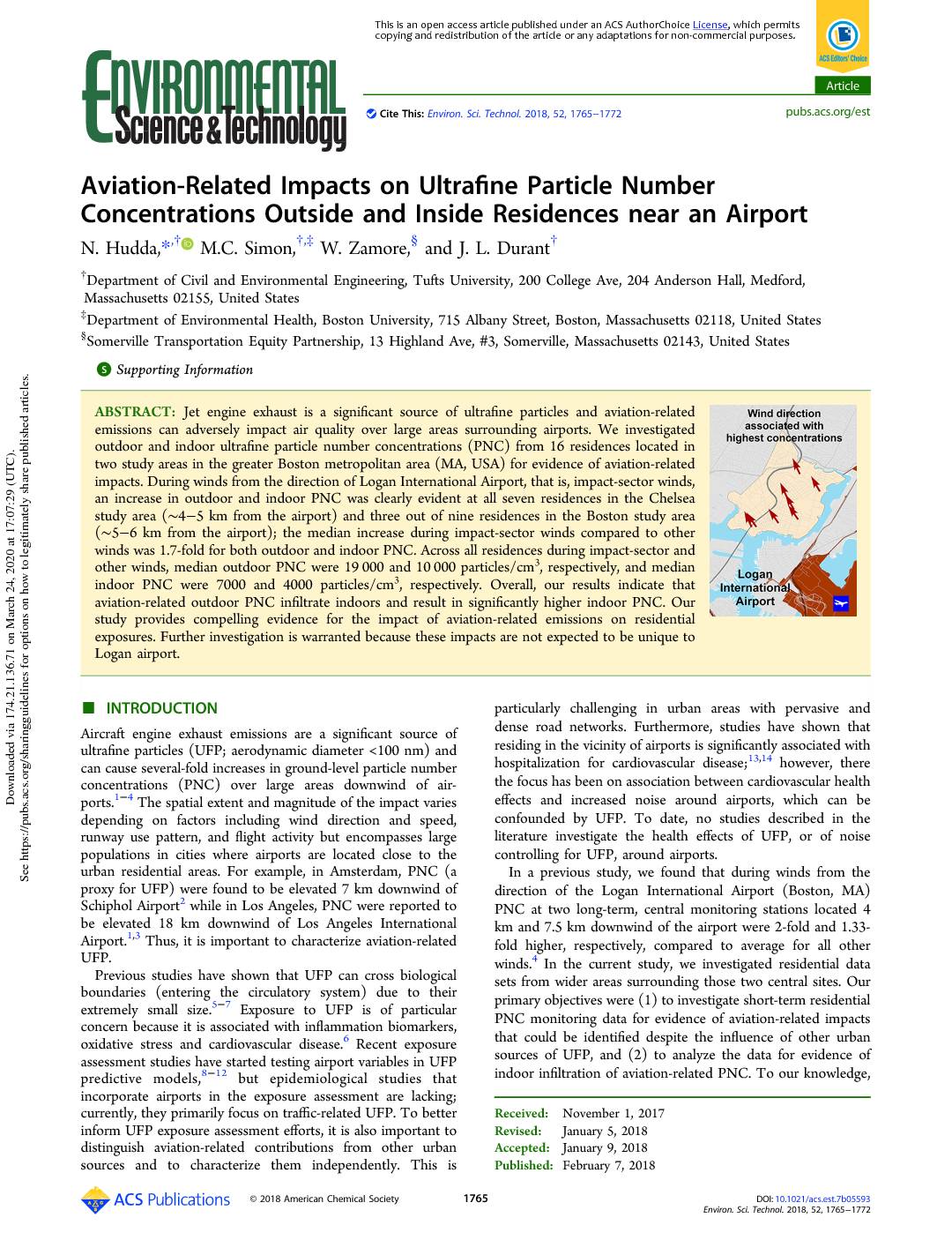
Aviation-related impacts on ultrafine particle number concentrations outside and inside residences near an airport
A study of residences near Boston's Logan International Airport found that jet engine exhaust significantly raises ultrafine particle concentrations both outdoors and indoors, with levels roughly 1.7 times higher when winds blow from the airport's direction. Researchers monitored 16 homes located 4–6 km from the airport and confirmed that aviation-related particles penetrate inside residences, posing potential health risks to nearby communities. While focused on Logan Airport, the authors note these findings are likely applicable to other major airports, including those in dense urban areas. -
 2018-01-08
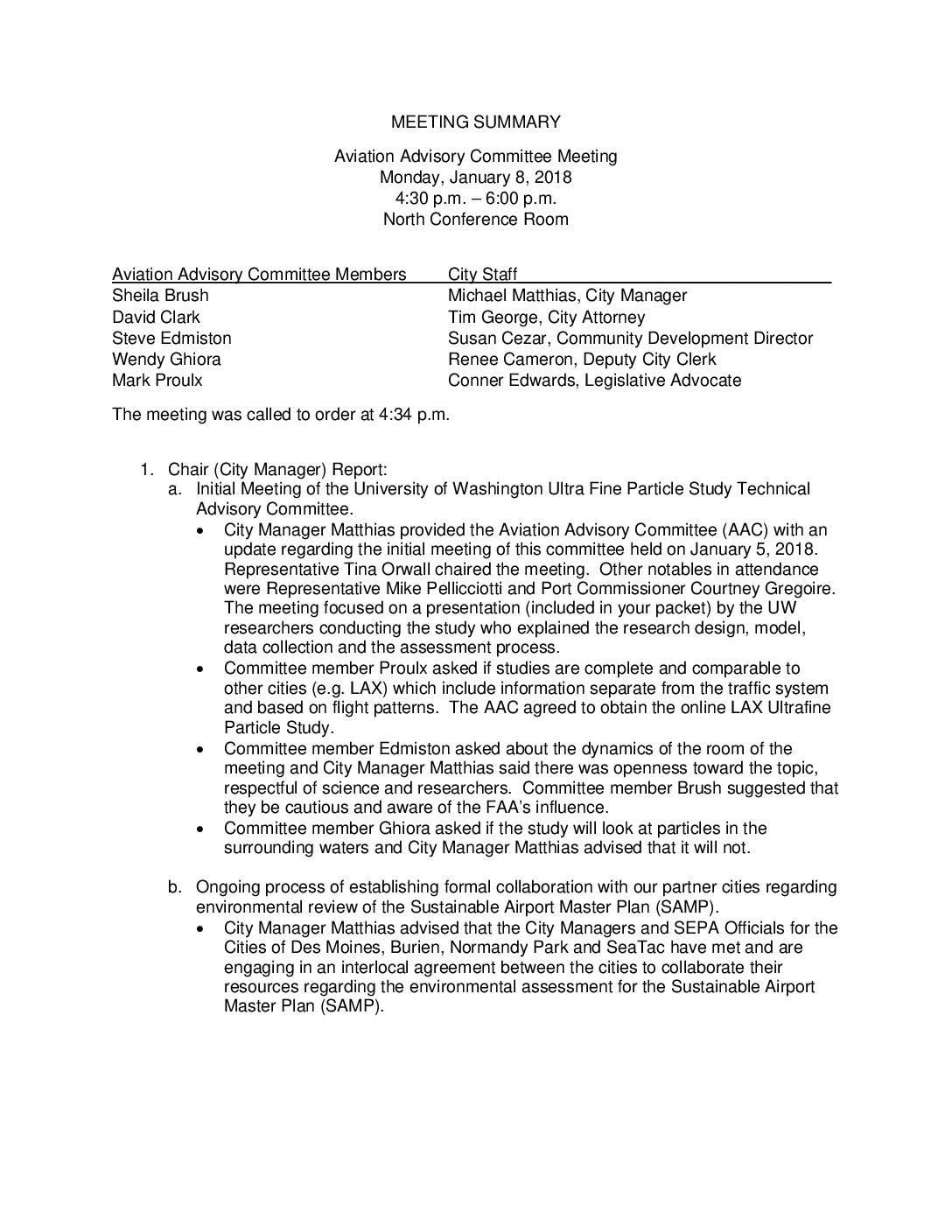
Aviation Advisory Committee Meeting Minutes — January 8, 2018
The Des Moines Aviation Advisory Committee met on January 8, 2018 to discuss several airport-related concerns, including an update on the University of Washington Ultrafine Particle Study, a proposed interlocal agreement between neighboring cities to jointly respond to the Port of Seattle's Sustainable Airport Master Plan (SAMP), and a potential resolution advocating for a second airport. Community members and committee members also raised ongoing concerns about the health and noise impacts of Sea-Tac Airport on local residents. -
2017 Washington State Senate Bill 6032 Sec. 602 (19) MOV-UP Study
“$125,000 of the general fund—state appropriation for fiscal year 2018 and $125,000 of the general fund—state appropriation for fiscal year 2019 are provided solely for the University of Washington school of public health to study the air quality implications of air traffic at the international airport in the state that has the highest total annual -
 2017-12-05
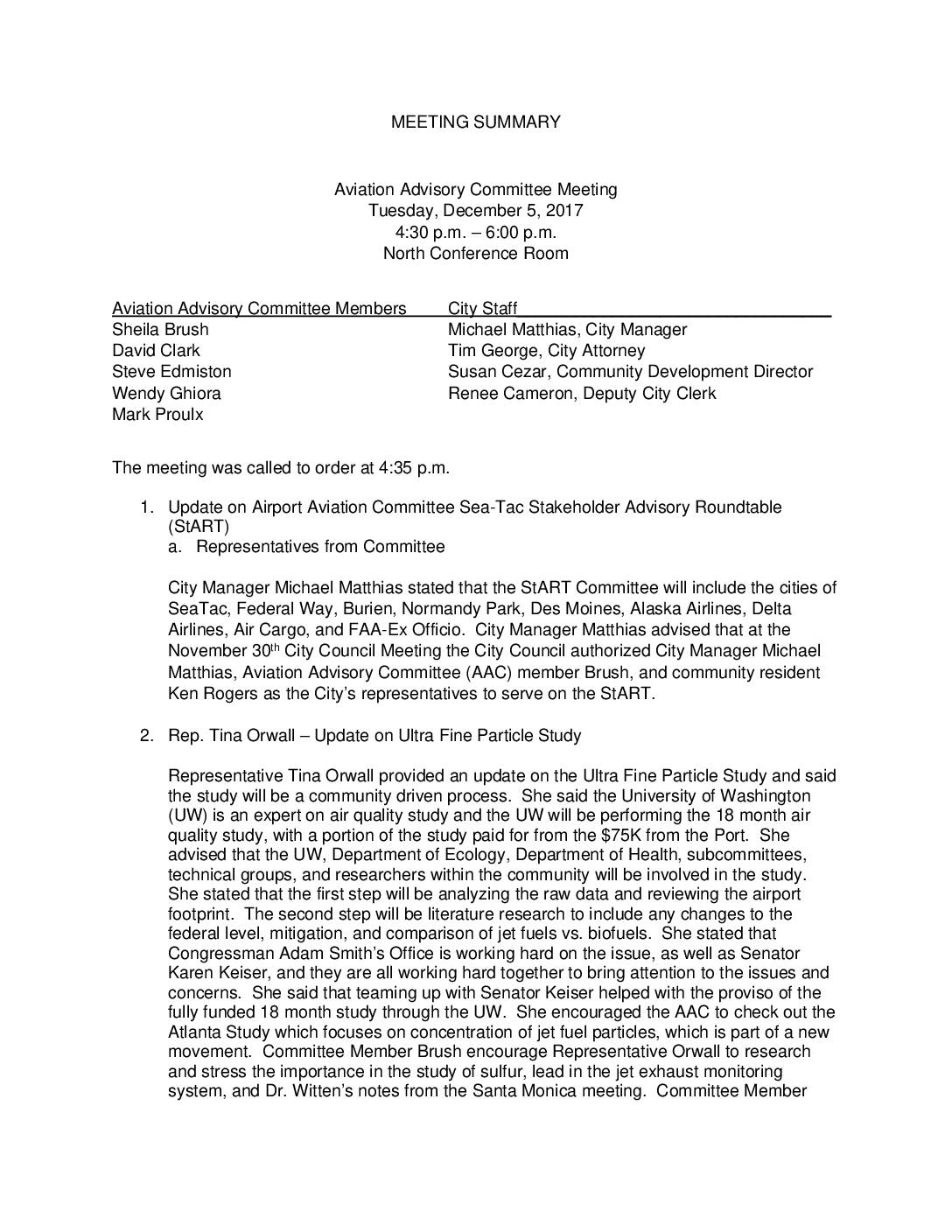
Aviation Advisory Committee Meeting Minutes — December 5, 2017
The Des Moines Aviation Advisory Committee met on December 5, 2017 to discuss key issues related to Sea-Tac Airport, including the formation of the Sea-Tac Stakeholder Advisory Roundtable (StART) and an 18-month air quality study being conducted by the University of Washington to examine the effects of ultra-fine particles from jet exhaust on surrounding communities. The committee also reviewed the environmental review process for the Sustainable Airport Master Plan (SAMP), noting concerns that the Port of Seattle may pursue a less rigorous Environmental Assessment rather than a full Environmental Impact Statement. Community members raised additional concerns about nighttime flights, air cargo operations, and the Port potentially bypassing SEPA/NEPA requirements through piecemeal project approvals.