TagThird Runway(1084)
-
 1998-02-18
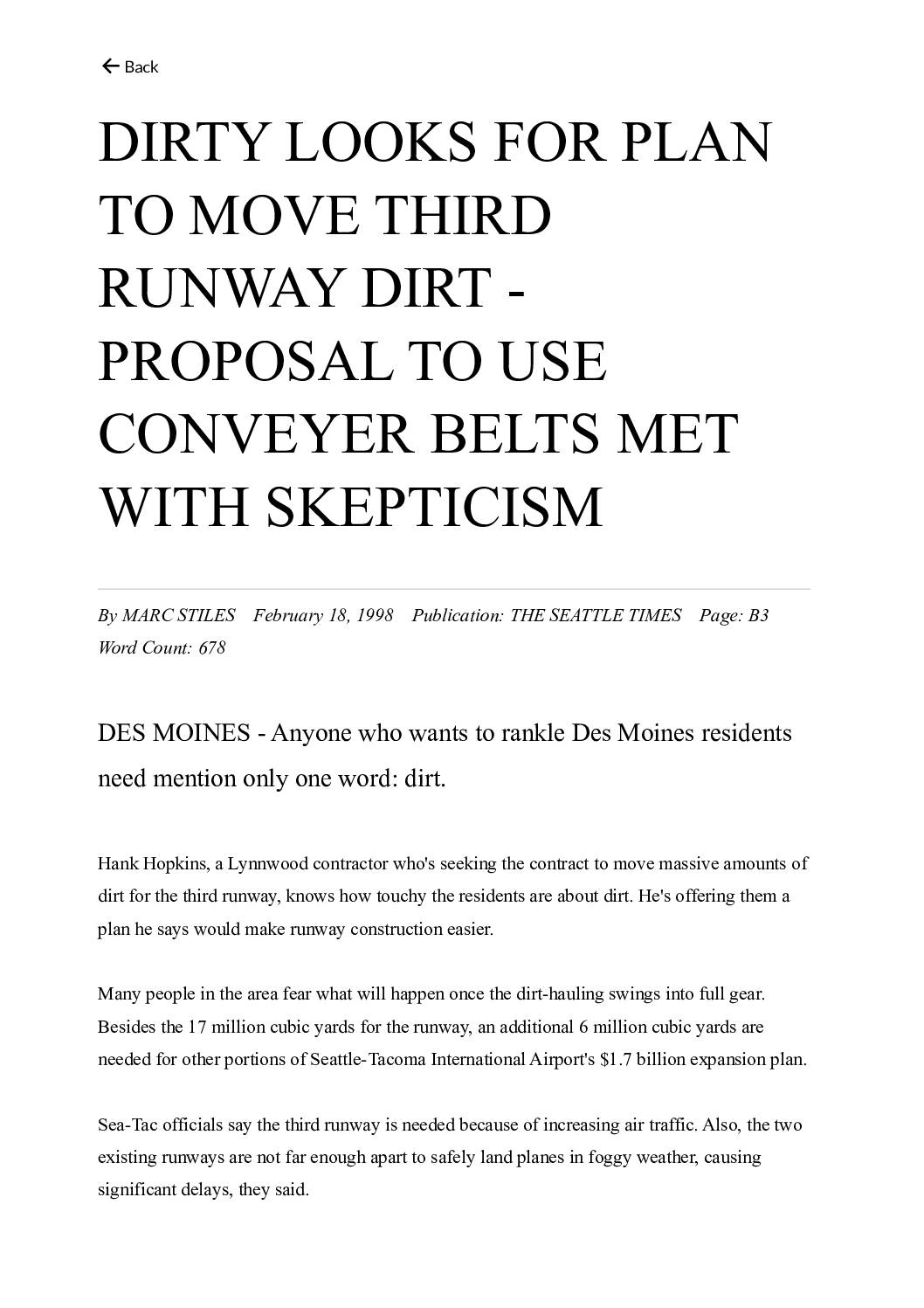
Dirty looks for plan to move third runway dirt – proposal to use conveyer belts met with skepticism
A Lynnwood contractor proposed using conveyor belts instead of trucks to haul the 23 million cubic yards of fill dirt needed for Sea-Tac Airport's third runway construction in the late 1990s. The plan would have barged dirt to Des Moines, then carried it 2.5 miles to the airport via belt, cutting the estimated haul time from five years to two and a half. Des Moines residents, already angry about the runway routing air traffic over their downtown, reacted skeptically and accused the contractor of trying to bribe the city with promises of new parks in exchange for cooperation. -
 1998-02-03
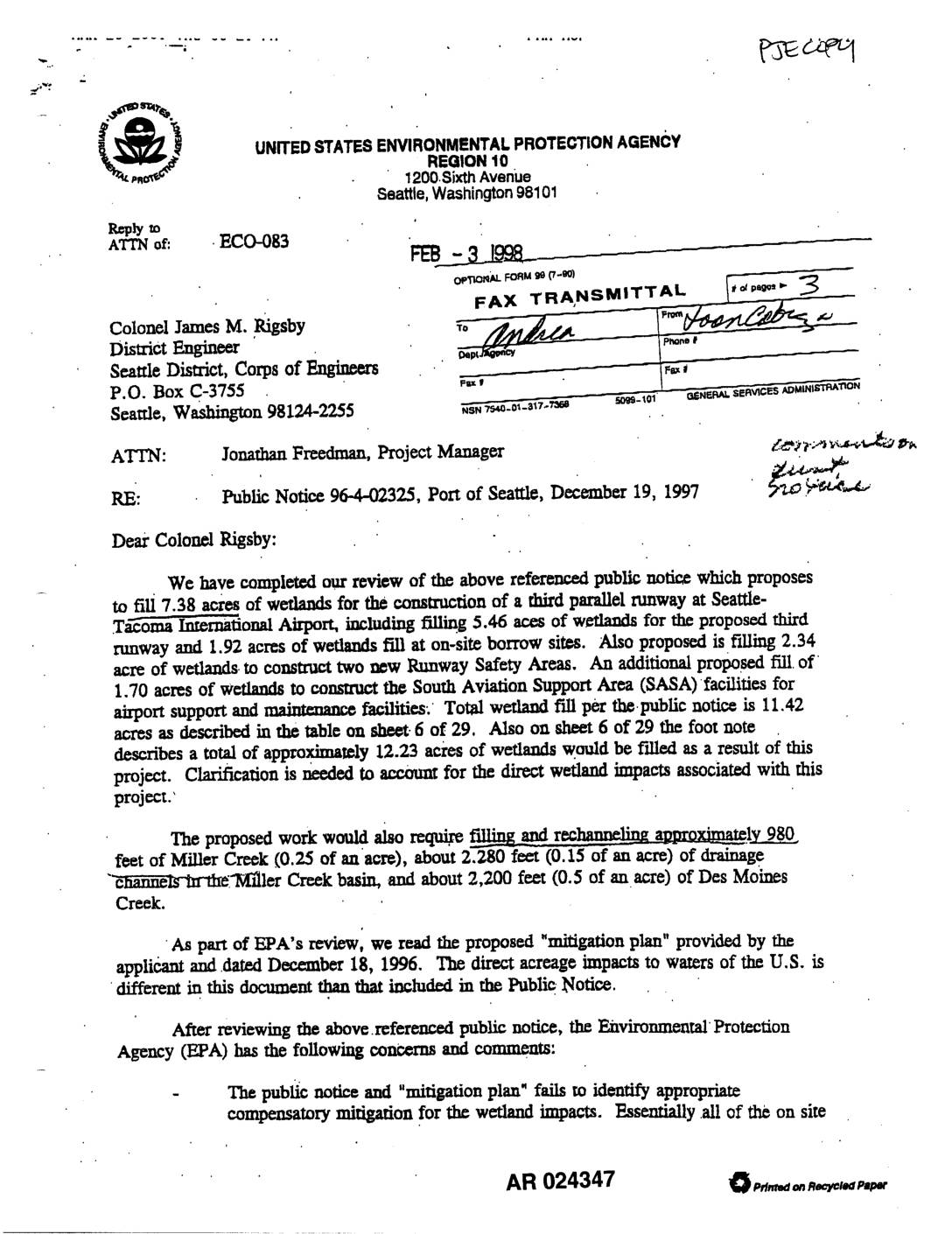
EXH AR024347: EPA Region 10 Letter to Army Corps re Public Notice 96-4-02325 Third Runway Wetlands Fill
In February 1998, the U.S. EPA Region 10 wrote to the Army Corps of Engineers recommending denial of a permit for the Port of Seattle's proposed third parallel runway at Seattle-Tacoma International Airport, citing concerns over the filling of more than 11 acres of wetlands and portions of Miller Creek and Des Moines Creek. The EPA objected that the applicant's mitigation plan relied almost entirely on off-site wetland replacement in the Green River Valley rather than within the affected watersheds, and questioned whether alternatives to wetland fills for the South Aviation Support Area and on-site borrow areas had been adequately explored. The agency indicated it was willing to work with the Corps and the Port to identify solutions that would satisfy both aviation safety needs and Clean Water Act Section 404(b)(1) requirements. -
 1998-01-22
EXH AR025788: Geotechnical Design Recommendations Phase 1 Embankment Construction Third Runway STIA
This January 1998 geotechnical engineering report by AGI Technologies provides design recommendations for Phase 1 embankment construction related to the Third Runway Project at Seattle-Tacoma International Airport. The report covers site conditions including subsurface soil layers and groundwater, as well as design concepts addressing embankment stability, settlement, and drainage. It was prepared for HNTB Corporation as part of the engineering groundwork for the airport's runway expansion. -
 1997-12-19
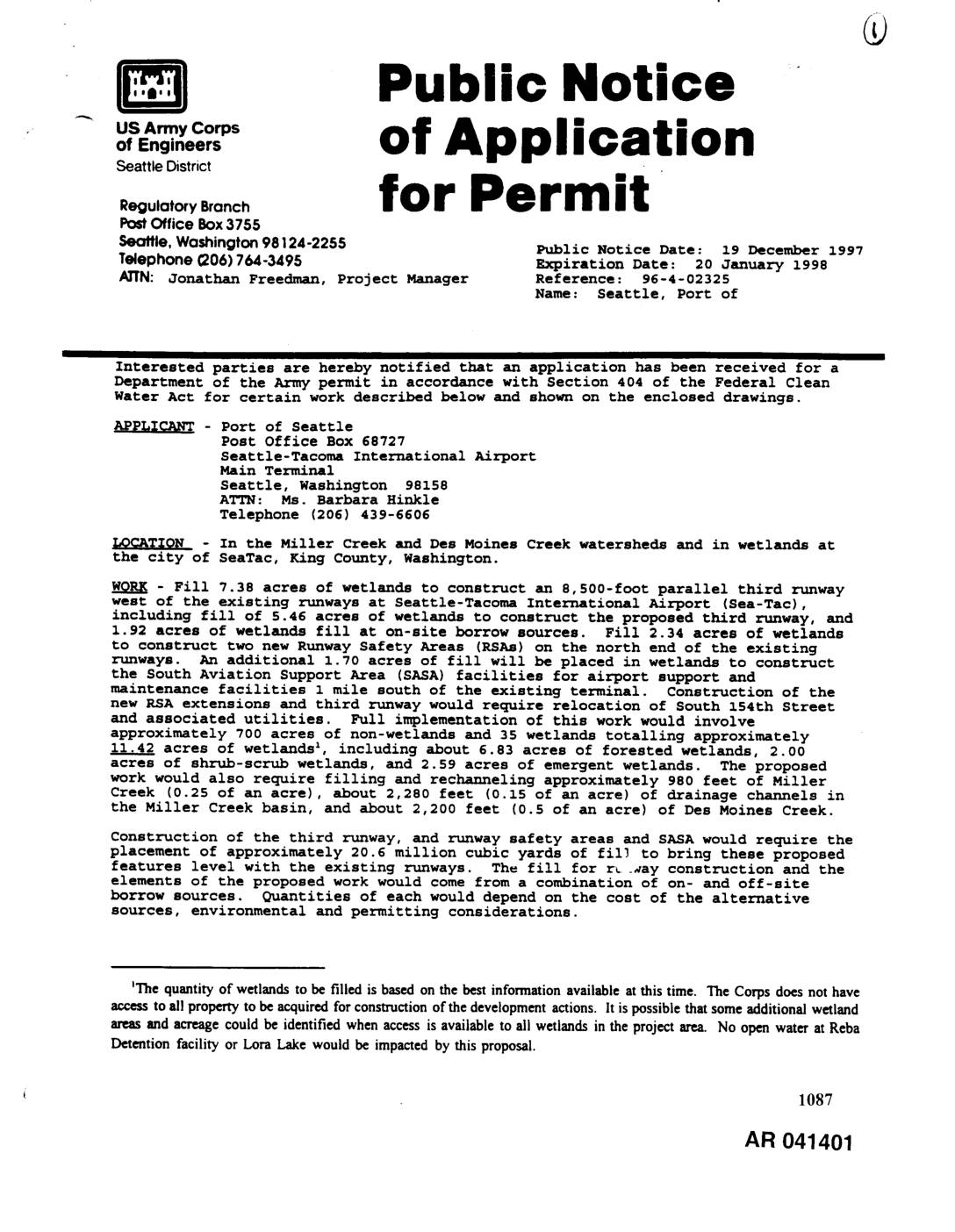
EXH AR041401: US Army Corps of Engineers Public Notice of Application for Permit — Port Of Seattle Third Runway, Sea-Tac Airport
US Army Corps of Engineers Seattle District public notice of permit application 96-4-02325, filed by Port Of Seattle (contact: Barbara Hinkle, (206) 439-6606) under Section 404 of the Federal Clean Water Act. Proposes filling 7.38 acres of wetlands to construct an 8,500-foot parallel third runway at Seattle-Tacoma International Airport (Sea-Tac), plus 2.34 acres for Runway -
 1997-11-01
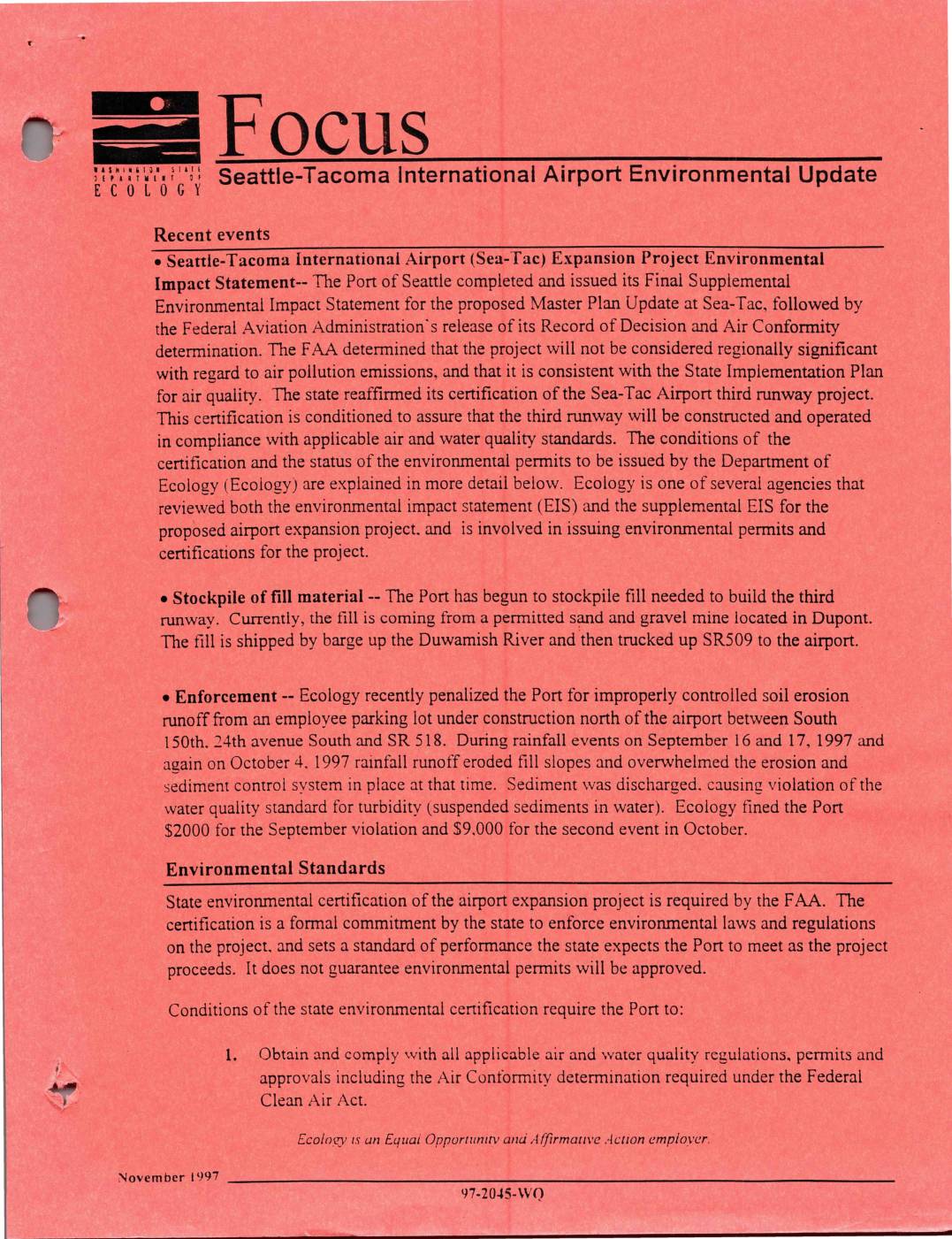
Seattle-Tacoma International Airport Environmental Update
This November 1997 environmental update from Washington State's Department of Ecology covers the Sea-Tac Airport third runway expansion project, detailing the FAA's air quality conformity determination, state environmental certification conditions, and required permits. The Port of Seattle was fined for soil erosion violations during construction of an employee parking lot, and was required to implement stormwater controls, groundwater studies, and erosion management plans. Several permits were under active review at the time, including an NPDES stormwater permit and a 404 wetland permit issued by the Army Corps of Engineers. -
 1997-11-01
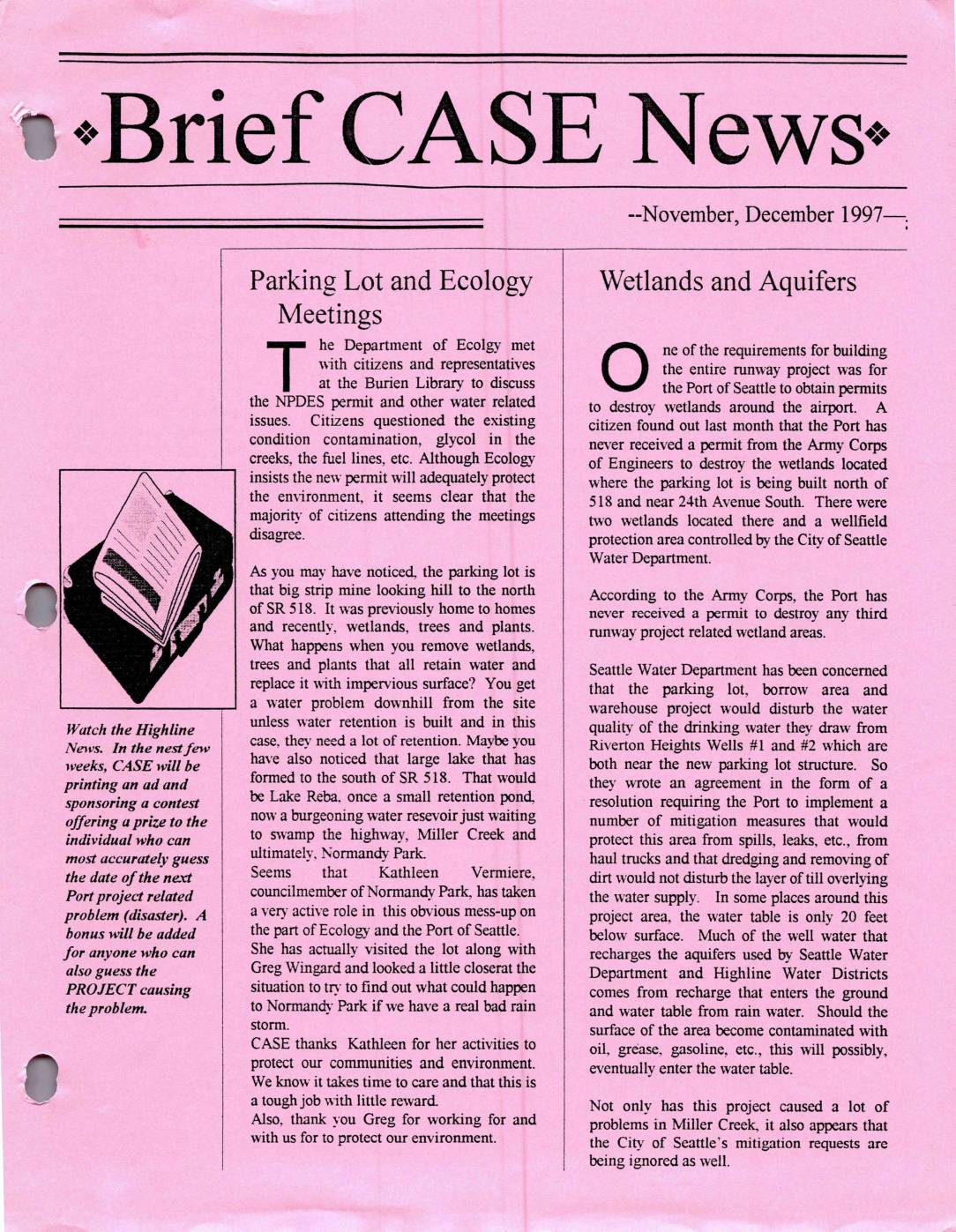
Brief CASE News: November–December 1997
This November/December 1997 newsletter from CASE (Citizens for an Accurate and Safe Environment) reports on environmental and noise concerns related to Port of Seattle airport expansion projects near Sea-Tac Airport. Key issues include the Port allegedly lacking required Army Corps of Engineers permits to destroy wetlands for a new parking lot, potential contamination threats to Seattle Water Department drinking water aquifers, and citizen complaints about early-morning aircraft engine run-ups disturbing nearby residents. The newsletter also highlights a legal victory in Burbank, California affirming local governments' rights to control land use decisions related to airport expansion. -
1997-09-26
Costly War Waged Over Third Runway
David Schaefer Seattle Times Staff Reporter AS PREPARATIONS begin for building a new runway at Seattle-Tacoma International Airport, a coalition of cities is spending millions of tax dollars on lawsuits and public relations trying to stop the massive project. The Port of Seattle, meanwhile, will spend millions in public funds to keep it from being -
 1997-08-31
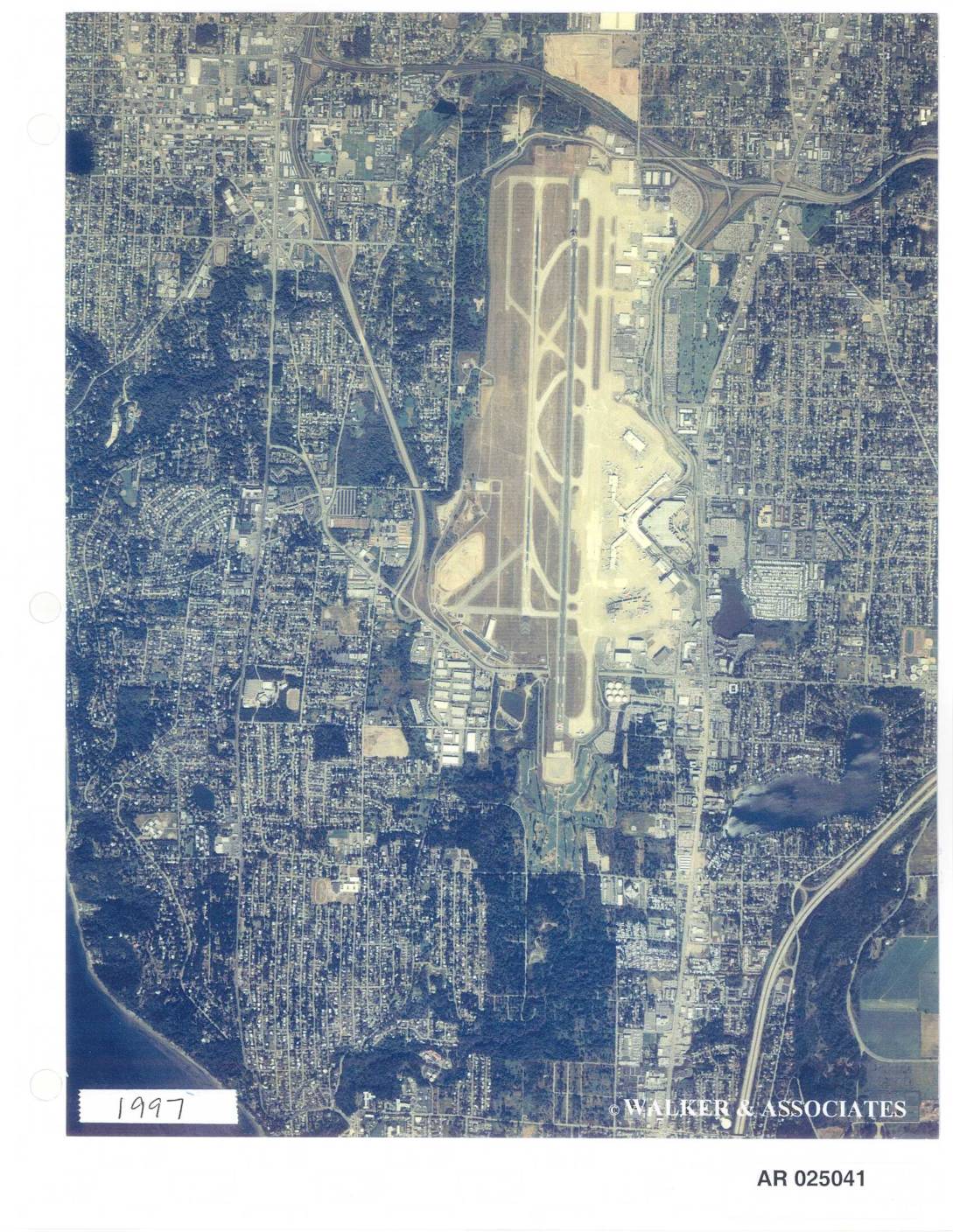
EXH AR025041: Aerial Photographs STIA 1997–1998 — Walker & Associates
This document contains aerial photographs of Seattle-Tacoma International Airport (Sea-Tac) taken in 1997 and 1998 by Walker & Associates, a photogrammetric and GIS services firm based in Seattle, WA. The images show the airport's runways, taxiways, terminal area, and surrounding residential and commercial neighborhoods from above. Accompanying metadata indicates the 1997 photograph was taken on August 31, 1997, at an approximate print scale of 1 inch equals 2,300 feet, under negative number 1197 SeaTac PP-2. -
 1997-07-03
EXH AR041146: FAA Record of Decision for Sea-Tac Airport Master Plan Update Development Actions
FAA Northwest Mountain Region Record of Decision (ROD) dated July 3, 1997, providing final Federal Aviation Administration approval for Sea-Tac International Airport Master Plan Update development actions adopted by Port of Seattle (POS) Commission Resolution #3212 (August 1, 1996) and amended by Resolution No. 3245 (May 27, 1997). Approves a new 8500-foot dependent air carrier -
 1997-07-03
Record of Decision for the Master Plan Update development actions, Sea-Tac International Airport, Seattle, Washington
This 1997 Federal Aviation Administration Record of Decision granted final approval for major development actions at Seattle-Tacoma International Airport, including construction of a new 8,500-foot third parallel runway, a 600-foot extension of an existing runway, and various landside facility improvements planned through 2010. The decision followed years of environmental review, public comment, and regional planning studies aimed at addressing growing passenger demand and significant air traffic delays, particularly during poor weather conditions.