TagThird Runway(1084)
-
 2002-02-20
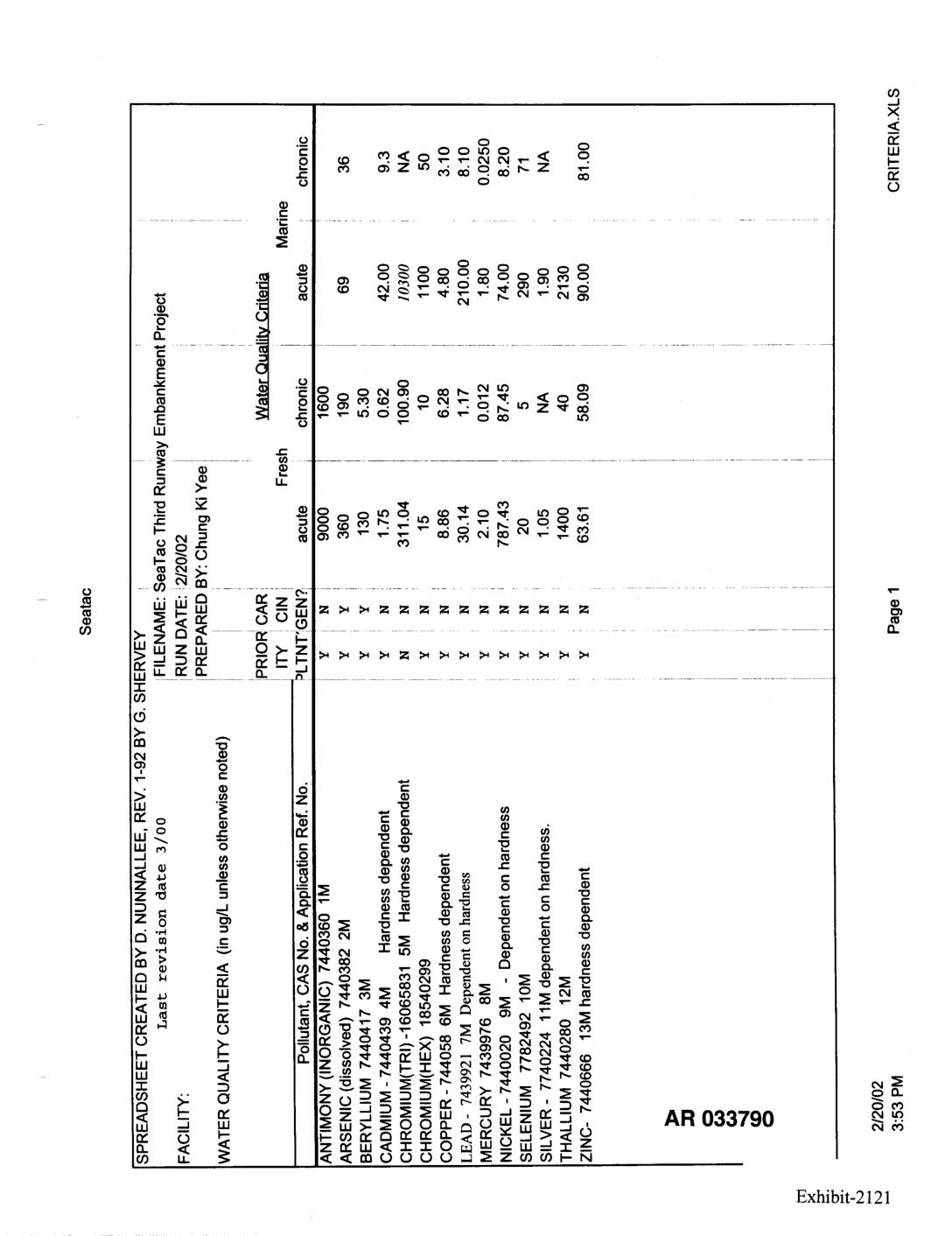
EXH AR033790: Water Quality Criteria Spreadsheet, Sea-Tac Third Runway Embankment Project
Water quality criteria spreadsheet (CRITERIA.XLS) for the SeaTac Third Runway Embankment Project, prepared by Chung Ki Yee, run date 2/20/02, created by D. Nunnallee (rev. 1-92) with last revision 3/00. Lists fresh and marine acute and chronic water quality criteria (in ug/L) for metals including antimony (inorganic), arsenic (dissolved), beryllium, cadmium, chromium (TRI and HEX), -
 2002-02-20
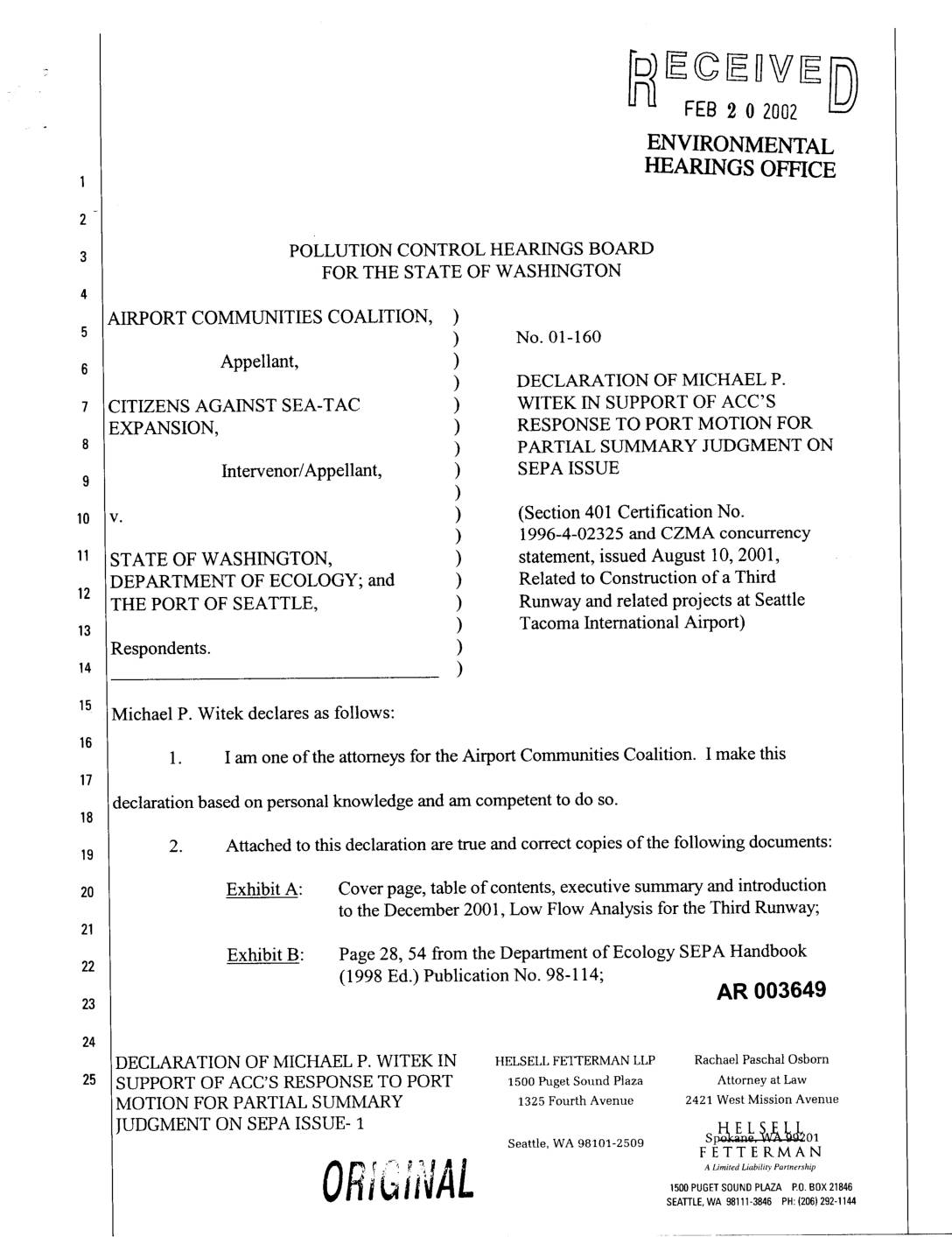
EXH AR003649: Declaration of Michael P. Witek in Support of ACC’s Response to Port Motion for Partial Summary Judgment on SEPA Issue
Declaration by attorney Michael P. Witek (Helsell Fetterman LLP) on behalf of Airport Communities Coalition (ACC) filed February 20, 2002, before the Pollution Control Hearings Board (PCHB), Case No. 01-160, opposing Port Of Seattle’s motion for partial summary judgment on SEPA issue. Relates to Section 401 Certification No. 1996-4-02325 and CZMA concurrency statement issued August -
 2002-02-20
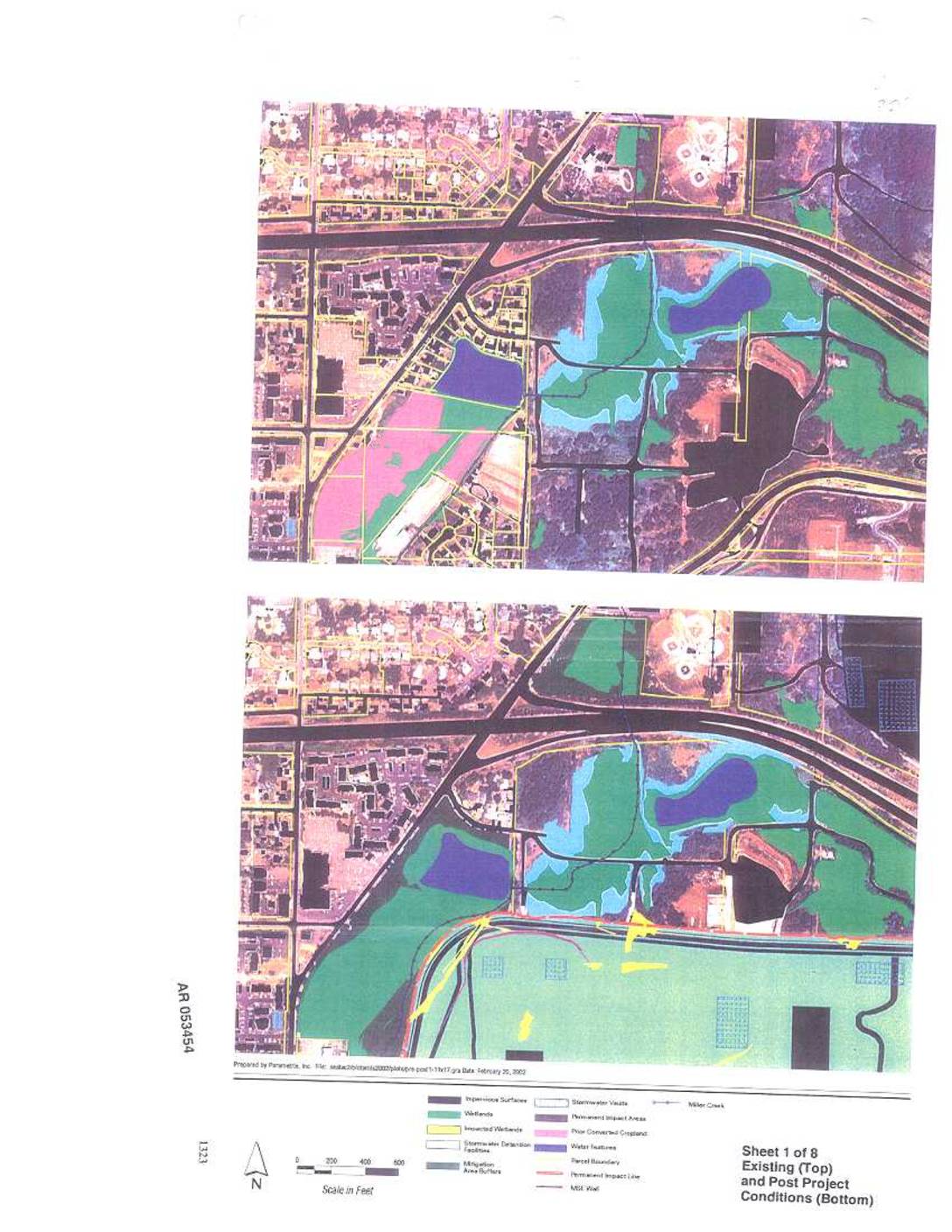
EXH AR053454: Existing and Post Project Conditions Maps, Sheets 1–3 of 8 — Sea-Tac Airport Wetlands and Miller Creek
Parametrix-prepared maps (Sheets 1-3 of 8, AR 053454-053456, dated February 20, 2002) depicting existing and post-project conditions near Sea-Tac Airport, showing wetlands, impacted wetlands, impervious surfaces, stormwater detention facilities, stormwater vaults, mitigation area buffers, permanent impact areas, prior converted cropland, Miller Creek, parcel boundaries, permanent impact lines, MSE wall, and airport navigation aids. Maps cover -
 2002-02-19
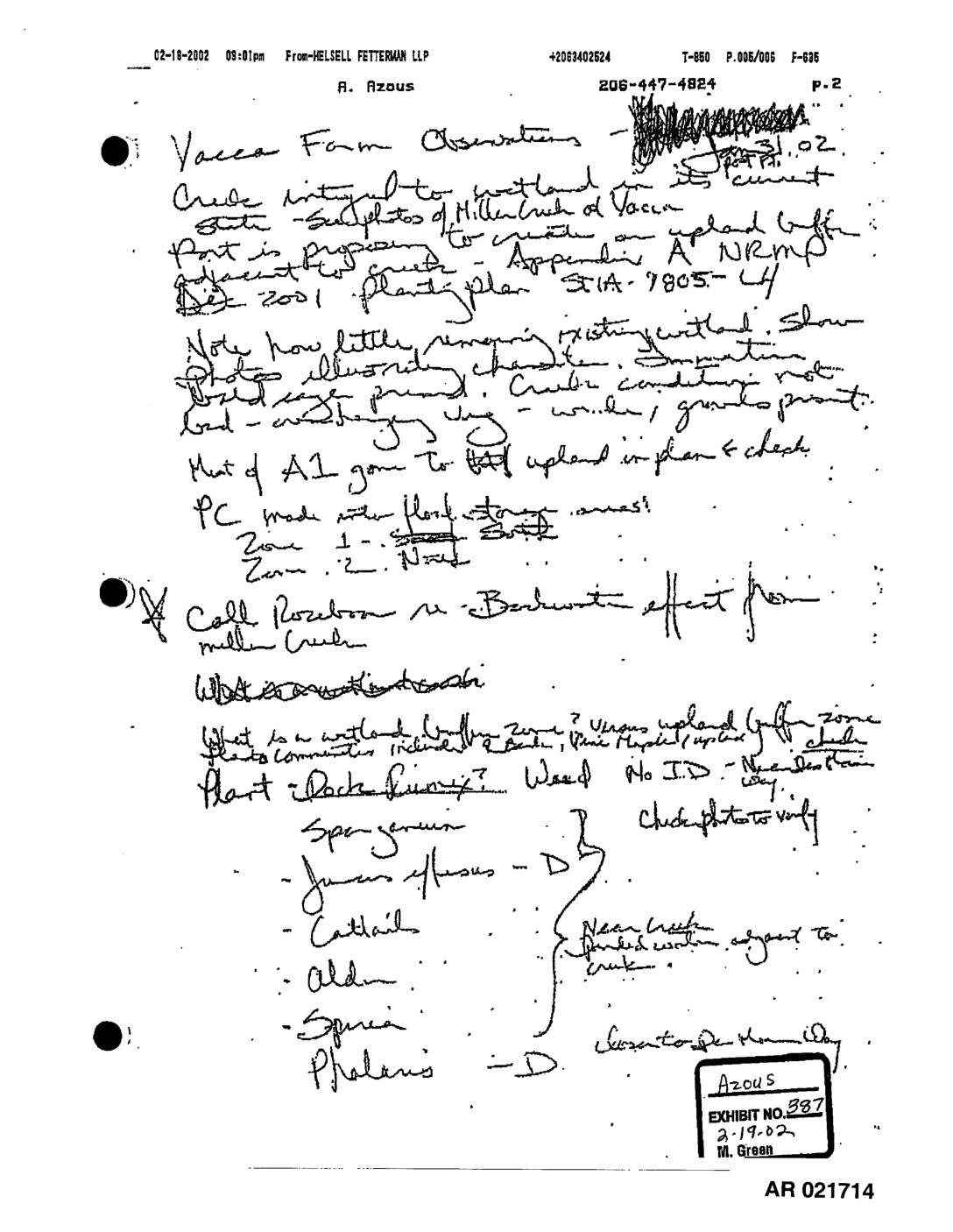
EXH 387: Vacca Farm & West Side Field Observations Jan–Feb 2002
These are handwritten field observation notes dated January 31, 2002, documenting wetland and upland buffer conditions near Miller Creek and Vacca Farm, including plant communities, wetland boundaries, and buffer zones. The notes reference site observations about existing wetland conditions, vegetation types (including cattails, alder, sedge, and Phalaris), and questions about the extent of wetland fill and excavation. The observations appear to relate to an environmental review of proposed land use changes adjacent to Miller Creek, with reference to an upland buffer plan (STA-7805). -
 2002-02-19
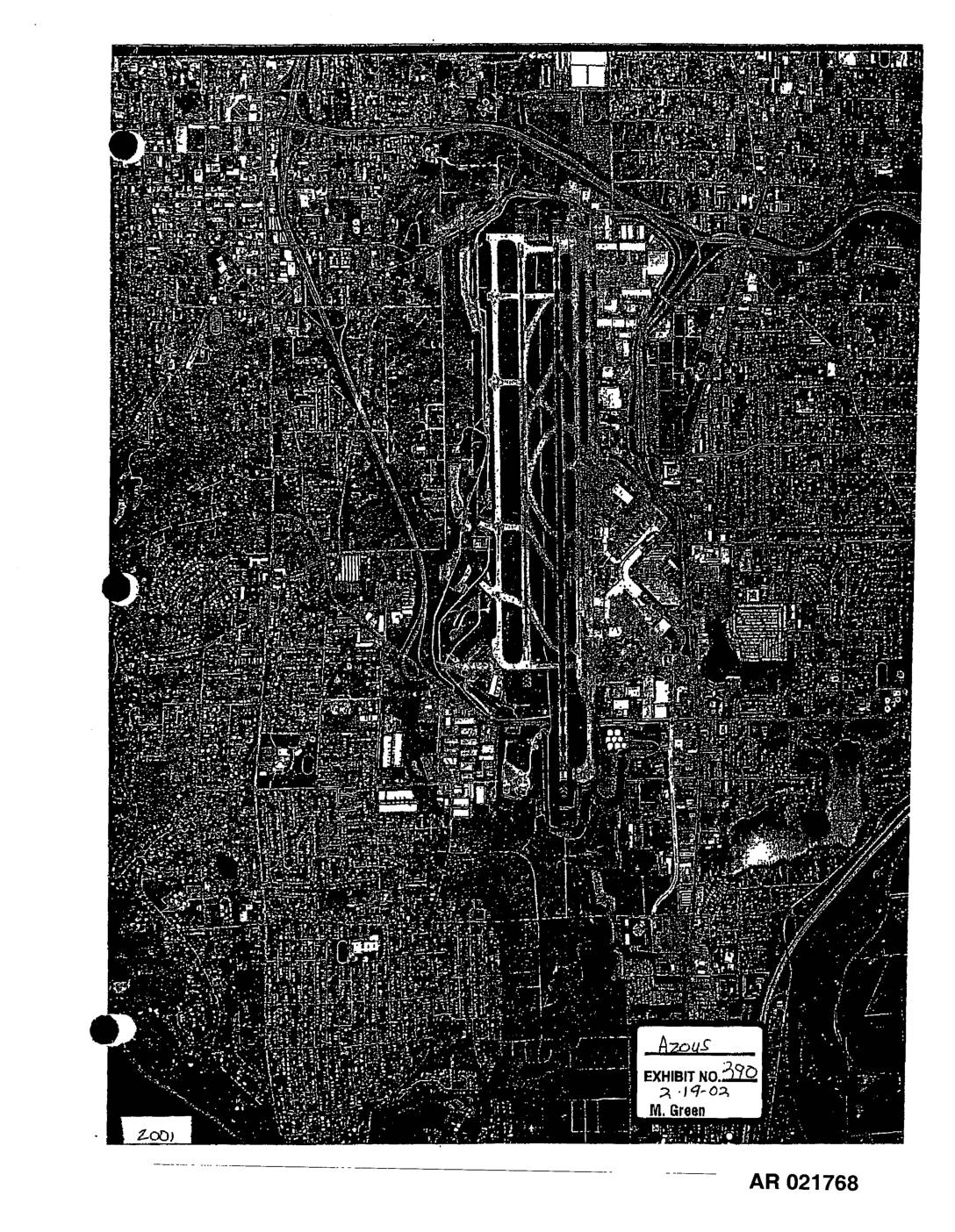
EXH 390: STIA Aerial Photographs 1997 2001
These two aerial photographs, dated 1997 and 2001, show overhead views of Seattle-Tacoma International Airport (Sea-Tac) and its surrounding neighborhoods. The images, produced by Walker & Associates and entered as Exhibit 390 in a February 2002 proceeding, document the airport's runway layout and adjacent residential and commercial areas over time. They appear to be part of an administrative record (AR 021768–021769) related to airport noise policy or land-use impact analysis. -
 2002-02-18
EXH 376: Decl. Dr. John Strand Support ACC Motion for Stay PCHB No. 01-133
Dr. John Strand, a fisheries biologist with over 25 years of experience, submitted this declaration in support of the Airport Communities Coalition's legal challenge to Washington State's water quality certification for Sea-Tac Airport's third runway expansion. Drawing on his own water quality sampling of Miller and Des Moines Creeks in 2000, Dr. Strand argues that the certification fails to adequately protect sensitive local waterways from stormwater runoff containing heavy metals, petroleum hydrocarbons, and other contaminants. He urges the Pollution Control Hearings Board to stay the certification until Clean Water Act compliance questions are fully resolved. -
 2002-02-18
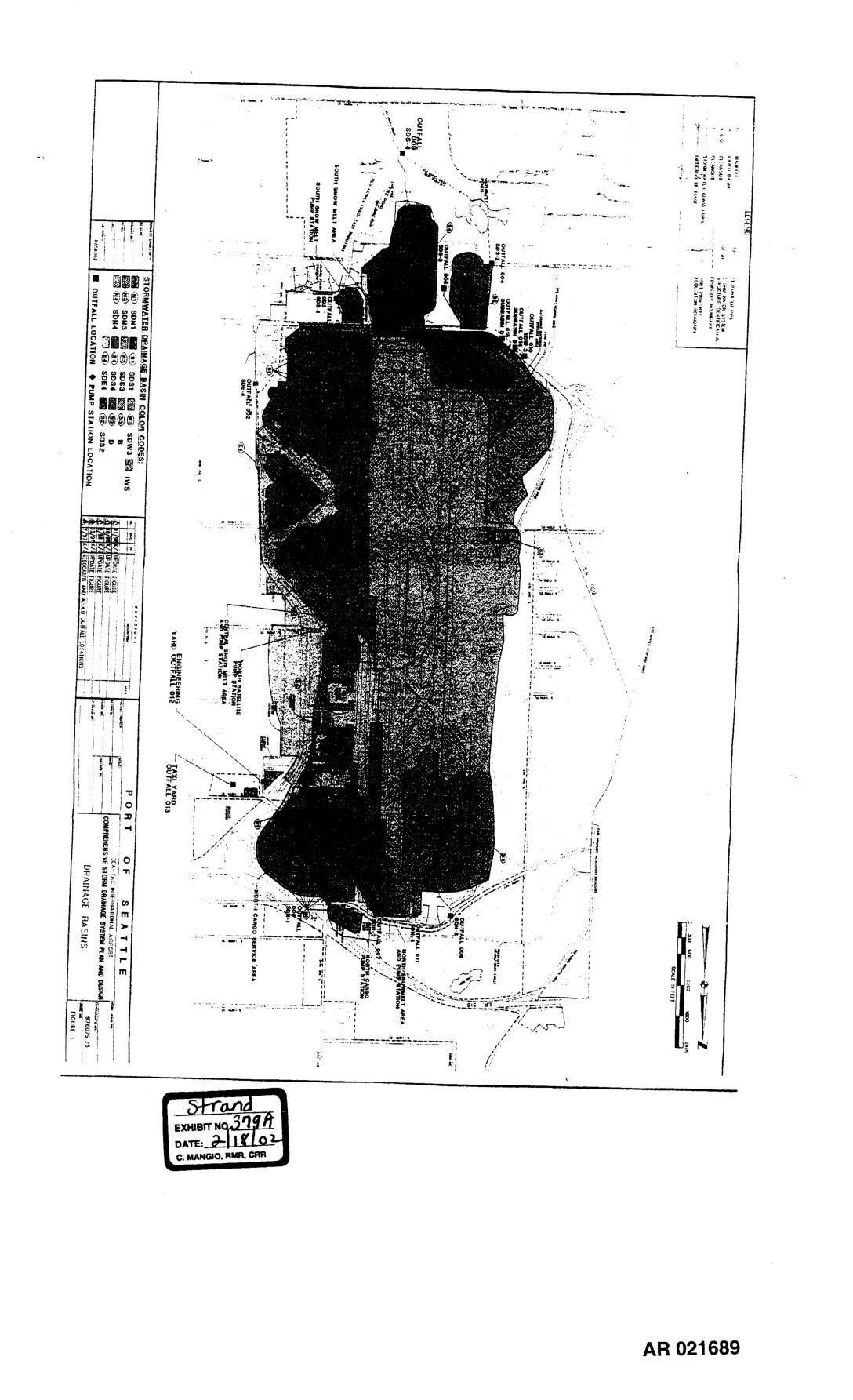
EXH 379A: Comprehensive Storm Drainage System Plan — Drainage Basins Map
This document is a map from the Port of Seattle showing the comprehensive storm drainage system plan and drainage basins for the Seattle port facility. It identifies stormwater drainage basin color codes, outfall locations, and pump station locations across the property. The figure was entered as Exhibit 379A on February 18, 2002, in proceedings recorded by C. Mangio, RMR, CRR. -
 2002-02-18
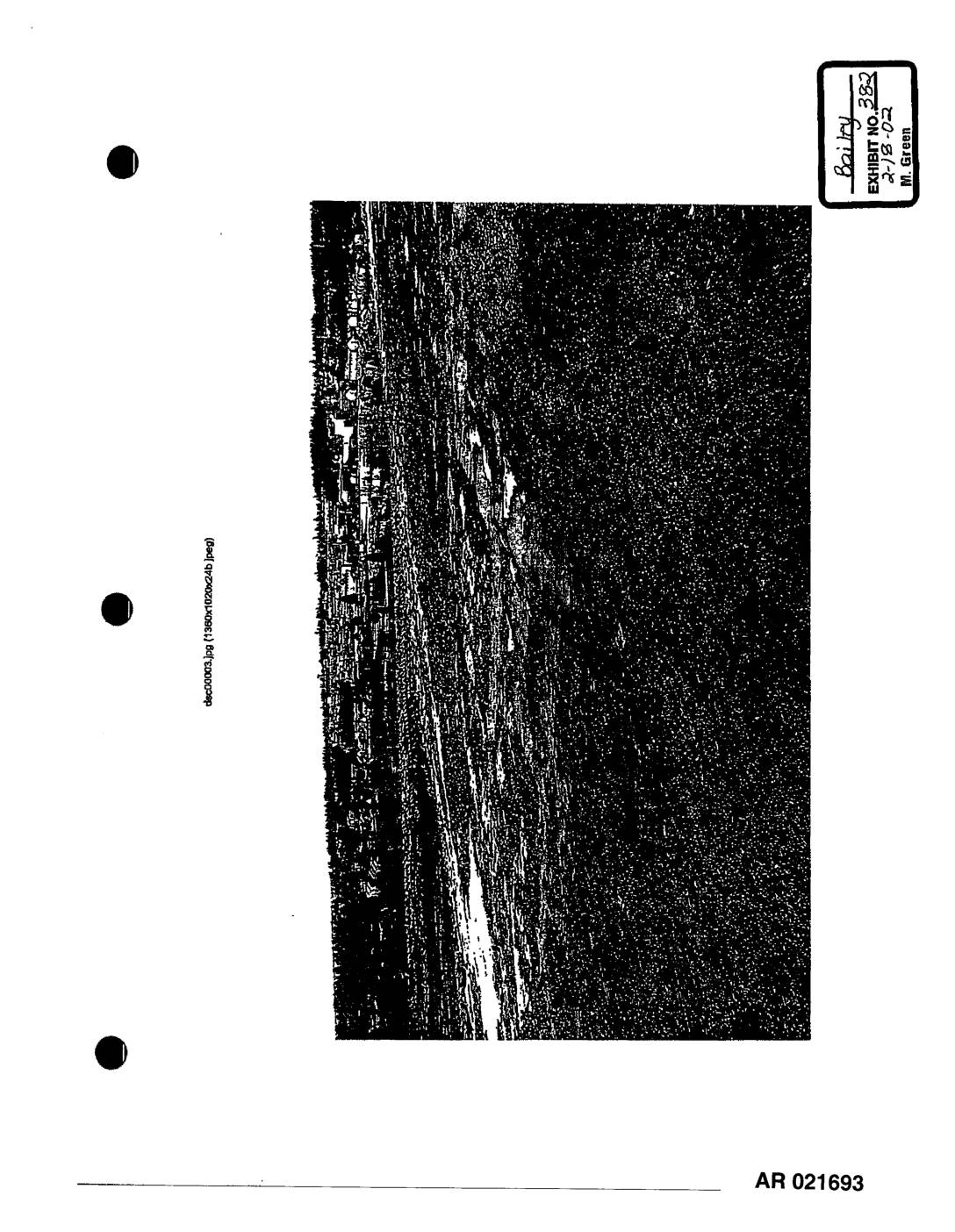
EXH 382: AR021693 — Aerial/Ground Photo STIA Third Runway Area
This document, marked as Exhibit No. 382 from the Bailey proceeding dated 2-18-02, contains a photographic image that appears to show an aerial or ground-level view of a landscape, likely related to environmental or noise impact evidence near Sea-Tac Airport. The photograph, originally a high-resolution JPEG (1360x1020x24b), depicts what appears to be a roadway or runway corridor surrounded by terrain. It is part of the administrative record (AR 021693) compiled in connection with Sea-Tac Airport noise policy litigation or regulatory proceedings. -
 2002-02-18
EXH 383: Third Runway EIS Photographs (AR 021694–021696)
These three pages (AR 021694–021696) are black-and-white photographic exhibits entered into the administrative record as Exhibit No. 383 on February 18, 2002, in the Bailey proceeding before M. Green. The images, originally digital JPEG files at 1360×1020 resolution, appear to depict aerial or close-up views of terrain or surface conditions, likely submitted as visual evidence related to noise-impact or environmental conditions at or near Sea-Tac Airport. The poor reproduction quality of the scanned photos makes specific details difficult to discern. -
 2002-02-16
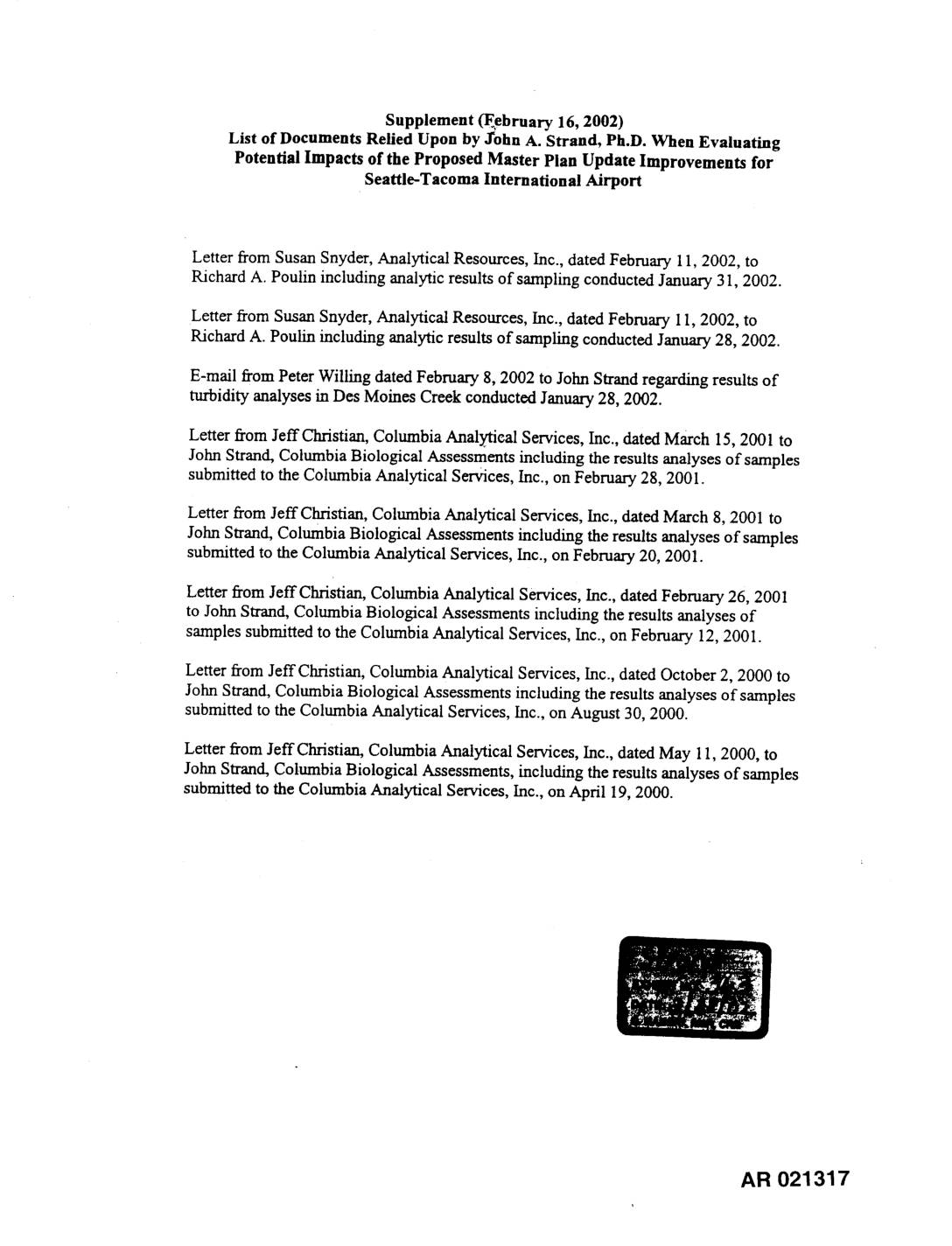
EXH AR021317: Supplement Feb 16 2002 — Docs Relied Upon by John A. Strand PhD STIA Master Plan Update EIS Evaluation
This February 2002 supplement lists the technical documents relied upon by environmental scientist John A. Strand, Ph.D., when assessing the potential environmental impacts of proposed improvements outlined in Seattle-Tacoma International Airport's Master Plan Update. The documents primarily consist of laboratory analysis letters from Columbia Analytical Services and Analytical Resources, Inc., covering water quality sampling results collected between 2000 and 2002. An email regarding turbidity measurements in Des Moines Creek is also included, suggesting a focus on water quality impacts near the airport.