TagStormwater(373)
-
 2002-10-22
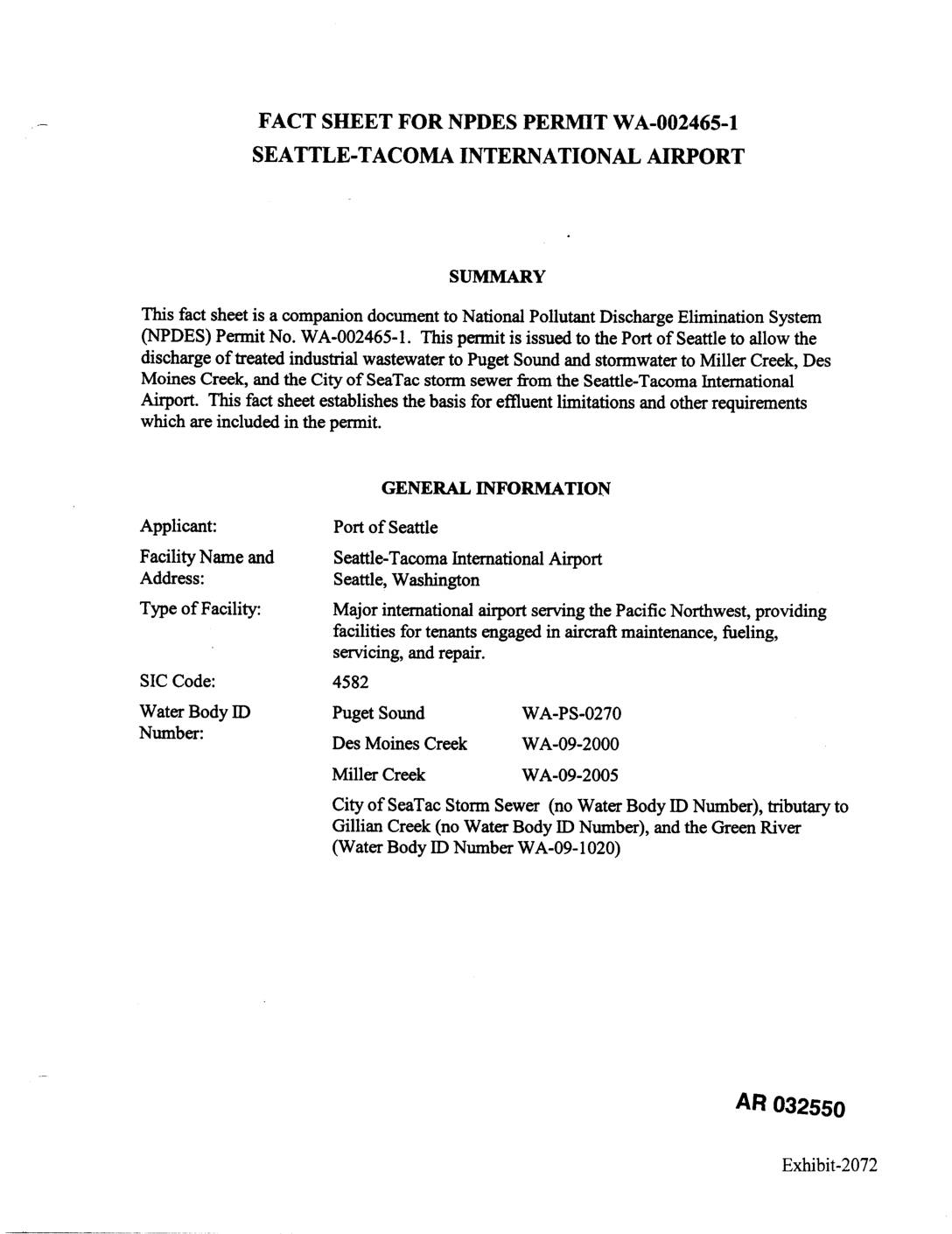
EXH 2072: Fact Sheet NPDES Permit WA-002465-1 STIA
This document is a fact sheet accompanying an NPDES (National Pollutant Discharge Elimination System) permit issued to the Port of Seattle for Seattle-Tacoma International Airport, governing how the airport manages and discharges treated industrial wastewater and stormwater. It covers discharge locations into Puget Sound, Des Moines Creek, Miller Creek, and the City of SeaTac storm sewer system, and establishes effluent limitations and monitoring requirements. The permit addresses water quality standards, pollution prevention plans, and compliance schedules to protect surrounding waterways from airport-related contaminants. -
 2002-10-22
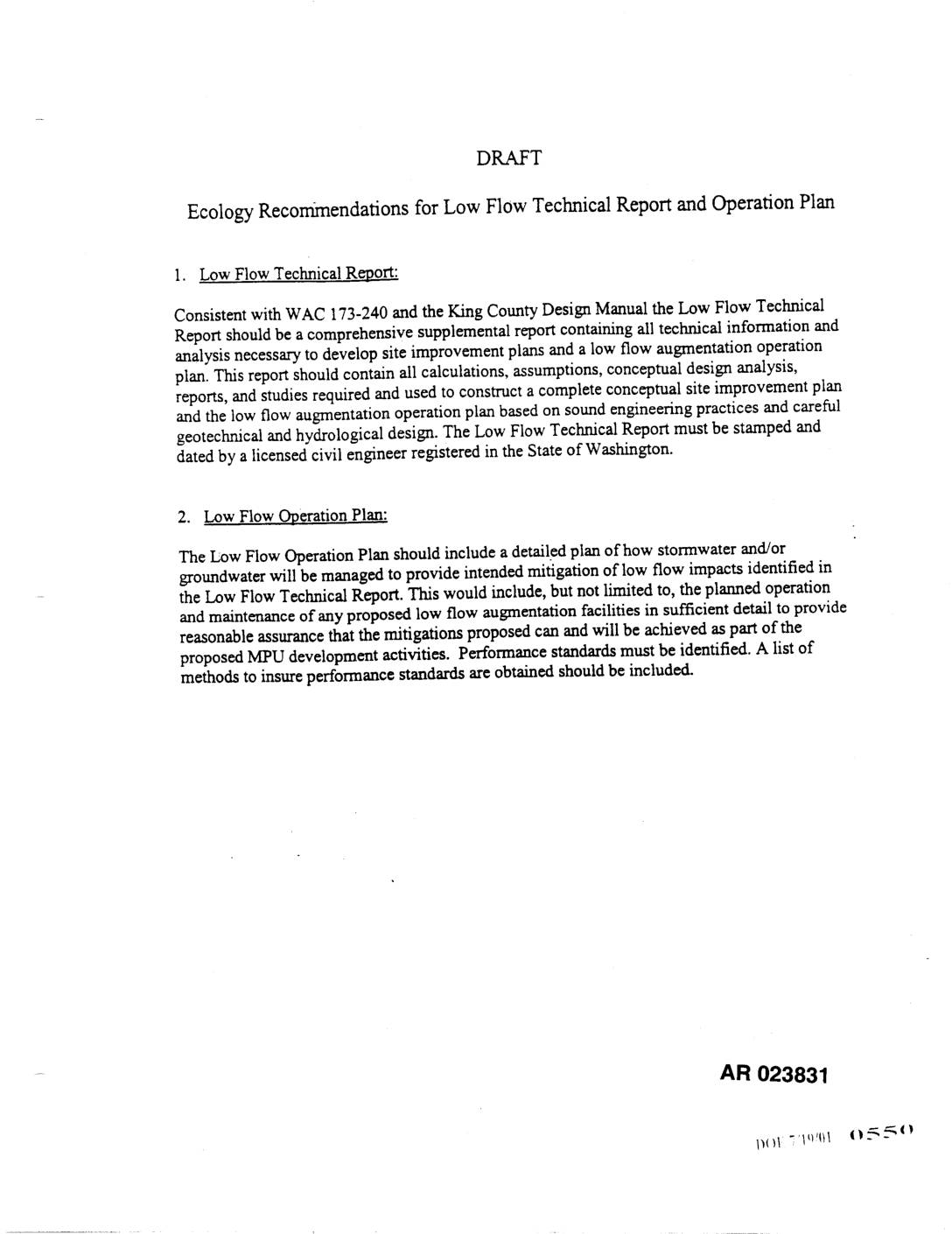
EXH AR023831: Ecology Draft Recommendations Low Flow Technical Report & Operation Plan
This draft document from Washington State's Department of Ecology outlines requirements for a Low Flow Technical Report and a Low Flow Operation Plan related to MPU development activities. The Technical Report must include all calculations, engineering analyses, and hydrological studies needed to address low flow impacts, and must be stamped by a licensed Washington civil engineer. The Operation Plan must detail how stormwater and groundwater will be managed to mitigate those impacts, including maintenance procedures, performance standards, and methods to ensure those standards are met. -
 2002-10-22
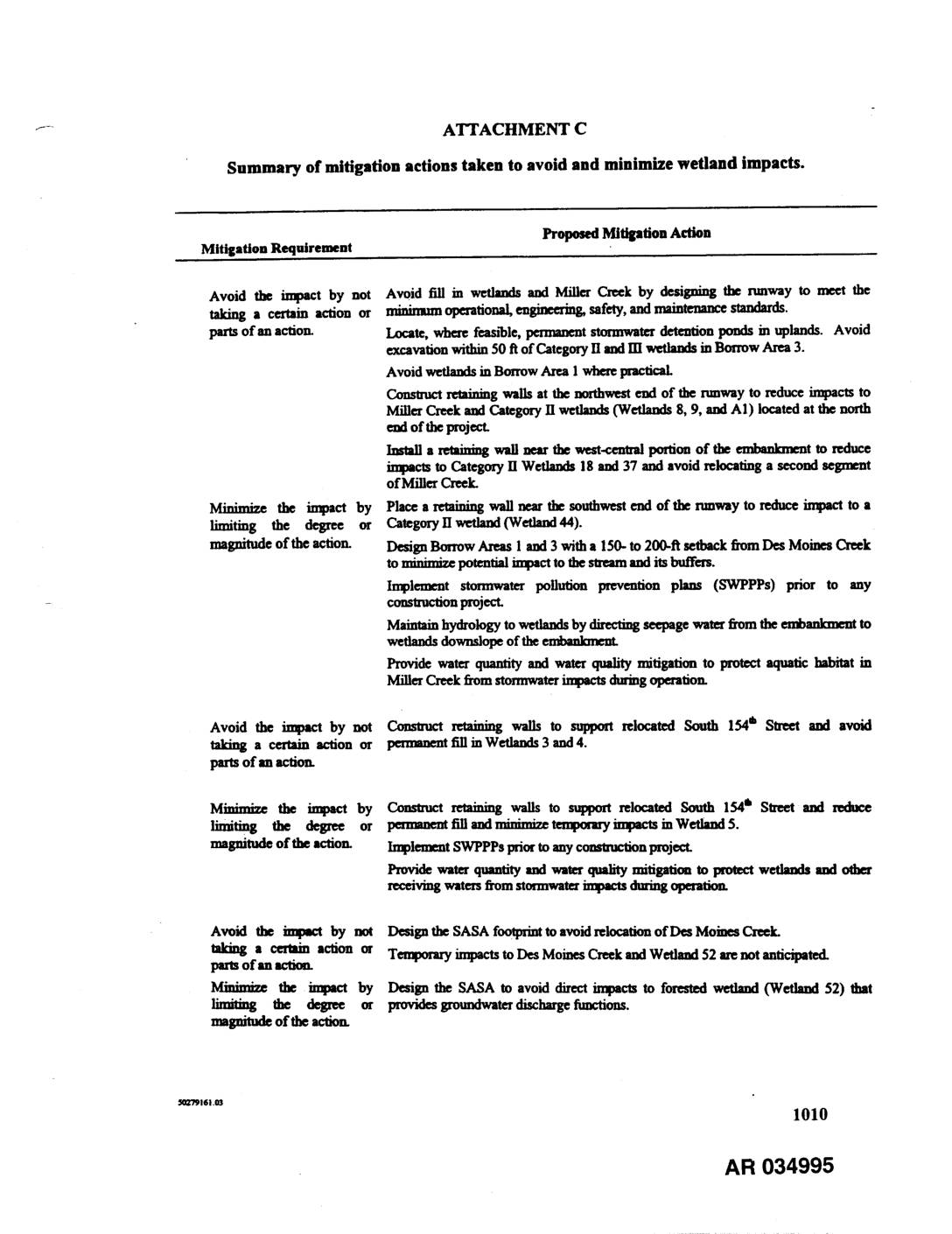
EXH AR034995: Summary of Mitigation Actions Taken to Avoid and Minimize Wetland Impacts
Attachment C summarizing proposed mitigation actions to avoid and minimize wetland impacts for a runway project at Sea-Tac Airport area. Document details mitigation requirements and actions for Miller Creek, Des Moines Creek, Category II and III wetlands (Wetlands 3, 4, 5, 8, 9, 18, 37, 44, 52, A1, and Borrow Area wetlands B1, B4–B10, B15a, -
 2002-10-22
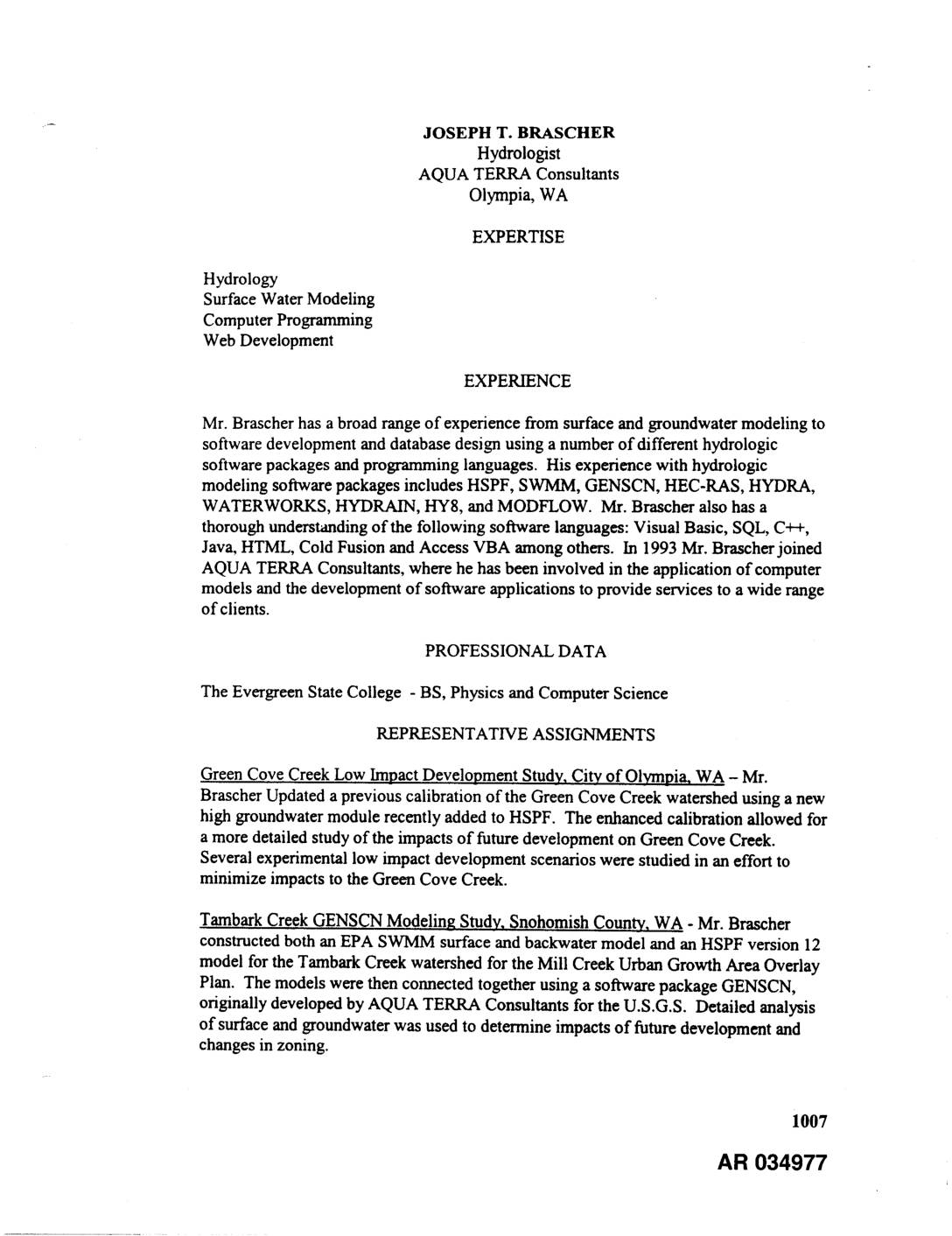
EXH AR034977: Resume of Joseph T. Brascher, Hydrologist, AQUA TERRA Consultants
Resume of Joseph T. Brascher, Hydrologist at AQUA TERRA Consultants, Olympia, WA. Details expertise in hydrology, surface water modeling, computer programming, and web development. Experience with hydrologic modeling software packages including HSPF, SWMM, GENSCN, HEC-RAS, HYDRA, WATERWORKS, HYDRAIN, HY8, and MODFLOW. Representative assignments include Green Cove Creek Low Impact Development Study (City of Olympia), Tambark -
 2002-10-21
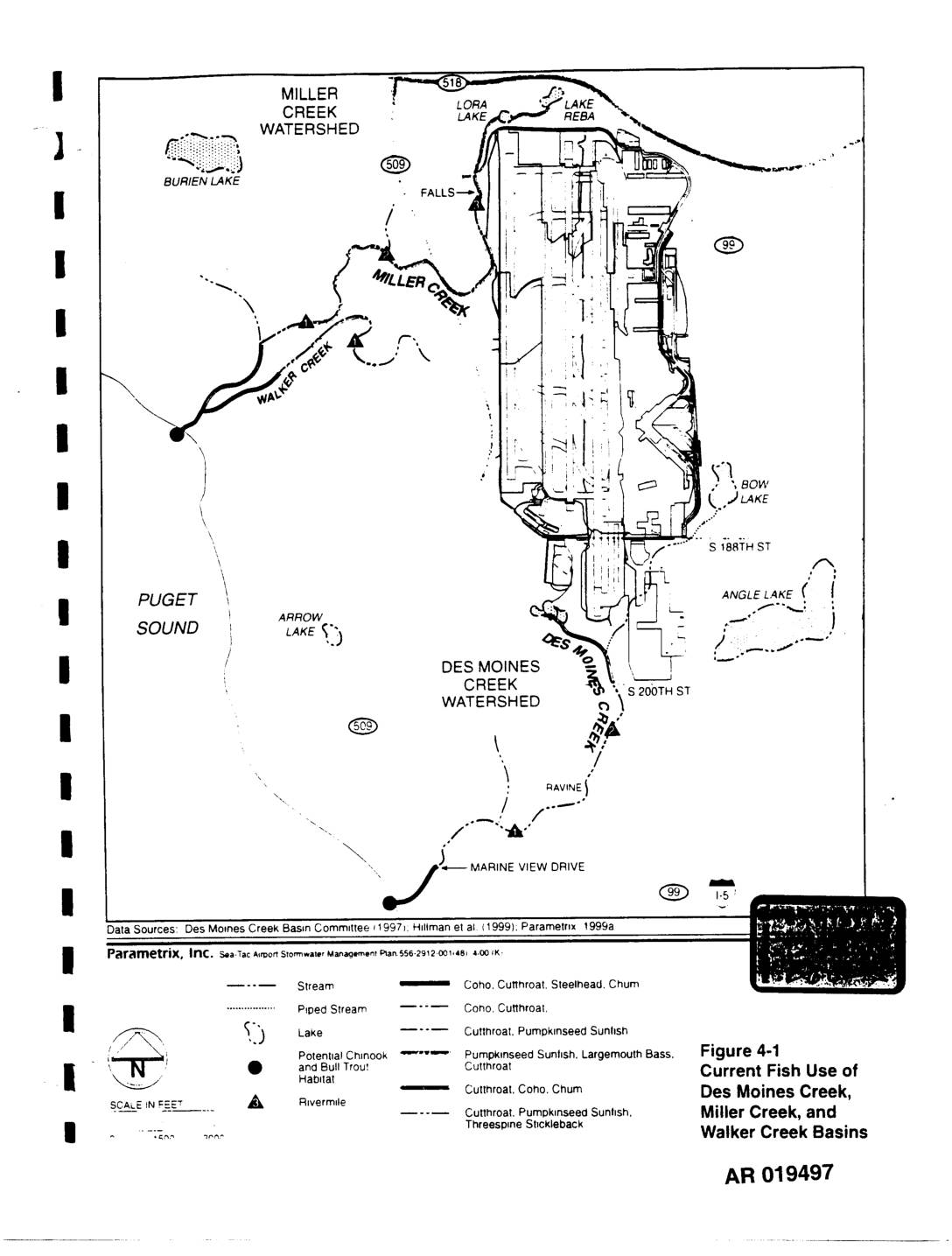
EXH AR019497: Figure 4-1 Current Fish Use Des Moines, Miller & Walker Creek Basins
This figure from the Sea-Tac Airport Stormwater Management Plan maps current fish habitat in the Des Moines Creek, Miller Creek, and Walker Creek watersheds near Sea-Tac Airport. It identifies the fish species present in various streams and lakes in the area, including Coho, Cutthroat, Steelhead, Chum, Chinook, Bull Trout, and Pumpkinseed Sunfish. The map also highlights piped stream segments and areas of potential Chinook and Bull Trout habitat within these interconnected watershed basins adjacent to Puget Sound. -
 2002-10-21
EXH 260: Declaration Donald E. Weitkamp PhD — ACC v. Dept of Ecology PCHB No. 01-133
This legal declaration by fish biologist Donald E. Weitkamp was submitted to Washington's Pollution Control Hearings Board in a case involving Seattle-Tacoma International Airport's expansion, including a proposed third runway. Weitkamp argues that the project's stormwater controls and water quality conditions under the §401 Certification are adequate to protect nearby streams, and disputes claims that salmon species are present near the airport's property along the headwaters of Miller, Walker, and Des Moines Creeks. He contends that these streams have already been significantly altered by surrounding urban development, making them more suitable for warm-water fish species than for salmonids. -
 2002-10-21
EXH AR021398: Declaration John A. Strand PhD Support CASE Appeal Stay NPDES Major Modification PCHB 01-090
In this 2001 declaration filed with Washington State's Pollution Control Hearings Board, fisheries biologist Dr. John A. Strand argues that proposed modifications to the Port of Seattle's stormwater discharge permit would harm Walker and Gilliam Creeks near Sea-Tac Airport, which support salmon, trout, and other aquatic life. Dr. Strand contends that Ecology failed to identify specific locations of new construction-related stormwater outfalls, denying the public a meaningful chance to assess environmental impacts. He supports a stay of the permit modification until its compliance with the Clean Water Act can be fully reviewed. -
 2002-10-21
Exhibit 217: Declaration of Kevin Fitzpatrick — Water Quality, NPDES, and 401 Certification for STIA Third Runway (PCHB No. 01-133)
In this 2001 legal declaration, Washington Department of Ecology official Kevin Fitzpatrick addresses water quality concerns raised by the Airport Communities Coalition regarding stormwater discharges from Seattle-Tacoma International Airport during its Third Runway expansion. Fitzpatrick explains that while stormwater discharges have shown elevated levels of copper, lead, and zinc, these instantaneous exceedances do not necessarily constitute violations of state water quality standards, since stormwater fluctuates rapidly by nature. He further outlines steps the Port of Seattle was taking to address pollution, including rerouting de-icing runoff, replacing zinc-emitting metal roofs, and conducting required studies to establish specific effluent limits under the Clean Water Act 401 Certification. -
 2002-10-21
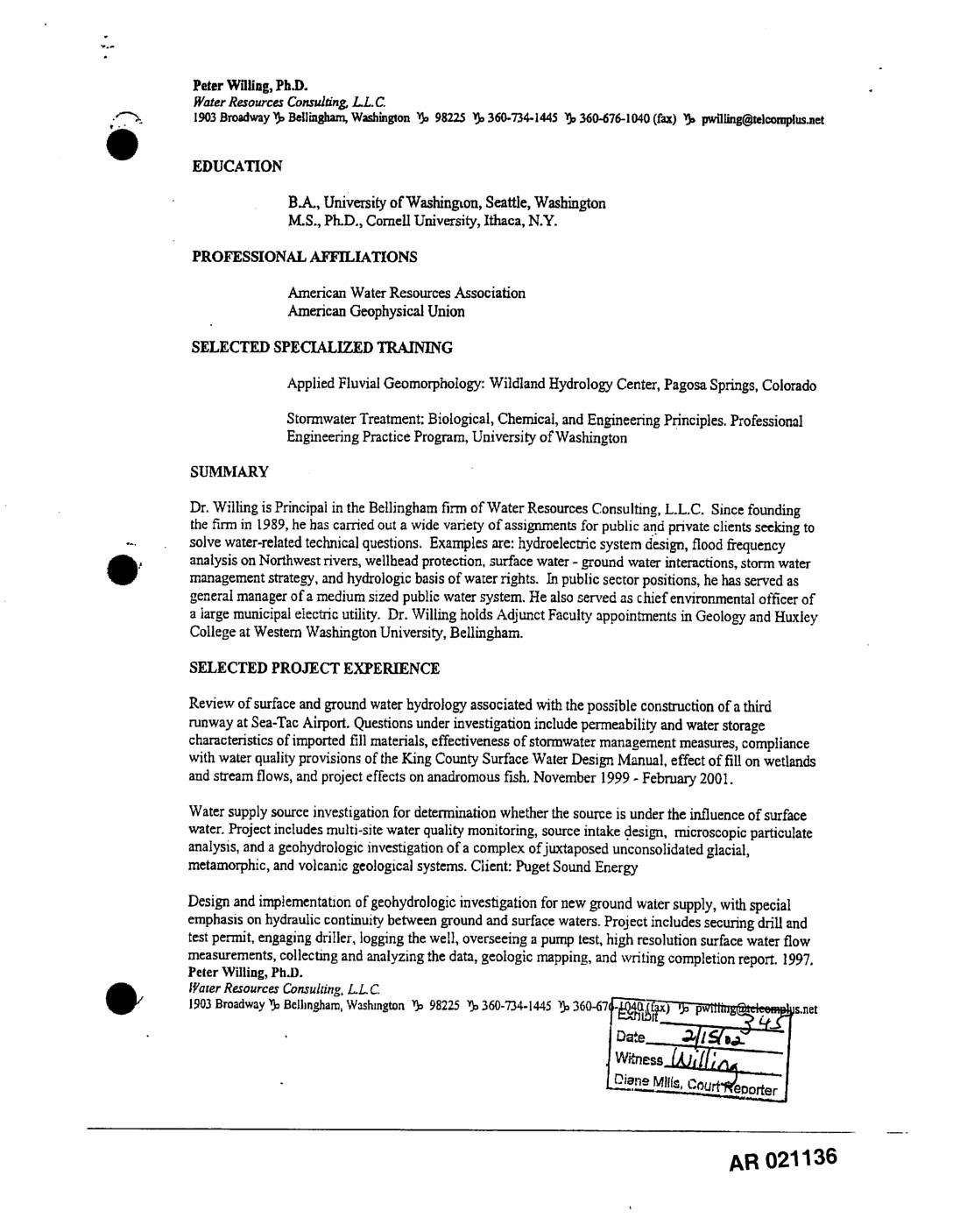
EXH 345: Curriculum Vitae Peter Willing PhD Water Resources Consulting LLC
This document is the curriculum vitae of Dr. Peter Willing, a water resources consultant based in Bellingham, Washington, who was retained to review surface and ground water hydrology related to the possible construction of a third runway at Sea-Tac Airport from November 1999 to February 2001. His investigation addressed issues including stormwater management effectiveness, compliance with the King County Surface Water Design Manual, and potential project effects on wetlands, stream flows, and anadromous fish. Dr. Willing holds a Ph.D. from Cornell University and has broad experience in flood analysis, water rights, and geohydrologic investigations across the Pacific Northwest. -
 2002-10-21
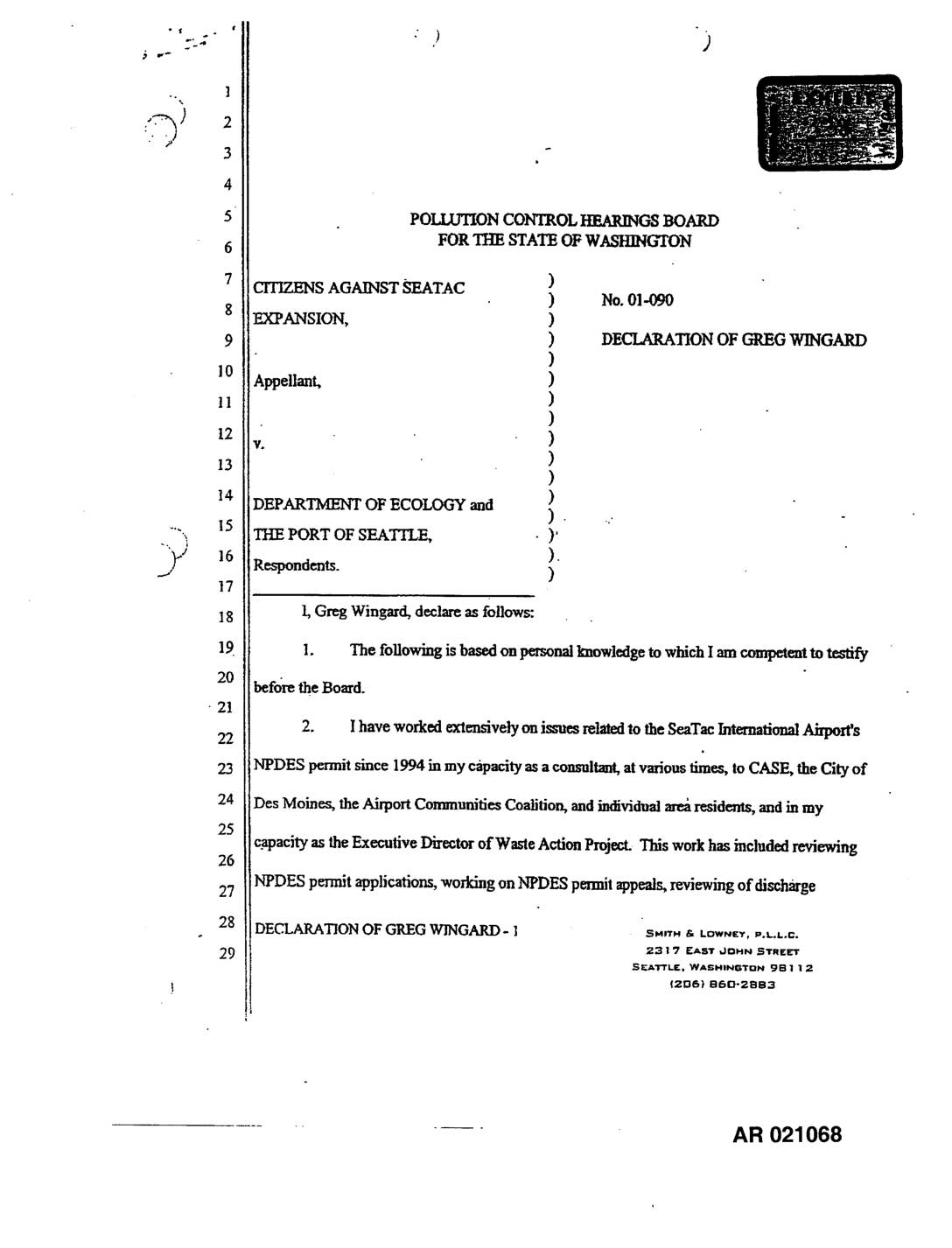
EXH AR021068: Declaration Greg Wingard — CASE v. Ecology & Port, PCHB No. 01-090
Greg Wingard, an environmental consultant and Executive Director of Waste Action Project, submitted this declaration in a 2001 Pollution Control Hearings Board appeal challenging a permit modification for Seattle-Tacoma International Airport's stormwater discharges. Wingard argues that the modified NPDES permit failed to identify the specific locations of new discharge outfalls into local waterways including Miller, Des Moines, Gilliam, and Walker Creeks, preventing meaningful public participation and environmental review. He contends that without knowing where discharges will occur, it is impossible to evaluate potential cumulative impacts on downstream waterways and riparian property owners.