TagSea-Tac Airport(1855)
-
 2025-01-01
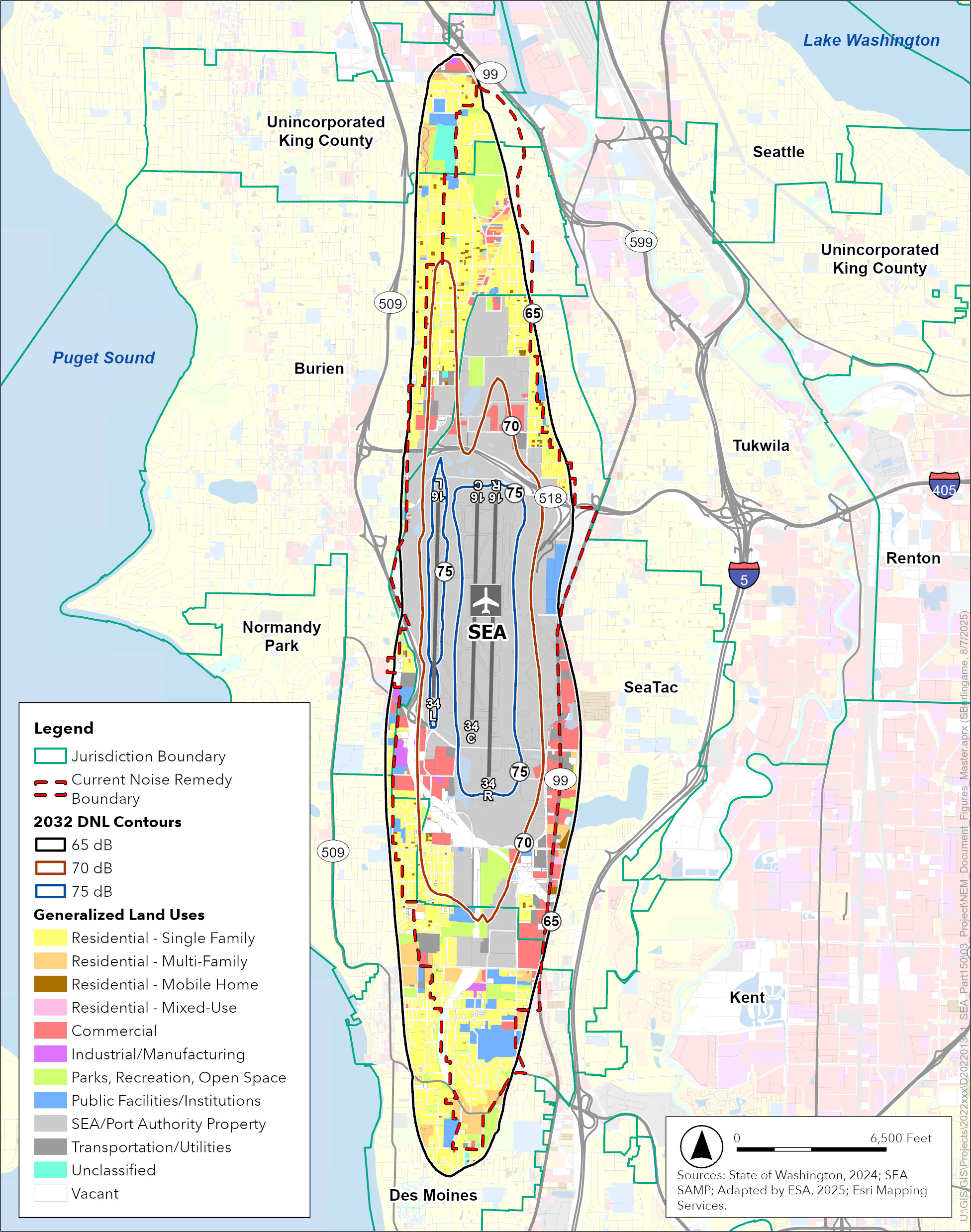
2032 DNL Noise Contours with Existing Land Use and Noise Remedy Boundary — Sea-Tac Airport
This GIS map depicts the 2032 Day-Night Average Sound Level (DNL) noise contours (65, 70, and 75 dB) for Seattle-Tacoma International Airport (SEA), overlaid with generalized land use classifications and the current Noise Remedy Boundary. Sourced from the State of Washington (2024) and SEA SAMP, adapted by ESA in 2025, the map covers surrounding jurisdictions including Burien, SeaTac, Tukwila, Normandy Park, Des Moines, and unincorporated King County. -
 2025-01-01
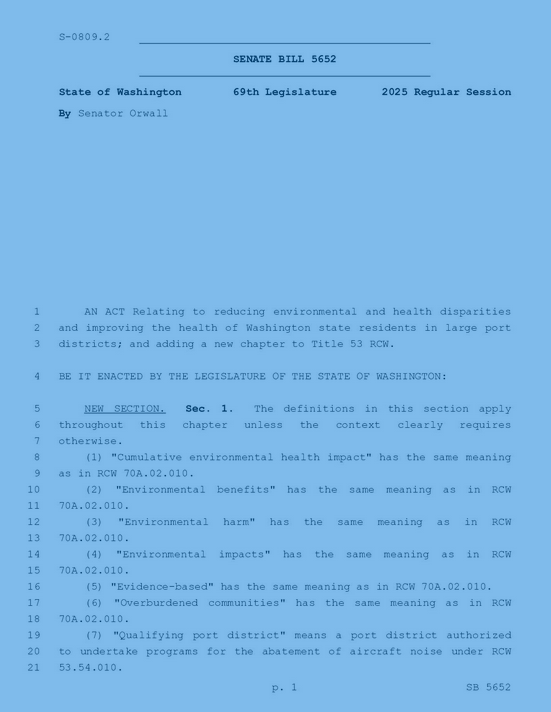
SB 5652 Cover Page — Washington State 69th Legislature 2025 Session
Senate Bill 5652, introduced by Senator Orwall in Washington State's 69th Legislature during the 2025 Regular Session, proposes reducing environmental and health disparities in large port districts by adding a new chapter to Title 53 RCW. The bill defines key terms including 'qualifying port district' as one authorized to undertake aircraft noise abatement programs under RCW 53.54.010, directly relevant to Sea-Tac Airport noise policy. -
 2025-01-01
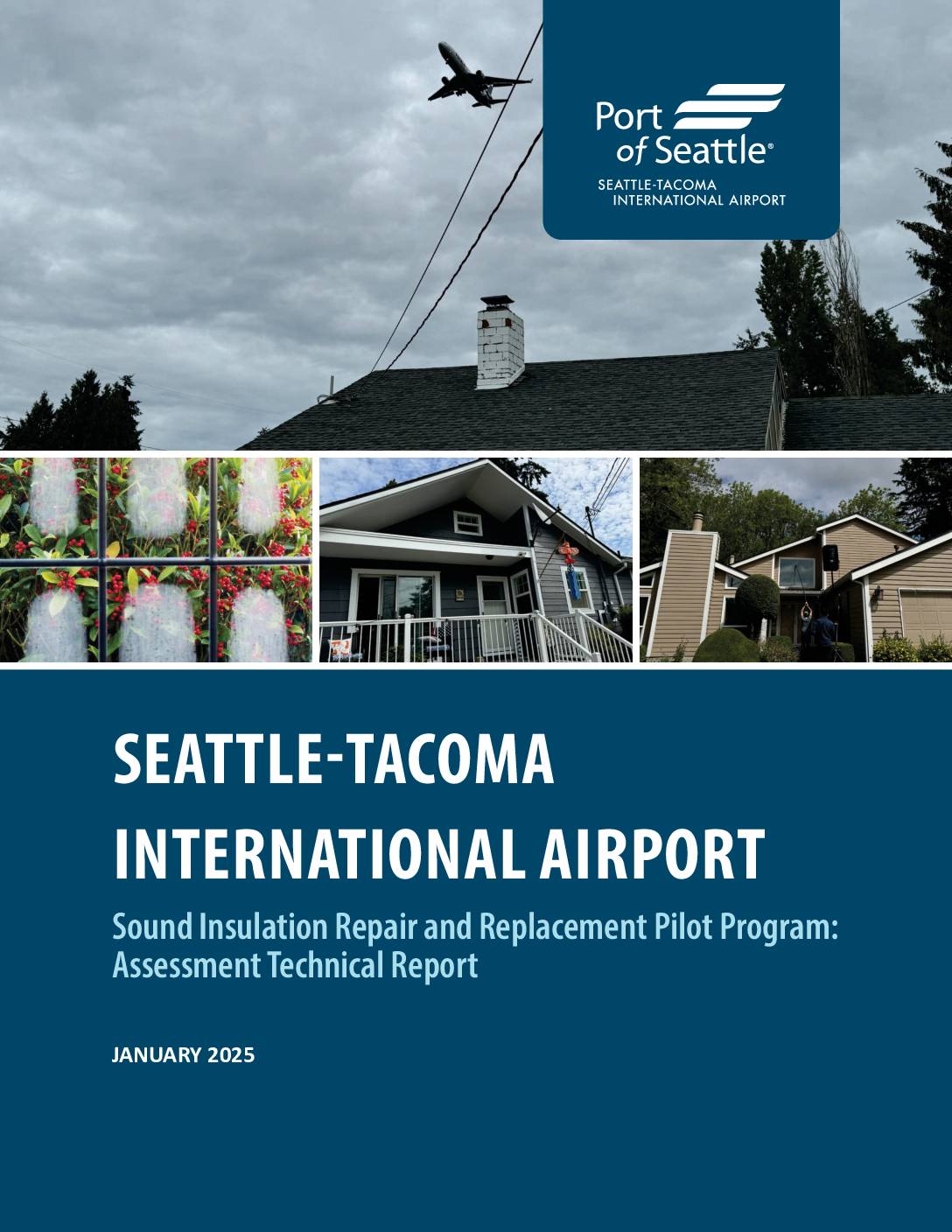
Seattle-Tacoma International Airport Sound Insulation Repair and Replacement Pilot Program: Assessment Technical Report
★ 32This January 2025 technical report, prepared by Environmental Science Associates for the Port of Seattle, documents a pilot program assessing the condition and effectiveness of sound insulation previously installed in homes near Seattle-Tacoma International Airport. The report covers resident surveys, research into the expected useful life of sound insulation building materials, acoustic testing methods, and test results from selected homes. It aims to inform future decisions about repairing or replacing aging noise-reduction treatments in affected neighborhoods. -
2024-12-29
Sea-Tac Airport Airlines and Destinations
-
 2024-12-21
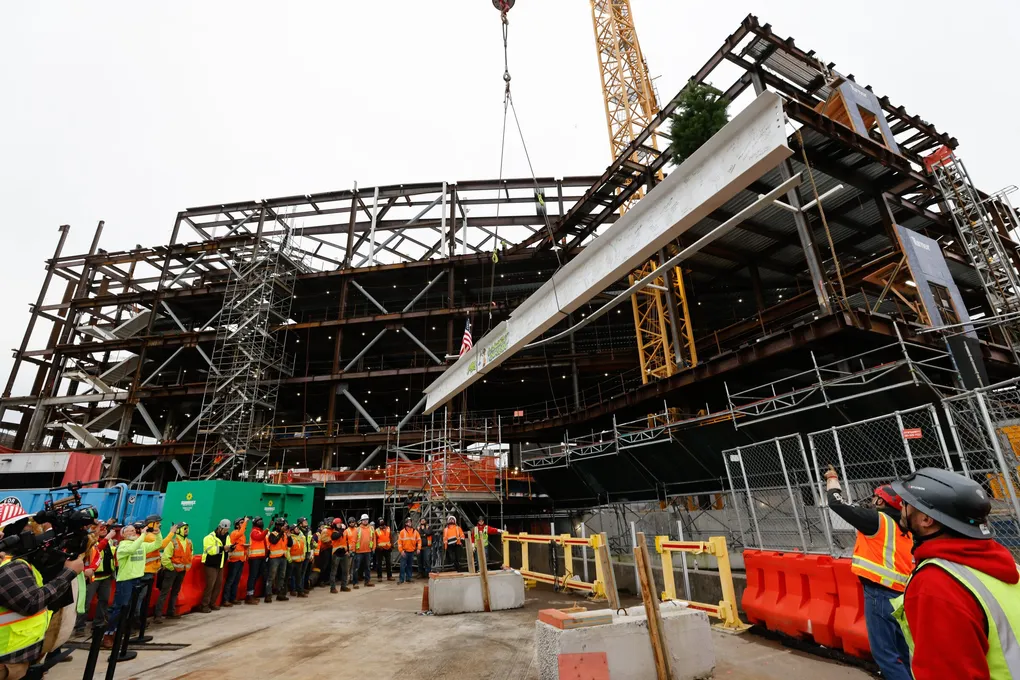
Sea-Tac Airport construction and holiday travel: What to expect
By Paige Cornwell Most travelers won’t see all the 100-plus different construction projects transforming Seattle-Tacoma International Airport as they run-run-Rudolph through the terminal. But they will notice scaffolding, long lines and congestion during the holiday rush. Sea-Tac is in the middle of a $5 billion, multiyear series of upgrades totaling 120 construction projects before the July 2026 World Cup, when -
 2024-12-18
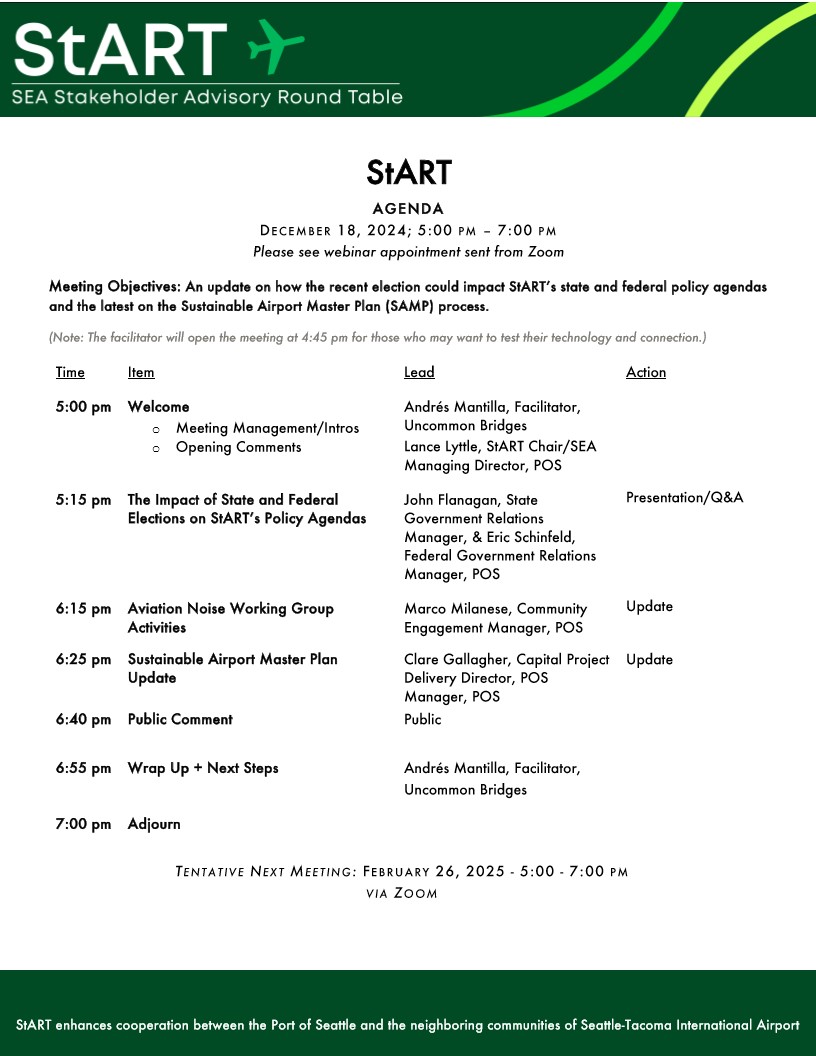
StART Meeting Agenda — December 18, 2024
Agenda for the SEA Stakeholder Advisory Round Table (StART) meeting held December 18, 2024, 5:00–7:00 PM via Zoom. Topics include the impact of state and federal elections on StART's policy agendas, Aviation Noise Working Group activities, and a Sustainable Airport Master Plan (SAMP) update, led by Port of Seattle (POS) staff and facilitated by Andrés Mantilla of Uncommon Bridges. -
 2024-12-13
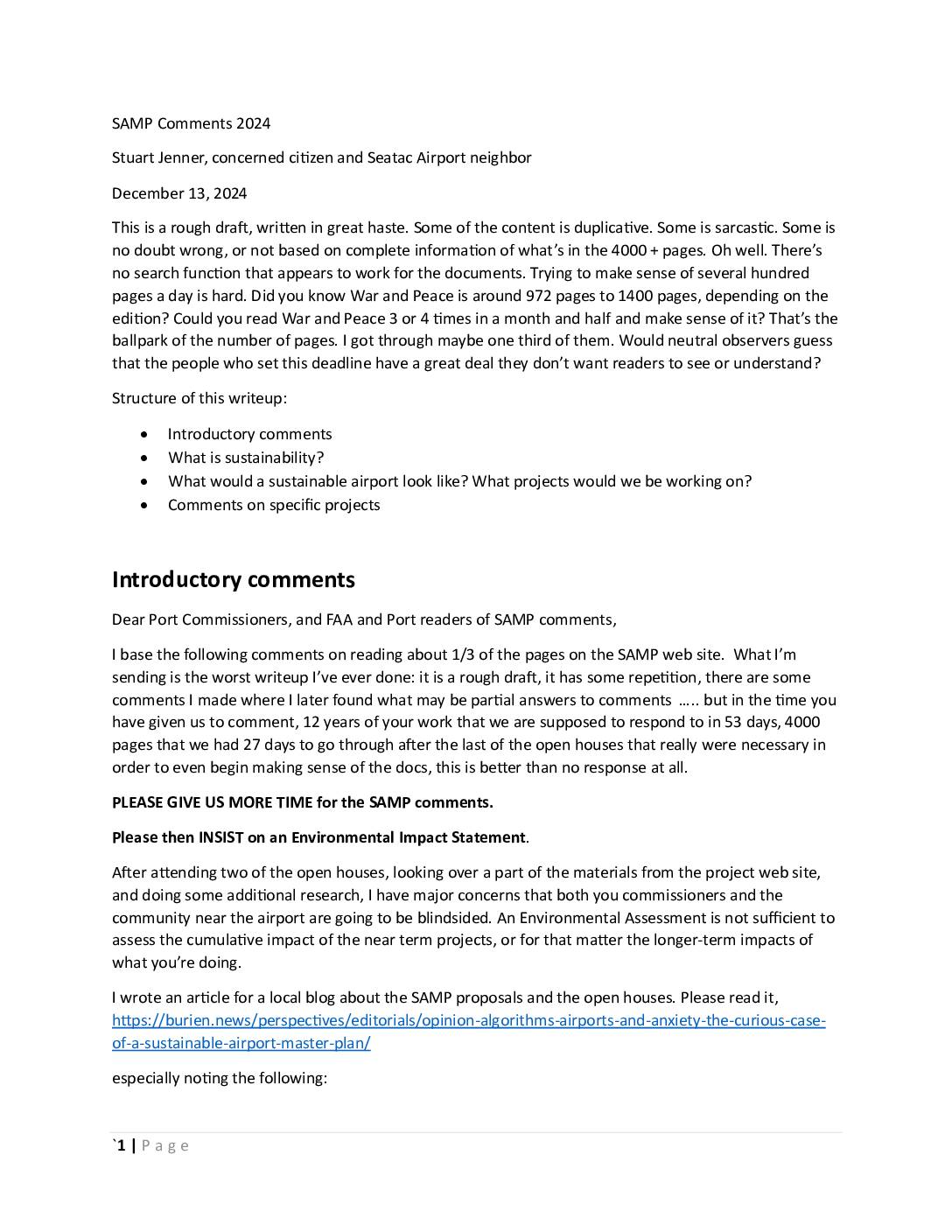
SAMP Comments: Stuart Jenner Public Comment on 2024 Draft Environmental Assessment
Seatac Airport neighbor Stuart Jenner submitted public comments in December 2024 criticizing the Port of Seattle's Sustainable Airport Master Plan (SAMP), arguing that citizens were given inadequate time to review over 4,000 pages of documents and that an Environmental Impact Statement—not merely an Environmental Assessment—is needed to properly evaluate the plan's effects on nearby residents. Jenner raises concerns about opaque computer models used to claim a nearly 50% increase in passenger traffic would have no environmental impact, shifting baseline comparisons that ignore past promises made during the third runway approval, and the absence of project cost information. He calls on Port Commissioners and the FAA to extend the public comment period and subject the plan to greater independent scrutiny. -
 2024-12-13
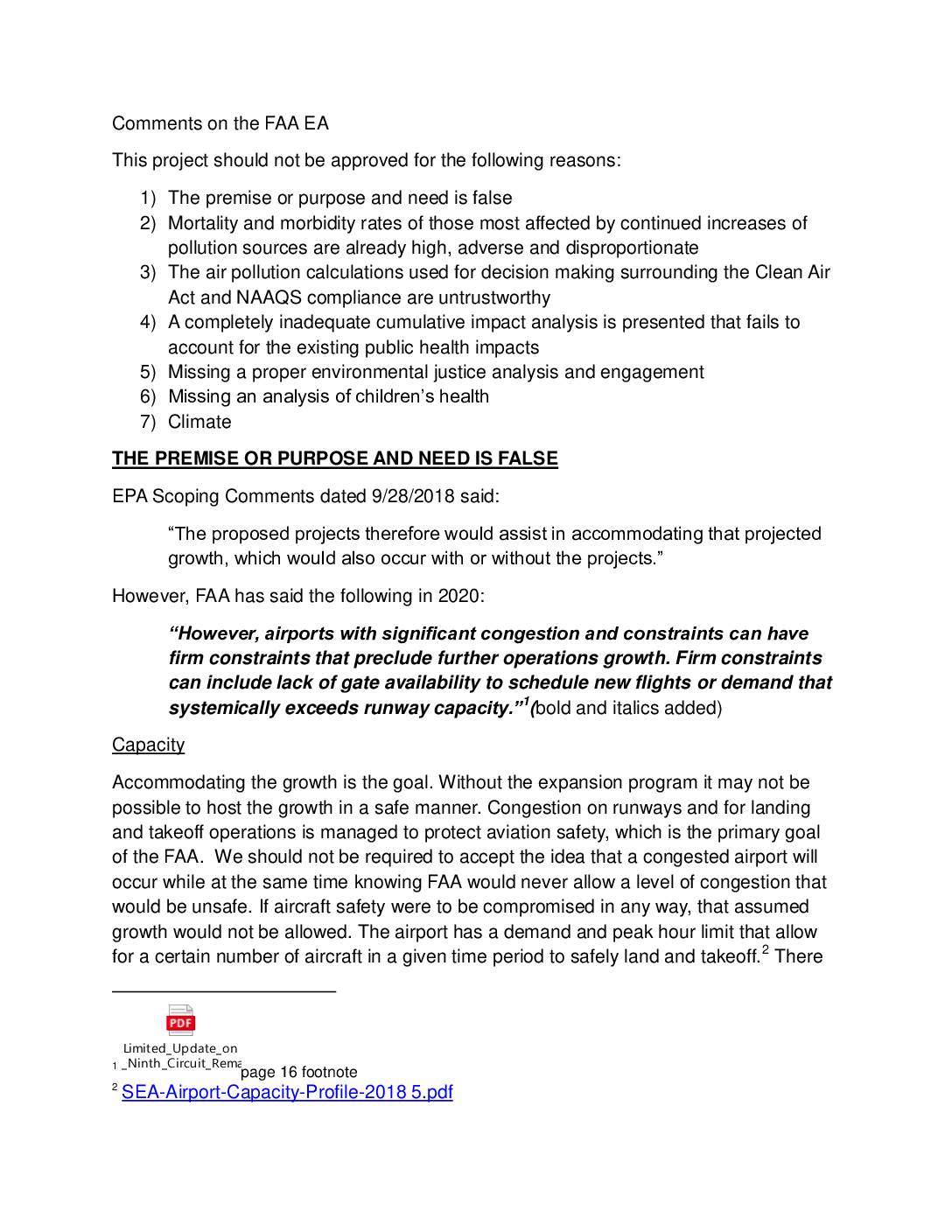
Comments on the FAA EA: SAMP Draft Environmental Assessment (Debi Wagner)
This document presents formal public comments opposing an FAA Environmental Assessment for expansion projects at Seattle-Tacoma International Airport. The author argues that the stated justification for expansion is misleading, contending that airport growth would not automatically occur without new gates and terminals since FAA safety rules already cap the number of aircraft operations. Additional concerns raised include disproportionate health burdens on nearby communities, unreliable air pollution modeling, inadequate environmental justice analysis, and failure to properly assess cumulative public health and climate impacts. -
 2024-12-12
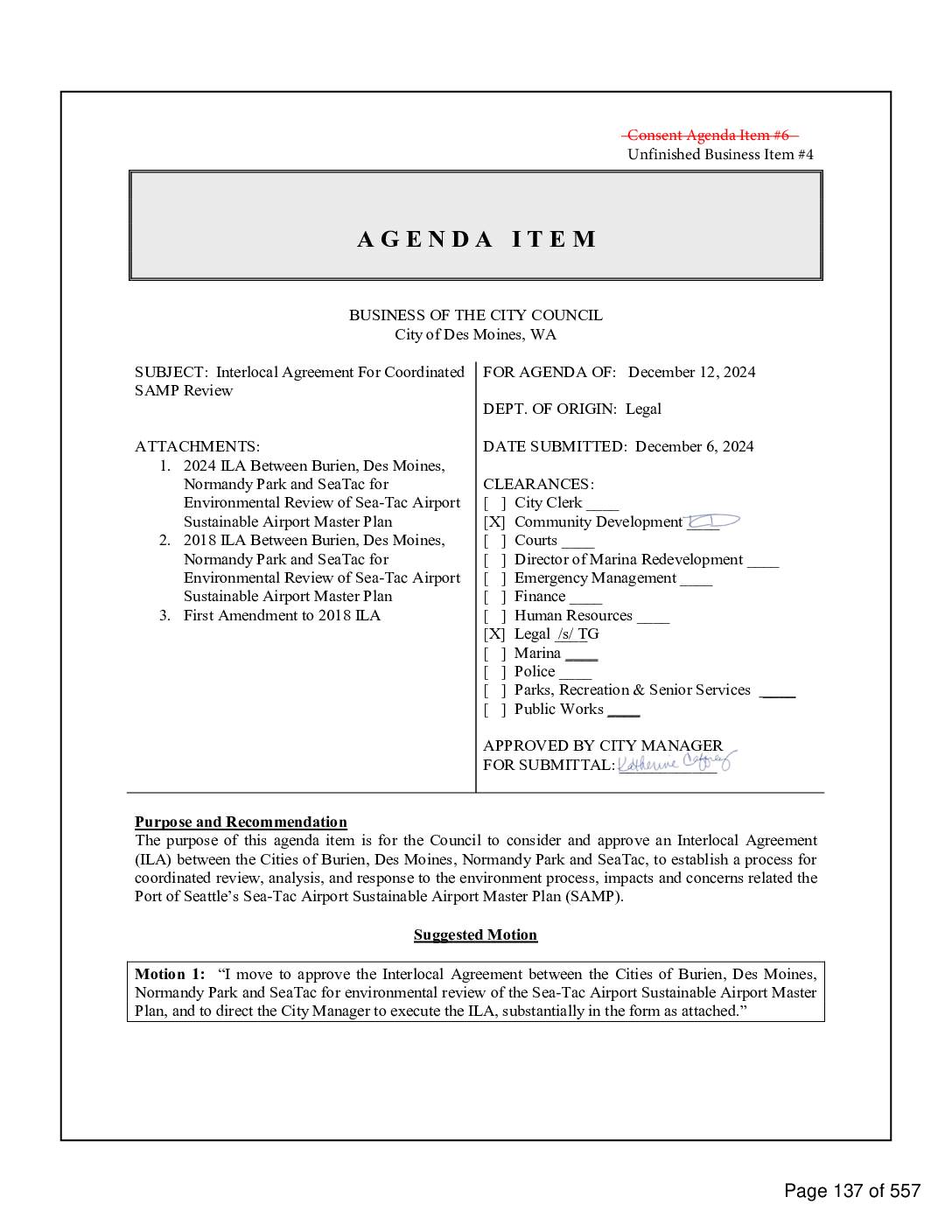
Interlocal agreement for coordinated SAMP review
The cities of Burien, Des Moines, Normandy Park, and SeaTac are renewing a cooperative agreement to jointly review and respond to the Port of Seattle's Sea-Tac Airport Sustainable Airport Master Plan (SAMP), which outlines future airport growth that could significantly impact neighboring communities. The new Interlocal Agreement (ILA), approved by Des Moines City Council in December 2024, extends collaboration through December 31, 2027, allowing the cities to share consultants and coordinate formal comments on the airport's environmental review process under NEPA and SEPA. Des Moines has committed up to $74,170 toward consultant services, with each city's share determined by relative population. -
 2024-12-06
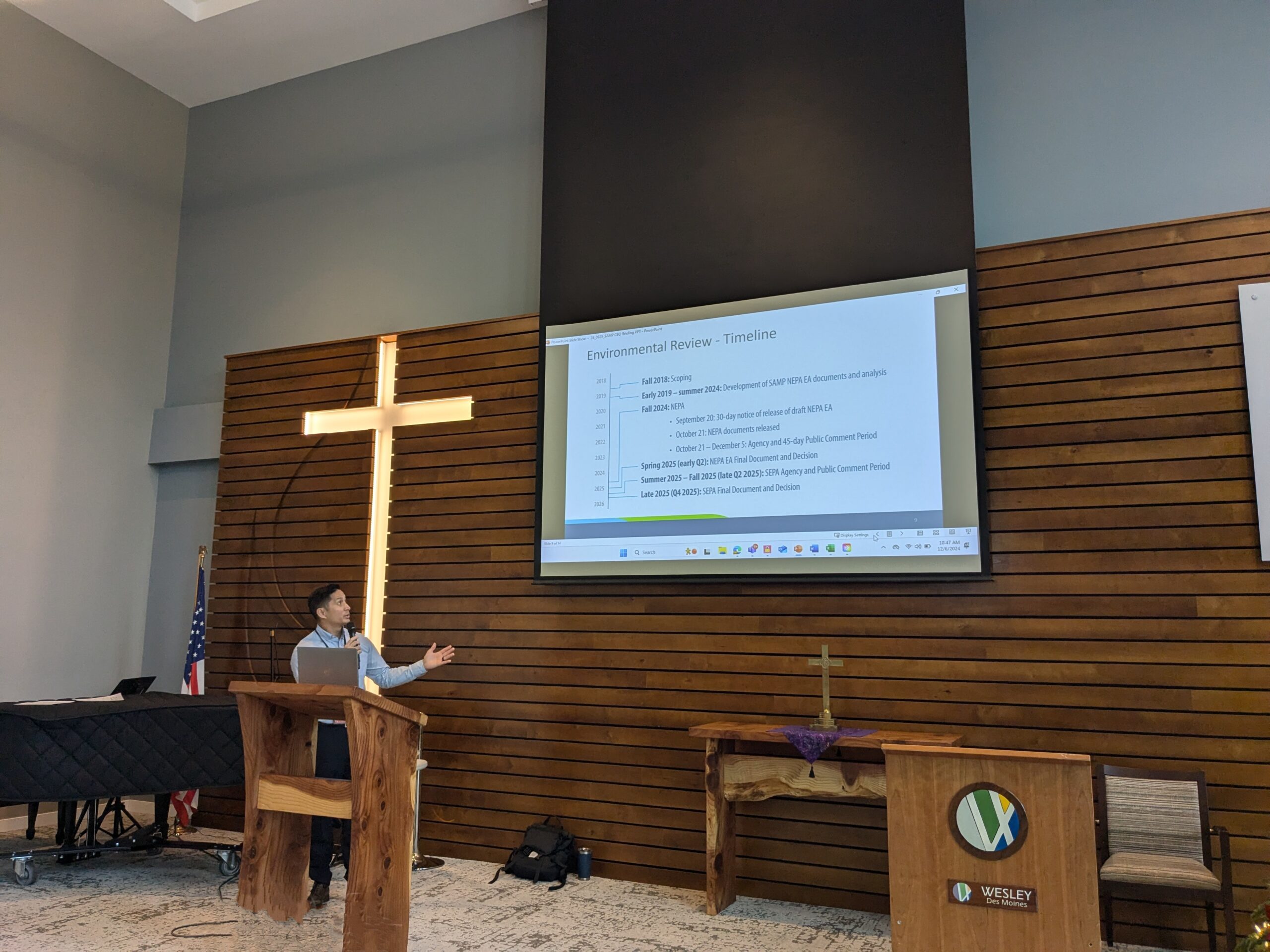
Port Of Seattle SAMP presentation Wesley
A presenter speaks at a podium at Wesley Des Moines church, displaying a PowerPoint slide titled 'Environmental Review – Timeline' covering NEPA/SEPA review milestones from Fall 2018 Scoping through Late 2025 SEPA Final Document and Decision, consistent with Sea-Tac Airport SAMP (Sustainable Airport Master Plan) environmental review proceedings. The timeline references Fall 2024 NEPA steps including a 45-day public comment period and Spring/Summer 2025 SEPA agency and public comment periods.