TagSea-Tac Airport(1855)
-
 1994-06-30
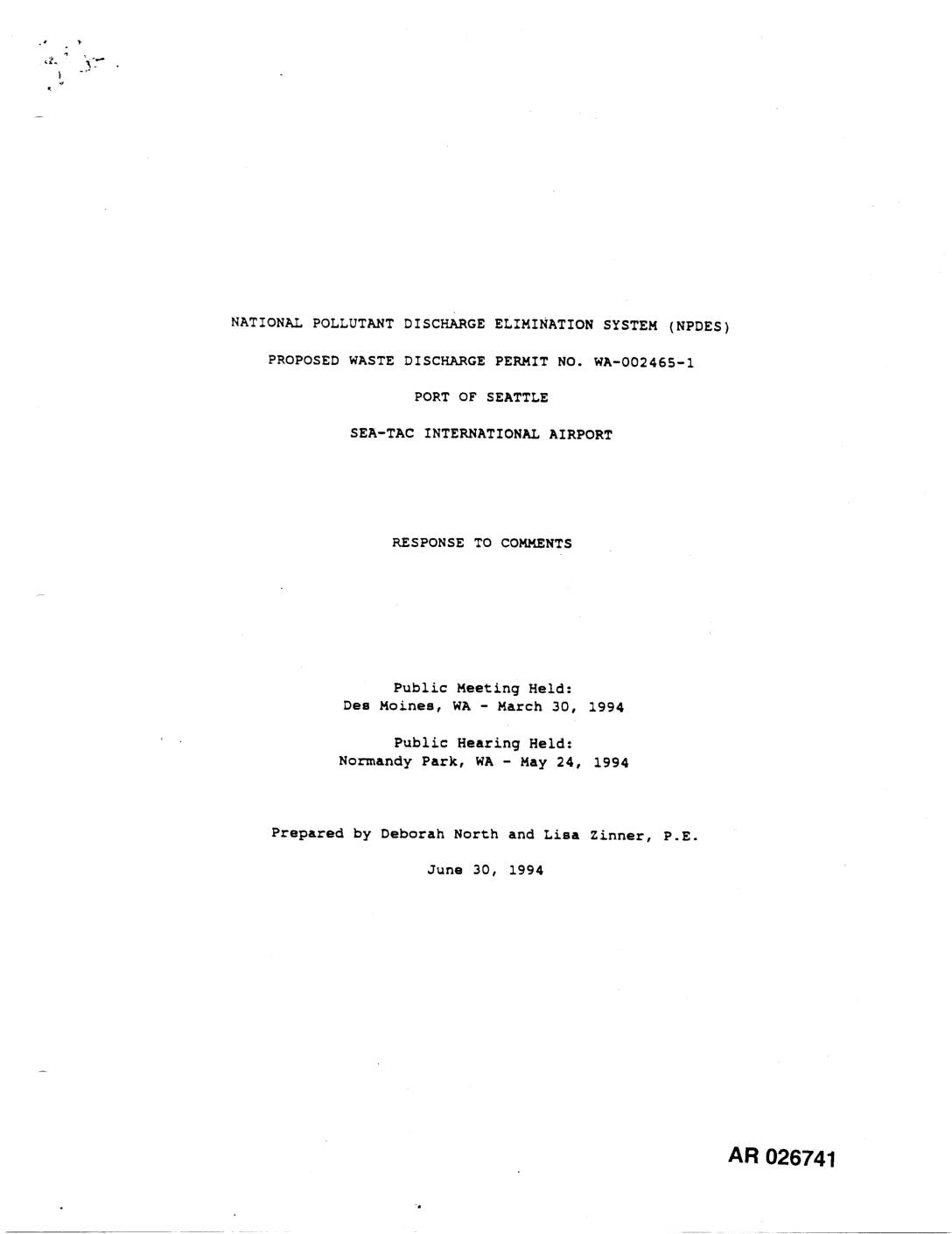
EXH AR026741: NPDES Permit No. WA-002465-I STIA Response to Comments
This 1994 document is a Response to Comments on a proposed National Pollutant Discharge Elimination System (NPDES) wastewater discharge permit issued to the Port of Seattle for Sea-Tac International Airport. It summarizes public feedback gathered at meetings in Des Moines and Normandy Park, Washington, addressing topics such as storm water management, effluent limitations, spill plans, and pollution prevention at the airport. The document reflects the Department of Ecology's review of industrial wastewater, cooling water, and storm water discharges from airport operations including aircraft maintenance, fueling, and de-icing activities. -
 1994-04-01
Archive Record 1322: PSRC Administration Files, Sea-Tac Airport Correspondence and Implementation Resolution A-93-03 Records, 1992–1994
This archival record (Box 01290, Historical Box 1322) contains administrative files from 1992–1994 related to Sea-Tac Airport planning and noise policy, including litigation documents, Environmental Impact Statement (EIS) comments on a proposed third runway, capacity enhancement plans, and correspondence from citizens, city officials, and state agencies. It also includes records tied to Implementation Resolution A-93-03, covering communications with groups such as Apogee, Bricklin Gendler, and the Airport Communities Coalition. The files were prepared by Angie Daniels and are classified under the Department Subject Files record series. -
1994-04-01
Archive Record 1322: PSRC Administration Files, Sea-Tac Airport Correspondence and Implementation Resolution A-93-03 Records, 1992–1994
A search results screen showing '1 of 1' result with navigation controls. The toolbar includes options for New Search, Back, Opened (8), and Current Record Actions, consistent with a library or document database interface. -
 1994-03-01
Port Of Seattle South Aviation Support Area final environmental impact statement
This March 1994 Final Environmental Impact Statement, prepared jointly by the Federal Aviation Administration's Seattle Airports District Office and the Port of Seattle, evaluates the proposed South Aviation Support Area at Seattle-Tacoma International Airport. The document assesses the potential environmental effects of developing aviation support facilities in the southern portion of the airport, covering impacts such as noise, land use, and related concerns. It was produced as part of the federally required environmental review process before any major airport infrastructure decisions could be approved. -
 1994-03-01
Seattle-Tacoma International Airport: Airport Noise Reduction Programs
Seattle-Tacoma International Airport operates one of the nation's most comprehensive airport noise management programs, divided into Noise Abatement measures — such as restricting noisy Stage 2 jets at night, controlling ground engine use, and routing flights over fewer homes — and Noise Remedy programs that help affected residents through home sound insulation, sales assistance, and a relocation program that has already moved over 3,900 people. The Port of Seattle also maintains a 24-hour noise complaint hotline and an 11-station monitoring system to track and reduce noise levels around the airport. Residents can contact the Port directly for information, to report concerns, or to learn about eligibility for free home insulation. -
 1994-01-14
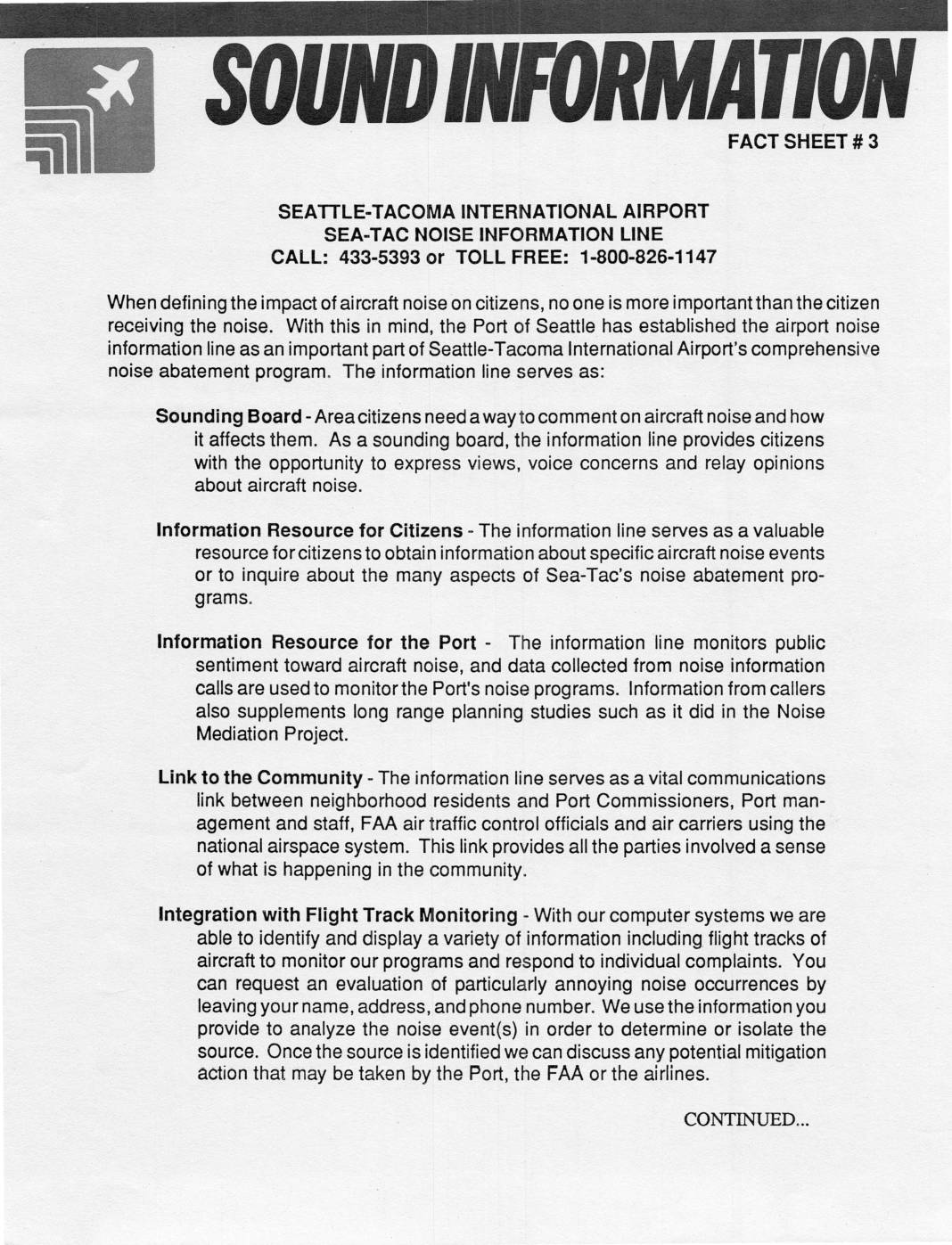
Sound Information Fact Sheet #3: Sea-Tac Airport Noise Information Line
The Port of Seattle operates a noise information line (433-5393 or 1-800-826-1147) that allows area residents to report aircraft noise complaints, ask questions about Sea-Tac's noise abatement programs, and request evaluations of specific noise events. Calls are documented in a database, and summaries are shared with FAA air traffic officials, Port Commissioners, and the public to help monitor and improve noise programs. However, the Port cannot take immediate action — such as modifying flight tracks — based solely on phone complaints. -
 1994-01-01
Archive Box 1319: MSA Expert Panel Correspondence, Port Of Seattle Noise Management Reports, and Airport Litigation Documents (1994–1996)
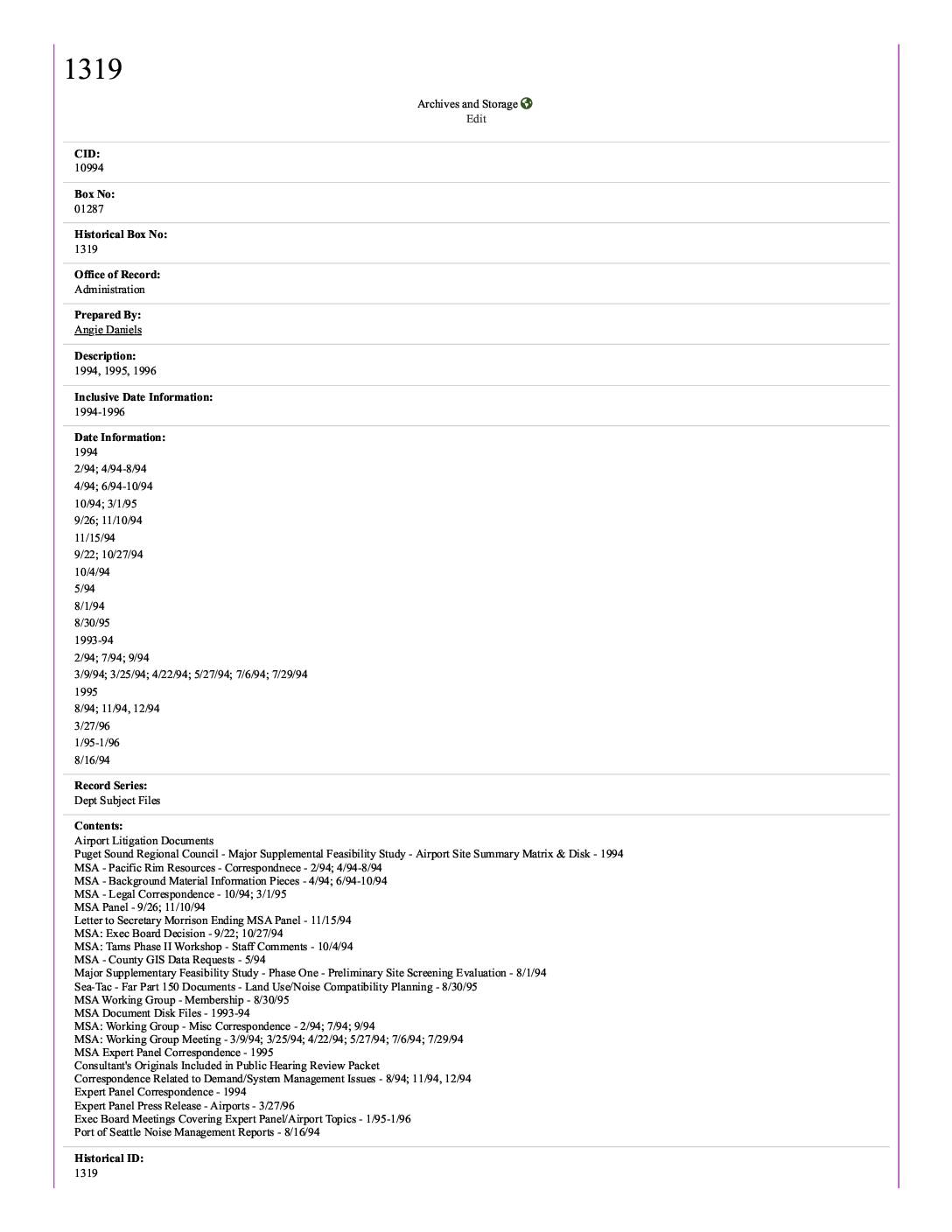
This archival box (Historical Box No. 1319) contains administrative records from 1994–1996 related to Sea-Tac Airport noise and site planning, including MSA Expert Panel correspondence, airport litigation documents, Puget Sound Regional Council feasibility study materials, and Port of Seattle Noise Management Reports. The files document working group meetings, legal correspondence, executive board decisions, and public hearing review packets connected to major supplementary feasibility studies and land use/noise compatibility planning. Records are held at the Washington State Archives. -
1994-01-01
Archive Box 1319: MSA Expert Panel Correspondence, Port Of Seattle Noise Management Reports, and Airport Litigation Documents (1994–1996)
This is an archival catalog record (CID 10994, Box 01287, Historical Box 1319) from the Port of Seattle Administration, prepared by Angie Daniels. It documents Dept Subject Files covering 1994–1996, including MSA (Major Supplementary Airport) feasibility studies, Puget Sound Regional Council airport site screening, Sea-Tac Far Part 150 land use/noise compatibility planning, expert panel correspondence, and exec board meetings on airport/noise topics. -
 1993-04-29
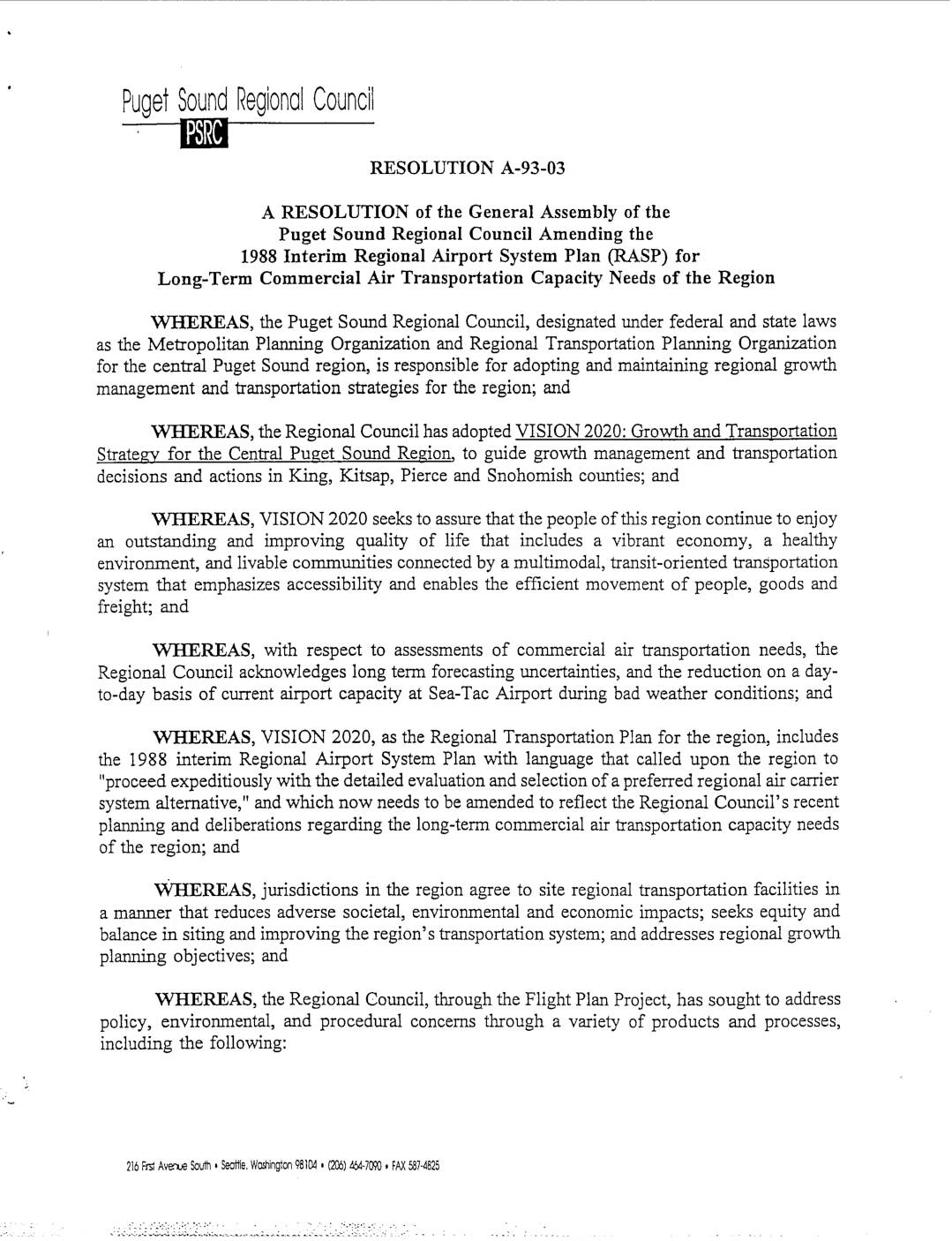
Resolution A-93-03: A resolution of the General Assembly of the Puget Sound Regional Council amending the 1988 Interim Regional Airport System Plan (RASP) for long-term commercial air transportation capacity needs of the region
In April 1993, the Puget Sound Regional Council adopted Resolution A-93-03, amending its Regional Airport System Plan to address long-term commercial air transportation needs for the central Puget Sound region. The resolution established a dual-track strategy of pursuing both a major supplemental airport within the four-county area and a third runway at Sea-Tac Airport, with the third runway to be authorized by April 1, 1996 unless a viable supplemental site could eliminate that need. Key conditions attached to the third runway approval included independent evaluation of demand management programs and measurable noise reduction performance objectives, while small supplemental airports such as Paine Field were eliminated as preferred alternatives. -
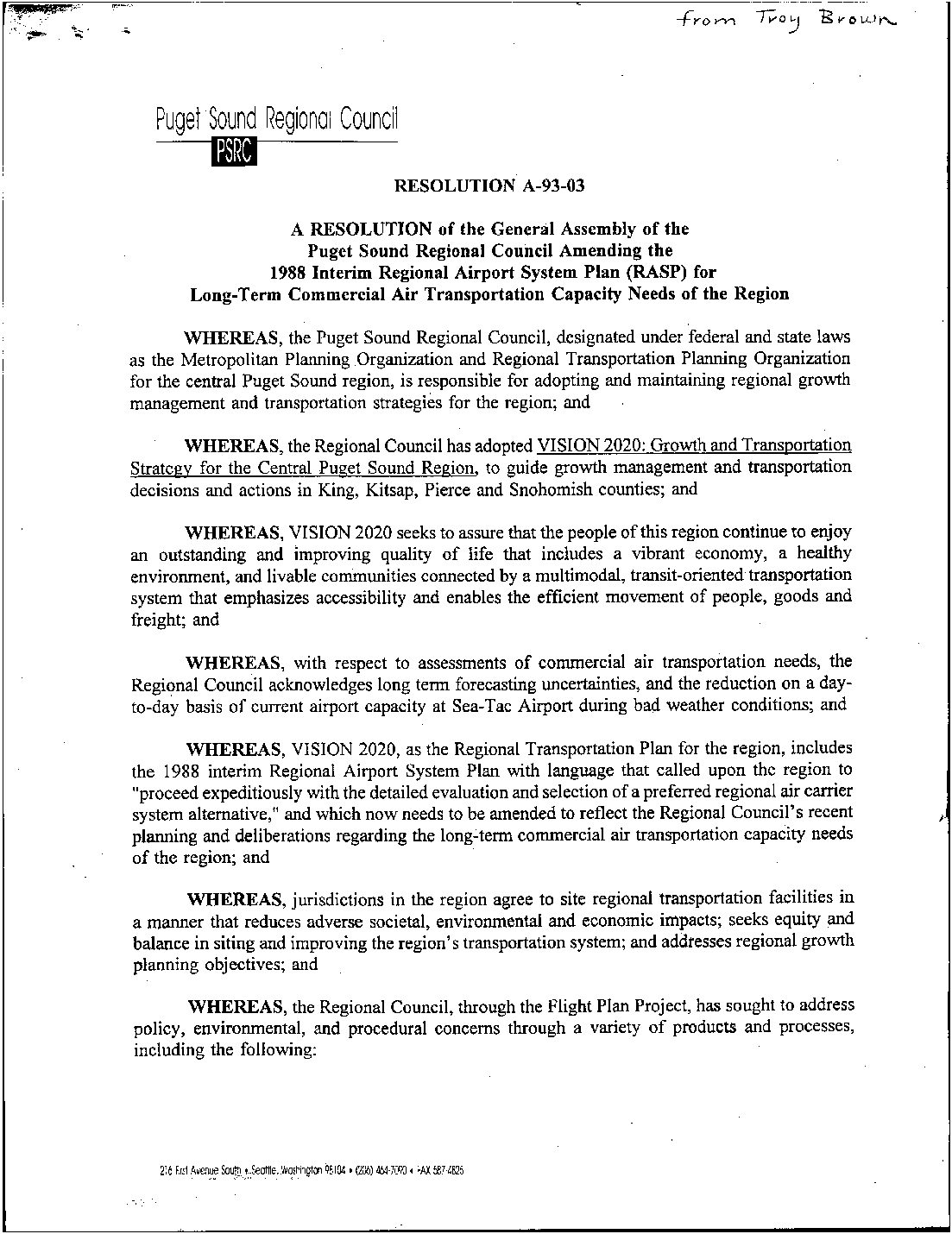 1993-04-29
Resolution A-93-03: A resolution of the General Assembly of the Puget Sound Regional Council amending the 1988 Interim Regional Airport System Plan (RASP) for long-term commercial air transportation capacity needs of the region
In April 1993, the Puget Sound Regional Council adopted Resolution A-93-03, amending its 1988 Regional Airport System Plan to address long-term commercial air transportation needs in the central Puget Sound region. The resolution established a preferred strategy of pursuing both a major supplemental airport within the four-county area and a third runway at Sea-Tac Airport, with the third runway to be authorized by April 1, 1996 subject to conditions including noise reduction performance objectives and demand management efforts. The resolution also eliminated small supplemental airports such as Paine Field as a preferred alternative and called for site-specific environmental impact studies on the proposed Sea-Tac third runway.