TagSea-Tac Airport(1855)
-
 1993-01-01
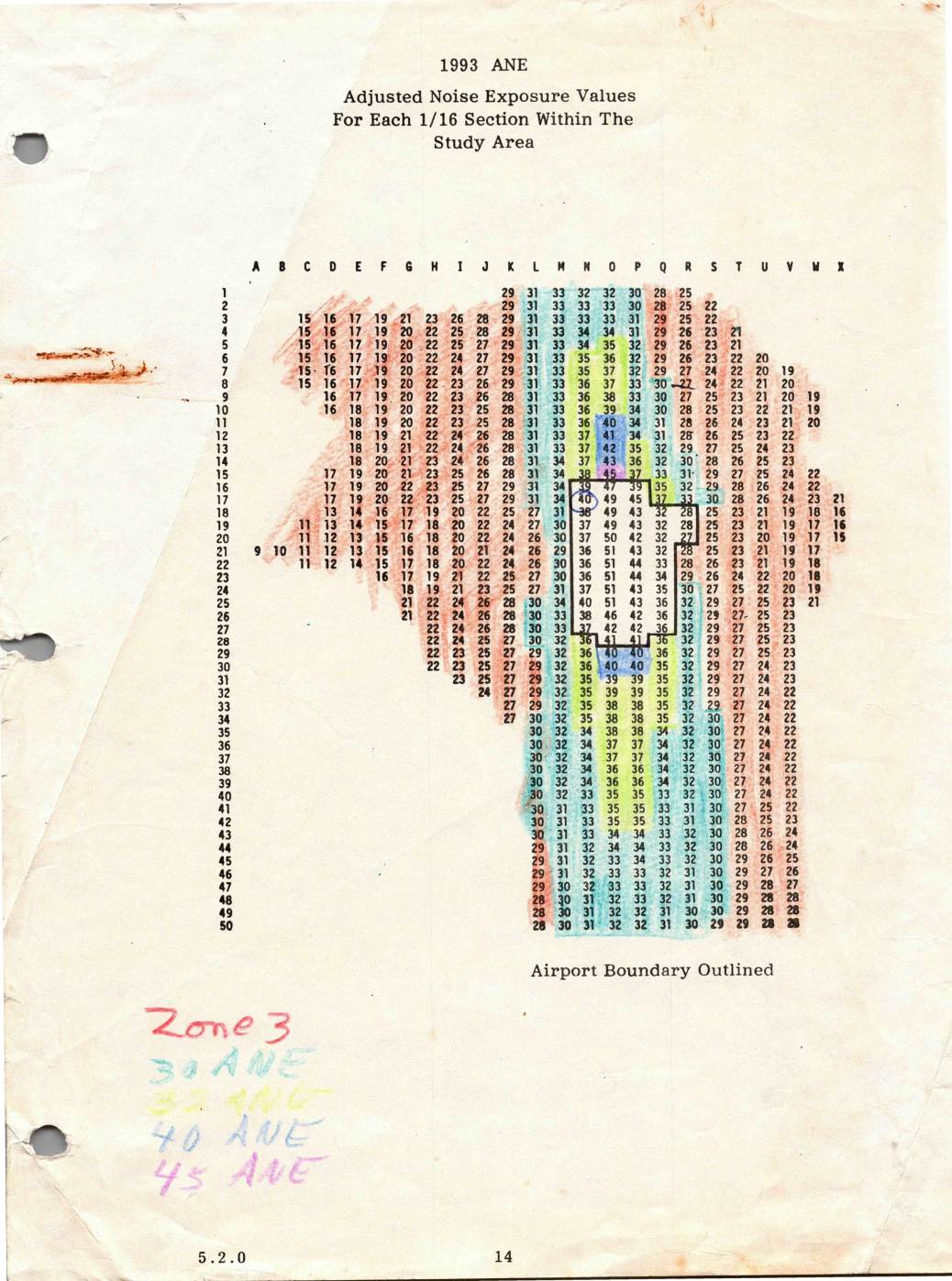
1993 ANE: Adjusted Noise Exposure Values for Each 1/16 Section Within the Study Area
This 1993 document presents Adjusted Noise Exposure (ANE) values for each 1/16 section within the Sea-Tac Airport study area, displayed as a grid referenced by row numbers (1–50) and column letters (A–X). The values represent measured noise levels across the surrounding region, with higher readings concentrated near the airport boundary and lower values toward the outer edges of the study area. Handwritten annotations indicate noise zone classifications at 30, 33, 40, and 45 ANE thresholds, which were used to define noise impact zones for land use planning purposes. -
 1992-12-10
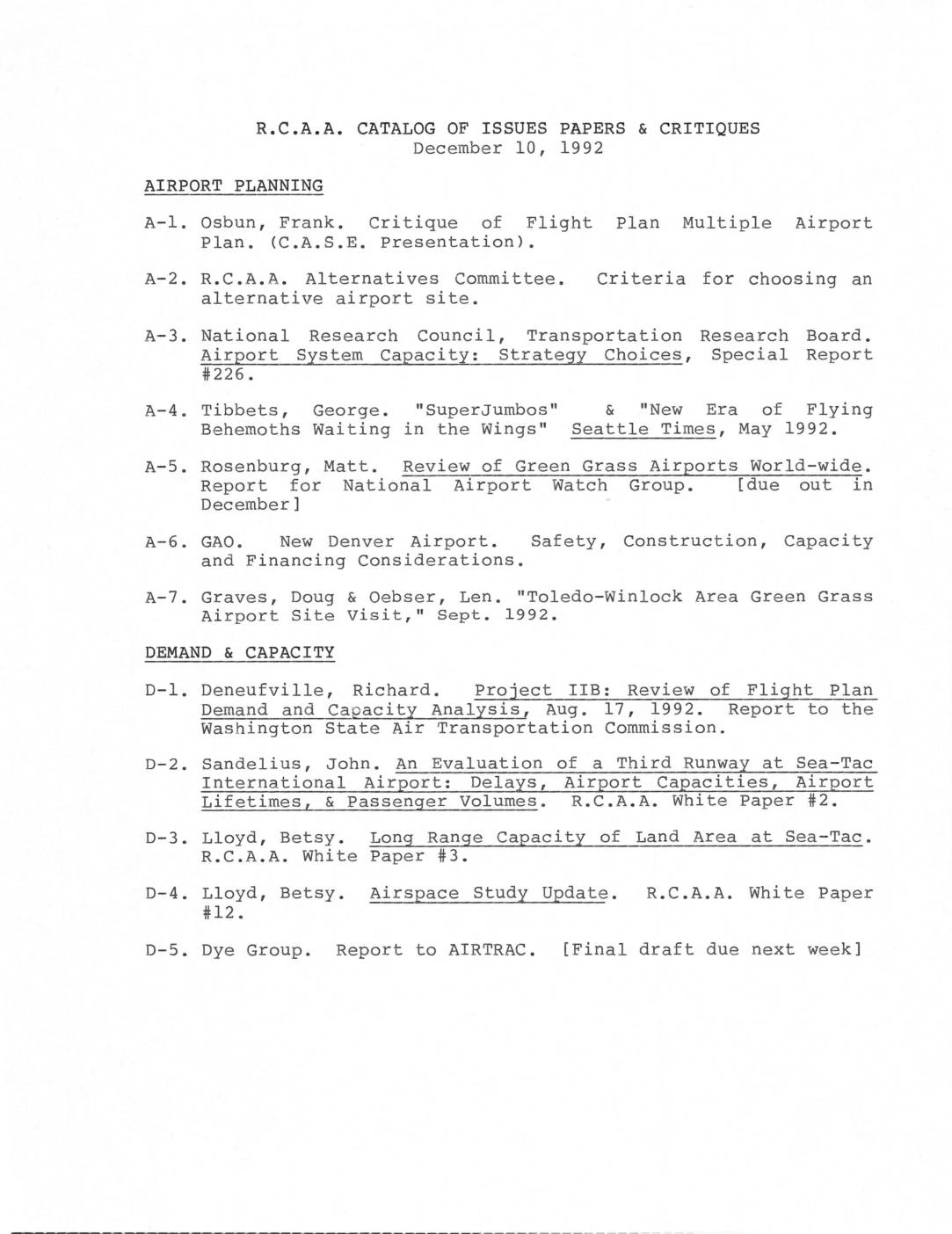
R.C.A.A. catalog of issues papers & critiques
This December 1992 catalog from R.C.A.A. (Residents for Conscious Airport Activity) lists research papers, critiques, and white papers organized by topic—including airport planning, demand and capacity, economics, health, environmental impacts, and noise—all relating to Sea-Tac International Airport expansion. Key concerns addressed include aircraft noise measurement and the adequacy of the 65 Ldn noise metric, air and water pollution from airport expansion, and the evaluation of alternative airport sites. The catalog reflects community and expert opposition to Sea-Tac's third runway proposal and broader regional airport policy decisions in the Puget Sound area. -
 1992-12-01
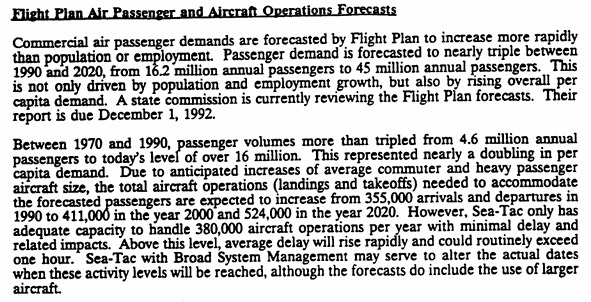
Flight Plan Air Passenger and Aircraft Operations Forecasts
A text excerpt from a document forecasting Sea-Tac Airport passenger and aircraft operations, projecting growth from 16.2 million annual passengers in 1990 to 45 million by 2020. The document notes Sea-Tac's capacity limit of 380,000 aircraft operations per year and references a state commission review of Flight Plan forecasts due December 1, 1992. -
 1992-11-20
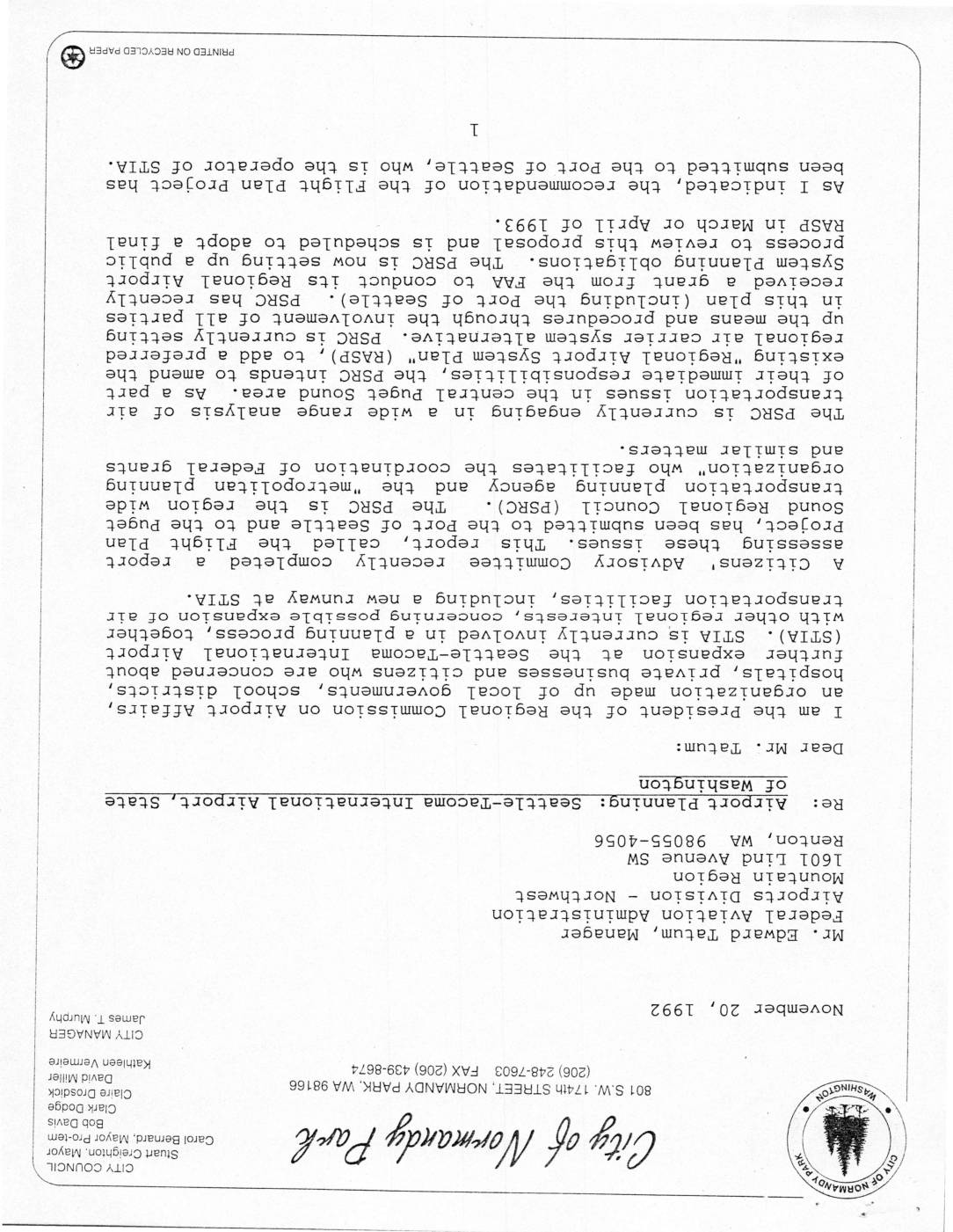
Airport planning: Seattle-Tacoma International Airport, State of Washington
In a November 1992 letter to the FAA's Northwest Mountain Region manager, the President of the Regional Commission on Airport Affairs urges the federal government to defer funding and detailed planning for a proposed third runway at Seattle-Tacoma International Airport (Sea-Tac). The letter argues that the Puget Sound Regional Council's ongoing regional airport system planning process must be allowed to fully evaluate all alternatives before any single project receives federal financial commitment. The author warns that proceeding prematurely with site-specific plans and an Environmental Impact Statement risks wasting federal money if the regional plan ultimately selects an alternative other than a third runway at Sea-Tac. -
 1992-10-21
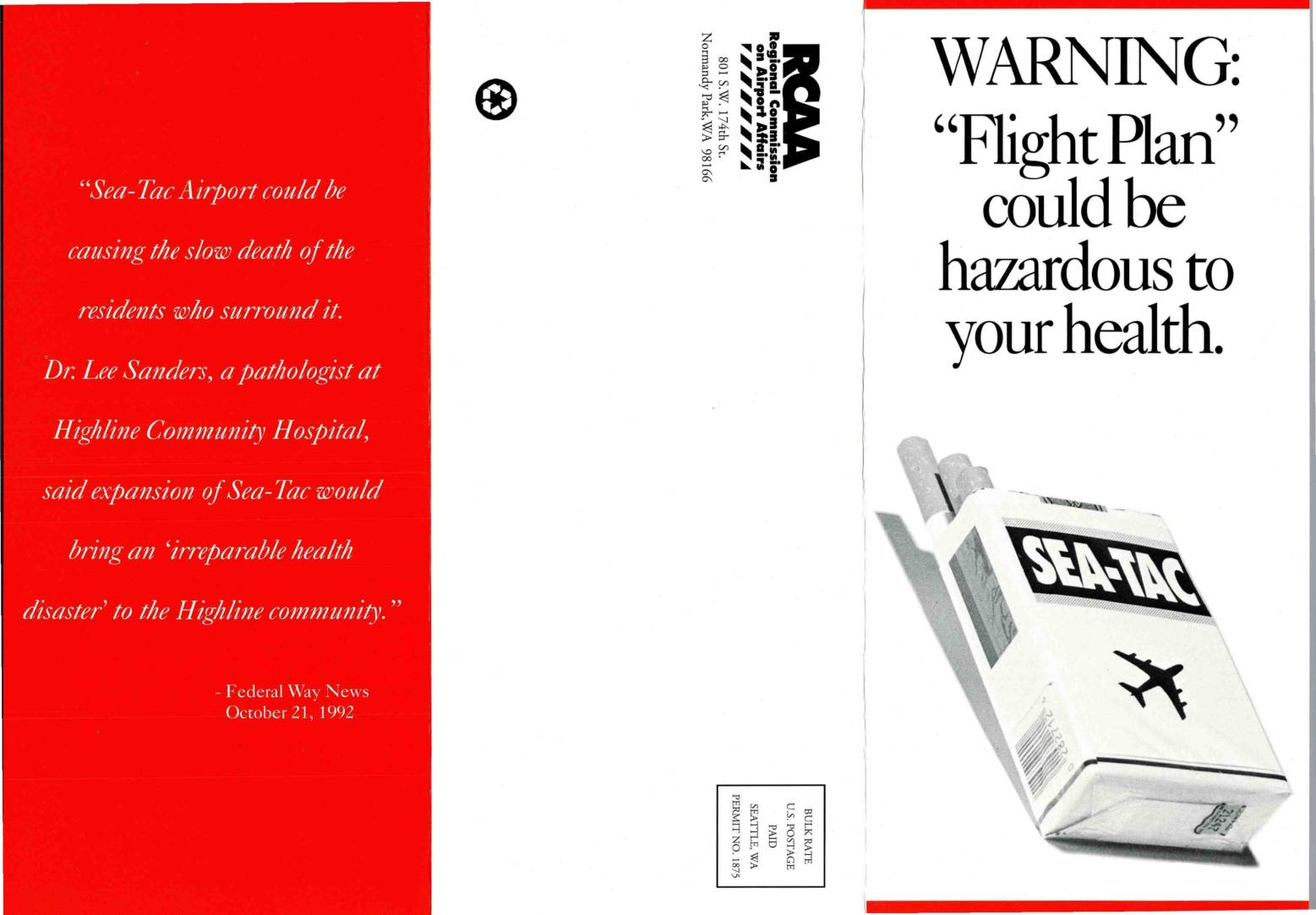
WARNING: ‘Flight Plan’ could be hazardous to your health
A 1992 pamphlet published by the Regional Commission on Airport Affairs (RCAA) warns that the Port of Seattle's expansion plan for Sea-Tac Airport — including the addition of a third runway — poses serious health risks to surrounding communities. Citing studies reviewed by physicians at Highline Community Hospital, the brochure links increased airport activity to higher rates of birth defects, cardiovascular disease, mental illness, and dangerous levels of air pollutants such as carbon monoxide, benzene, and lead. The document concludes that when health and community costs are fully considered, Sea-Tac expansion may be neither financially feasible nor ethically justifiable. -
 1992-10-05
The adverse health impacts of airport expansion with particular reference to Sea-Tac International Airport
A 1992 report by physicians from the Regional Coalition on Airport Affairs details the serious health risks posed by Sea-Tac International Airport's noise and air pollution on surrounding communities. It documents links between airport noise and increased use of tranquilizers, psychiatric hospitalizations, sleep disruption, lower birth weights, and declining school test scores, while also noting that Sea-Tac generates up to 5% of all air pollution in King County. The report argues that airport expansion would significantly worsen these already measurable public health impacts on South King County residents. -
 1992-10-05
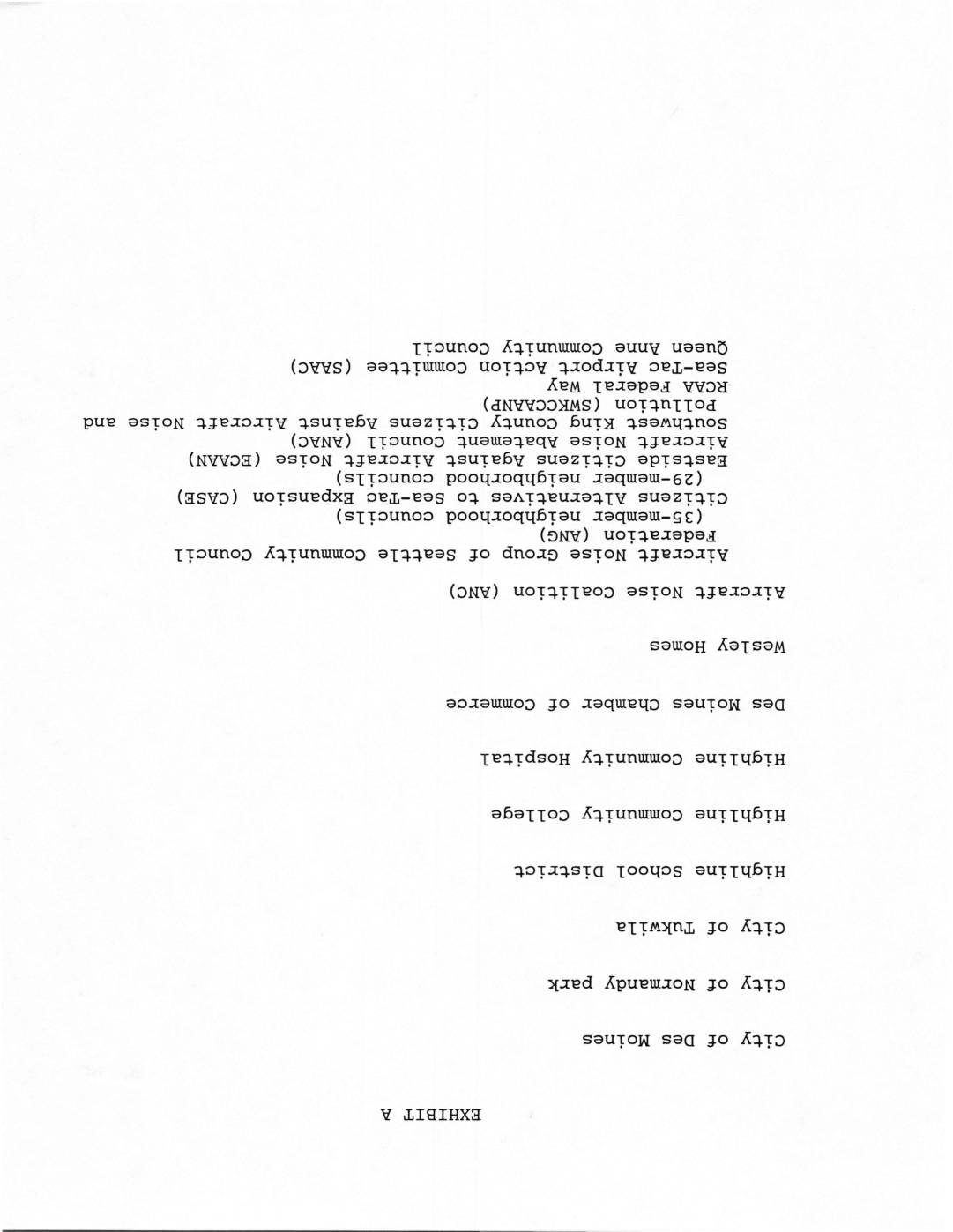
Airport Alternative Committee October 5, 1992 meeting notes
These documents relate to the Airport Alternative Committee's October 1992 meeting, which brought together cities, community organizations, and citizen groups concerned about aircraft noise around Seattle-Tacoma (Sea-Tac) Airport. The committee evaluated criteria and requirements for addressing airport expansion, including minimizing noise impact on the largest number of people, maximizing aircraft and ground safety, and providing 750 operations capacity by the year 2020. Alternative airport sites such as Vancouver, Black Lake, Fort Lewis, Portland, McCord, Arlington, and SeaTac were also discussed. -
 1992-10-01
The Flight Plan Project Final Environmental Impact Statement
The Flight Plan Project, a joint effort by the Puget Sound Regional Council and the Port of Seattle, produced this 1992 Final Environmental Impact Statement to evaluate long-term commercial air transportation options for the central Puget Sound region. It examines system-level alternatives ranging from expanding Sea-Tac Airport to building new airport facilities, assessing trade-offs related to noise, air quality, land use, and regional quality of life. The document serves as a programmatic planning tool, with no single preferred alternative identified, intended to guide future site-specific environmental reviews and regional airport policy decisions. -
 1992-09-11
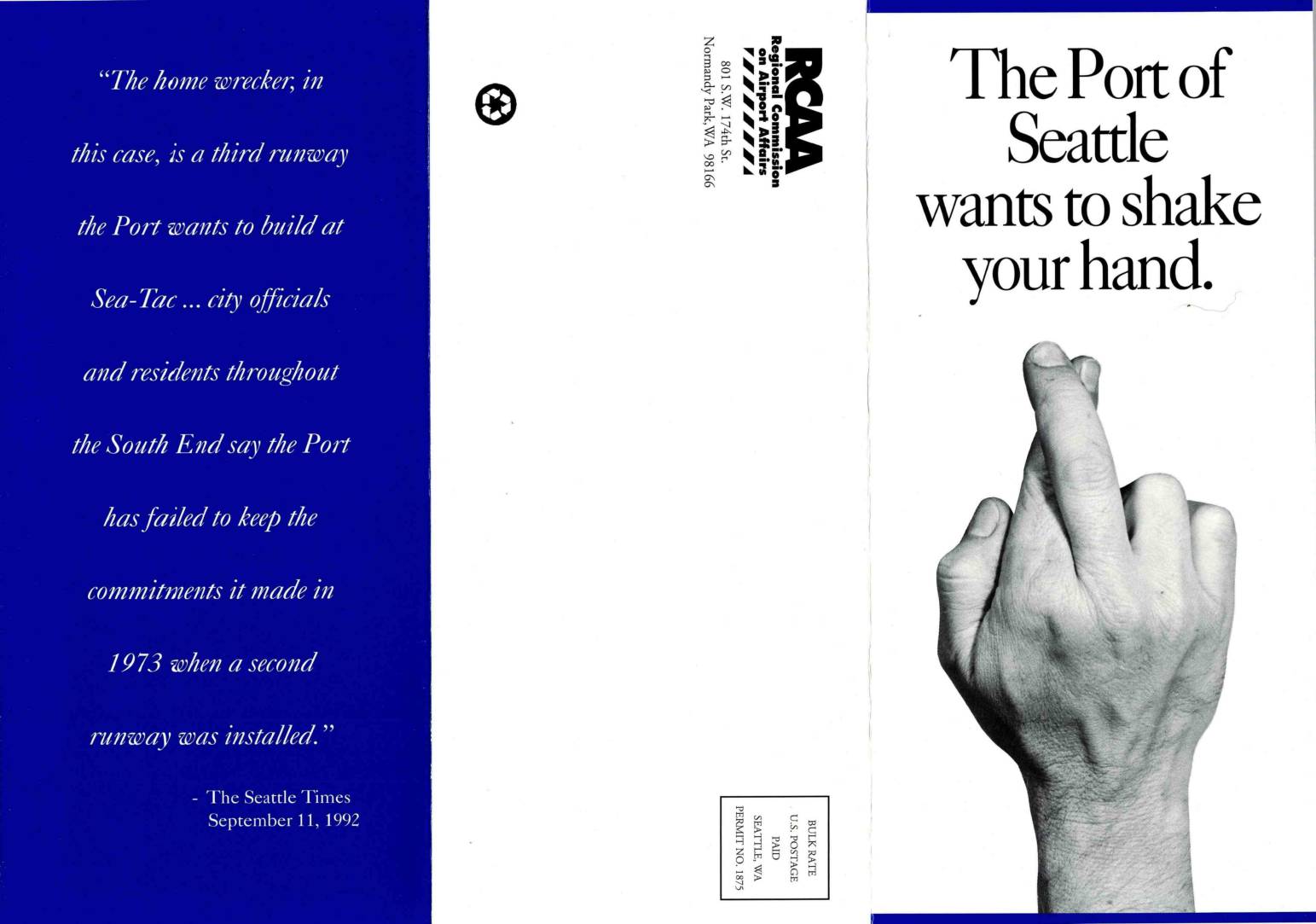
The Port Of Seattle wants to shake your hand
A 1992 brochure from the Regional Commission on Airport Affairs (RCAA) argues that the Port of Seattle broke its 1973 promises to soundproof homes affected by Sea-Tac Airport noise, noting that only 700 of 10,000 impacted homes had been insulated and no public buildings had been treated despite a recognized obligation since 1988. The brochure opposes the Port's plan to spend up to $1.2 billion on a third runway at Sea-Tac, questioning how residents can trust new commitments when past ones went unfulfilled. It calls on the Port to fulfill its existing mitigation obligations before pursuing further airport expansion. -
 1992-09-08
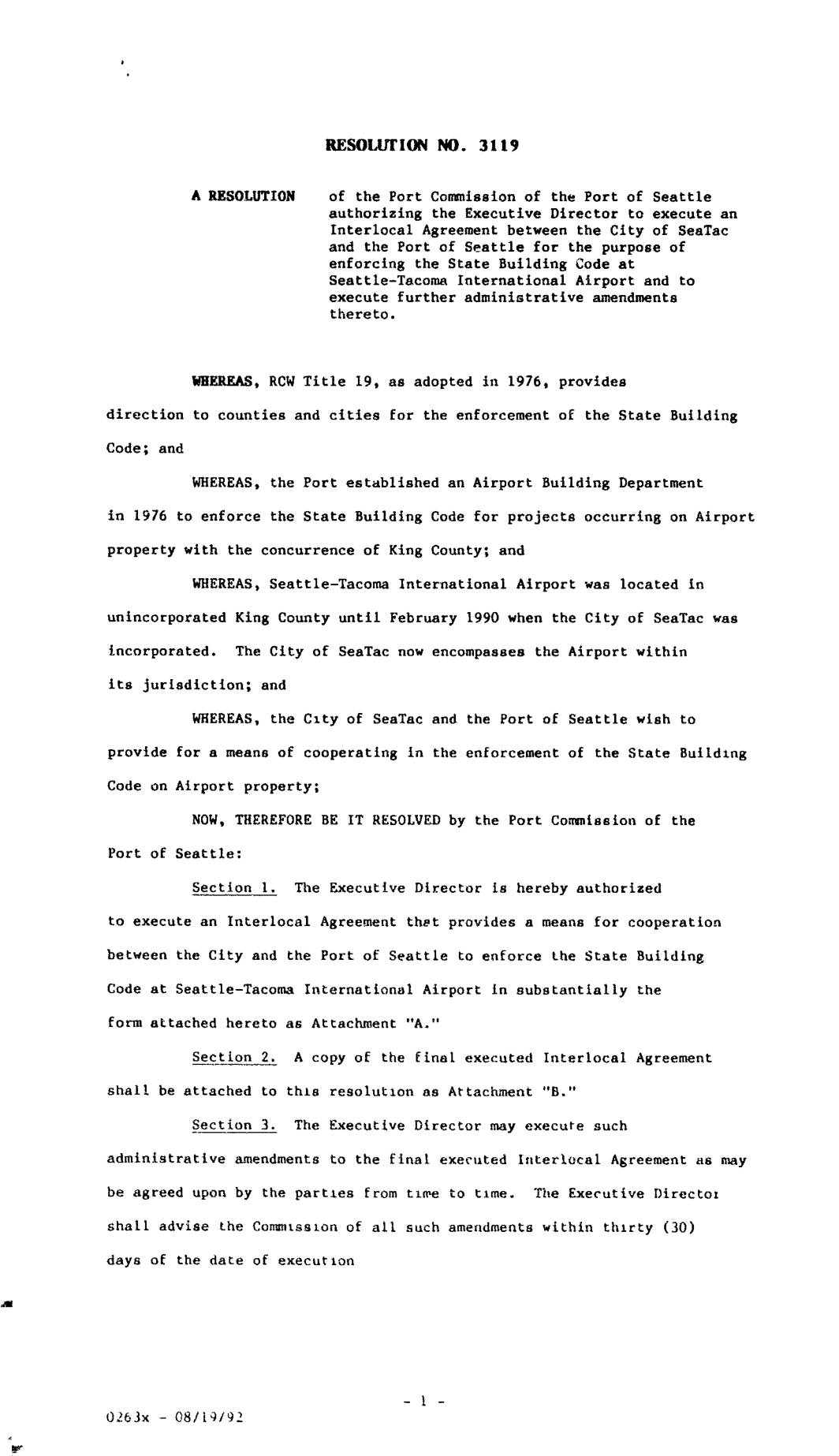
Resolution 3119: Port Of Seattle Commission Authorization for ILA with City of SeaTac for State Building Code Enforcement at Sea-Tac
Port Of Seattle Commission Resolution No. 3119, adopted September 8, 1992, authorizing the Executive Director to execute an Interlocal Agreement between the City of SeaTac and the Port of Seattle for enforcement of the State Building Code at Seattle-Tacoma International Airport. The resolution references RCW Title 19 (1976), the Airport Building Department established in 1976