TagRCAA(206)
-
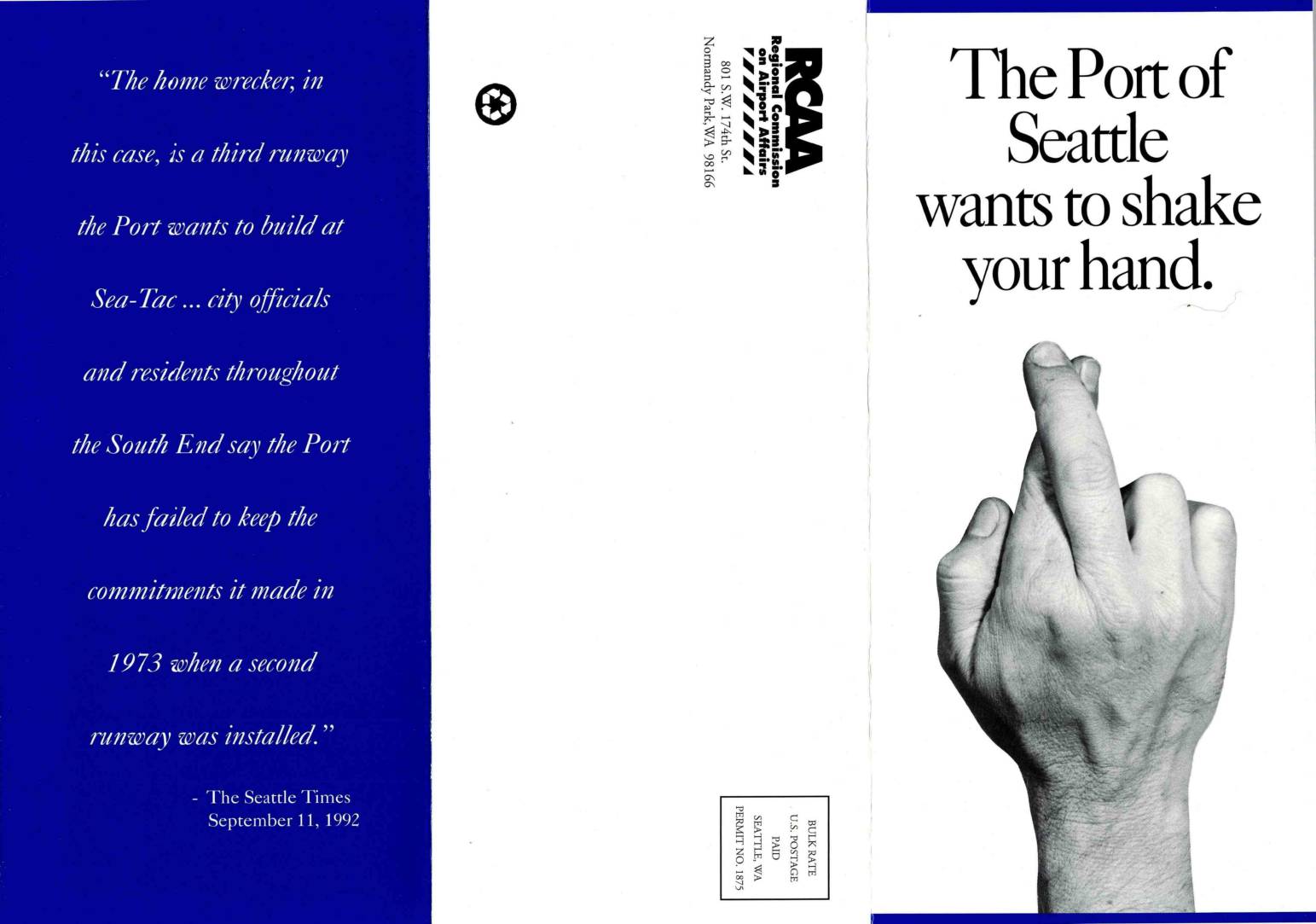 1992-09-11
The Port Of Seattle wants to shake your hand
A 1992 brochure from the Regional Commission on Airport Affairs (RCAA) argues that the Port of Seattle broke its 1973 promises to soundproof homes affected by Sea-Tac Airport noise, noting that only 700 of 10,000 impacted homes had been insulated and no public buildings had been treated despite a recognized obligation since 1988. The brochure opposes the Port's plan to spend up to $1.2 billion on a third runway at Sea-Tac, questioning how residents can trust new commitments when past ones went unfulfilled. It calls on the Port to fulfill its existing mitigation obligations before pursuing further airport expansion. -
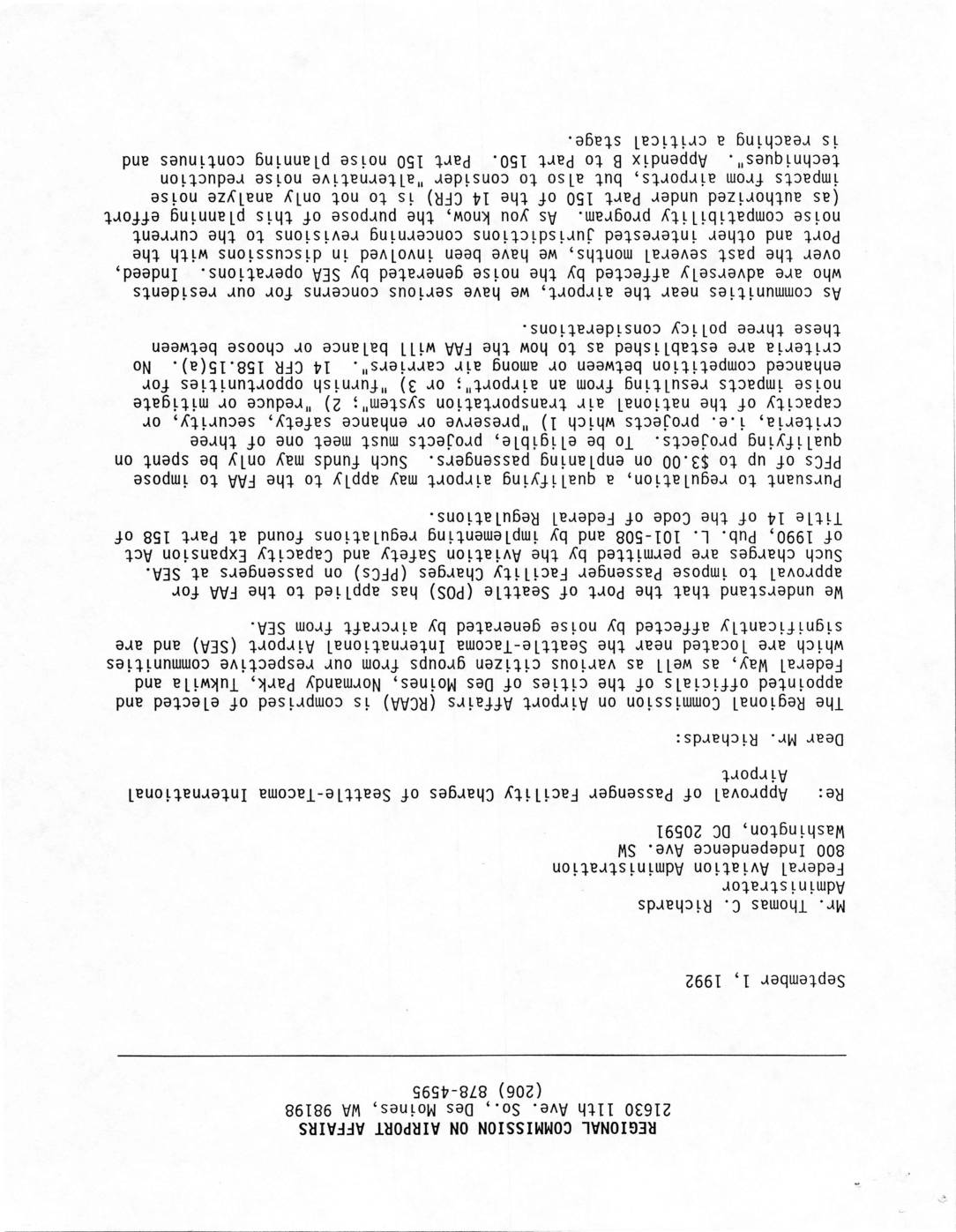 1992-09-01
Approval of passenger facility charges of Seattle-Tacoma International Airport
In a September 1, 1992 letter to the FAA Administrator, the Regional Commission on Airport Affairs formally requests reconsideration of the FAA's August 14, 1992 decision approving Passenger Facility Charges (PFCs) at Seattle-Tacoma International Airport. The Commission, representing communities near Sea-Tac severely impacted by aircraft noise, argues that PFC funds should be redirected toward noise mitigation efforts rather than security improvements and preliminary studies, and that local governments were not properly notified or consulted during the PFC application process. The letter calls for increased funding levels for noise mitigation, cancellation of certain approved expenditures deemed inappropriate or excessive, and greater consideration of local government views in future PFC allocation decisions. -
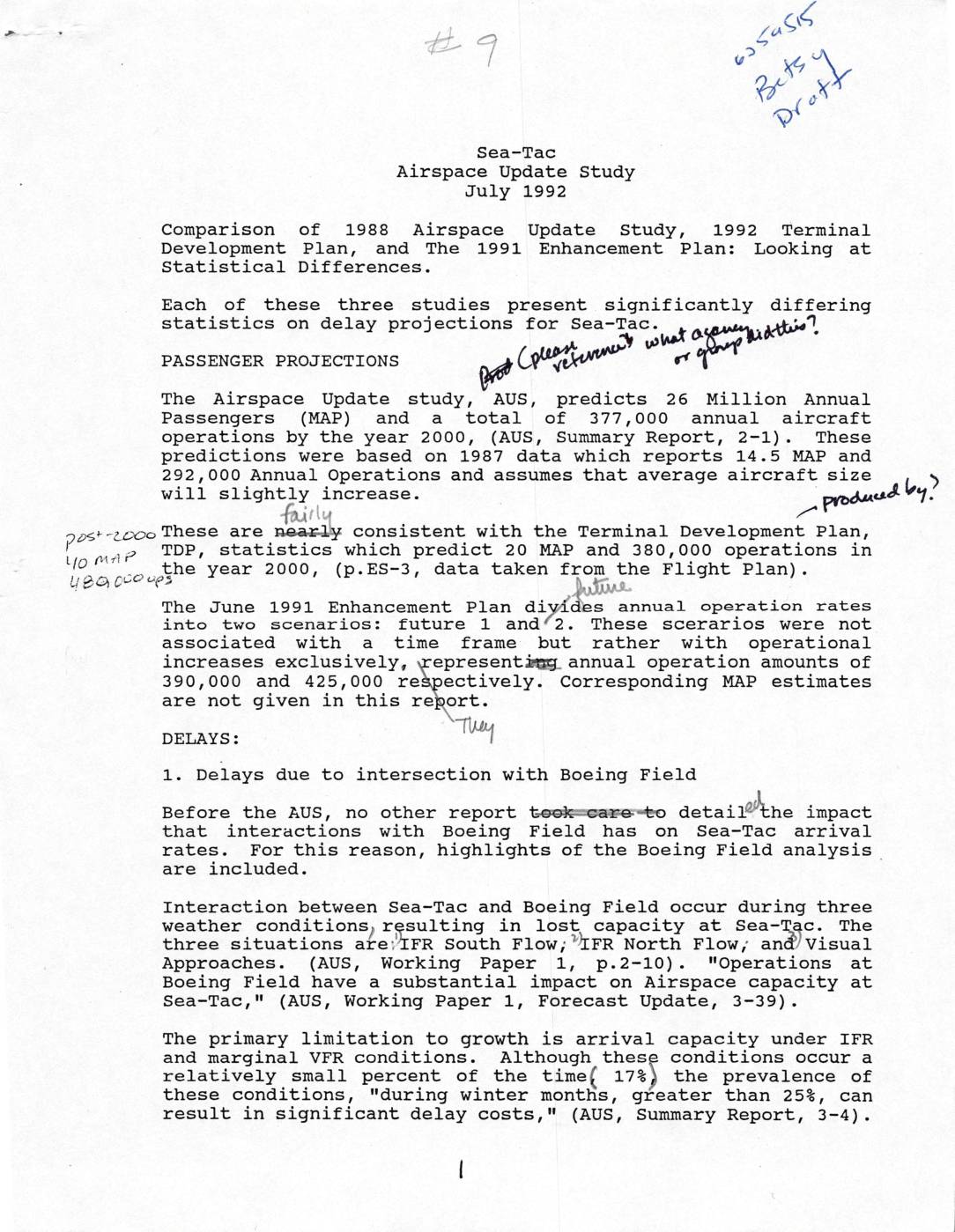 1992-07-01
Sea-Tac Airspace Update Study: Comparison of 1988 Airspace Update Study, 1992 Terminal Development Plan, and the 1991 Enhancement Plan
This 1992 study compares three planning reports on Sea-Tac Airport's future capacity and delays: the 1988 Airspace Update Study, the 1992 Terminal Development Plan, and the 1991 Enhancement Plan. The reports differ significantly in their passenger and flight operation projections for the year 2000, and show striking discrepancies in delay estimates — with the Enhancement Plan projecting delay hours more than five times higher than the Airspace Update Study. The document also outlines proposed solutions to reduce delays, including new runway construction, airspace conflict resolution with nearby Boeing Field, and improved approach procedures. -
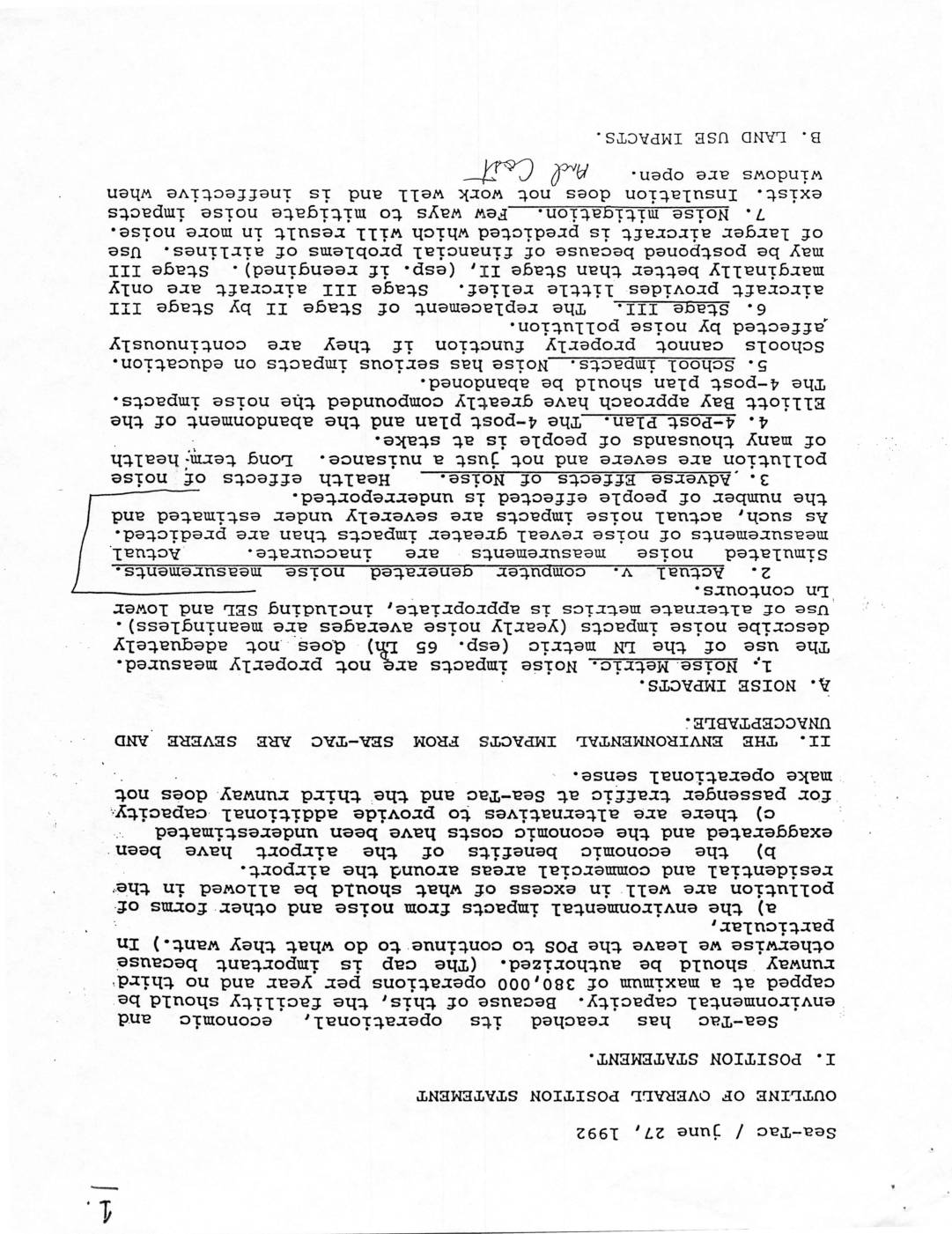 1992-06-27
Outline of overall position statement: Sea-Tac, June 27, 1992
A 1992 position statement argues that Seattle-Tacoma International Airport (Sea-Tac) has reached its operational, economic, and environmental capacity and should be capped at a maximum of 380,000 operations per year with no third runway authorized. The document contends that noise impacts on surrounding communities are severely underestimated, that a third runway would make no operational or economic sense, and that alternatives such as demand management, use of existing regional airports, and improved transportation systems should be pursued instead. -
 1992-03-02
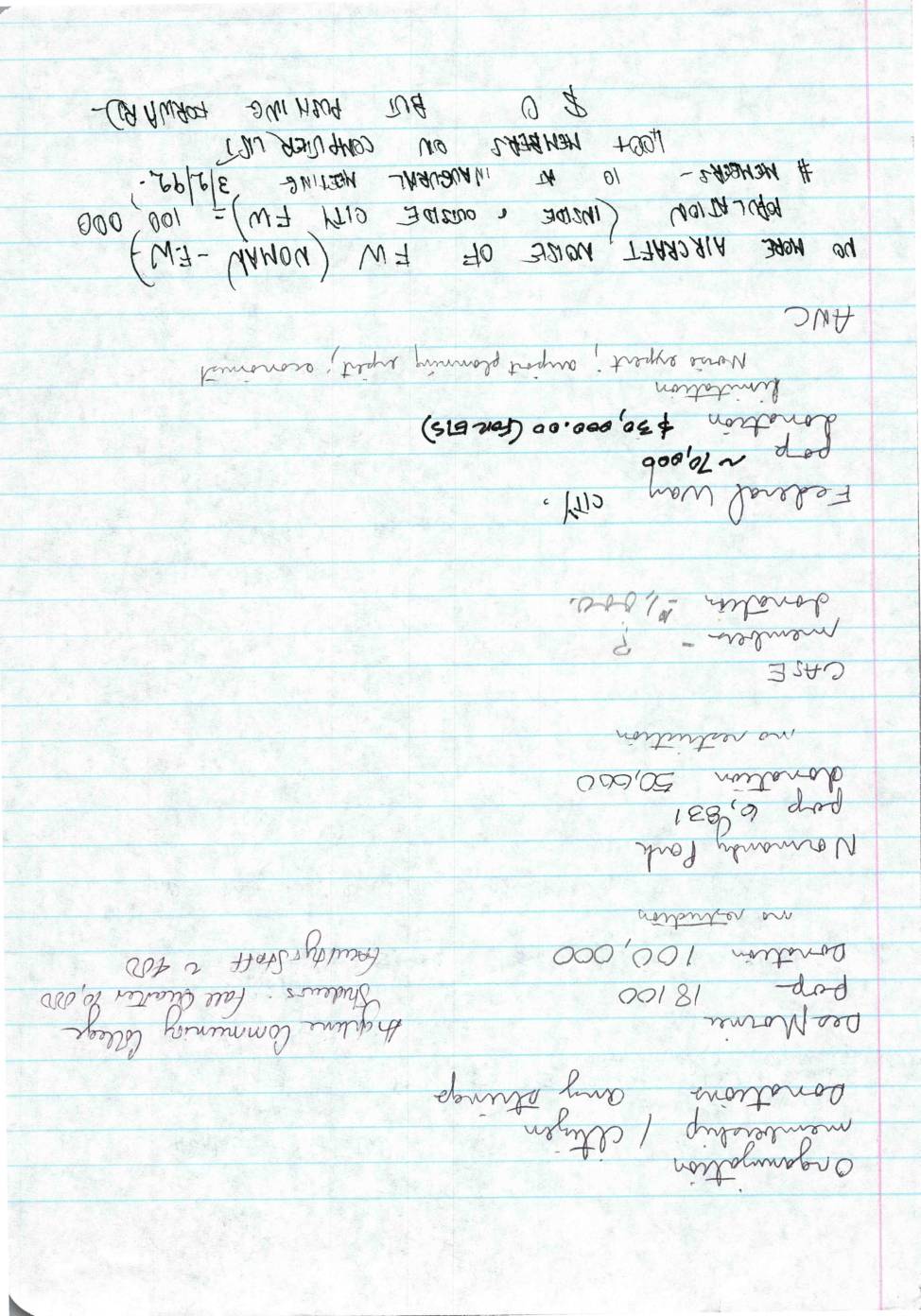
Handwritten notes on community organizations and airport noise
This handwritten document appears to be notes from an early 1992 meeting (dated 3/2/92) concerning aircraft noise policy near Sea-Tac Airport, referencing a group opposed to further aircraft noise and seeking members from both inside and outside city limits, with a target population of 100,000. The notes outline several case studies of organizations and community colleges receiving donations ranging from $50,000 to $100,000, apparently as part of noise mitigation or community foundation funding efforts. Key concerns include growing a membership list beyond those already on a computer list and organizing inaugural meetings to advance the no-more-aircraft-noise agenda. -
 1957-07-17
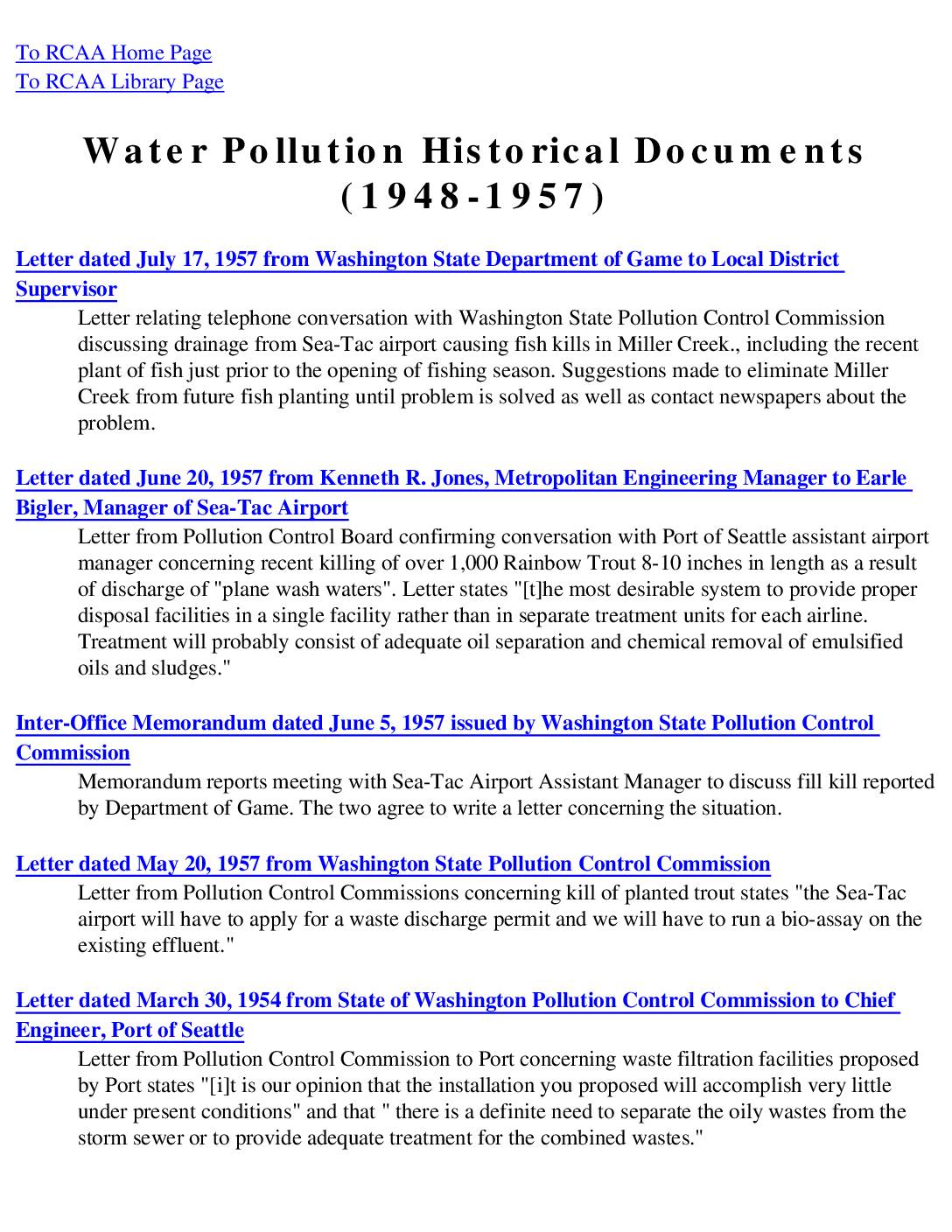
Water pollution historical documents (1948-1957)
This collection of historical documents from 1948 to 1957 chronicles ongoing water pollution problems caused by Sea-Tac Airport's drainage of aircraft wash water, oils, and chemicals into nearby Miller Creek and Des Moines Creek. The records show repeated fish kills, contamination of private property, and years of failed or inadequate treatment solutions, prompting complaints from residents, state legislators, and wildlife agencies. Despite numerous proposals and temporary fixes, the Washington State Pollution Control Commission continued to pressure the Port of Seattle to develop a permanent waste disposal system throughout the period.