TagRCAA(206)
-
 1993-01-13
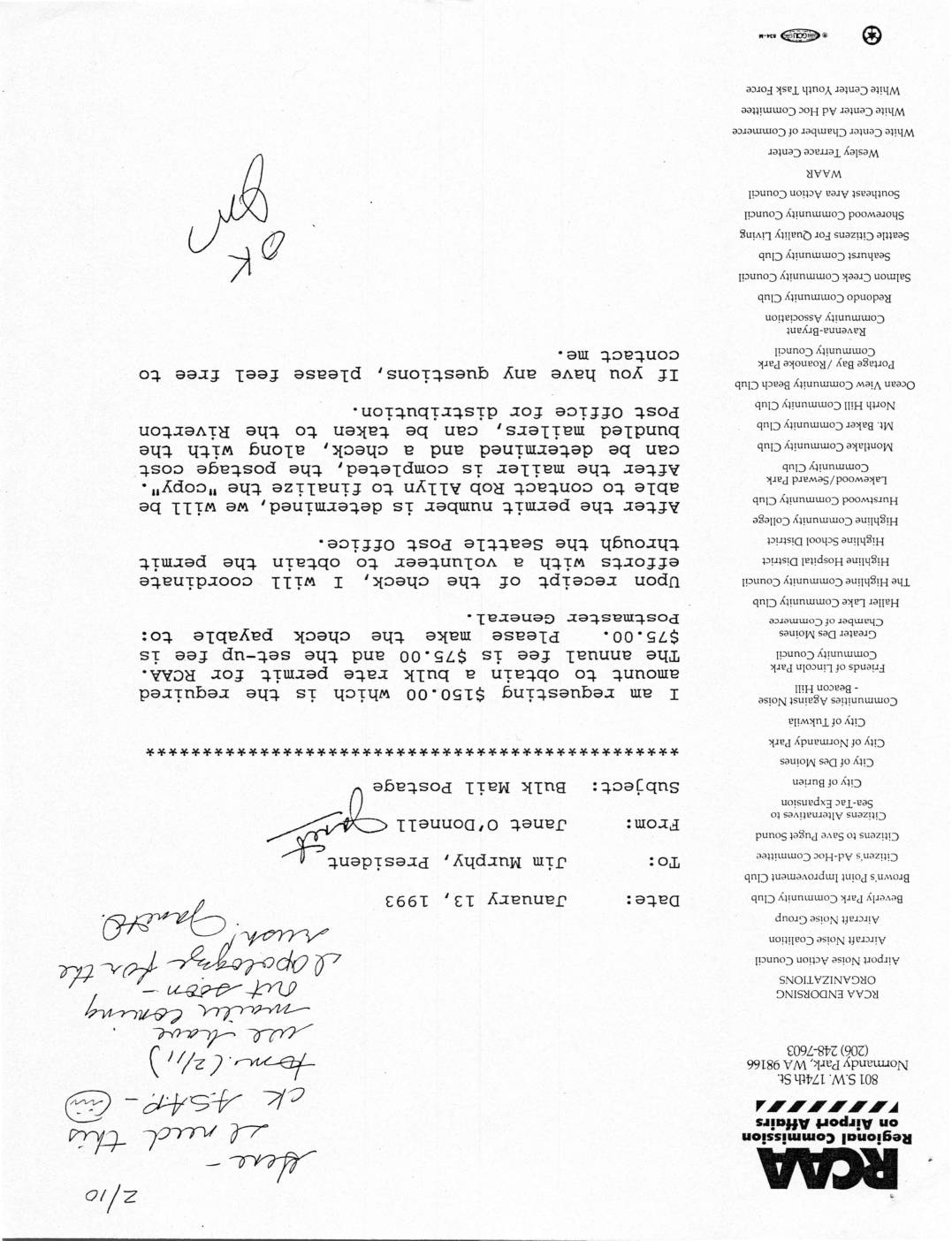
Bulk mail postage memo to Jim Murphy, President
A January 13, 1993 memo from Janet O'Donnell to Jim Murphy, President of the Regional Commission on Airport Affairs (RCAA), requests $150.00 to obtain a bulk mail postal permit — $75.00 for the annual fee and $75.00 for the setup fee — to support distribution of materials related to Sea-Tac Airport noise issues. The memo outlines the process for obtaining the permit through the Seattle Post Office and coordinating with a volunteer to finalize mailing logistics. The document is endorsed by a broad coalition of community organizations, city governments, and civic groups opposed to Sea-Tac Airport expansion and aircraft noise. -
 1993-01-01
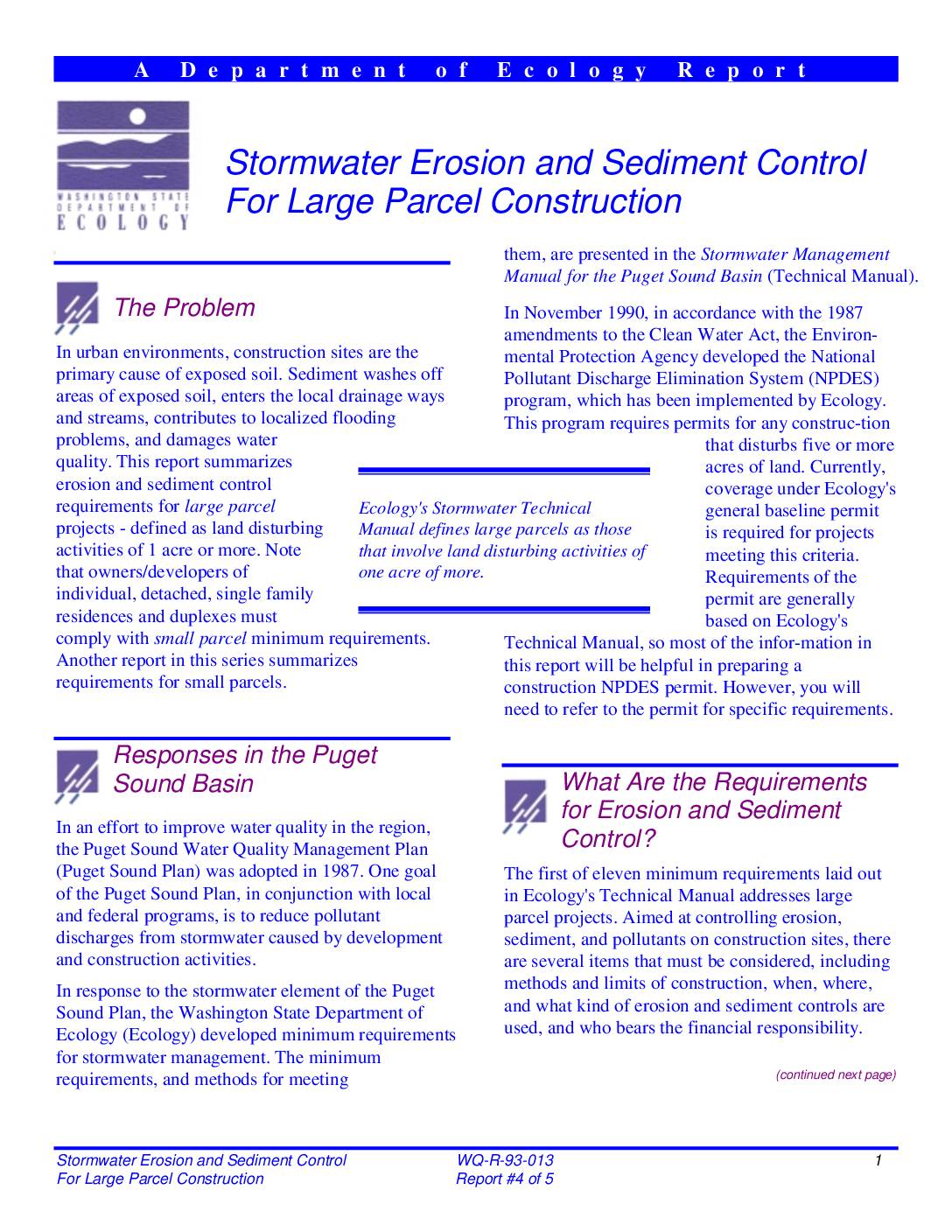
Stormwater erosion and sediment control for large parcel construction
This Washington State Department of Ecology report outlines stormwater erosion and sediment control requirements for large construction projects involving one or more acres of disturbed land in the Puget Sound Basin. It describes best management practices (BMPs) such as covering exposed soil, trapping sediment onsite, and protecting adjacent properties from runoff and sediment. Developers are required to create an erosion and sediment control plan and are financially responsible for its implementation. -
 1992-12-10
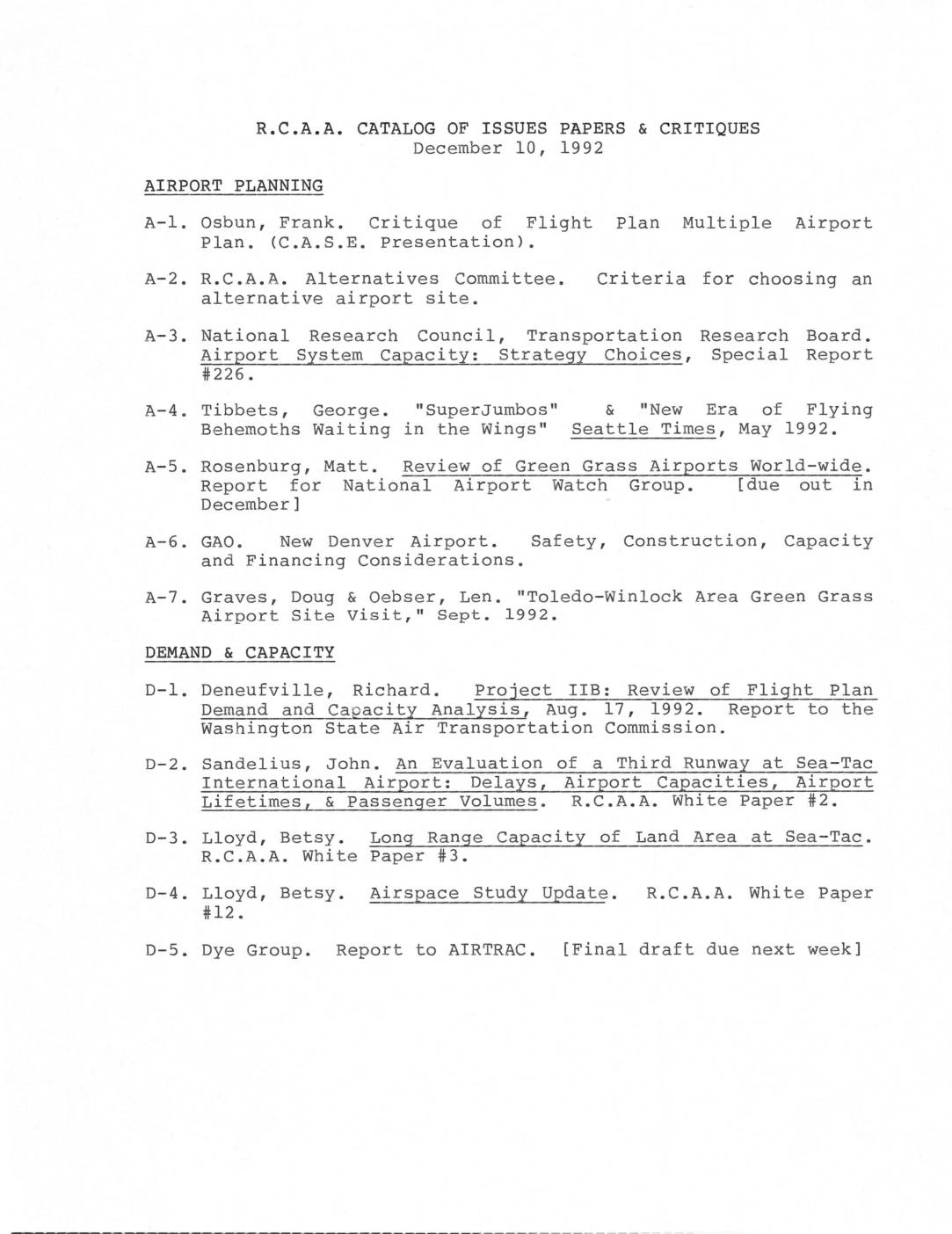
R.C.A.A. catalog of issues papers & critiques
This December 1992 catalog from R.C.A.A. (Residents for Conscious Airport Activity) lists research papers, critiques, and white papers organized by topic—including airport planning, demand and capacity, economics, health, environmental impacts, and noise—all relating to Sea-Tac International Airport expansion. Key concerns addressed include aircraft noise measurement and the adequacy of the 65 Ldn noise metric, air and water pollution from airport expansion, and the evaluation of alternative airport sites. The catalog reflects community and expert opposition to Sea-Tac's third runway proposal and broader regional airport policy decisions in the Puget Sound area. -
 1992-11-20
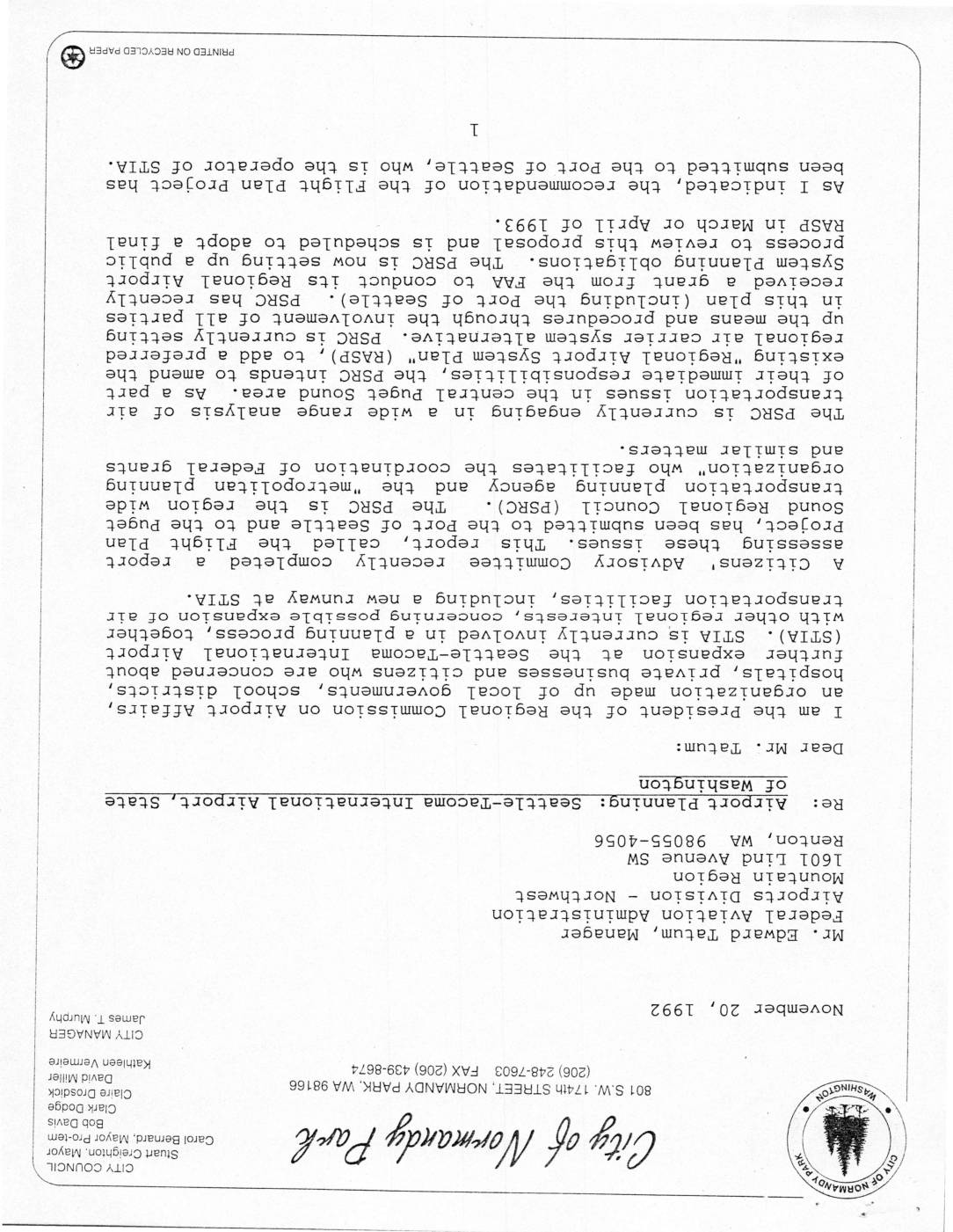
Airport planning: Seattle-Tacoma International Airport, State of Washington
In a November 1992 letter to the FAA's Northwest Mountain Region manager, the President of the Regional Commission on Airport Affairs urges the federal government to defer funding and detailed planning for a proposed third runway at Seattle-Tacoma International Airport (Sea-Tac). The letter argues that the Puget Sound Regional Council's ongoing regional airport system planning process must be allowed to fully evaluate all alternatives before any single project receives federal financial commitment. The author warns that proceeding prematurely with site-specific plans and an Environmental Impact Statement risks wasting federal money if the regional plan ultimately selects an alternative other than a third runway at Sea-Tac. -
 1992-11-06
Air pollution: A study with particular reference to Seattle-Tacoma International Airport
A 1992 report by the Regional Commission on Airport Affairs found that Seattle-Tacoma International Airport, despite occupying less than 0.2% of King County's land, was responsible for 8% of the county's carbon monoxide emissions and 5% of its nitrogen oxide emissions, along with significant quantities of toxic pollutants like benzene. At the time of the report, the airport had no air-pollution monitoring system in place, and the author argued this represented a critical gap in the airport's Environmental Impact Statement that urgently needed to be addressed. -
 1992-10-21
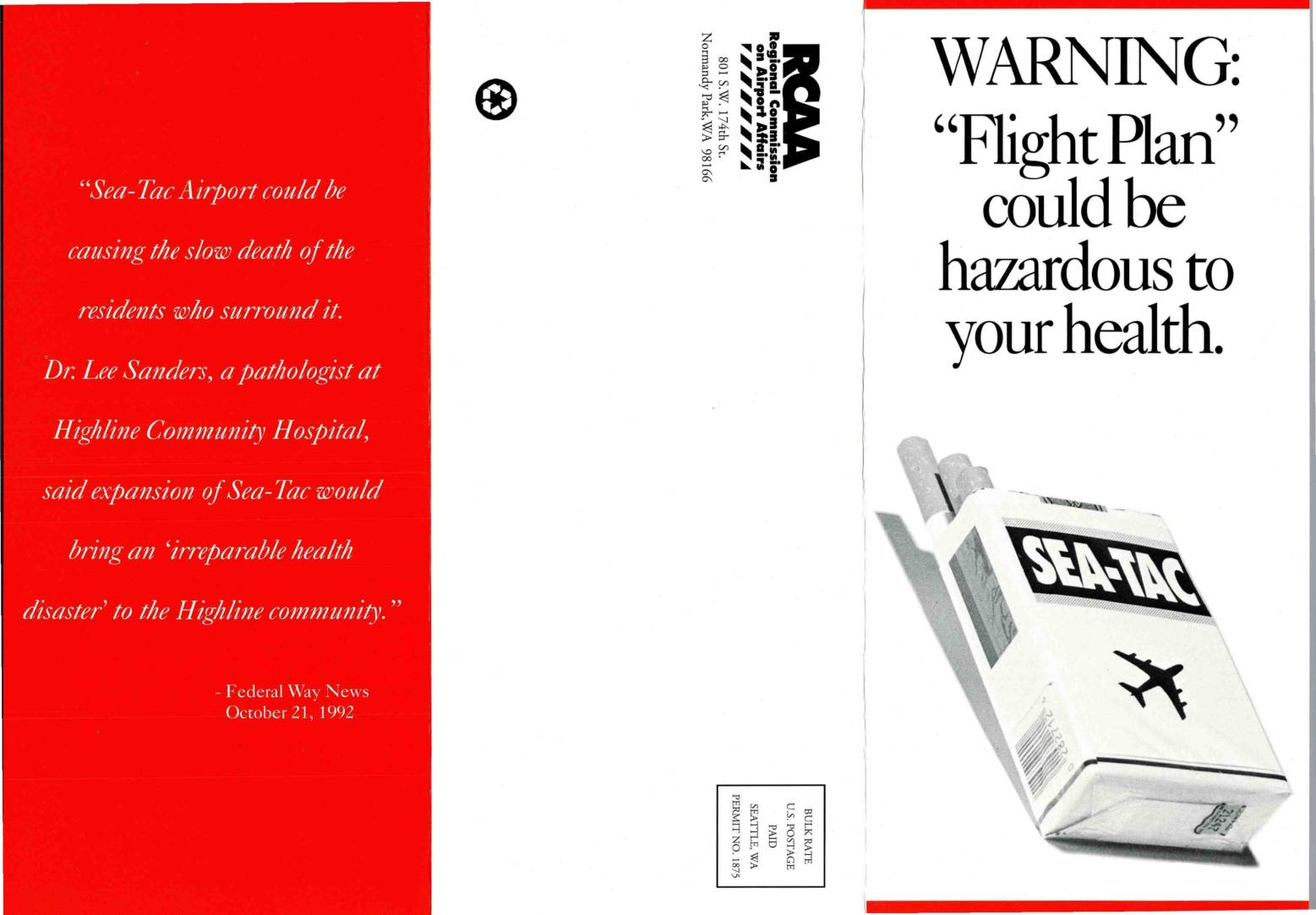
WARNING: ‘Flight Plan’ could be hazardous to your health
A 1992 pamphlet published by the Regional Commission on Airport Affairs (RCAA) warns that the Port of Seattle's expansion plan for Sea-Tac Airport — including the addition of a third runway — poses serious health risks to surrounding communities. Citing studies reviewed by physicians at Highline Community Hospital, the brochure links increased airport activity to higher rates of birth defects, cardiovascular disease, mental illness, and dangerous levels of air pollutants such as carbon monoxide, benzene, and lead. The document concludes that when health and community costs are fully considered, Sea-Tac expansion may be neither financially feasible nor ethically justifiable. -
 1992-10-05
The adverse health impacts of airport expansion with particular reference to Sea-Tac International Airport
A 1992 report from the Health Subcommittee of the Regional Coalition on Airport Affairs argues that noise from Seattle-Tacoma International Airport poses serious health risks to nearby residents, including increased rates of psychiatric illness, sleep disruption, hypertension, and adverse birth outcomes. The report also cites 1992 measurements showing classroom noise levels exceeding 85 decibels in Highline School District schools, linking airport noise to declining standardized test scores. The authors conclude that expansion of Sea-Tac Airport would significantly worsen these documented public health impacts. -
 1992-10-05
The adverse health impacts of airport expansion with particular reference to Sea-Tac International Airport
A 1992 report by physicians from the Regional Coalition on Airport Affairs details the serious health risks posed by Sea-Tac International Airport's noise and air pollution on surrounding communities. It documents links between airport noise and increased use of tranquilizers, psychiatric hospitalizations, sleep disruption, lower birth weights, and declining school test scores, while also noting that Sea-Tac generates up to 5% of all air pollution in King County. The report argues that airport expansion would significantly worsen these already measurable public health impacts on South King County residents. -
 1992-10-05
Airport Alternative Committee October 5, 1992 meeting notes
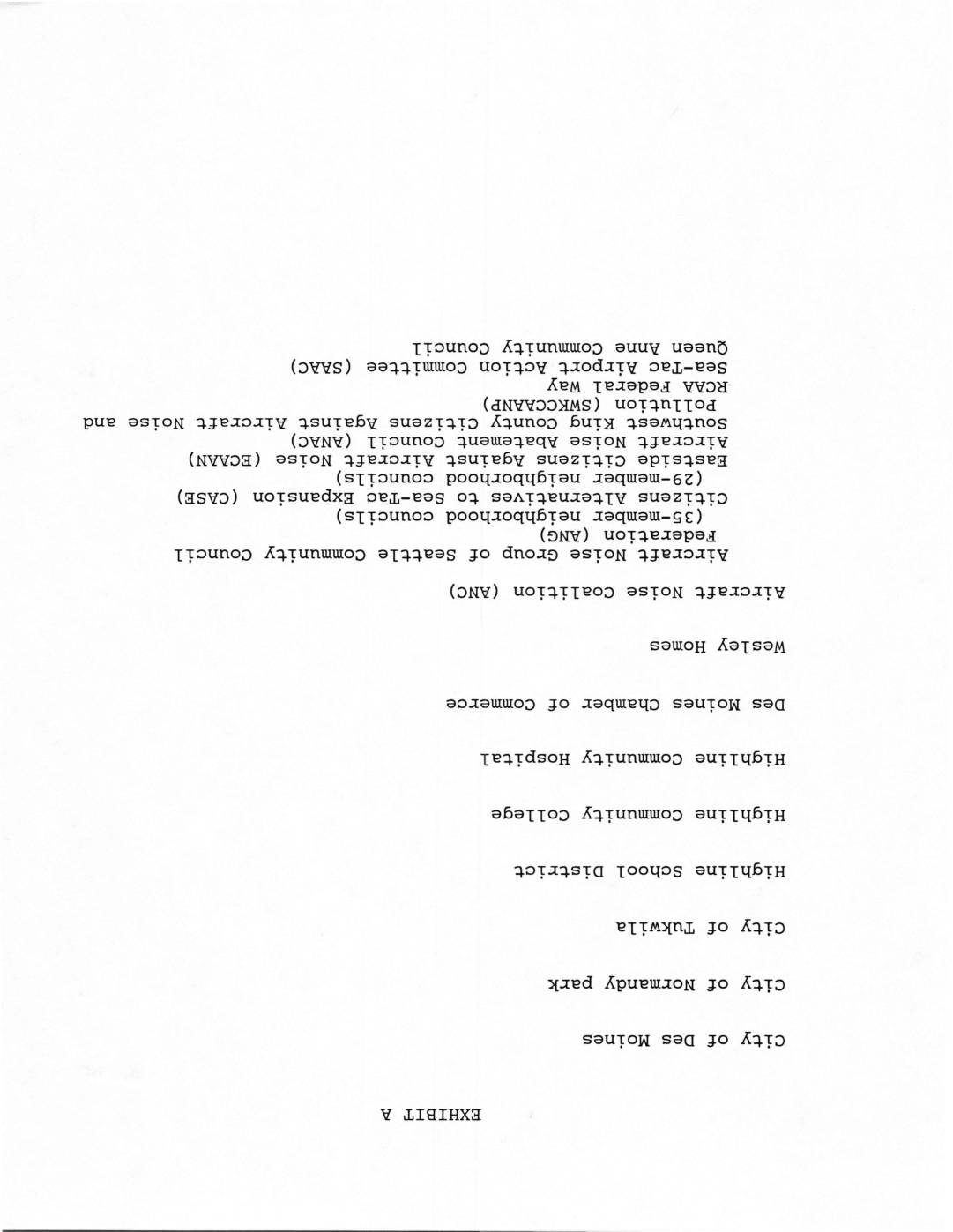
These documents relate to the Airport Alternative Committee's October 1992 meeting, which brought together cities, community organizations, and citizen groups concerned about aircraft noise around Seattle-Tacoma (Sea-Tac) Airport. The committee evaluated criteria and requirements for addressing airport expansion, including minimizing noise impact on the largest number of people, maximizing aircraft and ground safety, and providing 750 operations capacity by the year 2020. Alternative airport sites such as Vancouver, Black Lake, Fort Lewis, Portland, McCord, Arlington, and SeaTac were also discussed. -
 1992-09-28
Toledo-Winlock area visitation
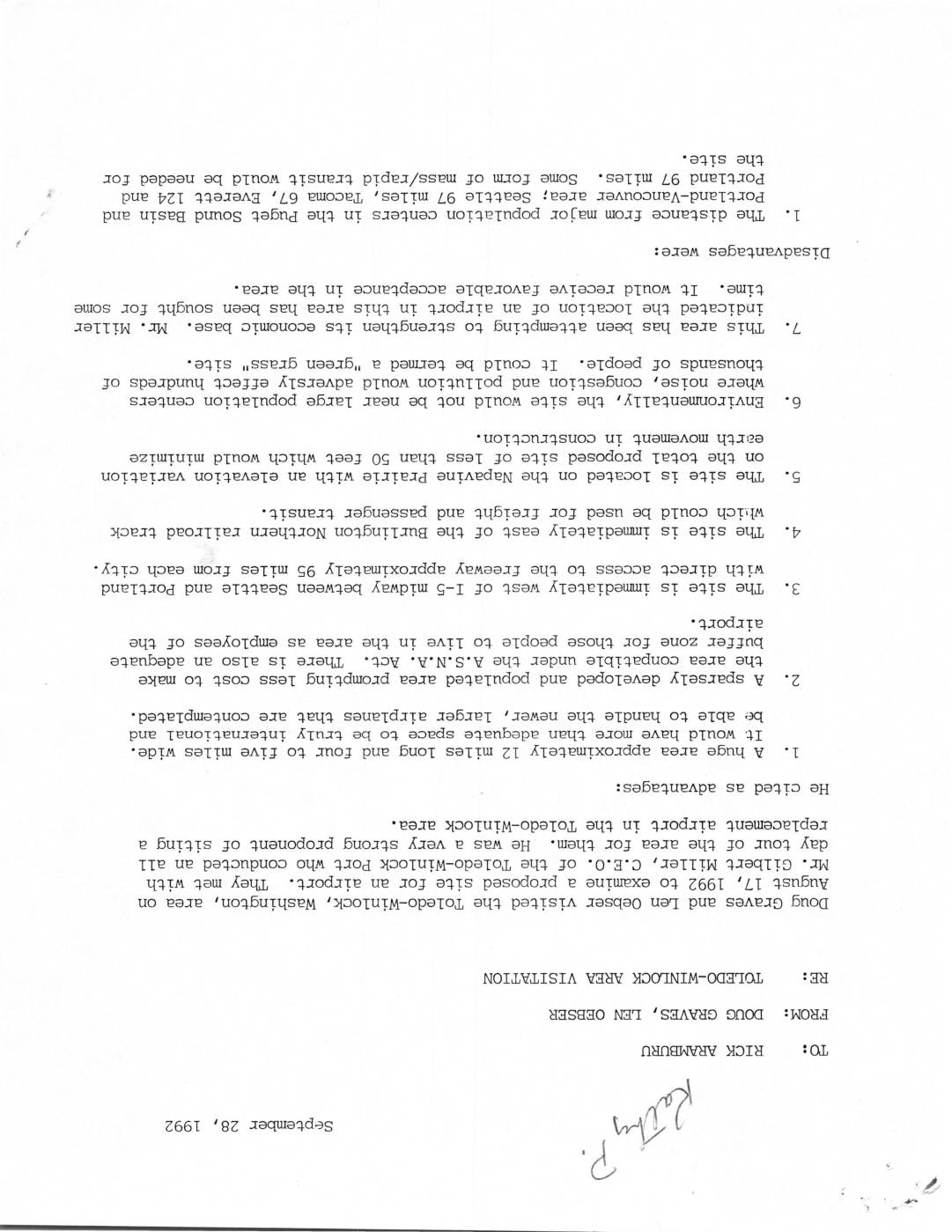
A September 1992 internal memo from Doug Graves and Len Oebser to Rick Aramburu summarizes a site visit to the Toledo-Winlock area of Washington State as a potential location for a new replacement airport. The site was praised for its large size, proximity to the I-5 freeway midway between Seattle and Portland, access to Burlington Northern rail lines, and its sparsely populated surroundings, which would minimize noise and environmental impacts. However, drawbacks noted included its distance from major population centers such as Seattle, Tacoma, Everett, and Portland, which would require some form of mass rapid transit to serve the airport effectively.