TagNoise(91)
-
 2011-04-15 00:00
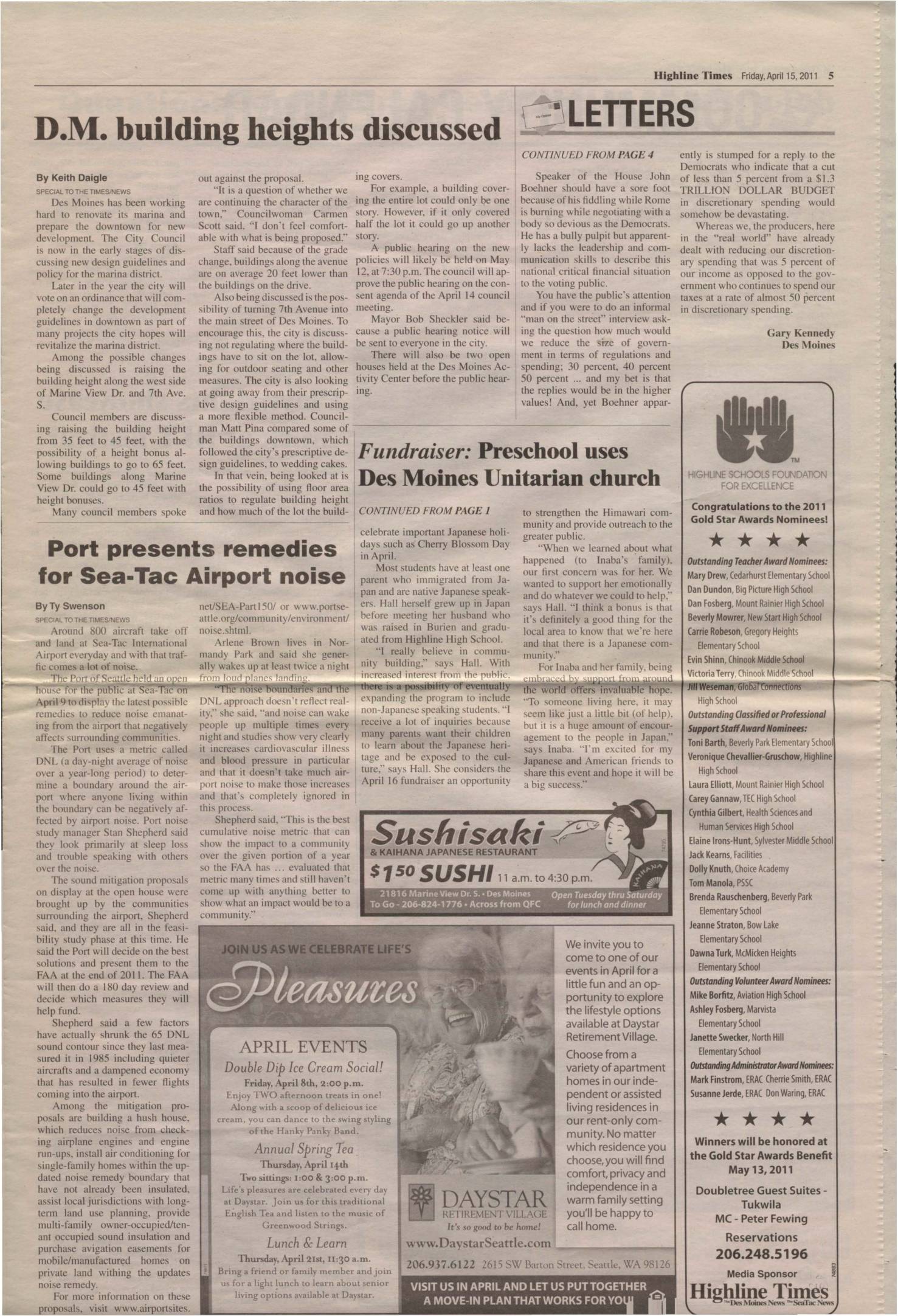
Port presents remedies for Sea-Tac Airport noise
is now in the early stages of dis- cussing new design guidelines and policy for the marina district. Later in the year the city will vote on an ordinance that will com- pletely change the development guidelines in downtown as part of many projects the city hopes will revitalize the marina district. Among the possible change being discussed is raising the building height along the west side of Marine View Dr. and 7th Ave. S. Council members are discuss- ing raising the building height from 35 feet to 45 feet, with the possibility of a height bonus al- lowing buildings to go to 65 feet. Some buildings along Marine View Dr. could go to 45 feet with height bonuses. Many council members spoke out against the proposal. "It is a question of whether we are continuing the character of the town," Councilwoman Carmen Scott said. ''I don't feel comfort- able with what is being proposed." Staff said because of the grade change, buildings along the avenue are on average 20 feet lower than the buildings on the drive. Also being discussed is the pos- sibility of turning 7th Avenue into the main street of Des Moines. To encourage this, the city is discus - ing not regulating where the build- ings have to sit on the lot. allow- ing for outdoor seating and other measures. The city is also looking at going away from their prescrip- tive design guidelines and using a more flexible method. Council- man Matt Pina compared… -
2007-04-02 23:25
Massachusetts v EPA, 549 U.S. 497 (2007)
Annotation Primary HoldingThe Clean Air Act allows the Environmental Protection Agency to regulate greenhouses gases because they qualify as air pollutants. Also, standing requires showing a concrete harm that can be traced to the defendant and remedied by the courts. Read More Syllabus SYLLABUS OCTOBER TERM, 2006 MASSACHUSETTS V. EPA SUPREME COURT OF THE -
2001-01-01 23:19
Aircraft Noise: The Ailment And The Treatment
By Arline L. Bronzaft, Ph.D., Chair, Aircraft Noise Abatement Group of New York and New Jersey (ANAG) | Hearing Rehabilitation Quarterly – Special Edition (2001) THE NEW MEANING OF F.A.A. The summer of 2000 was marked by an unusually high number of aircraft delays, especially at LaGuardia Airport in New York City. These delays continued -
 1997-05-01 00:00
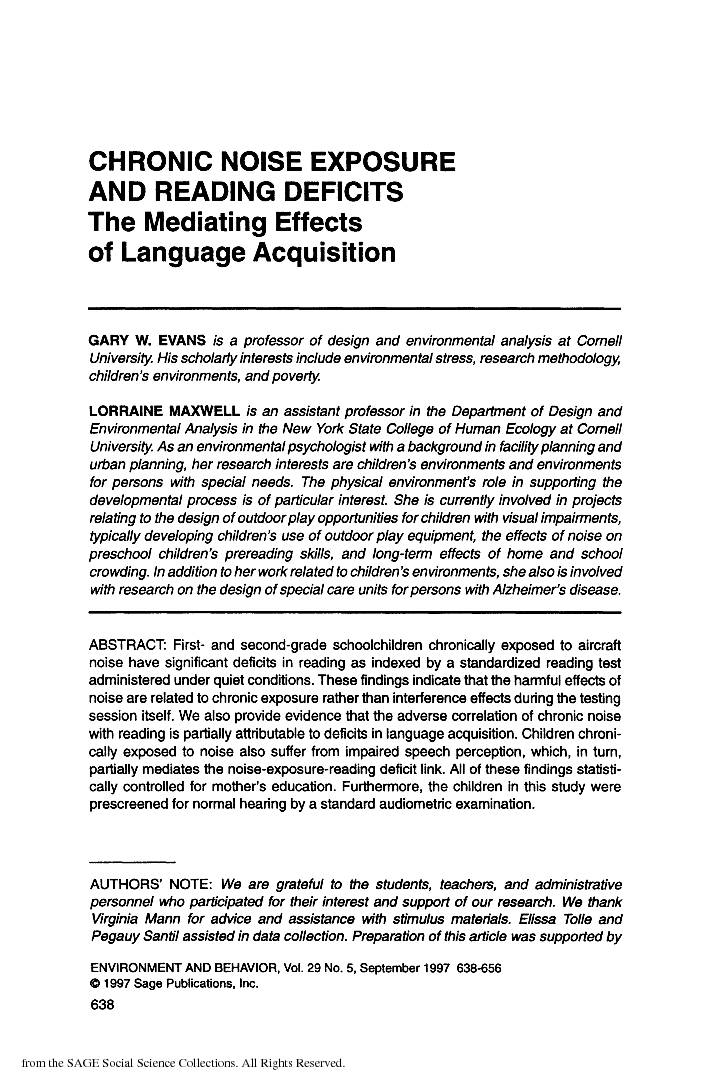
Chronic Noise Exposure and Reading Deficits Cornell May 1997
ABSTRACT: First- and second-grade schoolchildren chronically exposed to aircraft noise have significant deficits in reading as indexed by a standardized reading test administered under quiet conditions. These findings indicate that the harmful effects of noise are related to chronic exposure rather than interference effects during the testing session itself. We also provide evidence that the -
 1997-02-06 19:09
Sea-Tac International Airport Impact Mitigation Study (HOK)
The Helmuth, Obata Kassabaum study, referred to as ‘HOK’, began as an individual community grant application by the City of Burien. Understandably it became associated with the ACC (plaintiffs in lawsuits attempting to stop the Third Runway) and a response to the defects of the Third Runway EIS. However, this was an independent effort, put -
 1990-01-08 00:00
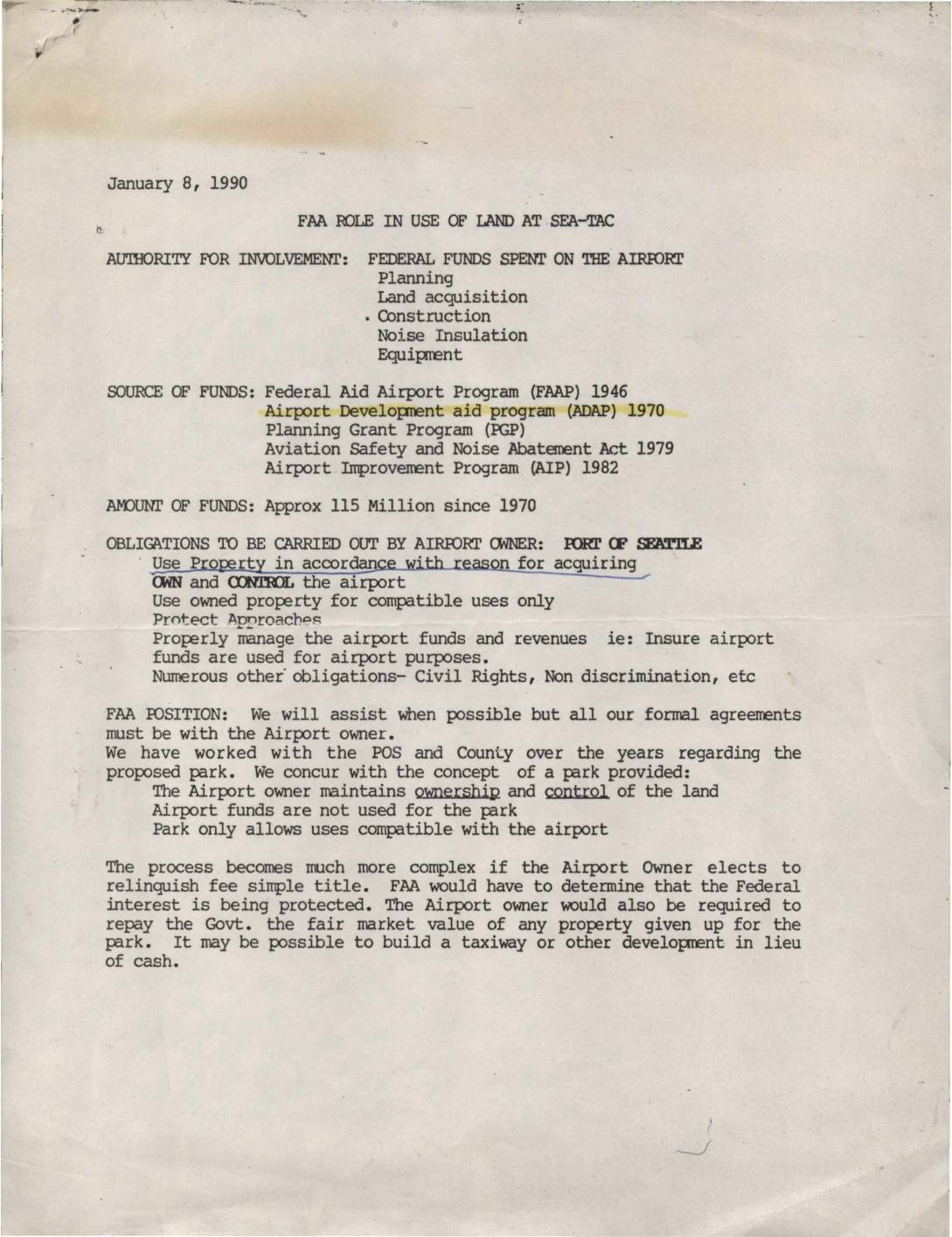
FAA – Role in Use of Land at Sea-Tac (NSTP), January 8, 1990
AU'rnORITY FOR INVOLVEMENI': FEDERAL FUNDS SPEN!' ON THE AIRroRT Planning Land acquisition • Construction Noise Insulation Equiprent SOURCE OF FUNDS: Federal Aid Airport Program (FAAP) 1946 Airp:>rt Developnent aid program (ADAP) 1970 Planning Grant Program (:ECP) Aviation Safety and Noise Abatement Act 1979 Airport Improverrent Program (AIP) 1982 AIDUNI' OF FUNDS: Approx 115 Million since 1970 OBLIG.lTIONS TO BE CARRIED OUT BY AIRIORT CMNER: !ORr CF SE1d"1LE · YUse Pro:wrty in accord®ce with reason for acquiring am and cm.IKlL the airport .. Use owned property for compatible uses only Prntect ~p~roacb~R Properly manage the airport funds and revenues ie: Insure airport funds are used for airport purp:>ses. Numerous other· obligations- Civil Rights, Non discrimination, etc FAA fOSITION: We will assist when p:>ssible but all our fonnal agreements must be with the Airp:>rt owner. We have worked with the POS and Counly over the years regarding the proposed park. We concur with the concept of a park provided: The Airp:>rt owner :rraintains ownership and control of the land Airport funds are not used for the park Park only allows uses compatible with the airport The process becomes nuch more complex if the Airp:>rt Owner elects to relinquish fee sinple title. FAA would have to determine that the Federal interest is being protected. The Airport owner would also be required to repay the Govt. the fair :rrarket value of any property given up for the park. It nay be possible to build a taxiway or other developrent in lieu of cash. l… -
 1984-07-19 00:00
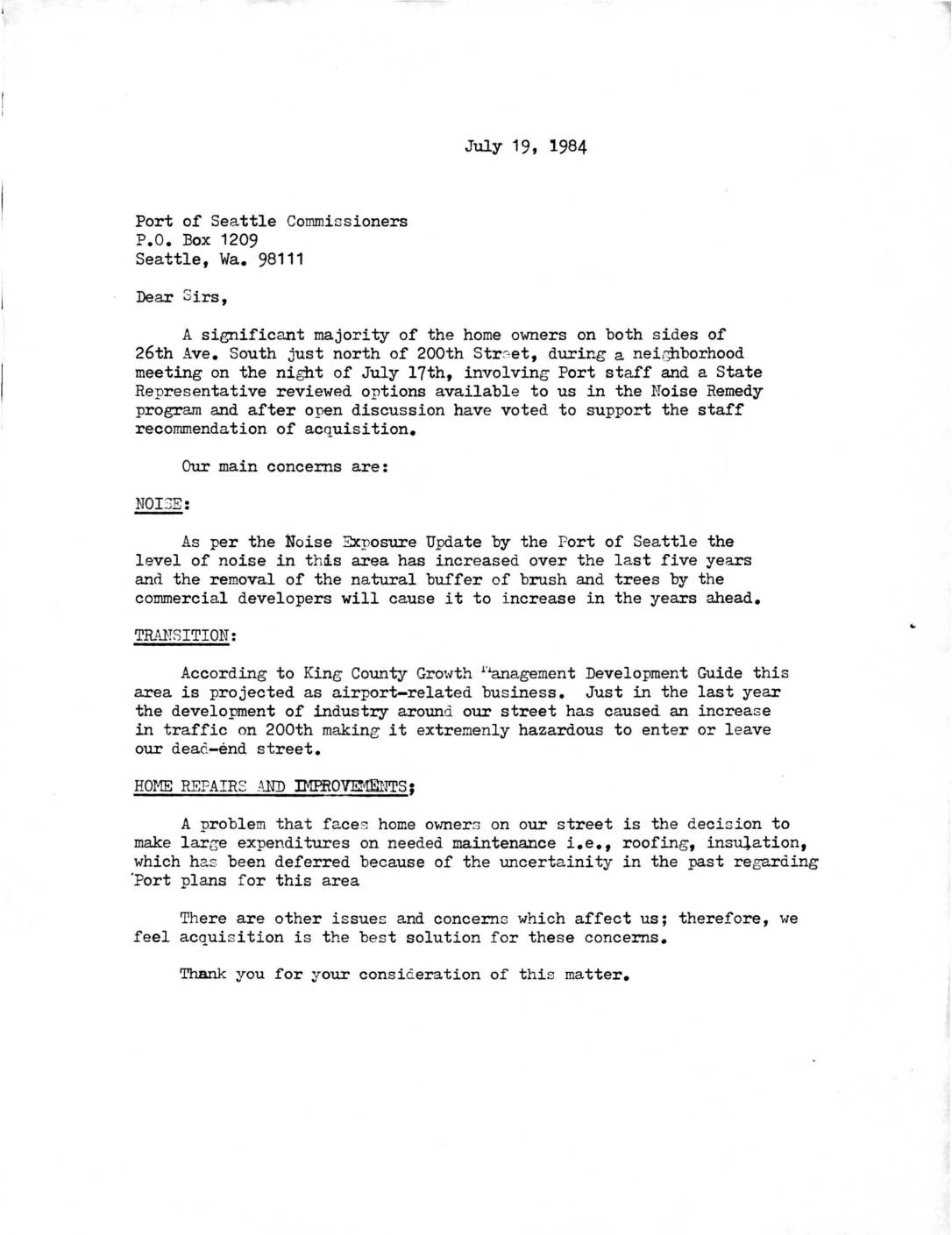
Homeowners Letter Supporting Port of Seattle Acquisition Program
Letter from homeowners on 26th Ave. South near 200th Street to Port of Seattle Commissioners requesting acquisition of their properties through the Noise Remedy program. The residents cite increasing noise levels, commercial development impacts, traffic hazards, and deferred home maintenance as reasons for supporting acquisition. -
 1984-02-28 00:00
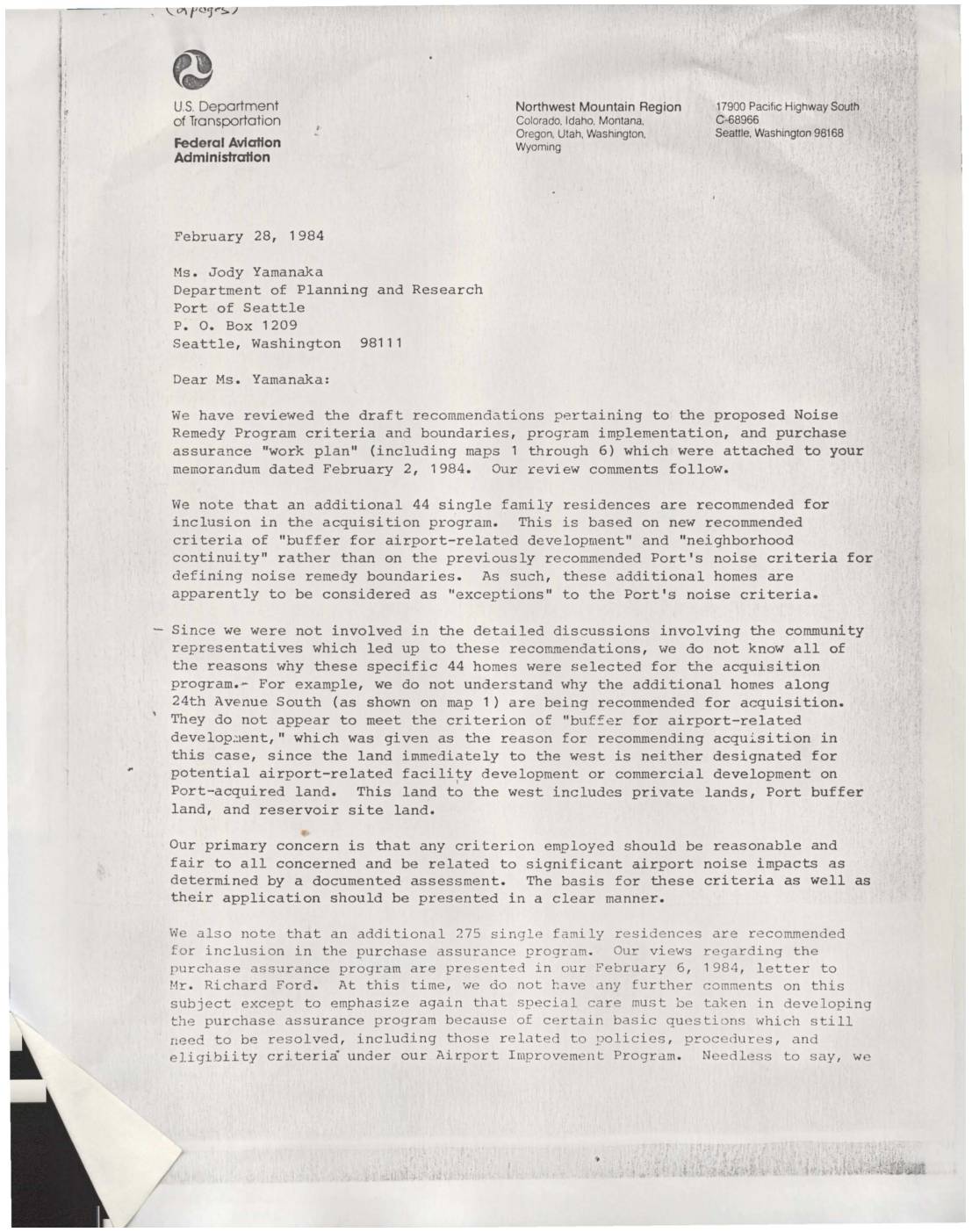
FAA Letter to Port of Seattle Regarding Noise Remedy Program
Letter from FAA Northwest Mountain Region to Port of Seattle reviewing draft recommendations for the Noise Remedy Program criteria and boundaries. The FAA expresses concerns about additional 44 single family residences recommended for acquisition based on ‘buffer’ and ‘neighborhood continuity’ criteria rather than noise criteria, and raises questions about the purchase assurance program for 275 -
 1983-09-28 00:00
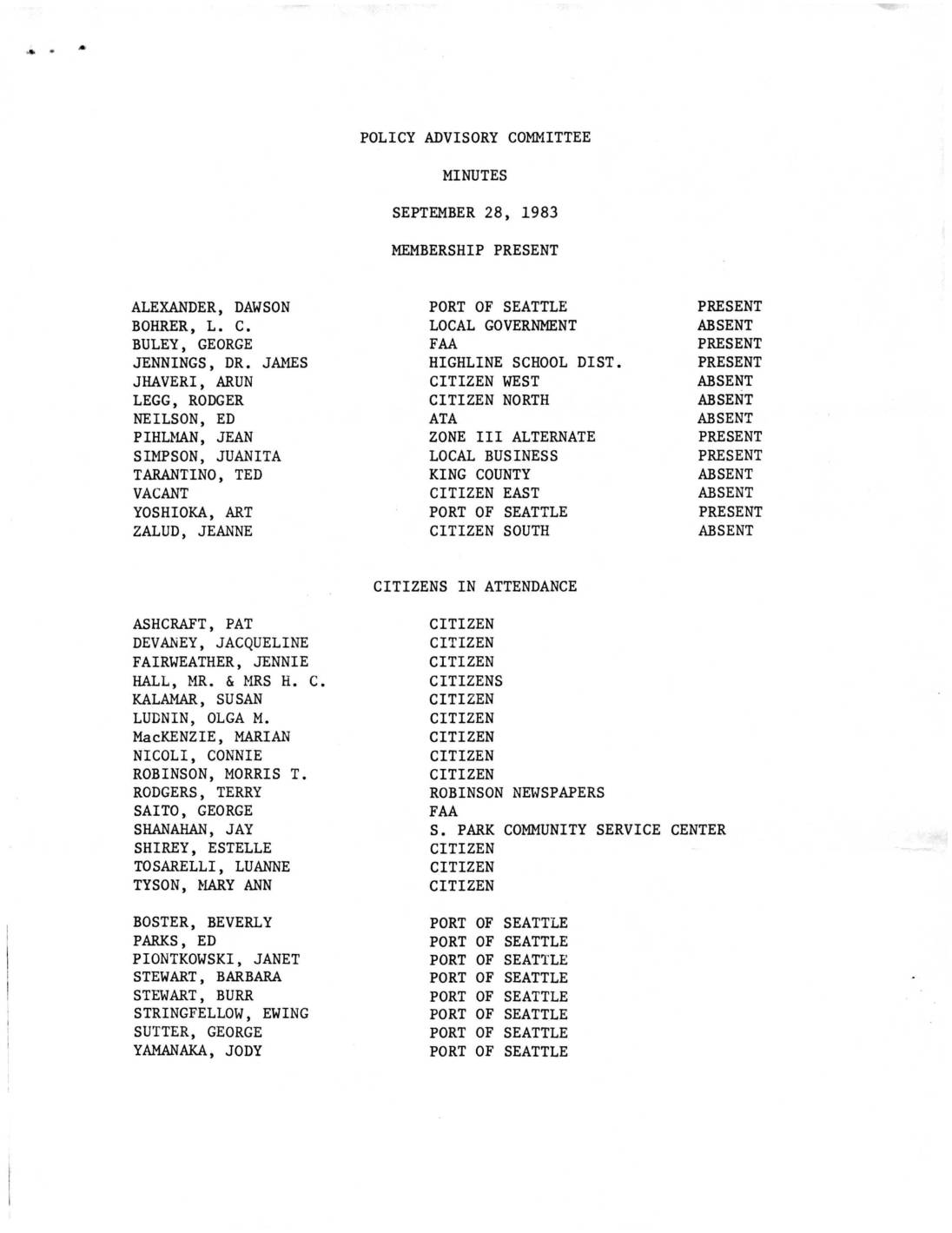
Policy Advisory Committee Minutes September 28, 1983
Minutes from the Policy Advisory Committee meeting discussing the Noise Remedy Update status, interim noise remedies including departure procedures and noise monitors, and the 20-year Master Plan update for Sea-Tac Airport. The meeting included updates on facilities development and community workshops. -
 1982-06-09 15:11
Noise Exposure Update
2.1 Study Scope and Purpose . . . . . . . . . . . . . 2.2 Organization . . 2.3 Sponsors. . . . . . . . . . . . 2.4 Consultants . . . . . . . . . . . . . . . . 2·5 Participants. . . . . . . . . . . . . . EXISTING CONDITIONS 3.1 Introduction. • • • • • • • • . • . •••• 3.2 Airport Facilities. • • • • • . . • ••••• 3.4 3.5 3.6 3.2.1 Runway and Taxiway System •••••••• 3. 2. 2 Passenger Terminal Facilities • • • • • • . • • • • 3.2.3 General Aviation Facilities • 3.2.4 Air Cargo Facilities. • • ••••• Aircraft Operations • • • 3.3.1 Fleet Mix ••••••••••• 3.3.2 Runway and Flight Track Utilization 3.3.3 Aircraft Fleet Noise Compliance •• Noise Monitoring System • • • • • • • • • • • • 3.4.1 Permanent Airport Noise Monitoring System 3.4.2 Portable Noise Meter ••••••••••• 3.4.3 Noise Monitoring Programs at Other Airports • Environment • • • • • • • • • • • • • • • • • Noise 3. 5.1 3.5.2 3.5.3 3.5.4 3.5.5 3.5.6 Climate 3. 6.1 3.6.2 Aircraft Noise Description Methodologies •• Aircraft Noise Levels • • • • • Ambient Noise Levels Maintenance Runup Noise Levels •• Taxiing Noise Levels ••.•.•••. Total Noise Environment • Meteorological Records…