TagFAA(687)
-
 2026-01-06
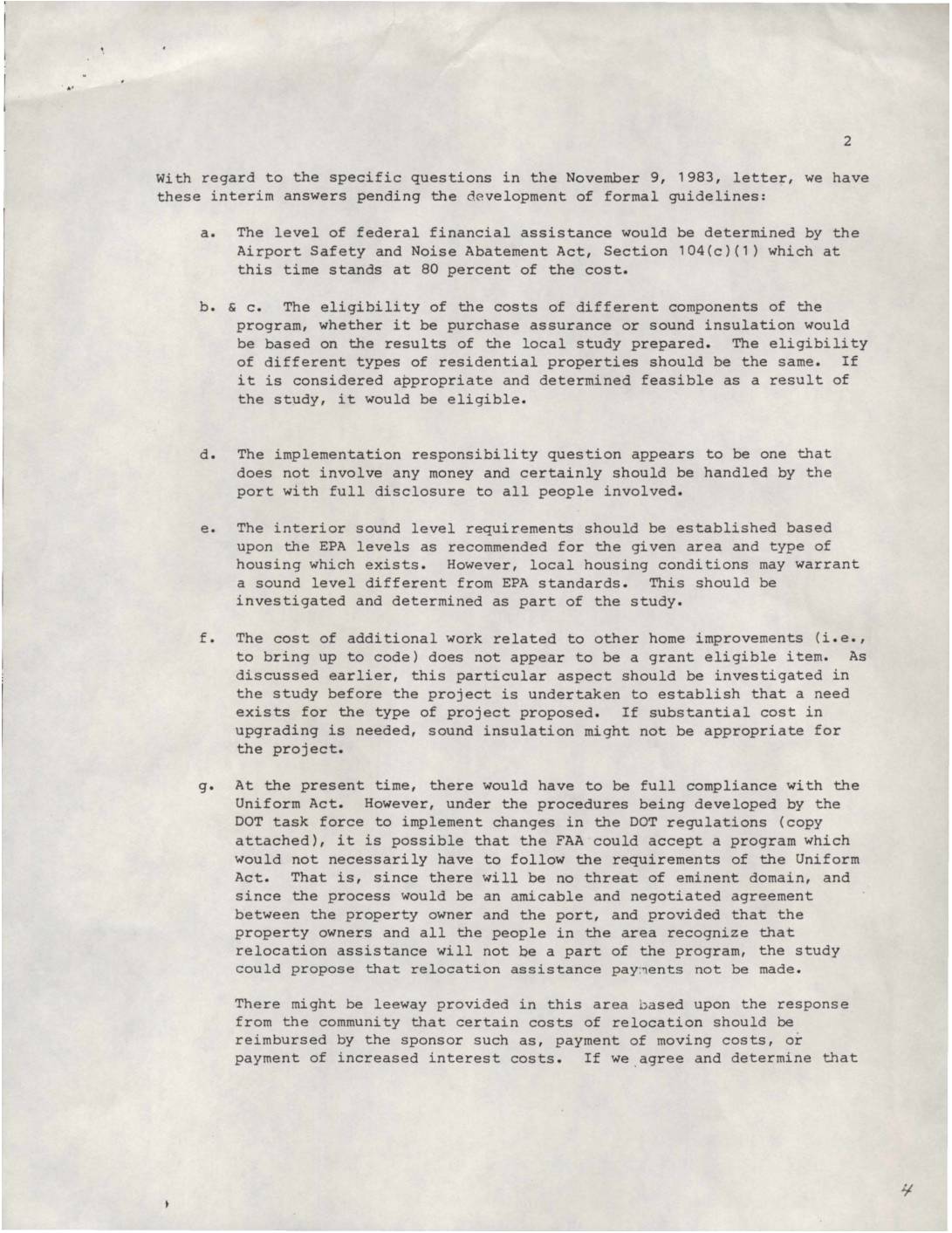
Interim answers to November 9, 1983 letter regarding airport noise remedy program
This letter from Edward G. Tatum, Manager of the FAA Airports Division, provides interim answers to the Port of Seattle's questions about federal funding and guidelines for airport noise remedy programs near Sea-Tac Airport. It outlines key details such as 80% federal cost coverage under the Airport Safety and Noise Abatement Act, eligibility criteria for sound insulation and property purchase assistance programs, and interior sound level standards based on EPA recommendations. The letter acknowledges that the FAA and Port of Seattle are breaking new ground together in developing policies that could serve as a nationwide model for noise abatement programs. -
 2026-01-06
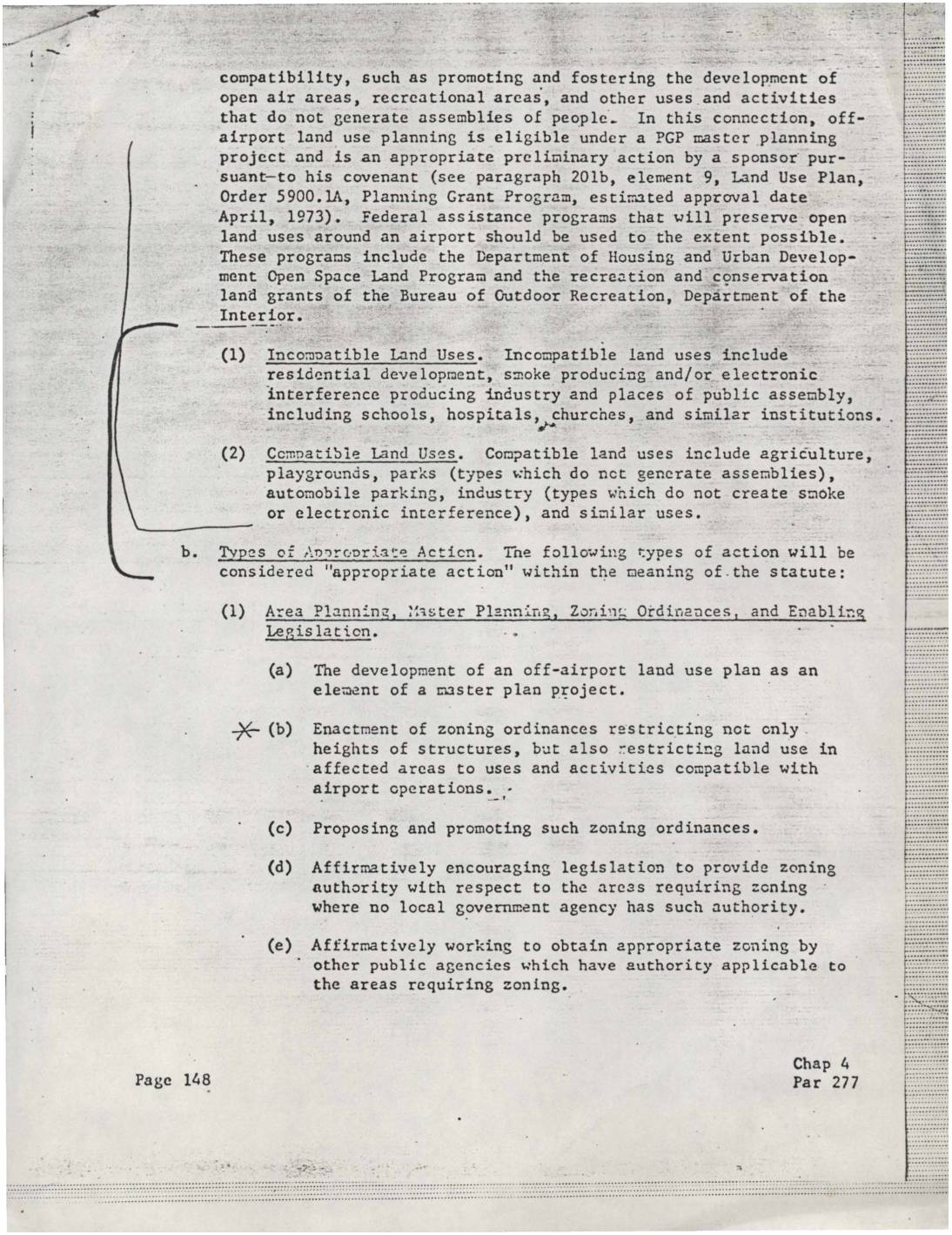
Airport land use compatibility: Incompatible and compatible land uses and types of appropriate action
This document outlines federal guidelines for managing land use around airports to minimize noise and safety conflicts. It distinguishes between incompatible land uses near airports—such as residential development, schools, hospitals, and churches—and compatible ones like agriculture, parks, and parking facilities. It also describes appropriate actions airport sponsors can take, including developing off-airport land use plans, enacting zoning ordinances, and working with local and regional authorities to restrict development in affected areas. -
 2026-01-06
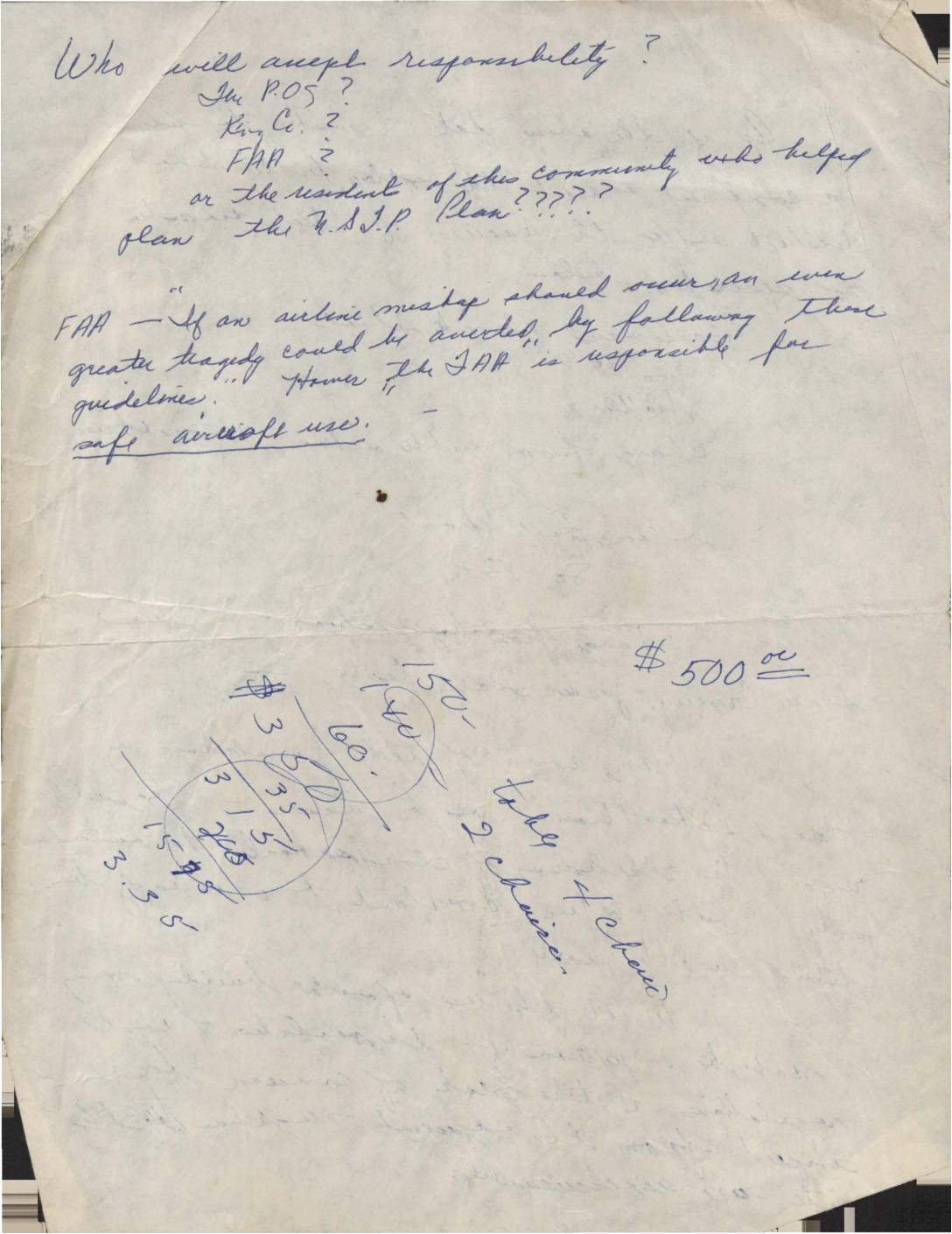
Handwritten Notes: FAA Responsibility and Community Complaints Regarding Airline Safety and School Building Use
A community member raises questions about who should accept responsibility for airport-related concerns — the Port of Seattle, King County, the FAA, or local residents who helped plan the N.S.I.P. — noting that the FAA is responsible for safe aircraft use but that following its guidelines could avert greater tragedy in the event of an airline mishap. A separate complaint is also filed against the Highline Public School District regarding the conversion of Boulevard Elementary School and Seaer High School into non-educational facilities, with the writer citing code violations and lack of concern for impact on adjacent neighborhoods. -
 2026-01-01
Transitioning to Unleaded Aviation Gasoline: A Guide and Tools
ACRP Research Report 284, published by the National Academies of Sciences, Engineering, and Medicine under the Airport Cooperative Research Program (ACRP), sponsored by the Federal Aviation Administration (FAA). Guide and tools for airports transitioning from leaded avgas (100LL) to unleaded aviation gasoline (UAvGas), covering fuel transition planning, general aviation fuel compatibility, lead emissions reduction, and -
 2026-01-01
ANES 2026: Palo Alto Community Considerations for Procedure Changes
Presentation from the 2026 Aviation Noise and Emissions Symposium (ANES) in Las Vegas, NV covering community expectations and implications for FAA flight procedure changes. Topics include FAA priorities of safety and efficiency over noise, NEPA environmental review levels (CATEX, EA, EIS) and community engagement requirements, extraordinary circumstances triggers, incremental nature of procedural changes, multi-year timelines -
 2025-12-21
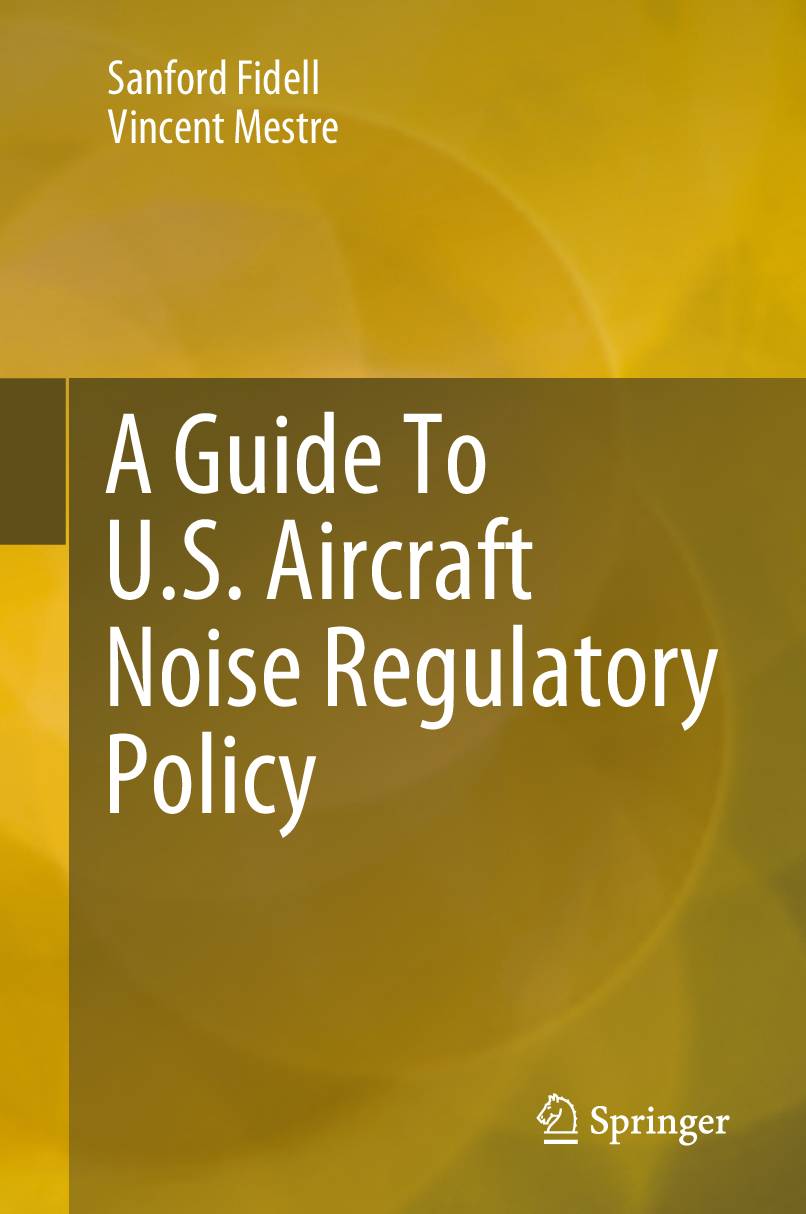
A guide to U.S. aircraft noise regulatory policy
This book by Sanford Fidell and Vincent Mestre provides a comprehensive guide to U.S. aircraft noise regulatory policy, covering the rules, standards, and government frameworks that govern how aircraft noise is measured, evaluated, and controlled. It is a key reference for understanding how federal agencies approach noise management around airports such as Sea-Tac, including the metrics and legal structures used to assess community noise impacts. -
 2025-12-21
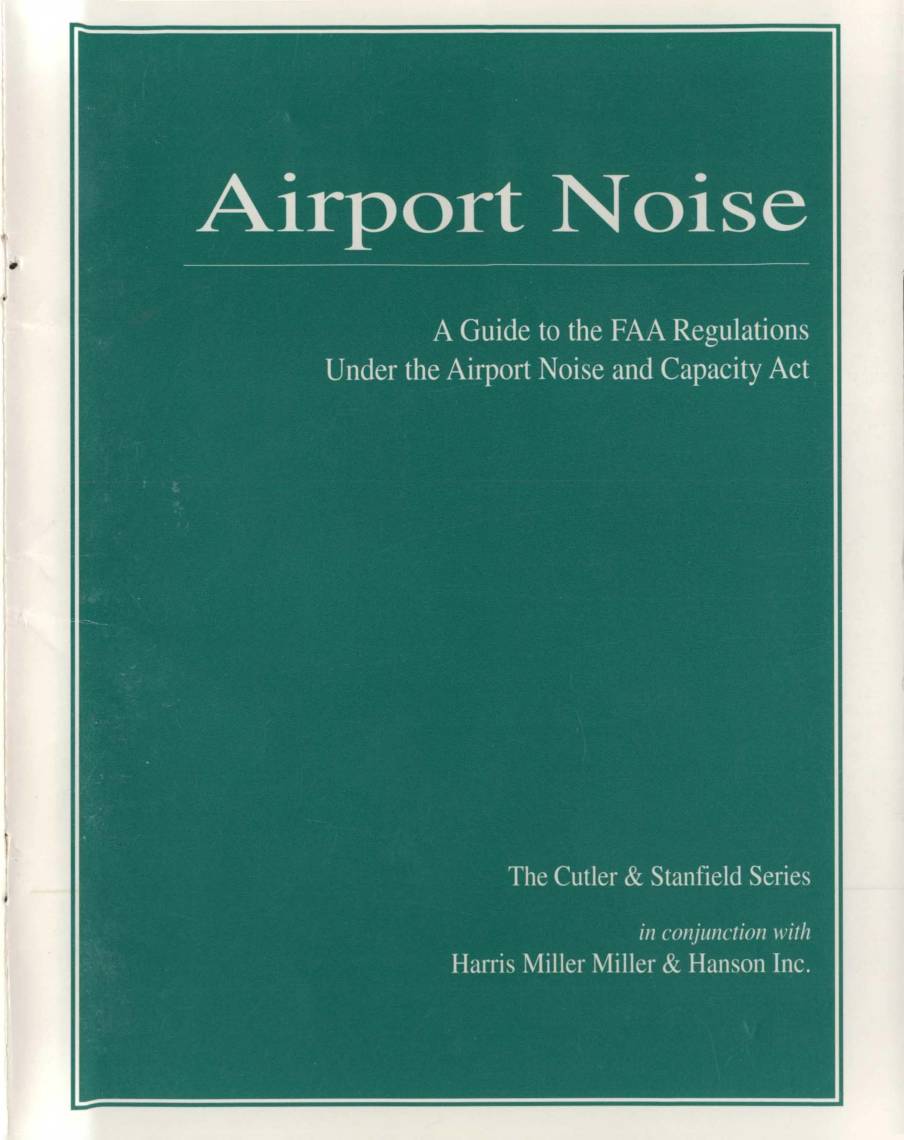
Airport Noise: A Guide to the FAA Regulations Under the Airport Noise and Capacity Act
This guide, produced by law firm Cutler & Stanfield in conjunction with acoustical consultants Harris Miller Miller & Hanson Inc., explains FAA regulations governing airport noise under the Airport Noise and Capacity Act. It is intended to help airport proprietors, community organizations, and local governments understand the federal rules that control aircraft noise levels and airport operational capacity. The guide draws on the firms' extensive experience advising clients on noise policy and drafting noise rules at major airports across the United States. -
-
2025-12-17
FAA head details air traffic control modernization progress, next steps
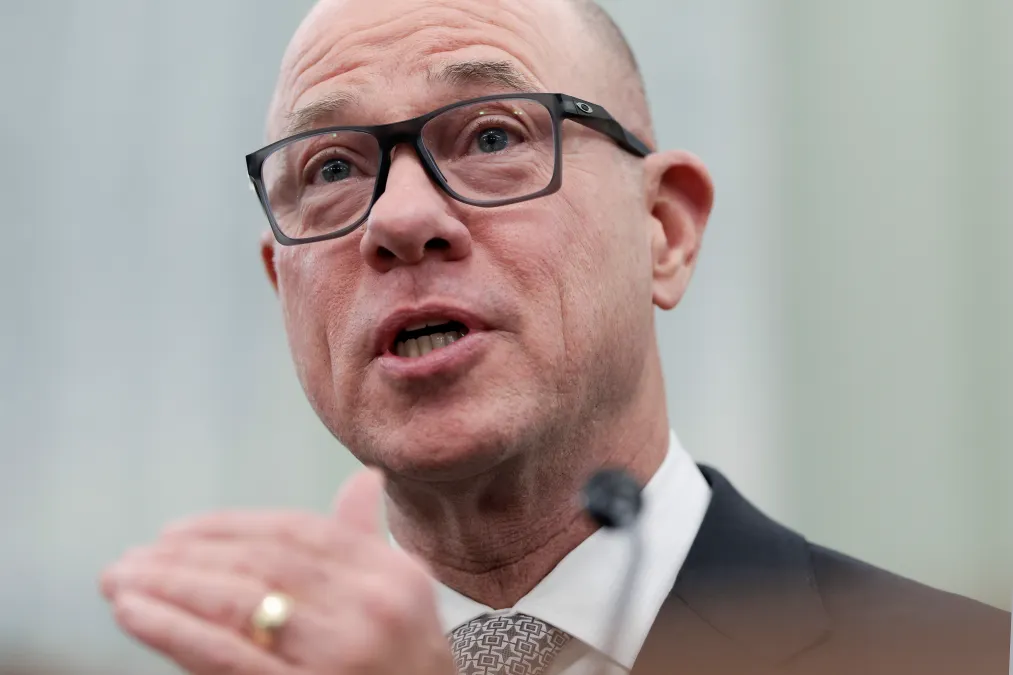
By Lindsey Wilkinson December 17, 2025 FAA Administrator Bryan Bedford speaks during a hearing in the U.S. Capitol on Dec. 17, 2025 in Washington, DC. (Photo by Heather Diehl/Getty Images) With modernization efforts ramping up at the Transportation Department’s Federal Aviation Administration, leaders have a sharpened focus on efficiency, safety and accountability, Administrator Bryan Bedford -
 2025-12-17
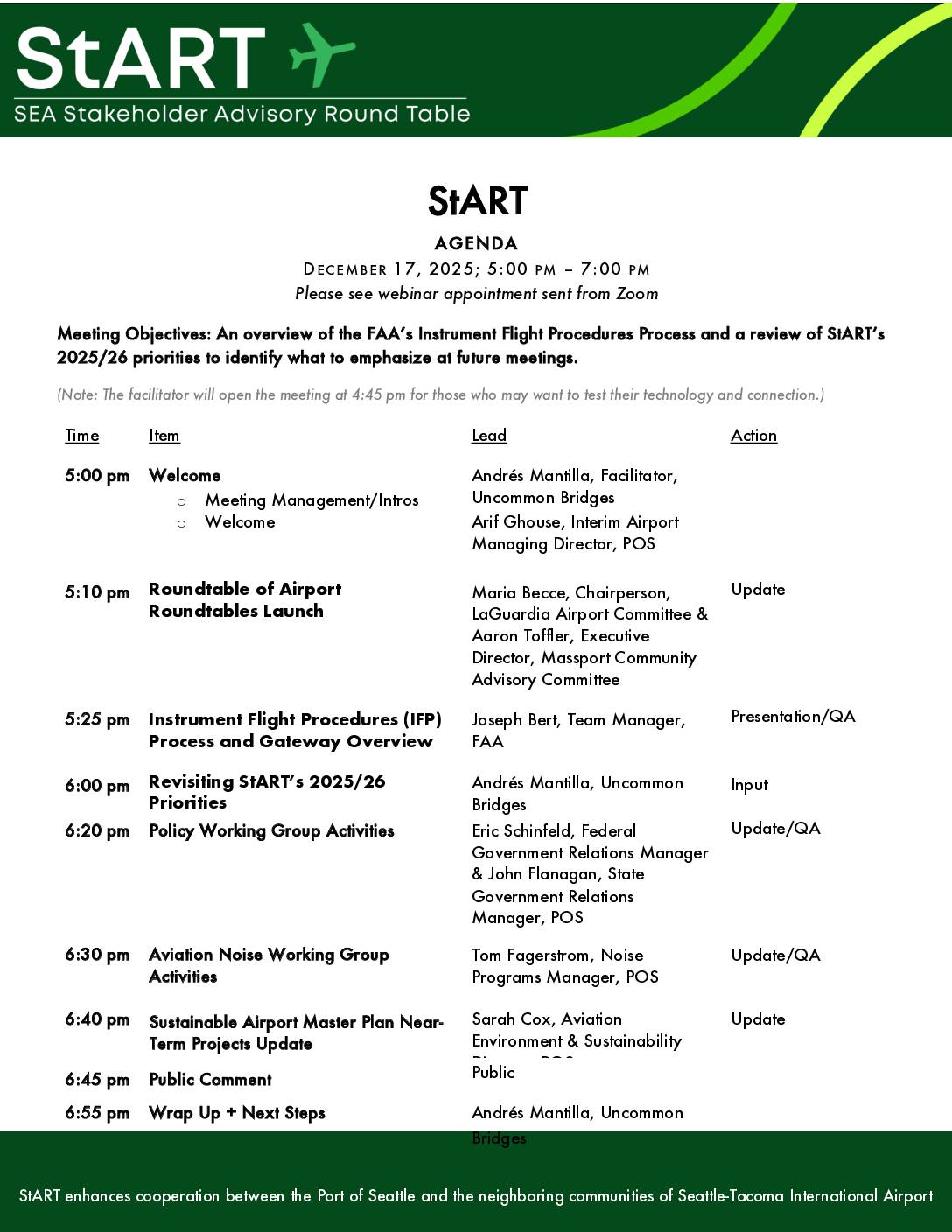
StART Agenda – December 17, 2025
The SEA Stakeholder Advisory Round Table (StART) held a virtual meeting on December 17, 2025, covering the FAA's Instrument Flight Procedures process, a review of StART's 2025/26 priorities, and updates on aviation noise, policy working group activities, and the Sustainable Airport Master Plan. StART serves as a forum for cooperation between the Port of Seattle and communities neighboring Seattle-Tacoma International Airport. The meeting also featured a presentation from representatives of other airport community roundtables and included time for public comment.