TagEnvironment(193)
-
UW study shows Seattle’s historically redlined communities have worse air quality
Haze from wildfire and Fourth of July firework smoke sets in Wednesday on the Seattle skyline. (Luke Johnson / The Seattle Times) By Isabella Breda Seattle Times staff reporter As Seattleites awoke to a hazy concoction of wildfire and Fourth of July firework smoke Wednesday morning, a new study dropped, revealing that some neighborhoods in the city -
Environmentalists and industry weigh in on how to decarbonize aviation
By Dominic Gates Seattle Times aerospace reporter Under intense political pressure, the aviation industry has set itself a daunting challenge to decarbonize flying by 2050 and laid out a road map to get there through technological innovation. For environmentalists, especially in Europe, that prolonged switch to clean energy technology is not good enough. “It takes -
 2023-05-08
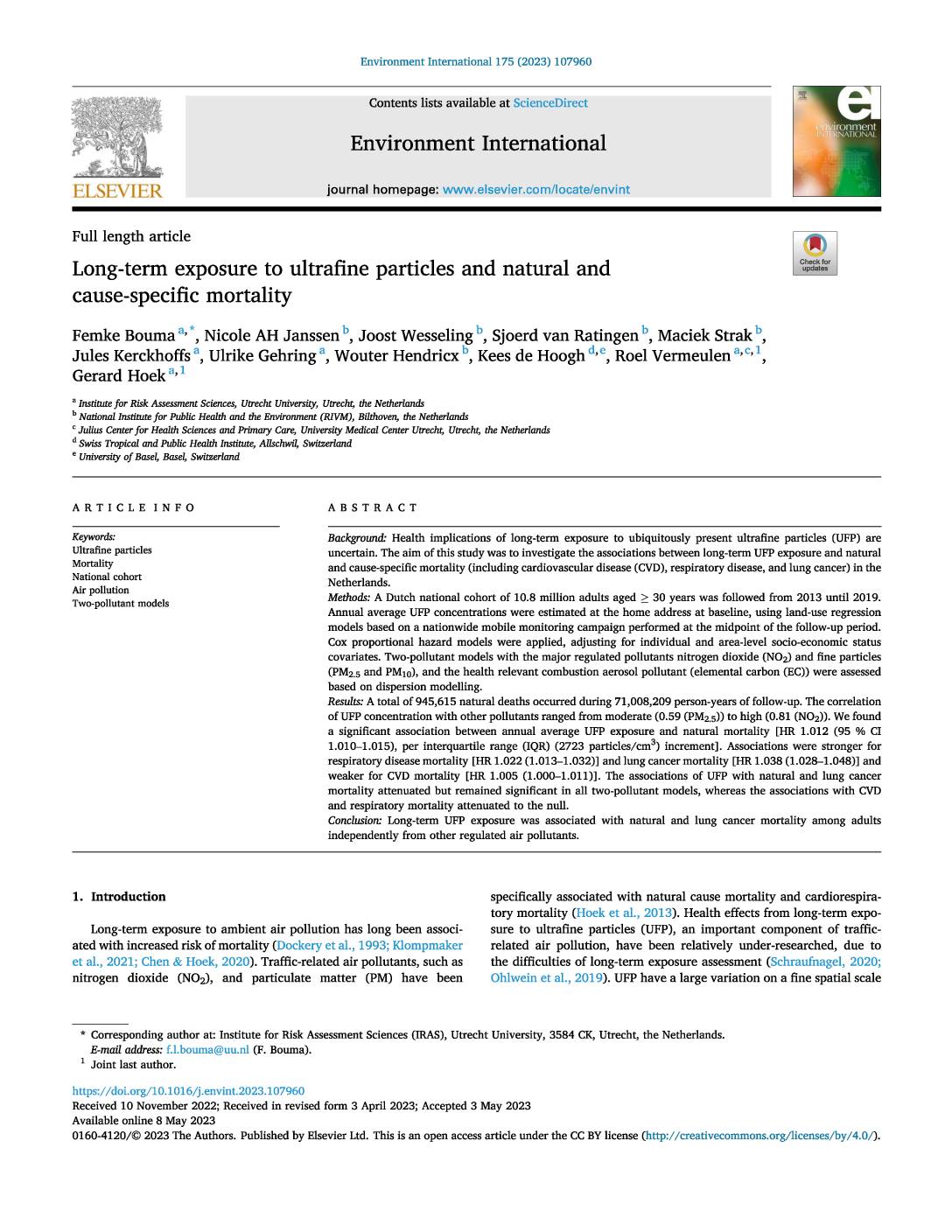
Long-term exposure to ultrafine particles and natural and cause-specific mortality
This study examined whether long-term exposure to ultrafine air particles (UFP) is linked to higher death rates among 10.8 million Dutch adults followed from 2013 to 2019. Researchers found that higher UFP exposure was significantly associated with increased risk of natural cause, lung cancer, and respiratory disease mortality, even after accounting for other air pollutants like nitrogen dioxide and fine particles. The findings suggest UFP pose health risks independent of other regulated air pollutants, though this research is unrelated to airport noise policy. -
California becomes the first state to adopt emission rules for trains
April 27, 2023 SACRAMENTO, Calif. — California approved Thursday a first-in-the-nation, ambitious rule limiting rail pollution to aggressively cut greenhouse gas emissions in the state’s latest move to establish itself as a global leader in the fight against climate change. The rule will ban locomotive engines more than 23 years old by 2030 and increase -
 2023-03-01
Identifying Overburdened Communities Highly Impacted by Air Pollution: Technical Support Document
This March 2023 technical support document from the Washington State Department of Ecology's Air Quality Program outlines methods for identifying communities that are disproportionately burdened by air pollution across Washington State. It provides regional office contact information and maps showing the four Ecology regions covering all 39 Washington counties. Note: this document focuses on statewide air quality and environmental justice topics and does not contain information specific to Sea-Tac Airport noise policy. -
Sea-Tac’s legacy of PFAS chemicals: ‘foam showers,’ sick firefighters and contaminated water
Feb. 12, 2023 at 6:00 am Updated Feb. 12, 2023 at 2:04 pm 1 of 15 | Jason Schnase, a battalion chief of training and safety with the Port of Seattle Fire Department, shows where firefighting foam is stored on an aircraft rescue firefighting vehicle at Sea-Tac Airport. A 3% PFAS/97% water… (Ellen M. Banner / -
 2023-01-01
Impact of roadside conifers vegetation growth on air pollution mitigation
This study examines how the growth of conifer trees planted alongside roads affects their ability to reduce traffic-related air pollution over time. Researchers found that as conifers grow taller, they become less dense, and the ideal tree height for maximum pollution reduction is between 4 and 6 meters. The findings suggest that regular pruning is essential to maintain roadside vegetation barriers at their most effective size for improving air quality in nearby communities. -
 2022-10-25
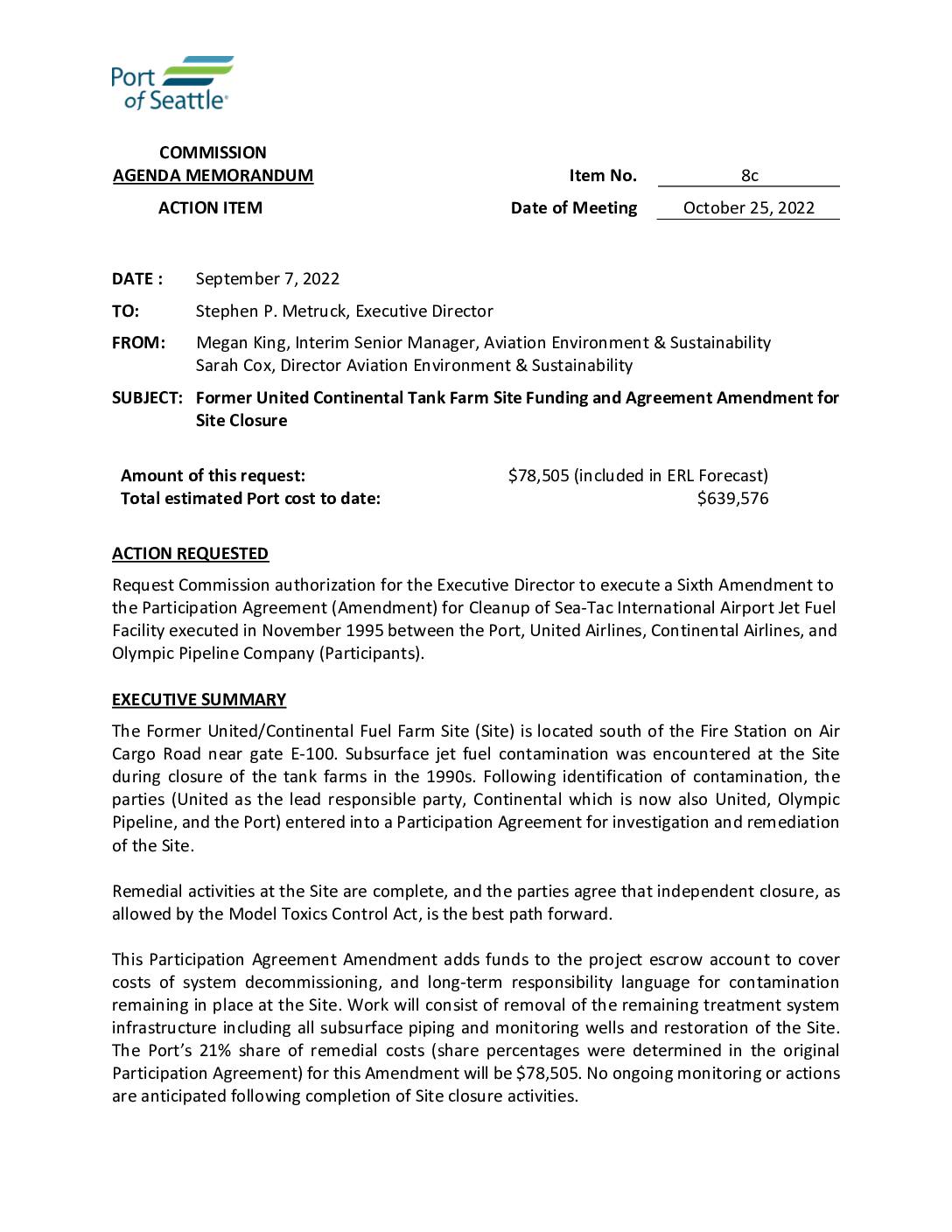
Former United Continental Tank Farm Site Funding and Agreement Amendment for Site Closure
Port of Seattle Commission agenda memorandum (Item 8c, October 25, 2022) from Megan King and Sarah Cox (Aviation Environment & Sustainability) to Executive Director Stephen Metruck requesting authorization to execute a Sixth Amendment to the Participation Agreement for Cleanup of Sea-Tac International Airport Jet Fuel Facility, originally executed November 1995 among the Port, United Airlines, -
2022-10-25
Former United Continental Tank Farm Site Funding and Agreement Amendment for Site Closure
Port of Seattle Commission agenda memorandum (Item 8c, October 25, 2022) from Megan King and Sarah Cox (Aviation Environment & Sustainability) to Executive Director Stephen Metruck requesting authorization to execute a Sixth Amendment to the Participation Agreement for Cleanup of Sea-Tac International Airport Jet Fuel Facility, originally executed November 1995 among the Port, United Airlines, -
 2022-10-25
Former United/Continental Tank Farm Site: Funding and Agreement Amendment for Site Closure
Port of Seattle Commission presentation (Item 8c supp, October 25, 2022) on the Former United/Continental Tank Farm Site at Sea-Tac Airport, seeking funding authorization and agreement amendment for site closure. The tank farm closed in the 1990s; petroleum contamination was discovered during closure and remediation was initiated in 1995 under a Participation Agreement among United