TagEnvironment(193)
-
 2017-12-01
King County Greenhouse Gas Emissions Inventory: A 2015 Update
★ 32This December 2017 report inventories greenhouse gas emissions across King County, Washington, providing a comprehensive 2015 update that examines emissions by sector using geographic-based and consumption-based methodologies. It was prepared by Cascadia Consulting Group and Hammerschlag & Co. LLC, covering sources such as transportation, buildings, waste, and energy use. The report tracks changes in emissions over time and analyzes key data sources to help inform county-level climate and environmental policy decisions. -
 2017-10-24
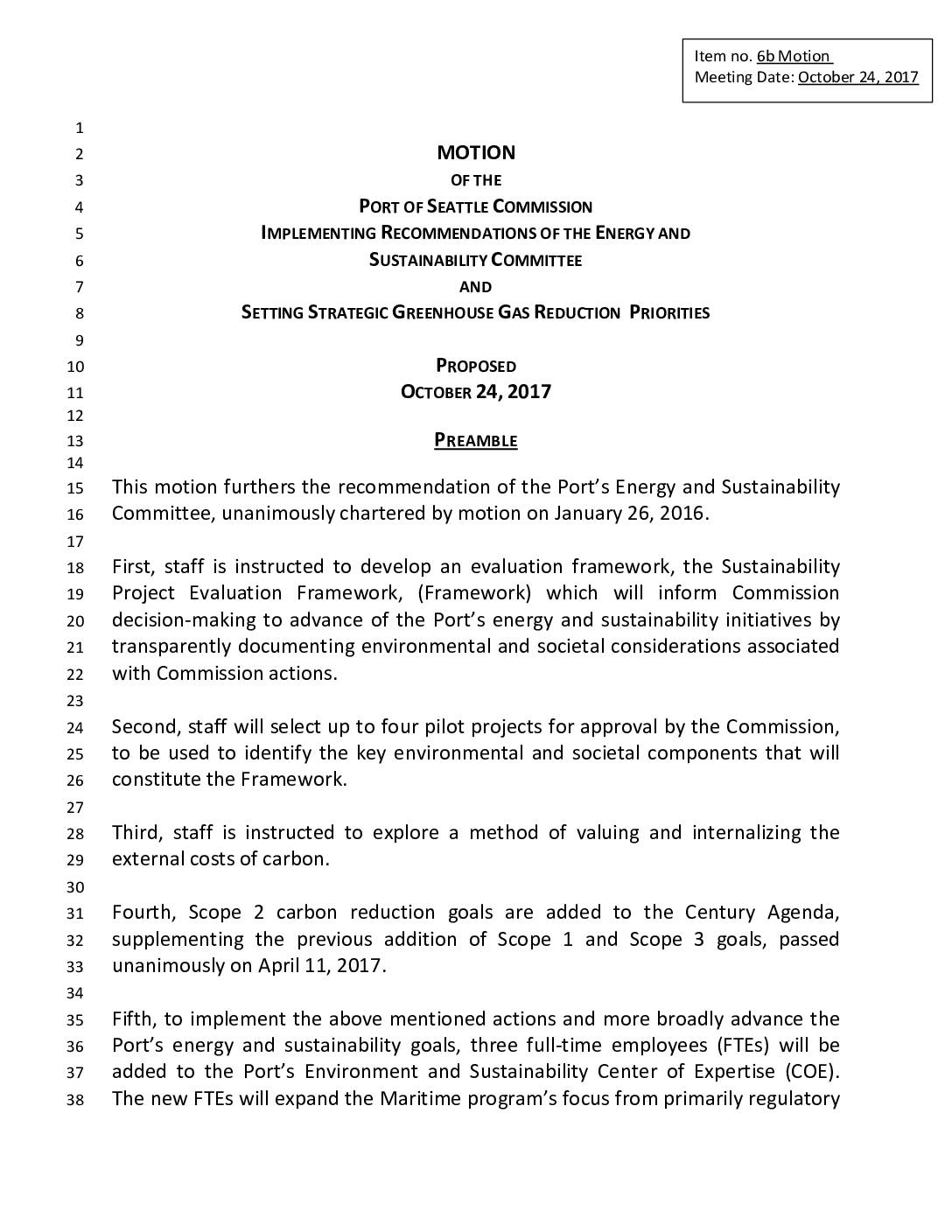
Motion of the Port Of Seattle Commission implementing recommendations of the Energy and Sustainability Committee and setting strategic greenhouse gas reduction priorities
In October 2017, the Port of Seattle Commission adopted a motion setting greenhouse gas reduction priorities and implementing recommendations from its Energy and Sustainability Committee. The motion established targets to reduce Scope 1, 2, and 3 emissions — aiming for 15% below 2005 levels by 2020, 50% below 2005 levels by 2030, and carbon neutrality by 2050. It also directed staff to develop a Sustainability Project Evaluation Framework, select pilot projects, and add three full-time employees to advance the Port's energy and sustainability goals. -
 2017-08-24
Talking Toxics | Part 1: Funding in Crisis
Educating Voters Environmental Priorities Coalition Lobby & Advocacy A series on protecting all communities from dangerous pollution. For 50 years, Washington Environmental Council has set our sights on a cleaner, brighter future and charted a path to get there. In 1988, WEC campaigned to pass Initiative 97 (commonly called the Model Toxics Control Act or -
 2017-06-01
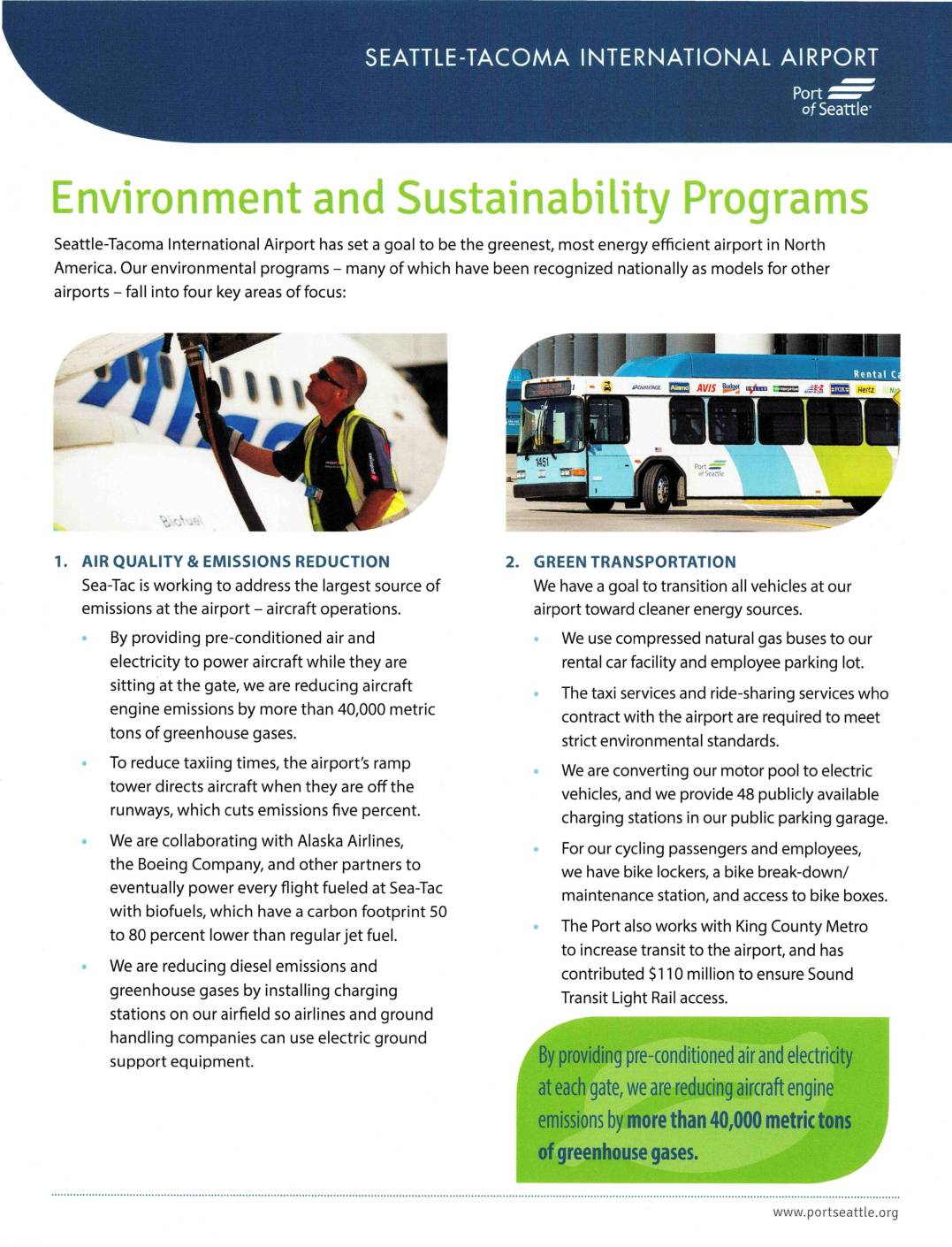
Environment and sustainability programs
Seattle-Tacoma International Airport's Environment and Sustainability Programs outline the airport's efforts to become the greenest, most energy-efficient airport in North America across four key areas: air quality and emissions reduction, green transportation, waste reduction and recycling, and water and wildlife management. Initiatives include providing pre-conditioned air and electricity at gates to cut aircraft engine greenhouse gas emissions by over 40,000 metric tons, transitioning vehicles to cleaner energy sources, and working toward recycling 60 percent of solid waste by 2020. The airport also actively manages 160 acres of wetland habitat, uses avian radar to protect wildlife, and has relocated more than 800 birds to reduce hazards to aircraft. -
 2017-05-11
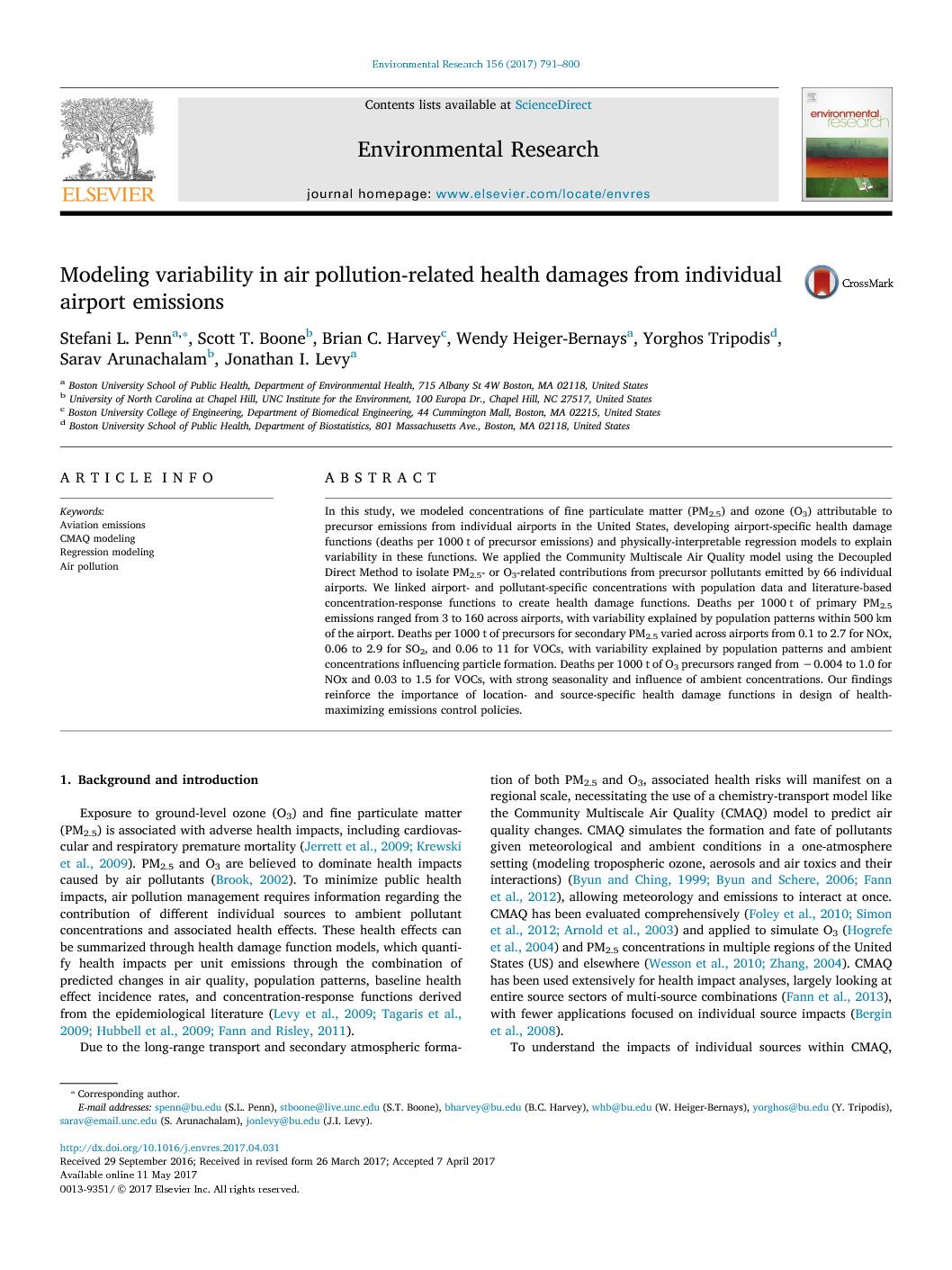
Modeling variability in air pollution-related health damages from individual airport emissions
Researchers used advanced air quality modeling to estimate the health impacts of emissions from 66 U.S. airports, including how pollution from each individual airport contributes to premature deaths. The study found wide variation in health damage across airports, driven largely by nearby population density and local atmospheric conditions. These findings can help inform emissions control policies at specific airports to better protect public health. -
2016-06-27
Sea-Tac Airport is first in the U.S. to achieve Salmon-Safe Certification
In a year where the Seattle-Tacoma International Airport is projected to have a record number of passengers, the Port of Seattle is taking care of the environment too, becoming the first U.S. airport to achieve Salmon-Safe certification, earned for its environmental practices that protect Puget Sound water quality and salmon habitat. The designation means that -
2016-04-28
Sea-Tac Airport neighbors get close-up view of environmental efforts
Sea-Tac Airport neighbors get close-up view of environmental efforts 04/28/2016 folksonbus.JPG To celebrate Earth Day, the Port of Seattle hosted residents from nearby communities to get a close up view of the many programs Seattle-Tacoma International Airport has in place to protect and improve the environment. Sea-Tac airport neighbors first got a briefing from Sea-Tac -
 2015-12-15
Sea-Tac Airport Sustainability Goals and Objectives
A December 2015 presentation by Sea-Tac Airport's Director of Environmental & Planning outlines how the airport is weaving sustainability into its Master Plan across three phases: what and where it builds, how it builds, and how it operates. The plan is guided by the Port of Seattle's Century Agenda and the airport's own Strategy for a Sustainable Sea-Tac (S3), with development concepts for airfield, terminal, and landside areas being screened against sustainability-based evaluation criteria. Key planning constraints include meeting passenger demand growth without adding new runways, improving airfield efficiency through NextGen technology, and converting sustainability goals into measurable decision-making criteria. -
 2015-03-01
City of Des Moines 2015 Surface Water Comprehensive Plan
The City of Des Moines 2015 Surface Water Comprehensive Plan is a technical planning document prepared by Parametrix engineers in March 2015 for the City of Des Moines, Washington. It addresses the management and infrastructure of the city's surface water systems, covering stormwater and drainage planning for the community. The plan was certified by licensed professional engineers and serves as a long-term guide for surface water improvements in the Des Moines area. -
 2014-11-06
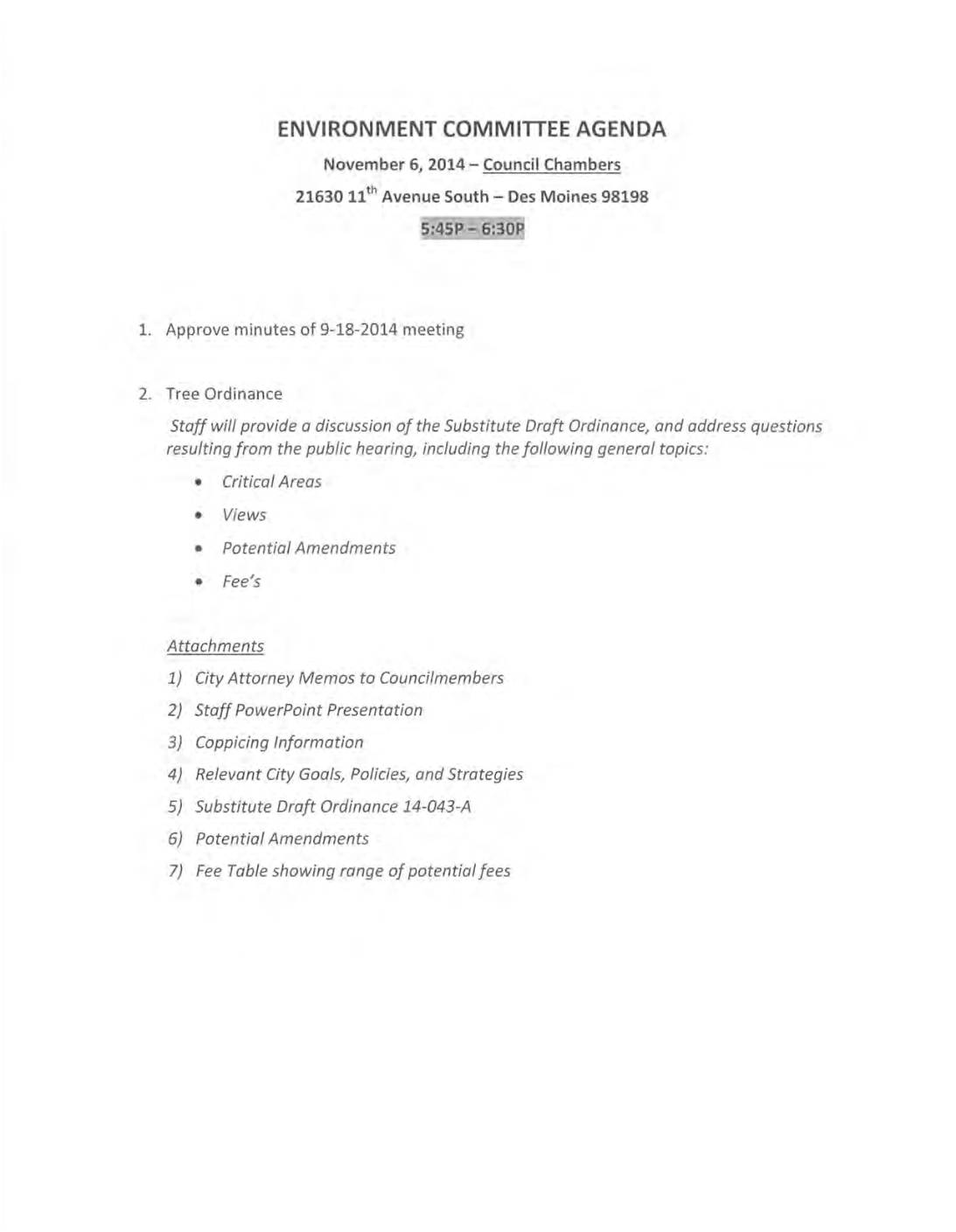
Environment Committee agenda and draft minutes, November 6, 2014
The Des Moines, Washington Environment Committee met on November 6, 2014 to review a proposed Tree Ordinance (Substitute Draft Ordinance 14-043-A), discussing topics such as critical areas, views, potential amendments, and fees. The committee also approved minutes from its September 18, 2014 meeting, during which staff presented updates on surface water management projects and budgets. Note: this document does not directly address Sea-Tac Airport noise policy.