TagEcology(788)
-
 2000-06-27
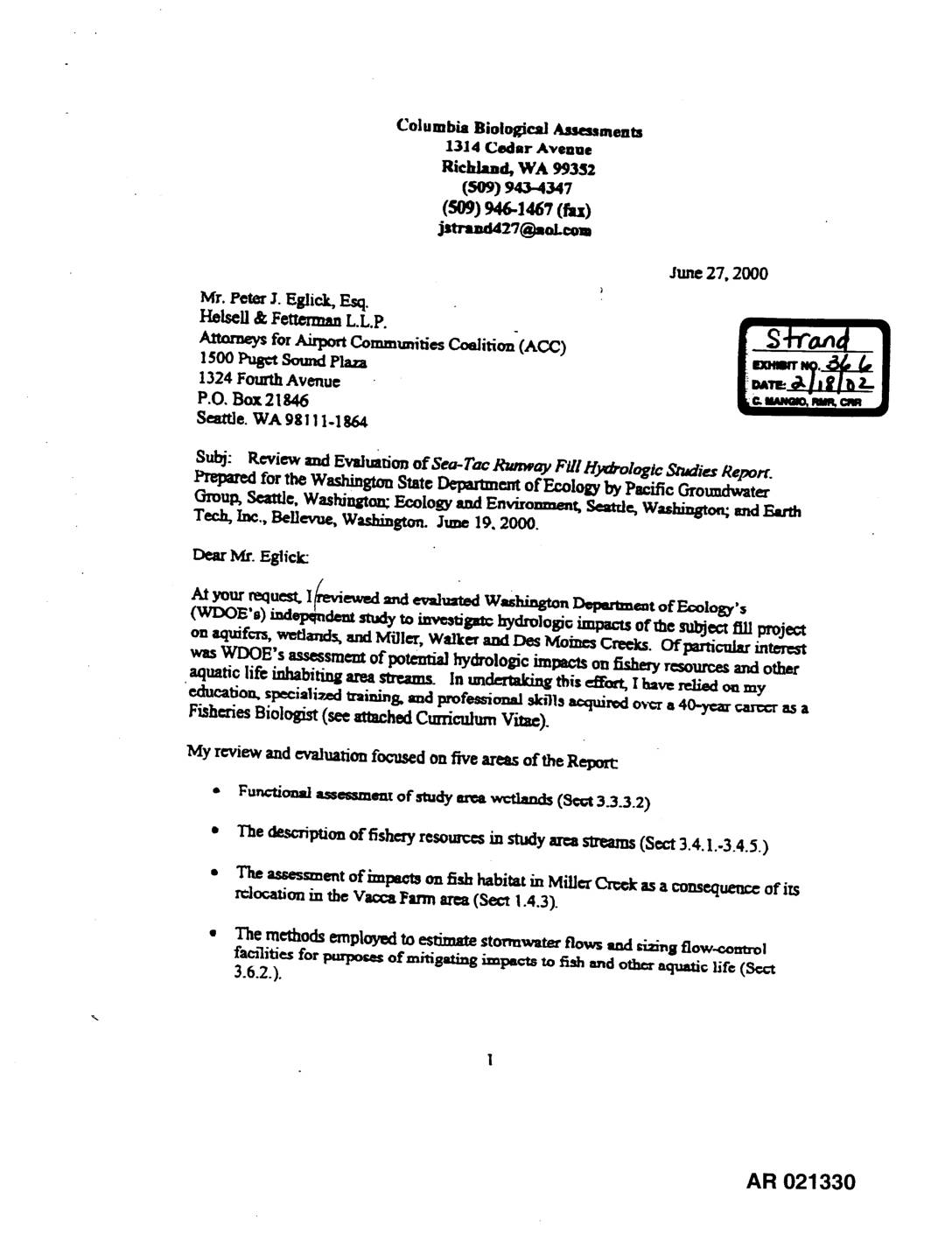
EXH 366: Columbia Biological Assessments Letter Reviewing STIA Runway Fill Hydrologic Studies — ACC Expert Review Fishery Wetland Impacts
A fisheries biologist hired by the Airport Communities Coalition reviewed a Washington State Department of Ecology hydrologic study of the Sea-Tac runway fill project, concluding that the study significantly underestimated impacts on local fish and wetland habitats in Miller, Walker, and Des Moines Creeks. The reviewer found that the study failed to accurately document fish species present, overlooked key wetlands supporting salmon and cutthroat trout, and inadequately assessed the consequences of relocating nearly 1,000 feet of Miller Creek to accommodate runway expansion. The letter argues that the Ecology department accepted the Port's claims of habitat improvement without requiring a thorough analysis of the substantial fish and invertebrate communities that would be destroyed. -
 2000-06-19
EXH AR045023: Sea-Tac Runway Fill Hydrologic Studies Report
Sea-Tac Runway Fill Hydrologic Studies Report (AR 045023, project JE9907) prepared by Pacific Groundwater Group, Ecology and Environment, and Earth Tech Inc. for Washington State Department of Ecology Northwest Regional Office, dated June 19, 2000. Report covers hydrologic and hydrogeologic characterization of the Sea-Tac Airport third runway embankment fill area, including Miller Creek and Walker -
 2000-06-19
EXH 410: Sea-Tac Runway Fill Hydrologic Studies Report
This June 2000 report by Pacific Groundwater Group examines the hydrological impacts of proposed runway fill construction at Seattle-Tacoma International Airport. It covers groundwater conditions, surface water management, effects on local wetlands and fish habitat in Miller and Walker Creeks, and reviews stormwater control proposals. The study was prepared for the Washington State Department of Ecology to assess how the Third Runway embankment fill would affect the surrounding hydrologic environment. -
 2000-06-19
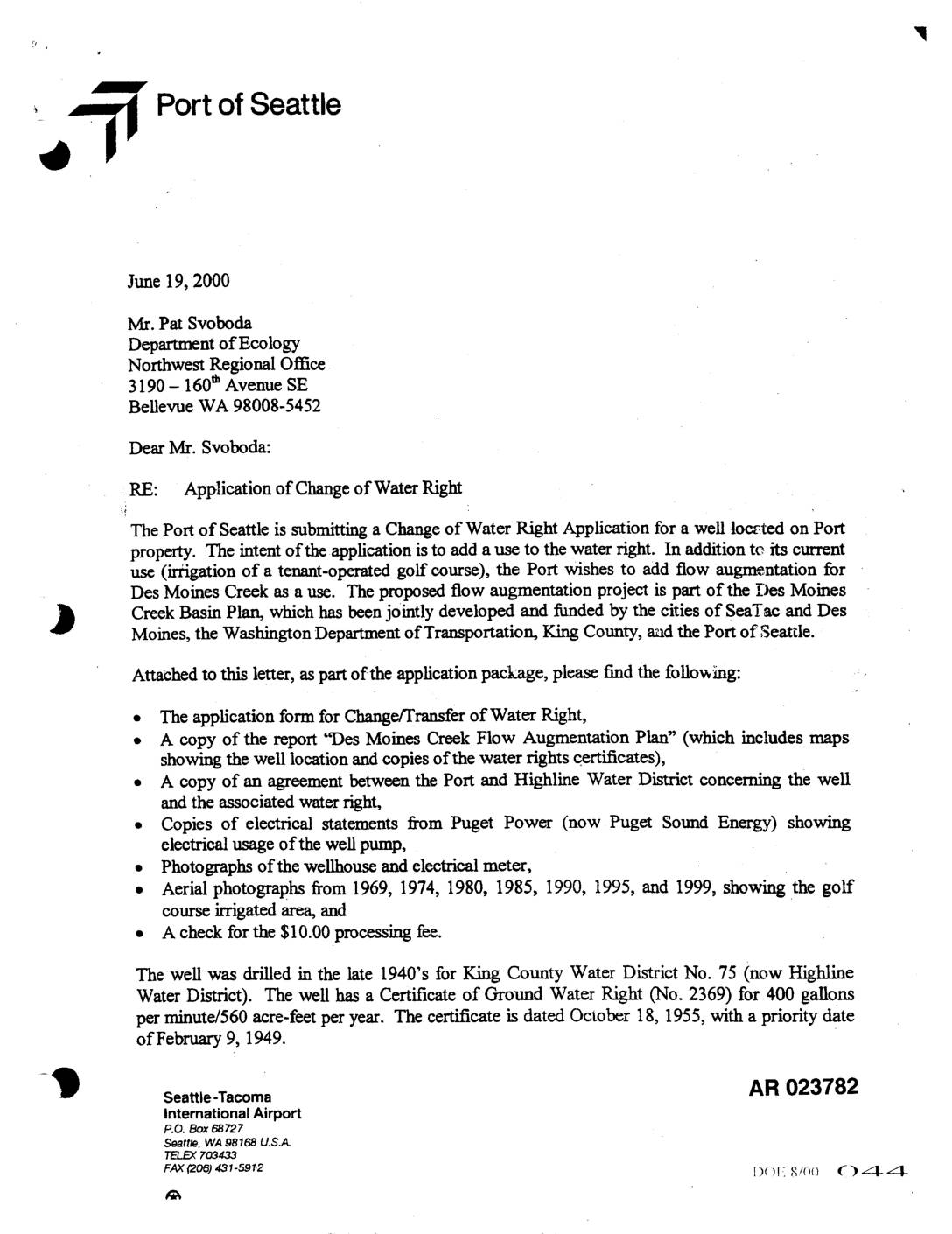
EXH AR023782: Port Of Seattle Letter to Department of Ecology — Change of Water Right Application for Des Moines Creek Flow Augmentation
In June 2000, the Port of Seattle submitted a formal application to the Washington Department of Ecology to add a new use to an existing groundwater right for a well located on Port property near Seattle-Tacoma International Airport. The well, originally drilled in the late 1940s and previously used to irrigate the Tyee Valley Golf Course, was proposed to also provide flow augmentation and temperature control for Des Moines Creek as part of a jointly funded basin restoration plan. The application addressed the well's ownership history, its continuous use for golf course irrigation since the mid-1960s, and the Port's agreement with Highline Water District confirming the Port's title to the associated water right (Certificate No. 2369). -
 2000-06-16
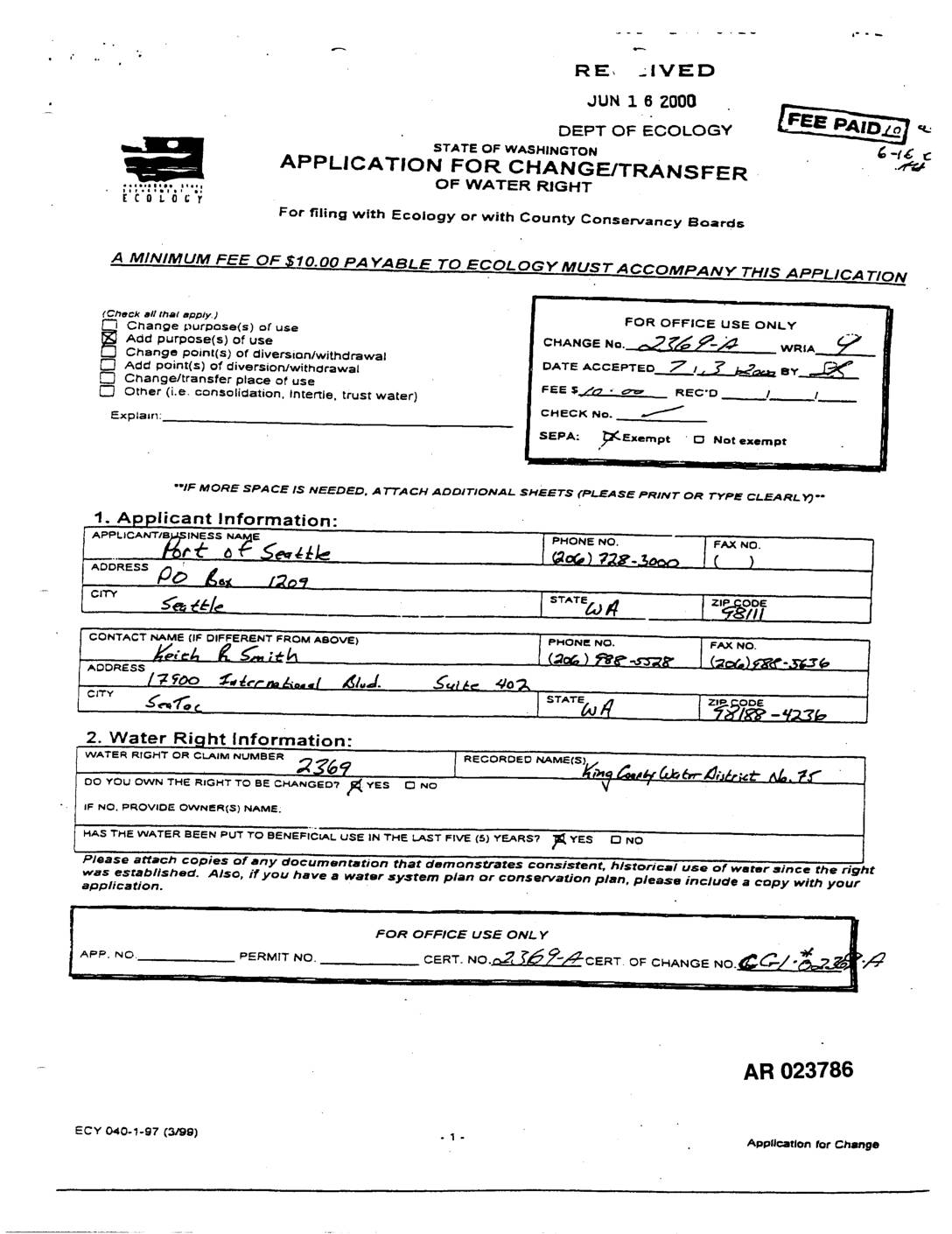
EXH AR023786: Application Change/Transfer Water Right — Tyee Valley Golf Course Well
The Port of Seattle filed an Application for Change/Transfer of Water Right with the Washington State Department of Ecology in June 2000, seeking to add flow augmentation for Des Moines Creek as a purpose of use to an existing well water right (No. 2369) originally used for domestic supply, golf course irrigation, and related uses at Tyee Valley Golf Course in SeaTac. The proposed change would extend the water right beyond 2000 to support creek flow augmentation alongside continued domestic supply and golf course irrigation, covering the Des Moines Creek corridor from the airport property to the creek's mouth at Puget Sound. This application reflects the Port's efforts to manage water resources in connection with environmental and operational responsibilities related to Sea-Tac Airport. -
 2000-06-12
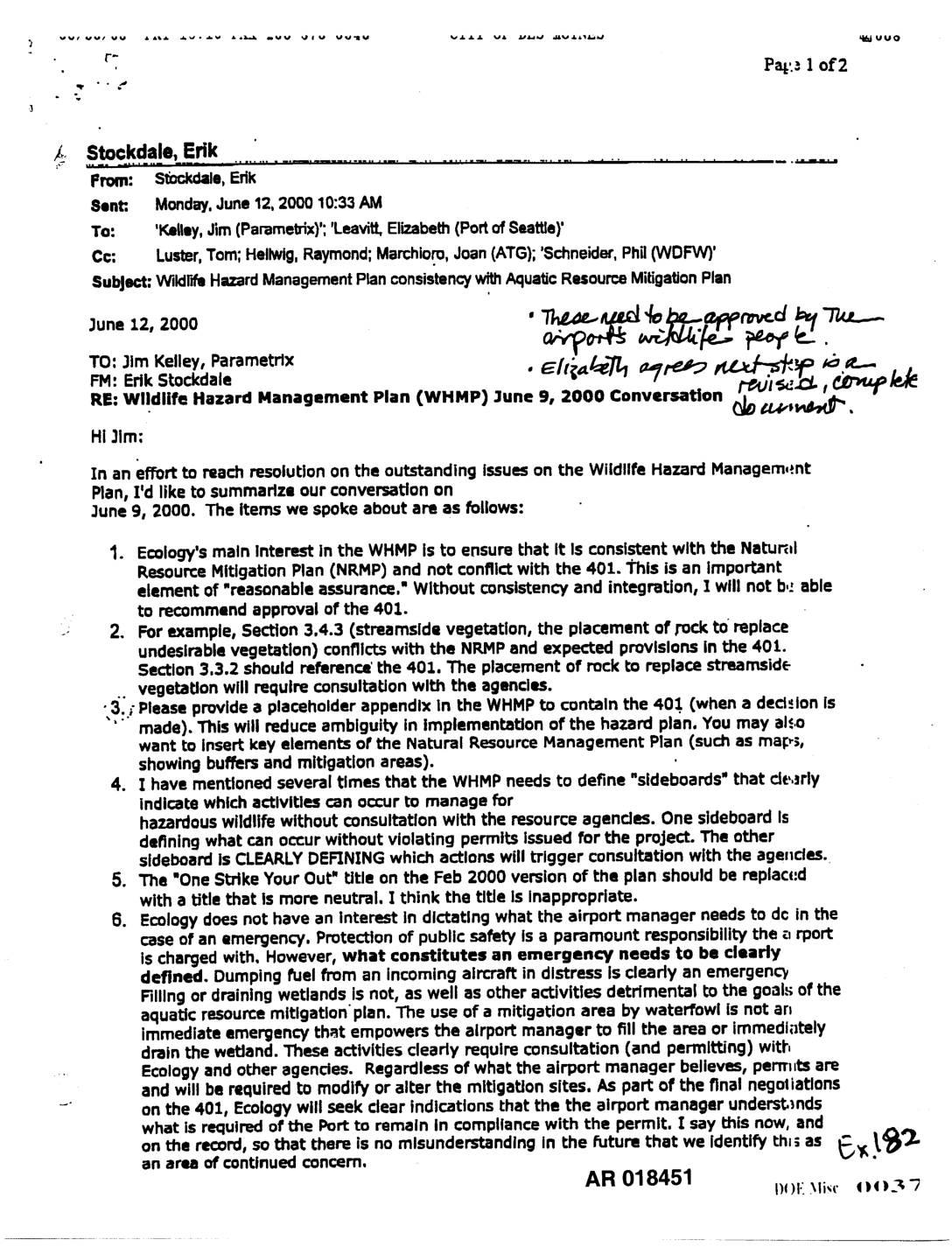
Exhibit 182: Wildlife Hazard Management Plan Consistency with Aquatic Resource Mitigation Plan — Email from Erik Stockdale, Ecology
Email dated June 12, 2000 from Erik Stockdale (Wetlands Specialist, Washington State Department of Ecology) to Jim Kelley (Parametrix) and Elizabeth Leavitt (Port of Seattle), summarizing a June 9, 2000 conversation regarding the Wildlife Hazard Management Plan (WHMP) and its consistency with the Natural Resource Mitigation Plan (NRMP) and 401 water quality certification. Stockdale outlines -
 2000-06-12
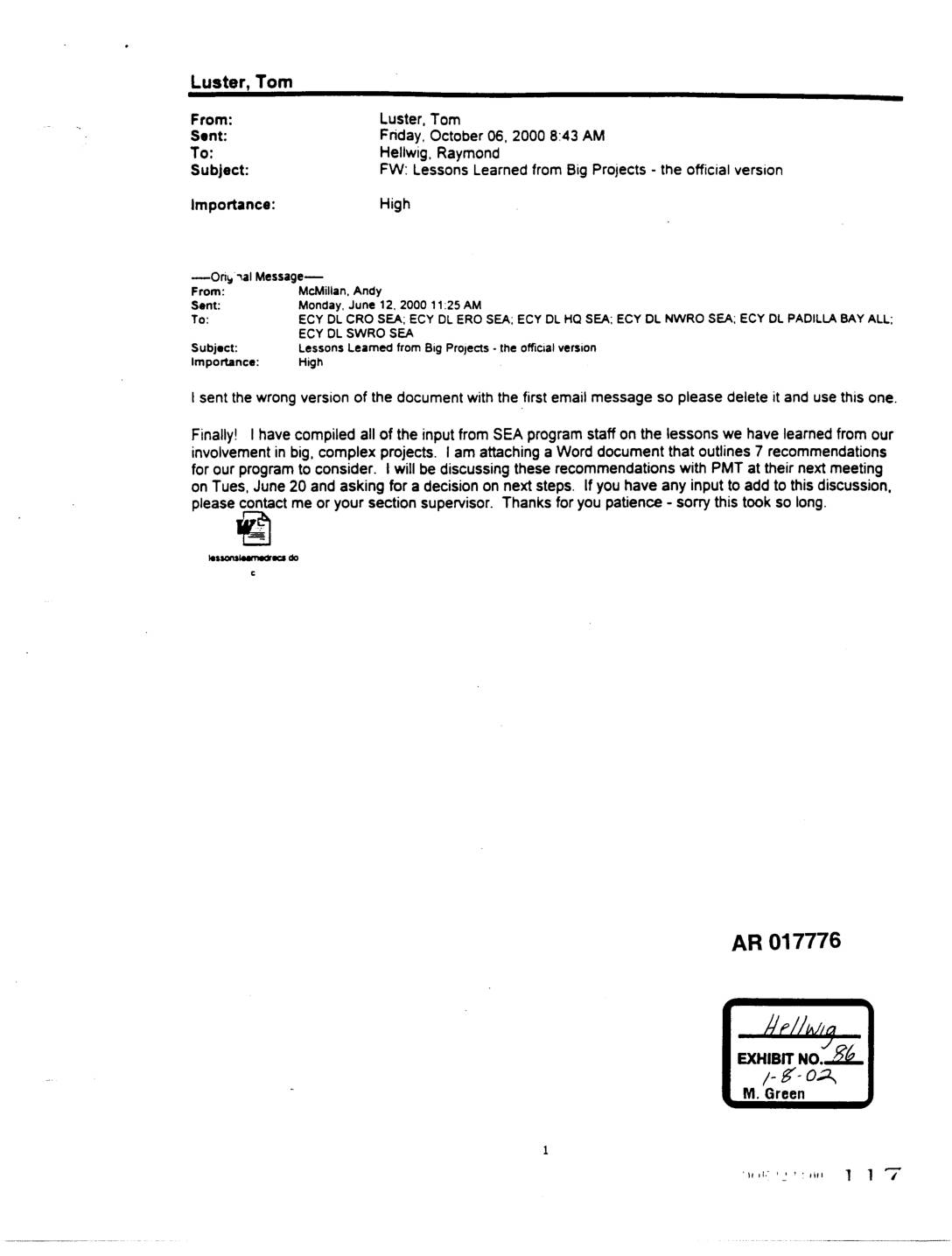
EXH AR017776: Lessons Learned from “Big” Projects — Recommendations for SEA Program
Email from Andy McMillan (SEA program) dated June 12, 2000, forwarded by Tom Luster to Raymond Hellwig on October 6, 2000, transmitting the official version of a Word document titled “Lessons Learned from Big Projects: Recommendations for SEA Program.” The attached document outlines 7 recommendations developed from SEA program staff experiences with large, complex projects -
 2000-06-01
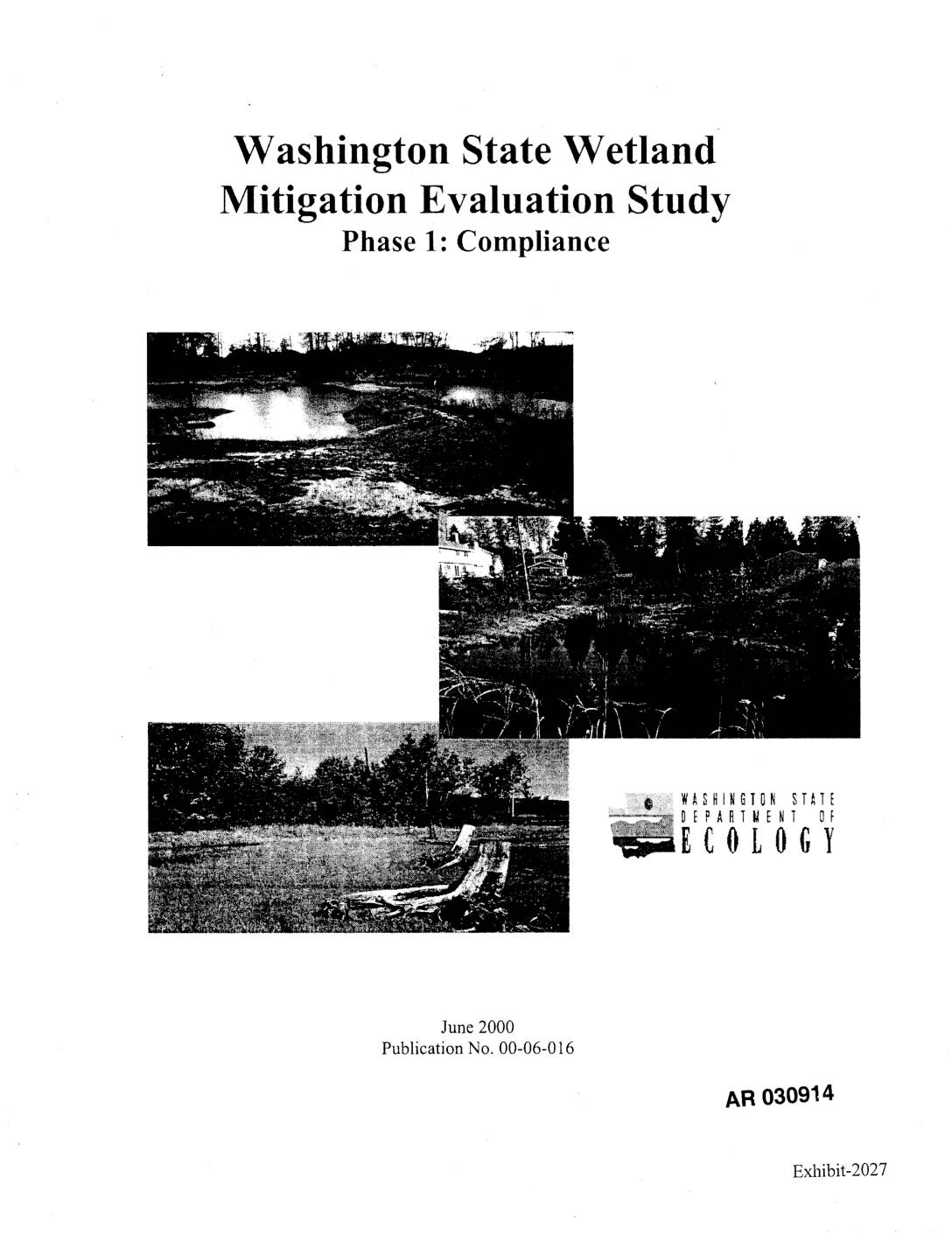
EXH AR030914: Washington State Wetland Mitigation Evaluation Study, Phase 1: Compliance
Washington State Department of Ecology (Ecology) Publication No. 00-06-016, authored by Patricia A. Johnson, Dana L. Mock, Emily J. Teachout, and Andy McMillan. Phase 1 compliance study of wetland mitigation in Washington State, published June 2000 by the Shorelands & Environmental Assistance Program, Lacey, WA. Exhibit-2027, AR 030914. -
 2000-05-22
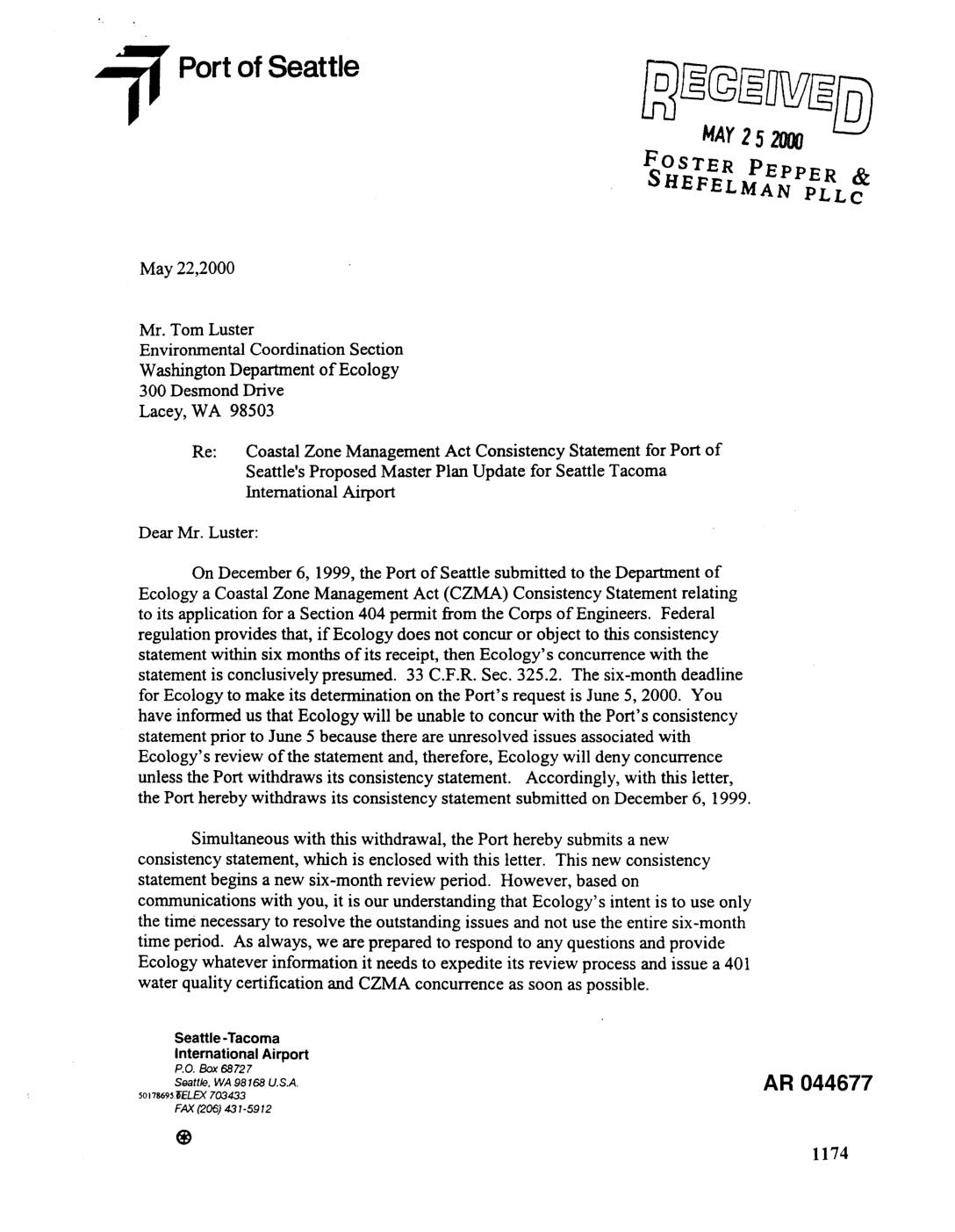
EXH AR044677: Port Of Seattle Letter Withdrawing and Resubmitting CZMA Consistency Statement for Sea-Tac Airport Third Runway
Letter dated May 22, 2000 from Elizabeth Leavitt, Manager of Aviation Environmental Programs at Port Of Seattle, to Tom Luster at Washington Department of Ecology (Environmental Coordination Section), withdrawing the December 6, 1999 CZMA Consistency Statement and simultaneously submitting a new one to reset the six-month review period under 33 C.F.R. Sec. 325.2. The withdrawal -
 2000-05-15
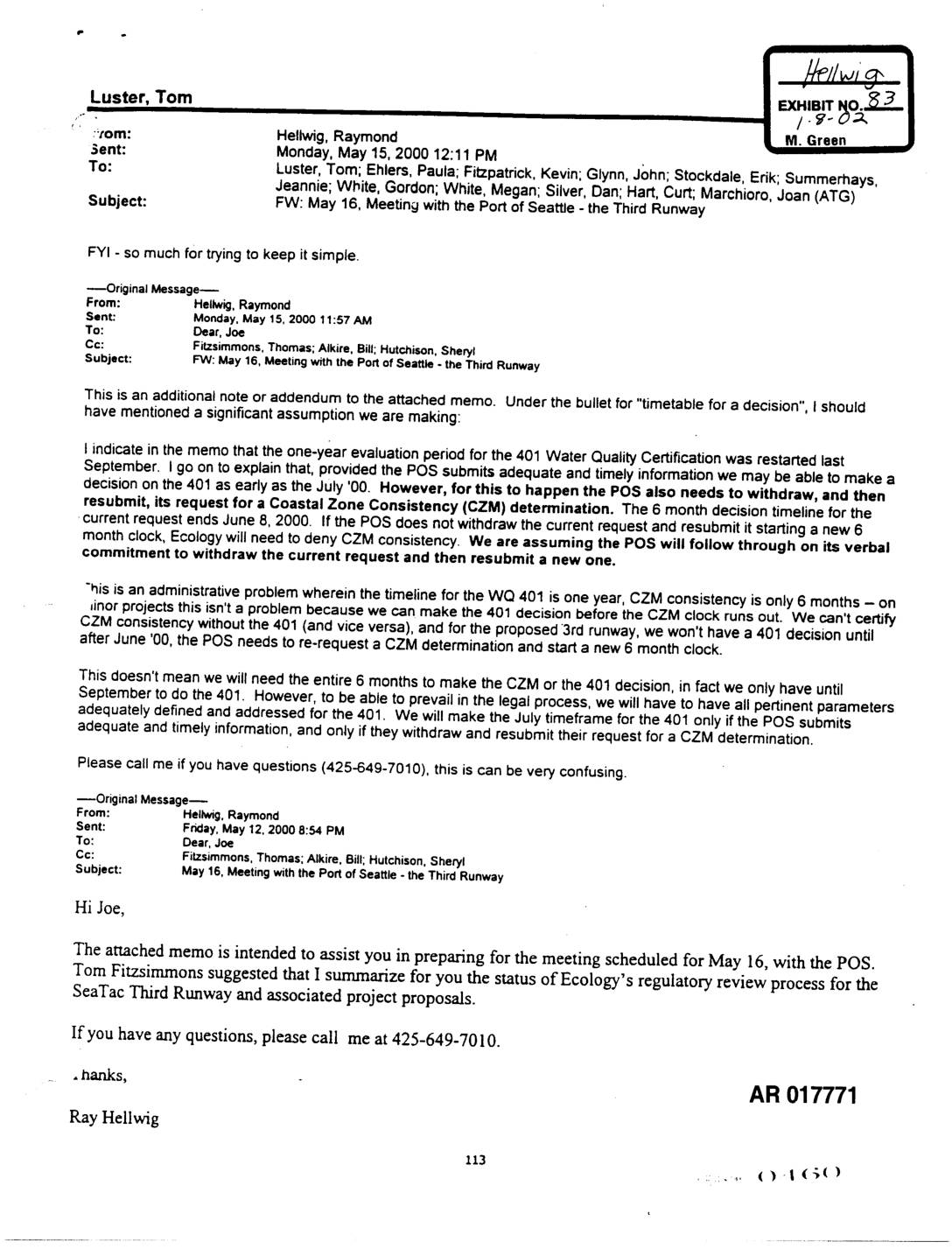
EXH AR017771: Ecology Internal Email — May 16 Meeting with Port Of Seattle on Third Runway 401 and CZM Review
Raymond Hellwig (Washington State Department of Ecology) emails Joe Dear and colleagues on May 15, 2000, as an addendum to a memo preparing for a May 16 meeting with Port Of Seattle regarding the Sea-Tac Third Runway. Explains that the one-year 401 Water Quality Certification evaluation period restarted September 1999, with a possible July 2000