TagDes Moines(304)
-
 2001-07-06
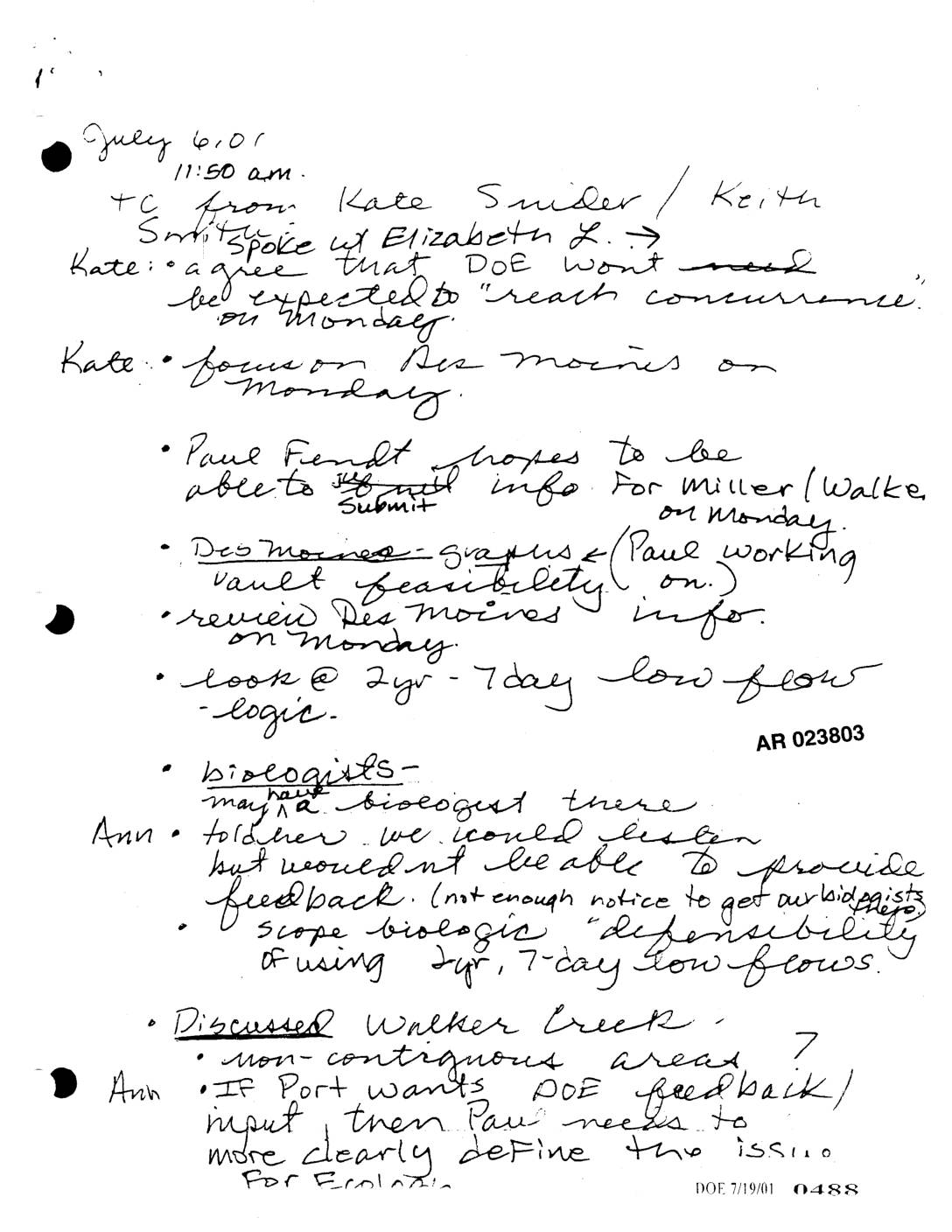
EXH AR023803: Handwritten Notes – Jul 6 2001 Teleconference, Des Moines, Walker Creek, Low-Flow Logic
Notes from a July 6, 2001 telephone conference involving Kate Snider, Keith Smith, and others discuss coordination with the Department of Energy (DOE) and review of Des Moines-related graphics and vault feasibility information. Topics include biologist availability, the biological defensibility of using 2-year and 7-day low flow data, and the status of Walker Creek non-contiguous areas. Ann reminds participants that Ecology is seeking all backup information in the format agreed upon at the June 25th meeting. -
 2001-06-22
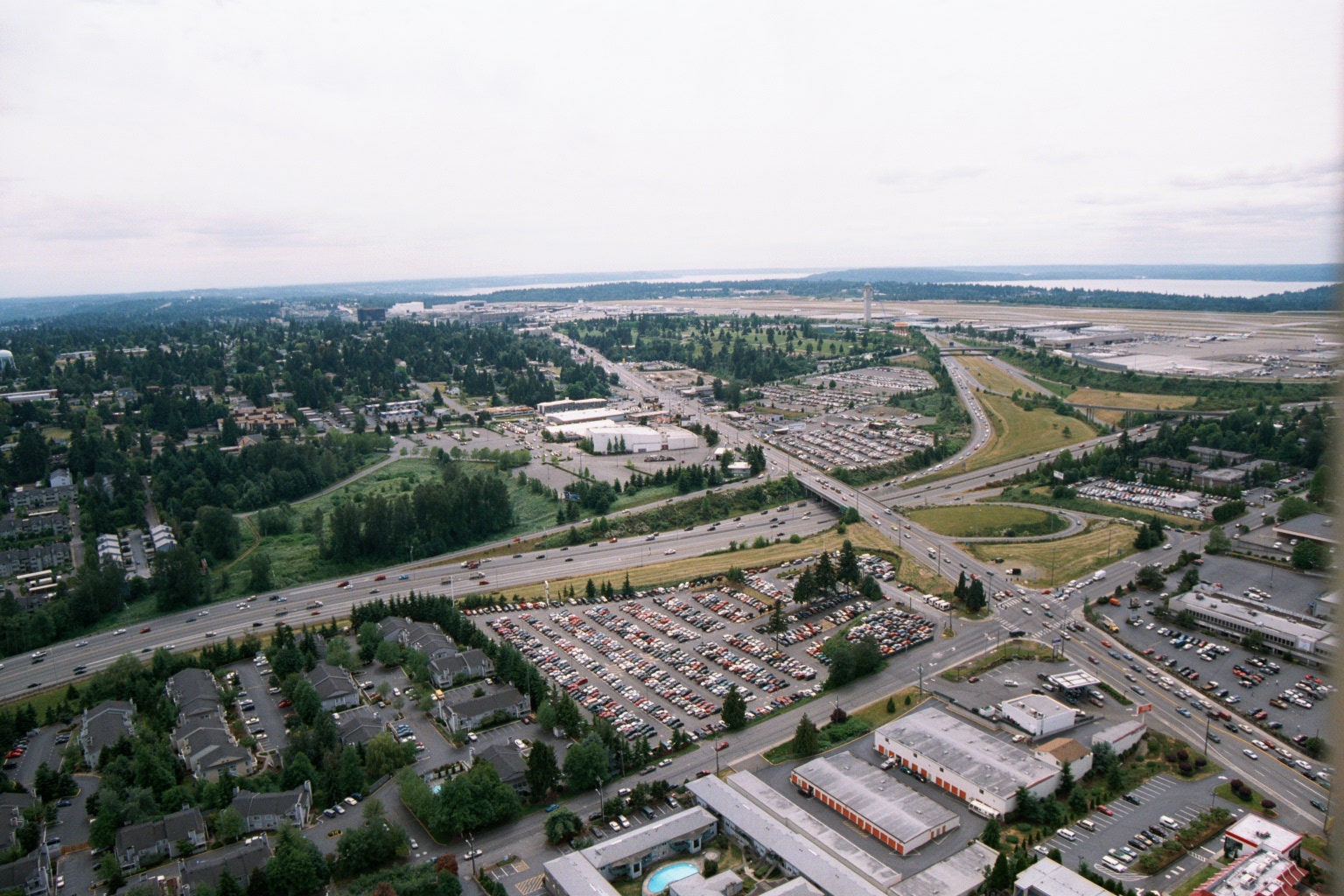
Aerial View of Sea-Tac Airport, Highway 99 Corridor, and Surrounding Development
Aerial photograph looking northwest showing Seattle-Tacoma International Airport (Sea-Tac) in the background with its runways and terminal area visible, along with Puget Sound on the horizon. The foreground shows the Interstate 99/Highway 99 corridor, large surface parking lots, residential apartment complexes, and commercial development in the cities of SeaTac or Des Moines, Washington. -
 2001-06-22
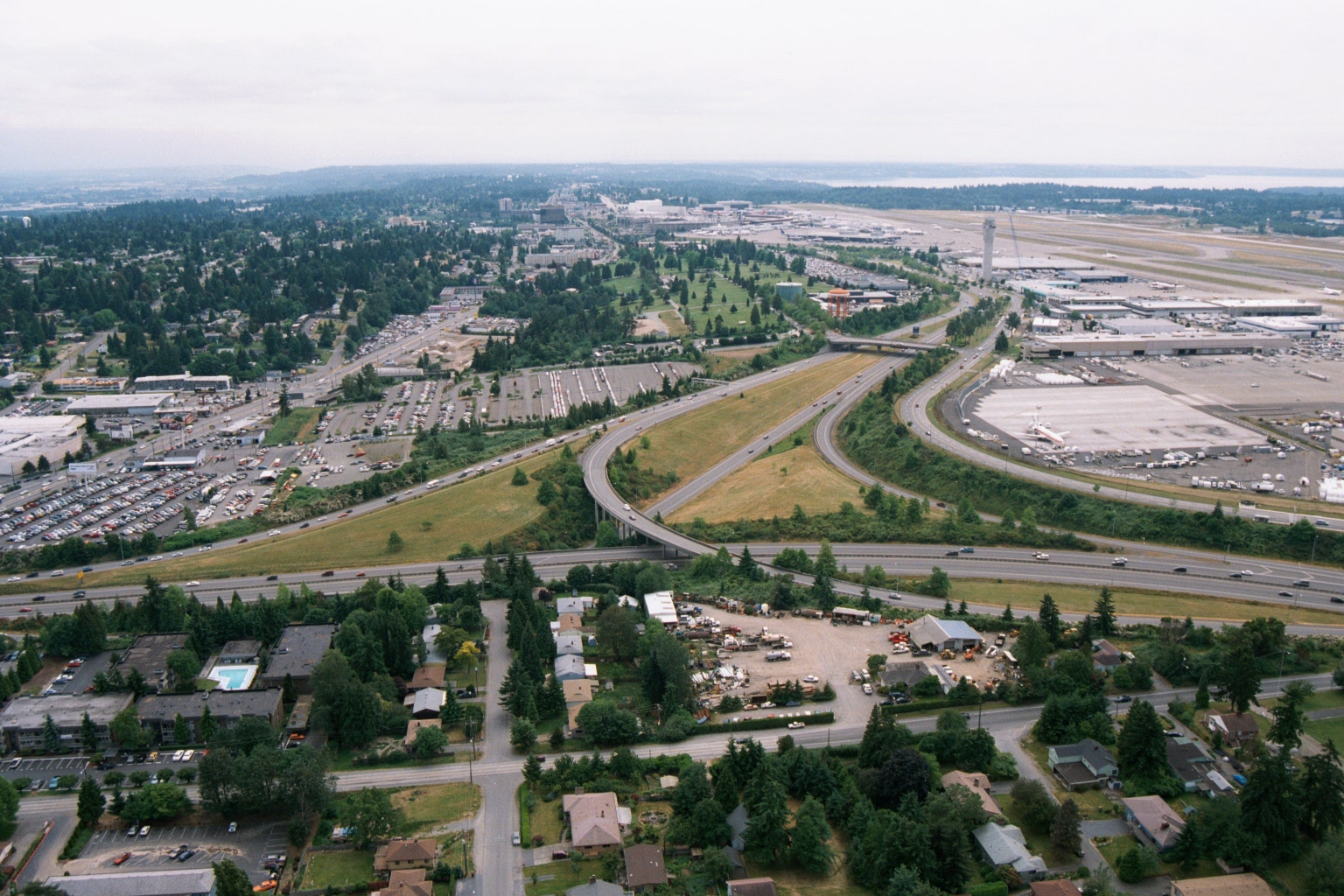
Aerial View of Sea-Tac Airport, Interstate 5, and Surrounding Communities
Aerial photograph looking northward toward Seattle-Tacoma International Airport (SEA-TAC), showing the airport terminal, control tower, runways, and aircraft gates on the right, with Interstate 5 interchange in the foreground and Puget Sound visible on the horizon. Residential neighborhoods, commercial properties, and parking areas in the cities of SeaTac or Des Moines are visible in the foreground, illustrating the airport's proximity to surrounding communities relevant to noise-impact planning. -
 2001-02-21
EXH AR025289: Five-Year Project RP — Des Moines Water Quality Monitoring Program
This February 2001 report by Herrera Environmental Consultants presents a five-year summary of water quality monitoring conducted for the City of Des Moines, Washington, covering three creek basins: Des Moines Creek, Massey Creek, and North Fork McSorley Creek. The report examines a range of water quality parameters including temperature, pH, dissolved oxygen, metals, nutrients, turbidity, and fecal coliform bacteria, as well as benthic invertebrate conditions as indicators of stream health. It was prepared for the City's Surface Water Management Utility and provides data intended to inform stormwater and surface water management decisions in the Des Moines area near Sea-Tac Airport. -
 2000-10-04
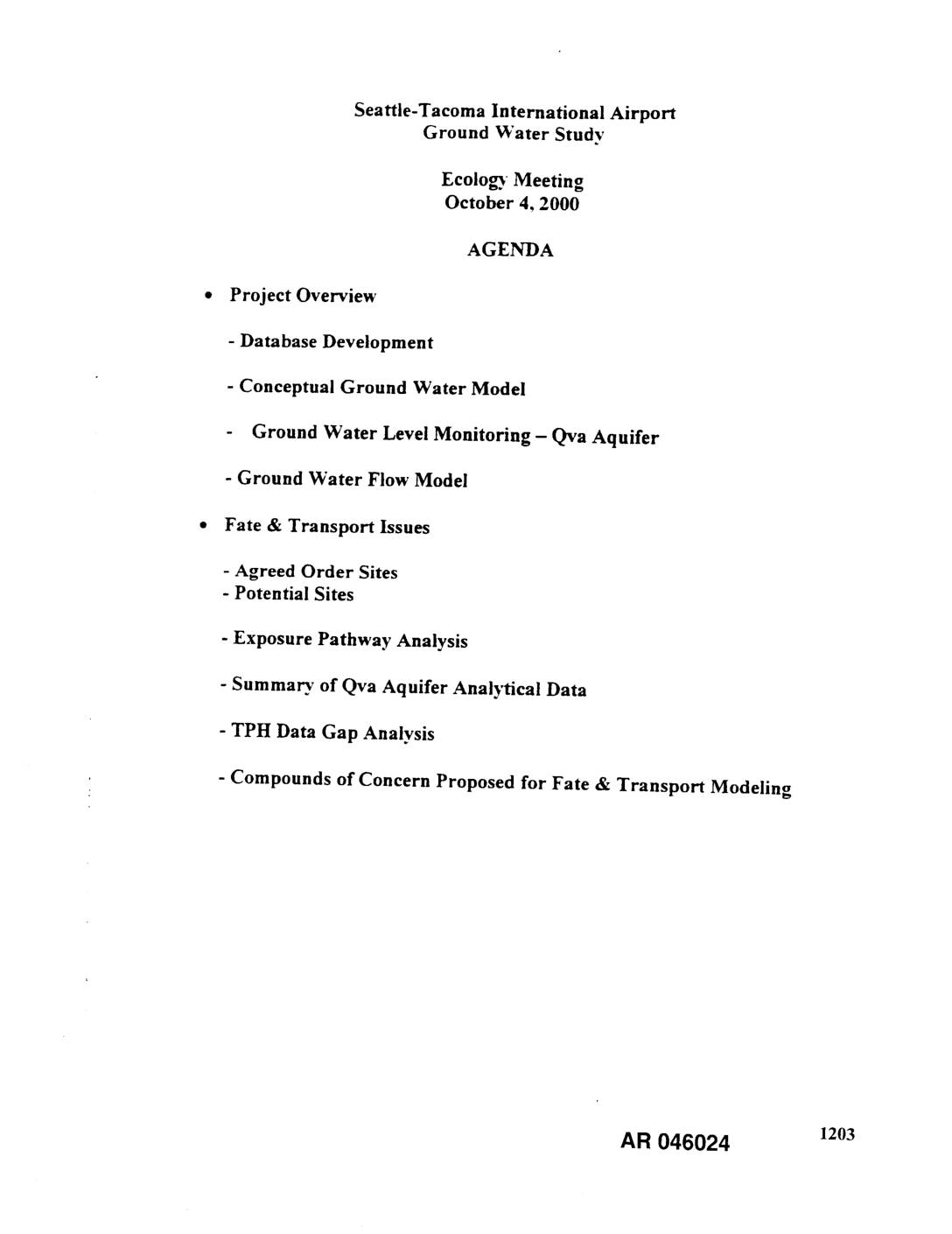
EXH AR046024: STIA Ground Water Study — Ecology Meeting Agenda and Presentation, October 4, 2000
Agenda and presentation materials for the Seattle-Tacoma International Airport (STIA) Ground Water Study Ecology meeting held October 4, 2000, prepared by Associated Earth Sciences, Inc., S.S. Papadopulos and Associates, Inc., and EA Engineering, Science, and Technology for the Port Of Seattle. Topics include database development, conceptual ground water model, ground water level monitoring of the -
 2000-08-18
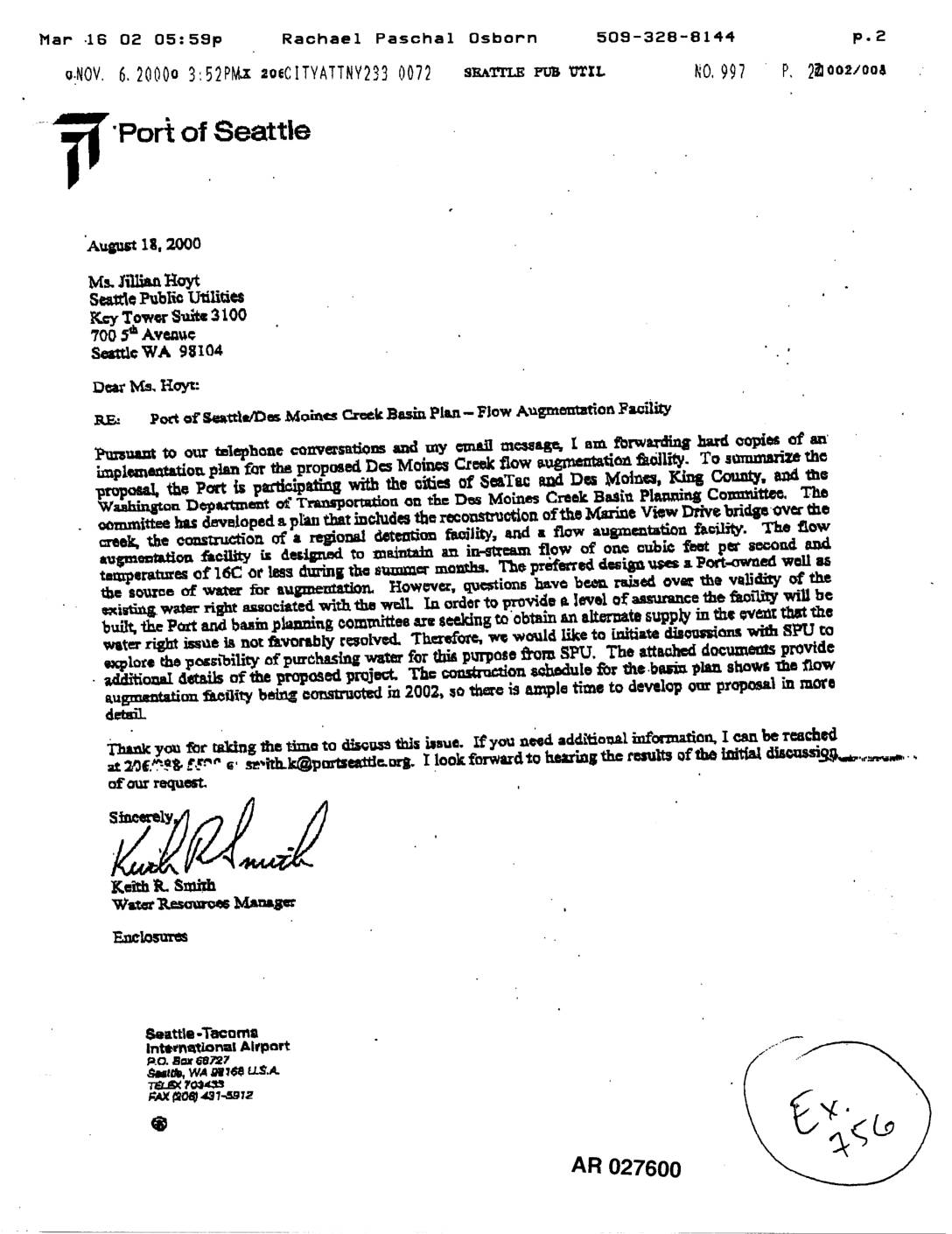
EXH AR027600: Port Of Seattle Letter to Seattle Public Utilities Regarding Des Moines Creek Basin Plan Flow Augmentation Facility
Letter dated August 18, 2000 from Keith R. Smith, Water Resources Manager at Port Of Seattle (Seattle-Tacoma International Airport), to Jillian Hoyt of Seattle Public Utilities, regarding the Des Moines Creek Basin Plan Flow Augmentation Facility. The Port seeks to purchase water from SPU as an alternate supply for the proposed flow augmentation facility, which -
 2000-04-25
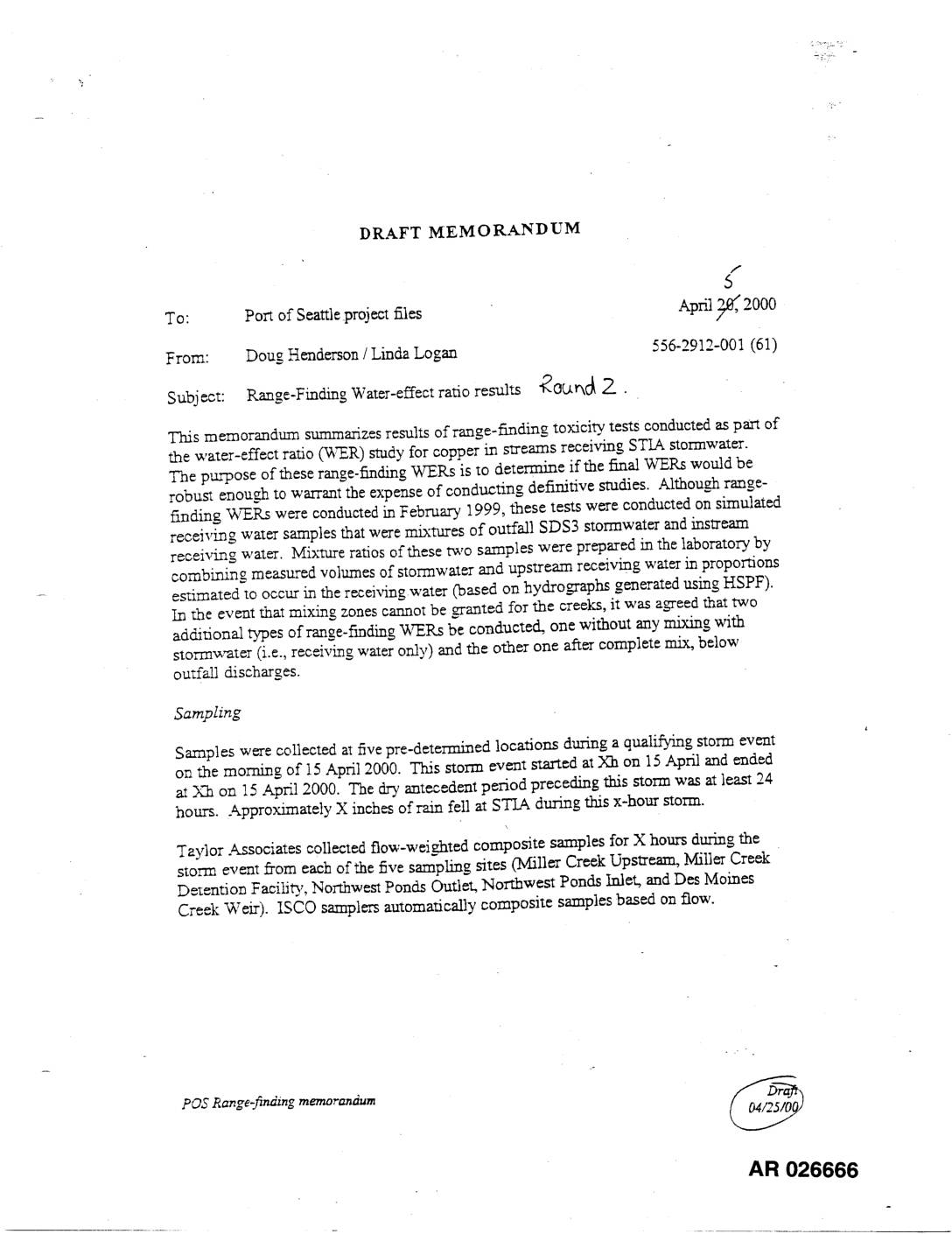
EXH AR026666: Draft Memo — Range-Finding Water-Effect Ratio Results Round 2 WER Study
A draft memorandum dated April 2000 summarizes range-finding water-effect ratio (WER) toxicity tests conducted for the Port of Seattle to measure copper levels in streams receiving stormwater runoff from Seattle-Tacoma International Airport (STIA). Water samples were collected from five sites — including Miller Creek and Des Moines Creek — during a storm event on April 15, 2000, and tested using Daphnia magna organisms to compare copper toxicity in site water versus clean laboratory water. The results were intended to determine whether more expensive definitive WER studies would be warranted, and to help establish site-specific water quality standards for copper. -
 2000-04-17
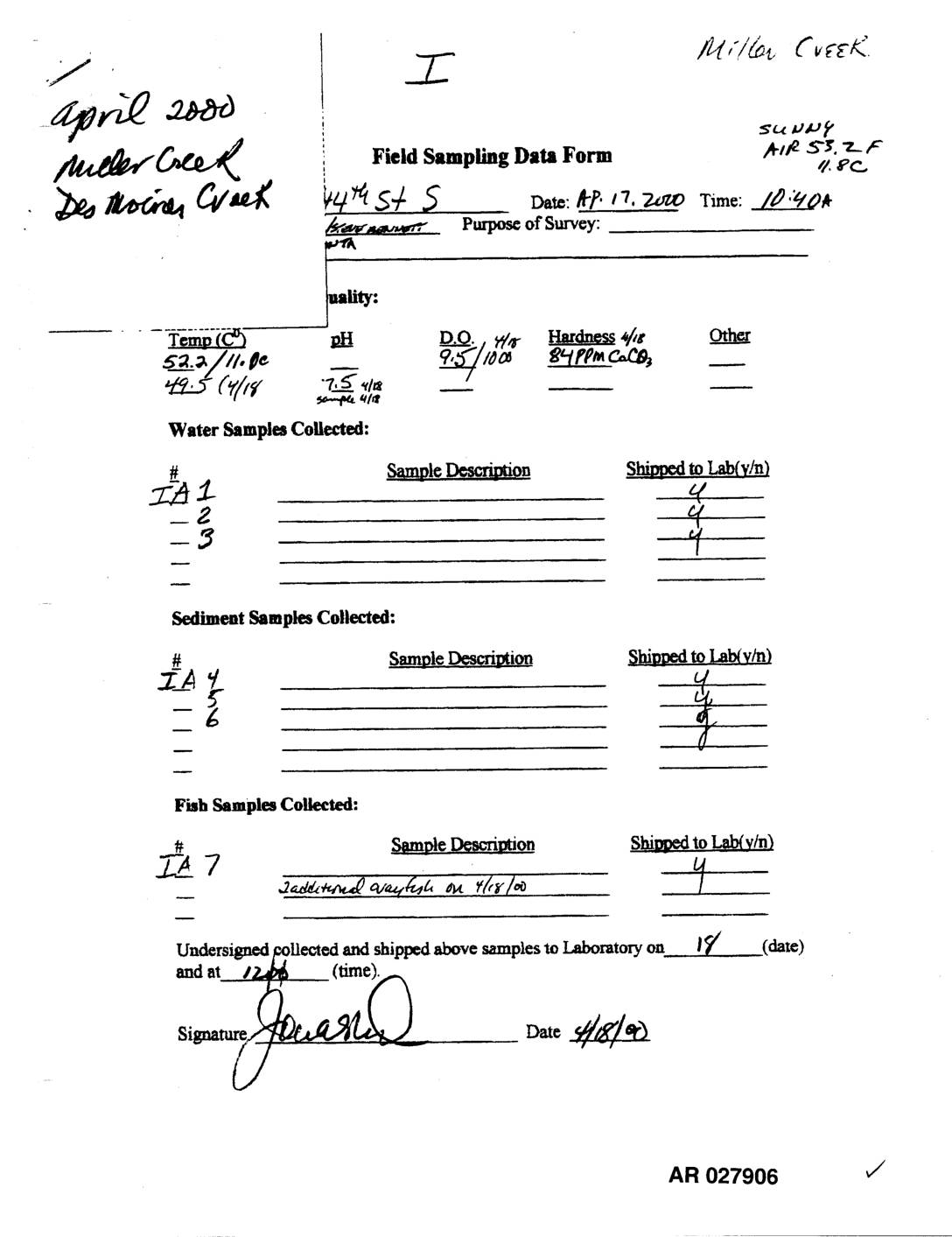
EXH AR027906: Field Sampling Data Forms — Miller Creek / Des Moines Creek Survey, April 2000
Field Sampling Data Forms (AR 027906–027908) documenting environmental sampling at Miller Creek and Des Moines Creek survey sites including 144th St S and S 157th Pl, dated April 17, 2000. Water quality measurements recorded: temperature 53.2°F/11.0°C and 49.5°C (4/19), pH 7.5, dissolved oxygen 9.5/100, hardness 84 PPM CaCO3 (site IA) and 120 ppm (site IB). -
 2000-02-14
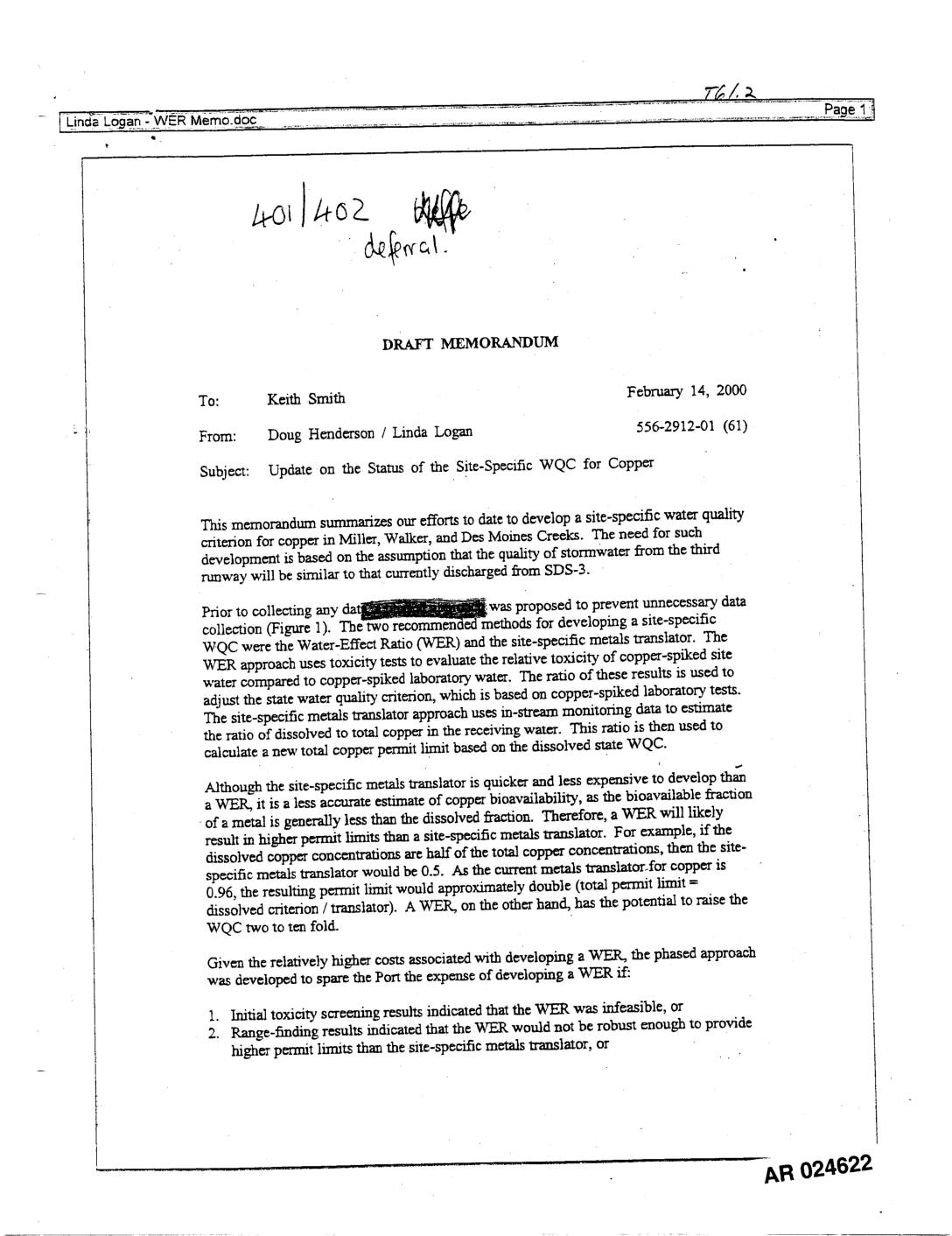
EXH AR024622: Draft Memo — Site-Specific WQC Copper Status Update, Miller, Walker & Des Moines Creeks
A February 2000 internal draft memorandum from environmental consultants to Port of Seattle staff summarizes efforts to develop a site-specific water quality criterion for copper in Miller, Walker, and Des Moines Creeks, in connection with stormwater runoff anticipated from a proposed third runway at Sea-Tac Airport. The memo evaluates two technical approaches—the Water-Effect Ratio (WER) and the site-specific metals translator—for potentially raising copper discharge permit limits, and outlines initial toxicity screening and range-finding study results. It also describes ongoing negotiations with the Washington State Department of Ecology regarding unresolved issues such as mixing zones, AKART requirements, and critical sampling conditions. -
 2000-02-14
EXH AR024917: Draft Memo — Site-Specific WQC Status Update, Copper, Miller, Walker & Des Moines Creeks
A February 2000 draft memorandum from environmental consultants to Keith Smith summarizes efforts to develop a site-specific water quality criterion for copper in Miller, Walker, and Des Moines Creeks near Seattle-Tacoma Airport, in anticipation of stormwater runoff from a proposed third runway. The memo outlines two technical approaches—the Water-Effect Ratio (WER) and the site-specific metals translator—for potentially raising copper discharge permit limits, and describes toxicity screening and range-finding studies conducted in 1999. The phased study approach was designed to avoid unnecessary costs if the WER method proved infeasible or if the Washington Department of Ecology would not permit its use in adjusting permit limits.